Tag: cable

  • CNN triumphs in trademark battle against GNN India

    CNN triumphs in trademark battle against GNN India

    MUMBAI: Four years on, US cable and satellite television giant CNN has finally won a trademark battle against media company GNN India Ltd (GNN) after taking it to court for using a similar logo.

    The Chennai bench of the Intellectual Property Appellate Board (IPAB), headed by Justice Manmohan Singh, while issuing an order in February this year, said the Indian firm adopted the trademark ‘GNN’ that is confusingly and deceptively similar to the American media company’s trademark ‘CNN’.

    The bench also directed the registrar of trademarks to remove the already registered trademark of the Indian company from the trademark register. “The respondent (GNN) has cleverly structured the impugned mark ‘GNN’ with a view to coming close to the ‘CNN’ trademark,” the order said.

    GNN was founded in 2009 by Manoranjana Sinh, estranged wife of former Union minister Matang Sinh. Both of them were arrested by the CBI separately for their alleged involvement in the Rs 2,000 crore Saradha chit fund scam.

    The American news channel moved the IPAB in April 2014 after it learned of the impugned mark being registered with the trademark register.

    The IPAB chairman, while issuing his final order in the case, observed that the Indian firm had adopted the original trademark with bad faith.

    “From an overall comparison of the marks, it is apparent that the rival marks are extremely similar. As such it will lead to a likelihood of association with the brand ‘CNN’ whose services, being broadcasting and telecommunication, are virtually identical,” the order stated, adding that it clearly displays the Indian firm’s unlawful intent to trade upon the goodwill and worldwide reputation associated with the ‘CNN’ trademark.

    GNN did not file any counter statement nor did it appear on the dates on which it was summoned by the appellate board. “The company has not been able to justify how it hit upon an identical mark as an imitation of the trademark of CNN,” the order said.

    “The objective of maintaining a trademark register is that the public should know whose goods they are buying and with whom particular goods are associated,” the order added.


  • DEN expands broadband services; plans Rs 100 cr capex

    DEN expands broadband services; plans Rs 100 cr capex

    MUMBAI: DEN Broadband Pvt Ltd (DEN) has expanded its hi-speed internet services to 100 cities across India. After an encouraging response to the pilot project in five cities, DEN has already started its first phase of expansion in 15 cities.

    DEN’s expansion plan is in sync with the massive growth in the internet consumption in the country. Data usage in India has already jumped by 144 per cent (y-o-y) with average consumption per user in 4G broadband reaching 11 GB per month. The rise in data consumption has not been matched by a corresponding increase in the speed of connection. While India globally ranks 67 in fixed broadband speeds with an average download speed of 20.72 Mbps, mobile broadband speeds still lags at 109th rank with an average download speed of 9.01 Mbps, as per Ookla’s speedtest Global Index, February 2018 report.

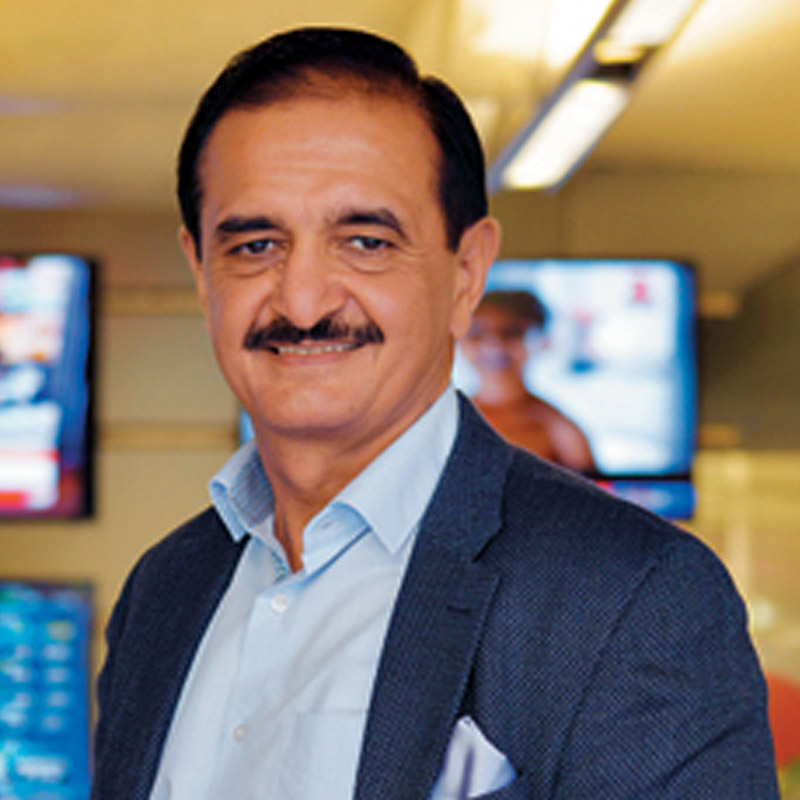
    DEN Networks CEO SN Sharma said: “This is a game changing moment not just for DEN but also for the Internet users in the country. Our hard work and investment in transforming our Co-ax cable trunk routes into fiber optics will now yield tangible results. For DEN it will mean a minimum investment whereas for our users it will mean best in class Internet speed.”

    The company intends to tap this high-potential market by capitalising on its existing cable TV infrastructure and providing hi-speed fixed broadband internet. With speeds upto 1Gbps at affordable prices, DEN Broadband will cater to the future needs of Internet while penetrating further into the untapped markets.

    DEN’s fibre cable infrastructure is already present across 13 states. The company plans to roll out through a franchisee model, which will leverage its strength as a leading national MSO with an established on-ground Cable LMO network to usher in a broadband revolution in the entire country. Its 14,000 plus LMO network would use its technology while adhering to the operational standards set by DEN. Being the franchisor, DEN will bill the subscribers directly and collect tariffs from them directly. The franchisee would get paid based on their agreement and size of their investment.

    The MSO’s fixed broadband infrastructure is being built using a mix of GPON/FTTX and metro ethernet technologies enabling download speeds from 20 Mbps till 1 Gbps. It estimates a capital expenditure of Rs 100 crore over the next three years. This expansion plan is targeted towards 100 cities across states where DEN has a strong foothold such as UP, Karnataka, Jharkhand and Uttarakhand.

  • TRAI seeks to regulate online streaming platforms

    TRAI seeks to regulate online streaming platforms

    MUMBAI: Online streaming platforms may come under the purview of the Telecom Regulatory Authority of India (TRAI). The regulator is likely to bring out a consultation paper to bring online video-streaming platforms like Netflix, Amazon Prime and Hotstar under the regulatory ambit, according to a report in Livemint.

    Industry stakeholders wrote to the TRAI to come up with a pricing framework and is likely to add a section in its upcoming consultation paper on over-the-top (OTT) services. They state that some broadcasters air content for free on their streaming platforms for which they charge customers on cable and DTH.

    Indian broadcasters such as Star, Zee and Viacom18 all have their own OTT sites and apps wherein some content is monetised while some is not kept behind a paywall.

    Some broadcasters and OTT players are up in arms against such a regulation because nowhere in the world does it exist. They claim that people have to pay for data charges if not content. OTT cannot be clubbed with DTH and cable and it comes under rules regarding net neutrality.

    Also Read:

    Pleased with India progress, says Netflix’s Reed Hastings

    Star to air IPL on 10 channels, in 6 languages; live on Hotstar

    Star to air IPL on 10 channels, in 6 languages; live on Hotstar

  • DEN readies Android-based STB for Feb launch

    DEN readies Android-based STB for Feb launch

    MUMBAI: Multi-system operator (MSO) DEN is all set to revamp its old hybrid set top box (STB) into a smart STB. The new STB will support 4k HD as well as internet access. 

    A trial for the same is already in process is what DEN Networks CEO SN Sharma informed analysts. He added that the revamped STBs have been planted across the country and the response so far from the subscribers has been good. The trial will go on till February and the prices will be announced during the middle of the month itself. 

    The MSO is also in talks with two Indian broadcasting giants, Star and Zee. It also renewed deals with Sony and IndiaCast in 2017 for a span of two years.

    DEN, which has 13 million cable audience and 8.4 million active subscribers, is also planning to grow its broadband business. The company will be sharing its plan by the end of financial year 2017-18. DEN currently has a net subscriber base of 2.15 lakh with 60 per cent active subscribers. 

    Currently in only 10 select cities across 4 states of the country, MSO has plans to stretch in more 10 cities. 

    DEN Networks CFO Rajesh Kaushal predicted that the future expenditure will be more in broadband and less in cable, as most of the boxes are already lifted and the subsidy is very less on it. 

    DEN previously spent Rs.11 crore for seeding in the existing 10 cities and for expanding to more 10 cities the cost will be around Rs.10 crores.

  • Operating margin, sub revenue prop up Siti financials

    Operating margin, sub revenue prop up Siti financials

    BENGALURU: Backed by higher subscription and carriage revenue, Indian multi-systems operator (MSO) Siti Networks Ltd (Siti) has posted 19.4 percent higher consolidated total income for the quarter ended 31 December 2017 (Q3 2018, the quarter under review) as compared with the corresponding year ago quarter. Total comprehensive loss (TCL) for the quarter was slightly lower as compared to the year ago and the immediate trailing quarters. Siti’s consolidated total income in Q3 2018 was Rs 364.85 crore as against Rs 305.54 crore for Q3 2017. TCL, including non-controlling interest during the quarter under review, was Rs 32.51 crore as compared with Rs 33.15 crore in Q3 2017.

    Siti’s subscription revenue in Q3 2018 increased by 43.6 percent year-on-year (yoy) to Rs 211.8 crore from Rs 147.5 crore. Carriage income for the period improved by 14.2 percent to Rs 82.9 crore from Rs 72.6 crore. The company’s activation and broadband revenue, however, declined yoy. Activation revenue in Q3 2018 at Rs 27.7 crore was 40.8 percent lower yoy than the Rs 46.8 crore in Q3 2017.

    Siti’s overall EBIDTA, including other income during the quarter under review, increased by 24.9 percent yoy to Rs 77.56 crore from Rs 62.09 crore. Operating EBIDTA (EBIDTA excluding activation) in Q3 2018 more than doubled yoy (increased by 2.26 times) to Rs 49.86 crore from Rs 15.29 crore.

    Siti’s cable TV (video) subscriber base increased by 22,000 in Q3 2018 to 1.132 crore from 1.110 crore in Q3 2017. The company added 4.6 lakh digital subscribers during the quarter. Its HD subscriber base increased by 46,000 to 2.90 lakh whereas the broadband subscriber base grew by 9,000 to 2.47 lakh in Q3 2018.

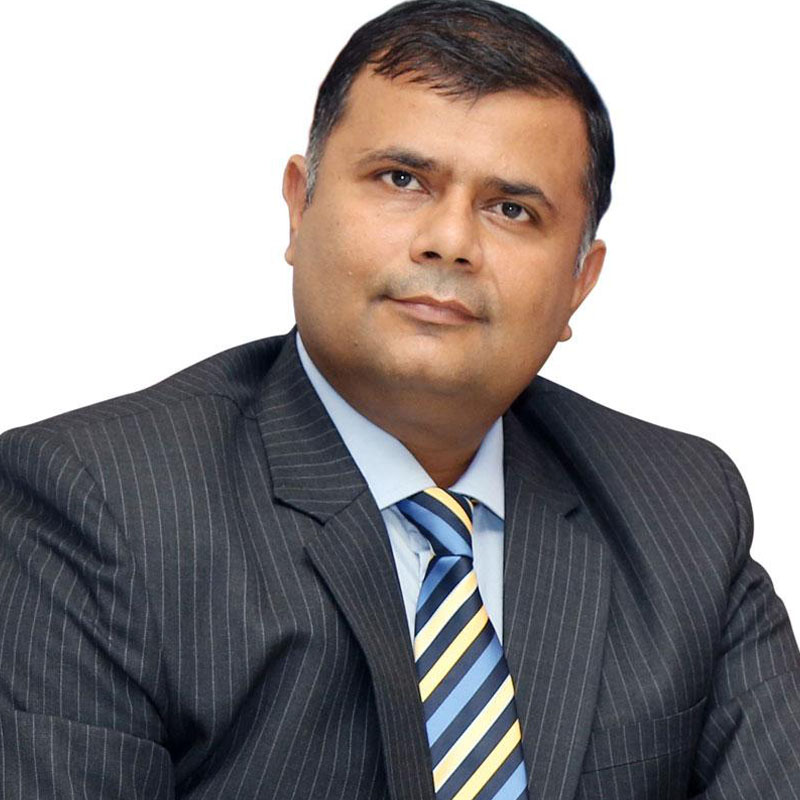
    While commenting on the results, Siti chief business transformation officer, Rajesh Sethi, said, “Our sustained focus on building operating efficiencies at SITI, coupled with an agile and process-driven work force, has driven our EBITDA growth this quarter to Rs 77.5 crore. Our operating EBITDA margin has expanded 2.5 times yoy to 14.8 percent, which is a testament to the successes we have been achieving in this transformation.”

    “We are hopeful about the impending implementation of the new tariff order, which will give our customers the right to choose while improving profitability through cost optimisation,” added Sethi.

    Let us look at the other numbers reported by Siti

    Total expenditure increased by 17.6 percent yoy to Rs 402.11 crore from Rs 341.97 crore. Finance costs reduced by 13.1 percent yoy to Rs 31.26 crore from Rs 35.97 crore. Carriage sharing, pay channel and related costs rose by 18.2 percent yoy to Rs 1170.62 crore in Q3 2018 from Rs 144.40 crore. Employee benefits expense in the quarter under review increased by 18 percent yoy to Rs 22.50 crore from Rs 19.07 crore in the corresponding year ago quarter. Other expenses grew by 16 percent y-o-y in Q3 2018 to Rs 92.79 crore from Rs 79.96 crore.

  • Punjab govt to levy entertainment tax on cable, DTH

    Punjab govt to levy entertainment tax on cable, DTH

    MUMBAI: The Punjab government is cracking down on errant cable ops by getting them to be accountable. It has added entertainment tax to cable and DTH connections. All local gram panchayats and state bodies will collect Rs 5 per month on a DTH connection and Rs 2 a month on cable TV from operators.

    The cabinet has approved the move. Once the governor gives the nod, the charges will begin from the date of notification.

    The state government aims to make Rs 9.6 crore via the DTH tax from 16 lakh connections and Rs 36.96 crore through 44 lah cable connections.

    Interestingly, no entertainment tax will be levied on other sources of entertainment such as cinemas, multiplexes, and amusement parks.

    The government is cracking down on cable mafias by getting them to clearly account their subscriber base. In the limelight is Fastway Transmission which is the mega player in the state and had the support of the previous Punjab government.

    When GST was introduced on 1 July, the power to collect entertainment tax was withdrawn from the state governments. This has now been given to the panchayats and municipalities by amending the seventh schedule of the constitution. Instead of requiring the centre to approve, The Punjab Entertainment and Amusements Taxes (Levy and collection by local bodies) Act 2017 was amended to get approval at the state level itself.

    Also read: 

    Supreme Court stays order on entertainment tax by LCOs

    M&E items get GST relief from 15 November 2017

    Entertainment tax: MSOs & LCOs must collect & pay, HC halts Delhi ‘action’

  • Recalibrating India’s DTH sector after Airtel DTH-Warburg Pincus deal

    Recalibrating India’s DTH sector after Airtel DTH-Warburg Pincus deal

    MUMBAI: For long, investors have given India’s DTH sector a pass-by saying the TV distribution sector (read cable TV) is rickety and has been digitised in a hurry to meet government mandates without too much thought and planning of the back end. Often times, DTH players have been bundled with the cable TV lot and considered a not-a-very-attractive investment.

    That was until last week.  The announcement that Warburg Pincus was picking up 20 per cent stake in Airtel Digital TV (DTH) -with around 14 million subscribers – for a staggering $350 million at a valuation of $1.75 billion or Rs 11,204-odd crore should surely come as a shot in the arm for those distributing TV and running DTH platforms.

    Right now, there are six of them: Tata Sky, Dish-Videocond2h, Airtel Digital TV, Sun Direct, DD Free Dish, and the floundering-now-waiting-to-be-resuscitated Reliance Big TV.

    Most of them have been burning cash. Folks have been saying there are too many DTH operators in India. They have pointed towards the UK that has one, the US that has just two.  And questions have been asked if India has too many vanity plays in both television and distribution.

    A senior investment analyst unwilling to be identified says last week’s Warbug Pincus vote of confidence in DTH highlights how upbeat the sector looks as an investment destination and how different it is from India’s cable TV scattered majors.

    It also raises questions around whether the Videocon management could have got a better deal when it decided to merge Videocon d2h with DishTV.  Was Videocon d2h a tad undervalued? After all, the difference in EBITDA between Airtel and Videocon d2h alone runs into Rs 170-odd  crore only. For FY 2016-17, Videocon d2h had an EBITDA of Rs 1018.1 crore as against Airtel DTH’s Rs 1222 crore. For fiscal 2017-18, Videocon d2h’s half yearly EBITDA stood at Rs 529.5 crore as against Airtel’s Rs 681.7 crore. Dish TV’s EBITDA for FY 2016-17 was Rs 972.8 crore, while it’s half yearly EBITDA for fiscal 2017-18 was  Rs 417.3 million.

    At the time of the merger, the combined entity’s valuation was placed at $2.7 billion for around 27 million subscribers of Dish TV and Videocon d2h. Combined the two would account for 16 per cent of the total 175 million hoseholds in India with around 2.80 million HD household and a combined proforma  EBITDA of  Rs 1826.2 crore. Going by the Airtel-Warburg numbers, the value of Dish TV-Videocon d2h should have been closer to $4 billion.

    Another senior industry observer opines that the Airtel-Warburg Pincus deal has opened up investors’ eyes all over the world about the growth potential in India’s DTH vertical.  The deal is probably one of the first-ever major large-ticket private equity placement deals in Indian DTH.

    What has changed in the past one year? And what is exciting investors to look at the sector differently?

    FreeDish to go away

    Indications are that the DD Free Dish threat is dissipating with the implementation of the new policy that the government has put in place with no renewals of slots taking place for private players. Industry professionals point out that the government is seeking to enhance the reach of its own channels on Free Dish.

    “It had deviated from its mandate–which was to reach out to all the rural areas where there are no transmitters and make the government’s voice reach those people. DD National was hurt because they gave slots to private GEC channels. The national channel’s viewership and revenue have since plummeted,” says one of them. “From Rs 1,400 crore in ad revenue, the figures came down to Rs 500-600 crore, out of which Rs 400 crore is from government enforced spending on the pubcaster. Its ad revenue is a measley Rs 200 crore and no private producer wants to produce for DD as it does not have the reach. With DD FreeDish likely to stop trading in bandwidth and not airing GECs, a window of opportunity for private DTH players to offer another option to rural and smaller town audiences will open.”

    Cord cutting – a hyped-up phenomenon

    Another senior industry researcher says that the phenomenon of cord-cutting has been hyped up by new entrants in the OTT space such as Netflix and their backers from the analyst community and investors in both the US and India.

    “Comparing the US and India is absolutely fraught with disaster. Even in cord cutting,” she says. “India has a very deep urban population and a very deep rural populace. The TV in the living room is still the centre piece of Indian homes; it is also moving into the bedroom. There will be no cord cutting; we will have both in India, the Netflixes as well as TV subscriptions.  Jio, too, has expanded the consumption of mobile bandwidth and nowhere is it posing a threat of cord cutting.”

    The impact of TRAI’s tariff order, GST and introduction of transparency

    The DTH industry has an estimated 90 million subscribers; the net figure is 65 million and the active is 52-55 million. The net sub number includes those subs who have been suspended for up to 120 days for non-payment; whereas actives are those who have subscribed and paid to for between zero and 30 days.

    Industry veterans point out that DTH operators are better placed to implement the TRAI’s new tariff regime which has been held up in courts.  One of them points out that the higher content costs that they have been paying to broadcasters will simply go away. “Our infrastructure allows us to permit millions of subscribers to unsubscribe online very easily and watch the channels and the shows they want to,,” says he. “Because of transparency our costs will go down with the execution of the tariff order.”

    Cable TV content costs, however, he points out are set to go up as under declarations of sub numbers to the tune of 50-60 per cent by LCOs to MSOs have been rampant. “After digitisation and GST, every connection is being reported to the MSO as everybody in the chain has to pay taxes. With this, the broadcaster will understand how many subscribers are actually there and he will charge transparently per sub basis. Based on that the fixed deals will happen,” he says.

    That should be good news for industry observers and naysayers who have been waiting like Godot for India’s TV content and distribution to unlock its true potential and value.

    Also Read:

    Warburg Pincus to buy 20% in Airtel’s DTH arm

    Reliance Big DTH to take FTA route under new management?

    STB import duty doubled to 20%

  • Focus Group to launch Kannada news channel

    Focus Group to launch Kannada news channel

    MUMBAI: Focus Group is now focusing on south India with its upcoming news channel Focus TV Kannada News.

    According to the sources, the channel will launch by the end of this year which will have 24×7 news programming.

    The channel will be available on all major cable and DTH operators. It will be a FTA (free-to-air) channel. The format of the channel will be MPEG4/DVBS2. The frequency rate is 4054 Hz. The testing for transmission service has started on INSAT4A satellite at 83 degrees east. The news channel will get the satellite transponder downlink signal from eight feet to 16 feet C-band dish antenna.

    Focus NE (formerly called NE TV) was the first 24-hour satellite channel of North-East India, which covered the eight states of the region. It was also the first earth station and teleport of the northeast.

    The group formerly had Focus News, Focus Haryana, Focus Bangla, Focus Odisha, Focus NE, Focus Hi-Fi under its umbrella. Some of the regional channels like Focus Haryana, Focus NE and Focus Hi-Fi were shut down a couple of years back.

    Neeraj Sanan was first roped in as the group CEO in 2014 and quit in 2015. After that its managing editor Shailesh Kumar who joined in the same year, quit around the same time as Sanan.

    Also Read: 

    Focus Group changes channel packaging for more focus 

    Focus News managing editor – regional Shailesh Kumar quits   

    Focus Bangla aims to capture its audience

  • Siti bullish on broadband: Rajesh Sethi

    Siti bullish on broadband: Rajesh Sethi

    Mumbai: Despite uncertainty in many quarters, these are interesting times for people following the multi-system operator (MSO) industry. Recently, Siti Networks Ltd (Siti) released its Q2 and H1 results for 2017-18, reigniting the hope for growth in the industry. Announcing growth in operating EBITDA, the company outperformed the competition in set-top box (STB) seeding by adding nearly 2.3 million boxes in the first half of the year as against near flat growth by other companies in the industry.

    For Siti, this forms the bedrock for future growth as monetisation of these boxes in H2 will bring incremental revenue benefit to the company. In the cable television distribution business, STB seeding, monetisation of seeded STBs, and collection efficiency are the core performance metrics.

    The broadband space is exploding with Reliance Jio having announced its impending entry and trial runs across various cities in the country. Siti is looking to leverage existing infrastructure and improve extraction levels. The company will look at a number of business models to ascertain what is the right fit in this business.

    In an email interaction, Rajesh Sethi spoke to Indiantelevision.com on a wide range of issues. Here’s what he had to say:

    What is the direction you are taking to turn around the fortunes of Siti Networks?

    We are one of the largest distribution platforms in the country and are working on the ethos of ‘demand more.’ We will leave no stone unturned to deliver the best to our customers while ensuring enhanced shareholder value. On the video front, this is going to be the last year of major seeding as we consolidate our market dominance. The focus will be on improving monetisation, collection efficiency, and prepaid implementation. We are well prepared to execute the tariff order as soon as the judgment is passed on the same.

    On the broadband front, we are looking to leverage our existing infrastructure and improve extraction levels. We will be selective in our broadband expansion and will look at a range of business models to ascertain what suits us best. The focus is on four pillars of people, process, product, and corporate governance with emphasis on compliances, systems and processes, harnessing inbuilt operating leverage, and making the organisation more agile and lean.

    What is your strategy to prune losses in the time to come?

    In the video business, seeding to capture the opportunity offered by digitisation, subsequent monetisation improvement, and enhanced collection efficiency will be the key priorities. These factors will form the bedrock for strong sustainable growth and ensure recurring cash flows.

    Broadband is a field that we are quite bullish on. Uptake in broadband is dependent on 4G pricing, which definitely is now looking to increase. Broadband growth will come from primarily form Tier 2 and 3 cities rather than the bigger cities. Broadband revenue performance will also see uptick with increasing customer base, churn, and fault rate control.

    Cost optimisation is a major lever in coming back to profitability and we are looking to rationalise our bandwidth, general and administrative, content, and HR costs to drive increased savings. The tariff order is expected to come by end of this fiscal and will substantially moderate content cost growth; content cost is expected to become a pass through.

    These actions are expected to contribute towards improved recurring cash flows and better profitability.

    How soon do you see a revival in the cable industry?

    The revival you speak of is already underway as Phase 3 and 4 monetisation has started happening and this will only move up, eventually being at par with monetisation levels in Phase 1. The bulk of Phase 4 seeding will be completed this fiscal and you will see strong subscription revenue growth lead by volume and monetisation increases. Thereafter, it is a steady state perpetuity business.

    The tariff order will moderate content cost growth as customer choice will dictate the content they view. At the same time, broadband is a big opportunity that will spur long-term growth and drive convergence. The industry is in a transitory phase and things will improve significantly in a year’s time.

    Why hasn’t digitisation helped the dynamics of the industry as envisioned?

    Ever since the announcement of digitisation, there were multiple delays due to a variety of factors. Phase 3 and 4 deadlines were delayed by more than a year due to multiple petitions, regulatory uncertainty, and other factors. As we speak, the tariff order is pending in the Chennai high court. Most DPOs incurred huge capital expenditure in upgradation of the network and purchasing STBs. The costs were incurred upfront and, therefore, monetisation got delayed.

    In addition to these delays, regulatory guidelines such as MIA/SIA also faced delays in enforcement. You are seeing this turbulence as we are in transition right now…once things settle down, you will witness strong recurring cash flows. The content delivery value chain will become more streamlined and the balance of power will shift to the DPOs.

    How important is it to have a lean workforce? Do you have a retrenchment strategy in place?  

    We have been focusing on areas where we can bring efficiencies into the system and one such effort in right sizing was executed in Q2 of 2017-18. This is a regular practice in most mature industries and allows the organisation to become leaner and agile. With this, we have given more latitude to our current employees by adding joint responsibilities in the video and broadband space in terms of delivery. We are focussed on employee growth with regular training sessions being held to upgrade skill sets and clearly delineating what is expected from them. Recently, we also rolled out our seven core values that define our DNA and influence behavior. We want to inculcate and sustain a high-performance culture in this company. These are the guiding principles in our efforts to take SITI to greater heights.

    What is your vision for Siti Networks?

    We are the leading content provider in the country and will continue to sustain our preponderance in video. Simultaneously, broadband is a natural transition for an entity like ours. Customers have already shown indication towards moving to non-linear on-demand entertainment and we expect broadband penetration to see a huge increase. Hence, we are moving towards delivering non-linear content. This will be the future of content consumption and Siti is preparing earnestly for it.

    We are also working with our technology partners to bring innovative products to the market. Our vision is that we should be at the forefront of providing world-class technology to customers.

    How do you see the company evolving over the next two years?

    Siti will have consolidated its primary growth lever of video with strong recurring cash flows taking place. We will be offering substantial HD, OTT, and other VAS services. In addition, we intend to push the pedal on broadband and ensure we have sizeable presence in the high-speed-wired broadband space. We could go in for some inorganic expansion as well.


  • FB and BloombergQuint collaborate for live biz news service

    FB and BloombergQuint collaborate for live biz news service

    MUMBAI: BloombergQuint has collaborated with Facebook for its live video streaming service ‘BQ Live’. It is a digital business news live streaming service that includes comprehensive programming on a daily basis from global and domestic markets coverage to views from the most influential newsmakers in business, economy and finance.

    BloombergQuint had launched this service last month at the Bloomberg India Economic Forum, which featured India’s finance minister Arun Jaitley and a host of other policy makers and corporate leaders.

    Speaking on the collaboration, BloombergQuint managing editor Menaka Doshi said, “Being multi-platform and digital-first has been core to our DNA since inception and this partnership epitomizes that philosophy. This will help us extend the reach and engagement of BQ Live appreciably, bringing high quality business content to decision-makers, entrepreneurs and young corporate audiences.”

    Facebook India head of news partnerships Varun Gupta said, “With over 200 million people using Facebook monthly, more and more people are logging in on Facebook to consume content that best informs and entertains them. We are happy to see Bloomberg|Quint use our platform to build immersive experiences for their viewers via such an engaging format as Facebook Live. With Facebook Live, BQ’s viewers will be not only able to consume news real-time but participate in the storytelling via interactive features such as comments, reactions, and questions.”

    Starting with pre-market cues and news, the service provides consumers with live insights into the markets throughout the day, culminating with perspectives and analysis in the evening. The live streaming service is available on www.bloombergquint.com and top social platforms, and pending regulatory approvals, will debut on leading cable and DTH platforms.

    Since going Live on facebook, BQ Live has already seen more than to 2 million video views for its top shows. The Live programming begins with Daybreak at 7 am. On weekdays, followed by power-packed markets programming through shows like Indian Open , The F&O show, Hot Money, #AskBQ, Power Lunch, Countdown and then perspective driven content through shows like Primetime and the Primetime Debate.

    BloombergQuint currently reaches more than 2 million monthly users across its on-site and partner platforms. During Budget 2017, BloombergQuint delivered over 50 million in reach, including 15 million video views and more than 25k shares on social media, ahead of several legacy players in the space.