Tag: cable TV

  • GTPL Hathway revenue up for Q1

    GTPL Hathway revenue up for Q1

    BENGALURU: Indian multi-system operator and internet service provider GTPL Hathway Limited (GTPL) reported 15.7 per cent increase in total income for the quarter ended 30 June 2018 (Q1 2019, quarter or period under review) as compared to the corresponding year-ago quarter  (y-o-y) Q1 2018. GTPL’s total income in Q1 2019 was Rs 303.55 crore, for the corresponding year ago quarter it was Rs 262.41 crore.

    GTPL’s consolidated profit after tax (PAT) was almost flat (declined 0.9 per cent) y-o-y in Q1 2019 to Rs 12.57 crore from Rs 12.69 crore in Q1 2018. Consolidated total comprehensive income for the period reduced 1.3 per cent y-o-y to Rs 12.50 crore from Rs 12.66 crore. Consolidated operating profit (EBITDA) excluding other income increased 18.6 per cent in Q1 2019 to Rs 77.49 crore (26.1 per cent of operating or op revenue) from Rs 65.35 crore (25.4 per cent of op revenue) in the previous fiscal.

    GTPL has two segments – cable TV business and internet service. Cable TV business operating result increased 9.9 per cent y-o-y to Rs 10.17 crore in Q1 2019 from Rs 9.26 crore in the corresponding quarter of the previous year. Operating revenue of GTPL’s cable TV business increased 17.4 per cent y-o-y to Rs 260.93 crore from Rs 222.18 crore.

    GTPL’s internet service operating revenue in Q1 2019 increased 2.6 per cent y-o-y to Rs 35.98 crore from Rs 35.07 crore. Internet service segment’s operating results for Q1 2019 declined 30.2 per cent y-o-y to Rs 2.40 crore from Rs 3.44 crore in the corresponding quarter of the previous year.

    Let us look at the other numbers reported by GTPL Hathway

    Consolidated total expenditure increased 17.2 per cent y-o-y during the quarter under review to Rs 283.11 crore from Rs 241.49 crore in Q1 2018. Pay channel cost in Q1 2019 increased 17.8 per cent y-o-yto Rs 126.44 crore from Rs 107.37 crore in the corresponding quarter of the previous year. Other operational costs reduced 15.4 per cent y-o-y in Q1 2019 to Rs 21.48 crore from Rs 25.40 crore in Q1 2018.

    Employee benefits expense in Q1 2019 increased 18.6 per cent y-o-y to Rs 35.32 crore from Rs 29.78 crore in the corresponding quarter of the previous fiscal. Finance costs increased 57.2 per cent y-o-y during the quarter under review to Rs 16.12 crore from Rs 10.26 crore. Other expenses in the period increased 23.3 per cent y-o-y to Rs 36.19 per cent in Q1 2019 from Rs 29.36 crore in the corresponding quarter of the previous year.

  • SC to hear Star India petition on TRAI tariff order late August

    SC to hear Star India petition on TRAI tariff order late August

    NEW DELHI: The Supreme Court today listed for 28 August the special leave petition filed by Star India and Vijay TV against a tariff and inter-connect orders of regulator TRAI that had been given a go-ahead by the Madras High Court.

    The TRAI tariff orders, first contested in Madras High Court by the petitioners, were cleared by the Chennai court with certain riders after hearings that continued almost over 16 months in front of two benches of the court.

    Though the petitioners were  unavailable for comments, a legal eagle explained that the very fact the Supreme Court has allotted a day for hearing the petition of Star India and Vijay TV, which basically revolves around copyright and why the regulator doesn’t have jurisdiction over such issues, highlights the fact that the judge doesn’t want to take a decision in a hurry.

    The next date of hearing of the case in the apex court on 28 August 2018 is few days before the deadline kicks in for filing of new inter-connect agreements by stakeholders of the Indian broadcast industry.

    After the Madras HC had given a thumb up to TRAI tariff order, and both the petitioners and the defendant (TRAI) had filed caveats in the Supreme Court, the regulator had bowled a googly saying that its tariff order would come into effect from 3 July 2018 as all judicial compliances had been completed. 

    “Having complied with the judicial mandates in the matter,  the Telecommunication (Broadcasting and Cable) Services (Eighth) (Addressable Systems) Tariff Order, 2017 and the Telecommunication (Broadcasting and Cable) Interconnection (Addressable Systems) Regulations, 2017 as upheld by the Hon'ble Madras High  Court and the Telecommunication (Broadcasting and Cable) Services Standards  of   Quality  of  Service and  Consumer  Protection (Addressable Systems) Regulations, 2017 come into effect from 3rd July 2018,” the regulator had said in a statement pointing out that all timelines mentioned in the original order should be adhered to immediately.

    According to TRAI, implementation of the new regulatory framework will “bring in transparency”, enable provisioning of affordable broadcasting and cable TV services for the consumer and, at the same time, “would lead to an orderly growth of the sector”.

    Keep tuned in for another episode of this legal saga, which started to air sometime in 2016.

  • Netflix outperforming traditional TV, YouTube in the US

    Netflix outperforming traditional TV, YouTube in the US

    MUMBAI: Netflix is outperforming traditional TV in the US. It has reached the top spot among platforms for watching entertainment on TV leaving traditional cable and broadcast television networks as well as YouTube and Hulu behind. A recent survey of US consumers by Wall Street firm Cowen & Co. has revealed the fact.

    The survey conducted in May included 2,500 US adults. The participants were asked which platforms they use most often to view video content on TV. 27 per cent of the total respondents choose Netflix. Other sources of entertainment like basic cable, broadcast and YouTube stood at 20 per cent, 18 per cent and 11 per cent respectively.

    More importantly, millennials give Netflix higher preference. 40 per cent of adults aged 18 to 34  prefer the platform most often to view video content on their TVs. Only 17 per cent of them use YouTube, 12 per cent basic cable, 7.6 per cent Hulu and 7.5 per cent broadcast.

    “Over the long term, assuming [Netflix] is able to continue to increasingly offer great content, this lead clearly bodes well for further value creation,” Cowen & Co. analysts led by John Blackledge wrote in a research note as quoted by Variety.

    Other than US, Netflix is trying to strengthen its foothold in other countries too. In India, it has recently launched Lust Stories that has been critically acclaimed. It’s also being very bullish about its original content. The company hopes to add five million international subscribers at the end of this quarter.

    “Owning a leading international content-production footprint and ramping relationships across the talent ecosystem should prove beneficial to Netflix’s ability to increase production in those markets, much of which is produced at a lower cost than similar content produced in Hollywood,” the Cowen & Co. analysts wrote.

    Also Read:

    Netflix CCO Ted Sarandos says India is ‘TV starved’

    Netflix announces new Indian original film ‘Lust Stories’

  • TRAI says b’cast & cable tariff, inter-connect orders come into effect 3 July

    TRAI says b’cast & cable tariff, inter-connect orders come into effect 3 July

    NEW DELHI: The Telecom Regulatory Authority of India (TRAI) today issued a statement stating that its tariff order for the broadcasting and cable sector will come into effect from 3 July 2018 as judicial compliances have been complied with.

    “Having complied with  the  judicial  mandates  in  the  matter,  the Telecommunication (Broadcasting and Cable) Services (Eighth) (Addressable Systems)  Tariff   Order, 2017 and  the Telecommunication (Broadcasting and Cable) Interconnection (Addressable Systems) Regulations, 2017 as upheld by the Hon’ble Madras High  Court and the Telecommunication (Broadcasting and Cable) Services Standards  of   Quality  of  Service and  Consumer  Protection (Addressable Systems) Regulations, 2017 come into effect from 3rd July 2018,” the regulator said in a statement pointing out that all timelines mentioned in the original order should be adhered to immediately.

    Star Tv and Vijay Tv had moved Madras High Court against the TRAI tariff order late 2016 and after protracted hearing the court finally gave its final judgement earlier this year. Subsequently Star and the regulator had both filed caveats at Supreme Court. Meanwhile, Tata Sky, Airtel Digital Tv had filed petitions in Delhi High Court on matters relating to the tariff order and the case is still pending a judgement or direction.

    According to TRAI, implementation of the new regulatory framework will “bring in transparency”, enable provisioningof affordable broadcasting and cable TV services for the   consumer and, at the   same time, “would lead to an orderly growthof the sector”.

    Some of the important activities and timelines are as under:

    #The  Telecommunication (Broadcasting and Cable)  Services (Eighth) (Addressable Systems) Tariff Order, 2017: Declaration ofMRP and nature of channels by broadcasters within 60  days; declaration of network capacity fee and  distribution  retail price  by distributors (DPO)  within  180   days; reporting by broadcasters within 120  days.

    # The Telecommunication (Broadcasting and Cable) Interconnection (Addressable    Systems) Regulations, 2017:    Publication     of     Reference Interconnect Offer (RIO) by   broadcasters   within 60   days; publication of referenceinterconnect offers by distributors within 60 days; Signing of the interconnection agreements within 150 days;

    # The Telecommunication (Broadcasting and Cable) Services Standards of   Quality of   Service ·and Consumer  Protection (Addressable Systems) Regulations, 2017:  Migration of the subscribers to the new framework within 180  days; Establishment of customer care center, website, consumer care channel and publication of manual of practice within 120 days.

    It would be interesting to see how the original petitioners react to the latest TRAI salvo. The regulator and petitioners were not available for immediate comments.

    ALSO READ:

    Third Madras high court judge gives TRAI tariff order thumbs up

    Star files caveat in Supreme Court on TRAI tariff order

    TRAI tariff order’s impact on the industry

    Decks cleared for TRAI tariff order implementation as HC declines stay

  • Obit: Remembering InCable’s Ram T Hingorani

    Obit: Remembering InCable’s Ram T Hingorani

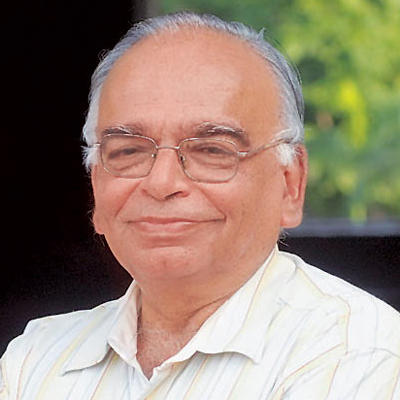
    MUMBAI: “Hi I am Ram Hingorani,” said the squeaky but very amiable voice. I looked around and saw this short bespectacled man dressed in a safari suit, with his hair slicked back. “I am here to show you around and I am with the media business of the Hindujas.”

    The time was the mid to late nineties and I was at the Hinduja office in Worli, Mumbai, just diagonally opposite the Haji Ali Dargah and next to the NSCI to meet up with the group of young men that had set up InCable – the Hinduja foray into the cable TV business.

    He was kind, gracious and over welcoming to a fault, Ram. He then went on to tell me how he had worked at The Times Of India for almost 30 years, retiring if I am right as a general manager or something like that. He then told me about being involved with the Ambanis in the nineties and the acquisition and relaunch of the quickly aborted Observer of Politics and Business and the Sunday Observer. He finally hopped onto the Hinduja group which had expanded into India by acquiring Gulf Oil, Ashok Leyland, apart from other companies.

    He talked about the group moving into the business of media by introducing newspapers, magazines, TV stations, cable TV networks, among other initiatives.

    The Hindujas had formed Induslnd Media & Communications company, which in turn would float four subsidiaries – In Cablenet, In Vision, In Movies and In Print. In Print was slated to publish magazines for specific niche markets, beginning with What’s In, a city entertainment and leisure guide which hit the stands and was distributed to its cable TV subscribers. RTH was in charge of In Print, which ran for a few years and then was phased out.

    He was the Hinduja man as they shopped around for their media ambitions reaching out to the existing media houses along with Sudheendra Kulkarni, the then vice-president of the Hinduja group’s media wing.

    Of all the ventures only one has survived the turbulent media times: the cable TV venture and part of the credit for that must go to RTH as he used to be called. He often played foil to the four musketeers as they were labeled– Yogesh Radhakrishnan, Jagjit Singh Kohli, Yogesh Shah, and Ram Punjabi –by working as a mediator between the Hindujas and them, easing out thorny issues. 

    Along with them, he expanded InCable into 14 cities over 10 years. With the network set up, he moved out, new executives replaced him and he went back to the Ambanis’ Reliance Communications in a bid to set up a triple play venture using the existing infrastructure of independent cable TV operators.

    RTH then retired in 2008 and lived a relatively sedate life – though he mixed around with the cable TV trade from time to time handing out advice – until he passed away on 24 May 2018.  

    The industry came out singing his praises. Said Ashok Mansukhani who currently runs InCable: “He was a giant of a man. He also helped ‘corporatise cable’ and was very hands-on in a world of armchair CEOs.”

    Added Dubai based president & CEO Mediastream FZE (an independent channel and content distribution company)  Rohinton Kapadia: “RTH was always positive even in the face of severe situations at critical times in our cable business. Having worked closely with him for many years I found him to be an inspiration for all of us and an invigorating leader at InCable. We all looked up to him as more of a father figure than our boss.”

    Like the rest of the cable TV trade, Indiantelevision.com sends out condolences to his family. And may his soul rest in peace.

  • GTPL revenue up as subs base, ARPU increase in fiscal 2018

    GTPL revenue up as subs base, ARPU increase in fiscal 2018

    BENGALURU: As mentioned by us earlier, Indian multi-system operator and internet service provider GTPL Hathway Ltd’s(GTPL) consolidated total revenue for FY 2018 (fiscal 2018, yearunder review, year ended 31 March 2018) had increased 18.2 percent as compared to the previous year (FY 2017). The company’s investor presentation for FY 2018 says that its active cable TV subscriber base in fiscal 2018 increased 1.42 million (0.142 crore) in the year under review to 7.4 million (0.74 crore) from 5.98 million (0.598 crore) in the previous year. The company says that it seeded 1.8 million (0.18 crore) digital set top boxes in the FY 2018. In FY 2018, GTPL’s cable TV digital paying subscriber base increased by 2.07 million (0.207 crore) to 7.0 million (0.7 crore). 

    Average revenue per user (ARPU) in phase II, phase III and phase IV by 6.25 percent, 1.64 percent and 1.96 percent respectively during the quarter ended 31 March 2018 Q4 2018 as compared to the quarter ended 31 December 2017 (Q3 2017). Phase-wise ARPU increased in FY 2018 as compared to FY 2017 as follows: phase I increased to Rs 103 from Rs 100; phase II increased from Rs 95 to Rs 105; phase III increased from Rs 54 to Rs 62; phase IV increased from Rs 41 to Rs 52.

    Over 38 percent of the company’s subscriber base in phase IV areas, which for GTPL has seen the highest increase in ARPU during FY 2018, both in terms of absolute rupees and in terms of percentage growth. Arising from the above, share of GTPL’s cable TV business to revenues and profits has gone up. 
    Please refer to the figure below

    public://g1_0.jpg

    Further, the company says that it has added 40,000 broadband internet subscribers in fiscal 2018, taking its broadband subscriber base to 0.28 million (0.028 crore). The company’s broadband ARPU remained the same in FY 2018and FY 2017 at Rs 480. Hence broadband revenue will have increased to an extent on account of the increased broadband subscriber base in fiscal 2018. The company has revealed that data consumption per user has increased from 38GB per month in March 2017 to 62 GB per month in March 2018.

    The company’s consolidated total income increased 18.2 percent during the year under review to Rs 1,113.35 crore from Rs 941.83 crore in the previous year. GTPL’s consolidated operating revenue for fiscal 2018 at Rs 1,091.27 crore was 20.2 percent higher than the Rs 907.70 crore for FY 2017. Other income reduced 35.3 percent in FY 2018 to Rs 22.09 crore from Rs 34.13 crore in FY 2017.

    Please refer to the figures below the company’s total revenue breakup in FY 2018 and FY 2017:

    public://g2_0.jpg

    public://g3.jpg

    Consolidated operating profit (EBIDTA) excluding other income increased 29.6 percent in FY 2018 to Rs 383.12 crore (35.1 percent of operating or op revenue) from Rs 295.71 crore (32.6 percent of op revenue) in the previous fiscal. Consolidated EBIDTA including other income increased 30.7 percent to Rs 314.43 crore (28.2 percent of total revenue) in FY 2018 from Rs 240.56 crore (25.5 percent of total revenue) in the previous year. 

    However, the company’s profit numbers still depend upon placement and activation revenue. It is heartening to note that the shares of placement and activation revenue to total revenue in FY 2018 as compared to FY 2017 have gone down as is obvious from the above figures.  If one were to calculate EBIDTA without placement and activation revenue, the company has incurred a lower operating loss of about Rs 35 crore in FY 2018 as compared to an operating loss of about Rs 72 crore in the previous year.

    The board of directors of GTPL has mooted dividend of Re 1 or 10 percent per equity share of face Rs 10 each subject to approval from shareholders for the year ended FY 2018. The outstanding capital of GTPL as on 31 March 2018 was Rs 112.463 crore.

  • GTPL Hathway board moots 10% dividend for fiscal 2018

    GTPL Hathway board moots 10% dividend for fiscal 2018

    BENGALURU: The board of directors of Indian multi-system operator and internet service provider GTPL Hathway Limited (GTPL) has mooted dividend of Re 1 or 10 per cent per equity share of face Rs 10 each subject to approval from shareholders for the year ended 31 March 2018 (FY 2018, year or fiscal under review). The outstanding capital of GTPL Hathway as on 31 March 2018 was Rs 112.463 crore.

    GTPPL’s consolidated profit after tax (PAT) more than doubled (increased 114.9 per cent) in FY 2018 to Rs 56.40 crore from Rs 26.24 crore in FY 2018. Consolidated total comprehensive income for the year increased 118.3 per cent to Rs 56.72 crore from Rs 25.98 crore. Consolidated operating profit (EBITDA) excluding other income increased 29.6 per cent in FY 2018 to Rs 383.12 crore (35.1 per cent of operating or op revenue) from Rs 295.71 crore (32.6 per cent of op revenue) in the previous fiscal.

    GTPL has two segments – cable TV business and internet service. Cable TV business operating result more than quadrupled (increased 302.6 per cent) to Rs 39.65 crore in FY 2018 from Rs 9.85 crore in the previous year. Operating revenue of GTPL’s cable TV business increased 21.7 per cent to Rs 947.87 crore from Rs 778.85 crore.

    GTPL’s internet service operating revenue in FY 2018 increased 13 per cent to Rs 143.40 crore from Rs 126.85 crore. Internet service segment’s operating results for fiscal 2018 increased 2.2 per cent in FY 2018 to Rs 16.75 crore from Rs 16.39 crore in the previous year.

    Let us look at the other numbers reported by GTPL Hathway

    The company’s consolidated total income increased 18.2 per cent during the year under review to Rs 1,113.35 crore from Rs 941.83 crore in the previous year. Consolidated operating revenue for fiscal 2018 at Rs 1,091.27 crore was 20.2 per cent higher than the Rs 907.70 crore for FY 2017. Other income reduced 35.3 per cent in FY 2018 to Rs 22.09 crore from Rs 34.13 crore in FY 2017.

    Consolidated total expenditure increased 12.3 per cent during the year under review to Rs 1,009.34 crore from Rs 898.79 crore in FY 2017. Pay channel cost in fiscal 2018 increased 15.3 per cent to Rs 440.61 crore from Rs 382.11 crore in the previous year. Other operational costs increased 1.7 per cent to Rs 90.77 crore from Rs 89.29 crore.

    Employee benefits expense in FY 2018 increased 16.3 per cent to Rs 126.12 crore from Rs 108.44 crore in the previous fiscal. Finance costs reduced 32.2 per cent during the year under review to Rs 39.35 crore from Rs 58.08 crore. Other expenses in the period increased 16.5 per cent to Rs 141.42 percent to Rs 121.44 crore in the previous year.

    Also Read :

    GTPL Hathway board okays additional stake buy in subsidiaries

    GTPL Hathway reports higher numbers and flat q-o-q ARPUs


  • Aim to take phase 3 ARPU to phase 1 value: Den Networks’ SN Sharma

    Aim to take phase 3 ARPU to phase 1 value: Den Networks’ SN Sharma

    MUMBAI: Den Networks has an ambitious plan charted out for its cable and broadband business for the coming two to three years. In an interview to Bloomberg Quint, Den Networks CEO SN Sharma highlighted the company’s plan to increase revenue and subscription.

    For the multi-system operator (MSO), digitisation of phase III in India was almost over 10 months ago and certain parts of phase IV were left by all operators. Sharma said that it may take six to eight months to wind this up. “In the last 12 months, we seeded close to five million set-top boxes (STBs) in phase III. Today, we have a tall figure of 11.5 million digital homes out of which 8.5 million are paying,” he said.

    The average revenue per user (ARPU) for Den has gone up substantially over the last two years. Even tier I and II towns had low ARPU of Rs 120 and Rs 80-90 a year ago. Two years ago, the ARPU for tier I and II towns was Rs 60-70 and Rs 50-60, respectively. Today, the ARPU is at Rs 144 for phase I and Rs 112 for phase II. Sharma also said that the company was able to make up 50 per cent of the subscription revenue from the cable operators from phase I while this was 40-45 per cent in phase II markets.

    Phase III ARPUs are still low at Rs 76 out of the ground rate of Rs 150-175. “As we move forward, cable operators know they have to catch up with phase I ARPUs and will gradually increase it with subscription and, accordingly, the same will be shared with us,” he added.

    The aim is to take the current ARPU of phase III up to Rs 144 in two years’ time. “The phase I journey has been successful and a confident path has been set. There is no reason this Rs 76 doesn’t move to Rs 140 level in 2-2.5 years’ time,” he said adding that 50 per cent of the digital universe was phase III and IV. Phase IV ARPU stands at Rs 66.

    Den is talking to broadcasters and peers to increase subscription levels in phase I areas and Sharma said that discussions were actively progressing. “There is headroom to increase this [subscription]. You will see changes in bouquets and packages offered so overall revenue can be taken up,” he shared.

    One of the ways to do this will be by focussing on HD STBs now. The target for the next 12 months is to convert 10 per cent of its SD base into HD, which will allow the MSO to add another Rs 60-70 per box. Another way is by gradually increasing the number of boxes seeded in phase IV that is currently at the rate of 40,000-50,000 a month.

    The company has a system to ensure that all reported boxes are activated. When a box doesn’t yield payment for more than three months, it is removed out of the declaration and considered a dead box. Here, Sharma lauds the system for being as efficient as telecom operators that withdraw service  if a subscriber doesn’t pay.

    The entrance of players like Jio, Airtel and Vodafone has definitely changed the broadband game for the company and Sharma admits this. Den’s broadband ARPU is currently Rs 550 with a speed of 50 mbps and unlimited data. He compared it to telcos who offer just 1 gb data a day with best case speed of 9 mbps.

    Over the years, data consumption on its platform has increased from 20 gb two years ago to 60 gb last year and is hovering at 80 gb today. “There is a data explosion courtesy Jio, Airtel and Vodafone. We are consciously aware of it and so we talk of unlimited data in high speed,” he said.

    Much of its broadband business is concentrated in Delhi with 2 lakh subscribers. However, the tariff war pulled down its ARPU to Rs 600. But the same in Kanpur is Rs 800. The plan is to increase subscribers by 6 lakh in three years taking the total to about 8 lakh.

    Sharma is confident that the entire business needs external funding since it is witnessing healthy growth in subscription and ARPU and no subsidy is being offered on HD boxes. Even the broadband business has been fibre infrastructure. About Rs 100-120 crore will be required for the coming three years, which will be managed through internal accruals.

    Also Read :

    Subscription revenue drives up Den’s PAT

    Den Networks appoints Himanshu Jindal as CFO

    TDSAT rules in favor of DEN Networks, directs ZEE entertainment to provide channels on RIO basis


  • Dual LCN helping consumers, says KCCL’s Shaji Mathews

    Dual LCN helping consumers, says KCCL’s Shaji Mathews

    MUMBAI: Kerala Communicators Cable Ltd (KCCL) CEO Shaji Mathews believes dual local channel numbers (LCN) is helping consumers and that its fate should be left to the market.

    2017 saw many channels, especially news broadcasters, raising the issue of channels broadcasting themselves on two LCNs thus creating biased ratings in their favour. Their contention was that the channel gets overarching visibility for viewers. “I don’t see any problem in dual LCN and why the government is restricting dual LCN. They need to rectify the rating system if they see some issues in the rating of a channel. Dual LCN is helping the consumer and we should leave it to the market to decide,” Mathews told Indiantelevision.com in an interaction.

    The structure of the Indian cable and satellite TV distribution market is evolving, led by digitisation of cable network mandated by the government. The Kerala cable industry has benefitted from the digitisation process with over 5000 cable operators and 50 lakh active subscribers.

    KCCL is an initiative of independent cable TV operators in Kerala under the guidance of Cable Operators Association (COA). COA is an umbrella union of local cable operators all over Kerala. KCCL has around 25 lakh active subscribers according to Mathews. The digitisation in the state was complete in March 2017.

    “In Kerala, the majority of the market is with KCCL and Asianet Cable. Apart from this, there are about a dozen small cable operators. The size of the state’s cable industry is around Rs 100 crore,” says Mathews.

    Mathews shares that the overall revenue has gone up because pay subscribers have increased. “The ARPU (average revenue per user) remains the same after the shift to digital from analogue, which is below Rs 200 in Kerala,” Mathews reveals.

    He says that small cable operators didn’t complete the digitisation on time because of various reasons such as non-availability of STBs and expecting the dates to be postponed.

    For KCCL’s first project-Kerala Vision Channel-raised a share capital of Rs 1.5 crore in 2006. The channel today covers 20 lakh homes in Kerala. Now its share capital is enhanced to Rs 10 crore with the approval of Registrar of Companies, SEBI and other government authorities. The capital outlay for the second major project is Rs 8.5 crore, 50 per cent of which has already been raised from the existing shareholders.

    There is already a cumulative investment of Rs 500 crore in the cable TV industry in the form of equipment, networking, studios and other infrastructure owned by individual cable TV operators all over the state with a consolidated turnover of Rs 250 crore per annum.

    Mathews lashed out at broadcasters who indulge in discriminative pricing. “To keep the competition going, the big broadcasters give their channel feeds to small operators for very low rates which forces us to negotiate and accept their terms and conditions.”

    The Telecom Regulatory Authority of India (TRAI) had clarified that a channel can only be present at one LCN number and the landing page would be considered as a separate one which is not allowed and TRAI has the right to investigate and take action.

  • GTPL launches high-speed internet on GPON FTTX technology

    GTPL launches high-speed internet on GPON FTTX technology

    MUMBAI: GTPL Hathway, a cable TV and broadband service provider in India, has launched its high-speed broadband service in Ahmedabad on GPON (gigabit passive optical network) FTTX (fibre to the X) technology. The company has upgraded its network to GPON FTTX technology to meet consumer demand and has started providing internet connections of 40 mbps and 100 mbps plans with no data restriction in the price range of Rs 635 to 763 per month.

    “GTPL has been making continuous enhancement in its technological capabilities and deploying most advanced available technology in cable and broadband industry. Our deployment of the latest GPON FITX technology has enabled us to provide a unique offering of high speed ‘no data restriction’ internet connectivity. This offer is a game changer and GTPL is proud to bring this to its valued customers,” said GTPL Hathway managing director Aniruddhasinhji Jadeja.

    The company has launched annual and half-yearly subscription. Currently, the services launched are restricted to Ahmedabad only but there are plans to progressively launch in other key cities of Gujarat.

    “With the launch of our new broadband plans, for the first time, customers in Ahmedabad will get ‘Sach mein unlimited’ – a unique combination of high-speed connectivity at a reasonable price with no data restriction whatsoever. The technology can provide up to 1 gbps if the customer so demands,” added Jadeja.

    Also Read:

    GTPL Hathway pockets Rs 480-mn Gujarat govt contracts

    GTPL Hathway declares maiden dividend on higher numbers for FY-17

    GTPL Hathway reports higher numbers and flat q-o-q ARPUs