Tag: cable TV

  • MIB amends Cable TV Rules for redressal of broadcast-related complaints

    New Delhi: The Centre has amended the Cable Television Network Rules to provide for a three-layer statutory mechanism for the redressal of consumer’s complaints relating to the content broadcast by TV channels.

    The Cable TV Networks (Amendment) Rules, 2021 was notified in an official gazette on Thursday.

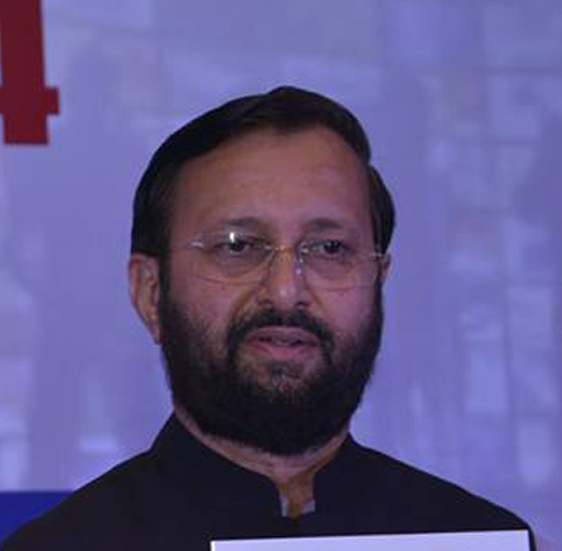
    “The @MIB_India has by amending the Cable Television Network Rules, 1994, developed a statutory mechanism to redress citizens’ grievances & complaints against programmes of TV channels. The @MIB_India has also decided to recognize Statutory Bodies of TV channels under CTN Rules,” tweeted information and broadcasting minister Prakash Javadekar. 


    At present, there is an institutional mechanism by way of an inter-ministerial committee to address grievances of citizens relating to violation of the Programme/Advertising Codes under the Rules. Similarly, various broadcasters have also developed their internal self-regulatory mechanism for addressing grievances. “However, a need was felt to lay down a statutory mechanism for strengthening the grievance redressal structure. Some broadcasters had also requested for giving legal recognition to their associations/bodies,” said the ministry of information and broadcasting (I&B) on Thursday.

    The amended rules stipulate a three-layer grievance redressal mechanism — self-regulation by broadcasters, self-regulation by the self-regulating bodies of broadcasters and an oversight mechanism by the central government. The rules require each broadcaster to establish a grievance or complaint redressal mechanism, appoint an officer to deal with the complaints, display the contact details of their grievance officer on their website or interface and be a member of a self-regulating body.

    As per the rules, any person aggrieved by the content of a programme of a channel may file his/her complaint in writing to the broadcaster first. “The broadcaster shall, within 24 hours of a complaint being filed, generate and issue an acknowledgement to the complainant for his information and record. The broadcaster shall dispose of the complaint and inform the complainant of its decision within 15 days of receipt of such complaint,” the rules state.

    The complainants can file an appeal with the self-regulatory body of broadcasters if they are not satisfied with the decision of the broadcaster’s grievance redressal officer or the decision of the broadcaster is not communicated to them within 15 days. The complainant may prefer an appeal to the self-regulating body, of which the broadcaster is a member, within 15 days therefrom.

    The self-regulating body will be required to dispose of the appeal within 60 days of the receipt of the appeal, convey its decision in the form of guidance or advisory to the broadcaster, and inform the complainant of such a decision within 15 days. “Where the complainant is not satisfied with the decision of the self-regulating body, he may, within 15 days of such decision, prefer an appeal to the central government for its consideration under the oversight mechanism,” said the rules.

    The Advertising Standards Council of India (ASCI) will hear complaints regarding the violation of the advertising code, take a decision within 60 days of the receipt of a complaint and communicate the same to the broadcaster and the complainant.

    According to the amended rules, there may be one or more self-regulatory body of broadcasters, provided that every such body shall be constituted by a minimum of 40 broadcasters. The self-regulating body shall, after its constitution, register itself with the central government “within a period of 30 days from the date of publication of these rules, or within 30 days from the date of its constitution, whichever is earlier,” the rules stipulate.

    The government will set up an Inter-Departmental Committee (IDC) to take up the hearing of matters “arising out of the appeals against the decisions taken at Level I or Level II of the grievance redressal mechanism”. It will also hear complaints referred by the central government.

    According to the ministry, the notification is significant as it paves the way for a “strong institutional system for redressing grievances” while placing accountability and responsibility on the broadcasters and their self-regulating bodies.

    At present there are over 900 television channels that have been granted permission by MIB all of which are required to comply with the Programme and Advertising Code laid down under the Cable Television Network Rules.

  • Cable industry veteran Lt Col VC Khare passes away

    Cable industry veteran Lt Col VC Khare passes away

    KOLKATA: Cable TV expert, retired Lt.Col VC Khare has passed away. He contributed to the cable TV industry in India at different roles for nearly three decades.

    He was a member of the Bureau of Indian Standards (BIS) where he played a significant role in formulating 8 BIS Specification for cable TV hardware. He published over 30 papers on cable television.

    The cable industry veteran was also a part of Broadcast Engineering Consultants India Ltd. (BECIL). During his stint at BECIL, he established the Wireline Broadcasting Division and set up training in collaboration with SCTE UK in India.

    He also worked with renowned brands like Videocon, Reliance Communications. At Videocon, he guided the setting up of d2h earth station for its DTH platform. At Reliance Communications, he set up Reliance Digital DTH platform from concept to service on screen.

    Khare was very vocal about industry issues like DAS implementation, new tariff order roll out. He spoke at different forums to share his expertise with the operators.

    At the early part of his career, he was associated with the Indian army for 24 years. He got his education on telecommunications engineering in the field of military communications from the Military College of Electronics and Mechanical Engineering Secunderabad.

  • Streambox-US Video technology pioneer to enter India

    Streambox-US Video technology pioneer to enter India

    New Delhi : Streambox, the industry leading pioneer in delivering unique IP based video streaming solutions over low bandwidth connections, has announced the opening of a new sales office in Mumbai to address the vibrant post-production markets in India and southeast Asia.

    “We are truly excited to launch in India, one of the largest and most active markets in the post-production and television broadcast industries," said Streambox CEO and co-founder Bob Hildeman. "Streambox products are a perfect fit for India’s rapid growth in media production and associated activities, such as film, post production and broadcast.” 

    Streambox offers end-to-end solutions for remote collaboration across a wide range of workflows, including editorial reviews, colour grading reviews and audio. According to the company, the collaborators can view and hear a live, colour-accurate audio/video stream in their edit suites, at home on cloud-based workstations, or even using an iPad or iPhone. 

    The company has appointed Sanjeev Kr Sinha as the country sales manager for India and southeast Asia. Sinha brings more than 15 years of experience in sales and marketing in the broadcast, cable TV, OTT post-production, and education industries, said the company on Wednesday.

    "We are thrilled to have Sanjeev join our team and taking a leading role in our business expansion in southeast Asia" said Hildeman.

    Sinha added, “I am very excited to work for a global pioneer like Streambox. I see huge potential for Streambox products in the post-production and video market in India and southeast Asia, which is the hub of post-production, broadcasters and film production activity in this region.”

    Streambox has developed optimised technology that can pack functionality like HDR and 12 bit 4:4:4 RGB processing into pixels, and intelligent utilisation of available network paths to achieve higher rates of transport and playback based on its proprietary leading edge ACTL – Advanced Compression Technology Level 3/5 codec and state of the art Low Delay Multi-Path Protocol.

  • HC notice to Karnataka govt, MIB over obscene content in media

    HC notice to Karnataka govt, MIB over obscene content in media

    New Delhi: The Karnataka high court has sought the state government’s response in a public interest litigation (PIL) to issue directions to frame statutory rules to prevent publication of indecent and obscene content as part of the news programme in electronic and print media.

    The court also issued notice to the ministry of Information and broadcasting (MIB) and state police in this regard.

    According to the petitioner, various media houses publish obscene videos and partially blurred nude photographs and videos of several incidents as part of news programmes. Some TV anchors also repeat the vulgar language used in the video clips to make it loud and clear so that the public can understand the language that is used by the compromised individuals, he stated in his plea, as reported by Bar and Bench.

    Though Section 5 of Cable TV (Regulation) Act-1995 provides that no person shall transmit or re-transmit through a cable service or any programme unless such programme is in conformity with the prescribed programme code, there is no definition for programme code, he submitted before the court.

    The petitioner prayed that publication of such content should be made a cognisable offence, which will have a reasonably deterrent punishment. Apart from framing guidelines, he also sought directions to prevent the electronic media from analysing the sub-judice matters before the court and direct the state police not to leak information collected during the course of investigation regarding any case to the press, public or media.

    The matter will be next heard on 7 June.

  • Govt ad spends on print down 51 per cent from last year

    Govt ad spends on print down 51 per cent from last year

    New Delhi: Print publications received a hard wallop with the outbreak of Covid2019 last year – circulation dropped, subscribers cut ties, and revenue dried up as advertisers tightened their purse strings. Now, it has emerged that the government, which is one of the biggest newspaper advertiser, slashed its spends on the medium by more than half during 2020.

    The NDA-led Centre spent roughly Rs 62 crore on print advertisements to publicise its activities and programmes during the pandemic ravaged 2020-21, which is 51 per cent down from last year. In 2019-20, the government’s total ad spend was Rs 128.96 crore.

    The information was shared by union minister for information and broadcasting Prakash Javadekar in the Rajya Sabha on Monday.

    According to the data, the government had spent Rs 430.75 crore in publishing print advertisements in 2015-16, which came down to Rs 366 crore in 2016-17, and increased substantially to Rs 462.2 crore in 2017-18. However, the downward trend began in 2018, when the print ad spends decreased from Rs 301 crore in 2018-19 to Rs 128.96 crore in 2019-20 and further shrunk to Rs 62 crores last year.

    The plummeting ad spends by the government come at a time when the print industry is struggling to survive the pandemic’s severe blow. Print media thrives on advertisement expenditure of industries including e-commerce, automobiles, and BFSI, which were also impacted by the lockdown. Many businesses ended up pulling out advertisements, as part of budget cuts and also due to a drastic fall in the circulation of newspapers and magazines. The prolonged lockdown restrictions forced several publications to limit the number of pages, shut their editions and resort to layoffs .

    Last year, the Indian Newspaper Society (INS) had also raised concerns over the rising newsprint and logistics costs and increasing preference for online content.

    The data shared also showed that the Centre spent relatively less money on advertising its programmes and policies on private satellite and cable TV channels compared to 2017. The overall ad spend on television came down from Rs 123 crores in 2018-19 to 25.68 crores in 2019-20 and just Rs 11 crores in 2020-21. The ad spends on social media remained a miniscule part of the total budget, the data indicated.

    The Bureau of Outreach and Communication (BOC), which acts as an advisory body to the government on its media strategy, undertakes information, education, and communication (IEC) campaigns of the government through its empanelled media platforms as per the policy guidelines.

    Javadekar also informed the Parliament that BOC adopted a media mix approach and it is also using digital cinema, internet websites, SMS, and social media along with print, radio and television advertisements for dissemination. He said that BOC had also conducted an all-India survey – an impact assessment study of multi-media campaigns covering 722 districts to study the impact of the campaigns run on various media platforms. 

    When asked if the government plans to increase the ad spend over the next few years, the I&B minister said, “BOC releases advertisements keeping in view the campaign requirements, target audience, availability of funds, and preferences indicated by the client departments.”

  • VBS 2021: The way forward for linear TV ecosystem

    VBS 2021: The way forward for linear TV ecosystem

    KOLKATA: The debate of over-the-top (OTT) platforms versus pay TV has been centre stage in media and entertainment conversations over the last couple of years. More recently, the subject has died down as the industry reached the conclusion that both linear TV and on-demand TV will co-exist in India for a long time, unlike the markets in the west. But the change in technology and consumer behaviour have definitely thrown challenges at the traditional TV ecosystem. At the Video and Broadband Summit (VBS) 2021, the industry discussed how to stay resilient even amid the flux.

    The summit started with a welcome note by Indiantelevision.com founder, CEO and editor-in-chief Anil Wanvari as the prestigious conference marked its seventeenth edition this year. Back in 2003, when the summit (earlier IDOS) was held for the first time, the industry was much more disorganised. Over the passage of nearly two decades, the industry has gone through multiple changes like digitisation, new price regime etc.

    India has escaped cord-cutting, TV viewing is growing but the industry cannot afford to lean back, Wanvari said. He also cautioned alarm that despite the projections of the Indian pay-TV ecosystem reaching $15-16 billion revenue, it still stands at around $11 billion.

    “Only about 800 million are being served by linear TV. Another 500 million are yet to be served. Traditional TV is definitely strong here but it has come under attack. Broadcasters have to find ways of combating the surge of edgy and almost meaningful content which has recently been brought under the regulation of I&B ministry that is being put out by OTT platforms to hook and retain customers. Now DTH operators, HITS providers, Cable TV players have to find ways of making their operations even more scalable, provide additional services,” Wanvari commented.

    Post the welcome note, VBS 2021 hosted its first panel discussion, moderated by Wanvari, bringing together top executives from broadcasters and distribution platform operators (DPOs). In ‘The leaders speak laying out a profitable future’ session, Indiacast Media Distribution president Amit Arora, Siti Networks CEO Anil Malhotra, Star & Disney India- India & International TV distribution president Gurjeev Singh Kapoor, Travelxp 4K founder & CEO Prashant Chothani, Fastway Transmission & Netplus Broadband group CEO Prem Ojha, and NXTDigital MD & CEO Vynsley Fernandes discussed the industry’s recovery post-Covid2019 and the way beyond.

    The leaders agreed that the industry has come out of the Covid2019 impact and is bouncing back gradually, although there are still some hiccups. “We all had to recast our business models, there were a lot of learnings that happened. One was that the government ensured that cable TV and broadband were treated as essential services,” Fernandes stated. Fastway’s Ojha added that technology took a big leap catalysed by the pandemic situation.

    “Majority of content consumption still happens on DPO level. They were keeping up the service level in the pandemic. I am really amazed to see how all of them were able to put up that spirit to their team that let’s not get frightened, let’s get the connectivity going. DPOs are the real media Covid warriors. This is my learning from the pandemic – that there has to be cross-dependency and there has to be faith between the entire ecosystem, then we are going to have much bigger recovery, much bigger growth going forward,” Chothani said. While the subscription count went down during the crisis due to migration, MN Vyas asserted that the numbers are bouncing back. “We’re looking forward to the good fiscal year 2022,” Arora said.

    Other than a dip in subscriber addition due to the Covid crisis, the broadcasters and DPOs could not undertake any price revision due to the lack of clarity on NTO 2.0. Kapoor said there is now competition in every genre reducing the risk of monopoly, both for broadcasters and MSOs. Hence, the pricing of content should be left with market forces rather than implementing heavy regulations.

    Talking about future opportunities, the leaders agreed that the conversion from SD to HD can be one potential area if communicated properly to consumers. Along with that, wired broadband is another potential growth driver for MSOs as the penetration is very low currently. Even if deep-pocketed players like Jio starts aggressive acquisition, there will still be enough opportunities left for other players given the fact there are only 22 million home broadband subscribers currently, Malhotra noted.

    Along with a robust business model, technology acts as the deciding factor in today’s fast-moving era. The second session discussed ‘Future proofing DPOs on video delivery solutions’ in the presence of NXTDigital group CTO Ru Ediriwira, Asianet Satellite Communications Ltd vice president & technology head Salil Thomas, Broadpeak Business Development vice president  Xavier Leclercq, and Planetcast Media Services founder director MN Vyas.

    Ediriwira said it is important to focus on future proof technology but new technology can come anytime and disrupt the industry despite the precautions. According to her, it is important to keep abreast of current developments and be open to new opportunities. Thomas echoed a similar sentiment, saying every organisation should be ready to adapt to changes, no matter what.

    “I think futureproof is something which is never possible. We have to really look at what is needed –at least what is needed in the next five years. We have to make a sea change in our distribution system. TV has to be more intelligent,” Vyas added.

    The panel also discussed the possibility of IPTV as a solution to simplify the network. Although it needs long-term investment and has not been considered widely, it could be the right direction to look at. Leclercq said, “Everywhere in the cable network, efficiency is reducing, complexity is moving everything to IP based delivery. I think one of the encouraging steps in this direction is seeing some big scale MSO in Europe, US launching IP only set top boxes.”

    The summit rounded off with a session focusing on ‘Customer First’ moderated by PwC India’s partner and leader – media, entertainment & sports advisory Raman Kalra. The panelists included some of the top names from the broadband and cable industry, such as JioFiber president Anuj Jain, Siti Networks ‘ DGM Strategy Anurag Nigam, UCN Cable Network operations head Debashis Mohanty, GTPL Hathway vice president Yatin Gupta and Shemaroo Entertainment broadcasting business COO Sandeep Gupta.

    Kalra opened the session by mentioning how customers today are spoilt for choice when it comes to choosing content to consume, what with video on demand and OTT platforms mushrooming with ever increasing channels of entertainment. Despite demands for content and internet broadband having skyrocketed during the pandemic, the challenge of remaining relevant is a concern for both the service and content provider, as well, in the highly competitive market. So the question arises on how to acquire and retain a customer base with the constantly changing customer demands and behaviour.

    The panel debated the pros and cons of the pandemic and the post-Covid market scenario. Everyone agreed that the period was a huge shot in the arm to the industry as people were confined to their homes with increasing digital requirements for their work, study and entertainment. It resulted in a major spike in cable TV and broadband consumption in the initial months of the pandemic, which flattened out towards the latter half of the lockdown.

    Strategies were discussed on how best to meet consumer needs and ensure customer stickiness. The session concluded by summarising that there’s a need for businesses to invest deeply in knowing and engaging with their customers. Analysing customers’ content consumption data can also lead to rich dividends.

  • #Throwback2020: Cable operators start adapting to stay relevant

    #Throwback2020: Cable operators start adapting to stay relevant

    KOLKATA: Charles Darwin coined the phrase ‘survival of the fittest’ while studying the phenomenon of natural selection in the evolution of life. This concept applies to the inanimate world, too – as exhibited by the Indian cable industry. With changing consumption patterns, advancements in technologies, there are few consistently profit-making cable TV service providers left in the market.

    Then came Covid2019, affecting the supply chain and normal operations. More people turned to online platforms for entertainment, further imperiling the industry. In order to survive, it became vital to adapt – and many large and mid-level cable operators did just that, by innovating business models for sustainability.

    As the countrywide lockdown was implemented, cable TV operators encountered multiple roadblocks. For instance, a part of the workforce in big cities, and students who went back to their hometowns or native villages did not renew their subscriptions. The closure of commercial establishments like hotels and offices also impacted the subscriber base along with financial stress among lower income groups. Due to lack of fresh content on major entertainment channels, live sports content, a number of subscribers downgraded their subscription packs. All of these factors caused a difficult first half of FY21 for consumers.

    The sales of new set top boxes dropped for 75 per cent of cable TV operators during Covid2019, while nearly 84 per cent operators reported a drop in collection, a survey study by INTIN said. And it’s not just for a brief period – 77 per cent multiple system operators (MSOs) expected a decline in revenue in FY21 and some of them even estimated the drop to be greater than 25 per cent.

    Along with subscriber loss, local cable operators faced the issue of payment collection due to restrictions during the stringent lockdown. While it initially led to a drop in revenue, it compelled most MSOs as well as LCOs to adopt digital payment practices. Major MSOs like GTPL Hathway, Siti Networks, IMCL acknowledged that more consumers and local cable operators embraced digital payment options post-Covid2019. However, some of the LCOs who are working on ground also cautioned that the number of consumers paying digitally is still not substantial, albeit the noticeable improvement during lockdown.

    The pandemic has further solidified the need to adopt hybrid boxes among MSOs. Hathway Digital, Den Networks, Siti Networks, IMCL, GTPL Hathway have already launched or are working on rolling out hybrid boxes. Although the roll out has been delayed due to the Covid crisis for some companies, they have set the target of finishing the task within this fiscal itself.

    In addition to providing OTT platforms like Netflix, Amazon, Hotstar on their boxes, foraying into the OTT space could be a big gamechanger for the industry, Intin recommended. Large MSOs often have upwards of 80 local cable channels, which can be readily primed to their own OTT platforms. Currently, only 24 per cent of cable TV players have their own OTT platforms offering pure-play cable content.

    Moreover, the operators who will be able to skinny bundles with an internet connection will thrive in this changing ecosystem. As more people worked from home, attended e-classes, consumed more online content, the demand for high-speed wired broadband has gone up rapidly. The wired broadband sector has continued to grow throughout the year, standing at 21.51 million subscribers as of October. The cable operators have gained from this growth substantially, as all listed MSOs have reported an increase in broadband subscribers.

    But while it is easier for larger players to invest in new technologies, it could be a challenge for the minnows to survive. According to a report from Omid, the number of local cable operators has gone down by 30 per cent between 2015 and 2020. Number of local cable operators is predicted to fall to around 20,000 by 2025, down from about 40,000 in 2019. It also mentioned that consolidation between larger pay TV players like Airtel TV, Dish and TataSky is also possible following the merger of Dish TV with D2H and the acquisition of cable operators Hathway and DEN by Reliance Jio.

    Like other sectors in the media and entertainment industry, cable operators also witnessed some significant changes in regulations. As part of the government’s move to decriminalise smaller offences, the ministry of information and broadcasting (MIB) proposed to remove jail terms for violating Cable TV Networks Regulation Act. Punishments for offences committed under the act would be limited to seizing the equipment of the operator, cancellation of the license, a ban of up to 30 days on the broadcasting of the channel, forcible running of apology scrolls and so on.

    The operators started off 2020 with the amended new tariff order (NTO 2.0) wherein they had to adjust network capacity fee and multi-TV connection charge. In the middle of the Covid crisis, TRAI recommended that all STBs provided to customers must support interoperability and urged the MIB to make it mandatory by introducing the requisite provisions. The viability of the move was questioned and stakeholders warned that it would be a very high-cost operation.

    On the bright side, MIB permitted infrastructure sharing between HITS operators and MSOs, meeting the long-pending demand of the TV distribution sector. The amended guidelines also allow sharing of transport stream transmitted by HITS platforms, between HITS operators and MSOs. As many MSOs across the country are facing a cash crunch, the infrastructure sharing could help them reduce operating expenses.

  • Indian broadcasting & cable TV market to surpass $19 billion by 2026, says report

    Indian broadcasting & cable TV market to surpass $19 billion by 2026, says report

    NEW DELHI: 2020 was packed with unforeseen highs and lows for the Indian broadcasting and cable TV sector. From record viewership, to plummeting ad revenues, to the NTO 2.0 wrangle, the industry is still in a rather precarious position. Despite these challenges, the broadcast and cable TV market, currently valued at $11.61 billion, is expected to reach $19.06 billion by FY2026, states a report by TechSci Research. 

    The India Broadcasting and Cable TV Market report holds favourable regulations, technological advancements and growing investment opportunities as key factors driving this growth. The increasing demand for TV sets, especially in rural India, is also further boosting the market. Moreover, the expansion of the entertainment industry with greater demand for international TV channels and shows will propel the growth of this sector through FY2026.

    In recent times, India has witnessed a surge in active subscriber base with entry of various multi system operators (MSOs). The digitisation of cable TV in the country is at an advanced stage with markets driven by content innovation and product offerings. Direct-to-home (DTH) subscriptions are growing rapidly with increasing per capita disposable income. The increased usage of 3G and 4G services along with an influx of new content creation methods are some other contributors expected to drive the growth of the Indian broadcasting and cable TV market. 

    Increasing disposable income coupled with rising urbanisation has changed the preferences of Indian consumers towards enhanced experience of television viewing. The concept of home theatre has been gaining traction among the new generation, with people always looking for advanced viewing options and latest technologies to better their experience. These factors are expected to fuel growth in the country’s TV and broadcasting market over the next five years.

    Also, there is a rising trend for personalised experience and premium television cable and DTH offerings in India, wherein customers demand personalised channels, picture quality, multiple functionalities in set top boxes, such as a different screen for children, etc. This would likely continue in the coming years as one of major trends for TV and broadcasting industry during the forecast period.

    “Southern region accounts for more than 31 per cent of the demand in India’s broadcasting and cable TV market and the region is expected to continue its dominance in the country during the forecast period as well. Major demand in the southern region is coming from Bengaluru, Kerala, and Karnataka. The area has seen significant developments since the recent years regarding broadcasting and cable technology,” said TechSci research director Karan Chechi.

    India’s broadcasting and cable TV market can be segmented based on type, revenue generation, and region. Based on type, cable TV and satellite accounted for the dominant share as an increasing number of users are shifting towards DTH services from the traditional cable operators, due to high picture quality and affordable prices.

    Some of the major players operating in this segment include Siti Networks, DEN Networks, Tata Sky, GTPL Hathway, Sun Direct TV, Dish TV India, Bharti Telemedia, NXTDIGITAL, Fastway Transmission, and Asianet Satellite Communications, among others.

  • Why last mile monopoly is a roadblock in broadband growth

    Why last mile monopoly is a roadblock in broadband growth

    KOLKATA: Demand for broadband connectivity has existed in India for a while, but recently, calls for better quality of service are growing increasingly strident. While the existing cable TV infrastructure could play a potential role in delivering broadband, last mile monopoly is one of the major factors that prevent the growth of the sector through infrastructure sharing.

    In response to the Telecom Regulatory Authority of India’s consultation paper, one of the largest broadcasters – Star India stated that there is still a problem of last mile monopoly in the cable TV industry arising from exclusive deals between cable TV operators and Resident Welfare Associations (RWA).

    “Following TRAI recommendation on ‘In-Building Access by Telecom Service Providers’ in January, the DoT in November 2019 issued an advisory to all telecom service licensees to share in-building infrastructure to share infrastructure in airports, railway stations, bus terminals, metro lines and hospitals etc. The MIB, as the licensor of all MSOs, must issue a similar advisory for sharing of cable TV operators’ in-building infrastructure and infrastructures within a particular RWA,” Star India said.

    The broadcaster mentioned that 1,600 MSOs and 60,000 LCOs have laid a vast network of copper coaxial and fibre network connecting 8.3 crore households. It suggested that since these are private networks and do not utilise scarce spectrum, the government should exempt cable operators with Internet Service Provider (ISP) license from paying AGR for a minimum period of five years, provided that they operationalise them within six months of obtaining ISP license. According to the broadcaster, this will incentivise cable TV operators to provide broadband services and instantaneously increase wired broadband connectivity from 1.9 crores to around 10 crores.

    Leading ISP Atria Convergence Technologies Ltd also pointed out that there is a huge monopoly in providing cable TV services as the dominant LCO takes over a particular area by tying up with a single MSO and completely stifles the competition by preventing entry of other LCOs and MSOs in the given area.

    “Wired ISPs are seen as a threat by the LCOs and the same usually results in sabotage of network assets of the wired ISPs. If wired ISPs need to actively collaborate with LCOs, then these prevalent practices in cable TV industry should be curtailed and arrangements between ISPs and LCO should be left to market forces,” it added.

  • NXTDigital posts strong Q2 results

    NXTDigital posts strong Q2 results

    NEW DELHI: NXTDigital has posted a year-on-year EBITDA growth of 15.8 per cent at Rs 50.7 crores for the second quarter, an improvement of 2.7 per cent over the previous quarter.

    While revenues remained stable despite the impact of the Covid2019 pandemic, the company posted an EBIDTA of Rs 102.1 crores for the half year ended 30 September 2020, a growth of 8.7 per cent over the corresponding period of the previous year. By laying greater focus on operational efficiency rather than pure revenue growth at the cost of profitability, it was able to improve EBIDTA margins to 21.7 per cent for the half year, compared to 19.2 per cent in the corresponding period of the previous year.

    NXTDigital has not only been able to maintain its subscriber base but grow its video and data businesses, in spite of the serious negative sentiments of the pandemic. The company has maintained its collection efficiency of over 99.5 per cent under its prepaid collection model.

    The board has designated Vynsley Fernandes as media group chief executive officer of NXTDigital with oversight of all the media businesses of the group encompassing cable TV, HITS and broadband. He will be responsible for leading the overall business and operations of the group as it continues to expand across the media spectrum.

    With NXTDigital being the only HITS platform in the country, it’s expected to get a boost from  the sharing of HITS infrastructure with other Multi-System Operators (MSOs) across the country, as recently notified by the ministry of information & broadcasting. The potential for infrastructure sharing or managed services stands at over 69 million cable TV households today – comprising smaller independent and regional MSOs.

    NXTDigital CEO Vynsley Fernandes said “The focus in Q2 was to lay greater emphasis on operational efficiency, rather than pure revenue growth at the cost of profitability. Our strategy was to continue enhancing customer engagement whilst rolling out innovative solutions and driving cross-selling relentlessly. The result is manifested in our key performance indices – where not only has our EBIDTA grown both year-on-year and quarter-on-quarter; but has also seen growth in margins.”

    Going forward, NXTDigital will continue to focus on consolidating and growing its serviced subscriber base, expected to cross 10 million; including onboarding of more than 5 million of managed services customers. It will also continue to drive cross-selling of digital video, broadband and value-added services whilst offering innovative bundled products and packages in diverse geographies.

    The company will also roll out its NXTCONNECT device, which is a single device for customers to access live television channels, OTT content, social and other apps, games & much more, to commemorate the festival season. The launch will be coupled with the rollout of NXTGO, an innovative dongle-type device that can be plugged into an OTT set top box or an Android-based television and provide immediate access to live television channels securely.