Tag: cable TV

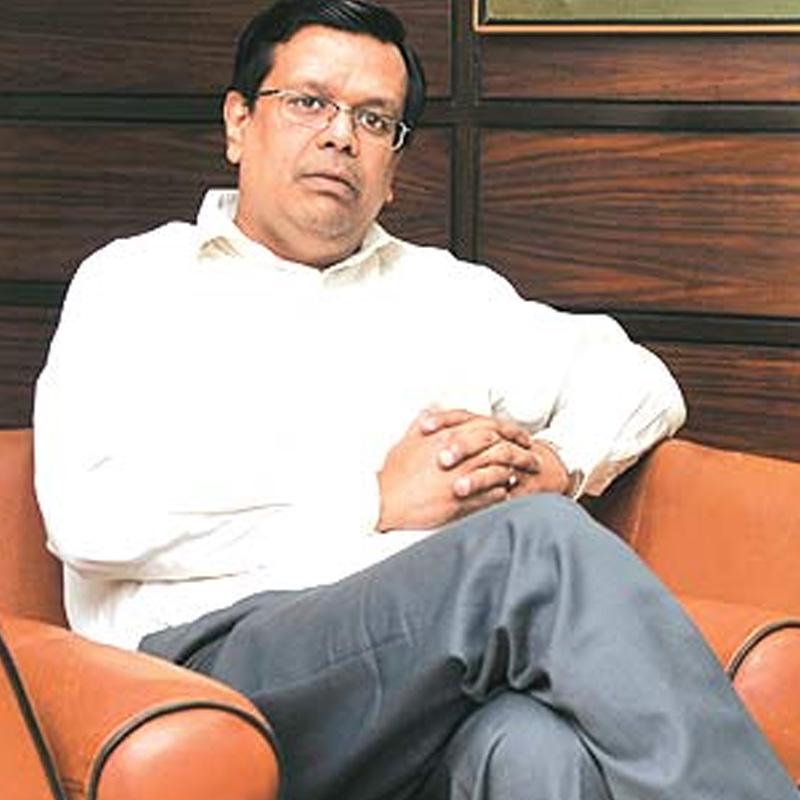
  • ‘Cable TV sector sees rapid consolidation and new competition in 2008’ : Hathway Cable & Datacom MD & CEO K Jayaraman

    ‘Cable TV sector sees rapid consolidation and new competition in 2008’ : Hathway Cable & Datacom MD & CEO K Jayaraman

    Cable TV companies have attracted private equity funding and used it for consolidation and digitalisation. But tight liquidity credit markets, intense competition to woo local cable operators, and rise in cost structures present a challenging 2009, says Hathway Cable & Datacom MD & CEO K Jayaraman

    2008 marked the emergence of new multi-system operators (MSOs) with pan India ambitions. This resulted in intense competition to woo the local cable operators. The year also marked subtantial private equity/mezannine funding to some of the existing and new MSOs. Some estimates say that the combined inflows during the year could have reached about Rs 7 billion.

    The substantial equity inflows resulted in furthering rapid consolidation of the industry with the independent cable operators (ICOs) partnering or entering into joint ventures with the larger MSOs. In fact some estimates put that almost 40 per cent of the total C&S (cable & satellite) homes could be the cumulative universe under the umbrella of the larger MSOs.

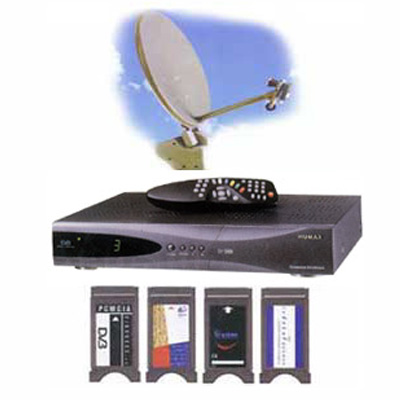
    A welcome fall out of the rapid consolidation and equity flow was the intensive pace of digital cable tv roll out. Incremental voluntary digital cable during the year could have touched one million, based on rough estimates.

    But this was again restricted to selective MSOs. Customers who opted for digital cable enjoyed 150 plus channels at the same price as of analogue. The digital boxes were also subsidised deeply by the MSOs. Digital cable was able to effectively combat the competition from satellite despite the latter companies having huge funding and high decibal advertisements. While the fob prices of cable digital boxes fell, the gain was lost due to 20 per cent rupee depreciation during the year.

    The year also saw spiraling salary costs in the cable TV companies, with each one outdoing the other, even as subscription income lagged. The raged optimism arising out of projected placement fees and new capital infusion fuelled the salary costs and other overheads too.

    Sadly towards the last quarter of the calendar year due to a combination of global meltdown and zero liquidity in the Indian banking system, the companies were sent scurrying for cover and control over these costs. While it may not be easy to cut these fixed costs, the situation can result in further profitability pressure for unorthodox business models in the year 2009.

    The intense competition to woo the local cable operators (LCOs) sucked a lot of funding and, therefore, the roll out of value added services like broadband through cable etc suffered, barring a few whose inherent business model comprise these services too.

    While the year saw rapid consolidation and new competition, sadly the core subscription business was forgotten. Subscription income from LCOs have dipped for the industry as a whole, except for business model where last mile also co-existed, as the chase for territory and placement fees gained predominance. Business models and enterprise valuations were being built around these non-conventional parameters. Cost structures increased rapidly including pay channel costs even as the LCOs dodged the MSOs.

    The last quarter meltdown and liquidity crisis, coupled with slowing down of advertisement income for the channels, did send ominous signals to the MSOs with non conventional parameters. Pressure had started building rather quickly, but the difficult signs are being ignored.

    Overall, the year ended on a sombre mood with a more challenging year 2009 in the offing.
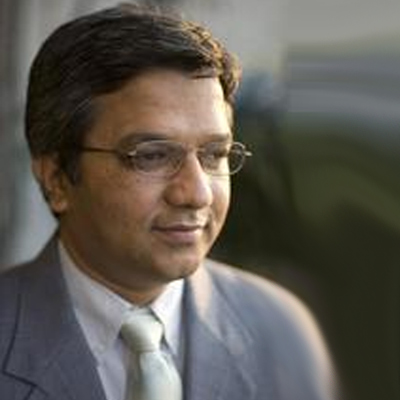
  • ‘We are entering into an era where capital will be scarce’ :  Citi Venture Capital International managing director India region head PR Srinivasan

    ‘We are entering into an era where capital will be scarce’ : Citi Venture Capital International managing director India region head PR Srinivasan

    There may be pressure on Citigroup Inc. to remove the flab with the US government agreeing to infuse $20 billion of capital as part of a rescue package, but Citi Venture Capital International (CVCI) is drawing up plans to make acquisitions at attractive valuations. Out of the $4.5 billion fund, it is yet to invest $3 billion, almost a third of which will pour into the Indian market.


    Though CVCI has made only one media investment in You Telecom, a broadband and cable TV company, it is also eyeing the direct-to home (DTH) and Hindi entertainment broadcasting space.


    In an interview with Sibabrata Das, Citi Venture Capital International managing director India region head PR Srinivasan talks about the opportunities of investing in various sectors including media at a time when capital is going to be scarce.


    Excerpts:

    Being in the midst of an unprecedented global economic turmoil, how comfortable is Citi Venture Capital International (CVCI) in its funding structure to grab buying opportunities in Indian media companies?
    We have a $4.5 billion fund, out of which $3 billion is yet to be invested. We have already invested $500 million in India. We are likely to pump in a further $750 million-$1 billion in this market while the balance will be put in China, Eastern Europe, etc. You Telecom has been our only investment in the media and entertainment sector. But as asset prices come down, we are open to picking up stakes in other verticals within the media sector.

    Have you initiated talks with any of the media companies?
    We see a good investment opportunity in DTH and are talking to one player. We may also start looking at TV channels in the Hindi general entertainment space, if they come at attractive valuations and are managed well. Even if we are headed for a slowdown, the truth is that people will still want entertainment. Since we have already acquired You Telecom, we are not looking at parallel investments in the cable TV sector. We would expand and make further acquisitions through You Telecom.

    Since CVCI has a running investment in a broadband and cable TV company through You Telecom, why is it that you are eyeing a competing distribution platform like DTH?
    There is space for all three forms of carriage – DTH, cable TV and IPTV. No form of distribution is superior or dominates over the other. In the US, both cable and DTH enjoy substantial market shares. The only country which has a single dominant platform is UK where DTH has a content advantage in form of exclusive sports telecast rights. India, however, has a content-neutral policy. The regulatory framework is also in favour of independent distributors and is neutral to broadcasters. The DTH sector also has a 20 per cent equity cap for broadcasting companies.


    The main cost in DTH is advertising. Unlike cable which has a capex requirement in the distribution architecture, DTH doesn’t have a wired cost. If you get scale in DTH, you will become profitable. The expense mix will change with volumes. But in India with so many players getting into the business, not all will get the scale.

    When CVCI bought out British Gas’s broadband business, was the investment attractive because the infrastructure of You Telecom could be used for cable TV service?
    You Telecom had world class network built to FCC standards. We were clear that we would buy this asset and wait for both competition and regulation to fall in place so that this can be developed into a last mile home entertainment network. When the government came out with Cas and DTH became active, digitalisation got a push. For the cable TV business to grow, there was need for competition, the right market, and the right regulation. We are in that environment today. India is in the early stages of having second TV – so we could have a situation where we have both cable and DTH.

    Were you not in discomfort because the cable TV sector has too many players and there is very little of last mile ownership with the multi-system operators (MSOs)?
    In terms of reaching homes, cable with 80 million does much better than telecom. The sector needs to get more organised; it is only a matter of time before this happens. The cable industry in India is a marathon and not a sprint. Though there is a capex requirement and last mile is still not under control of the MSOs, the mix looks good once you have a base of one million digital subscribers.

    ‘For the cable TV biz to grow, there was need for competition, the right market, and the right regulation. India is in the early stages of having second TV – so we could have a situation where we have both cable and DTH

    Why did You Telecom take so long in moving into cable TV service?
    Our efforts to do the video business evolved with the DTH industry. We acquired a 50 per cent stake in Bangalore-based Digital Infotainment, a small-sized cable network, to make our foray into the cable TV business. We also took a majority in Scod18 Networking, an association of cable TV distributors in Mumbai. We have cable TV operations in Mumbai, Bangalore, Vizag and Dharwad in Maharashtra.

    In You Telecom, CVCI has 85 per cent stake. How did you restructure the equity structure as the government allows only 49 per cent FDI (foreign direct investment) in a cable TV company?
    We floated Digital Outsourcing, the company that would handle cable TV business. Tulsi R Tanti and his family members, promoters of Suzlon Energy Ltd, have acquired 49 per cent stake in this company. You Telecom India owns 36 per cent while the rest is held by high net worth Indian individuals.

    How much is You Telecom investing to expand its business?
    You Telecom plans to pump in Rs 4 billion over the next two years to expand its cable TV and broadband business. If we decide to go for Headend-In-The-Sky (HITS), we will require another Rs 1.5 billion. We have 1.3 million cable TV subscribers and expect this to go up to three million. We have seeded 60,000 digital set-top boxes and expect to touch one million in the next 18 months. The cable business will grow through setting up own headends, acquiring networks and forming joint venture partners in different geographies. There is a lot of entrepreneurial talent in the cable community and we want to tap into that.

    Do you have an aggressive plan in acquiring last mile operators?
    The challenge in cable is to get direct points. We bought 5000-7000 points. Our strategy is to own last mile, but all in good time. Our plan is to own a headend and then acquire the last mile. The valuations for last mile were inflated because people thought there was abundant capital available.

    Have the valuations dropped drastically?
    For the last three years, there has been abundant capital and liquidity. Though we purchased at 18-24 months revenue, there were MSOs who bought at 30-40 months turnover. That kind of money is not available; we will not get financing for making purchases like that any more.


    Most of the mid caps have fallen over 80 per cent. The last mile business has to follow along those lines. People are not going to bid prices up. It is only a matter of time before people accept the new world realities. We are entering into an era where capital will be scarce. Business plans will have to evolve accordingly.

    Do you see yourself in an advantageous position because you are sitting on cash at a time when the credit markets are frozen and capital is hard to get?
    Money is not going to be available on tap. This will impact the way the new financial system is going to be reshaped. Every sector will feel the jolt. As new broadcasters need to raise capital, MSOs who have planned carriage revenues over the next 2-3 years to support their business models will find the going very hard. Many of them will have to redraw their plans.


    It is a good time to have cash. For those who are investing now, the returns will be higher than the previous years.

  • CAS: Government to revert to Delhi HC next week

    CAS: Government to revert to Delhi HC next week

    NEW DELHI: The government is likely to revert to the Delhi High Court with a status report on CAS’ rollout early next week even as the Indian Broadcasting Foundation (IBF) has raised several queries on addressability’s efficacy.

    “A senior official of the information and broadcasting ministry admitted that it has to go back to the court with a feedback on CAS, but said it’s timing is still not clear.

    “One month for us would be calculated from the day we received a certified copy of the court order. As on 10 March, a verbal order was passed,” the official said.
    Still, the official also added that the court would have to be apprised of
    the progress on CAS front and “it would be done.” With diverse signals emanating from the industry stakeholders, the government is slightly confused, the official said.

    However, the deluge of facts and figures relating to CAS and various time lines proposed by stakeholders also gives the government some breathing space.

    On 10 March, the Delhi High Court directed the government to implement CAS in Kolkata, Delhi and Mumbai within a month’s time. The judgment came on a petition filed by some MSOs, including INCablenet and Hathway.

    While a large section of the cable fraternity has been pushing for quick
    implementation of CAS, a section of broadcasters and consumer organisations want a certain comfort level before CAS is rolled out.

    IBF AGAINST PRICE CONTROL UNDER CAS

    Meanwhile, the IBF in a submission to the government has said that there should not be any price control in a CAS-enabled regime and the issue of piracy should be addressed as a priority.

    “Under the Trai (sector regulator) recommendations to government for CAS implementation, presented on 1 October, 2004, it was recommended that there should be no price control in addressable markets. In view of this, we believe that for CAS notified areas, there should be no price fixation,” the IBF letter states setting the cat amongst the pigeons (read the cable operators).

    The letter, a copy of which is available with Indiantelevision.com, drops broad hints that pay broadcasters would not give a la carte price for consumers — something that has been in demand for over a year now during confabulations on CAS.

    “Broadcasters are whole sellers to cable operators as the consumer price for cable TV is fixed by the operators,” IBF has said, adding all pending litigations and outstanding dues involving the cable industry must be resolved before CAS is rolled out.

    Hinting that the claims of MSOs and cable ops on availability of set-top boxes might be exaggerated, the IBF goes on to state that effective steps should be taken to ensure that in the notified areas, adequate number of boxes is available with MSOs and last mile operators to cater to the demand.

    “There should be no instance that consumers want to install STBs and
    MSOs/LCOs are unable to provide them. MSOs/LCOs would also need to ensure that there is proper coordination between them and their LCOs. The MSOs/LCOs should provide a detailed STB implementation plan,” the IBF letter says.

    The broadcasters have also urged the government to ban carriage fee, which is demanded by cable operators and also given by most major broadcasters whether free to air or pay.

    “The IBF members are of the view that the government should make sure that cable operators not demand carriage fee from the broadcasters… in view of the fact that they collect subscription revenue from the subscribers,” the letter states.

    Another point raised by the IBF is that since CAS is being mandated by the government, unlike in other countries where market forces bring about its rollout, other addressable systems like DTH, IPTV and broadband should also be similarly mandated to create “a level playing field” for those platforms.

  • MSOs, industry chambers firm up lobbying for entertainment industry on budget


    NEW DELHI: Amidst an overwhelming sense of dismay, all three industry bodies are lining up their lobbies to get the demands of the entertainment and broadcasting industry sewn into the budget, somehow.

    However, the position of sector regulator Trai is not clear so far on this issue and also, the Indian Broadcasting Foundation feels that there is no point in lobbying.


    The major MSO body, MSO Alliance is also gearing up to impress upon the government the need for concessions favouring digitalisation and removing meaningless double-taxation.

    So far, senior executives-industrialists have already met the Finance Minister once but the response to their pleas is not immediately known.

    “There seems to be nothing on the horizon at the moment,” Bobby Bedi, head of the Confederation of Indian Industry‘s entertainment industry committee, told indiantelevision.com.

    “We have already met the I&B minister and he is solidly with us. The problem is the finance minister,” argued another senior executive, saying that “perhaps people do not realise that the industry is poised for a quantum jump.

    “There are immense possibilities in the areas of digital exhibition, outsourcing, post-production, etc., which needs a boost,” Bedi said.

    He revealed that the Federation has already taken up lobbying with members of Parliament on getting some of their crucial demands met.

    Bedi suggested: “We should see some of the concessions coming up, though maybe not necessarily as the final budget provisions, but maybe sometime later in the year.”

    A senior official in the entertainment industry cell of the Federation of Indian Chambers of Commerce and Industry also revealed to indiantelevision.com that they have already started lobbying with members of Parliament, but would not reveal their names, saying: “We have a centralises system,” she said.

    The Associated Chambers of Commerce and Industry in India‘s representative Ajay Sharma said that the three chambers had met the finance minister yesterday already, but would not discuss what the response of the minister was.

    The Telecom Regulatory Authority of India has not decided what course it will take. Responding to a question, RN Choubey, Trai advisor (Broadcasting and Cable Services) told indiantelevision.com: “The MSOs had certain suggestions, so we had sent them the finance ministry, but they had come in late, so the proposals reached late. By then the major formulations in the budget must have been sealed.”

    So is Trai still going to press further and lobby for the demands being taken up by finance ministry? “Nothing is ruled out nor ruled in. What Trai is going to do is for them to decide, and I cannot assume that role.”

    Roop Sharma, Cable Operators Federation of India president said: “We have already held a meeting with Assocham, and we are going to take this issue up seriously, especially digitalisation and bringing down duties and taxes.

    IBF director-finance, Naresh Chahal said: “What do we do with more lobbying? We had sent so many crucial suggestions and are dismayed. This has been the position of the government for the past three years, so I do not think anything will change by lobbying.”

    Chahal said, however, some may have a feeling that broadcasters are all very rich and need no concessions, but that was not true. There are many small broadcasters who suffer immensely and there are so many newer ones coming up who need initial start-up concessions, he reasoned.

    Meanwhile, the MSO Alliance is also firming up its plans and will go with the chambers of commerce and industry.

    Ashok Mansukhani, senior official at Incable and a senior member of the MSOA said: “The government has simply blackballed the issue of digitalisation, completely ignoring even the recommendations of the Planning Commission.”

    He said that MSO and cable TV, as well as broadcasting are a telecom service issue now, with all of the players regulated by Trai. “So we cannot be a service and pay service tax, and then also pay entertainment tax, which the cinema halls do. Where is the level playing field?” Mansukhani demanded to know.

  • Industry vents ire on ‘nothing budget’

    NEW DELHI: In the initial reactions to the 2007-08 budget proposals by Union Finance Minister, the media industry seemed distraught that none of the reliefs it has sought have been considered.

    “There is nothing we had hoped for,” a source in the Indian Broadcasting Foundation told indiantelevision.com. The source pointed out that the Sensex crash pointed to the sentiments of the corporate sector and the media industry could not feel otherwise.
    Both the major commerce and industry chambers, Federation of Indian Chambers of Commerce and Industry, as well as the Confederation of Indian Industry have, meanwhile, said they were disappointed with the budget.

    There were, however, indications, that the industry, especially MSOs would perhaps try and activate the government to meet with their demands in the ensuing period of debate on the budget proposals

    One major news channels told this correspondent that the major thing they had proposed was reduction of customs duty on STBs and components for producing them indigenously, but hopes had been dashed.

    Said India TV CEO Chinatamani Rao, “What could one react to? The IBF had on behalf of the broadcasting industry given several suggestions and nothing has been done on those issues. There is nothing in the budget for the entartainment or broadcasting industry. At best, you can say it is a neutral budget.”

    However, Big 92.7 FM COO Tarun Katial, struck a less strident note when he said, “Reduction in the customs duty works in the favor of business houses. The service tax however needs to reduce… especially since the radio industry is at its infancy and has great employment and media opportunities in the semi-urban and rural markets.

    “Local retail advertisers are at the bottom of the pyramid and they should not be subject to service tax, especially if they have to be enabled to compete with other established / larger players. The benefits that the budget brings to the agricultural sector is very good and with our network spreading across the country and reaching out to 50,000 villages, it is sure to be good for business.

    “Extending FBT on ESOPs requires some analysis and the additional 1 per cent cess on all taxes is sure to burn a hole in some pockets.”

    Radio Mirchi CEO Prashant Pandey said, “There has been nothing specific for the radio industry in this budget. So while it is a growth budget and that is good news for advertising, that is the only thing which brings cheer. I dont think radio was looking at anything specific either. We had asked for a waiver of customs duty in our pre budget memorandum, so that was expected.”

    Arvind Mohan, senior executive vice president of WWIL told indiantelevision.com: “This is a dismal budget. There is nothing in it for us.”

    He opined that at best, the marginal reduction of tax burden on import of digital equipment could be seen as a s sort of a silver line.

    There has been no change in the customs duty for import of STBs, and the service tax, which had been sought to be done away with in this budget, has been slightly augmented, from 12.24 to 12.36 per cent, which is detrimental to the growth of the industry, Mohan felt.

    Stressing that he felt that the dividends distribution tax and the tax on share options for employees would also dampen industry spirit as a whole, Mohan said, “We shall take it up with Trai and also with the Indian Media Group, and lobby with the finance ministry and we hope the government will heed our demands.

    Roop Sharma, president, Indian Cable Operator‘s Federation, said: “Chidambaram wants complete digitalisation of cable TV before the 2010 Commonwealth Games, but what has he done for that? Nothing. I think they want the small industries like cable operators to die out, because they have given no tax holiday for us at all.”

    Senior Trai officials said that they had sent their proposals to the finance ministry some 25 days ago, and “by then the budget procedure might have got a long way through,” indicating therefore, that they were not happy with what has been proposed for the sector.

    The official said that due to certain reasons, he had not been able to look at the exact budget proposals, and would be ready to comment later only.

    Most observers, however, felt that there was nothing in this budget for the media and entertainment industry, but sought more time for giving more considered opinion.

    Trai had strongly proposed that customs duty on import of STBs and their components be reduced to Zero, and service tax be waived. It had called for rationalisation of tax structure to provide for a level playing field for the newspaper and electronic media, but that has not been reflected in the proposals by the finance minister.

  • Impasse over Tamil Channels continues in Bangalore

    Impasse over Tamil Channels continues in Bangalore

    BANGALORE: The impasse over the airing of Tamil channels continues here, the capital of the southern state of Karnataka, with seemingly no end in sight since the Kannada organizations are strongly against broadcast of the same.

    MSOs had stopped telecast of Tamil channels after the verdict on sharing of Cauvery river waters that Karnataka finds unfavorable for it.

    A source in the Karnataka State Cable TV Operators Association reveals that MSOs and cable operators are in favor of restarting airing Tamil Channels, but are facing stiff resistance from Kannada activists. “We fully support the people of Karnataka on this issue, as do the Tamil people based here in Karnataka. Entertainment should be kept away from issues that are politicized. Have Tamil channels on DTH been stopped? Have flights or trains between Tamil Nadu been stopped?” pleads a cable operator. “Cable is reachable and hence threatened,” adds another.

    The Tamil basket in Karnataka consists of around eight or nine channels, depending upon the MSO, area and the cable operator, from a possible bouquet of 11-12 channels. Of these, the Sun Group has five, Raj TV three, Jaya TV two, along with one each from DD and Vijay.

    Currently 2-3 channels are being aired in Bangalore. Sun’s KTV and Star’s Vijay were available in some areas while some had DD’s Tamil channel and other areas had Sun being aired since today, and yesterday. One Sun Tamil channel was switched on in monochrome in some areas.

    Regular Tamil channel broadcast in many areas of the state are on against token resistance from activists, as per information from some districts. However, the situation in some sensitive areas such as Mandya, Mysore and the surrounding areas could not be verified at the time of filing this report.

    The sharing of the Cauvery waters issue has plagued the southern states, with the major protagonists’ being Karnataka and Tamil Nadu since the past few decades. The interim water sharing verdict in December 1991 saw riots break out in Bangalore and the state, with loss of life and property. Even the 5 February verdict saw protests and a ‘bandh’ recently.

    The Karnataka government has yet to file an appeal against the 5 February verdict – they have 90 days to do so.

    Meanwhile, the people of Bangalore, a significant percentage of whom are non-Kannadigas, with Tamils forming a big chunk, are impatient and want entertainment to be kept away from these kinds of issues and enjoy their TV fare.

  • Trai pitches for duty slash on STB components, seeks removal of entertainment tax on cable TV


    NEW DELHI: The Telecom Regulatory Authority of India (Trai) has take up the demands of stakeholders in the broadcasting industry and recommended to the Finance Ministry that there is a need for tax rationalisation. The chief amongst which is abolishing of customs duty on import of components for the local manufacture of STBs.

    MSO sources tell indiantelevison.com that Trai has suggested to the ministry that it should ensure a level playing field in the interest of digitalisation of cable television, which has seen increased demand after the rollout of Cas.

    For the benefit of the consumers, Trai has also suggested that Entertainment Tax be abolished from the cable TV sector.


    Trai has argued, as the MSOs had desired, that this is the only industry in which both service tax and entertainment tax are levied, the latter going to the state governments, and suggested that instead of the extra entertainment tax burden, there should be evolved a system of sharing a part of the service tax with the state governments.

    These sources say also that Trai has for the first time written to the government of the reports the industry has been filing since the middle of January this year, that after Cas rollout, the interest in digitalised TV has vastly increased, and Trai says that there are requests from areas not covered under mandatory Cas for the same system being introduced.

    The issues were discussed in a roundtable between Trai, the MSOs and other stakeholders earlier this month.

    Trai has written to the government, sources requesting anonymity tell indiantelevision.com, that the stakeholders desire rationalisation of tax structure, because greater convergence in broadcast and telecommunication technologies in the near future would result in the distinction between the two services getting increasingly blurred.


    Hence the need for a level playing field, which in turn could not be brought about without required rationalisation of taxation in the two sectors.

    Trai feels that the current additional customs duty of 4 per cent on components of set top boxes and associated items like viewing cards should be abolished, just as has been done for the components and parts of cellular phones and mobile phones.

    The Trai wishlist sent to the MoF, sources say, recommends the complete removal of basic customs duty on imported digital headend equipment from the present 12.5 per cent, to improve penetration in the country as a whole.

    Trai says this is quite in line with the abolition of duty on import of STBs done in 2006.

    The MSOs say that they had desired that though excise duty is currently levied on the transaction value of STBs, which are sold as packaged commodity, in the same manner as mobile phones, televisions and cameras, but wherever required manufacturers may be given the option for the scheme on which excise duty is levied on the basis of MRP, with an abatement of 40 per cent.

    Presently, this is applicable to other packaged commodities, and Trai has sent this as part of the recommendation to the ministry as well.

    In consonance with the wishes of the MSOs and other stakeholders, Trai has also suggested that the telecom department has demanded reduction of excise duty on telecom equipment to 8 per cent, and this same should be applicable to manufacture of STBs.

    The stakeholders had told Trai that this would be necessary because with greater convergence of technologies, it would be tough to distinguish between the services.

    There is another tricky issue on excise duty. MSOs say that the premises of the subscriber where the set top box is deployed should be treated as the extended premises of the service provider and the STBs at the premises of the subscriber be treated as the possession of the service provider.

    This would enable them to avail a set-off of excise duty paid, against its service tax liability.

  • Blackout continues, Karnataka cable ops plan rally

    Blackout continues, Karnataka cable ops plan rally

    BANGALORE: The blackout of Tamil channels by the cable TV trade in Karnataka continues following the Cauvery water verdict.

    At the time of writing, a section of the cable operators was planning to voice their grievance to the authorities. The Karnataka State Cable Operators Association had planned a rally from Anil Kumble circle on MG road to the Governor’s residence on 20 February to hand over a memorandum against the verdict with the expectation of support from all the bodies involved in the cable TV distribution chain, including MSOs.

    A cable operator said that he expected participation from cable ops from the surrounding rural areas of Bangalore and from the interiors of Karnataka.

    Sources from the various associations representing cable operators and broadband service providers say that the black out of the Tamil cable channels was a voluntary decision, later reinforced by ‘requests from Kannada activists’ groups.

    A faction of the cable TV trade said that they were willing to restart the broadcast of Tamil channels saying that “it is the verdict that we are against, not the language, and we have given the longest support to the agitation against the verdict, but now we are willing to restart the Tamil feed.”

    Certain sources reveal that the trade is apparently becoming nervous about any backlash from vested parties and is considering asking for police protection should they go for the latter option. A meeting is expected to be held on 19 or 20 February to decide on the course of action.

    The Cauvery Tribunal verdict has already had its first victim in the form of union minister of state for information and broadcasting M H Ambareesh who put in his resignation from both the union ministry as well as Parliament in protest against it.

  • STB availability key to Cas success

    STB availability key to Cas success

    MUMBAI: Availability of set-top boxes (STBs) is one of the key concerns for the successful roll out of conditional access system, speakers at a workshop on “Cas and Digital CATV” said here today.

    Cable operators should not only look at the price of the boxes but also the quality of features it offers as there is revenue to be earned from the consumers. “While what is being pushed now in India is basic boxes, there is need also to go in for middleware that enables enhanced facilities. The important question to be asked is what the boxes can do. Cable operators will be able to, after all, earn revenues from features like video-on-demand and gaming,” said Technosat managing director Irshad M Contractor.

    The Dubai-based company is prepared to set up a manufacturing facility in India if the demand for STBs pick up. Technosat has boxes ranging from basic to premium features on MPEG-2 and is currently conducting trials on MPEG-4.

    Though multi-system operators (MSOs) are currently importing boxes, several manufacturers in India are keen to come up with local production facilities. “We are introducing 4-5 flavours of STBs that are fully developed in India. The boxes will have personal video recorder (PVR) and digital video recorder (DVR). We are integrating the encryption system with Conax. We are also in talks with other Cas technology providers,” said Surbhi Broadband general manager sales P C Mishra.

    The two-day workshop, which concluded today, was organised by Satellite & Cable TV (SCaT) magazine and attracted over 250 delegates. The focus was on facilitating cable operators to make the transition from analogue to digital cable. The issues covered ranged from digital headends to billing solutions for Cas.

    Speaking on digital headends for simulcasting digital video broadcasting – cable (DVB-C), Peter Batt of Teleste said there was need to offer on demand TV and other value-added services. The third generation headends improved footprint and power consumption while offering unicast/multicast video services and triple play. But the fourth generation IP-centric headend for DVB-C and IPTV combined everything and offered “ultimate flexibility.”

    Earlier SCaT editor and executive director Dinyar Contractor said Headend-In-The-Sky (HITS) would mean rapid digital and Cas roll out as it would reach out to the smallest and far flung last mile operators (LMOs). Even as Cas made it unviable for LMOs to set up a digital Cas headend and offer a large pay bouquet, HITS offered several advantages to them.

    “The transmodulator cost is as low as Rs 2000 per channel and the LMOs can assemble their own, local basic tier. It is economically attractive if the Telecom Regulatory Authority of India (Trai) permits nationwide Cas,” he said.

    SCaT chairman Sudeep Malhotra spoke on uplink and downlink policies, elaborating on the regulatory framework prescribed for the different genres of channels such as news and sports. “There are 164 Indian channels licensed to be uplinked from India. The channels that are registered and allowed to be downlinked into India amount to a total of 54 channels,” he said.

  • Trai not for mandated Cas in rest of India

    Trai not for mandated Cas in rest of India

     MUMBAI: The Telecom Regulatory Authority of India (Trai) feels Cas (conditional access system) should roll out voluntarily rather than be mandated in other parts of the country.

    “We may think of mandatory Cas for the larger metros but in other parts of the country it may not be the best way forward. We haven’t, though, made up our mind on this. We have constituted a small group representing all the stakeholders to suggest on how to take voluntary Cas forward. We realise that Cas has gained momentum and wouldn’t like to miss on that opportunity,” said Trai advisor M C Chaube while speaking at a workshop on “Cas and Digital CATV,” organised by Satellite & Cable TV (SCaT) magazine in Mumbai.

    With some cable operators continuing to transmit unencrypted signals in the Cas areas, the broadcast and cable sector regulator intends to come down heavily on them.

    “We are aware that there are still slippages and there are complaints that encryption have not taken place in some areas. We are going to take action against this as it is at the core of Cas,” said Chaube.

    Reacting to a suggestion from the three multi-system operators (Wire & Wireless India Ltd, Hathway Cable & Datacom and Incablenet) that Cas should be opened up to the other areas of Mumbai, Delhi and Kolkata by April, Chaube said the process needed a certain run-up time. “Cas is not just about three MSOs. The smaller MSOs should be given time to prepare for laying out the digital infrastructure. Consolidation is bound to happen as digitalisation requires deep pockets, but as a regulator we shouldn’t have such a time frame in mind that makes it difficult for the smaller MSOs,” he added.

    Trai would relook at such areas like pricing and a la carte issues in the middle of this year. “We are going to revisit at some of these decisions and take a call whether appropriate adjustments are needed. We would be examining such issues as similar pricing for all genres of channels, a la carte offerings and Rs 77 on free-to-air (FTA) channels,” Chaube said.

    The seeding of set-top boxes (STBs) would touch 500000 in a week’s time out of an estimated cable and satellite home of 1.2 million in the Cas belt. “The average penetration would be 40 per cent. Kolkata is seeing slow offtake because regional channels are popular and they are in FTA mode. Our aim is not to see that boxes are sold but to offer consumers choice through Cas,” Chaube clarified. The penetration percentage though will be clearer when figures are available on the number of homes that have more than one TV sets.

    The next stage of progress would be when consumer forms return to the MSOs and they are fed into the subscriber management system (SMS).

    In case of voluntary Cas, the crucial element was for the broadcasters and MSOs to enter into commercial agreements, he added.

    In a panel discussion, WWIL MD Jagjit Kohli pointed out that Trai should come out with some regulatory framework to facilitate voluntary Cas and Headend-In-The-Sky (HITS). “Broadcasters may not support voluntary Cas. So it would be essential for Trai to define some rules as the momentum for digitalisation should not be lost,” he added.

    Hathway Cable & Datacom MD and CEO K Jayaraman pointed out that cable operators in non Cas areas should be ready to adopt digitalisation which has grown much faster in India than what was being initially preicted.

    Incablenet head Ravi Mansukhani said the seeding process has been successful and the next step for MSOs would be to stop free access of pay channels in phases.