Tag: cable TV

  • Ortel files for Rs 1 bn IPO amid digitisation

    Ortel files for Rs 1 bn IPO amid digitisation

    MUMBAI: After tossing between a public float and a rights issue for nearly two years, Ortel Communications Ltd, Odisha‘s leading multi-system operator (MSO), is gearing up tap the market. And unlike last time, private equity fund New Silk Route will not totally exit the company.

    Ortel has filed a draft prospectus for an initial public offer (IPO) to raise Rs 1 billion to fund development and expansion of cable television, broadband and internet telephony services.

    The public offer also includes an offer for sale by NSR – PE Mauritius LLC to sell, a private equity fund, to sell half of its holding in the MSO. NSR holds 35.15 per cent stake (or 8.18 million shares) in Ortel and is offering for sale 4.09 million shares. As per the agreement with NSR, Ortel was to get listed on the exchanges by March 2012 but could not do so.

    The MSO and the private equity fund are considering a private placement of up to 3.5 million equity shares for about Rs 215 per share to raise Rs 750 million prior to the filing of the Red Herring prospectus. This pre-IPO private placement would set the benchmark for fixing the price band for the Ortel public issue to be conducted on a book building basis.
    If the private placement goes through, the MSO will reduce the offering – both fresh shares and offer for sale — in the IPO proportionately, while at the same time ensuring that the post-IPO equity share capital is held by the public (non-promoter).

    A preferential issue of 0.9 million shares was made to promoters last in April 2010 at Rs 79 per share and 16,650 shares to NSR at Rs 105 per share in August 2012.

    As of 30 September 2012, Ortel had outstanding debt of Rs 1.51 billion with respect to the secured facilities availed by it from certain banks and financial institutions.

    As of September 30, 2012, 87.81 per cent of Ortel’s customers are based in Odisha, and its revenues are primarily derived from the sale of cable television and broadband services in Odisha. It has expanded to the states of Andhra Pradesh, West Bengal and Chhattisgarh over the last five years.

    “We plan to scale up and expand our business operations in these states. We also plan to expand our business beyond our current areas of operations. Our growth strategy may involve identification of potential high-growth areas, future strategic acquisitions and partnerships,” Ortel said.

    Ortel’s business model entails control over the ‘last mile’ which requires significant capital investment. The MSO said in fiscal years 2009-10, 2010-11, 2011-12 its loss after taxation was Rs 37.38 million, Rs 172.96 million and Rs 181.36 million, respectively. Its loss after taxation for the six months ended 30 September 2012 was Rs 128.77 million, which is 71 per cent of the loss in the whole of 2011-12. The company had a net negative cash flow of Rs 218.12 million in 2011-12.

    The company also operates a teleport at Bhubaneswar. It uplinks certain channels of Odisha Television Limited, one of the group companies of Ortel, from the teleport. Both Teleport and digital satellite news gathering (DSNG) services are ancillary to Ortel’s core business and accounted for 2.41 per cent of its total income, for the six month period ended 30 September 2012.

    Ortel’s revenue generating units (cable TV, broadband and internet telephony subscribers) have grown to 480,328 in September 2012 from 319,749 in April 2010.

    The MSOs total income has grown to Rs 1,211.07 million in 2011-12 from Rs 785.31 million in 2009-10 at a CAGR of 24.18 per cent, while its profit before depreciation, interest and tax has increased to Rs 374.75 million in 2011-12 from Rs 214.66 million in 2009-10, a CAGR of 32.13 per cent.

    Ortel said, “The focus of our growth strategy has been to acquire cable television subscribers of MSOs and LCOs. Since
    April 1, 2010 to September 30, 2012, we have acquired 161,285 cable television subscribers through acquisition of 259 MSOs/ LCOs.”

    Ortel also plans to further enhance its digital cable services by offering more value-added services such as pay-per view, digital recording devices, mosaic viewing, and interactive educational offerings.

    Also read:
    IPO gone sour, Ortel eyes rights issue & PE funding

  • Trai asked to expedite views on govt entities in cable TV after Jayalalitha letter

    Trai asked to expedite views on govt entities in cable TV after Jayalalitha letter

    MUMBAI: The Information & Broadcasting ministry has asked the Telecom Regulatory Authority of India (Trai) to expedite the process of re-examining granting of Digital Addressable System (DAS) licence to a government or government-owned entity.

    The move comes in the wake of Tamil Nadu Chief Minister J Jayalalitha writing to Prime Minister Manmohan Singh to expedite the matter of granting DAS licence to the state government-owned cable distribution company Arasu Cable TV Corporation, which has been hanging fire for more than five months.

    "There is a larger question. I am aware of the concerns raised by the Tamil Nadu Chief Minister. The Members of Parliament have also come and met me. That is why we have requested the TRAI chairperson to expedite their consideration… so that we can take a conclusive decision at the earliest," I&B minister Manish Tewari said.

    "We have referred the matter back to the TRAI for reconsideration as to whether the state government or the central government entities should be allowed in the broadcasting or the distribution business," Tewari added.

    Arasu, the dominant MSO in Tamil Nadu, applied for DAS licence on 5 July but is yet to get the licence as the government is mulling whether or not to grant broadcasting or the distribution licences to government-owned entities.

    The government has till date issued DAS licence to 11 MSOs in Chennai.

    While acknowledging that Arasu was granted a license in 2008, he said that there was a recommendation from Trai which doesn‘t allow state government or their instrumentalities to enter distribution or in the broadcasting business.

    Arasu has already placed orders for the supply of Set Top Boxes (STBs), Conditional Access System and Subscriber Management System and erection of Head-End at a cost of about Rs 500 million.

    Arasu, which was lying defunct under the DMK regime, was revived by AIADMK government after it stormed to power in April last year.

    It commenced cable TV services in all the 31 Districts of Tamil Nadu on 2 September, 2011 barring Chennai, which was a conditional access system area.

    Arasu Cable is providing 100 channels to the subscribers at a cost of Rs 70 per month per subscriber. It has 23,000 local cable operators in its network with a subscriber base of six million.

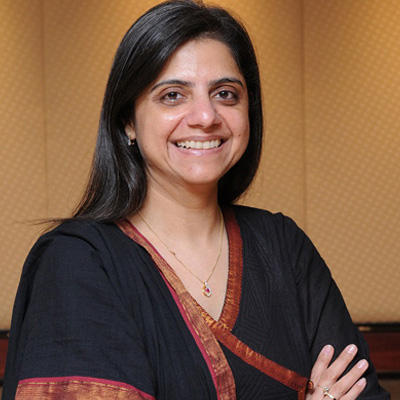
  • ‘Segmentation in kids TV genre makes biz sense in digital era’ : Viacom18 EVP & business head – Kids Cluster Nina Elavia Jaipuria

    ‘Segmentation in kids TV genre makes biz sense in digital era’ : Viacom18 EVP & business head – Kids Cluster Nina Elavia Jaipuria

    Kids channels, bogged down in an analogue cable TV environment, suddenly find space to grow. Segmented channels is the new mantra. After launching an action and adventure channel Sonic in 2011, Viacom18 has launched another dedicated offering in the form of Nick Junior, a preschool channel targeted at 2-6 years.


    Nickelodeon‘s move follows Disney‘s foray into the preschool space and Zee‘s entry into the kids broadcasting space with the launch of its edutainment channel ZeeQ. The common thread between the three channels is that they are pay-driven, unlike the earlier ad supported models.


    Nick Jr. makes its arrival at a time when India is moving towards mandatory digitisation of cable networks.


    In an interview with Indiantelevision.com‘s Javed Farooqui, Viacom18 EVP & business head – Kids Cluster Nina Elavia Jaipuria shares her enthusiasm about why she is bullish about the preschool segment and the impact that digitisation will have on the kids TV genre.


    Excerpts:


    Preschool blocks had existed on kids channels. Now we are seeing full-fledged channels being launched targeting preschoolers. How has the business climate changed?
    The biggest change is digitisation. We are seeing that happen now. The segmentation in the kids TV genre makes more business sense now because we will have transparency. Subscription revenues will also increase.


    Does digitisation make more sense for segmentation in the kids TV genre primarily because of carriage being corrected or you see a substantial gain in subscription revenue as well?
    It‘s both. It will allow us to try very focussed segmentation which we could have not done in analogue cable TV environment. Today in digital, we can segment as much as we can. Carriage payouts will no longer be a deterrent and pay revenues can only grow. So we are all riding the wave of digital right now and hoping that while we cater to need gaps, we also make business sense.


    That is not to say the launch of Nick Junior is a sudden development. Since I started working with Nickelodeon, I always wanted to bring Nick Jr. to India. But then it had to make business sense for everyone.


    Are we in a situation where full-run preschool programming on a channel is not yet commercially viable?
    I don‘t think so.


    Why then did BBC shut CBeebies in India despite knowing that digitisation of cable TV networks is happening?
    Actually, I am very suprised that it happened so abruptly. I am sure they have their reasons for moving out of the country.


    Why do you then have this dual slot (Nick Jr. and Teen Nick) on Nick Jr.?
    We could have gone either way — done a 24-hour channel or have the model of preschool content till 7 pm and teenage programming after that. We have the product and the content that is our own, so it‘s just a matter of dishing it out to them.


    But we seriously believe that towards the evening this channel will get switched off as most toddlers and their mothers are winding down for the day. So it‘s a good idea to use a frequency that is going to be switched off and wanting to keep them switched on. We are also assuming that in a one television household you always have younger siblings and older siblings and when the younger siblings go away, the older siblings take care of the remote.


     ‘We will see a lot of localised content as digitisation picks up. In all this, what will continue is animation. No matter how hard you try, live action can never help children to transport to their imaginary world. We will stick to animation‘

    How do you differentiate Teen Nick from Nickelodeon?
    Nick is hardcore animation and will run from 6 am to 7 pm. Teen Nick, on the other hand, is only live action and has all the sitcoms and dramas that are rocking internationally. Most of the kids in India are watching them on YouTube. So you will have Victorious and Unfabulous and those kind of shows which have made it really big in the West but haven‘t really got the chance to come to India. They are very teenager shows because they are based on college, music, internet, digital and a lot of comedy. So there are sitcoms and drama that are very different from Nick.


    Since Nick Jr. is targeting 2-6-year-olds, wouldn‘t the upper end of this age group want to watch television even after seven in the evening?
    We have seen that post 7 pm, kids are winding down; most of the remotes are also not in toddlers hands. Even at dinner time, it‘s not the toddler that has the remote. I don‘t think even the kids category has the remote post 7 because it‘s the GECs and News channels that take over. You have this trend in a single television household. That way the battle for remote will continue across every segment.


    What kind of research went into launching this channel?
    There was no rocket science really about the research. To me every parent would like to do what is best for their child and in today‘s competitive world you want your child to learn and develop fast. Therefore, parents are doing everything they possibly can to ensure that their kids are learning and developing and this (Nick Jr.) is filling that need gap to my mind. There certainly was a gap there and there was no offering. The research to that extent is that there is a need gap and parents are looking for this kind of learning and development. What happens in school is hardcore education. We are only complementing that with edutainment.


    What is researched is the content and we do this internationally. It‘s content that is made worldwide, so the curriculum is set in place. Every show, therefore, teaches a particular skill . So if you look at Team Umizoomi, it‘s really maths.


    And you must remember that we are getting our international content here. There is even research going on there before they produce any preschool content. We are very careful in keeping Nick Jr. a destination for safe viewing with no violent content.


    How important is the preschool segment within the kids genre?
    It‘s very important from perspectives. One is it allows you to cater to the entire range of kids right from zero to teenage which is what we are now looking at. This was the missing gap that we had in Viacom18. But it‘s also important from the consumer products business point of view. We all are trying to create ancillary revenue streams for ourselves outside of ad sales and outside of subscription. Nick Jr. will play a very large role in driving this part of the business.


    Will it be an ad-free channel?
    Currently it is an ad-free channel, but I don‘t think we can continue to be ad-free. Despite everything being said about digitisation, the ratio of subscription-to-ad sales is still skewed. In the Western world, subscription contributes about 65 per cent of the revenues and in India we are not even half of that. However being a responsible broadcaster, we will be very selective of how much and what ads we put.


    How much is the subscription revenue for kids channels?
    It is under-indexed, I don‘t think it will even hit Rs 200 crore (Rs 2 billion).


    What kind of an upside do you see with digitisation?
    Nobody has any answer to this question.


    Why is Nick Jr. only in English?
    It is inherent in India for every parent to learn English. This is an aspirational channel which teaches your child English. If we do this in regional languages, it will defeat the very purpose of being aspirational. The shows are very easy to understand. So when Dora teaches to say A for Apple, that is what causes the child to learn.


    So is Dora the link between Nick and Nick Jr.?
    Dora has been on Nick and we will keep her there as well because that is the driver show. It also help us from the consumer products perspective.


    Will you have local productions for Nick Jr.?
    No, because we believe that for this kind of a product there is no boundary. In fact, even as kids grow older it doesn‘t matter to them whether it‘s a Japanese show or an American show. Therefore you will see a lot of animation featuring on normal kids category. There is no need to create so much desi content and the pipeline we are creating for Nick where we have Keymon Ache and Motu Patlu for this audience is done after a lot of research. It takes a lot of time to make a show.


    Disney also launched its preschool channel. What impact will competition have on the genre?
    It will only grow the category as there will be more choice. It‘s the best thing that can happen to the category. It will only grow the preschool category that was almost non-existent until all of us launched.


    How do you see segmentation within Nick?
    Nick is the mother brand and it delivers a very core need of a child, which is humour. Nick will continue in that space. While we talk about Nickelodeon audience being very universal, I think it‘s 4-14 years, so I never like to box it at any level. I think the core really lies at 6-12 if you really ask me and we will continue to cater to them in humour and comedy.


    Within comedy, you have action comedy, family comedy, silent comedy and slapstick comedy. The character either becomes a role model or a superhero and it‘s the character that takes over after a point. As you move along, you will see newer episodes of Ninja coming in and that‘s how we drive our viewership. You will see the mother brand engaging on the television platform and outside the platform. The Keymon game had 3 million downloads on Nokia Ovi, so we are dealing with what I call the ‘screenagers‘. It‘s all about staying ahead of the curve and engaging with kids across various screens.


    Will Nick have more localised content?
    I see more localisation happening on that front. But that is also a chicken and egg situation and we have to look at the investment-to-revenue ratio. We don‘t know when the subscription revenues will start getting corrected. After that happens, you will see more focus on local content. But having said that, we have two shows and we have a third in the pipeline; you will see a lot more progress on that front. In all this, what will continue is animation. No matter how hard you try, live action can never help children to transport to their imaginary world. We will stick to animation.


    Will we see more movies coming out?
    We had Keymon Ache & Nani in Space Adventure movie
    and you will see movies from Motu Patlu because Bollywood and Hollywood have become not just kids but also family entertainment. As we move from kids to family, you will see more extensions happening.


    But till now Nick has not been airing movies?
    Series is the bread and butter for us. Kids like to watch, as Farah (Khan) was saying, repetitive content. They want to watch more of the same, so that‘s what we give in the weekend as well. We don‘t miss not having movies on the channel.


    Has ad growth stayed flat for the kids genre this year?
    Ad revenue will grow anywhere between 10 to 14 per cent. If you look at the last five years, the CAGR is 14 per cent.


    Isn‘t the space tough as we have 12 channels fighting for Rs 2.5-3 billion ad revenue market?
    It is a hugely under-indexed market. From viewership perspective, we have eight per cent genre share while ad revenue share is just two per cent. Correction is bound to happen. A few years back, this revenue share was just one per cent. So we are growing, although we don‘t get what we deserve.


    Do you see room for local players entering this space?
    We saw UTV launch Hungama years ago. Zee has already made an entry. Let digitisation complete, then only there will be space. In the current scenario, it will be a tough proposition for local players.


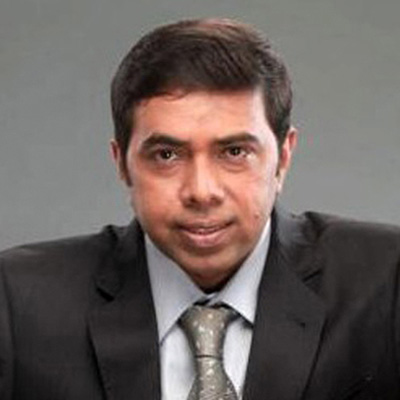
  • ‘Digitisation will throw open acquisition opportunities’ : IndusInd Media and Communications chief executive officer Nagesh Chhabria

    ‘Digitisation will throw open acquisition opportunities’ : IndusInd Media and Communications chief executive officer Nagesh Chhabria

    T he Hindujas have started the first round of cable TV digitisation in the three metro cities of Mumbai, Delhi and Kolkata. The second phase will open up 15 more cities where IndusInd Media and Communications Ltd (IMCL), the cable TV company they own, operates. Aggression is being planned to take on 14 more cities through acquisitions, joint ventures or direct entries.


    The ambitious target set is deployment of four million digital set-top boxes (STBs) on top of the 1.5 million IMCL is expecting to achieve in the first phase of digitisation. The company is also planning to own one million last mile connections in two years, up from its current base of 300,000.


    IMCL, which operates its cable TV business under the Incablenet brand, will need Rs 6 billion in the new phase that will see 38 cities go digital by 31 March 2013. The company is in talks with private equity investors to raise $75 million.


    “There is a huge appetite now to invest in cable TV companies. The first phase of digitisation has been successfully implemented in the three metro cities of Mumbai, Delhi and Kolkata. There is also no uncertainty now about India’s digitisation programme across the country. We should see equity deals happening in the sector,” says IndusInd Media and Communications chief executive officer Nagesh Chhabria.


    Chhabria believes the cable TV ARPUs (average revenue per user) would rise to Rs 500 by 2015, while carriage income would see a 10-15 per cent drop in DAS (digital addressable systems) markets.


    “In the first phase, we are looking at a 15 per cent increase and believe our ARPU would settle at Rs 225. If the ARPU is lower than this, the local cable operator will not survive,” he says.


    In an interview with Indiantelevision.com’s Sibabrata Das, Chhabria talks about the changing cable TV environment and the multi-system operator’s (MSO) expansion plans.


    Excerpts:

    Q. Is IMCL in talks with private equity investors to raise capital for funding its cable TV digitisation programme?
    We are looking at raising $75 million and have mandated Ernst & Young for this purpose. There is a huge appetite now to invest in cable TV companies. The first phase of digitisation has been successfully implemented in the three metro cities of Mumbai, Delhi and Kolkata. There is also no uncertainty now about India’s digitisation programme across the country. We should see equity deals happening in the sector.


    Q. Will $75 million meet IMCL’s total funding requirement for the second phase?
    We will need Rs 6 billion as we expect to deploy four million set-top boxes (STBs). We have existing lines of credit from banks for $15 million. We can further raise $10 million of new debt. So along with equity financing, we should be comfortably placed. Of course, there is concern about the weakening of the rupee, which will mean STBs becoming costlier. But we are asking our STB manufacturer to offer us a better rate so that it offsets any rise in dollar value.


    Q. Hasn’t IMCL lined up vendor financing so that the pressure on funding upfront eases?
    We have not gone in for that option. The Cisco set-top boxes are 15-20 per cent more expensive than ours. Our model works out cheaper for us.


    Q. Isn’t your estimate of the STB requirement too high as IMCL operates in only 15 out of the 38 cities that fall under digitisation in the second phase?
    It is easier now to get into new cities because there is less entry cost. You don’t have to pay broadcasters for an assumed number of subscribers as digitisation would reflect your actual subscriber base. Capital expenditure, of course, is going to be higher but there is an assured revenue model.


    We plan to enter into 15 more cities and anticipate a requirement of two million STBs from the new operations. For our existing operational cities, we would need two million STBs.

    ‘Even in the second phase, DTH will hardly be able to make an impact. Since most of the cities that fall in this round of digitisation are carriage markets, the national MSOs have a presence in them. Already 10 per cent of this market is digitised by the MSOs‘
    Q. Will you take the acquisition route for entering into these markets?
    Digitisation will throw open acquisition opportunities. There are many operators who will find it difficult to fund for the STBS. So they will either want somebody to invest in their cable networks or completely sell out. We are in talks with many independent operators. We can also enter on our own through fibre or available bandwidth.
     

    Q. How are valuations getting decided?
    We look at the profits made in the last fiscal and offer four times that value. The other option is to look at future profits (sans STB investment) made from the first six months of digital operations and then fix a value. But this has few takers as nobody wants to take the risk.


    Q. Are you not looking at last mile acquisitions that will give IMCL direct ownership of the consumer homes without having to share a portion of the subscription revenue with the local cable operator?
    We have an aggressive plan to own last mile. Our target is to own one million primary points in two years, up from our current base of 300,000. The acquisition of primary points, however, is much costlier and the price could be in the region of ten times the subscription fee. In Mumbai, this could go up to 20 times. But with digitisation necessitating billing systems, the primary points will be up for grabs.


    Q. Has DTH been able to eat into IMCL’s subscriber base in the first phase?
    We have hardly felt the impact. Even in the second phase, DTH will not be able to win over cable TV consumers in a big way. Since most of the cities that fall in this round of digitisation are carriage markets, the national MSOs have a presence in them. Already 10 per cent of this market is digitised by the MSOs. DTH will stand a better chance in tier III and IV towns. Acquisition of primary points in these smaller places will be a good strategy for MSOs to follow.


    Q. How many STBs has IMCL deployed across three cities in the first phase?
    We have already seeded 1.3 million boxes and our target is to touch 1.5 million. In Mumbai we will do 850,000 million and 0.5 million in Delhi. The progress in Kolkata is slow but it will also pick up.


    ‘We are looking at raising $75 mn and have mandated E&Y. There is a huge appetite now to invest in cable TV companies. The first phase of digitisation has been successfully implemented in the three metro cities of Mumbai, Delhi and Kolkata. There is also no uncertainty now about India’s digitisation programme across the country. We should see equity deals happening in the sector‘
     

    Q. Is the conversion into second TV homes significant?
    The demand for second TV sets is higher in Delhi than in Mumbai. But at a combined level we are talking of a 25-30 per cent conversion rate. We are working out a pricing for second and third TV sets as we have to match the DTH offers. But we are yet to ink deals with broadcasters on this.


    Q. What is the kind of content deals that you have stitched with broadcasters?
    We have done cost-per-subscriber deals. This works out better in the long term and is a more transparent system. We get to know our cost per box and it is easier to work out negotiations later. Our content cost would work out to 33 per cent of our subscription revenue.


    We wanted to do three-year deals with broadcasters but they were not ready for it. Most of our content deals are on a yearly basis.


    Q. What is the revenue share you are giving to local cable operators?
    The value chain will take away 33 per cent of our subscription revenue. We also have operational costs and an investment on the STBs, but we also earn carriage or placement revenue. We are seeing a 10-15 per cent drop in our carriage deals for DAS (digital addressable system).


    Q. Will ARPUs go up?
    In the first phase, we are looking at a 15 per cent increase and believe our ARPU would settle at Rs 225. If the ARPU is lower than this, the local cable operator will not survive.


    ARPUs for MSOs should at least be Rs 300 for them not to be dependent on carriage income. MSOs with ARPUs below Rs 300 will have to be carriage dependent.


    Our forecast is that cable TV ARPUs would rise to Rs 500 by 2015. What will lift up ARPUs is HD and regional packages. Premium packages will also get sold.


    Q. So are we talking of financially healthy MSOs in digitised India?
    A lot on how the market shapes up will be decided over the next six months. We will know the actual seeding of boxes in consumer homes once the subscription collections happen.


    Q. Will IMCL rely only on video services or there is a serious plan to pump up broadband investments?
    We will be investing Rs 1 billion on broadband infrastructure in the next fiscal. We are also going to prepare for IPTV and OTT (over-the-top) services.


    Q. What about launching local cable channels?
    Yes, this is very much a part of the plan. Since there will be no constraints on bandwidth in the digital era, we are planning to put together 10-12 local channels, including local news. We are also looking at ad-free channels.

  • Satellite TV to overtake cable TV revenue by 2016: Study

    Satellite TV to overtake cable TV revenue by 2016: Study

    MUMBAI: By 2016 satellite TV revenue will overtake cable TV revenue for the first time.

    Market research firm Infonetics Research released excerpts from its November 2012 Pay TV Services and Subscribers report, which forecasts and analyzes the telco Internet protocol television (IPTV), cable video, and satellite video services markets.

    The global pay-TV market (cable, satellite, and telco IPTV) totaled $137 billion in the first half of 2012 (1H12), a 9.4 per cent increase over the same time last year. Global pay-TV service revenue is forecast by Infonetics to grow at a seven per cent CAGR from 2011 to 2016, spurred by emerging markets India, Brazil, Argentina, Mexico, Russia and China.

    Latin America, the smallest but fastest-growing pay-TV market, is on track to jump by 23 per cent this year to top $23 billion. The number of global pay-TV subscribers will reach 719 million in 2012, up by six per cent from 2011.
    While cable subscribers continue to make up the lion’s share (60 per cent in the first half of the year) of pay-TV subscribers, growth is strongest in the telco IPTV segment, up by 19 per cent in the first half of this year over the second half of last year.

    Verizon and AT&T are neck-and-neck for revenue share in the fast-growing telco IPTV market, followed by France Telecom and Deutsche Telekom in Europe and NTT and CTC in Asia Infonetics Research directing analyst for broadband access, pay TV Jeff Heynen said, “Ongoing challenging economic conditions in the key revenue-generating markets of North America and Western Europe have resulted in slowing subscriber and revenue growth in the cable TV market”.

    Subscribers are far less loyal than they used to be. The cable TV industry is characterised more by churn than cord cutting, as subscribers take advantage of introductory pricing on satellite and IPTV subscriptions that’s 30-50 per cent below their cable bills. “DirecTV, Verizon, AT&T, and Virgin Media have all set their sights on existing cable subscribers, and they’re seeing their subscriber bases increase as cable TV subscriptions shrink,” Heynen said.

  • Digitisation: Broadcasters not ready to rework ad deals

    MUMBAI: Broadcasters and the media agencies representing advertisers will soon lock horns over commercial deals as India‘s four metros move to digital cable TV from 1 November.

    An uneasy calm is already prevailing as the top multi-system operators (MSOs) have switched off English movie channels in Mumbai and Delhi on analogue cable from 10 October, the two prime ad markets. Next to follow is Hindi movie channels from 15th, news channels from 18th and Hindi GECs from 22nd of October.

    More real sense of the pain is to come for advertisers and media agencies nearly three weeks after and it can hurt or be a mild irritation depending on the number of consumers who stay without the digital set-top boxes (STBs) in their homes. The problem of television viewer dropouts in the metros of Delhi, Mumbai, Kolkata and Chennai becomes more sensitive in a high-spending festive season quarter during an ad slowdown year.

    In this interim transition, broadcasters do not want their commercial deals with advertisers to be reworked. Their logic: the gain will be for the whole industry and everybody has to join in making this sacrifice in order to feast later.

    “Our festive ad deals are locked. We are not ready to rework the commercial terms. The IBF (Indian Broadcasting Foundation) is taking up the issue on behalf of the broadcasters,” says Zee Entertainment Enterprise chief sales officer Ashish Sehgal.

    The media agencies, on the other hand, are wanting to cut short term advertising deals reflecting rate revisions

    based on the extent of STB penetration. Says Havas Media India and South Asia CEO Anita Nayyar, “This has been a year of reduced ad spends and basically a slowdown year. Now there is uncertainty about the reach of the channels in the metros. The deals will have to be re-packaged.”

    A part of that duel will be decided on Monday when the IBF, the Advertising Agencies Association of India (AAAI) and the Indian Society of Advertises (ISA) meet TV measurement ratings agency TAM.

    The broadcasters are insisting on a “viewership data dark period” to smoothen the process of transition to sort out temporary disruptions and avoid a panic situation. An indirect implication of this: advertising deals can’t be renegotiated as there will be no benchmark data on ratings of TV shows or channels.

    Media agencies are taking the opposite course to achieve what the broadcasters are out to prevent. They want ratings so that the reality surfaces and every stakeholder knows to what extent digitisation has succeeded. A tussle can, however, be avoided if the government directs TAM to stop reporting about TV viewership data for a short period, allowing the industry to settle down to digitisation.

    Multi Screen Media president network ad sales and telephony Rohit Gupta reflects the aggressive mood that runs through the broadcasting community. “No broadcaster is going to rework the deals. The IBF and the NBA (News Broadcasters Association) are working together on this. The DTH has added over 25 million net subscribers and we haven’t got anything extra for this from the advertisers. There is no reason for us to take a cut,” he avers.

    Media agencies have already started making their demands. Sehgal admits that some requests have come asking for rate revisions but no discussions have followed. “We haven’t done any negotiations on rate cuts. Even in our annual deals we haven’t factored digitisation at all.”

    So will that mean a part of Zee’s ad inventory will go empty? “Our inventory is sold out for the festive season. Even the big-ticket properties like Saregama have no inventory left. For the network, we have locked in most of our deals,” says Sehgal.

    Smaller networks may not be in that lucky state and may have factored in digitisation in their ad deals with media agencies. Says
    9X Media chief revenue officer Pawan Jailkhani, “The date of digitisation has been decided months back. Advertisers have factored all of this while doing festival and non festivals deals. They take utmost care to safeguard their interests and they know it is not going to affect much as the blackout will be miniscule.”

    Most of the sports channels may consider themselves lucky that they do not have any big sporting event coming up during that early digitisation period and, thus, their revenues will not be affected adversely. “It is an interesting period that the industry is entering into. Nobody knows what the short term impact will be. There could be an ad softening in the festive quarter if only there is a major drop in TV viewership. But if the cable empty homes convert to digital cable within a brief period, then there will be a miniscule impact,” says a media analyst.

    Also read:

    Advertisers want deals to reflect digitisation gaps

  • Advertisers want deals to reflect digitisation gaps

    MUMBAI: Advertisers are pressing for structuring of advertising deals with television broadcasters to reflect the likelihood of a section of homes going without cable TV connections in the four metros as the shift to digital delivery of television channels happens from 1 November.

    The advertising industry expects about 15-20 per cent of television households to remain disconnected for some period from 1 November. Also, advertisers’ communications in the run up to the deadline for digitisation will not reach to the fullest extent as broadcasters have begun to switch off analogue channels genre wise from 10 October and would end the process of complete withdrawal of analogue TV channels in the four metros on 22 October with the most watched Hindi general entertainment channels (GECs).

    Allied Media COO PM Balakrishnan says, “There is lot of thinking happening at the backend. I don’t think advertisers are panicking.
    Even the deals are getting structured considering all these things.”

    The CEO of a large media buying and planning agency, who did not want to be quoted, said, “Advertisers may do well to analyse the realities of digitisation based on data available and fine-tune their media plans for the festive season.”

    The Information and Broadcasting Ministry on Wednesday said an average of 77 per cent of cable TV homes in Mumbai, Delhi, Chennai and Kolkata have switched to digital with the installation of set-top boxes (STBs), led by Mumbai with 99 per cent digitisation. According to the ministry, Chennai is the laggard with 59 per cent cable TV homes converted to digital.

    Advertising, particularly by consumer durable companies and automobile makers, peaks during Diwali festival when the consuming class spends the most.
    Havas Media India and South Asia CEO Anita Nayyar says, “The timing is very bad. The advertisers and media agencies are not going to be happy considering the environment currently. This was the period when we were looking at some traction at least. This has been a year of reduced ad spends and basically a slowdown year. Now there is uncertainty about the reach of the channels in the metros. The deals will have to be re-packaged.”

    Advertising community is also doubtful about the government’s claim of 77 per cent average digitisation in the four metros. Cable operators in Chennai and Kolkata are asking for extension of the digitisation deadline as they fear a significant percentage of homes would be without cable TV connection after 31 October.

    Lodestar UM COO Anamika Mehta says, “The economy has been sluggish, so all marketers were looking at the festive period to drive sales. TV obviously takes the big chunk of advertising. Now on TV many marketers will play safe.”
    Adding to this, OMD COO Haresh Shriyan says, “Whatever genre broadcasters will pull out, there are companies which are advertising on it. It will have serious implications on them in all the four metros. All this will certainly reflect on the ratings and reach, if executed. The advertisers now will have two options. One is that if the reach comes down and if the ratings and connectivity is impacted, advertisers will seek to have compensation from the broadcasters. They have paid when everything was normal but today it isn’t. Also, if this is the scenario, if the reach is impacted, if people don’t get to see their ads, the advertisers and agencies need to recommend a boost of plan for these markets.” 

    There is also a faction of media planners that feels the advertisers need not panic. If the current figures are to be believed, then the percentage of media darkness will be small compared to the earlier estimates. Madison Media CEO Basab Datta Chowdhury says, “Given the current level of penetration, it is only 20 per cent of homes that will be without cable TV connections. 100 per cent penetration won’t happen, we all know.”

    The important point to consider here is what part of the estimated 20 per cent media dark homes constitutes the TG. The advertisers’ ire on the pull out of analogue signals will depend on how much of their TG is being excluded from the reach.

    According to Madison’s Chowdhury, there isn’t much to worry in that case. “Right now, we are talking about 20 per cent of the homes (in media darkness). Also, if we extrapolate IRS figures onto the current penetration of digitisation, then it is essentially the Sec D and E homes. Nearly 95 per cent of the communication is targeted at the Sec A B and C viewers,” she says.

    TAM’s ratings

    If the industry banked on TAM ratings for planning and estimates earlier, the data becomes all the more important now in view of the genre-wise switching off of analogue signals. Nayyar says, “What TAM does post 1 November will be known only after the meeting next week. But till 31 October, TAM should continue giving ratings. This will serve two purposes — we will know the reality of digitisation figures in the metros. Secondly, we will know how much media darkness is prevalent in the metros.”

    Representatives from Advertising Agencies Association of India (AAAI), Indian Society of Advertisers (ISA) and Indian Broadcasting Foundation (IBF) would be meeting TAM Media Research on 15 October to discuss issues arising out of digitisation and the likelihood of some homes remaining without cable TV connections.

  • Digitisation: Ad deals may be reworked on short term basis

    Mumbai: Advertisers may have to enter into transitory arrangements with broadcasters if some homes are left without digital cable connections in the four metros after 1 November.

    The government has mandated compulsory end to analogue delivery of television channels after the digitisation deadline, resulting in the possibility of a significant number of cable TV homes going without television signals for failing to have set-top boxes (STBs) installed to receive digital television signals.

    “In the worst case scenario, when we do have 30 per cent dark homes in the four metros, there may be need to rework the commercial deals on a short term basis,” Leo Burnett Indian sub-continent chairman and CEO Arvind Sharma told Indiantelevision.com.

    The Information & Broadcasting (I&B) Ministry last week said 68 per cent of cable TV homes in the four metros of Mumbai, Delhi, Chennai and Kolkata have already installed STBs to receive television channels in digital form. It said Mumbai leads the progress in digitisation with 95 per cent homes digitised, followed by Kolkata with 67 per cent. In Delhi, 53 per cent of the cable homes have switched to digital and in Chennai, 49 per cent.

    The number of households, however, is based on census data and a broad section of the broadcast industry does not believe this reflects the actual estimate of the STB requirement in these four metros.

    “In my opinion, digitisation will ramp up and only in the interim period will we as industry (advertisers, agencies and broadcasters) have to work out short term commercial deals. More importantly, the events of the next 40 days will be crucial,” Sharma said.

    So will TAM, the television audience measurement agency, report from digital homes only in the four metros after 1 November? A TAM spokesperson said: “TAM started reporting Digital TV Homes viewing data since 2008 when Digitization crossed threshold levels in some of the markets. TAM currently reports data from Non-C&S households (Terrestrial Antenna reception mode)and two types of C&S households: Digital C&S and Analog C&S – depending on whether households receive channels through a Set-Top Box (STB) or without Set-Top Box.

    As per TAM JAN 2012 TV baseline report, almost 35% of All India C&S homes have already adopted Digital way of watching TV, with 1/3rd of them coming from Urban markets. The government, by its DAS notification, has mandated that from November 1st 2012, C&S channels can be legally received in the Municipal Corporation (MC) limits of the four major metros (NCR for Delhi) only through a Digital STB. Therefore, from NOV 1st, TAM will not report data of channels viewed in TV Homes that are not received through a Digital STB in these areas (exception being, viewing happening in TV Homes through Terrestrial Antenna signal reception)”.

    The spokesperson added: “In other words, TAM will only be reporting Digital TV viewing data and Non C&S TV viewing in the DAS implemented areas of the 4 City. Data from Homes in the non-MC area of the cities (which does not fall under Phase I of DAS implementation) will continue to be reported as usual. We will be sending out a formal communication to our clients in the coming few days spelling out the details.”

    As a broad section of the industry feels that a total 100 per cent STB penetration will not be possible on day one itself (1 November), there will be some empty homes. If TAM sticks to its current statement, this will mean the analogue coverage in the four metros will not be reported by TAM. So what happens if cable TV operators transmit the analogue signals illegally (take digital signals through a STB and convert it through a modulator for carriage on their analogue networks)? The government, however, is determined to implement digitisation and may take recourse to strict action by arresting the ‘violators‘ under criminal offence.

    Media agency ZenithOptimedia CEO Satyajit Sen fears some kind of temporary disruption in business. “We presume that there will be disruption in the business. In the four metros, there aren‘t enough STBs to make them (cable TV homes) all go digital. Majority of the consumption of various categories happens in the four metros. Our clients will demand for TAM ratings and hence we will also ask for it,” Sen said.

    Lodestar UM CEO Shashi Sinha, however, is not disturbed by the disruption in TV viewership. “People who matter to us are the consuming class and they will switch to digital. May be in the beginning for two to three months, we will see some impact but gradually everyone will switch to digital. At least the consuming class will by the last week of October,” he said.

    Broadcasters to switch off analogue, Rajat Sharma to work in interests of viewers

    Broadcasters are largely confident of a smooth changeover to digital delivery of television channels from analogue. Like Lodestar‘s Sinha, Times Television Network MD & CEO Sunil Lulla too felt there is no need for any worry as the first phase of digitisation is happening at good speed.

    “Digitisation will happen. People who want to get STBs will get those who don‘t want won‘t,” Lulla said.

    The government is dead serious this time around in ensuring digitisation happens in the four metros by the deadline of 1 November and that all the stakeholders are brought on board. It has issued orders directing broadcasters to switch off analogue decoders in the four metros, unlike in 2003 when certain pockets in the metros were asked to shift to digital delivery of television channels.

    The government has gone a step ahead and made carriage of analogue television signals after the digitisation deadline in the four metros a criminal offence.

    BAG Films CMD Anurradha Prasad said, “All broadcasters want digitisation and, hence, we all will be switching off our analogue signals from 1 November. This is an order of government.”

    An NDTV spokesperson said, “The government order is sacrosanct and the broadcasters are adamant on switching off the analogue signal from 1 November.”

    India TV chairman and editor-in-chief Rajat Sharma sounded a different note. He said, “For all stakeholders — IBF, NBA, I&B Ministry and MSOs, the viewers‘ interest is foremost. We will take a call keeping in mind that the viewer doesn‘t suffer.”

    Pay TV channels will be more than willing to shift to digitisation as early as possible as it will mean a rise in their subscription revenues as the number of cable television subscribers disclosed by local cable operators will rise. In analogue, cable operators under-report the number of cable TV connections and thereby cause a loss of revenue for broadcasters with pay TV channels.

  • Govt still to take action against misleading & surrogate ads of liquor brands

    NEW DELHI: The Government has not been able to take a decision on allegations of surrogate or misleading advertising in television advertisements of as many as 37 products in the last two years.

    A reply given in Parliament earlier this week by Information and Broadcasting Ministry Ambika Soni lists 17 advertisements of 2011 and 20 of 2012 as ‘under consideration’ of the Ministry.

    While there were no complaints during 2009, action was taken on all seven complaints during 2010.

    The advertisements ‘under consideration’ in 2011 are for products like Bagpiper Club Soda, Bacadardi Together Music CD, Imperial Blue Music CDs, McDowell No. 1 Platinum Soda, Royal Stag (five different versions), Imperial Blue (two versions), Royal Challenge, Kingfisher Premium, Blender’s Pride, Howard 5000 (two versions), Kingfisher Beer, and VB Best Cold Beer.

    In 2012, the complaints are for most of the above-mentioned brands, in addition to Carlsberg Beer, Seagram’s Imperial Blue Superhits music CDs, Signature, Tuborg, 100 Pipers Music CDs, Seagram’s Royal Stag Mega Cricket, McDowell Century Soda, Kingfisher Premium Packaged Drinking water, Signature Natural Mineral Water, ICE Music CDs, Teacher’s Music CDs, Signature Parties (sponsored by Karbonn Mobiles), Seagram’s Royal Stag Mega Music, and Seagram’s Natural Mineral Water.

    In addition, there was a complaint this year about a misleading advertisement of Garnier Fructus shampoo, and another about Bhavishya Jeevan Amrit which are under consideration.

    In most other cases, the matter was referred to the Advertising Standards Council of India (ASCI), the Indian Broadcasting Foundation (IBF) or the News Broadcasters Association (NBA) and these self-regulatory bodies advised the TV channels not to carry the advertisements.

    Most prominent among these was the daily telecast of the advertorial on ‘Third Eye of Nirmal Baba’ on some channels.

    A total of 43 cases of misleading or surrogate advertisements were received by the Ministry during 2011 and 2012, many of them for the same product telecast in different channels.

    Soni said complaints also came for 18 advertisements in the print media between 2009-10 and 2011-12, including three this year which were under process with the Press Council of India.

    Earlier this year, MoS C M Jatua had said the Department of Consumer Affairs is holding a series of consultations and workshops with all stakeholders in different parts of the country to create awareness about this issue.

    He said the Consumer Protection Act 1986 had ample provisions to act against advertisements making false or misleading representation and these had been duly notified as Unfair Trade practices for which a consumer could approach the Consumer Courts.

    The Press Council Act and the Journalistic Norms drawn up by the Council, and the Cable TV Networks (Regulation) Act apart from the ASCI also had powers to deal with such complaints.

    In reply to another question, Parliament was informed that a representative of the Department of Consumer Affairs was now represented on the Inter-Ministerial Committee which hears complaints against TV channels.

  • Tata Sky and Lokmat among 9 ads in May that ASCI indicts

    MUMBAI: India‘s advertising watchdog, ASCI, has upheld complaints made against nine advertisements in May, including that of Tata Sky‘s tirade against cable TV and Marathi newspaper Lokmat‘s tall circulation claims in Pune.

    The Advertising Standard Council of India (ASCI) found Tata Sky‘s print ad stating ‘Cable is just a Dabba‘ as unfairly denigrating other products. The direct-to-home (DTH) operator was referring to the cable set-top boxes (STBs) as ‘dabba‘ implying that it was of non standard or poor quality box, which is not the fact.

    The ad, which appeared in The Hindu‘s Chennai edition (dated 30 March 2012), contravened Chapter IV.1 (e) of the Code, ASCI pointed out.

    In the wake of digitisation mandated by the government, DTH operators have launched aggressive ad campaigns to take away share from cable TV networks. Airtel digital TV, for instance, launched an ad stating “Sirf Cable Nahi Life Badlo”, urging consumers to make the shift away from cable to DTH.

    The government has fixed 31 October as the deadline for digitisation in the four metros of Delhi, Mumbai, Kolkata and Chennai, pushing back the sunset date of analogue cable by four months.

    The Consumer Complaints Council (CCC) of ASCI also upheld the complaint against Lokmat‘s ‘No. 1 Newspaper‘ ad in which the Marathi daily claimed to have added 65,000 readers in SEC A segment in Pune. The watchdog pointed out that Lokmat did not mention the period over which this growth has been attained, which in itself is misleading.

    As per IRS 2011 Q4, in the last quarter Lokmat has added only 5000 SEC A readers in Pune city. The CCC concluded that Lokmat‘s claim in Pune was misleading as the advertisement did not mention the reference period pertaining to the source data. The advertisement contravened Chapter I.4. of the ASCI Code.

    Brooke Bond‘s ad to promote its Red Label Natural Care Tea brand was indicted for not adequately substantiating the claims made for enhancing immunity by consuming the tea product. In the ad, Broke Bond had said that the product has a “scientifically proven combination of five ayurvedic ingredients (tulsi, ashwagandha, mulethi, ginger and cardamom) to strengthen “your body‘s defence” and, thus, helps in protecting “you and your family from cold, cough and flu”. It further stated that it “is clinically shown that drinking three cups of Brooke Bond Red Label Natural Care daily helps enhance one‘s immunity”. The advertisement contravened Chapter I.1 of the Code.

    Another complaint upheld was IMS – Score more at BBA / BBS. The ad that appeared on its website claimed that ‘143 IMS students got selected into SSCBS in the year 2011‘. The ad shows a bar chart showing selection of IMS students into SSCBS over the years 2008 to 2011. The CCC concluded that, in the absence of validation by an independent agency / Chartered Accountant, the claims mentioned in the advertisement and cited in the complaint, were not substantiated.

    Glenmorangie‘s print advertisement which appeared in Conde Nast India in the February 2012 issue was complained against and upheld. The ad states: “Why is it so important that we only use our casks twice? Taste Glenmorangie and the question becomes rhetorical”. The visual depiction of the brand name is suggestive of a well-known brand of liquor- Glenmorangie. In the absence of specific information, the ad appears to be a surrogate advertisement for Glenmorangie. The CCC concluded that it was surrogate ad for a brand of alcohol- Glenmorangie. The advertisement contravened Chapter III.6 of the Code.

    Alchemist‘s claim of ‘India‘s most successful MBA prep‘ was pulled up too. It has not been backed up and substantiated and there is no validation / check by any independent agency that confirms this claim. In the absence of any proof, supporting information, from the Advertiser, the CCC concluded that the claim, ‘India‘s Most Successful MBA Prep‘ was not substantiated. The advertisement contravened Chapter I.1 of the Code.

    Shree Maruti Herbal‘s print advertisement on ‘Maruti Stay -On Capsules & Oil‘ was complained against and upheld for claiming it ‘helps improve vitality, stamina and energy‘. The website also claims ‘Stay-On guarantees – Sexual performance of adults in all age groups‘. The CCC concluded that the claim, ‘helps improve vitality, stamina and energy‘, was not substantiated. The advertisement contravened The Drugs & Magic Remedies Act. Also, the advertisement tends to create, by implication, a perceived inadequacy of physical attributes, in this case the impotence and infertility, which could be objectionable to both men and women. The advertisement contravened Chapters I.1, III.4 and I.5 (d) of the ASCI Code.

    Jake‘s Beauty-Spa-Salon & Academy received a complaint related to its design and copy. It is similar to the Complainant‘s ad of ‘Schnell Hans Salon Spa & Academy‘. The CCC concluded that the headline, ‘Your Passport to Success‘, was similar to the complainant‘s advertisement and, thus, suggested plagiarism. The ad contravened Chapter IV.3 of the Code.

    The ad of Nikon camera was also upheld. According to the complainant, the TV commercial required permission from the Animal Welfare Board of India (AWBI) for the use of birds in advertisement or films. In the application by Nikon, permission was asked for four sparrows to be shown in their natural habitat with a girl playing and passing through. In reality, the birds turned out to be cockatiels which are being used as toys by the girl and perch on her shoulders among other things. The CCC concluded that as the requisite permission was not received from the AWBI to shoot cockatiels in the TVC, it was in violation of The Performing Animals Registration Rules 2001. The advertisement contravened Chapter III.4 of the Code.

    During the month of May, the CCC also received complaints against five television commercials. The complaints were received against the ads of Midas Care‘s Clean & Dry cream, Sprite Cold drink, Emami‘s Fair & Handsome for Men, Gillette Mach 3 and Extra Strong Axe. However, as these ads did not contravene ASCI‘s codes or guidelines, the complaints were not upheld.