Tag: cable TV

  • Govt gives 15 days grace for phase II cable TV digitisation

    Govt gives 15 days grace for phase II cable TV digitisation

    NEW DELHI: Ever since the ministry of information and broadcasting ministry announced that it was enforcing 31 March 2013 for Phase II cable TV digitization and switch-ff of analogue signals in 38 cities in 14 states, there have been yelps from state government chief ministers and cable TV operators, and MSOs all over.

    Media reports were that a large number of viewers in these cities are grappling with blank TV screens as cable TV operators have not been able to speedily provide the set top boxes (STBs) needed to digitize. Some state governments went so far as to ask for a six-month extension to the digitization deadline. A couple of high courts – in Karnataka and Gujarat – had already agreed to a week long postponement in late March and on 1 April

    Late last night, according to a PTI report, the government heard the protesters’ pleas and said it would go slow on enforcing the black out of analogue signals. While categorically stating that the deadline was not being extended, information & broadcasting secretary Uday Kumar Varma, said that the industry was being given “a transition time of 10 to 15 days depending on the ground level situation so that there is no inconvenience to the people.”

    Reports are that almost 25 per cent of the 16 million households in these cities missed the deadline to switchover to digitized cable TV. The ministry has hence told MSOs and cable TV operators “to switch off the signals in a phased manner and depending on the situation in various cities.”

    Says the head of a leading MSO: “It’s good to hear that the government has given us this grace period. During the day there were ghastly reports that nodal officers and SDMs in various cities were threatening cable TV operators and MSOs with arrests if they did not switch off analogue TV signals. This should come as a relief to all of them. As it is we have not been able to sign digital agreements with a majority of broadcasters for these cities. Hopefully we will be able to do something soon.”

    Sources indicate that the ground situation in various cities is varied and that the I&B ministry officials would coordinate with the local nodal officers in order to decide the timing and extent of analogue TV switch offs in order to avoid blank TV screens.

    Data available with the I&B ministry has revealed that towns which are facing a problem include: Vishakapatnam with 12.8 per cent digitization (out of 500,000 TV homes); Srinagar with 20 per cent, Coimbatore with 28.89 per cent, Jababalpur with 34.87 per cent and Kalyan Dombivili (38.59 per cent). Seven of the 38 cities had achieved 100 per cent plus digitization: Ludhiana, Hyderabad, Faridabad, Allahabad, Amritsar, Chandigarh and Jodhpur — reported 100 per cent digitisation while three others — Thane, Meerut and Jaipur — had 90 per cent plus.

    Varma’s announcement came a little after indiantelevision.com reported that cable TV operators had got a reprieve in the Andhra Pradesh high court too. Justice M V Ramanna had directed DAS to be stayed for two weeks and the case is expected to be heard on 15 April. The order came on a petition by the Greater Hyderabad Cable TV Operators Association which took the position that there was no clarity regarding the availability of STBs.
  • DTH Assn’s Harit Nagpal: “We can plug the shortfall in STBs in Phase II”

    DTH Assn’s Harit Nagpal: “We can plug the shortfall in STBs in Phase II”

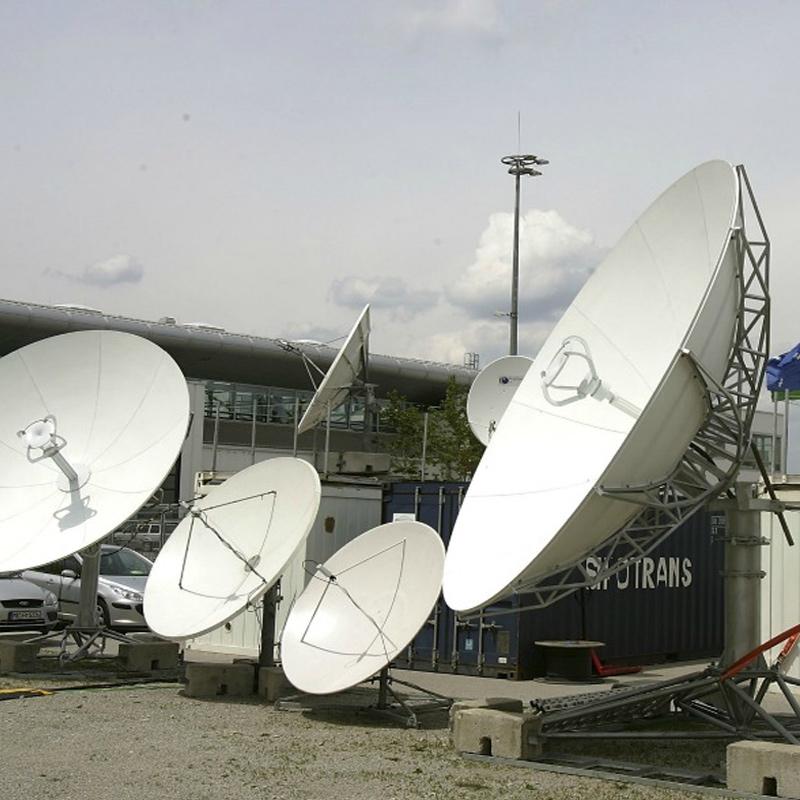
    MUMBAI: They are being pretty direct. DTH TV operators have categorically stated that they can definitely fill the gap should there be any shortage of set top boxes in any city under phase II of the government mandated digitsation of cable TV.

    “Digitisation does not need to be postponed,” says DTH Association of India president Harit Nagpal emphatically “ We have been digitizing the TV industry for the past seven years. We have national contracts with the broadcasters, which we keep working on with them. We have adequate stocks of STBs and trained manpower to meet any demand which crops up in any city should cable TV operators not be in a position to deliver the set top boxes to their customers.”

    He is pretty confident that this can be done overnight. “At Tata Sky we have about 1.5 million set top boxes in stock,” he reveals. “I am speaking for all DTH operators: If there is a colony or a ward or a pincode which is feeling the shortage, we can rush boxes there overnight to plug the shortage.”

    Nagpal believes that media reports claiming that 50 per cent of homes in some cities are facing a TV blackout could be attributable to independent cable TV operators in these cities not clearly reporting the number of STBs they have installed. “I think it is a reporting problem,” he says. “The number of TV homes not receiving signals is much lower. Some anomalies like this are bound to occur on an exercise of this scale.”

    DTH today accounts for about 27-28 per cent of the entire pay TV base in this country with about 40 million active subscribers according to the DTH association.

    Also, according to MIB reports almost 40 per cent of the digitization that has been achieved in the 38 cities has been done by DTH players, among which figure Tata Sky, Airtel, Videocon d2H, DishTV, Sun, DDDirect, Big TV.

  • Digitisation to propel pay TV revenue growth in Asia Pacific: Study

    Digitisation to propel pay TV revenue growth in Asia Pacific: Study

    MUMBAI: The cable TV digitisation in India and other Asian countries will drive pay TV revenues in Asia Pacific which are expected to reach $43.9 billion in 2018 from $33.86 billion in 2013, according to Digital TV Asia Pacific report.

    Digital cable television will comprise the largest chunk of the overall pay TV revenue pie. It is expected to grow from $12.42 billion in 2013 to $23.16 billion. Direct-to-Home (DTH) will be the second pay TV revenue contributor by 2018 with an estimated $11.6 billion in revenues, up from $8.5 billion in 2013.

    Both digital cable TV and DTH will grow even as analogue cable TV revenue will shrink from $8.9 billion currently to to $1.83 billion as cable TV digitisation gains momentum. IPTV revenues during the same period are expected to reach $7.17 billion in 2018 from $4.01 billion.

    The report also said that pay TV penetration will rise from 56 per cent in 2012 to 67 per cent in 2018, adding 154 million subscribers to take the total to 587 million.

    China will provide 313 million pay TV households by 2018, with India supplying a further 158 million. However, pay TV penetration will be higher in South Korea (95 per cent) and Hong Kong (96 per cent).

    Digital TV research‘s Simon Murray said, “Pay TV revenues will more than double in five countries Indonesia (tripling), Pakistan, the Philippines, Thailand and Vietnam] between 2012 and 2018, but will fall in Hong Kong and South Korea.”

    The Asia Pacific region is undergoing a rapid digital TV conversion that will see penetration increase from 16 per cent in 2008 to 44 per cent in 2012 and on to 90 per cent in 2018 – or up by 440 million homes between 2012 and 2018. By end-2013, digital penetration will reach 53 per cent, or 420 million homes (up by 78 million on the end-2012 figure), says the report.

    Murray continued: “Despite the rapid conversion, digital TV will still have plenty of room for growth for some time to come. Only six of the 15 countries forecast in this report will have fully converted to digital by 2018. By then, Indonesia and the Philippines will have digital penetration of only 42 per cent and 34 per cent respectively. Indonesia will still have 29 million analog homes and India will have 31 million analog homes.”

    Of the 440 million digital homes to be added between 2012 and 2018, 128 million will come from DTT. However, the number of analog terrestrial homes will fall by 204 million. Digital cable will contribute a further 187 million additional homes, with analog cable losing 141 million. Pay DTH will supply an extra 35 million and pay IPTV 71 million more.

    The report also forecasted that pay IPTV subscribers will overtake that of pay DTH in 2016.

  • Trai brings ad regulation ghost back to haunt broadcasters again

    NEW DELHI: Turning the heat on broadcasters again, the Telecom Regulatory Authority of India (Trai) has notified the Standards of Quality of Service (Duration of Advertisement in Television Channels) after watering down the amended version of the ad regulation.

    The main regulation was issued on 14 May last year that had the broadcasters up in arms. The matter finally reached Telecom Disputes Settlement and Appellate Tribunal (Tdsat) with the broadcasters getting interim relief in the form of a stay.

    The amended ad regulation has done away with contentious clauses by keeping a standardised ad duration at 12 minutes on clock hour basis for all channels as stated under the advertising code of the Cable Television Networks Rules (CTNR) 1994.

    As per the advertising code, no programme shall carry advertisements exceeding 12 minutes per hour, which may include up to 10 minutes per hour of commercial advertisements, and up to 2 minutes per hour of a channel’s self-promotional programmes.

    The advertising code among other things also states that “all advertisement should be clearly distinguishable from the programme and should not in any manner interfere with the programme use of lower part of screen to carry captions, static or moving alongside the programme”.

    The authority has also defined clock hour in the amended regulation. “The clock hour means a period of sixty minutes commencing from 00.00 of an hour and ending at 00.60 of that hour,” Trai said in the notification.

    While refusing to bow down under pressure from broadcasters, the Trai has also tried to pacify them by doing away or moderating certain clause from its earlier version in March.

    Some of the provisions that have been done away with include: (i) advertisements should be carried only during breaks in live sporting action, (ii) time gap between consecutive advertisement sessions should be of minimum 30 minutes in case of movies and 15 minutes otherwise excluding sporting events and (iii) no part screen or drop-down advertisements should be permitted etc.

    In order to minimise other breaks during certain live sporting events, in which natural breaks either occur after relatively long periods or there are no natural breaks such as F1 races, part screen advertisements should be allowed, the Trai said.

    It also said that “the “part screen” and “drop down” advertisements are integral forms of advertising and statutory rules already exist under the Cable TV Act to regulate the format and duration of advertisements that may be carried on television channels and the regulations are beyond the purview of Trai and in conflict with the provisions of rule 7 of the CTNR 1994”.

    The watered down version will also not go down well with broadcasters who are already bearing the brunt of of ad slowdown. It wouldn‘t be surprising if the matter ends up in the court again.

    The Trai contends that it is not bringing a new regulation; rather it is just implementing an existing one under the CTNR 1994 act. It also affirmed that regulating the duration of ads on television channels is the need of the hour in the interest of the consumers.

    The authority has alleged that most channels are in ‘brazen breach’ of the advertising code contained in the CTNR 1994.

    It has based its action on a report by I&B ministry’s Electronic Media Monitoring Centre (EMMC) that validated the rampant breach of permitted duration of advertisements in an hour by a large number of TV channels.

    Unperturbed by the allegations that it is overstepping the line, the Trai asserts that it has the power to define the term “quality of service” and lay down its standard and ensure its compliance.

    “Therefore, Trai has made these regulations to effectively monitor the duration of advertisement and to ensure that the broadcasters comply with the legislation in this regard,” it said in the notification.

    In order to monitor and ensure compliance of these regulations, broadcasters are now mandated to report the duration of advertisements carried in their channels to the Trai on quarterly basis in a prescribed proforma.

    The authority also warned that it would by order or direction issued from time to time, intervene for the purpose of protecting the interests of the subscribers or for ensuring compliance of the provisions of these regulations.

    The Trai amended the ad regulation following the Tdsat ruling that directed the authority to take stakeholders into confidence before implementing the ad regulation. The Trai issued a consultation paper on 27 August asking all stakeholders to give their responses which was followed by open house discussion.

    During the consultation process, the broadcasters contended that the ad regulation would result in fall in advertisement revenue. It was also mentioned that the restriction on advertisement duration would result in sharp increase in subscription charges.

    Some of the broadcasters suggested that the said regulations should be implemented after the completion of Digital Addressable System (DAS) in December 2014 or it should not be regulated on clock hour basis; instead it should be regulated on an average basis, averaged over a period of 24 hour.

    However, the Trai feels that if the ad duration is calculated on average basis the broadcasters will push more and more advertisements during prime time which attracts the highest number of eyeballs, to fetch higher rates for the commercial time slots.

    Some of the broadcasters were also of the view that sports channels merit different treatment. Live telecasts other than sports should also be treated at par with live sporting events.

  • Zee TV Canada to be available on Shaw Cable

    Zee TV Canada to be available on Shaw Cable

    MUMBAI: Zee Americas has launched Zee TV Canada on Shaw Cable, Canada‘s leading cable TV service provider.

    Zee TV Canada, which recently became a full-fledged 24/7 offering, is distributed by Ethnic Channels Group (ECG) in US and Canada.

    The partnership with ECG came after Zee Americas discontinued its deal with Asian Television Network (ATN).

    “We are very excited about this development. It is an immense opportunity to re draw the growth potential, as western Canada is home to more than thirty five percent of South Asian Canadians,” said Zee Americas Business Head Sameer Targe.

  • Govt claims 55% digitisation achieved in Phase II

    Govt claims 55% digitisation achieved in Phase II

    NEW DELHI: Just two days after stakeholders expressed fears that imported digital set top boxes would become more expensive with the doubling of customs duty, the Information and Broadcasting Ministry claimed that over 55 per cent digitisation target has been achieved in the 38 cities set for switching off analogue by 31 March.

    According to data received by the Ministry from the direct-to-home (DTH) service providers and multi-system operators (MSOs), a total of 8.77 million set-top boxes (STBs) have already been installed in Phase II cities against the target of 16 million, registering an achievement of 55 per cent digitisation as on 22 February. Out of the total of 8.77 million, DTH connections accounted for 4.07 million while cable STBs accounted for 4.7 million.

    The Ministry said it had been constantly monitoring the preparedness for the implementation of digital addressable cable TV system in the 38 cities of Phase II.

    The Ministry has set up a Task Force exclusively for Phase II cities to oversee and monitor the digitisation process. A public awareness Committee has also been constituted in the Ministry for spearheading awareness campaign and all TV channels have started to run a scroll informing consumers about the deadline for cable TV digitisation.

    All India Radio (AIR) has also started broadcasting of the radio jingles on its national and regional networks for creating public awareness. Several other initiatives like SMS campaign, video spots and print advertisements etc. are on the anvil. The State Governments/UTs have already nominated nodal officers in 38 cities of Phase II. The Ministry had recently conducted a workshop for them.

    It is planned to organise a second workshop shortly to take stock of preparedness in Phase II cities. A regional workshop was also held recently at Bangalore to sensitize local MSOs, cable operators and other stakeholders.

    The Ministry had set up a Control Room during Phase I, which has continued to function to address the queries of consumers, cable operators and others. The Control Room which also has a toll free number has been receiving a number of calls from consumers of Phase II cities.

    In order to facilitate cable TV digitisation in 38 cities of Phase II, the Ministry has already issued provisional registration to 30 Independent MSOs to operate in Phase II cities. This would enable these MSOs to operate in their respective cities to provide digital cable TV services.

    For the second phase, the 38 specific cities and areas which have been listed in the notification are – Bangalore, Hyderabad, Ahmedabad, Pune, Surat, Kanpur, Jaipur, Lucknow, Nagpur, Patna, Indore, Bhopal, Thane, Ludhiana, Agra, Pimpri-Chinchwad, Nashik, Vadodara, Faridabad, Ghaziabad, Rajkot, Meerut, Kalyan-Dombivali, Varanasi, Amritsar, Navi Mumbai, Aurangabad, Solapur, Allahabad, Jabalpur, Srinagar, Visakhapatnam, Ranchi, Howrah, Chandigarh, Coimbatore, Mysore and Jodhpur.

    MSOs, however, believe that there will be a 3-6 months delay in Phase II digitisation. The STB shortage in the market is apparent, they point out.

    Even though digital STBs have been deployed in three of the four metros that came under Phase I digitisation, MSOs have been struggling to get billing implemented which would enable subscribers to pay according to the channel packages they select. The other issues like payment to broadcasters and collecting subscription money from the local cable operators have yet to be sorted out.

  • LCOs in Bangalore hold black flag demonstration to protest DAS deadline for 2nd phase

    LCOs in Bangalore hold black flag demonstration to protest DAS deadline for 2nd phase

    NEW DELHI: Cable TV operators from Bangalore and Mysore staged a black flag protest here to oppose the deadline for the second phase of digitisation on 31 March which will cover these cities.

    The protest was held outside the venue of a seminar on the Digital Addressable System (DAS) here.

    Operators associations demanded that the 31 March deadline be extended. The members of the Karnataka State Cable TV Operators Association submitted a memorandum to Information and Broadcasting Ministry’s Technical Advisor Yogendra Pal who also participated in the seminar.

    Their demands included extension of the deadline, changing the revenue-share model with multi-system operators (MSOs) prescribed by the Telecom Regulatory Authority of India, and evolution of a licensing frame for local cable operators (LCOs).

    Association President Patrick Raju said the deadline was not feasible and demanded to know the status of implementation in the metros. Countering Pal‘s claim that digitisation was total in Delhi, Kolkata and Mumbai, Raju said the situation on the ground was different.
     
    “Let them set it right there, carry out an honest assessment and then start the next phase. This is being done in haste without consulting us, who are the major stakeholders,” he said.

    Meanwhile, Ministry sources told indiantelevision.com that around 47 per cent of consumers in Bangalore and 38 per cent in Mysore had already taken new digital set-top boxes. The sources claimed that MSOs in the two cities had adequate number of STBs.

  • BIS certification mandatory for all STBs from 3 April

    BIS certification mandatory for all STBs from 3 April

    NEW DELHI: Cable TV networks will need to have their set-top boxes (STBs) conformed to the standards set by the Bureau of Indian Standards (BIS) by 3 April. If they fail to do so, the STBs will not be valid.

    An order issued in October last year that all specified electronic goods including STBs have to conform to standards set by the Bureau of Indian Standards will come into effect from 3 April this year.

    The order of the Department of Electronics and Information Technology had said on 3 October 2012 that all specified electronic goods including STBs imported or domestically manufactured must bear a self Declaration “Confirming to IS…….. Registration Number”.
     
    This covers video games, LCD and LED Plasma television sets, visual display units, laptops, optical disc players, amplifiers, and electronic music systems among other things.

    Thus after 3 April, it would be illegal to place these goods in the market without BIS clearance.

  • IPTV’s share in pay TV to rise to 18% by 2018 from 11.5% in 2012

    IPTV’s share in pay TV to rise to 18% by 2018 from 11.5% in 2012

    MUMBAI: The worldwide pay-TV market grew at a steady pace in 2012 generating $238 billion by end-of-year, up from $223 billion in 2011, according to ABI Research‘s ‘Pay-TV ARPU and Revenues‘ Market Data.

    The global pay-TV market is expected to generate $304 billion in 2018 with a CAGR of four per cent.

    Service revenue contributions from cable TV are proving mixed. The Asia-Pacific region saw service revenue growth due to underlying increase in subscriptions. However, cable TV operators in North America are experiencing a decline in service revenue as result of a contracting subscriber base, despite cable TV innovations such as DVR and HDTV.

    Globally, IPTV is gaining market share year-over-year while the rest of the pay-TV platforms are slowly contracting. IPTV service revenue market share increased from 10 per cent in 2011 to 11.5 per cent in 2012. Cable TV market share dropped to 47 per cent in 2012 from 48.5 per cent in 2011 while satellite TV market share dropped around one per cent.

    ABI Research VP, practice director of core forecasting Jake Saunders said, “Availability of super-fast broadband networks and bundle offers from telcos over high-speed networks are driving the growth of IPTV adoption. IPTV market share is expected to increase to 18 per cent in 2018, to generate $53 billion in revenue”.

    ABI Research analyst Khin Sandi Lynn said, “Based on ABI Research‘s global Pay-TV market share analysis, satellite giant DirecTV ranks top in terms of Pay-TV service revenue across all platforms. In the global IPTV sector, Verizon is the top ranked IPTV operator with the highest service revenue”.

  • Free streaming gaining ground in the US

    Free streaming gaining ground in the US

    MUMBAI: New options are emerging in the consumer television landscape in the US though traditional pay TV operators and broadcaster networks still dominate, according to The NPD Group, a global information company.

    The new options include subscription video on demand (SVOD), electronic sell-through (EST) and free TV streaming.

    While SVOD drives the most online TV streams by far, the incidence of consumers who used SVOD and free streaming in 2012 was relatively equal.

    According to NPD‘s “Free Streaming TV” report, 12 per cent of US TV watchers reported streaming TV shows for free during the prior three months, compared to 14 per cent who watched a TV show via SVOD.

    NPD senior VP of industry analysis Russ Crupnick said, “Over half of the viewers for streaming TV are between the ages of 18 and 34, so the YouTube generation is evolving from short-form and user-generated content to TV shows and, like YouTube, they can watch where and when they want. Despite the attention lavished on tablets and phones, an astonishing 83 percent of free TV streaming programs are viewed on a computer.”

    Nearly all broadcast and cable TV networks offer free streaming of their programming via the Internet; however, based on NPD‘s latest information, consumer usage of free-streaming TV sites varies. Hulu.com dominated free streaming TV, accounting for 43 per cent of total streams during 2012.

    After Hulu, the five broadcast network sites (CBS.com, ABC.com, FOX.com, NBC.com, and CWTV.com) accounted for another 30 per cent of total streams. Four cable TV sites — abcfamily.com, comedycentral.com, MTV.com, and A&ETV.com — round out the top-ten free streaming TV sites. NPD‘s research shows that streaming consumers are very satisfied overall with the experience.

    All of the top 10 free streaming sites have strong consumer feedback with 75 per cent or more of each of these site‘s users reporting that they intend to return to the site in the future.

    Hulu.com, in particular, has very committed users, given that two-thirds say they “definitely” will return to the site.

    These free sites generally perform well on convenience and site organisation. Most of them also perform well on current release availability; however, Fox.com streamers rate the site much lower on this measure, due to the fact that Fox generally delays availability of its programming. “The consumer response to program availability on Fox, speaks to the often-controversial question of whether the audience detects shows that are windowed,” Crupnick added.

    Based on NPD‘s findings, the shift toward internet video distribution drives a more complex and diverse set of content and purchase and rental options to consumers. With it comes a more diverse set of direct and indirect competitors among movie studios and TV networks, as well as their TV and digital distribution partners.

    According to Crupnick, “from the consumer perspective, it is important to monitor the habits and perceptions of the audience as all of these distribution models evolve, which will help align programming to the target audience and inform whether consumers are responding positively to the experience these options provide.”