Tag: cable TV

  • Netflix dominating the subscription video-on-demand (SVOD) subscribers market

    Netflix dominating the subscription video-on-demand (SVOD) subscribers market

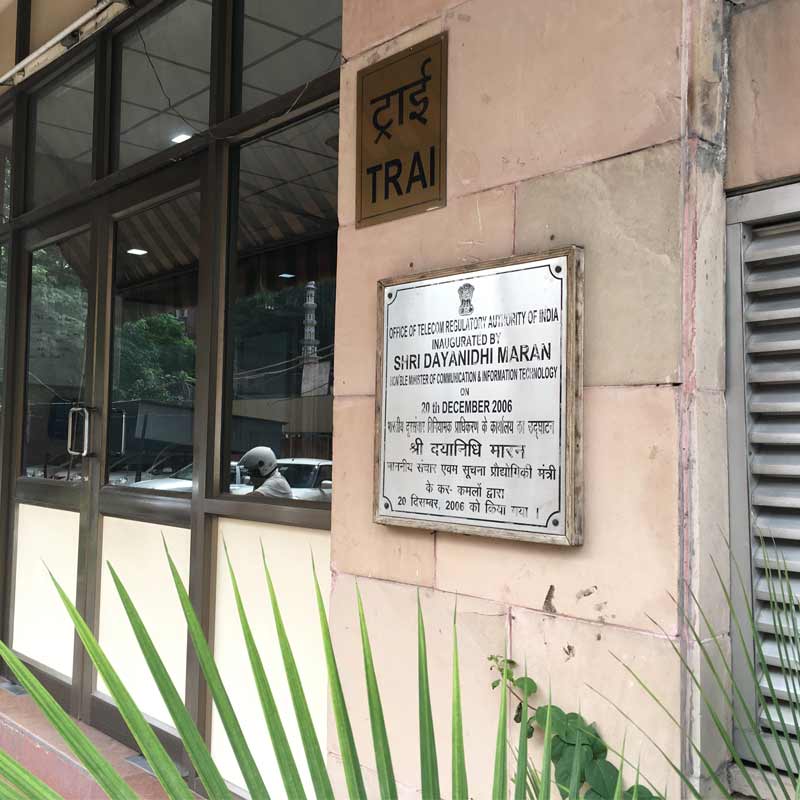
    NEW DELHI:The Telecom Regulatory Authority of India (TRAI) seems to be getting hyperactive. Just like its head the ever so aggressive Rahul Khullar.

    In the past month or so it has been releasing consultation papers and regulations like it is in a hurry. Today, it released another two draft regulations. Both relate to the interconnection agreements that broadcasters sign with distributors such as Cable TV, DTH and IPTV operators.

    Entitled the “Telecommunication (Broadcasting and Cable Services) Interconnection (Digital Addressable Cable Television Systems) (Second Amendment) Regulations, 2013” and the draft “Telecommunication (Broadcasting and Cable) Services (Fourth) (Addressable Systems) Tariff (Second Amendment) Order 2013,” they seek to amend some regulations that TRAI had passed earlier in relation to tariffs and interconnect agreements in earlier years. (Earlier, TRAI had notified the Interconnection Regulations for DAS dated 30 April 2012 as amended on 14 May last year and the Tariff Order applicable for the Addressable Systems dated 21 July 2010 as amended on 30 April last year).

    The amendments it has proposed state:

    * Multi system operators (MSOs) cannot seeks signals of a particular TV channel from a broadcaster under ‘must provide‘ clause while at the same time demanding carriage fee for carrying that channel on its distribution platform.

    * No minimum channel carrying capacity has been prescribed for the MSOs. However, the MSOs are mandated to carry the channels of broadcasters on non-discriminatory basis under the ‘must carry‘ provision.

    * The service providers of the addressable systems are allowed to price and package their offering of channels, however, they are required to comply with the modified twin conditions, as proposed in the draft amendment to the tariff order. These twin conditions are (a) the a-la-carte rate of a pay channel forming part of a bouquet shall not exceed two times the a-la carte rate of the channel offered by the broadcaster at wholesale rates for addressable systems (b) the a-la-carte rate of a pay channel forming part of a bouquet shall not exceed three times the ascribed value of the pay channel in the bouquet. The TRAI says it is doing this to ensure that the a-la-carte rates offered to the subscribers are reasonable vis-? -vis the bouquet/package rates.

    *As in the case of pay channels, operators can specify a minimum subscription period, not exceeding three months, for Free-to-Air (FTA) channels subscribed on a-la-carte basis by the subscribers.

    *Subscribers are free to choose channels on a-la-carte basis or bouquet/package basis or any combination of a-la-carte and bouquet/package.

    *Channels, such as HD orMUMBAI: According to The NPD Group, a global information company, growth in watching television programming is driving subscription video-on-demand (SVOD) viewership, and Netflix continues to clearly dominate the category.

    According to NPD‘s VideoWatch VOD report, in the first quarter of the year the number of viewers watching television shows using SVOD services increased by 34 per cent, compared to the same quarter year-ago. NPD‘s VideoWatch Digital tracking shows Netflix dominating the sector, with a 90 per cent share of video-streaming units during the first quarter, which was four percentage points lower than last year.

    In the TV category alone, which accounts for 80 per cent of streams, Netflix holds an 89 per cent share. HuluPlus showed healthy growth in 2013, with 10 per cent of TV streams in Q1, while Amazon Prime accounts for just two per cent of the overall TV units streamed.

    NPD senior VP of industry analysis Russ Crupnick said, “There‘s no doubt that Netflix is driving the growth in SVOD, particularly with increased attention to television programming. We are also seeing good gains in the streaming numbers from Hulu Plus and Amazon Prime, and while neither pose an immediate threat to Netflix it is interesting to see which services later adopters will try.”

    In the first quarter of 2012, 76 per cent of SVOD subscribers streamed only from Netflix. This year that figure fell to 67 per cent, while 10 per cent of SVOD streamers used both Netflix and Amazon Prime, and eight per cent used both Netflix and Hulu.

    Crupnick said, “Since its launch, Netflix Watch Instantly has enjoyed a virtual monopoly on the SVOD market, and the company still has a quite comfortable market-share lead. While Hulu Plus and Amazon both still have a long way to go before they come close to catching Netflix, we are beginning to see increasing trial of these services, even among some Netflix users.” 3D, requiring special type of set top boxes are to be offered on a-la-carte basis and if such channels are also offered as a part of a bouquet(s), corresponding to each such bouquet, the operator would be required to offer bouquet(s) excluding the HD and 3D channels, at a reduced price, commensurate to the rates of these HD and 3D channels.

    Written comments on these draft amendments have been invited from the stakeholders by 18 June.

    You can download the two new proposed amendment drafts by clicking on the following links:

    Telecommunication (Broadcasting and Cable Services) Interconnection (Digital Addressable Cable Television Systems) (Second Amendment) Regulations, 2013

    Telecommunication (Broadcasting and Cable) Services (Fourth) (Addressable Systems) Tariff (Second Amendment) Order 2013

  • TRAI releases draft tariff order and DAS interconnect regulations

    TRAI releases draft tariff order and DAS interconnect regulations

    NEW DELHI:The Telecom Regulatory Authority of India (TRAI) seems to be getting hyperactive. Just like its head the ever so aggressive Rahul Khullar.

    In the past month or so it has been releasing consultation papers and regulations like it is in a hurry. Today, it released another two draft regulations. Both relate to the interconnection agreements that broadcasters sign with distributors such as Cable TV, DTH and IPTV operators.

    Entitled the “Telecommunication (Broadcasting and Cable Services) Interconnection (Digital Addressable Cable Television Systems) (Second Amendment) Regulations, 2013” and the draft “Telecommunication (Broadcasting and Cable) Services (Fourth) (Addressable Systems) Tariff (Second Amendment) Order 2013,” they seek to amend some regulations that TRAI had passed earlier in relation to tariffs and interconnect agreements in earlier years. (Earlier, TRAI had notified the Interconnection Regulations for DAS dated 30 April 2012 as amended on 14 May last year and the Tariff Order applicable for the Addressable Systems dated 21 July 2010 as amended on 30 April last year).

    The amendments it has proposed state:

    * Multi system operators (MSOs) cannot seeks signals of a particular TV channel from a broadcaster under ‘must provide‘ clause while at the same time demanding carriage fee for carrying that channel on its distribution platform.

    * No minimum channel carrying capacity has been prescribed for the MSOs. However, the MSOs are mandated to carry the channels of broadcasters on non-discriminatory basis under the ‘must carry‘ provision.

    * The service providers of the addressable systems are allowed to price and package their offering of channels, however, they are required to comply with the modified twin conditions, as proposed in the draft amendment to the tariff order. These twin conditions are (a) the a-la-carte rate of a pay channel forming part of a bouquet shall not exceed two times the a-la carte rate of the channel offered by the broadcaster at wholesale rates for addressable systems (b) the a-la-carte rate of a pay channel forming part of a bouquet shall not exceed three times the ascribed value of the pay channel in the bouquet. The TRAI says it is doing this to ensure that the a-la-carte rates offered to the subscribers are reasonable vis-? -vis the bouquet/package rates.

    *As in the case of pay channels, operators can specify a minimum subscription period, not exceeding three months, for Free-to-Air (FTA) channels subscribed on a-la-carte basis by the subscribers.

    *Subscribers are free to choose channels on a-la-carte basis or bouquet/package basis or any combination of a-la-carte and bouquet/package.

    *Channels, such as HD or 3D, requiring special type of set top boxes are to be offered on a-la-carte basis and if such channels are also offered as a part of a bouquet(s), corresponding to each such bouquet, the operator would be required to offer bouquet(s) excluding the HD and 3D channels, at a reduced price, commensurate to the rates of these HD and 3D channels.

    Written comments on these draft amendments have been invited from the stakeholders by 18 June.

    You can download the two new proposed amendment drafts by clicking on the following links:

    Telecommunication (Broadcasting and Cable Services) Interconnection (Digital Addressable Cable Television Systems) (Second Amendment) Regulations, 2013

    Telecommunication (Broadcasting and Cable) Services (Fourth) (Addressable Systems) Tariff (Second Amendment) Order 2013

  • TRAI reveals that some MSOs control 80 per cent of DAS areas in some cities post digitisation

    TRAI reveals that some MSOs control 80 per cent of DAS areas in some cities post digitisation

    NEW DELHI: Indian cable, satellite TV has been drawing in investors like a honey pot attracts bees. The reason: it has continued to grow despite recession in other areas. It turned over Rs 34,000 crore representing around 42 percent of the total media industry with the country having 15.5 crore TV households at the end of year 2012.

    A consultation paper by the Telecom Regulatory Authority of India (TRAI) on Monopoly/Market dominance in Cable TV services says this is just the tip of the iceberg. There‘s a lot more scope for growth as TV penetration in India is still at approxminately 60 per cent of total households.
     
    TRAI had received a reference dated 12 December last year from the Indian information & broadcasting ministry seeking TRAI’s recommendations in view of the fact that it has become necessary to examine whether there is a need to bring in certain reasonable restrictions on MSOs and LCOs including restricting their area of operation or restricting subscriber base to prevent monopoly as cable TV distribution is virtually monopolized by a single entity in some Indian states.

    In the paper, TRAI has sought stakeholders‘ views on whether the state should be the relevant market for measuring market power in the cable TV sector or suggest alternatives. In the first place, TRAI wants to know if stakeholders agree that there is a need to address the issue of monopoly/market dominance in cable TV distribution and how the ill effects of monopoly/market dominance can be addressed. TRAI has sought to know whether, to curb market dominance and monopolistic trends, restrictions in the relevant cable TV market should be based on area of operation or based on market share.

    Asking a series of fifteen questions, TRAI has said it wants written comments on the consultation paper by 24 June and Counter comments, if any, by 1 July.

    Cable TV has grown significantly with the number of subscribing households increasing from just 410,000 in 1992 to more than 9.4 crore by the end of March 2012, says the TRAI consultation paper.

    And although direct-to-home (DTH) has emerged as an alternate to cable TV and its pulling in subscribers at a faster rate than cable TV, the percentage of cable TV homes is significantly higher vis-a-vis DTH subscribers which numbered an estimated 5.45 crore by the end of year 2012.

    Cable TV subscribers constitute approximately 60 per cent of the total TV homes in the country, whereas the share of DTH is about 35 per cent. DTH operates on a national basis and transmits all channels throughout the country irrespective of variations in demand of channels in different markets. Cable TV networks on the other hand operate on a regional basis and can choose channels to be supplied according to the demand in the area served. In the pay DTH sector, there are six major players providing services on a national basis. In contrast, Cable TV operators are limited in a particular area and in most cases the customer is served by a single local cable operator. On the technical front also, there are differences between DTH and cable TV in terms of the number of channels .

    The increase in the subscriber base has also led to commensurate growth on the supply side. India today has a large broadcasting and distribution sector, comprising 828 television channels, around 6,000 multi system operators (MSOs), approximately 60,000 local cable operators, 7 DTH/ satellite TV operators and a few IPTV service providers and one terrestrial TV operator, the pubcaster Doordarshan. .

    Pointing out that there are currently no restrictions on the area of operation and accumulation of interest in terms of market share in a city, district, state or country by individual MSOs and LCOs in cable TV, TRAI says it has been observed in some states that a single entity has, over a period of time, acquired several MSOs and LCOs, virtually emerging as a monopoly. In such states, operation of a major portion of the cable TV network is controlled by a single entity. Such monopolies/market dominance are clearly not in the best interest of consumers and may have serious implications in terms of competition, pricing, quality of service and healthy growth of the cable TV sector.

    Technological developments, particularly use of packet switched digital communications, have made it possible to provide Internet access as well as telephone services over cable TV networks. Therefore, cable TV networks can become a cheaper and more convenient way of providing broadband and voice services, as cable TV networks already have outreach to a large number of households. Then, there is the possibility that the effects of monopoly/market dominance in cable TV distribution could also extend to other services, such as voice and broadband, which are carried on cable.

    The Cable TV Network (Regulation) Act 1995 and the Cable TV Rules do not restrict the number of MSOs/LCOs operating in any particular area. There are MSOs which operate at the national level, while others operate either on regional level or in a smaller area.

    Some of the prominent national MSOs are DEN Networks Ltd., Digicable, Hathway Datacom, IndusInd Media and Communication Ltd. and Siti cable. Some of the prominent MSOs that are operating in regional markets are Fastway, GTPL, KAL Cables (Sumangali), Ortel, Asianet, Tamil Nadu Arasu Cable TV (TACTV) Corporation Ltd., Manthan, JAK communications and Darsh Digital. However, the majority of the remaining are small, local (city based) MSOs with a subscriber base of a few thousand.

    In the case of analogue platforms which are non-addressable, LCOs had the option of downlinking free to air (FTA) channels directly from broadcasters without the help from MSOs. Pay channels were obtained by LCOs through MSOs as these are transmitted by broadcasters in encrypted form. MSOs obtain signals from broadcasters, decrypt the encrypted signals and supply these to LCOs for distributing to consumers.

    With the implementation of DAS, the business model has undergone a change as now only MSOs can receive signals from the broadcasters as per the Cable TV Networks Rules, 1994 as amended on 28 April 2012. In the case of DAS, both FTA and pay channels received from the broadcasters are transmitted to LCOs in encrypted form by the MSO. The MSO maintains a Subscriber Management System (SMS) where details about each customer and his/her channel preferences are stored. All the channels are now decrypted at the customer end through a set top box (STB) programmed by the MSO as per details in the SMS. Therefore, in the DAS environment, MSOs play a key role in distribution of both FTA and pay channels. Thus, with the changed scenario in DAS, the issue of dominance in the cable TV sector needs to be addressed at the MSO level.

    TRAI has also observed that the level of competition in the MSOs‘ business is not uniform throughout the country; certain states (e.g. Delhi, Karnataka, Rajasthan, West Bengal and Maharashtra) have a large number of MSOs.

    On the other hand certain markets like Tamil Nadu, Punjab, Orissa, Kerala, Uttar Pradesh and Andhra Pradesh are characterized by dominance of a single MSO. However, the same MSO is not dominant in all states. While it could be argued that because of larger size, an MSO is able to reap the benefit of economies of scale and pass on the benefits to the customers, in practice such dominance in certain markets can and has led to non-competitive practices.

    In case the loss in consumer welfare due to inadequate competition outweighs the gains from economies of scale, measures will obviously be required for promoting competition. It is in this backdrop that the question arises whether there is a need for any restrictions to be imposed on MSOs/LCOs to prevent monopolies/accumulation of interest so as to ensure fair competition, the TRAI asks in the consultation paper.

    In a well-functioning competitive market, where firms are competing on fair terms and there are no artificially erected barriers of entry, there may not be any need to impose restrictions. However, if there is little or no competition in the market or in case where barriers to entry are erected by incumbents, there is the distinct possibility of the abuse of market dominance by the incumbent service provider (s).

    The TRAI paper has revealed that the MOSs have the following share of STBs seeded through phase I and phase II of digitisation: Hathway (23.5 per cent), Den (18.5 per cent), Siticable (11 per cent), IMCL (10.6 per cent), Digicable (10.1 per cent), Fastway (6.3 per cent), GTPL (6 per cent), KAL (3 per cent) and others (11 per cent).

    The exact market shares of the MSOs are not available because in the analogue platform the number of subscribers cannot be accurately ascertained due to non-addressability and the lack of transparency in reporting of subscriber base. Once DAS is implemented, cable TV services will have to be provided through a set top box and it will be possible to obtain the exact number of customers through the subscriber management system of the MSO.

    TRAI‘s studies have further shown that some MSOs are controlling more than 80 per cent of the DAS market in some cities. Since subscriber figures for the state are not available, the share of STBs seeded in DAS market could be used as a proxy for market share for the entire state.

    The size of markets catered to (across states, cities and even localities) by an MSO determines its market power and influence. One of the ways in which MSOs have tried to expand and increase their size (and influence) is by buying out LCOs and smaller MSOs. The joint venture/ subsidiary model has emerged as a result of mergers and acquisitions (M&A) of LCOs/MSOs by large MSOs. The MSOs have varying levels of ownership interest in these LCOs. Typically, MSOs provide more favorable terms and financial assistance to joint venture companies and subsidiaries. The point is that, by way of acquisition, joint venture or subsidiary, some MSOs have been increasing their presence and size leading to a situation of market dominance.

    TRAI has also found instances where the dominant MSOs are ‘â€?misusing their market power to create barriers of entry for new players, providing unfair terms to other stakeholders in the value chain and distorting the competition. MSOs with significant reach (i.e. a large network and customer base) are leveraging their scale of operations to bargain with broadcasters for content at a lower price and also demand higher carriage and placement fees. Such MSOs are in a position to exercise market power in negotiations with the LCOs on the one hand, and with the broadcasters on the other.‘

    TRAI says that large MSOs, by virtue of securing content at a lower price and charging higher carriage and placement fee from broadcasters, are in a position to offer better revenue share to LCOs. ‘They, therefore, can incentivize LCOs to move away from smaller MSOs and align with them. Such MSOs use their market power to provide unfavourable terms or make it difficult for the broadcasters to gain access to the distribution network for reaching the customers. There are instances where a dominant MSO has made it difficult for some broadcasters to have access to its distribution network for carrying content to consumers. Blocking content selectively can also become an obstacle to promoting plurality of viewpoints.‘
  • Trai’s tariff order gets a mixed response from leading MSOs and DTH service providers

    Trai’s tariff order gets a mixed response from leading MSOs and DTH service providers

    MUMBAI: Cable TV and DTH industry executives have given a mixed response to the standard tariff package order which they can charge subscribers for set top boxes (STBs) and consumer premise equipment (CPE) that the Telecom Regulatory Authority of India (Trai) announced late last evening. Called The Telecommunication (Broadcasting & Cable) Services Fifth – The Digital Addressable Cable TV Systems Tariff Order 2013 and The Telecommunication (Broadcasting & Cable) Sixth -The Direct to Home Services Tariff Order 2013, respectively, they seek to offer another option for buying STBs to TV viewers in India.

    Leading Indian MSO DEN Networks COO M.G. Azhar was reasonably happy about the orders being release. Says he: “It is good news. Under the new order, the government has standardised a payback period of three years for the STB/CPEs.”

    He, however, confessed that he does not know how much of an impact it would have on consumer offtake. “Our experience shows that we have not had too many subscribers opting for the basic STBs which we have been offering to them in the past with similar packages,” he reveals. “We used to take Rs 600 or so when a consumer signed on for DEN‘s DAS services and then adjust the cost of the STB through the subscription fees we levied every month. Normally, we have been seeing more offtake coming for the better STBs.”

    Some like Tata Sky MD and CEO Harit Nagpal said it was too early to respond to the media about the Trai tariff orders. “We are responding to the Trai on this directly,” he explained. “We are seeing how quickly we can implement it.”

    Videocon d2H CEO Anil Khera admitted that he was not so sure if the orders would be acceptable to all. But he added that his company was trying to understand what its impact would be on the DTH sector. “We are currently studying the order and seeking legal advice as well, we are still trying to understand the logistical issues,” stated Khera.

    Indusind Media & Communications Ltd MD Ravi Manshukhani, was pretty non-committal about the Trai‘s new orders. “Whatever they have put out is absolutely fair, we just hope that we are able to implement whatever is required from our end with support from the government,” he stated.

    But he also highlighted that the operator should have the right to quote his price for the STBs he is giving his customers. He cautioned: “See the government is playing its part in creating guidelines for the sector, but they do not know what is actually happening on the ground. We have not yet matured as a market to provide what Trai wants. Right now we all are in the process of digitising the country as per the demands of Trai and ministry of information and broadcasting, so we are providing the boxes at whatever prices we can. If there are more rules and regulations like this then it is only going to make things painful.”

    So the verdict of the industry on the new Trai tariff orders seems rather unclear. Let‘s wait and watch, and see how they react to it over the next few days.

    Also read:

    Trai issues Tariff Orders for STBs/CPEs for DTH and cable TV operators

    TRAI acts tough about DAS; moves court against cable TV ops

    Trai issues draft tariff package for STBs/CPEs for DTH and cable TV ops

  • TRAI acts tough about DAS; moves court against cable TV ops

    TRAI acts tough about DAS; moves court against cable TV ops

    MUMBAI: The Telecom Regulatory Authority of India (TRAI) is flexing its muscles. The telco regulator has taken about a dozen cable operators to a Delhi court for not providing details of subscribers of set-top boxes (STBs) to multi-system operators (MSO) which is necessary to ensure accountability in digitisation of cable TV services.

    The regulator has filed a complaint before chief metropolitan magistrate Vidya Prakash, saying that cable TV operators have not been complying with its regulations relating the government mandated digital addressable system (DAS). Under this, cable ops are supposed to attach a set top box to TV sets of their subscribers. And they have to provide customer details along with their choice of services, choice of channels and bouquets. But they have not been forwarding these to the MSO, the TV signals of which they are delivering to their subscribers. TRAI had ordered this to be the norm to ensure transparency and acccountability.

    The regulator had in May 2012 issued its standards of quality of services (Qos) which provides for connection, disconnection, transfer, shifting of the cable TV services, procedure for handling subscribers complaints and redressal, for obtaining/ supplying STBs, changing the position of channels, payment of bills and responsibilities of cable operators and MSOs for ensuring quality of service at the subscriber level.

    According to the QoS, cable ops had to mandatorily provide consumer information. But when it was getting updates about the spread of digitisation in phase I in the four metros, it discovered that some linked cable ops were shying away from providing relevant consumer details like total number of STBs seeded and operationalised, their choice of channels, bouquets and about subscribers. The TRAI also disclosed that the cable ops have failed to comply with its notices.

    Small cable ops have been having run-ins with the TRAI from time to time, fearing future survival in a scenario where the MSO ends up building a direct relationship with their subscribers.

  • Trai issues Tariff Orders for STBs/CPEs for DTH and cable TV operators

    Trai issues Tariff Orders for STBs/CPEs for DTH and cable TV operators

    MUMBAI: The Telecom Regulatory Authority of India (TRAI) late last evening issued two tariff orders prescribing standard tariff package for set top boxes (STBs) for digital addressable cable TV systems (DAS) and Consumer Premises Equipments (CPEs) for Direct to Home (DTH) services. The prime objective of these tariff orders, TRAI says, is to ensure effective commercial interoperability.

    The said tariff orders have been devised to make available STBs / CPEs at a reasonable price and, lucid and easy to understand, terms and conditions as well as to take care of the interests of the service providers. This would also promote healthy competition amongst the operators which would ultimately benefit all the stakeholders of the sector, including the consumers.The standard tariff packages for STB/CPE on rental basis are to be offered mandatorily by DTH and cable TV operators.

    As per the two tariff orders issued and notified on 27 May, cable TV operators and DTH service providers will be in a position to provide four options to consumers with differing rental and security deposit plans. DAS service providers can provide the STBs at a monthly rent of Rs 55.66 or Rs 50.66 (excluding taxes) if the security deposit is Rs 400 and Rs 800 respecitvely. For DTH service providers, the monthly rent for the CPE has been mandated at Rs 71.75 and Rs 65.50 if the security deposit is Rs 500 and Rs 1000 respectively.

    The entire security deposit will be refunded to subscribers at the end of three years and the STB or CPE will belong to the customer. Should the customer choose to clip the service earlier under these options, he will still get the entire STB security depost refunded.

    The tariff orders have also given options where the security depost is adjustable against the monthly rent. Thus DAS service providers can offer the STBs at a monthly adjustable rent of Rs 46.80 or Rs 32.93 if the security deposit is Rs 400 and Rs 800 respectively. And DTH service providers can provide STBs at a monthly adjustable rent of Rs 60.66 and Rs 43.32 if the security deposit is Rs 500 and Rs 1000. Under these options, should the customer choose to exit the DTH or CAS service, he will be entitled to a refund depending on the month he is discontinuing the service.

    For instance, if he moves out in month twelfth of year one of the Rs 500 adjustable security deposit plan for DTH, he will be entitled to get a refund of Rs 370.18. If the exit takes place in month 24 the refund amount has been drawn up to be Rs 192.05.The TRAI has similarly drawn up tables which clearly spell out how much the refund would be. The two orders which clearly explain this are called The Telecommunication (Broadcasting & Cable) Services Sixth – (The Direct to Home Services) Tariff order 2013 and The Telecommunication (Broadcasting & Cable)Fifth – (Digital Addressable Cable TV Systems) Tariff Order 2013 TARIFF ORDER, 2013 and have been made available on the TRAI web site trai.gov.in.

    To see the standard tariff plan for DTH Click Here

    To see the standard tariff plan for DAS Click Here

    The charges which have been mandated by TRAI include the installation fee, activation fee, smart card viewing charges, and repair and maintenance for three years.

    The regulator has said that, while these packages are mandatory, service providers can also make other offers to subscribers.It has also stated that these specific packages are prescribed for “plain vanilla STBs/CPEs” and not for the exotic ones with recorders and HD and 3D STBs.

    The Standard Tariff Package for Cable TV operators has been worked out on the basis of the following facts and figures as provided by the Industry stakeholders/ Associations:-

    a) The total cost of STB has been taken as Rs 1750.

    b) Life span of STB has been taken as three years.

    c) The residual value has been taken as nil.

    d) Rental per month is based on cost of STB on Equated Monthly Installment (EMI) Basis @15 per cent per annum (@1.25 per cent per month) for a period of 36 months.

    The Standard Tariff Package for DTH operators has been worked out on the basis of the following facts and figures as provided by Industry stakeholders/ Associations;

    a) The total cost of CPE has been taken as Rs 2250.

    b) Life span of CPE has been taken as three years.

    c) The residual value has been taken as nil.

    d) Rental per month is based on cost of CPE on Equated Monthly Installment (EMI) Basis @15 per cent per annum (@1.25 per cent per month) for a period of 36 months.

    In case of un-installation/discontinuance of service before the last day of the month, balance security deposit shown as refundable at the end of that month will be refunded on return of Customer Premises Equipment.

    No installation charges or re-installation charges (except in case of shifting of connection) or activation charges or smartcard/ viewing card charges is to be levied by the DTH operator/or DAS service provider on the subscriber.

  • Dish TV slashes losses in FY 2013; outlook improves

    Dish TV slashes losses in FY 2013; outlook improves

    MUMBAI: The Zee TV group DTH service provider Dish TV India Ltd (Dish TV) is slowly but gradually emerging from a sea of red ink; especially if one looks at the company‘s financials for the year ended 31 March 2013. Losses have been more than halved to Rs 66 crore from Rs 133.14 crore in the previous fiscal. Even its quarter losses have been reduced. Additionally, it added new subscribers in Q4 2013 at 200,000, taking up its net subscribers to 10.7 million.

    And things look likely to get even better for it if one goes by the massive 27 per cent it commands of the DTH market, and the fact that it is looking at raising average revenues per user (ARPUs), reducing customer subsidies in the medium term and in the process increasing profitability.

    Let us look at the standalone Q4-2013 results as against the corresponding Q4-2012

    Revenues for Q4 FY 2013 stand at Rs 555.40 crore, a rise of 7.5 per cent from the corresponding last year quarter Rs 516.44 crore. Subscription revenues at Rs 500 crore recorded a growth of 15.3 per cent. Total expenses too went up 7.4 per cent, standing at Rs 580.36 crore in Q4 FY 2013 (Rs 540 crore in Q4 FY 2012). Programming and content cost accounted for a large chunk of this increase rising 34 per cent during this period to Rs 196.72 crore as against Rs 146.76 crore.

    Although Dish TV reported a loss of Rs 43.62 crore, it is a 11 per cent improvement over the Q4-2012‘s loss of Rs 49 crore.

    Let us take a look at the Q4-2013 financials in comparison with Q3-2013

    Revenues in Q4-2013 have marginally decreased by Rs 2.42 crore as against Rs 557.82 crore reported in Q3-2013. While programming and content costs have risen by over 20 per cent to Rs 196.72 crore (Rs 162.69 crore in the immediate preceding quarter), it has got more efficient while reducing its selling and distribution expenses to Rs 74.2 crore (Rs 90 crore.). Additionally, it scaled down its advertising expenses by 30 per cent to Rs 16.6 crore (Rs 23.7 crore). EBITDA in Q4 2013 fell 12.8 per cent to Rs 120 crore against Rs 137.77 crore in Q3-2013. And losses fell to Rs 43.62 crore as opposed to Rs 44.48 crore.

    Dish TV has increased its new subscriber prices and pack prices in the past few months and has managed to bring down its subscriber acquisition cost (SAC) to Rs 1,996 as against Rs 2,201 in the immediate preceding quarter.

    The company added 200,000 net subscribers in Q4-2013- its lowest net new adds for a quarter since 2007 – taking its net subs base to 10.7 million. This low net add figure has alarmed some observers; but this has happened at a time when India is going through a gut wrenching change of digitisation of its cable TV infrastructure. Phase II of digitisation has been moving rather slowly with cable TV operaors in many cities which were supposed to come under the digitisation hammer fighting the government‘s mandate in courts and getting stay orders. So, many subscribers there are continuing to receiving analogue signals and hence have not moved to digital as yet. Hopefully, in the coming days as digitisation moves forward DTH providers will have some spillover benefits of subs moving to digital services.

    Dish TV‘s ARPUs were also lower for Q4-2013 at Rs 157 as against Rs 160 for the immediate preceding quarter.

    Let us look at the consolidated FY-2013 results as against FY-2012

    FY-2013‘s consolidated revenues stood at Rs 2,166.80 crore, a rise of 10.7 per cent as against last fiscal‘s Rs 1957.9 crore. It reported an EBITDA of Rs 575.9 crore as against Rs 496 crore last fiscal (a 16.1 per cent increase) with its EBITDA margin standing at 26.7 per cent.

    It has reported a 5.1 per cent YoY increase in content costs as against an overall increase of 11.5 per cent in total expenses to Rs 2,215 crore (Rs 1,983.8 crore).

    What is noteworthy is the way it has managed to bring down the net loss for FY-2013 to Rs 66 crore compared to Rs 133.14 crore in FY-2012. The earnings per share (EPS) too has shown a massive improvement from a negative Rs 1.25 to a negative Rs 0.62.

    Dish TV has a bouquet of 400 plus channels and it added another five HD channels in April 2013 taking its offering to 42 HD channels and services on its platform. Most analysts are bullish on the stock, currently trading at Rs 64.30.

    Says Dish TV chairman Subash Chandra, “In the media sector, digitisation, though not fully up to speed, holds big potential for the industry. DTH platforms, in particular, look forward to a level playing field contributing to meaningfully higher ARPUs and stickier subscriber bases over time. Dish TV‘s industry leading initiative, to hike acquisition and pack price is likely to be a catalyst to achieve that.”

    Dish TV recently launched India‘s first standard definition recorder, Dish+ with an unlimited recording facility. This was initially launched in the 42 cities covered under Phase 1 and Phase 2 of digitisation and is now available across India as a value for money differentiator over its competitors‘ offerings.

    Dish TV managing director Jawahar Goel points out that fiscal 2013 saw most players in the Indian DTH industry evolve to the next level and Dish TV led the industry and helped it pull off a significant increase in the new subscriber acquistion price over the last several months thereby reducing the effective cash burn per subscriber.

    “While the resultant decline in industry gross additions is marginal, it is expected to be well compensated by the quality of subscribers,” he highlights. “There was no respite though from the multiple taxation which the DTH industry is reeling under. Uncertainty on the rollout of goods & services tax (GST) continues to be an overhang on the earnings potential of the industry,”

    He is quite confident that DTH will score over cable TV thanks to the strong service back up the sector has built and its increasing focus on value growth rather than chasing subscriber numbers.

    “On the digitisation front, the MSO‘s readiness on encryption, packaging, dunning and effective business processes is taking undue time. With increasing expectations, customers however will gradually align to a technologically progressive and service oriented mass-scale platform, albeit at a premium. Dish TV has experienced strong though early signals of churned subscribers getting back to its platform in select markets in the current quarter,” says Goel says in a parting statement.

    Other points for FY 2013 to be noted are:

    * The company set up a 70:30 joint venture company Dish T V Lanka (Pvt) Ltd on 25 April 2012 under the laws of Sri Lanka with Satnet (Pvt Ltd). Satnet has a DTH licence and the joint venture will work on providing DTH related service in the island country.

    * The company has extended the life of the consumer premises equipment (CPE) for depreciation purposes of to five years for equipment activated on or after 1 April 2012. Upto 31 March 2012, in certain cases, the one-time advance contribution towards the CPEs in the form of rental was being recognized over a period of three years from the activation date. There is no significant impact on financial results of the quarter and year-ended 31 March 2013 on account of change in estimate for revenue recognition.

    * Dish TV’s net-worth as at 31 March 2013 is eroded by its accumulated losses. However, the management has prepared the financial results assuming that the Company will continue as a going concern considering that it has adequate resources in the form of operating cash flows, sanctioned credit facilities from lenders and bank deposits to adequately meet its obligations.

    * The name of the Company’s wholly owned subsidiary in Singapore, namely, Dish TV Singapore Pte Limited was changed to Digital Network Distribution Pte Limited on 12 March 2013. The Company entered into a share purchase Agreement dated 19 March 2013 with a party for transfer of its investment at an agreed price of Sing$12,000. On 1 April 2013, the share holding in Digital Network Distribution Pte Limited was transferred and, accordingly, as at 31 March 2013, the investments has been shown under current maturities of long term investment.

    * During the current year, Direct Media Distribution Ventures Pvt. Ltd (formerly known as Dhaka Warriors Sports Pvt Ltd) disinvested its holding in the Company from 59.86% to 45.24% and consequently, it ceases to be the holding company of Dish TV India Limited.

    *Hitherto, the exchange differences arising from foreign currency borrowing to the extent that they are regarded as an adjustment to interest cost, were treated as borrowing cost in terms of AS – 16, “Borrowing Costs.”

    During the year ended 31 March 2013, pursuant to a clarification dated 9 August 2012 from the MCA, the Company has changed the accounting policy w.e.f. from 1 April 2011, to treat the same as “foreign exchange fluctuation”, to be accounted as per AS – 11 “Effects of Changes in Foreign Exchange Rates,” instead of AS – 16 “Borrowing Costs”.

    This change has resulted in a reversal of finance cost of Rs. 70.68 crore and increase in depreciation by Rs. 11.24 crore during the year ended 31 March 2013. The aforesaid change, resulting in a net gain of Rs 59.44 crore, has been shown as ‘exceptional items’ in the financial results for the year ended 31 March 2013. In this regard, if the company had followed the same accounting policy as in the previous year, finance costs for the year would have been higher by Rs 58.41 crore; depreciation expense would have been lower by Rs 14.15 crore and the loss for the year would have been higher by Rs 44.26 crore.

  • LCOs on the warpath in Kolkata, allege MSOs not playing fair in DAS

    LCOs on the warpath in Kolkata, allege MSOs not playing fair in DAS

    NEW DELHI: Cable TV operators in Kolkata have launched an agitation against the multi-system operators (MSOs) and broadcasters for failing to set proper rates and bouquets for the consumer.

    A representative of the operators told indiantelevision.com in Kolkata that the state government had added a further complication by levying a charge of Rs 70 as service tax for every set top box installed which the LCOs feel is illegal.

    The LCOs have sought a meeting with the State finance [Click and drag to move] minister in Kolkata in this connection.

    Even though the revenue share between the LCOs and MSOs is not clear and the packages being offered to the consumers are vague with no agreements having been signed, the LCOs say that Siti Cable and Indian Cable Network Company Ltd have sought help from the police which has imposed Section 144 for restricting entry of LCOs.

    Ratan Jaiswal who represents the Sangram Committee of the LCOs told indiantelevision.com that the number of digital STBs installed at present was less than forty per cent in the eastern metropolis.

  • Indian HD TV channels: attracting brands, and media agencies

    Indian HD TV channels: attracting brands, and media agencies

    MUMBAI: There was a time not so long ago when Sony Entertainment Television‘s Six HD channel was getting almost no TV commercials. It was the place where you got to watch sports almost uninterrupted.

    No more.

    With the Sony Entertainment Network and other TV networks focusing on increasing their respective HD TV channels‘ reach, and MSOs and cable TV operators and DTH operators beginning to offer and attracting subscribers for the clearer HD TV channel services, it is no surprise to see TVCs on the trot on HD channels.

    Says Sony Six and Max executive vice president and business head Neeraj Vyas: “Advertising has started in HD and it will eventually catch on, after all everyone is looking to do business. You can’t be running a channel which is free of advertising. Once subscriptions settle down post digitisation, we will witness an even greater rise in the number of ad spots on HD TV channels as well.”

    Among the brands which have started advertising on Sony Six HD during the ongoing Pepsi IPL6 include: Pepsi, Parle Krackjack, Raymond, Matrix, Renault Duster, LG, Samsung Galaxy Note 4, Vicco, Frooti, Godrej Good Knight and Coke.

    Media industry sources reveal that advertising on HD entails a fraction of the cost that is usually spent for TV spots on regular standard definition channels. Says a media agency CEO: “If a media buyer wants to buy ad spots for all the 76 matches on Max for IPL6, the rates will be approximately Rs 4,25,000 for 10 seconds and for Sony Six HD the rates will be Rs 50,000 for 10 seconds.”

    Vyas agrees that TV commercials rates today are far lower on HD transmission than standard definition television ad rates, but that is because of low HD TV penetration rates in India. “My estimate is that there are about 1.2 to 1.4 million HD TV subscribers in India,” he says. “But it is, however, a step in the right direction because everything globally is moving towards HD.”

    “The fact of the matter is that advertisers and agencies should look at using HD channels more to air their TV commercials,” says a media observer. “For certain brands and categories, they are ideal vehicles to reach out to selected targeted audiences.

    HD subscribers are normally well-heeled, have travelled, have large disposable incomes, are looking for better things out of life, and are willing to pay for them. Hence, automobiles, expensive phones, travel services, airlines, computers and tablets, high end fashion brands would do well to use HD channels to advertise.”

    Estimates are that HD TV channel advertising accounts for barely a quarter per cent of ad spends on TV in India. But the increasing uptake of HD TVs and channels by consumers indicates that it is a medium that is going to engage media agencies and advertisers.

  • Hyderabad-based MSO chooses Conax for transmitting signals to LCOs

    Hyderabad-based MSO chooses Conax for transmitting signals to LCOs

    NEW DELHI: Indian multi-system operator Bhagyanagar Digital Services Pvt Ltd of Hyderbad is using selected Conax to transmit signals to cable TV operators with a cost effective and flexible content security (CAS) solution for enabling smooth digital migration and development of subscriber bases.

    Conax will empower Bhagyanagar Digital Services with smooth transition to the benefits of digital services and the integration of new secure content distribution offerings and easy upgrade to future services and business models such as multi-device and broadband content delivery.

    Bhagyanagar Digital Services is a large consortium of cable TV operators based in Hyderabad. Conax will guide the Bhagyanagar cable TV operators in navigating the new digital landscape and deploying secure distribution of new pay TV content models. The partnership will enable Bhagyanagar Digital Services‘ operators to significantly reduce churn, overcome the challenges of digitisation and harness the opportunities provided by the new digital environment.

    The new solution, complimented by Conax‘ advisory role, will help position and secure the Hyderabad operator‘s regional roadmap into the future. The Conax Contego Broadcast solution will also offer Bhagyanagar with total, state-of-the-art security for one-way operations and comprehensive support for subscription, pairing, fingerprinting and messaging, with optional support for DRM control and pay-per-view. Introduction of new consumer offerings such as video-on-demand and advanced multiscreen services can be smoothly integrated to the existing platform to support future growth demands.

    Bhagyanagar Digital Services MD A V Pullarao said, “Key factors in selecting Conax include the expert guidance we have received, flexibility, India based 24/7 support service, long experience in digitization and strong proven security track record in both India and around the globe. Additionally, Conax offers us short-time-to-market and a wide range of security-certified, cost effective set-top-boxes.”

    Conax vice president (Asia sales) Are Mathisen added, “In deploying Conax Contego Broadcast, Conax will guide Bhagyanagar Digital Services‘ pay-TV operators in building a strong foundation for subscriber and revenue growth during this exciting digitization phase, including a strong roadmap for integrating additional types of networks and services in the future. Conax has a long tradition of furnishing world-class content security, features and functionality for small, medium and large -sized operators.”