Tag: cable TV

  • I&B ministry to take up cable TV monopoly recommendations

    I&B ministry to take up cable TV monopoly recommendations

    MUMBAI: The inter-ministerial committee in the information and broadcasting ministry (MIB) is likely to take up the Telecom Regulatory Authority of India’s (TRAI’s) recommendations on controlling monopoly/market dominance in the cable TV sector this week. These were released by the TRAI on 26 November 2013. This was revealed by MIB minister Manish Tewari to the Times of India (TOI) yesterday.


    According to the TRAI recommendations, a barometer known as the Herfindahl Hirschman Index (HHI) is to be used to measure monopoly of MSOs or cable TV service providers in a market which as defined as a state (with certain exceptions).


    The recommendations state that “the threshold value for any individual/group/entity contribution to the market HHI should be no more than 2500.”  According to the TOI report, this constitutes 50 per cent market share, the market being defined as a state.


    The TRAI recommendations further state that “any M&A among MSO(s) or between an MSO and LCO in a relevant market shall require the prior approval of the regulator. The decision on any proposal, complete in all aspects, shall be conveyed within 90 working days.”


    They go on to further add that in “the cases where any group’s contribution to HHI in a market is more  than 2500 as on the date of issue of guidelines, such legal entity/ ‘group’ shall take necessary remedial measures, within 12 months from the date of issue of guidelines, so as to limit  its ‘control’ in various MSO(s)/ LCO(s) in such a way that the  contribution to market HHI of that ‘group’ reduces to less than or equal to 2500.”


    Tewari told the TOI that the ministry was “seriously looking at introducing a cap on the market share of MSOs to stop monopolistic practices, whether due to political pressure or political ownership, to protect plurality and diversity of content.” 

  • Man Jit Singh likely to continue as IBF president

    Man Jit Singh likely to continue as IBF president

    MUMBAI: It was in early January of this year, that a major announcement emerged from MultiScreen Media (MSM – Sony Entertainment) wherein NP Singh was announced as CEO of the network, replacing Man Jit Singh. 


    The industry hadn’t digested the news when another one broke which stated that  Man Jit Singh was being moved into a global position as president of  Sony Pictures Home Entertainment, replacing David Bishop who will depart in March when his contract expires.


    What this elevation means is that Man Jit Singh will now be located in Los Angeles (LA). 


    So what does it mean for Indian Broadcasting Foundation (IBF) of which he is the president?


    Last year in September, the IBF re-elected Singh as its president at its 14th annual general meeting. But with him spending more time in LA, will IBF look for someone else to take his place? 


    No, comes the unanimous response from highly placed industry sources. An IBF representative states that:  “Man Jit Singh will continue to preside over the body as the president. For us, things are working smoothly and we don’t expect to see any changes.”


    Another source from the industry who is in agreement adds, “There is a board meeting to discuss the issue on 16 of this month but we see status quo being maintained.”


    When we called up Man Jit Singh to get his view on the same, he was unreachable. However, sources reveal he will be jetting to and fro between India and the US even now like he used to earlier. “He is used to the travel and has been doing it for ages now, so we don’t think distance is going to change anything.”

  • Chennai Corp cracks the whip on cable TV ops

    Chennai Corp cracks the whip on cable TV ops

    MUMBAI: A major crackdown on cable TV operators is taking place in Chennai. 


    The Chennai civic body, The Chennai Corporation has gone on a drive to collect infrastructure usage and registration charges from local cable TV operators in the city.


    Sources in Chennai revealed that around 16 companies were given legal status after they coughed up Rs 1 crore to the corporation. Currently, the civic body charges Rs 9,400 per km as infrastructure use rent to cable TV and telecom operators, though a proposal to hike it to Rs 32,000 is pending with the government. 


    The Chennai Corporation has been trying to clean up the city and had issued orders to its employees and staff to snap cables of the operators who did not pay up. It expects to collect another Rs 1 crore in the coming week. 

    The civic body is expected to next streamline the way the cables have been strung over head all over Chennai, say officials.

  • Rovi announces guide solution for SD and HD digital terminal adapters in North America

    Rovi announces guide solution for SD and HD digital terminal adapters in North America

    MUMBAI:  Rovi Corporation ROVI +0.07%  , a global leader in entertainment discovery, today announced the launch of a guide solution for standard definition (SD) and high definition (HD) digital terminal adapters (DTAs) devices for North American cable operators. With the addition of this new guide, Rovi now offers discovery solutions that span across the array of cable platforms – from basic DTAs and advanced digital video recorders (DVRs) to second screen devices – that can help cable-TV service providers improve the user experience across their entire subscriber footprint.


    Frequently used for secondary televisions not connected to an advanced digital set-top and in homes that subscribe only to basic cable services, DTAs are basic cable boxes used to enable cable operators to upgrade their systems to an all-digital environment. In North America, cable companies are transitioning to all-digital in order to support bandwidth intensive services such as HD channels, multi-screen devices, and high speed data that are becoming increasingly popular with subscribers. DTAs provide cable operators with opportunities to more easily expand their service offerings, optimize the use of bandwidth, and enhance the experience for consumers by introducing a guidance experience on more set tops across their subscriber-base in North America.


    The capabilities included in the Rovi DTA Guide are the ability to find out what’s on TV, tune channels directly from the program grid, set parental controls, and set language options for the guide and audio. Rovi DTA Guide, anticipated to be broadly available to North American cable operators in early 2014, supports the growing market for DTA set-top boxes in this industry-wide transition to an all-digital environment. Rovi is currently working with many DTA providers, such as Cisco, Evolution Digital and Pace, to test and pre-port Rovi DTA guides.


    “For many cable TV subscribers, the guide has been designated as ‘only for the advanced DVR.’ Now that it is available on lower-end devices in addition to the premium set top box, cable TV subscribers including Basic and Expanded Basic households, can enjoy a better experience on every TV in their home,” said Michael Buchheim, senior vice president of product management for Rovi. “The guide experience is no longer limited to the premium digital subscribers, and cable operators will be able to use it to show the added value that they bring to their customers.”


    Rovi plans to demonstrate DTA Guides for industry executives in a private suite at Caesars Palace during the CES tradeshow in Las Vegas, January 7-10. Invited attendees can view Rovi services and technologies driving entertainment discovery and monetization, and learn first-hand how Rovi works with leading brands to unlock the full value of their entertainment offerings.

  • The year of the great tossing

    The year of the great tossing

    The year Indian news television channels got a sneak peek at what Pi Patel must have experienced while battling the raging storm in mid-seas in Ang Lee’s Life award winning Life Of Pi. Like Pi, news channels were tossed around, heaved up and down, had spear sharp rain and high waves buffeting them, got scalded by the hot sun, went through bouts of starvation and dying thirst – and they lived – at least most of them did – to tell the tale. It was a tough, tough year for them no doubt.

    Rising inflation, a tough economic environment which saw advertising spends being slashed, rising costs for carriage on cable TV and DTH, further fragmentation and evaporation of viewership – all led to their top lines and even bottomlines being beaten black and blue. Net result: layoffs, restructuring, reorganisation, was the name of the game. To top it all, the regulators – the Information & Broadcast (I&B) ministry and Telecom Regulatory Authority of India (TRAI) – too got into the act. The I&B pushed ahead with its digitisation drive even as it cracked down on them for paid content, and the TRAI ordered a reduction in advertising time permitted on air on channels.

    The news television industry has always had problems of plenty. More than 100 TV channels battle for a piffling Rs 2000 crore in ad spends. And more jumped onto the bandwagon during 2013 -an estimate is that around 25 new news channels made their debut. As though there wasn’t enough competition for the small morsels of advertising available in the various states and languages all over the country. But what kept the whole industry gloomy was the heartbeat aka advertising revenue which stayed flat for the whole year; and for some it even dipped. The big players were the ones who got to taste a little blood while the others struggled to make money out of inventory.

    The alarm bells started ringing out earlier in the year when TAM Media the viewership ratings agency did a rejig with its panels and started reporting on LC1 towns and also a new set of data reflecting the digitisation that was spreading across phase 1 towns. As an outcome, some of the channels ended up showing near zero viewership. TAM said this was because real viewership patterns were cropping up with deeper penetration of people meters.

    NDTV India, one of the older news broadcast networks, tried in vain to prosecute TAM’s parent AC Nielsen in the US on charges of fraud, but the NY court shooed it away, saying it should fight the legal battle on Indian turf. Allegations of TAM being rigged started rising to a cacophony and unanimously several channels decided to unsubscribe from TAM including NDTV, Times, CNN and Zee. A fierce battle issued between channels, advertisers and TAM that also saw support grow for the Broadcast Audience Research Council (BARC).Angry advertisers threatened to pull out advertisements from channels that had unsubscribed from TAM- including the seven big networks. After weeks of an impasse, resolution finally came about with rolling ratings of four weeks and silver, gold and platinum packs for clients. The major change coming about was the conversion of TRPs to TVTs. Satisfied channels finally went back to TAM but are still clinging on to the new lifeline-BARC.

    It was in the second quarter of the year that a bunch of channels in Kolkata under the Saradha group went belly up with the financial and real estate group going bust. Questions were raised about the MIB’s laxity in issuing broadcasting licences. In a bid to tighten its procedures, it wrote to all channels, asking them to provide them with details about their operations and to see if they were still complying with the licence terms. Some 67 channels did not; and had their licences revoked. The MIB also became stricter about norms relating to directorial appointments on news channels’ boards.

    But the big big fight of the year was the one that blew up when the TRAI introduced a quality of service regulation that restricted advertising air time to just 12 minutes per hour. Broadcasters who were accustomed to showing 20 to 25 minutes of ads experienced a jolt when this came out. They all collectively revolted, specially the news channels claiming that their revenue would be affected in an industry that is already suffering much losses. The News Broadcasters Association (NBA) also met the I&B ministry to ask TRAI to go easy on this regulation.The industry seems to have pacified the ministry on the content front at least, with the NBA, the Broadcast Editors Association, and the Indian Broadcasting Foundation (IBF)’s Broadcast Complaints Content Council (BCCC) in place. This despite, 2013 saw paid news being discussed very aggressively. Suggestions to set up a body to monitor broadcast – just like how the Press Council of India (PCI) does for the print media – were made. But the NBA opposed this strongly, saying that the self-regulatory mechanisms that are in place are enough to ensure that the news channels stay in line.

    The news channels yelped that they feared a shut down if the ad cap were to be implemented right away. They suggested that the ad cap, if necessary to be implemented, should be concurrent with the completion of digitisation in the country as then there would be more revenue flowing in. I&B minister Manish Tewari seemed to concur and even came out in their support on this approach.

    The interim order got smiles on some of their phases. The year 2013 was choppy to say the least for most of the news industry. High carriage fees, a slowdown in advertising growth, and extremely thin subscription revenues had forced even the older and long established news networks to look for solutions to keep their businesses viable. Almost all of them reorganized, consolidated their news operations which led to lopping off of bloated employee payrolls. The big buzzword during the year was the integrated newsroom – wherein a centralized bureau of journos and news crew helps service web, TV, and other online properties for a news network having several news channels.Finally the regulator decided to give the news channels some more time. A new advertising limit per hour was set. 20 minutes of ad time for news channels and 16 minutes for GECs till 30 September and after that everyone would have to together switch to 12 minutes and would have to submit compliance reports. But this formula did not go down well with the NBA even as the TRAI announced that it would rap violators on their knuckles. Some NBA members– along with some other niche channels – decided to take steps to protect themselves. They challenged TRAI’s mandate in the Telecom Disputes Settlement Appellate Tribunal (TDSAT) which heard arguments from all the affected parties for nearly 20 days. The NBA’s appeal to the tribunal got them an interim order preventing the regulator from taking any action against erring channels, allowing them to heave a collective sigh of relief. Even as the TDSAT was about to deliver its judgment, a coincidental verdict was given by the Supreme Court which stated that the tribunal had no power to hear or adjudicate on challenges to TRAI regulations. Swiftly, the TDSAT dismissed the case and the NBA immediately moved the Delhi Court to hear its plea. The Delhi High Court after listening to the initial appeal decided to get into its details later, giving the next hearing date as 13 March 2014. It however gave an interim order disallowing the TRAI from taking any coercive actions against channels not following the 12 minute ad cap.

    At the time of writing, Zee Media Corp was slated to take the same route following the announcement of the merger of DMCL – the company that produces the Times of India-challenger newspaper DNA – with it. It had prepared for the merger by donning a new moniker, dropping Zee News and naming itself as Zee Media Corp. The year saw it running a skeleton Telugu news channel, even as it launched Zee Rajasthan Plus.Network18, NDTV, UTV Bloomberg, BAG Network, among many others shed staff. Network 18 bid adieu to nearly 350 people, NDTV shut down its Mumbai bureau itself and Bloomberg handed over the much dreaded pink slip to 30 staffers. Roles of those retained were redefined and they were given additional responsibilities.

    Several other new offerings are lined up for 2014 including an English news channel, English business channel and two regional channels for Odisha and Bihar-Jharkhand . The company also repackaged itself and came up with a new positioning which seeks to attract India’s youth to watch its news channels.

    The year 2014 looks set to be an exciting one with national elections on the anvil. Even international channels have taken note of this with Al Jazeera, France 24 and BBC World News sprucing up their presence in the country. But there are challenges that the broadcast news sector will have to face: the ad cap situation needs resolution, carriage fees need further reduction, and the struggle to make money continues. But what’s keeping the sector hopeful is the scheduled completion of digitisation by end 2014. The hope is that the dark clouds will part to reveal a silver lining. And then clear skies.With controversy surrounding the Sahara group and its consistent clashes with the Securities Exchange Board of India, it decided to drop the Sahara name from all the channels, retaining the Samay as a brand. India TV too changed its complete look while it has also brought on board several news professionals including veteran Q W Naqvi. Bag Films hired former Star group president Ravina Raj Kohli on its advisory board while IBN7 CEO Dilip Venkatraman left the organisation after giving it a new look. The ABP group announced that it would launch new services but was stalled on account of the MIB’s tough stance on licensing norms and procedures. Even then a rumour that persisted through the year was the rumour that its former partner Star India would re-enter the news channel business.

    The year 2014 looks set to be an exciting one with national elections on the anvil. Even international channels have taken note of this with Al Jazeera, France 24 and BBC World News sprucing up their presence in the country. But there are challenges that the broadcast news sector will have to face: the ad cap situation needs resolution, carriage fees need further reduction, and the struggle to make money continues. But what’s keeping the sector hopeful is the scheduled completion of digitisation by end 2014. The hope is that the dark clouds will part to reveal a silver lining. And then clear skies.

  • Cable TV prediction: US to phase out STBs by 2015

    Cable TV prediction: US to phase out STBs by 2015

    MUMBAI: The year 2013 was a big year for the Indian cable TV industry. The country that was till now running on analogue signals opened up to digitization, even if it was in few regions. While we can celebrate this achievement as we enter into 2014 and also gear up for the phase III and phase IV of digitisation, there is some food for thought coming from the US cable industry for the Indian cable TV industry. 

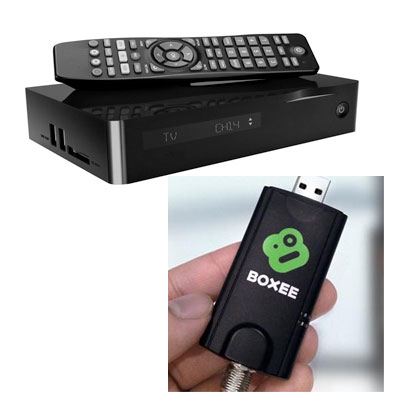
    According to the CEO of TV Predictions, Inc Phillip Swann, the Americans will see phasing out of cable TV set top boxes (STBs) by 2015 and witness an upsurge in USB dongle or CableCard like products that can be connected to a TV and signals can be received from the operator’s facility. And all this to reduce the expenses incurred due to huge sums paid to the box manufacturers.

    The predictions suggest that consumers would anytime prefer the simplicity and convenience of cable dongle over the set top boxes. That apart, the cable TV operators will also appreciate the savings.

    When the Google Chromecast Net TV device was launched, it was surely a step ahead in the cable TV industry. The dongle is one of the best-selling electronic products at Amazon.com currently.
    Some of the dongles available in the market currently are Boxee’s Live TV dongle and TBS USB DVB-C TV Stick amongst others.

    The predictions make it pretty obvious that the Americans are moving at a faster pace in the sector. Another point to ponder over here is that while in India the cable TV operators are still struggling to seed the STBs, another country is in the process of its phase out and switch to a compact technology.

    It’s not that in India, technology hasn’t improved. The direct-to-home (DTH) operators by introducing new and better facilities like recording as per preference, authority to choose channels with their high-definition (HD) boxes has already become a threat to the Indian cable TV operators who have just started seeding the standard definition STB with no added feature.

    With the world shrinking, it would not take the consumers much time to get exposed to the advancement happening in the TV/Cable industry the world over. The Indian consumers would soon wish for a compatible technology like the dongle. The New Year seems to be an alarm for the cable operators to start preparing for the huge shift.

  • DirecTV, Dish Network to hike price

    DirecTV, Dish Network to hike price

    MUMBAI: Dish Network and DirecTV subscribers will have to gear up to shell out more for using their services. Come 2014 and DirecTV’s base ‘entertainment’ package will cost $58 per month, a $3 hike from 2013, the ‘premier’ package will cost $130, up $5 from a year ago. Rising content cost and desire to keep the satellite TV provider’s operating profit flat are being cited as the reason for the price hike.


    Dish Network on the other hand will hike its fees by 5.5 per cent. This following its 16.3 per cent price hike in the beginning of 2013. While, the ‘welcome plan’, ‘America’s choice 120+ plan’ will cost the same, the other packs will get a $5 price hike and a $3 hike in the ‘smart pack’ which will cost $33 in 2014.


    DirecTV, which has close to 20.16 million US subscribers, according to reports, will increase its price at an average of 3.7 per cent starting February.


    Media reports have confirmed that both the companies will raise the prices of their various television packages and also increase the service fees as well.


    Can’t say if pay TV service providers are looking at any such New Year surprise for consumers in India, but it surely doesn’t seem to be a happy start to the New Year for DirecTV and Dish Network subscribers in the US.

  • SureWaves is one of the top 5 media options: Rajendra Khare

    SureWaves is one of the top 5 media options: Rajendra Khare

    BENGALURU:  The office of SureWaves CMD and founder Rajendra Khare has the word ‘connectivity’ splashed across its walls while that of his colleague and SureWaves co-founder Anant Kansal sports ‘diversity’ on its walls. According to Khare, the two words sum up what the pioneering media convergence company is all about. In an interaction with Tarachand Wanvari of indiantelevision.com, Khare talks about SureWaves’ journey so far and the road ahead. Excerpts…

    What role does SureWaves play? Tell us something about your team.

    SureWaves is a technology-driven media company that infuses the smartness of digital media like internet and mobile into the mainstream medium of television.

    A leading advertising medium for a vast number of advertisers, television accounts for 40% to 50% of overall ad spend in most parts of the world. With close to 800 satellite TV channels in India, the audience is fragmented and reaching them in a cost-effective manner is difficult. Distinct socio-cultural regions in India necessitate advertising be communicated in the right language and in a locally relevant context. Cable TV is a viable alternative to satellite channels in delivering highly targeted advertising and at lower costs. As reported by TAM, regional cable enjoys significantly higher viewership than most satellite channels. The challenge is to be able to aggregate the inventory across cable TV channels in India to provide a single window for advertisers to buy inventory and provide accountability.

    In one of the biggest technological initiatives in the Indian television industry, SureWaves has been working on nation-wide integration of cable TV advertising through the ‘SureWaves National Spot TV Network’. With over 250 cable TV channels run by key MSOs in different parts of the country now connected to SureWaves’ central grid, it offers instant access to the combined viewership of regional cable on a market-by-market basis. The SureWaves network is now positioned as one of the top five media options for national advertisers in all parts of the country.

    This has been made possible only through the sustained passion and efforts of the SureWaves team – a rare combination of top talent in technology, media, marketing, research and analytics. SureWaves co-founders Anant Kansal and Tapan Datta bring significant experience in technology-based operations and marketing communication. Chief Operating Officer Mandar Patwardhan is a media veteran who has served long innings in mainstream television and radio. Our business leadership team is constituted by people who’ve had stints in organisations like Star, ESPN, Zee, NDTV, Times, Radio Mirchi, Radio City, Group M and Reckitt Benckiser.

    Please describe the technology deployed by SureWaves.

    At the heart of our technology is the ‘SureWaves Media Grid’, a cloud-hosted scalable platform which allows instant access to multiple TV channels, filters them basis geography and genre, checks on available inventory, and schedules commercials. The grid also provides telecast reports in near-real time for each spot across all channels with time stamps.

    The ‘SureWaves Media Grid’ works in conjunction with edge devices called ‘SureWaves MediaStation’, which reside in the respective television channel studios or cable-head ends, and perform seamless insertion of ads during scheduled commercial breaks. Technology allows not only the capability of centralized delivery, scheduling and monitoring of advertisements but also integrates with industry standard tools to enable effective campaign evaluations to seamlessly integrate with the clients’ media planning process.

    In effect, SureWaves technology is a solution for large scale media fragmentation, whereby people can watch what they like through the growing number of niche and regional channels of their choice and yet, it is possible for advertisers to reach out to people, irrespective of what they are watching. Technology makes it possible to buy inventory on a market-by-market basis, achieving a sharp targeting capability on television for greater efficiency and effectiveness. SureWaves has been a pioneer in the field and has filed several national and international patents for its innovative technology.

    You tinker only with the cable operators/MSOs’ own content, own channel, not the broadcasters’ content aired through the cable operators’/MSOs’ infrastructure?

    That’s right. We partner with MSOs, who run and own their channels and also own the channels’ commercial inventory. We do not tinker with broadcasters’ content, where the MSO is acting only as a last mile distributor of the content through their cable network. Some niche and regional satellite broadcasters have also joined the SureWaves network, and partnered us to benefit from the seamless access made available to their inventories to national advertisers by us.  

    What is your estimate of the market size?

    What SureWaves offers is comparable to the top four or five GECs in the country in terms of reach and viewership.  Top national advertisers have already tasted the benefits of our network and are making it a part of their regular media plans. In addition to the huge viewership and reach, SureWaves also offers sharp targeting capability on a market-by-market basis. International trends show that marketers and advertisers gravitate towards media, which enables superior targeting. In bigger media markets like the US, where choice of market-wise targeting on television has been available to national advertisers through Spot TV, Spot TV commands nearly 20% of the overall television ad spend on account of national advertisers.

    What kind of infrastructure do you have in place, and in which regions of India?

    The ‘SureWaves Media Grid’ is a cloud-based infrastructure which works in conjunction with Media Stations that are deployed in the studios of each of the channels who are part of the SureWaves network. We now cover all 28 states and union territories of India and deliver upwards of 80% regional cable viewership in all markets. 

    So you depend on TAM or maybe BARC, once the data is in place. Don’t you think that the sample size is too small, particularly in the case of regional cable, to present the true broader picture?

    Industry has already taken cognizance of the sample size being small for a large country like India, and concerted efforts are being made to increase it. Since the viewership measurement is presently limited to metros and 160-170 large towns, a big majority of the television-viewing population in India which resides in the 7000+ small towns and in rural India is not covered. Cable TV channels have a relatively stronger hold in these areas and the numbers for regional cable would begin to look even better as and when these towns begin to get included in measurements. In the coming years, tier-2/tier-3 and LC1 towns will be seen as real growth engines and advertisers are already beginning to factor the power of regional cable despite the gaps in formal measurement in these markets.

    Since you have a Broadcom background, don’t you think that a reverse signal will take care of a number of problems? Is a reverse signal possible, given the infrastructure at the last mile? What kind of changes will have to be made at the MSO end? Will it be cost-effective for all players, viewers and the current ecosystem?

    Reverse signal can help to an extent but it also needs to be combined with demographic data, which is an important part of the people meter-based approach to viewership measurement. There are new technologies that can be applied for recognition of television viewers. However, standard STBs serve a different purpose and are not designed to gather and transmit back the measurement data through reverse signal. Further, reverse signal data would also need to be further collated from the MSO head-ends to the measurement agencies, which may not be trivial. It is a good problem to solve but industry is in a comfort zone and there has been no real momentum in using the reverse signal for audience measurement by leading measurement agencies. A combination of reverse signal and secondary research data is perhaps an option.
  • MSOs request WB UD minister to waive off amusement tax arrears

    MSOs request WB UD minister to waive off amusement tax arrears

    KOLKATA: The multi-system operators (MSOs) in Kolkata have requested the West Bengal Urban Development minister Firhad Hakim to waive off amusement tax arrears, thanks to the cable television digitisation which has revealed their business details to the government authorities.

    Cable TV sources said that the state government which is slated to get around Rs two to three crore every month as amusement tax from the MSO gets only Rs 15 – 20 lakh from the MSOs in the Kolkata Municipal Area (KMA) area now.

    “Seeing the present situation, it can be assumed that the state government has lost between Rs eight to 10 crore in the form of amusement tax in last three months,” said a cable TV analyst.

     After the DAS implementation, apart from the increased monthly subscription fee, the consumers are supposed to shell out Rs 10 more as amusement tax charged by the state government.

    Firhad Hakim after taking a note to the appeal made by the MSOs has asked the MSOs to write a letter to the government and accordingly the state would look into the matter.

  • Dish TV-IndiaCast: TDSAT orders both to ceasefire

    Dish TV-IndiaCast: TDSAT orders both to ceasefire

    MUMBAI: This was one case that hardly took any time to get a judicial order.  In the first hearing itself, the Telecom Disputes Settlement Appellate Tribunal (TDSAT) has come to the conclusion that Dish TV cannot be applying its ‘on request scheme’ for IndiaCast channels. And it has ordered India’s oldest DTH operator to make all its channels either as a la carte or as packages.


    The TDSAT has also asked Dish TV to change the wordings of the scroll it is running on the channels as IndiaCast had raised objections about the same. At the same time, it has also asked the aggregator to stop airing the promos and advertisements that it has been running on its channels and newspapers asking people to change to other cable TV and DTH platforms. All these need to be incorporated as soon as the official order is out.

    “I don’t know what are they objecting to. ‘On request channels’ is nothing but a la carte, worded differently. When you take channels on RIO they can only be a la carte,” said a senior executive from Dish TV. “We will be changing what we are running on the scroll after looking at the words that they have objected to and what they would like it to be changed to,” he added.

    As of now, Dish TV officials stated that they will not be challenging or filing any appeal against the TDSAT order.