Tag: cable TV

  • 106 MSOs registered says Javadekar; Arasu application under review

    106 MSOs registered says Javadekar; Arasu application under review

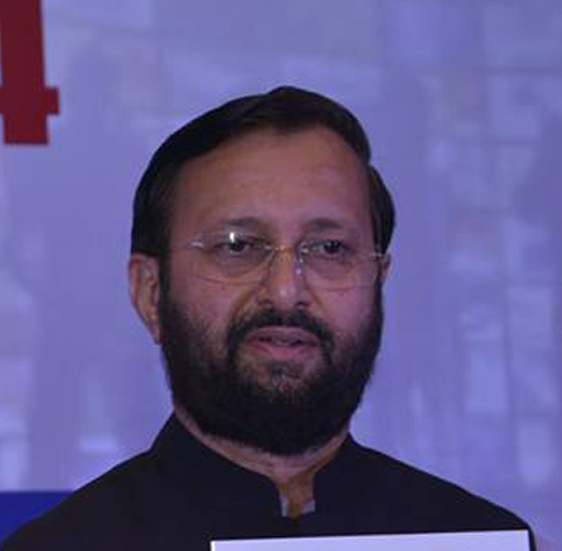
    MUMBAI: The government is doing well in the area of registering multi system operators (MSOs), especially in those areas where digitization has been implemented. This was stated by information & broadcasting minister Prakash Javadekar in a written reply in th Rajya  Sabha. He revealed that 106  MSOs have  have been granted permanent registrations by his ministry to enable them to operate in digital addressable system (DAS) zones.


    He added that the I&B ministry had received a letter from the Tamil Nadu chief minister J Jayalalithaa to also register the government run MSO the Tamil Nadu Arasu Cable TV Corp  Ltd to allow it to operate in the DAS notified areas of the southern state.


    He disclosed that his ministry was examining Arasu’s application in the light of the TRAI’s recommendations regarding the entry of government entities in the broadcasting and distribution activities.


    The TRAI has been consistent in its stand that state government entities should not be allowed to enter the business of broadcasting and distribution of TV channels. It had made these recommendations in its paper on Issues related to entry of certain entities into Broadcasting and Distribution Activities in December 2012, and reiterated them in its consultation paper on monopoly/market dominance in cable TV in June 2013.

  • Kolkata LMOs to join hands with smaller MSOs

    Kolkata LMOs to join hands with smaller MSOs

    KOLKATA: Cable TV industry in Kolkata is up for some change. The last mile owners (LMOs) who have for long been complaining about losing their consumers to the multi system operators (MSOs) because of digitisation, are now looking for different ways of retaining their customers. While it had started with setting up of cooperatives, the LMOs are now joining hands with the smaller MSOs, who are also DAS licence holders.


    As part of this arrangement, a group of LMOs will sign a Memorandum of Understanding (MoU) with the MSO. While the group will have access to the headend, SMS and other backend services of the MSO, it will be free to create its own packages and also bill the consumers. This will also help the LMO to own its customers.


    “We have already prepared an agreement with a DAS licence holder who will levy a minimum price against every set top box (STB) that we take from him. Joining of other LMOs is in progress,” said an enthusiastic LMO on condition of anonymity.


    According to market sources, some of the MSOs that may get into such an arrangement are Sristi Cable TV Network, Kailash Cable Network, Meghbela Cable & Broadband Services and Barasat Cable TV Network. The smaller MSOs are looking at increasing their topline and bottomline and strengthening their presence in the region by partnering with the LMO group.


    “LMOs will partner with DAS licence holders either by forming a cooperative or working independently with him using his network,” informs a cable TV industry source.


    Meetings in this regard had started a year ago between the two parties operating in the KM area which currently has close to 33 lakh digitised cable TV homes. The LMOs will not be swapping the STBs in the current digitised homes, but will try and capture the new homes which have not yet been digitised.  


    The partnership will give the LMO the power to bill its subscribers, create packages based on consumers’ choice, and get a share of carriage fees as well as ownership of STBs.


    Cable Operators Sangram Committee general secretary Apurba Bhattacharya while confirming the development said, “It is good that LMOs are looking for new business models to earn their living. The operators are happy to get into this space. We will run the business ourselves.”


    LMOs in Kolkata are moving to this arrangement, since setting up of a headend not only takes time, but is expensive as well. “Setting up the headend requires a lot of permissions and an investment of some crores, so it is better to get into partnership with existing DAS licence holders than to set up our own headend,” says a LMO.


    A last mile owner who is in talks with one of the smaller MSOs concludes, “During the analogue regime, the revenue share between the MSO and LMO was 20:80 but after digitisation, this has come down to 65:35. The business model is not at all lucrative anymore.”

  • Only 70 per cent of the Indian pay-TV market will be digitised by 2023: MPA report

    Only 70 per cent of the Indian pay-TV market will be digitised by 2023: MPA report

    MUMBAI: The process of digitisation in India currently seems to be stuck in limbo. Even with several deadlines being set, the country doesn’t seem to have progressed much even in digital addressable systems (DAS) phase II, let alone phases III and IV. A new report from Media Partners Asia (MPA) has predicted key findings about the cable and DTH industry in India between 2013 and 2023.


    It expects the next five years to be a period of robust growth of India’s pay-TV market. MPA projects that the pay TV industry in the country will grow from $7.4 billion in revenue in 2013 to $12.3 billion by 2018.


    The growth in revenue will be equal to an average annual growth rate of 11 per cent between the years 2013 to 2018. By 2023, it expects the industry to generate revenues of approximately $ 16.4 billion. The findings by MPA were published in the report ‘India Pay-TV and Broadband-Future Trends’.


    The study states that by the end of 2013, India had approximately 65 million paying digital subscribers. MPA projections indicate that only 70 per cent of the Indian pay-TV market will be digitised by 2023.


    The total number of TV households in India is currently pegged at around 160 million with nearly 20 million on terrestrial only. This will be the growth opportunity for alternative platforms as cable and DTH will find it unviable to penetrate into the interiors of the country. The Ministry of Information and Broadcasting (MIB) has given a deadline of 31 December 2014 for completion of digitisation. If one goes by the MPA report, India has a long way to go for 100 per cent digitisation.


    From 2015 to 2017 will see an upward trend as DAS will take off in phase III and IV areas. After 2017, the time will be for consolidation and monetisation as subscriber growth will decelerate.


    While the growth during 2009 to 2013 was driven by volume, the next five years will be led by average revenue per user (ARPU). At the end of the 2018, pay TV subscribers will hit 165 million and by 2023, it will be 180 million. This implies a long term penetration of 80 per cent.


    The growth will also give wide space for alternative platforms such as Doordarshan-owned Free Dish, headend-in-the-sky (HITS) and over-the-top media (OTT) apart from cable and DTH, which will address the need gap between TV households and pay TV subscribers.


    DTH industry revenues are expected to reach $4 billion by 2018 and $5.5 billion by 2023. This will be due to healthy subscriber additions from 2014 to 2016 and by improved churn and suspension management. The active DTH subscriber base is expected to grow from 37 million in 2013 to 60 million by 2018 and 70 million by 2023. Thus, DTH will have a 39 per cent share of the pay-TV market by 2023 and 56 per cent share of the digital market.


    MPA predicts that the total digital cable subscribers will be 50 million by 2018 and 55 million by 2023. Digital cable conversion will shoot up from 29 per cent in 2013 to 48 per cent by 2018 and 50 per cent by 2023. This will enable growth in cable broadband. It expects share of cable in the fixed broadband market to grow from 6 per cent to nearly 15 per cent from 2013 to 2023.


    The projected total pay-TV channel revenues for broadcasters, including advertising and subscription will grow from $3.3 billion in 2013 to $6 billion by 2018 and $8.3 billion by 2023.


    Meanwhile the pay-TV ad market is expected to grow at 8.6 per cent CAGR over 2013 to 2023 while broadcaster subscription revenues are expected to grow at 11.3 per cent over the same period. This will be due to improved macro-economic conditions, sub-segmentation of existing genres and new advertiser categories.


    “The Indian market is important because of its accessibility for global media distributors and investors and its high levels of pay-TV penetration. Ever changing regulations are destabilising but the government’s DAS mandate will be an important catalyst while improved supply side factors, including healthy financial markets and investments from international strategists are also critical,” says MPA India VP Mihir Shah.

  • Chip maker Broadcom gets chirpy about India

    Chip maker Broadcom gets chirpy about India

    KOLKATA:  It’s got India on its mind.  Most Indian cable TV and DTH operators are pretty familiar with the  US-headquartered Broadcom Corp. The company provides the chips that go into the set top boxes and also for enterprise networking and mobile connectivity functions. What they probably don’t know is that it has invested more than 15 per cent of its global R&D budget in its Indian R&D centre. And that its Indian MD Rajiv Kapur is extremely gung-ho about the potential in India as its television ecosystem digitises. 


    And that’s despite the fact that there’s not been a flood of orders from those wanting to supply STBs to Indian  cable TV ops and MSOs.


    Says he:  “Right now activity is more on the technology front. The actual orders are expected to come before the end of the deadline (31 December 2014). And hence I can confidently say further growth will come. Even in the current situation, India’s revenue is being noticed from the global perspective.”


    Surely. With India’s transition from analog to digital television service, many consumers need new, full-featured set-top boxes (STBs) for home viewing. This represents a major opportunity for regional operators and set-top box manufacturers, as only a portion of the roughly 100 million STBs in consumers’ homes have already been digitised according to published government figures. Adding to this potential for set-top box growth is the trend of consumers adding more than one television to their home, as well as natural consumer upgrade cycles from standard definition to high definition, and so on.


    Meanwhile Kapur  points out that the company has invested -and is continuing to invest –  in India to develop complete solutions and also for support infrastructure.  “Our core competency is in chip making. But we have walked the extra mile by designing the complete hardware and software part. We have put many more features in the chip,” says Kapur.  


    Demand for those chips will come in the not to distant future. For  now, he says, “We see an immediate demand for standard definition STB “Zappers,” which are cost-effective and easy to deploy to new and current subscribers. In time, STBs with advanced features may either be imported or manufactured regionally due to their lower volume demand.”


    Endorsing his view is Vadodara-based VKJ Advisory CEO Vinod K Jhaveri who adds that Broadcom could and should take advantage of the current government’s stated policy to encourage indigenous production of chips in order to save the nation precious forex and make the silicon affordable. “Companies like Broadcom Corp have a great future as they can – in  the years to come – become a hub for Asia. They can use their  facilities to export  chips and semi conductors to countries like China and other Asian counterparts.”

  • TRAI to host open house meet on cable and TV tariff issues

    TRAI to host open house meet on cable and TV tariff issues

    NEW DELHI: An open house discussion on tariff issues related to broadcasting and cable television services for commercial subscribers will be held later this week in the capital.


    The discussion has been called by the Telecom Regulatory Authority of India (TRAI) on 4 July.


    The meet is expected to be attended by senior officials of TRAI, Information and Broadcasting Ministry and stakeholders, apart from consumer organisations.

  • Cable bills in Kolkata to see a 15 per cent hike from 1 August

    Cable bills in Kolkata to see a 15 per cent hike from 1 August

    KOLKATA: Cable TV viewers in the Kolkata Municipal Area (KMA) will have to face another price hike in their cable TV bills, starting 1 August. This, after the Telecom Regulatory Authority of India (TRAI) hiked the tariff ceiling by 15 per cent for broadcasters.


    While consumers in the region have still been coping with the price hike after TRAI made gross billing mandatory, multi system operators (MSOs) are now all set to increase the channel package rates by 15 per cent.  


    That apart, more than 31 lakh cable TV homes in Kolkata may witness both channel addition and deletion. A few favourite channels can also be included in the new package with additional charges. However, MSOs have assured that the rentals for the Janata Pack will remain unchanged.


    Most MSOs linked the price rise to the TRAI regulation on tariff hike.


    Siticable Kolkata director Suresh Sethiya said, “After the price defreeze proposed by the regulator, that is 15 per cent, April onward, when MSOs now sit with broadcasters for renewal of channel contracts, they will have to shell out more money compared to the previous contracts. We can’t take the pinch on ourselves as we don’t have enough resource to fall back upon. Therefore cable rents are bound to go up in the range of 15-20 per cent from 1 August.”
     

    “We have no other option but to increase the channel package rates as the broadcasters have started bargaining a lot,” said a small MSO operating in Kolkata.  


    An official from KCBPL-GTPL, referring to the directive of Train on Subscriber Management System (SMS) and online up gradation said, “We are bound to increase the price as we have to show the bill and pay tax on that. Secondly, to follow the new bill delivery system of TRAI, we will incur additional costs in terms of software development and manpower.”


    Since DAS has yet not been implemented on ground in any area, subscribers are suffering. “LCOs have started taking full package charge from subscribers in the name of TRAI. But, sadly the same is not being passed on to us. While the LCOs are making good profit and broadcasters are earning more and more, MSOs are still suffering from the financial crunch. In the past few months, our financial health has gone from bad to worse. Questions are now being raised on our existence in the future,” concluded another MSO operating in the region.

  • TRAI issues consultation paper on tariff for commercial subscribers

    TRAI issues consultation paper on tariff for commercial subscribers

    MUMBAI: Three months ago, the Telecom Regulatory Authority of India (TRAI) revised the tariff rates for non-addressable cable TV areas which allowed a rise of 27.5 per cent in two stages. While this was for non-commercial subscribers, the regulator has now issued a consultation paper asking comments from stakeholders for the same with respect to the commercial subscribers.


    The consultation paper states that the tariff for commercial subscribers has been an issue since 2005 when associations of hotels and restaurants challenged the various tariffs imposed by broadcasters in the Telecom Disputes Settlement Appellate Tribunal (TDSAT). Even though the TDSAT disposed off the petition stating that such organisations cannot be called consumers, it asked the Telecom Regulatory Authority of India (TRAI) to think about whether or not to impose a tariff regulation on them.


    While the TRAI came up with two definitions for ‘ordinary cable subscriber’ and ‘commercial cable subscriber’, the appeal was challenged in the Supreme Court which then directed TRAI to frame separate tariff ceilings for non-commercial subscribers.


    Even though the Regulator had come up with definitions and categories of such commercial subscribers, it was challenged by the Federation of Hotel and Restaurants Associations of India (FHRAI).


    Now, TRAI has once again come up with a fresh definition for a ‘commercial subscriber’ and has asked stakeholders if they agree to it or if they have alternative suggestions. It says that a commercial subscriber means “any person, other than a multi system operator or a cable operator, who receives broadcasting service at a place indicated by him to a broadcaster or a cable operator or direct to home operator or multi system operator or head end in the sky operator or a service provider offering Internet Protocol television service , as the case may be, and uses such signals for the benefit of his clients, customers, members or any other class or group of persons having access to its commercial establishment.”


    “Commercial establishment” means any premises wherein any trade, business or profession or any work in connection with, or incidental or ancillary thereto is carried on and includes a society registered under the Societies Registration Act, 1860 (21 of 1860), and charitable or other trust, whether registered or not, which carries on any business, trade or profession or work in connection with, or incidental or ancillary thereto, journalistic and printing establishments, educational, healthcare or other institutions run for private gain, theatres, cinemas, restaurants, eating houses, pubs, bars, residential hotels, malls, airport lounges, clubs or other places of public amusements or entertainment but does not include a shop or a factory registered under the Factories Act, 1948 (43 of 1948).”


    “Shop” means any premises where goods are sold, either by retail or wholesale or where services are rendered to customers, and includes an office, a store room, godown, warehouse or work place, whether in the same premises or otherwise, mainly used in connection with such trade or business but does not include a factory, a commercial establishment, residential hotel, restaurant, eating house, theatre or other place of public amusement or entertainment.”


    TRAI says that with these definitions it is shifting its focus from how the commercial establishments use the cable connection to defining it as one who avails the service from a broadcaster or a distribution platform operator (DPO).


    In the earlier definition, the regulator had also divided commercial consumers into various sub-divisions of similarly placed entities depending on their size of business, paying capacity to clients etc. These were challenged several times in the past. Therefore, it has now asked stakeholders that if such a sub-division was not the right way to proceed, what would be an alternative way of dividing them into similarly placed groups.


    Furthermore, three models of dealings between the commercial user and DPO has been given by TRAI and stakeholders are expected to select any one or give their own alternative model.


    The first model is that the broadcaster publishes the rates for commercial tariff as a Reference Interconnect agreement (RIO) and then commercial subscriber negotiates. The second model is that the DPO publishes the rate and negotiations shall be done on the same. In the third model, both the aforesaid models shall be available to commercial customers wherein there shall be a competition among DPOs and between DPOs and broadcaster.


    Furthermore, four options as regard to what shall be the tariff price have also been given:


    First, the tariff for commercial subscribers is same as that for ordinary subscribers. Second, the tariff for commercial subscribers has a linkage with tariff for ordinary subscribers. Third, the tariff for commercial subscribers has no linkage with the tariff for ordinary subscribers but there are some protective measures prescribed to protect all the stakeholders. Fourth, the tariff for commercial subscribers is kept under total forbearance.


    In the case of the third option several provisions have been suggested such as – broadcasters be mandated to offer all their channels on a-la-carte and specify rates. In case a broadcaster directly makes the signal available to the subscriber then the sum of a-la-carte rates of the channels shall not exceed one and a half times the rate of the bouquet of which they are a part and the a-la-carte rate of each channel should not exceed thrice the average rate of a channel of that bouquet. In case of a DPO, apart from the earlier two provisions, a-la-carte rates for all FTA channels should be uniform. The regulator also suggested that it should receive the RIO by either the broadcaster or the DPO and that a provider shall not deny channel signals unless subject to technical feasibility. 


    If a stakeholder chooses the second option he/she has been asked to justify what the ceilings should be for each category of commercial subscribers.


    Stakeholders have been asked to give their views by 27 June at the latest.


    Click here to read full consultation paper
  • TRAI defreezes tariff ceiling in analogue cable TV areas

    TRAI defreezes tariff ceiling in analogue cable TV areas

    MUMBAI: The Telecom Regulatory Authority of India (TRAI) has revised the tariff ceilings for the non-addressable cable TV areas. The authority has allowed an overall 27.5 per cent inflation linked hike in the tariff ceilings. The announcement was made through a notification of the Tariff Order namely the ‘Telecommunication (Broadcasting and Cable) Services (Second) Tariff (Eleventh Amendment) Order, 2014’.


    The rise is based on the hike in the wholesale price index (WPI) over the past five years. “The Authority has come to a conclusion that an overall 27.5 per cent inflation hike is allowed. However, it is also of the view that a hike to the tune of 27.5 per cent in a single go would not be appropriate for the market and the consumer to adjust to. Therefore the Authority has prescribed this hike to be implemented in two installments,” says the TRAI release.


    While the first installment is of 15 per cent will be effective from 1 April 2014, the second installment for the remaining inflation linked increase will be effective from 1 January 2015. “This will give enough and reasonable time to all the stakeholders to adjust to these hikes,” says the release.


    Click here for the full notification

  • Digital TV Research forecasts North America to add five million Pay-TV subs by 2020

    Digital TV Research forecasts North America to add five million Pay-TV subs by 2020

    MUMBAI: Digital TV penetration reached 94.2 per cent at the end of 2013, and will increase to 100 per cent by 2017 is the forecast that has been made by Digital TV Research. Of the 17 million digital homes to be added between 2013 and 2020, 5.5 million will come from cable, 5.9 million from IPTV, 4.6 million from DTT and 0.9 million from satellite TV added the research.


    Despite a small decline in 2013, the number of pay-TV subscribers in North America is expected to witness a spike, with Digital TV in North America forecasted to make five million additions by 2020.


    However, pay-TV penetration is expected to drop from 87 per cent in 2010 to 83.8 per cent by 2020, as pay-TV penetration has peaked in Canada and US subscribers fell slightly in 2013; most of the pay-TV subscriber losses over the last few years have been analogue cable subs. With 18.39 million analogue cable subscribers still prevalent at the end of 2010, the number is expected to fall to 3.75 million by the end of this year.


    According to the study, satellite TV is expected to overtake cable to become the largest pay-TV platform revenue generator in 2015. However, satellite TV revenues will increase by only $1.2 billion between 2013 and 2020, to $42.8 billion. Cable revenues will fall by nearly $13 billion in the same period (dropping by $2.5 billion this year alone) the study added.

  • Manthan Broadband eyes customers in DAS phases I and II with lucrative deals

    Manthan Broadband eyes customers in DAS phases I and II with lucrative deals

    KOLKATA: The ongoing Cable TV Show 2014 in Kolkata became a platform for the Kolkata-headquartered cable TV multi-system operator (MSO) Manthan Broadband to make few lucrative deals to consumers. The show at the Netaji Indoor Stadium has witnessed an amazing response in the first two days and thus Manthan took an opportunity to woo the direct-to-home customers as it announced that any customer from the Digital Addressable System (DAS) phases I and II if switches to Manthan, he won’t have to pay anything for the set top boxes (STBs) and the installation charges.


    However, few terms and conditions apply as the customers will have to opt for the ‘Super Sunday Pack’ at Rs 320 per month. “As a fair offer, we have informed to all our affiliated local cable operators (LCOs) that customers will just have to pay five months subscription fees and can enjoy the Manthan cable services for six months,” said Manthan Broadband Services director Sudip Ghosh also adding that the offer is mainly aimed at high-end customers. “With this offer, a customer can save around Rs 1500 as of now,” he said.


    According to Ghosh, by the end of May, the MSO is aiming to poach around 50,000 connections. It is present in Kolkata, Howrah and Ranchi with around 7.5 lakh STBs in DAS I and II.


    Interestingly, cable TV analysts think that the region is going to witness such offers from more players in the region despite of DTH penetration being low in the region. The DTH connections in the region has just crossed the 5 lakh mark.


    “Last week Dish TV created a sub brand Zing to target regional markets and the STB offer was at a lower price.  And now cable TV industry players like Manthan waging a war on DTH players. More such announcement by different players can be expected to poach others’ customers,” said an analyst.