Tag: cable TV

  • Goldman Sachs to up stake in cable TV MSO DEN Networks; to invest Rs 142.43 crore

    Goldman Sachs to up stake in cable TV MSO DEN Networks; to invest Rs 142.43 crore

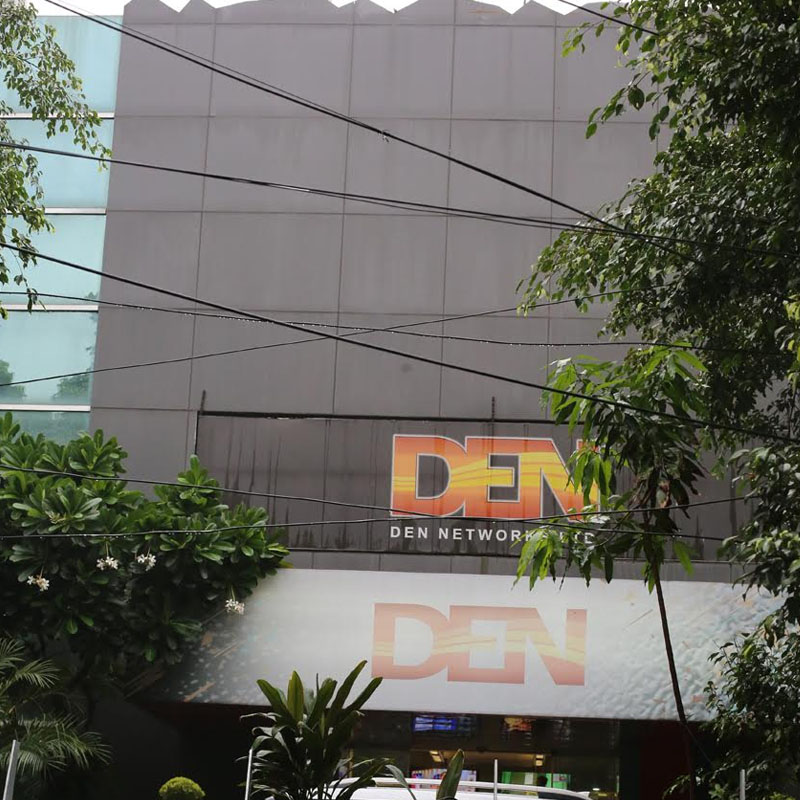
    MUMBAI: MSO DEN Networks has proved the naysayers – who have been carping that the Indian cable TV sector is as insipid as dry sawdust – wrong. The company’s existing shareholder Goldman Sachs is picking up 1.58 crore equity shares at a price of Rs 90 per share via a preferential allotment. This will take Goldman Sachs’ equity stake in DEN up from 17.79 per cent to 24.49 per cent and involve an injection of much needed capital to the tune of Rs 142.43 crore. The divestment is expected to trim promoter stake in the company to 37 percent.

    Board approval for this transaction came through yesterday and the company is seeking its shareholders’ nod through an extraordinary general meeting which is scheduled for 14 October 2016. DEN Networks informed the BSE about its intentions yesterday.

    Media observers say that the Indian cable TV ecosystem – including the government, the regulator TRAI, broadcasters, MSOs and cable TV operators – has stumbled in the digitization process which was mandated by the ministry of information and broadcasting four years back. They have also been saying that investor sentiment towards the sector is pretty weak. Shares of most leading Indian cable TV companies have been depressed, and have been parked at lows.

    However, DEN Networks has been taking steps to correct the perception. It has brought back its CEO SN Sharma who has since been working on raising revenues and profitability.

    The Goldman investment should come as a shot in the arm for DEN Networks as well as the Indian cable TV sector which is grappling with reinventing its business model.

    The company’s CFO Manish Dawar told CNBC TV18 that the company will be utilising the funds to invest in the broadband business as well as to reduce its debt. Earlier, this month, it had got board approval to demerge its broadband/internet service provider (ISP) business undertaking into its wholly owned subsidiary Skynet Cable Network . The company’s ISP business had a turnover of around Rs 40 crore in FY-2016.

    Dawar told the business news channel that DEN’s performance is on the upswing. “In Q1 we have already turned positive on EBITDA basis and if we were to look at I am talking about pre-activation which is what the investors wanted to kind of look at, so, therefore Q1 on cable business we are already EBITDA positive. Broadband is progressing very well, we have been able to reduce our losses tremendously over the last one year,” he said. “TV-Shop we are very close to break even. So, if you were to look at on a consolidated basis also, in the current quarter and I am talking about on a like-to- like basis, last quarter we were at minus (–) Rs 5 crore and the current quarter is positive Rs 5 crore on consolidated basis.”

    Investors greeted the Goldman Sachs announcement with delight. DEN Networks shares hit a high of Rs 85 during day trading yesterday only to close at Rs 80.85 – a rise of 3.5 per cent. The company’s share had hit a 52 week high of Rs 133 (21 September 2015) and it had dropped to a low of Rs 60.50 on 15 February 2016.

    The company also made an investor presentation yesterday in which it stated that its digital rollout is progressing well. Of the 13 million subscribers it has, almost 9.8 million of them have upgraded to digital in Q1 2017. Five million of these are in DAS Phase I & II areas with the remainder being in Phase III and phase IV.
  • Goldman Sachs to up stake in cable TV MSO DEN Networks; to invest Rs 142.43 crore

    Goldman Sachs to up stake in cable TV MSO DEN Networks; to invest Rs 142.43 crore

    MUMBAI: MSO DEN Networks has proved the naysayers – who have been carping that the Indian cable TV sector is as insipid as dry sawdust – wrong. The company’s existing shareholder Goldman Sachs is picking up 1.58 crore equity shares at a price of Rs 90 per share via a preferential allotment. This will take Goldman Sachs’ equity stake in DEN up from 17.79 per cent to 24.49 per cent and involve an injection of much needed capital to the tune of Rs 142.43 crore. The divestment is expected to trim promoter stake in the company to 37 percent.

    Board approval for this transaction came through yesterday and the company is seeking its shareholders’ nod through an extraordinary general meeting which is scheduled for 14 October 2016. DEN Networks informed the BSE about its intentions yesterday.

    Media observers say that the Indian cable TV ecosystem – including the government, the regulator TRAI, broadcasters, MSOs and cable TV operators – has stumbled in the digitization process which was mandated by the ministry of information and broadcasting four years back. They have also been saying that investor sentiment towards the sector is pretty weak. Shares of most leading Indian cable TV companies have been depressed, and have been parked at lows.

    However, DEN Networks has been taking steps to correct the perception. It has brought back its CEO SN Sharma who has since been working on raising revenues and profitability.

    The Goldman investment should come as a shot in the arm for DEN Networks as well as the Indian cable TV sector which is grappling with reinventing its business model.

    The company’s CFO Manish Dawar told CNBC TV18 that the company will be utilising the funds to invest in the broadband business as well as to reduce its debt. Earlier, this month, it had got board approval to demerge its broadband/internet service provider (ISP) business undertaking into its wholly owned subsidiary Skynet Cable Network . The company’s ISP business had a turnover of around Rs 40 crore in FY-2016.

    Dawar told the business news channel that DEN’s performance is on the upswing. “In Q1 we have already turned positive on EBITDA basis and if we were to look at I am talking about pre-activation which is what the investors wanted to kind of look at, so, therefore Q1 on cable business we are already EBITDA positive. Broadband is progressing very well, we have been able to reduce our losses tremendously over the last one year,” he said. “TV-Shop we are very close to break even. So, if you were to look at on a consolidated basis also, in the current quarter and I am talking about on a like-to- like basis, last quarter we were at minus (–) Rs 5 crore and the current quarter is positive Rs 5 crore on consolidated basis.”

    Investors greeted the Goldman Sachs announcement with delight. DEN Networks shares hit a high of Rs 85 during day trading yesterday only to close at Rs 80.85 – a rise of 3.5 per cent. The company’s share had hit a 52 week high of Rs 133 (21 September 2015) and it had dropped to a low of Rs 60.50 on 15 February 2016.

    The company also made an investor presentation yesterday in which it stated that its digital rollout is progressing well. Of the 13 million subscribers it has, almost 9.8 million of them have upgraded to digital in Q1 2017. Five million of these are in DAS Phase I & II areas with the remainder being in Phase III and phase IV.
  • What’s troubling HITS man Tony D’Silva?

    What’s troubling HITS man Tony D’Silva?

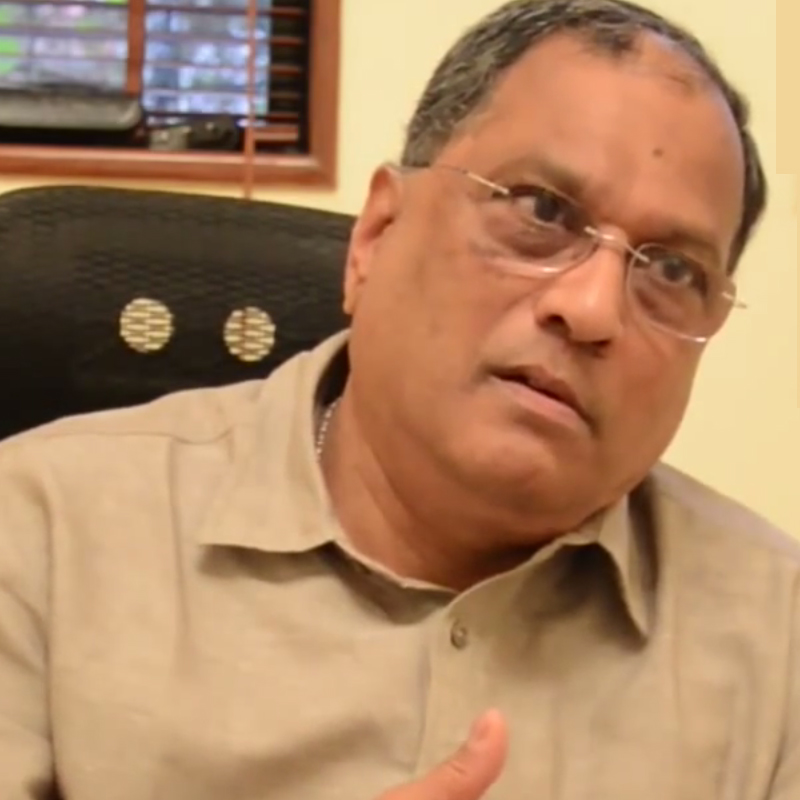
    MUMBAI: When the Hindujas announced their intentions to set up their Headend in the sky (HITS) platform to service cable dark phase III and phase IV– years ago, the project’s head – cable TV veteran Tony D’Silva – was highly excited. HITS would allow the company – Grant Investrade Ltd (GIL) – to beam out the 800 or so Indian TV channels to homes in towns and villages where setting up new or upgrading to expensive digital head ends was not viable or feasible.

    There were regulatory hurdles initially but the venture finally got off the ground last year much in advance of the DAS Phase III deadline of 31 December 2015. Tony went around marketing the project with great gusto, reaching out to cable ops in the hinterlands, got the Hindujas, the owners, to invest.

    There was interest from cable operators in almost all the areas that the product was demonstrated. The project looked very much viable as it gave cable operators a steady source of income without having to invest much in hardware and just servicing their existing subscribers.

    Then came the spate of cases in the courts of various states, and Phase III came to a grinding halt (it is now pending the decision from the Delhi high court which is expected in the next week). Analogue signals were not switched off in many parts of the country and Tony was in a bit of a fix. As are many other chieftains in MSOs like DEN and Hathway, which have reported very bloodied and battered results in Q1 2017.

    And Tony is a troubled man. Not just for that reason. He says he expects the court to rule justly in favour of digitization of the cable TV sector. However, he is not clear how many more court cases will be filed to stymie Phase III and Phase IV.

    Tony’s woes are mainly because he has been unable to strike viable content deals with some broadcasters.

    “It’s very unfair,” he states. “Some of the major broadcasters are asking the digital package price from me, but they continue to be okay with analogue pricing from cable operators in the very same phase III areas. How will I be able to offer them a digital package price to them when they are getting the same channels at analogue rates? Why will cable operators accept my superior quality digital offering? Why will an MSO and LCO agree to pay for digital services when they are also paying for analogue- that is double the price. These are questions broadcasters need to understand.”

    Another point that Tony would like to make is that broadcasters had refrained from charging any special digital rates in phase I and II areas until the cutoff dates. “We are a pure digital platform; but we are looking at serving in the now-analogue areas more,” he says.

    Tony would like to make an appeal to broadcasters and the regulator to stop charging digital package rates from him and analogue package rates from cable ops. “We are the new kid on the block and we are really aiding the spread of cable TV digitization in very difficult to reach areas of the country. I would beseech the community to give us a fair content deal at analogue rates until the analogue switch off commences. We are very open to pay digital rates once digital is switched on.”

    He goes on to point out that HITS is definitely going to help the pay TV broadcast sector get revenues in their coffers which are hitherto difficult-to-access as digitization gains in strength. “But allow us to run a feasible business first,” he says.

    Hopefully, broadcasters and the regulators will see reason in his plea.

    Meanwhile, the HITs platform is continuing with its game plan of merging GIL with IMCL – the hitherto cable TV MSO arm of the group. The company has informed the ministry of information & broadcasting about its merger intentions and has also approached the High court about the same.

    Then, over the past year or so, IMCL or Incable, has shut down or exited or bought joint ventures MSO headends where they had very little control over the operations. “We are down to about two and a half million paying cable TV customers and most of them are on a wholesale pre-paid model, so we are doing fine there,” says Tony. “The next few months are going to be very crucial. I am hopeful of things getting better,” he adds with a note of optimism.

  • What’s troubling HITS man Tony D’Silva?

    What’s troubling HITS man Tony D’Silva?

    MUMBAI: When the Hindujas announced their intentions to set up their Headend in the sky (HITS) platform to service cable dark phase III and phase IV– years ago, the project’s head – cable TV veteran Tony D’Silva – was highly excited. HITS would allow the company – Grant Investrade Ltd (GIL) – to beam out the 800 or so Indian TV channels to homes in towns and villages where setting up new or upgrading to expensive digital head ends was not viable or feasible.

    There were regulatory hurdles initially but the venture finally got off the ground last year much in advance of the DAS Phase III deadline of 31 December 2015. Tony went around marketing the project with great gusto, reaching out to cable ops in the hinterlands, got the Hindujas, the owners, to invest.

    There was interest from cable operators in almost all the areas that the product was demonstrated. The project looked very much viable as it gave cable operators a steady source of income without having to invest much in hardware and just servicing their existing subscribers.

    Then came the spate of cases in the courts of various states, and Phase III came to a grinding halt (it is now pending the decision from the Delhi high court which is expected in the next week). Analogue signals were not switched off in many parts of the country and Tony was in a bit of a fix. As are many other chieftains in MSOs like DEN and Hathway, which have reported very bloodied and battered results in Q1 2017.

    And Tony is a troubled man. Not just for that reason. He says he expects the court to rule justly in favour of digitization of the cable TV sector. However, he is not clear how many more court cases will be filed to stymie Phase III and Phase IV.

    Tony’s woes are mainly because he has been unable to strike viable content deals with some broadcasters.

    “It’s very unfair,” he states. “Some of the major broadcasters are asking the digital package price from me, but they continue to be okay with analogue pricing from cable operators in the very same phase III areas. How will I be able to offer them a digital package price to them when they are getting the same channels at analogue rates? Why will cable operators accept my superior quality digital offering? Why will an MSO and LCO agree to pay for digital services when they are also paying for analogue- that is double the price. These are questions broadcasters need to understand.”

    Another point that Tony would like to make is that broadcasters had refrained from charging any special digital rates in phase I and II areas until the cutoff dates. “We are a pure digital platform; but we are looking at serving in the now-analogue areas more,” he says.

    Tony would like to make an appeal to broadcasters and the regulator to stop charging digital package rates from him and analogue package rates from cable ops. “We are the new kid on the block and we are really aiding the spread of cable TV digitization in very difficult to reach areas of the country. I would beseech the community to give us a fair content deal at analogue rates until the analogue switch off commences. We are very open to pay digital rates once digital is switched on.”

    He goes on to point out that HITS is definitely going to help the pay TV broadcast sector get revenues in their coffers which are hitherto difficult-to-access as digitization gains in strength. “But allow us to run a feasible business first,” he says.

    Hopefully, broadcasters and the regulators will see reason in his plea.

    Meanwhile, the HITs platform is continuing with its game plan of merging GIL with IMCL – the hitherto cable TV MSO arm of the group. The company has informed the ministry of information & broadcasting about its merger intentions and has also approached the High court about the same.

    Then, over the past year or so, IMCL or Incable, has shut down or exited or bought joint ventures MSO headends where they had very little control over the operations. “We are down to about two and a half million paying cable TV customers and most of them are on a wholesale pre-paid model, so we are doing fine there,” says Tony. “The next few months are going to be very crucial. I am hopeful of things getting better,” he adds with a note of optimism.

  • Hathway Cable to debut Divine during Ganesh Utsav

    Hathway Cable to debut Divine during Ganesh Utsav

    MUMBAI: DTH service providers have been providing spiritual services to their subscribers for quite some time now. As have cable operators and MSOs who switch on coverage of local poojas during religious festivals and periods.

    Now here is national cable TV MSO Hathway Cable & Datacom that is all set to launch a spiritual channel come1 September during the festival of Lord Ganesh which is predominantly celebrated in Maharashtra.

    Called Divine, it is to be available on channel 47 on its cable TV network nationally.

    Divine will to operate throughout the year and will be focused on broadcasting live events around religious festivals and on licensed content. Hathway has a bank of licensed spiritual content, which will form the major programming content post-Ganpati Utsav.

    “We have no restrictions on the kind of programmes we will telecast tomorrow ourselves. We intend to bring to viewers fine spiritual content,” says Hathway Cable & Datacom general manager- marketing & communications Akhil Rampal.

    Divine is launching around Ganpati Utsav, therefore initially it will have round the clock live coverage of pandals from Mumbai and outside. Live aartis and darshans are going to be part of the programming strategy.

    “We are attempting to re-brand spiritual content and innovate on how it conventionally is delivered to viewers,” adds Rampal.

    Though not many advertisers have yet signed on to advertise on the channel, at the time of writing, the idea is to reach out to the community of regional local advertisers which are already on the cable TV network.

    Hathway will be rolling out a campaign to push the channel around its launch. It hopes many viewers will tune in to listen to the shouts of Ganpati Bappa Morya.

    It’s over to the elephant God to oblige.

  • Hathway Cable to debut Divine during Ganesh Utsav

    Hathway Cable to debut Divine during Ganesh Utsav

    MUMBAI: DTH service providers have been providing spiritual services to their subscribers for quite some time now. As have cable operators and MSOs who switch on coverage of local poojas during religious festivals and periods.

    Now here is national cable TV MSO Hathway Cable & Datacom that is all set to launch a spiritual channel come1 September during the festival of Lord Ganesh which is predominantly celebrated in Maharashtra.

    Called Divine, it is to be available on channel 47 on its cable TV network nationally.

    Divine will to operate throughout the year and will be focused on broadcasting live events around religious festivals and on licensed content. Hathway has a bank of licensed spiritual content, which will form the major programming content post-Ganpati Utsav.

    “We have no restrictions on the kind of programmes we will telecast tomorrow ourselves. We intend to bring to viewers fine spiritual content,” says Hathway Cable & Datacom general manager- marketing & communications Akhil Rampal.

    Divine is launching around Ganpati Utsav, therefore initially it will have round the clock live coverage of pandals from Mumbai and outside. Live aartis and darshans are going to be part of the programming strategy.

    “We are attempting to re-brand spiritual content and innovate on how it conventionally is delivered to viewers,” adds Rampal.

    Though not many advertisers have yet signed on to advertise on the channel, at the time of writing, the idea is to reach out to the community of regional local advertisers which are already on the cable TV network.

    Hathway will be rolling out a campaign to push the channel around its launch. It hopes many viewers will tune in to listen to the shouts of Ganpati Bappa Morya.

    It’s over to the elephant God to oblige.

  • TRAI gives MSOs-LCOs 15 days to sign interconnection agreements

    TRAI gives MSOs-LCOs 15 days to sign interconnection agreements

    MUMBAI: Telecom’s watchdog Telecom Regulatory Authority of India (Trai) is cracking the whip on India’s cable TV sector players. The regulator yesterday issued a cautionary note to India’s MSOs (multisystem operators) and LCOs (local cable operators) to get their act together on written interconnection agreements.

    And it warned them if them of dire consequences punishable under the TRAI

    It warned the former to supply TV signals to the latter only if the two have signed interconnection agreements. It has given the two a deadline of 15 days to sign their contracts with the MSO being given the responsibility of handing over the agreement to the LCO and getting its acknowledgement of receipt.

    The Trai warned MSOs to stop flirting with LCOs by offering them signals without a written interconnection agreement in place, failing which punishment under the TRAI act would follow.

    The Trai has also drawn up and issued the formats of a model interconnection agreement (MIA) and standard interconnection agreement (SIA) which have to be entered into by the two. The MIA can be used by the two if they agree to terms mutually in a structured manner according to regulations. If they fail to reach a conclusion under the MIA, they could use the SIA which provides standard terms and conditions prescribed by the regulations

  • TRAI gives MSOs-LCOs 15 days to sign interconnection agreements

    TRAI gives MSOs-LCOs 15 days to sign interconnection agreements

    MUMBAI: Telecom’s watchdog Telecom Regulatory Authority of India (Trai) is cracking the whip on India’s cable TV sector players. The regulator yesterday issued a cautionary note to India’s MSOs (multisystem operators) and LCOs (local cable operators) to get their act together on written interconnection agreements.

    And it warned them if them of dire consequences punishable under the TRAI

    It warned the former to supply TV signals to the latter only if the two have signed interconnection agreements. It has given the two a deadline of 15 days to sign their contracts with the MSO being given the responsibility of handing over the agreement to the LCO and getting its acknowledgement of receipt.

    The Trai warned MSOs to stop flirting with LCOs by offering them signals without a written interconnection agreement in place, failing which punishment under the TRAI act would follow.

    The Trai has also drawn up and issued the formats of a model interconnection agreement (MIA) and standard interconnection agreement (SIA) which have to be entered into by the two. The MIA can be used by the two if they agree to terms mutually in a structured manner according to regulations. If they fail to reach a conclusion under the MIA, they could use the SIA which provides standard terms and conditions prescribed by the regulations

  • Siti Cable Network renamed as Siti Networks

    Siti Cable Network renamed as Siti Networks

    MUMBAI: A new name brings in new vibes and possibly a new direction. At least that ‘s what the Essel group is aiming for if one goes by the name change it has resorted to at its national cable TV MSO Siti Cable. Last week, It informed the Bombay stock exchange, that it will be called Siti Networks as it has got shareholders (earlier) and the Registrars’ approval on 5 August for the renaming. The company was originally incorporated as Wire and Wireless (India) Ltd.

    As reported by Indiantelevision.com earlier, Siti Networks reported 29.4 per cent growth in revenue for the fiscal ended 31 March 2016 (FY-16, current fiscal). The company reported revenue of Rs 1213 crore in FY-16 as compared to Rs 937 crore in the previous year. Operating profit (EBIDTA) in the current year increased to Rs 323 crore as compared to Rs 168.4 crore in FY-15.

    The company has reported a profitable turnaround for the first time in its history. Neglecting the impact of minority interest, Siti profit after tax in the current year was Rs 6.84 crore as compared to a loss (without factoring in minority interest) of Rs 101.88 crore in FY-15.The company’s loss in the current year declined to Rs 1.71 crore from a loss of Rs 109.10 crore in FY-15. Siti reported profit before tax (PBT) at Rs 22 crore in FY16 as compared to a negative PBT of Rs 85.2 crore.

    Siti’s cable subscribers in FY-16 grew to 1.22 crore from 1.05 crore reported at the end of FY-15. The growth happened in Q3-16.

    On the other hand the digital subscribers in FY-16 increased to 79 lakh (64.8 percent of cable subscribers) as compared to 53.8 lakh in FY-15 (51.2 percent of cable subscribers). Digital subscribers in the quarter ended 31 March 2016 (Q4-16, current quarter) increased by 11 lakh to 79 lakh as compared to 68 lakh in Q3-16.

    Whereas, the broadband subscribers in FY-16 grew 93.3 percent to1.355 lakh from 0.701 lakh in FY-15. Broadband subscribers in Q3-16 were 1.07 lakh.

  • Siti Cable Network renamed as Siti Networks

    Siti Cable Network renamed as Siti Networks

    MUMBAI: A new name brings in new vibes and possibly a new direction. At least that ‘s what the Essel group is aiming for if one goes by the name change it has resorted to at its national cable TV MSO Siti Cable. Last week, It informed the Bombay stock exchange, that it will be called Siti Networks as it has got shareholders (earlier) and the Registrars’ approval on 5 August for the renaming. The company was originally incorporated as Wire and Wireless (India) Ltd.

    As reported by Indiantelevision.com earlier, Siti Networks reported 29.4 per cent growth in revenue for the fiscal ended 31 March 2016 (FY-16, current fiscal). The company reported revenue of Rs 1213 crore in FY-16 as compared to Rs 937 crore in the previous year. Operating profit (EBIDTA) in the current year increased to Rs 323 crore as compared to Rs 168.4 crore in FY-15.

    The company has reported a profitable turnaround for the first time in its history. Neglecting the impact of minority interest, Siti profit after tax in the current year was Rs 6.84 crore as compared to a loss (without factoring in minority interest) of Rs 101.88 crore in FY-15.The company’s loss in the current year declined to Rs 1.71 crore from a loss of Rs 109.10 crore in FY-15. Siti reported profit before tax (PBT) at Rs 22 crore in FY16 as compared to a negative PBT of Rs 85.2 crore.

    Siti’s cable subscribers in FY-16 grew to 1.22 crore from 1.05 crore reported at the end of FY-15. The growth happened in Q3-16.

    On the other hand the digital subscribers in FY-16 increased to 79 lakh (64.8 percent of cable subscribers) as compared to 53.8 lakh in FY-15 (51.2 percent of cable subscribers). Digital subscribers in the quarter ended 31 March 2016 (Q4-16, current quarter) increased by 11 lakh to 79 lakh as compared to 68 lakh in Q3-16.

    Whereas, the broadband subscribers in FY-16 grew 93.3 percent to1.355 lakh from 0.701 lakh in FY-15. Broadband subscribers in Q3-16 were 1.07 lakh.