Tag: cable TV service

  • DEN Networks ties up with Visiware, launches premium gaming service

    MUMBAI: DEN Networks, one of the largest cable TV service providers in India, has launched Playin’TV, a premium interactive gaming service that will usher in rich gaming experience for its subscribers.

    The company has partnered with France-based Visiware International, the world leader in interactive games for television to offer these services. This is Visiware International’s first association with a CATV company in India.

    – Partners with France-based Visiware International to launch Playin’TV

    – Offers Playin’TV to subscribers for free until 31 May

    Type of Games on Playin’TV

    – Arcade / Adventure – Carrot Mania or Zombie Market

    – Brain teasers – Incan-Tatris or Match 3 type of games;

    – Board and Cards – Solitaire Club

    – Sports – Bowling or Cricket and much moreThe company has partnered with France-based Visiware International, the world leader in interactive games for television to offer these services. This is Visiware International’s first association with a CATV company in India.

    Commenting on the launch of Playin’TV, DEN Networks CEO S.N. Sharma said, “We are excited to partner with Visiware International and launch Playin’ TV on our cable TV and broadband networks. Playin’ TV is an internationally-renowned interactive gaming channel and we always strive to provide world class entertainment to our customers.

    He further added, “The launch coincides with the arrival of Indian summers, a time when most people prefer indoor entertainment. Playin’ TV’s comprehensive suite of games ranging from board and card games to adventure and sports will provide the ideal indoor recreation to DEN subscribers across all ages.  With DEN Networks’ 13 million plus subscriber base spread across 400+ cities, Visiware International is set to gain a massive entry into the Indian market while our subscribers will enjoy premium games of international repute.”

    The company is offering these games to its cable TV subscribers for free until 31st May. Post that, it will provide membership subscription at a promotional price of Rs 35 per month till September 2017.  The launch of Playin’TV on DEN Boomband, the company’s broadband service is to follow soon.  

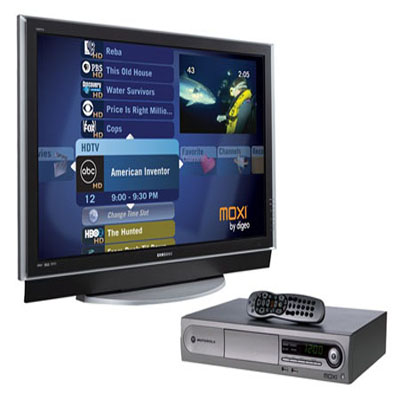
    Exclusive to DEN Cable subscribers, Playin’TV is accessible 24/7 on Channel No. 444. Subscribers need no other accessories other than their set top box and remote control to start playing on the TV. Some of the popular genres of games that will be available to Playin’TV subscribers include Adventure, Board & Cards, Brain Teasers, and Sports. DEN will offer 6 games at the launch in May, with 1 new game added every month until September 2017. Post that, the games will be refreshed each month with favorite games staying on air for longer duration.

    Visiware International COO Frederic Fellague said, “Visiware International being one of the pioneers and market leader is proud to partner with one of India’s largest cable distribution companies. We believe that gaming is one of the key to increase ARPU on cable. Partnering with DEN Networks will allow us to demonstrate in the future our capability to develop new forms of gaming interactions with the evolution of the set top box market.”

  • Disney India announces Siddharth Roy Kapur to replace Ronnie Screwvala

    Disney India announces Siddharth Roy Kapur to replace Ronnie Screwvala

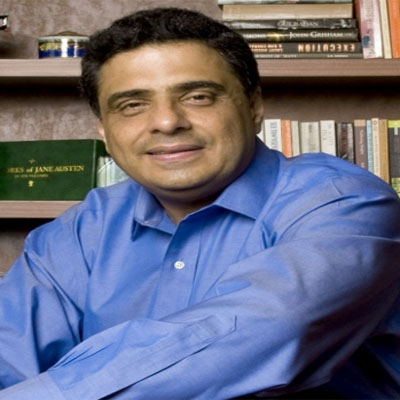
    MUMBAI:  The Walt Disney Company (TWDC) today announced that Managing Director Ronnie Screwvala will step down on 30th June 2014 and  Siddharth Roy Kapur, currently Managing Director of Disney UTV’s studio’s business, will take over the Company’s India operations.  Siddharth Roy Kapur will become managing director of TWDC India effective 1st January 2014, and Ronnie will assist in the transition until 30th June 2014.


    Ronnie, started off as a local cable TV operator in Mumbai with cable TV service under the name ‘Network’ in 1981. He then went to work with Western Outdoor Studios and then started  UTV Software Communications in 1990 along with Zarina Mehta, and Deven Khote.  It was in February 2012 that the Walt Disney Company acquired a controlling interest in UTV by buying out Screwvala and other shareholders interest and it later even delisted it from the stock market. Since then he has been ranked among the most influential people by several publication right from Time magazine to Esquire and what have you.


    Ronnie is throwing an early farewell party tonight for his colleagues at his south Mumbai residence. A well deserved celebration if there ever was one!

  • Trai’ng hard but falling way too short

    Trai’ng hard but falling way too short

    Some like it; some don’t. But there’s no denying that the Telecom Regulatory Authority of India (Trai)-mandated pay channel prices in CAS areas (Rs 5 for all pay channels) is going to stir up much more than just a storm in the proverbial cup.


    It’s like those weekly village markets that are quite popular in India where the refrain is har maal paanch rupaiya mein (every product priced uniformly at Rs 5). The actual price may differ a bit, but the concept adopted by Trai is the same. Reason: low and uniform prices attract buyers.


    Faster the adoption of a technology like CAS, sooner more transparency will come into the Indian broadcast and cable industry, which has been plagued by massive under-declaration by cable ops
    _____****_____

    A low price entry point for a new technology — about which myths abound still for the general public — is certainly a good way of incentivising its quick adoption. And, faster the adoption of a technology like CAS, sooner more transparency will come into the Indian broadcast and cable industry, which has been plagued by massive under-declaration by cable operations and other such ills in the absence of any regulation.


    But in attempting to keep cable TV as a mass service —- which it is, anyway — and having the prices of all pay channels uniform, Trai has forgotten one important aspect of regulatory process: the cost factor while deciding tariff for a service.


    The real boom in the Indian cellular phone market came when players clipped price lines and made the whole process of acquiring a mobile phone connection so cheap and attractive that even a domestic hand found it hard to resist. Who can forget a certain Indian telecom player’s offer of a mobile phone connection with unlimited talk time for a certain period of time and the handset thrown in for Rs 500 under the Monsoon Hungama or monsoon bonanza scheme some time ago?


    Trai, which also oversees the telecom sector, may actually take pride in claiming that it facilitated massive growth in cellular phones in the country. The numbers say it all. There are more cellular phone connections in the country compared to fixed line connections. But broadcast industry cannot crow like its telecom counterpart.


    Though cable TV service, unlike some others like transport (especially capital intensive railway transport), cannot be categorized as a natural monopoly, the cost of putting together that service cannot be overlooked.


    In forcing an entertainment broadcaster to sell its product at a ridiculously low cost, Trai is trying to say Indian consumers don’t appreciate high quality production values.
    _____****_____

    Not as capital intensive as power or transport sectors, cable TV nevertheless does need investments to be made by all stakeholders of the value chain. By presuming that all types of content can be acquired comparatively cheap and revenue generated through volume sales (after all, India now boasts of 68 million C&S homes with all TV homes standing at 110 million), the regulator has highlighted its partial ignorance of how the broadcast business is conducted.


    Imagine the plight of Nimbus, for example, which has bought Indian cricket rights for over $ 600 million hoping that the content would help it to price its proposed channel at a premium. But now it would have no option but to price a pay channel at Rs 5 and look at rejigging the whole business model.


    There is no denying that the programming costs in the sports, movies and entertainment segments are higher than news or infotainment channels segment. In forcing an entertainment broadcaster to sell its product at a ridiculously low cost — when compared to the input costs of aggregating content — Trai, probably, is trying to say that Indian consumers don’t appreciate high quality production values and can be served shoddy work. Class comes with a price tag and the price decided by the regulator is unlikely to encourage quality.


    Could Trai have gone in for differential pricing for some genres of channels? Yes, of course it could have, and displayed a visionary flair in the process.


    But as long as regulators like Trai remain hostage to a government’s whims and fancies, it would always open itself to the criticism of pandering to politicians’ wishes, which are mostly based on populism.


    Still, there is no gainsaying that the last word on this tale is a long way away from being written. And, if the way the currents are flowing are anything to go by, it could well be on this critical point that Trai’s efforts to usher in the CAS era could fall flat!

  • Trai issues regulations on quality of cable TV service

    Trai issues regulations on quality of cable TV service

    NEW DELHI: Cable TV consumers are in for a pleasant surprise as cable operators will now be put under stringent monitoring relating to quality of service.

    India’s broadcast regulator today issued detailed regulations prescribing standards of quality of service to be observed by the cable operators and multi system operators in CAS notified areas of Mumbai, Kolkata, Delhi and Chennai.

    The Telecom Regulatory Authority of India (Trai) said the regulations would come into effect from 1 October, 2006.

    The regulations have been drawn keeping in view the facts that the industry would be subject to prescription of quality of service standards for the first time and, therefore, would need time to adjust on various quality of service aspects.

    The issues addressed in the regulations broadly cover the following areas:

    (i) Connection, disconnection, transfer and shifting of cable services
    (ii) Complaint handling and redressal in respect of cable services
    (iii) Billing Procedure and billing related complaints
    (iv) Set-top box related issues and complaints
    (v) Positioning of channels / taking the channel off air

    A snapshot of the major features of these regulations categorized under the above-mentioned broad areas are indicated below:

    Application for connection/disconnection/transfer/shifting
    * Application for pay channel or request for basic service tier to be responded within five working days.
    * Cable Service connection/reconnection to be provided within 2 working days on completion of all formalities by the subscribers.
    Complaint handling and redressal
    *Multi System Operator/Cable Operator to maintain customer service center/help desk center for 24 hours, 7 days a week including facility for automatic recording of complaints.
    *All complaints received in the day to be attended/responded within eight hours.

    Billing related issues
    * Billing to be done normally on monthly basis and entries to be itemized.
    *Subscribers required to ensure prompt payment of bills. Deterrents to discourage delayed payments
    *Redressal of complaints on billing within 7 days from the date of notice.

    Set Top Box (STB) related issues
    * MSO/Cable Operator to repair or replace within 24 hours of receipt of complaint of malfunctioning of set top box and refund of security deposit within seven days of return of set top box.

    *Rebate for delay in activation/reactivation of set top box beyond two working days @ Rs 15 per day for the first 5 days and @ Rs 10 per day for the subsequent period

    Positioning of channels/Taking the channel off air
    *No channel to be taken off the air, except for circumstances beyond the control of the operator, without prior notice of three weeks.

    The High Court of Delhi on 20 July 2006 had directed implementation of CAS in the three metros of Mumbai, Kolkata and Delhi by 31 December 2006.

    One of the areas identified in the implementation of CAS was prescription of quality of service standards by Trai, which has been now done after consultations with the industry stakeholders.

    A full text of the regulation along with the explanatory memorandum is available on Trai’s website, www.trai.gov.in.