|
Driven by the rapid development in digital and mobile technologies, sound company Dolby is expanding its market base from cinema to the broadcasting sector.
Dolby is pushing Dolby Digital Plus, an enhanced version of the Dolby Digital system, which allows broadcast operators to deliver surround sound. But Dolby also works with the entire value chain to ensure a better consumer experience.
As the Indian broadcasting sector digitises, Dolby sees a big opportunity. It has stitched deals with three DTH operators and is in talks with the cable TV operators. It wants to work with content providers to boost the quality of their sound.
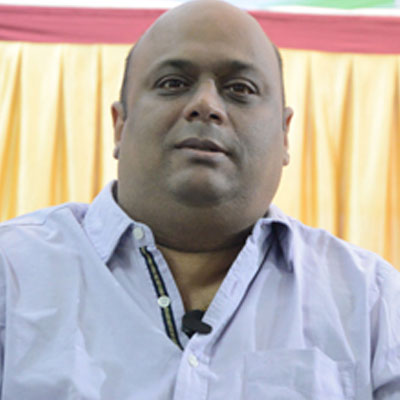
In an interview with Indiantelevision.com’s Ashwin Pinto, Dolby Laboratories senior director, broadcast Jason Power talks about the company’s growth across all media platforms and its India plans.
Excerpts:
|
|
What strategy has Dolby followed in the past few years to enhance the consumer’s entertainment experience?
Our focus lies in all those things which are going digital and High Definition (HD). This is where we see a big opportunity as we create technologies that enable entertainment to be replayed at its best. While people know us for doing this best for cinema over the past 10 years, we have also been focusing on the broadcast sector and other areas where digital entertainment has been happening.
Dolby has been closely linked to the transition to high definition around the world. Dolby has been there to make sure that the audio complements the HD picture.
Now HD content is moving to digital devices such as the mobile phone. We ensure that content is replayed at its pristine best, regardless of the platform which includes online delivery.
|
|
What new products have you added to your portfolio recently?
The most exciting product for broadcasting is Dolby Digital Plus. Dolby Digital has been synonymous with HDTV. Dolby Digital Plus is the new generation of that technology and an ideal combination for new HD television services. It is being used in Europe and the US.
In India, it is currently being used by three direct-to-home (DTH) operators – Airtel digital TV, Tata Sky and Sun Direct. Using our technology, they can now offer 7.1 channels of surround sound.
|
|
How is Dolby Digital Plus an improvement?
It allows surround sound to be added at attractive data rates. It minimises the data rate that broadcasters need to use for transmitting audio. There is a 40 per cent saving over the previous technology. Most importantly, it allows for future innovation. The Blu Ray disc, for example, has features for 7.1 channel audio, for interactivity in the audio. We can offer these same benefits to broadcasters. It can keep DTH competitive.
|
|
What kind of product research does Dolby do to make sure that clients and consumers are satisfied?
Satisfying consumers is what we are about. We believe that to be successful, we have to make a difference to the entertainment experience.
To make the technology a difference, we want to help the industry create a surround sound. We work with content makers to help produce in surround sound. We work with broadcasters to help them handle that surround sound in their station. We also work with operators to help them transmit that surround sound.
We work with set-top box (STB) vendors to help them input our technology. We also work with home cinema manufacturers. We do educational drives and training to help operators understand our technology better and see how people hook up systems better. We are present across the value chain.
|
|
What have the learnings been from working with so many parties?
In the broadcast business where we have over 1000 channels using our technology, we find the eco system complex. Many parties are involved in the chain. There is production, broadcasters, equipment vendors, STBs, chip suppliers and middleware. There are all these layers. You have to support all these players if you want to give the consumer at home a better experience.
A key part of our success is our engagement with all the parties all the way through the value chain. We have not just tried to flog the technology in one small piece. We have engaged with the whole industry to help make surround sound a reality for them. We have nurtured and catalysed the process happening in the industry. This has been essential to our success in the broadcast business.
|
|
‘For us, the Indian market will be content driven. China, on the other hand, will be more manufacturing centric‘
|
|
|
Which are your top three markets in Asia?
You have to split it between the consumer audience and manufacturing. Clearly, there are TV manufacturers in Korea. But in terms of consumption and getting content on the air in our technology, India and China are key. They have large populations going through an exciting digital transition. DTH is exploding in India. The HD transition is just happening. Digital cable transition will happen in the coming years. This is why we are excited about India.
|
|
Earlier Dolby was known for its work in cinema. When did you shift the focus to broadcast and mobile entertainment and how has it benefited you?
We remain focussed and invest heavily on cinema. We innovate in terms of audio formats for cinema. We are involved in 3D for cinema.
But we have steadily grown other businesses as digitisation has spread globally. Broadcast and PC is our second largest biggest segment.
|
|
How important will the role of sound be in a digital Indian television landscape?
What is interesting is that India has a passion for entertainment. Consumers are hungry for changing the quality of their entertainment experience; we can provide that change.
HD is about video and audio. Both are equally important – or it is incomplete. We think that for HD to make a difference and a valuable proposition, it needs to be more than just a pretty picture on the wall. We can turn it into an immersive experience where the consumers feel that they are in there.
We want to put your right in the middle of a cricket match, right in the middle of a rainforest or in the middle of your favourite drama, for instance. Picture gives you detail and something to watch for, but it is the sound that makes it real for you.
|
|
What other products do you offer for the broadcast sector?
The other product is Dolby Volume. It is a different challenge. It deals with the issue of volume inconsistencies across TV services. It can even be used in TV sets to level out sound differences.
|
|
How big a challenge is it to market your products to television platforms and services in India and abroad?
Our technology is used in over 50 per cent of TV sets shipped around the world. It is a challenge to market but we have invested in this area; we have improved the relevance of our technology. Our USP is about providing a richer, more immersive experience through surround sound for digital entertainment.
|
|
What is the value add that the DTH players will get by partnering with Dolby?
We are helping the three Indian DTH companies adopt our technology. They have included our technology in their STBs so that they can transmit on surround sound. We work upstream with broadcasters to help them provide a selection of surround sound content to feed on HD services. NGC, Discovery, ESPN are some channels that are making use of our surround sound technology. Our focus now is to work with local channels to help produce content in surround sound.
|
|
Have you set any targets in terms of the amount of business you expect to see from India?
We want our technology to be adopted by all the six DTH operators. We are also excited about digitisation of cable. We can help incentivise consumers to switch over to digital cable.
|
To what extent did the economic downturn affect business?
We have seen growth globally in the broadcast business. Our touch rate to digital television has doubled in the past two years. We have met our forecasts.
We have benefited from the macro effect of HDTV rolling around the world. This insulated us from the downturn.
|
Could you give me an example of how Dolby worked with a broadcaster to make the HD transition?
We have worked with the DTH operators here. With Airtel we have worked not just in terms of enabling our technology in their transmission through STBs, but also to help them publicise this to the consumer and explain the difference.
In the UK Sky was the first significant sized HDTV operator in Europe; so we worked with them on content. Cricket production was the first place we got involved in; we helped them work on mixing surround sound to their cricket coverage with minimal additional effort.
|
|
In terms of sound, don’t movies and sport benefit the most?
They do. However there are other genres like audience shows, live entertainment shows and talent shows that can also get a boost. They can be really immersive. I have seen people bend our format to all kinds of content.
|
How big is your R&D effort?
Our investment is sizeable. We have state of the art research going on in audio and imaging. We contributed some of the fundamental IP into MPEG 4 video encoding; we have some technology around high dynamic range imaging. We recently announced a product targeted at very high end post production facilities.
|
|
Are you looking at setting up an R&D hub in India?
That is something we would be open to. We have decentralised our research to use local talent. Five years back, we used to do most of our search in the west coast of the US. Now we have eight research locations dotted around the world. We are familiar with talent coming from here.
|
|
How are you tackling China?
We have been present there for a long time; our technology is a standard part of HD television there. We have 11 channels using our technology. As the digital TV transition is taking place, it is also an exciting market for us. We license our technology for STB manufactures. We partner with government agencies like Cesi. We help their members have access to our technology for the Chinese and global market.
|
How are India and China different as markets?
In India, it will be content driven for us; it is about making sure that there is local content using our technology.
China, on the other hand, will be more manufacturing centric. It will be about enabling their manufacturers compete on a worldwide stage; we will give them audio features that the global market demands.
|
On the cinema front, you have done work in stereoscopic 3D. Have exhibitors in India and overseas supported you in this, given the added investments they have had to make?
Exhibitors are happy that they are able to command a premium price for 3D exhibition. It has helped them fund the investment in digital cinema exhibition.
Some chains in India use us. According to our feedback, we provide the sharpest and clearest picture. Our glasses are reusable. It is not a wear once and throw away model. Theatres that are very quality conscious tend to like us more.
|
How do you see 3D TV progressing?
We are excited about the potential for 3D in broadcast. We see moves by major TV manufacturers to promote 3D TV sets. The interesting thing is that making a flat panel TV to a 3D one requires little cost. They can offer this additional benefit without there being a big impact on their cost.
We see big forecasts of 3D TV shipments coming from broadcasters to transmit in 3D. We have published an open specification that broadcasters can use. We have exciting ideas about what we can offer in the future.
|
In developing solutions for new media like mobile, you work with several partners like Nokia and LG. How has this experience been?
We work with LG across different fields. With Nokia it is with the mobile phone and is a newer relationship. We work with them not just as an entertainment device but as an entertainment library device. You can have movie content on the phone and enjoy it with your headphones; you could also connect the phone to a home cinema system and enjoy the content in HD, Dolby surround System. We help these companies establish a completely new value proposition.
We also work with companies like Netflix and AT&T to help their content get decoded in our formats. Then they can deliver this content through whatever pipes they choose in the best possible audio.
|
What are the challenges in developing solutions for new media?
We have partnered closely with the industry to make sure that technology is there in the form that they need it in. There are specific chips that are used in mobile phones. We also work with the chosen chip set vendors of handset manufacturers to make it easier for them to have our technologies available on a chip.
The other part is creating technology to improve the headphone listening experience. When a consumer hits the Dolby button on the mobile phone, the whole experience should come alive. That is our goal. The challenge was creating a complex technology which you then make available in a form that works so that it is practical to implement on the mobile phone.
|
|
What work does Dolby do in gaming?
Our technology is included in Xbox, Playstation and Nintendo among other manufacturers. We work with game developers to see how best to include our technology. We also have a new technology called Dolby Axon. It is a voice communications application that helps interactive gamplay.
|
|
|
What are the challenges in developing solutions for new media?
We have partnered closely with the industry to make sure that technology is there in the form that they need it in. There are specific chips that are used in mobile phones. We also work with the chosen chip set vendors of handset manufacturers to make it easier for them to have our technologies available on a chip.
The other part is creating technology to improve the headphone listening experience. When a consumer hits the Dolby button on the mobile phone, the whole experience should come alive. That is our goal. The challenge was creating a complex technology which you then make available in a form that works so that it is practical to implement on the mobile phone.
|
|
What work does Dolby do in gaming?
Our technology is included in Xbox, Playstation and Nintendo among other manufacturers. We work with game developers to see how best to include our technology. We also have a new technology called Dolby Axon. It is a voice communications application that helps interactive gamplay.
|