Tag: Cable TV Networks

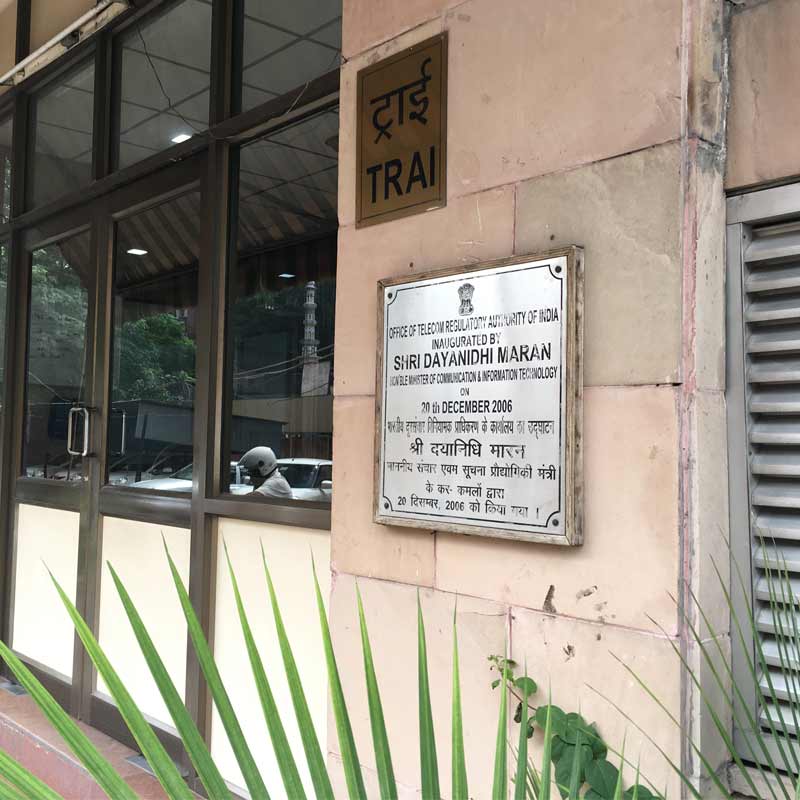
  • Digitisation: Trai directs MSOs and LCOs to comply with QoS in DAS areas

    Digitisation: Trai directs MSOs and LCOs to comply with QoS in DAS areas

    NEW DELHI: For the Telecom Regulatory Authority of India (Trai), it is time to take audit of the first phase of implementation of digital addressable system (DAS) by cable TV networks. Though satisfied with the deployment of set-top boxes (STBs), the broadcast sector regulator now seems to be wanting faster progress made on packaging of channels and billing so that cable TV subscribers can select their channels according to their budgets.

    In a toughening of stance, Trai has directed multi-system operators (MSOs) and the local cable operators (LCOs) to make their subscriber management system (SMS) fully operational in DAS areas. The systems are provided for under Regulation 20 of the Standards of Quality of Service (QoS) Regulations.

    Trai has asked the MSOs and the LCOs to file a compliance report of the QoS within seven days from the date of issue of this directive. The sector regulator had sent the directive on 22 February.

    “It has come to the notice of the Trai that this feature has not been implemented effectively by many MSOs. Also, in many of the cases the LCOs have not provided the completed subscriber application forms to their linked MSOs,” Trai said.
    The compliance report to be given to the Authority will contain total number of STBs received from the linked MSO, total number of STBs seeded and operationalised, total number of consumer application forms duly filled and complete in all respects (all the relevant consumer details and his choice of channels/ bouquets) and submitted to the linked MSO.

    An addressable system “enables the subscribers to exercise their choice of services and budget their bills accordingly”. It also “facilitates the MSOs to effectively manage their accounting and billing of the services rendered”.

    Though the process of SMS had started, senior executives of several MSOs said on condition of anonymity that the entire system would take some time. They also admitted that they faced resistance from some LCOs, following which there was delay in selling channel packages to their subscribers and implementing a proper billing system. Meanwhile, some LCOs have carried out protests to express their dissatisfaction over Trai‘s prescribed revenue share with the MSOs in DAS markets.

  • McCann Erickson to design IBF’s digitisation campaign

    McCann Erickson to design IBF’s digitisation campaign

    NEW DELHI: The Indian Broadcasting Foundation (IBF) is launching a countrywide awareness campaign to apprise viewers of television about the benefits of digitisation.

    The campaign is being designed by McCann Erickson (India). The agency was selected out of four which had responded to bids invited by the IBF.

    IBF director (finance) Naresh Chahal told indiantelevision.com that a major focus of the campaign would be to encourage people to buy digital set top boxes as the four metros covered under Phase I of digitisation would not be able to get either free-to-air or encrypted channels from 1 July this year unless they have switched to new STBs.

    He said the aim would be to educate the viewers about the fact that a digital STB would enable him to get more channels, give additional value added services, and ensure transparency, apart from proving to be economical in the long run.

    Asked about the budgeting of the campaign, he said the TV channels would bear their own costs as every channel was going to be affected by digitisation. However, IBF would work out further details as it decides to use the print media, cinema, out-of-home, and online advertising as the next step.

    Although he refused to name the other three bidders, it is understood that they included O&M.

    Parliament has already passed the Cable TV Networks (Regulation) Second Amendment Bill to speed up the process of digitisation of cable networks.

    The Government has set 31 December 2014 as the final sunset date for digitisation of the cable networks. It had earlier announced a timetable for complete digitisation of cable television in the four metros by 31 March 2012, but this was put off to June 2012 in a notification issued subsequently.

    The target date for completely digitising cable sector in cities with population of more than one million was 30 March 2013, all urban areas by 30 September 2014, and the whole country by 31 December 2014.

    The Telecom Regulatory Authority of India has been authorised under the Bill to fix the tariff for ala carte basis.

    Apart from improving the quality of reception, digitisation would also empower the cable operators to give larger number of channels to the consumers. There will be no prime band after digitisation.

  • ‘We will keep aside Rs 10 bn for organic or inorganic growth opportunities’ : Zeel MD and CEO Punit Goenka

    ‘We will keep aside Rs 10 bn for organic or inorganic growth opportunities’ : Zeel MD and CEO Punit Goenka

    Punit Goenka is in control of the media empire that patriarch Subhash Chandra built assiduously over almost two decades. He is quick to take decisions, is unruffled by temporary ups and downs, and believes in continuity.


    The elder son of Chandra digs deep into the Zee culture, has his own ways of finding solutions and does not hesitate to bet on sports as he takes up the responsibility of shaping Zee‘s broadcasting business.


    “I have learnt a lot from my dad. He is no more hands-on. See, he has not called me for over an hour (during the interview). I have my own style,” says Goenka, a grin on his face.


    Soft-spoken and shy, Goenka is a people‘s man. He backs his senior team, even when certain decisions do not work in the short run.


    In an environment of raunchy reality TV shows, he believes in clean content and explains that Zee TV, the flagship channel, is designed for family viewing.


    Goenka crafts strategies that focus on profitability; he hardly plays to the gallery.


    Under his leadership, Zee ended its 12-year-old rivalry with Star to float a joint venture distribution company named Media Pro Enterprise India. The aim of the JV: to pave the path for consolidation and hasten the need for digitisation in the sector.


    In an interview with Indiantelevision.com‘s Sibabrata Das, Zee Entertainment Enterprises Ltd managing director and CEO Goenka talks about the lack of opportunity in the marketplace to make the right purchase, the need to bet on sports broadcasting and to stick to profitability in a high-cost environment.


    Excerpts:

    Zeel is sitting on a cash pile of Rs 14 billion (as of 30 June 2011). Are you looking at acquisition opportunities?
    There is nothing that is available today that is fitting our criteria; we see no opportunity in the marketplace for us to make the right purchase. Even in the southern states, we are taking the organic route and patiently building our businesses there.


    As a company philosophy, we have decided to keep aside a cash of Rs 10 billion at any stage for organic or inorganic growth opportunities.

    But isn‘t this the right time for consolidation in the industry?
    Every two years we think the time has arrived for the industry to consolidate. But then something happens and there are more launches. Last time, it was the private equity firms; before that, we had the international strategic investors.


    However, for the benefit of the industry, consolidation is the answer. The sector is sized at Rs 300 billion and there are 500 television channels in the country earning an average ARPU (average revenue per user) of $3. That is why we have become an unprofitable industry.

    In a drive to consolidate and digitise the industry, Star India and Zee Group recently ended their 12-year divorce to create a distribution company. Has the joint venture been able to shake up the pay-TV market?
    It has been three months since the merged entity got formally rolling (on 1 July). Although we have started billing as a joint entity, there are old individual contracts that have yet to run their full cycle. We have over 5000 contracts with cable TV networks individually. So the impact will be felt when we start inking new contracts. There will be no major revenue upside in the short run. The deal will have a deeper impact after 18 months of implementation.

    How deep in terms of percentage growth?
    Both Star India and Zeel are seeing single-digit growth in subscription revenue from cable TV networks. Our domestic subscription income from cable rose 16 per cent (Rs 3.88 billion) in FY’11, but that included sports. By pooling together the resources of both the partners, we hope to post strong growth and address various anomalies of the analogue market including piracy.


    A large part of the deal plays out in analogue cable. In case of DTH, both of us are in any case growing independently.

    Given our growth trajectory and contracts, the sports business should break-even in two years. In the worst case scenario, we should be able to turn it around by the middle of FY‘14‘

    How painful has been the integration process?
    We have had to let go 20-25 per cent of the combined workforce. Some of them, however, have been absorbed inside the network.

    Media analysts say Zeel’s share price will get a boost if the sports broadcasting business is hived off and capital raised by offloading equity. Has any investment bank got the mandate to hunt for an investor for the sports business?
    We have no capital-raising plans. Zeel will continue to fund the sports business till it turns around. We have taken a long term call and sports broadcasting is a strategic business for us.

    When do you expect the sports business to turn around?
    Given our growth trajectory and contracts, the sports business should break-even in two years. In the worst case scenario, we should be able to turn it around by the middle of FY’14.

    Zeel‘s sports losses for FY‘11 stood at Rs 2.08 billion on a revenue of Rs 4.4 billion (excluding a one-time revenue gain of Rs 700 million as one-time fee for the pre-mature termination of rights for AIFF). So what will drive this to profitability?
    Subscription revenue will drive the business to profitability while advertising will be event-led.


    Ad revenue is heavily dependent on cricket. And within that segment, it is India cricket. While advertising revenue is cyclical, subscription income is consistent throughout the year.

    Zeel has bagged the eight-year Cricket South Africa (CSA) television rights for $180 million. Considering that the earlier five-year rights went for $75 million, isn’t the new price tag on the higher side?
    The price is in our comfort zone. It is an inflationary rise and has been one of the most valuable boards for us. By having one of the strategic boards under our belt for a longer term, we are under less pressure.

    We get to learn from sources that the Zimbabwe board rights have been retained for $20 million (earlier it had gone for $6 million for four years). But Zeel will be able to give its sports business maximum firepower when it is able to retain the telecast rights for the other three boards – Sri Lanka, Pakistan and West Indies. So will you bid aggressively?
    We have not yet signed with the Zimbabwe board, so I can’t comment on that. The other three boards are up for renewal during FY’12 and FY’13. We have done our calculations and will not bid recklessly for these rights. There are boards outside these which are also coming up for grabs.

    When is the golf channel getting launched ?
    We are awaiting government approval. We are ready to launch the golf channel within 60 days of obtaining the regulatory clearances.

    Will Comcast be a partner for the channel?
    Earlier Taj Television (which Zeel later acquired) had some sort of an agreement with Comcast for the golf channel. We have decided that we will do it ourselves and completely own it.

    When are you launching a full-fledged HD channel in sports?
    We are launching Ten Sports in HD format later this month. This will be a full-fledged HD channel and will have varied content from the other channels. So we will have four sports channels (Ten Cricket, Ten Action+ and Ten Sports already exist) by this month-end. We have acquired a slew of properties across different sports such as football and tennis. This has enabled us to launch three different channels and post strong subscription growth.

    Are there other HD launches planned?
    Zee TV, Zee Cinema and Zee Studio will be launched in HD format soon.

    Zeel has posted a measly 0.5 per cent ad growth in the fiscal first-quarter. Do you see the market improving?
    On the ad front, we have had a flat first quarter and do not expect to post double-digit growth this fiscal. But we will have a high single-digit growth.


    Subscription revenues will continue to have a similar growth trajectory, both on analogue cable and DTH. Our international revenues should stay flat.

    International subscription income actually de-grew two per cent in FY’11. Do you have any plans to fix the international business?
    The problem is with UK and Europe; the wobbly economy there is affecting our subscriber numbers. We have launched a hybrid channel, Zee Café, in the UK to arrest our degrowth in that market. The content, aimed at the South Asian diaspora, includes cricket and regional fiction shows sub-titled in English.


    In the other markets like the US, We are seeing growth.

    Is your localisation strategy working?
    Zee Aflam has seen reasonable growth and has reached break-even status within three years of operations. But operating in free-to-air markets (FTA) means the channel can grow only at limited speed.


    The other experiment we have carried out is in Russia. The audiences there love Bollywood, soaps and dramas. However, it is early days yet.


    We are also planning to launch in 3-4 other markets.

    Zee TV has slipped to fourth position as Sony Entertainment Television rejuvenated on the back of its big-ticket game show Kaun Banega Crorepati (KBC). Will you change the programming strategy and bring in celebrity-backed reality shows?
    There has been a streak of bad launches but it has not convinced us enough to believe that we need to change our content strategy. We are relaunching these slots.


    A large part of a particular channel‘s growth still comes from one show. A reality show may bring in spikes but we will wait to see what happens after that concludes. We will not take to celebrity-based reality shows unless we feel that we have a concept that needs to engage them. We are happy with our homegrown formats.


    Our prime competitor is Star. And as a network, we are in close competition.

    We will be increasing original hours of content on Zee TV from 28 hours to 33 hours per week. There has been some delay in that because we have had a few bad launches and we want to first fix those slots. We have also had a slowdown in the ad market

    Will you increase the programming hours of Zee TV as you fight back to regain market share?
    We will be increasing our original hours of content from 28 to 33 hours per week. There has been some delay in that because we have had a few bad launches and we want to first fix those slots. We have also had a slowdown in the advertising market.

    Zee has kept away from purchasing big movie titles. Will that affect Zee Cinema when Viacom18 launches its movie channel?
    With movie acquisition costs touching the roof, we have reduced the number of big title purchases. But we have maintained our 30 per cent share in the genre due to the extensive reach the channel enjoys; we have also wisely worked on our library content. We control 2800 movies.


    Big titles give rating spikes but they are first run on GECs rather than on movie channels. The Hindi movie channel genre has become cluttered and unprofitable due to high acquisition costs. But we have stayed profitable.

    Star Gold has reduced ad inventory on the channel by 33 per cent and is showing six fresh movies a day. Will you follow suit?
    Such a move has to be compensated with an increase in ad rates. In the current market scenario, this may not be easy. But we are working on reducing the ad time on the channel. And don’t forget that Zee Cinema was the first channel to show five fresh movies a day.
    Sun TV is under attack from the Jayalalithaa government. With the launch of the state-owned Arasu cable, will you make aggressive investments in the Tamil Nadu market?
    With Zee Tamizh, we have a foot in that market. Arasu has got presence in some pockets of the state. It is still early days and we have to wait and see how the market gets impacted. But if we get more distribution, we will get more aggressive.

    Isn’t Zee under attack from Star in the Bengali and Marathi regional language markets?
    The growth of Star has only expanded the market. In the southern region, we have fortified our position in Telugu and Kannada. Going beyond the Marathi and Bengali and the southern belt, there is no distinct language difference and Hindi still rules. Bhojpuri, for instance, has not met with much success yet. The Punjabi market can see growth once TAM (the television ratings agency) starts reporting Punjab as an independent market. Now it is clubbed with Haryana, Chandigarh and Himachal Pradesh; there is no clear weightage in that market.


    Regional news, on the other hand, is easily doable.

    Isn’t the news genre too cluttered?
    The industry can support 6-7 national channels. With so much of fragmentation, the way forward is serious news.


    There should be more stringent norms in this genre as entertainment is also passing as news. We have positioned ourselves as a serious news channel and are seeing decent growth. Unlike other players, we also have a strong pay revenue from our news business.


    It is the regional markets that are getting cluttered. The Andhra market, for instance, has seen too many launches. Some national news broadcasters are also having issue over cost structures.

    Will you launch an English general news and business news channel or you feel the balance sheet of Zee News Ltd has to further strengthen before you go in for these high-cost launches?
    The balance sheet can support these launches. But strategically, we will focus on Hindi and regional news channels. Yes, we have two critical genres left. But we will first fill up the regional space.
    Are you looking at expanding through the franchise route?
    We will take the franchise route only if editorial content is with us. After all, that is what impacts our brand.
    When you started, you were part of the Agrani satellite project. Do you still nurture the ambition of owning a satellite?
    Agrani was a good project but the policies were not supportive. Banks also had no clue how satellite funding works. Owning a satellite doesn’t make sense now; it is more feasible to lease transponder space on a satellite.
  • Govt will not take any step to compromise with freedom of media: PM

    Govt will not take any step to compromise with freedom of media: PM

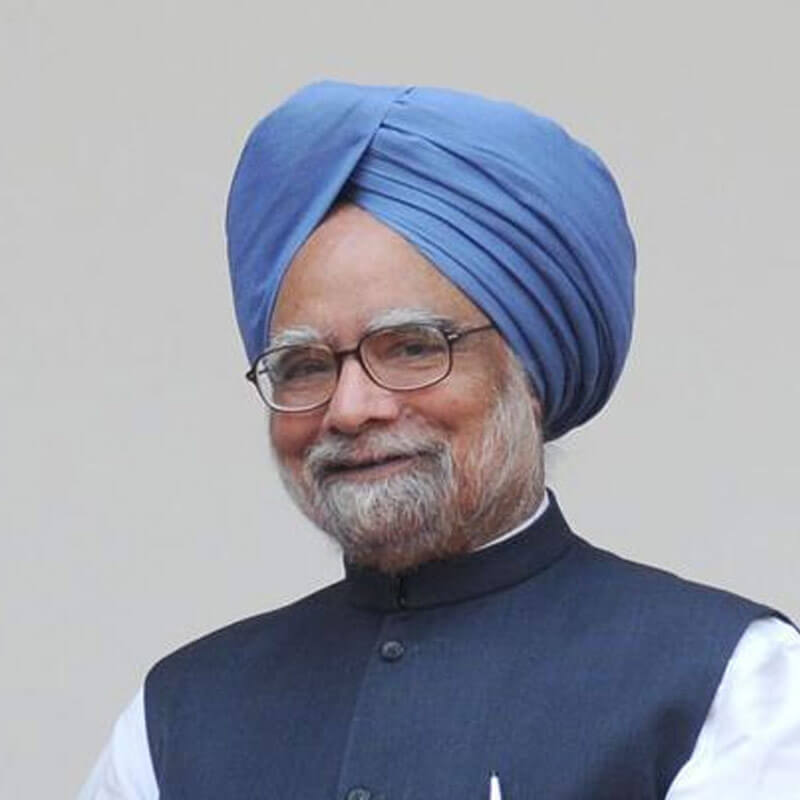
    NEW DELHI: Prime minister Manmohan Singh once again assured the editors of news channels in a meeting today that the government “would not take any step that would compromise with the freedom of the media.”

    The prime minister met the editors of television news channels to discuss the proposed changes in the Cable TV Networks (Regulation) Act.

    Earlier, the editors of 15 news channels had sought for a meeting with the PM. The editors had shown concern and were of view that “the spirit of self regulation must prevail.”

    On 14 January, Singh had hinted at a broader consultation with all stakeholders before coming out with any amendments that would put curbs on news coverage.

  • Govt. issues showcause notice to Live India on fake sting

    NEW DELHI: Live India, which ran into controversy after telecasting a sting operation that was subsequently declared as fake, has been issued a showcause notice by the information and broadcasting ministry.

    “A notice has been issued to the channel to show cause why its licence and permission to uplink should not be withdrawn for carrying out a fake sting and violating the Programme Code as well as the regulations under the Cable TV Networks (Regulation) Act 1995,” confirms a senior ministry official, speaking to Indiantelevision.com.

    “The Act is clear that ‘no person shall transmit or re-transmit through a cable service any programme unless such programme is in conformity with the prescribed Programme Code,” the source adds.

    Queried about the government notice, Broadcast Initiative Ltd promoter Markand Adhikari, however, refuted it. “I am not aware of any showcause notice issued by the ministry,” Adhikari stated.

    Meanwhile, Live India is facing the ire of the government on the one hand and other TV news channels on the other, as the incident has come at a time when there is growing confrontation between the I&B Ministry and news broadcasters on the need or relevance of an imposed Content Code.

    The channel’s reporters Prakash Singh and Rashmi Singh are in police custody, while school teacher Uma Khurana has been granted bail in the fake sting which showed her using her own students for prostitution.

    Businessman Virendra Arora, who is said to have wanted to recover money reportedly owed to him by Khurana, now stands accused of having hatched the conspiracy using Singh.

  • Hathway expands in north, acquires 51% in a Kanpur cable network

    Hathway expands in north, acquires 51% in a Kanpur cable network

    MUMBAI: Hathway Cable & Datacom is expanding its cable TV network in the northern region through the acquisition route. After buying a controlling stake in two local cable TV networks in Chandigarh and Mohali, the multi-system operator (MSO) is expanding its footprint in Kanpur.

    Hathway has acquired 51 per cent equity in JMD Sherawali Network, a leading cable operator in Kanpur, for an undisclosed amount.
    “By reaching out to Kanpur, it will be an important start for us into the core Uttar Pradesh market. JMD Sherawali Network has a 60 per cent market share in Kanpur. We have bought 51 per cent stake in the network,” said Hathway Cable & Datacom CEO and MD K Jayaraman.
    The MSOs are selectively expanding their cable networks. Last year, rival MSO Siticable bought out Indian Cable Net from the RPG Group to become the dominant MSO in Kolkata. Hathway has swung into action this year with the first acquisition made in February.

    With this acquisition, Hathway will be operating its cable TV services in 14 cities. Hathway’s cable TV is already available in cities across the nation including Mumbai, New Delhi, Chennai, Pune, Nashik, Bangalore, Hyderabad, Ludhiana, Vijaywada, Jalandhar and Mysore. The MSO is currently offering digital cable services in New Delhi, Mumbai, Pune, Bangalore and Hyderabad.

    Besides the analogue business, Hathway is also making efforts to rolout its digital services. The MSO will be launching gaming on its digital cable TV services by April-end. For the gaming technology, Hathway has selected NDS. Though available free, the commercial launch is likely to take about a month.

    “The gaming feature will be available to all our digital customers initially on a free of cost basis from end of April. Many more games will be added in the course of the year,” said Jayaraman.

  • CAS Ruling: MSOs now have the ammo to take on DTH

    CAS Ruling: MSOs now have the ammo to take on DTH

    It was one piece of news that cable TV networks were waiting to hear for long, too long in actual fact!


    Buffeted by potential competition from direct-to-home (DTH) operators, the timing of the Delhi High Court ruling that has ordered the government to enforce the rollout of conditional access system (CAS) in India within four weeks couldn’t have been more crucial. Tata Sky is preparing to launch in June and Dish TV, at present the only existing private sector DTH service provider, is expected to sort out programming contracts with Star India and SET Discovery by then.


    Cable TV can take DTH head on with its digital service. It has the firepower to do so, having built a rich battery of last mile operators (LMOs) who have serviced consumers over the years.


    Firstly, it can cobble together more channels than DTH can offer at the initial stage when the consumer is making the shift from analogue to digital. Already, some MSOs are making available a little under 150 TV channels. DTH operators, on the other hand, are limited by transponder space on satellite and can only ramp up under MPEG-4 compression technology.


    Second, cable TV can bundle broadband and, with preparation in future, telephony services.


    Third, it can develop interactive features with its fibre network.


    Fourth, it has manpower in place which can be quickly energised to push digital set-top boxes (STBs).


    Sure, MSOs and independent operators would have preferred the courts to have come up with the same verdict much earlier, after the government withdrew CAS in 2004. That would have given them a first mover advantage with a considerable time lag before DTH could kickstart operations.


    But there was one issue which had still to be sorted out for an effective rollout: LMOs felt insecure and did not back the rollout of digital cable. With competition from DTH looming large, they now have the support of their franchisee operators.


    But what if the verdict on CAS had come after Tata Sky’s launch and Dish TV’s content contracts had been stitched with Star and Sony? Cable TV operators would have been able to fight against DTH with two weapons in their armoury – analogue cable and voluntary digitalisation. On analogue cable, operators have the flexibility of dropping subscription fees drastically. With a price warrior in place through analogue service, digital cable could offer an alternate choice to consumers to combat DTH head on. On the flip side, the digital service would still remain unaddressable while DTH could provide consumers the choice of selecting channels and packages they want to pay for.


    Under CAS, cable operators do not have the flexibility of delivering pay channels on their analogue network. Consumers will have to select between DTH and digital cable for receiving these channels. They will, in other words, have to buy either a DTH or a cable TV set-top box.


    But delaying the direct knock-to-knock face-off between cable and DTH operators hardly serves any purpose. The business model for MSOs and independent operators can only get worse if no CAS is in place. Because the way out to stop DTH from invading into cable territory without a properly tiered and price-packaged digital service would have been possible only through rate drops. While LMOs would have been unaffected, the MSOs would have felt the pinch.


    Retooling business strategies and organising the sector is in the commercial interest of the cable operators. The hour has come to change the mindset and bring in quality and service-oriented practices. It will be meaningless to wish away competition from DTH and later IPTV providers.


    Several networks already have a stockpile of digital STBs. So far, they have been unable to place these boxes in consumer homes. Even Hathway Cable & Datacom, the more aggressive of the digital cable TV players, claims it has managed to distribute just 40,000 boxes. It would do better for operators to take a more positive view: that with CAS, digitalisation, either through cable or DTH or IPTV, would move faster.


    After all, the market is too big and diverse for any single player to cover it all.


    Ensuring a ramp up in supply of boxes, erecting a solid encryption system, and having a sound billing mechanism should be the focus areas. Also, it is crucial for operators to find more, better and premium content which can lure customers. They will also have to work out rental schemes and low up-front charges to subsidise the boxes in order to stay competitive with DTH.


    Another hard lesson to be learnt from this is that investments on old technologies won’t help. For those who have put their money on analogue STBs, the chances of surviving the battle look grim. Yes, there is a market for free-to-air analogue service. But no, not for analogue STBs as that will limit the channel offerings at a time when supply is growing rapidly.


    There will be competitive pressure for cable operators to upgrade their networks and services. Territorial monopolies will end and cable operators will also have to fight amongst themselves for retaining or acquiring subscribers.


    DTH, of course, retains one advantage. It has a national footprint while CAS is limited to the four metros in the first phase. This will give DTH economies of scale, but then it will still face the big hurdle of drawing in consumers to buy a box in the non-CAS areas.


    By bringing in CAS, the MSOs realise the entire business model changes in favour of them. Gaining control over the entire value chain across the network and having an addressable system will pump up valuation of cable companies and draw in global investors.


    The green signal on CAS couldn’t have come at a riper time. If there is any year which can drive digitalisation forward, this is it. In June-July, ESPN Star Sports will show live the football World Cup. The other key properties on the roster are ICC cricket Champions Trophy in September and the cricket World Cup early 2007 (both events on Sony).