Tag: Cable TV Networks

  • Why can’t pvt FM channels have news, SC asks govt

    Why can’t pvt FM channels have news, SC asks govt

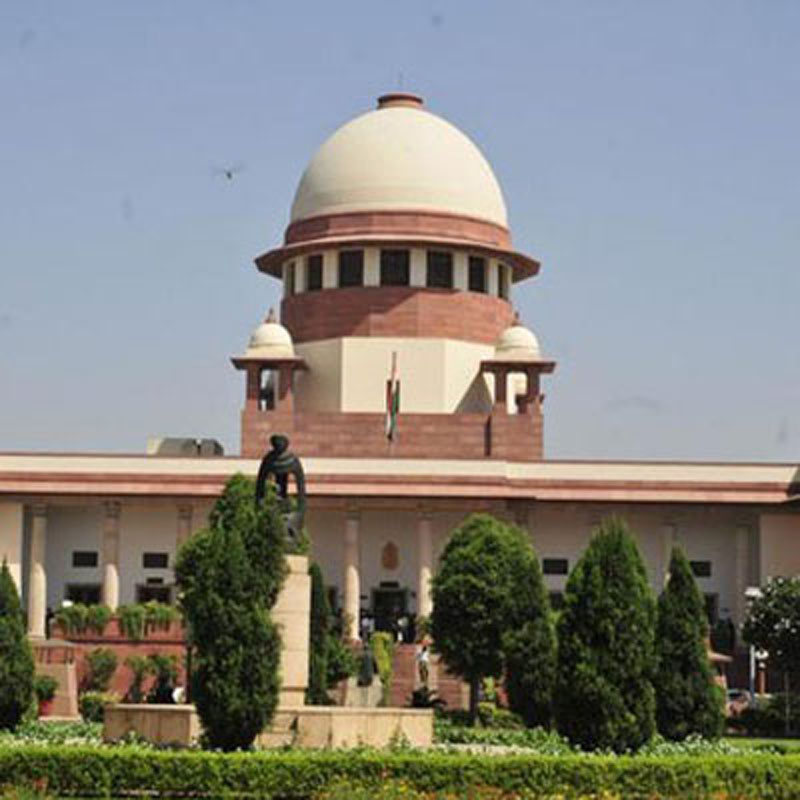
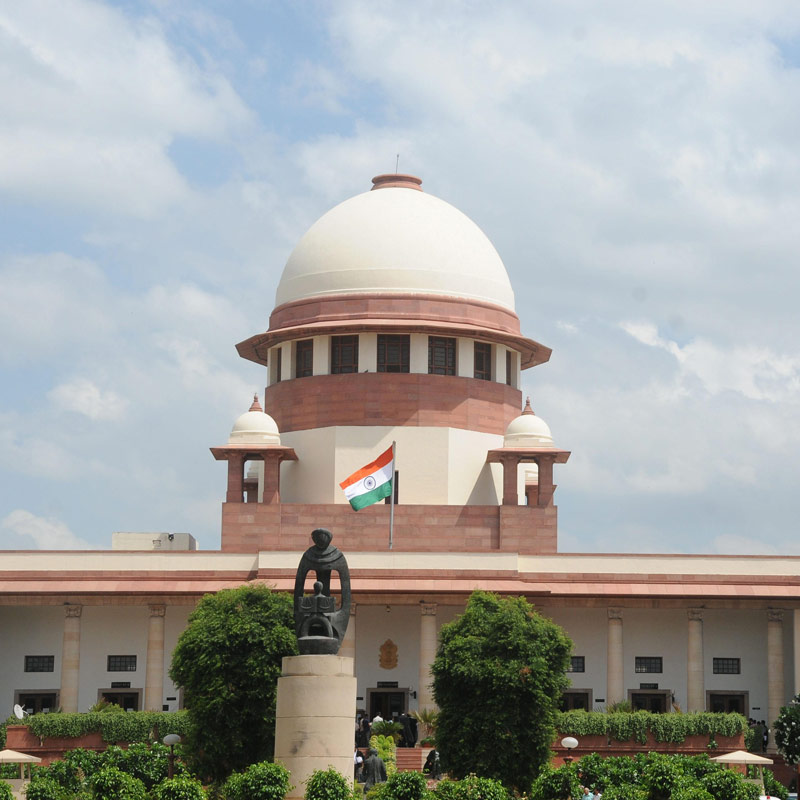
    NEW DELHI: The Supreme Court has asked the government to explain the continuing prohibition on FM radio stations and community radios from airing news and current affairs at par with private TV channels and the print media.

    The observation by the chief justice of India J.S. Khehar and Justice D.Y. Chandrachud came on a public interest litigation filed in 2013 by Common Cause, and the Court asked why the government wanted to control news on radio, which covers almost the entire population including the rural masses.

    The court directed the government to explain in four weeks the series of orders passed between 2008 and 2013 preventing private radio from airing their own news and current affairs broadcasts.

    The government’s prohibition, Common Cause argued, was in clear violation of the Supreme Court’s landmark verdict in 1995 in the Ministry of Information & Broadcasting vs Cricket Association of Bengal when the court had held that “airwaves are public property to be used to promote public good and expressing a plurality of views, opinions and ideas”. That judgment had led to the passing of the Cable TV Networks (Regulation) Act 1995.

    Common Cause counsel Prashant Bhushan and Kamini Jaiswal said that policy Guidelines and of the Grant of Permission Agreements framed by the government which prohibit private FM radio stations and community radio stations from broadcasting their own news and current affairs programmes clearly violate the fundamental right of the freedom of speech and expression as guaranteed under Article 19 (1) (a) of the Constitution.

    For more details: Why can private FM channels not have their own news bulletins, Supreme Court asks Govt.

    Also Read :

    ‘Risk’ in FM stations airing news, apprehends Prasar head

    TRAI: FM Radio ad revenues move up in Q2-17

    Big Ganga strengthens weekend programming; four shows planned in Jan

  • TRAI commences exercise to explore growth of internet through Wi-fi networks

    TRAI commences exercise to explore growth of internet through Wi-fi networks

    NEW DELHI: Noting that Wi-Fi networks offer affordable, scalable and versatile technologies that can facilitate the spread of Internet access in rural and urban areas alike, the Telecom Regulatory Authority of India today issued a consultation paper on Proliferation of Broadband through Public Wi-Fi Networks.

    Through a set of twelve questions, the Authority has sought to get the opinion of stakeholders including internet and telecom service providers on how best Wi-fi (an acronym for Wireless Fidelity) can grow in the country. Comments have been invited by 10 August with counter-comments by 24 August.

    At the outset, the regulator has noted that the growth of Internet penetration in India and realisation of its full potential is closely tied to the proliferation of broadband services. “Broadband” is currently defined to mean a data connection that is able to support interactive services, including Internet access, with the capability of a minimum download speed of 512 kbps. It therefore refers to a means of delivering high-speed Internet access services.

    Broadband services can be delivered through a number of different access technologies, both wired and wireless, including Digital Subscriber Lines (DSL), optical fibre technology, cable TV networks and mobile broadband services like 2G/3G/4G. In addition to these, radio frequency signals (or spectrum) can also be used for the creation of “wireless local area networks” (WLANs), offering an effective mechanism for extending the “last-mile connectivity” of broadband connections to a wider segment of users.

    Trai says Modern technology makes it possible to integrate a server with high storage capacity with the Wi-Fi hotspot equipment. As the cost of such servers has come down significantly, along with the cost of storage, and the form factors of such devices are very small, it should be possible to cache or download content for easy browsing even when the backhaul connectivity is not available. Such an arrangement can find great application in storing children’s study materials, educational data, agricultural and health related information, as well as movies and entertainment content, for the benefit of Wi-Fi users in areas with irregular connectivity, such as rural areas.

    The regulator said that strictly speaking, Wi-Fi is a certification provided by the Wireless Broadband Alliance1 (WBA), which owns and controls the “Wi-Fi Certified” logo that can be applied to products that satisfy certain interoperability criteria.

    WBA is a non-profit organization, formed in 1999, that promotes Wi-Fi technology and certifies Wi-Fi products if they conform to certain standards of interoperability.

    The questions raised by Trai are:

    Q1. Are there any regulatory issues, licensing restrictions or other factors that are hampering the growth of public Wi-Fi services in the country?

    Q2. What regulatory/licensing or policy measures are required to encourage the deployment of commercial models for ubiquitous city-wide Wi-Fi networks as well as expansion of Wi-Fi networks in remote or rural areas?

    Q3. What measures are required to encourage interoperability between the Wi-Fi networks of different service providers, both within the country and internationally?

    Q4. What measures are required to encourage interoperability between cellular and Wi-Fi networks?

    Q5. Apart from frequency bands already recommended by TRAI to DoT, are there additional bands which need to be de-licensed in order to expedite the penetration of broadband using Wi-Fi technology?

    Q6. Are there any challenges being faced in the login/authentication procedure for access to Wi-Fi hotspots? In what ways can the process be simplified to provide frictionless access to public Wi-Fi hotspots, for domestic users as well as foreign tourists?

    Q7. Are there any challenges being faced in making payments for access to Wi-Fi hotspots? Please elaborate and suggest a payment arrangement which will offer frictionless and secured payment for the access of Wi-Fi services.

    Q8. Is there a need to adopt a hub-based model along the lines suggested by the WBA, where a central third party AAA (Authentication, Authorization and Accounting) hub will facilitate interconnection,
    authentication and payments? Who should own and control the hub? Should the hub operator be subject to any regulations to ensure service standards, data protection, etc?

    Q9. Is there a need for ISPs/ the proposed hub operator to adopt the Unified Payment Interface (UPI) or other similar payment platforms for easy subscription of Wi-Fi access? Who should own and control such payment platforms?

    Q10. Is it feasible to have an architecture wherein a common grid can be created through which any small entity can become a data service provider and able to share its available data to any consumer or user?

    Q11. What regulatory/licensing measures are required to develop such architecture? Is this a right time to allow such reselling of data to ensure affordable data tariff to public, ensure ubiquitous presence of Wi-Fi Network and allow innovation in the market?

    Q12. What measures are required to promote hosting of data of community interest at local level to reduce cost of data to the consumers?
  • TRAI commences exercise to explore growth of internet through Wi-fi networks

    TRAI commences exercise to explore growth of internet through Wi-fi networks

    NEW DELHI: Noting that Wi-Fi networks offer affordable, scalable and versatile technologies that can facilitate the spread of Internet access in rural and urban areas alike, the Telecom Regulatory Authority of India today issued a consultation paper on Proliferation of Broadband through Public Wi-Fi Networks.

    Through a set of twelve questions, the Authority has sought to get the opinion of stakeholders including internet and telecom service providers on how best Wi-fi (an acronym for Wireless Fidelity) can grow in the country. Comments have been invited by 10 August with counter-comments by 24 August.

    At the outset, the regulator has noted that the growth of Internet penetration in India and realisation of its full potential is closely tied to the proliferation of broadband services. “Broadband” is currently defined to mean a data connection that is able to support interactive services, including Internet access, with the capability of a minimum download speed of 512 kbps. It therefore refers to a means of delivering high-speed Internet access services.

    Broadband services can be delivered through a number of different access technologies, both wired and wireless, including Digital Subscriber Lines (DSL), optical fibre technology, cable TV networks and mobile broadband services like 2G/3G/4G. In addition to these, radio frequency signals (or spectrum) can also be used for the creation of “wireless local area networks” (WLANs), offering an effective mechanism for extending the “last-mile connectivity” of broadband connections to a wider segment of users.

    Trai says Modern technology makes it possible to integrate a server with high storage capacity with the Wi-Fi hotspot equipment. As the cost of such servers has come down significantly, along with the cost of storage, and the form factors of such devices are very small, it should be possible to cache or download content for easy browsing even when the backhaul connectivity is not available. Such an arrangement can find great application in storing children’s study materials, educational data, agricultural and health related information, as well as movies and entertainment content, for the benefit of Wi-Fi users in areas with irregular connectivity, such as rural areas.

    The regulator said that strictly speaking, Wi-Fi is a certification provided by the Wireless Broadband Alliance1 (WBA), which owns and controls the “Wi-Fi Certified” logo that can be applied to products that satisfy certain interoperability criteria.

    WBA is a non-profit organization, formed in 1999, that promotes Wi-Fi technology and certifies Wi-Fi products if they conform to certain standards of interoperability.

    The questions raised by Trai are:

    Q1. Are there any regulatory issues, licensing restrictions or other factors that are hampering the growth of public Wi-Fi services in the country?

    Q2. What regulatory/licensing or policy measures are required to encourage the deployment of commercial models for ubiquitous city-wide Wi-Fi networks as well as expansion of Wi-Fi networks in remote or rural areas?

    Q3. What measures are required to encourage interoperability between the Wi-Fi networks of different service providers, both within the country and internationally?

    Q4. What measures are required to encourage interoperability between cellular and Wi-Fi networks?

    Q5. Apart from frequency bands already recommended by TRAI to DoT, are there additional bands which need to be de-licensed in order to expedite the penetration of broadband using Wi-Fi technology?

    Q6. Are there any challenges being faced in the login/authentication procedure for access to Wi-Fi hotspots? In what ways can the process be simplified to provide frictionless access to public Wi-Fi hotspots, for domestic users as well as foreign tourists?

    Q7. Are there any challenges being faced in making payments for access to Wi-Fi hotspots? Please elaborate and suggest a payment arrangement which will offer frictionless and secured payment for the access of Wi-Fi services.

    Q8. Is there a need to adopt a hub-based model along the lines suggested by the WBA, where a central third party AAA (Authentication, Authorization and Accounting) hub will facilitate interconnection,
    authentication and payments? Who should own and control the hub? Should the hub operator be subject to any regulations to ensure service standards, data protection, etc?

    Q9. Is there a need for ISPs/ the proposed hub operator to adopt the Unified Payment Interface (UPI) or other similar payment platforms for easy subscription of Wi-Fi access? Who should own and control such payment platforms?

    Q10. Is it feasible to have an architecture wherein a common grid can be created through which any small entity can become a data service provider and able to share its available data to any consumer or user?

    Q11. What regulatory/licensing measures are required to develop such architecture? Is this a right time to allow such reselling of data to ensure affordable data tariff to public, ensure ubiquitous presence of Wi-Fi Network and allow innovation in the market?

    Q12. What measures are required to promote hosting of data of community interest at local level to reduce cost of data to the consumers?
  • SC rejects Star appeal on sharing sports signals with DD

    SC rejects Star appeal on sharing sports signals with DD

    NEW DELHI: The Supreme Court today upheld the contention by Prasar Bharati that enhancements embedded in the sports feed shared by sports channels with Doordarshan were commercial advertisements.

    Rejecting a special leave petition by Star India against a Delhi High Court order which had gone in favour of Prasar Bharati, The apex Court also held that the prohibition in Section 3 of the Sports Broadcasting Signals (Mandatory Sharing with Prasar Bharati) Act 2007 (Sports Act) is not only against advertisements of the broadcast service provider but also those of the content rights owner and holder.

    The Court said the word ‘its’ in Section 3 of the Act refers to the the content rights owners, holder and broadcast service provider. Therefore it was immaterial as to who inserted the enhancements. Under the Act the signal to be provided had to be free of advertisements.

    The Sports Act is clear that live signals of sporting events of national importance have to be shared by the content rights owners or holders and broadcast service providers with Prasar Bharati without advertisements. Furthermore, a clean feed is to be provided.

    Prasar Bharati in its petition in the High Court had claimed that the feed being provided contained commercial enhancements. But Star took the plea that the commercial enhancements were not advertisements and the enhancements were in any case being inserted by International Cricket Council.

    Star also said the prohibition in Section 3 of the Sports Act was only against advertisements of the broadcast service provider (Star) and not those of the content rights owner (ICC). It claimed that the word ‘its’ in Section 3 of the Act only referred to the broadcast service provider and not the content rights owner.

    While senior counsel Abhishek Manu Singhvi had appeared for Star Sports, Prasar Bharati was represented by Attorney General Mukul Rohatagi.

    Taking up the case in Febuary last year, Justice Ranjan Gogoi and Justice Prafulla C Pant had said ‘we are of the view that the interim order passed earlier to the effect that the impugned order dated 4 February of the High Court shall remain suspended should continue until further orders.’

    The Court had at that time said it was ‘not inclined’ to consider the suggestion made by Star Sports that Doordarshan should set up an extra/special channel which has been contended by Prasar Bharati to be unviable and technically unfeasible within any reasonable period of time.

    On the second suggestion about ‘putting up a scroll to the effect that ‘the channel displaying the sports event (concerned ICC World Cup 2015 matches) is meant only for Doordarshan’, the Court said ‘acceptance of the said suggestion would be understanding the provisions of Section 3 of the Sports Act 2007 and Section 8 of the Cable Television Networks (Regulation) Act 1995 in a particular manner which is not warranted at this stage of the proceedings. We, therefore, decline to accept the said second suggestion advanced on behalf of the respondents.’

    Star India had in an additional affidavit at the time said that it was losing around Rs 290 crore every year by sharing its sports signals with Doordarshan and was expecting to lose around Rs 120 crore by sharing the telecast of the World Cup this year. (Under the Sports Act, the rights holder gets 75 per cent of the revenue from the telecast on DD which keeps the balance 25 per cent.)

    The Delhi High Court had declined to set aside the must carry clause as well as the Sports Act in its judgment.

  • SC rejects Star appeal on sharing sports signals with DD

    SC rejects Star appeal on sharing sports signals with DD

    NEW DELHI: The Supreme Court today upheld the contention by Prasar Bharati that enhancements embedded in the sports feed shared by sports channels with Doordarshan were commercial advertisements.

    Rejecting a special leave petition by Star India against a Delhi High Court order which had gone in favour of Prasar Bharati, The apex Court also held that the prohibition in Section 3 of the Sports Broadcasting Signals (Mandatory Sharing with Prasar Bharati) Act 2007 (Sports Act) is not only against advertisements of the broadcast service provider but also those of the content rights owner and holder.

    The Court said the word ‘its’ in Section 3 of the Act refers to the the content rights owners, holder and broadcast service provider. Therefore it was immaterial as to who inserted the enhancements. Under the Act the signal to be provided had to be free of advertisements.

    The Sports Act is clear that live signals of sporting events of national importance have to be shared by the content rights owners or holders and broadcast service providers with Prasar Bharati without advertisements. Furthermore, a clean feed is to be provided.

    Prasar Bharati in its petition in the High Court had claimed that the feed being provided contained commercial enhancements. But Star took the plea that the commercial enhancements were not advertisements and the enhancements were in any case being inserted by International Cricket Council.

    Star also said the prohibition in Section 3 of the Sports Act was only against advertisements of the broadcast service provider (Star) and not those of the content rights owner (ICC). It claimed that the word ‘its’ in Section 3 of the Act only referred to the broadcast service provider and not the content rights owner.

    While senior counsel Abhishek Manu Singhvi had appeared for Star Sports, Prasar Bharati was represented by Attorney General Mukul Rohatagi.

    Taking up the case in Febuary last year, Justice Ranjan Gogoi and Justice Prafulla C Pant had said ‘we are of the view that the interim order passed earlier to the effect that the impugned order dated 4 February of the High Court shall remain suspended should continue until further orders.’

    The Court had at that time said it was ‘not inclined’ to consider the suggestion made by Star Sports that Doordarshan should set up an extra/special channel which has been contended by Prasar Bharati to be unviable and technically unfeasible within any reasonable period of time.

    On the second suggestion about ‘putting up a scroll to the effect that ‘the channel displaying the sports event (concerned ICC World Cup 2015 matches) is meant only for Doordarshan’, the Court said ‘acceptance of the said suggestion would be understanding the provisions of Section 3 of the Sports Act 2007 and Section 8 of the Cable Television Networks (Regulation) Act 1995 in a particular manner which is not warranted at this stage of the proceedings. We, therefore, decline to accept the said second suggestion advanced on behalf of the respondents.’

    Star India had in an additional affidavit at the time said that it was losing around Rs 290 crore every year by sharing its sports signals with Doordarshan and was expecting to lose around Rs 120 crore by sharing the telecast of the World Cup this year. (Under the Sports Act, the rights holder gets 75 per cent of the revenue from the telecast on DD which keeps the balance 25 per cent.)

    The Delhi High Court had declined to set aside the must carry clause as well as the Sports Act in its judgment.

  • Election Commission issues detailed media guidelines for Bihar assembly polls

    Election Commission issues detailed media guidelines for Bihar assembly polls

    NEW DELHI: Even as the Model Code has come into effect for the elections to the Bihar assembly, the Election Commission today prohibited conduct of Exit poll and dissemination of their results during the period mentioned therein, that is, from the hour fixed for commencement of polls in the first phase and half hour after the time fixed for close of poll for the last phase in all the States.


    The directive was issued under Section 126A of the Representation of Peoples Act 1951. The polls commence from 12 October and will continue till 8 November, in five phases.


    The Commission reiterated that the TV, radio channels and cable networks should ensure that the contents of the programme telecast by them during the period of 48 hours referred to in Section 126 of the Act do not contain any material, including views/appeals by panelists/participants that may be construed as promoting/prejudicing the prospect of any particular party or candidate(s) or influencing/affecting the result of the election. This among other things includes display of results of any opinion poll and of standard debates, analysis, visuals and sound-bytes.


    At the outset, the Commission said there are sometimes allegations of violation of the provisions of Section 126 by TV channels in the telecast of their panel discussions/debates and other news and current affairs programmes. The Commission said it has clarified in the past that Section 126 prohibits displaying any election matter by means of television or similar apparatus during the period of 48 hours ending with the hour fixed for conclusion of poll in a constituency.


    “Election matter” has been defined in that Section as any matter intended or calculated to influence or affect the result of an election. Violation of the aforesaid provisions of Section 126 is punishable with imprisonment up to a period of two years, or with fine or both.


    During the period not covered by Section 126 or Section 126A, concerned TV, radio, cable and FM channels are free to approach the state, district or local authorities for necessary permission for conducting any broadcast related events, which must also conform to the provisions of the model code of conduct and the programme code laid down by the Information and Broadcasting Ministry under the Cable TV Networks (Regulation) Act 1995 with regard to decency, maintenance of communal harmony, etc.


    They are also required to stay within the provisions of Commission’s guidelines dated 27 August 2012 regarding paid news and related matters. Concerned chief electoral officer or district election officer will take into account all relevant aspects including the law and order situation while extending such permission.


    Apart from issuing separate guidelines for the print media, the Commission also drew attention of the media to the guidelines issued by the Press Council of India and the News Broadcasting Standards Authority with regard to elections.

  • Law Commission to complete recommendation on paid news soon

    Law Commission to complete recommendation on paid news soon

    NEW DELHI: The Law Commission is expected to complete its recommendations relating to paid news during election soon. It is currently studying the laws related to election laws in entirety.


    Information and Broadcasting Ministry sources tell indiantelevision.com that recommendations for changes in laws relating to the Press Council of India and the Cable TV Networks (Regulation) Act would be taken up after a consultation with the Election Commission.


    Furthermore, based on the recommendations of the standing committee on Information Technology, inclusion of provisions in the ‘Press and Registration of Books and Publications Bill’ to check the incidents of paid news are being examined. 


    The Press Council of India has formulated ‘Norms of Journalistic Conduct’ to be adhered by the media. These norms prescribe that advertisements should be clearly demarcated from news by printing disclaimers. As far as news is concerned, it must always carry a credit line and should be set in a typeface that would distinguish it from advertisements. The council has also drawn up a set of guidelines that are applicable to financial journalism and also on reporting of elections.


    So far as electronic media is concerned, all private satellite TV channels are required to adhere to the Programme & Advertising Codes prescribed under Cable Television Networks (Regulation) Act, 1995 and the rules framed there under. 

  • TRAI ad cap case: Judgement day dawns?

    TRAI ad cap case: Judgement day dawns?

    MUMBAI: Exactly a month after hearings first began in the ad cap case in the Telecom Disputes Appellate Tribunal (TDSAT), the verdict is set to be pronounced today. The TDSAT has listed it in the cause list for 11 December.


    The case that is being fought by broadcasters led by the News Broadcasters Association(NBA) against the Telecom Regulatory Authority of India (TRAI) is all set to be given a new direction.


    Indiantelevision.com gives you the highlights of the broadcasters vs TRAI ad cap legal slugfest and the coincidental twist that came near the end.


    The NBA’s main contentions were that TRAI does not have the authority to regulate content and that the agreement between the two is not of a licensor and a licensee but is rather a registration. It also said that the TRAI had not fulfilled the laying requirements before parliament thus making the regulation invalid.


    However, the TRAI stated that there was no rule in the TRAI act saying that merely because they hadn’t done the laying requirements, the regulation cannot be implemented. It also claimed that according to the terms of the licence and by applying section 7 of the Cable TV Networks Act it was authorised to implement the regulation to ensure the customers get quality of content on TV.


    After hearing the NBA, the TRAI, music channels and some other channels the TDSAT had reserved the judgement. The twist that came last week was when in a separate case of BSNL vs TRAI and others, the Supreme Court had ruled that cases in which the validity of a regulation by TRAI is challenged, cannot be heard in the TDSAT and has to be appealed against in the High Court since by law a regulation needs to be passed through parliament. This has put the fate of the ad cap regulation in a fix since officially TRAI claims it is a regulation.


    We wonder how the TDSAT will decide the case. Most probably, the TDSAT will dismiss it and request the petitioners to move the Hight Court after the verdict the SC gave on Friday. Had the petition been regarding the application of the regulation, the TDSAT could still have decided on it. However, the SC judgement clearly states that TDSAT cannot take a call on the very act that created it. TDSAT was formed under section 14 of the TRAI act giving it legislative and administrative powers.


    Section 36, under which the regulation was formed clearly underlines that if it is framed, it needs to be consistent with the terms of the TRAI act.


    However, after the SC ruling, the TDSAT seems to have been rendered powerless to decide on this case, even after 20 days of hearings and a long wait for the result, which will now be affected by the SC ruling.


    If the broadcasters are asked to move the HC, it means more time for them to deliberate on the validity of the regulation. But it is possible that they will have to follow the 12 minute ruling till the time, the HC does not say anything about it.

  • TDSAT ad cap: All arguments done

    TDSAT ad cap: All arguments done

    MUMBAI: It has been a long three weeks of hearings at Telecom Disputes Settlement Appellate Tribunal in the ad cap case between the News Broadcasters Association and other channels versus the Telecom Regulatory Authority of India (TRAI). Several arguments went back and forth between all the parties and, finally, it has come to an end.


    The last day saw the music channels, Polimer Media and TRAI give their rejoinders. Polimer Media’s rejoinder was that Article 19 1 a of the Constitution does not apply in this case since it is not a writ petition. It also said that pay channels and FTA channels cannot be treated the same.


    The music channels’ counsel Ramji Srinivasan argued that TRAI cannot use both section 36 and section 11 of the TRAI act for the regulation and now do a flip and call it a direction. If TRAI did want to frame the regulation, it should have done so under section 36 and not used multiple sections from multiple acts.


    However the music channels’ counsel said that they do have a license from the TRAI but if the regulator wants to use it then it needs to to apply section 7 (11) of the Cable TV Networks act strictly without additions or subtractions.


    He also presented data showing the effect the ad cap will have on their revenues. He said that channels in this genre will need to resort to a 30 per cent hike in ad rates if the cap does come into effect.


    Srinivasan said that amicus curiae Aman Ahluwalia had said that news channels will be severely affected by ad cap since their viewership is low; similarly the music channels are also in danger since they are are also niche with a limited viewership. And hence the ad regulation should not be applied to anyone at all.


    Finally the TRAI gave its rejoinder clarifying that it has framed a regulation under section 36 of the TRAI act and if the TDSAT feels it is a direction then it is not impeded in saying so. However the regulator maintained that it is not a direction, it is a regulation.


    The TDSAT is supposed to announce its judgement on the case.

  • Phase II of ad cap comes into effect; channels follow TRAI mandate

    Phase II of ad cap comes into effect; channels follow TRAI mandate

     NEW DELHI: Indian TV viewers are going to be a delighted bunch. Reason: the number of TV commercials being bombarded at them on TV channels just got reduced.


    The Telecom Regulatory Authority of India (TRAI) ad cap regime imposed on news and general entertainment channels came into force today with an upper limit of 20 and 16 minutes per hour respectively. This will run till 30 September, following which the 12-minute rule will come into play from 1 October.


    Both Indian Broadcasting Foundation (IBF) and the News Broadcasters Association (NBA) have said their members are following the regime, the first phase of which came into effect on 29 May when its members agreed not to exceed 30 minutes of advertising per hour. IBF president Man Jit Singh and NBA president K V L Narayan Rao told indiantelevision.com that the TV channels would stand by their commitment to the government since this was now the law.


    The final decision of 29 May had taken a lot of wrangling, with the matter also going to the Telecom Disputes Settlement & Appellate Tribunal against TRAI which insisted that it was only implementing a regulation which was part of the Cable TV Networks Rules 1994.


    Following this, the IBF Board finally appointed a committee of five persons – K V L Narayan Rao, Zee Entertainment CEO Puneet Goenka, Asianet managing director K Madhavan and Disney UTV media managing director K Anand with the assistance of secretary general Shailesh Shah – to research, debate, consult and arrive at what will work.


    The committee admitted in its report that some channels especially those in regional languages ran more than 30 minutes of advertising per hour. Shah, however, claimed to indiantelevision.com that the per hour ad time works out to just over 11 minutes if a full-day average is taken.


    The TRAI, however, says it is going to keep a sharp eye on each channel to ensure that there is no violation of the time cap set on the TV broadcast industry. “TRAI would continue to monitor the timing of commercials per hour by various channels,” says TRAI principal advisor on broadcasting and media N Parameswaran.


    It is quite likely that the air time reduction, could result in revenue losses for the channels. Though none of the broadcast bodies have clearly highlighted how much this erosion could be, media buyers do acknowledge that broadcasters will no doubt hike ad rates with the implementation of 12 minute ad cap on 1 October.
    “The impact cannot be felt as of now. Once the ad time comes down to 12 minutes (across GECs) in October that is when the crunch will be felt,” said an executive from a leading media buying and planning company. June to September is a lean period for advertising on channels, especially considering it is the monsoon season all over India.


    There are also few who believe that the ad cap restriction will improve quality of viewing. Madison Group COO- buying Neel Kamal Sharma opines, “It is a win-win situation. On one hand the advertisers will benefit as now they can target their audiences in an effective way. The broadcasters will also increase their ad rates. Parallel to this even digitisation will bring in extra revenue for the broadcasters, decreasing their dependence on ad revenue.”


    Sharma hopes for the transition to take place in a fair manner, which has been recognized by all without shifting the entire burden onto advertisers. “We must take a long term view of the situation and handle it carefully as some people may try to take advantage of the situation to increase rates disproportionately which may neither be good for them nor good for TV industry’s growth in the long run as many advertisers have already started exploring alternative options,” he adds.


    The message for broadcasters is clear: take tiny steps – together with your advertising partners. Don’t go for the long jump; you might end up jumping alone.