Tag: Cable TV Networks

  • TRAI recommends mandatory STB interoperability

    TRAI recommends mandatory STB interoperability

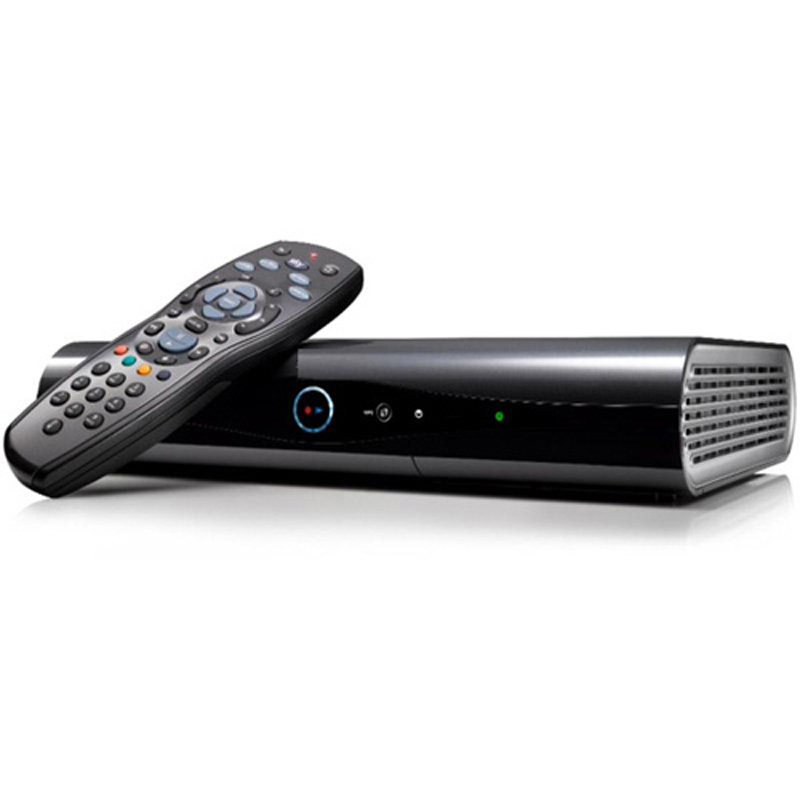
    MUMBAI: The Telecom Regulatory Authority of India (TRAI) today released recommendations on interoperability of set top boxes (STB) for digital TV broadcasting services. STBs must be made interoperable within each segment of cable TV and DTH respectively.

    TRAI says that currently, STBs are non-interoperable and that deprives the customer of the freedom to change his service provider and creates a hindrance to technological innovation, improvement in service quality, and the overall sector growth.

    “The issue has its own challenges with disparate interest groups among distribution platform owners, CAS vendors, STB manufacturers and other stakeholders. Since the broadcasting sector is content-centric, security of content and robust anti-piracy features are necessary. Affordability of STB remains an important criterion and any suggested solution should not cause undue increase in price of STB. Ensuring proper content security, strong anti-piracy features and flexibility while keeping the STB costs reasonable are the main challenges for achieving STB interoperability,” says the release.

    DTH STBs comply with the license conditions to support common interface (CI) module-based interoperability. However, in practice, even in the DTH segment, the STBs are not readily interoperable.

    TRAI recommends the following:

    * All set top boxes in India must support technical interoperability in principle, i.e., every STB provided to a consumer must be interoperable.

    * Ministry of information and broadcasting (MIB) may include a suitable clause/condition in the permission/registration/cable TV network rule mandating all the DPOs (DTH as well as MSOs) to compulsorily facilitate service provisioning through the interoperable STBs either provided by DPOs or procured by the consumers from open market.

    * There are technical and commercial constraints to universal STB. Therefore, interoperability of STBs, with effect from the date as prescribed vide the extant clause/ condition, shall be ensured within the DTH or cable segment. That is, the interoperability shall be applicable within the DTH segment and within the cable segment, respectively.

    * The MIB may notify through licensing conditions or amendment in the Cable Television  Network  Rules   1994  as  per  the  Cable  Television  Network (Regulation)  Act, 1995  or  through  any other appropriate  mechanism mandatory use of DVB CI+ 2.0 standards (with USB CAM) as per the ETSITS 103 605 standards both for DTI I STI3s and STFBs being used by MSOs from a prospective date.

    * A time of six month may be given to both DTH operators and MSOs to adopt DVB CI Plus 2.0 standards (with USB CAM) as per the ETSI TS 103 605 standards from the date of MIB notifications. MIB may also coordinate with BIS so that suitable amendments are brought within this time frame.

    * The authority recommends mandatory provisioning of USB port-based common interface for all  digital television sets in  India. MIB in coordination with TRAI and ministry of electronics and information technology may request BIS to amend the specifications for digital television sets to include provisioning of USB- based common interface port as per DVB CI Plus 2.0 standard based on ETSI TS 103 605 standards. Such specifications must mandate TV manufactures to:

    ·         Provide all digital television sets with minimum one open interface port based on DVB CI Plus 2.0 standards permitting simple connection of USB CAM to allow reception of television signals.

    ·         Provide digital television sets with built-in tuners to enable reception of television content through both satellite and cable platforms.

    Setting Up of Coordination and Implementation Committee

    A coordination committee may be set up by the MIB having members from the ministry of electronics and information technology, TRAI, BIS and representatives of TV manufacturers. The committee may steer implementation of revised STB standards for both the DTH and the cable TV segment.

    Further, the committee may maintain continuous oversight for setting up of the digital television standards by BIS to provide for DVB CI Plus 2.0 port based on ETSI TS 103 605 standards and to have provision for reception of both DTH and cable television signals. The coordination committee may steer the adaptation of the revised STB and digital television standards in a time-bound manner.

  • Analogue equipment may be seized, warns MIB

    Analogue equipment may be seized, warns MIB

    NEW DELHI: Stressing that the law permits seizure of equipment of defaulting cable operators. all state-level administrators have been asked to direct district magistrates (DMs) to take action against those operators who were still distributing analogue signals.

    In its letter to all states, the Ministry said that Section 11 of the Cable TV Networks (Regulation) Act 1005 gives powers to act against the defaulters. The letter wanted the administrators to allot about half an hour time to the Ministry, in any one of the meetings held by them with DMs in near future to highlight their role/powers.

    The Ministry also said it wanted to get the issue monitored by senior officers like Divisional Commissioner, Revenue Secretary or inspectors general. At the outset, the Ministry also said “hardly any compliance reports are being received” despite instructions given earlier.

    At the outset, the Ministry said that it had been mandated that only digital encrypted signals can be carried on the cable television networks in the country from 1 April.

    “However for its successful implementation, it is important that regular monitoring is carried out by the authorised officers {DM, SDM and CP as per Section 2 of the Cable Act to ensure that cable operators carry only digital encrypted signals, follow the provisions in the  Act and the Rules framed thereunder, and prompt action is taken against the defaulters.”

    The Ministry has prepared a Check List for inspection of MSOs by the Authorised Officers. Copy of the checklist is available at the MIB website.

    Also Read:

    Analogue signals: MIB to take action against defaulters 

    37 new MSOs in 45 days takes total to 1421, seven among 59 cases sub-judice

    LCOs to get unique TRAI number to ensure fair deals, says advisor Gupta

  • TRAI advises govt to aid TV infra sharing, ease ‘permissions’

    NEW DELHI: The Central Government should encourage sharing of infrastructure, wherever technically feasible, in TV broadcasting distribution network services, on voluntary basis including sharing of head-end used for cable TV services and transport streams transmitting signals of TV channels, among MSOs.

    In its recommendation to infrastructure sharing in the broadcasting sector, the Telecom Regulatory Authority of India said the MSO registration condition regarding ‘having an independent digital head-end of his own and provide digital addressable cable services from his head-end’ should be suitably amended so as to enable sharing of head-end.

    The Headend-in-the-sky (HITS) or the MSOs should be allowed to share the HITS platforms on voluntary basis, in flexible ways, for distribution of TV channels. The sharing of transport streams transmitted by HITS platform, between HITS operators and MSOs should be permitted.

    Direct-to-Home operators willing to share DTH platform and transport stream of TV channels, on voluntary basis should be allowed to do so with prior written intimation to the Information and Broadcasting Ministry and TRAI to ensure efficient use of scarce satellite resources.

    The distributors of TV channels should be permitted to share the common hardware for their Subscriber Management Systems applications and Conditional Access Systems applications.

    While sharing the infrastructure with another distributor of TV channels, the
    responsibility of compliance to the relevant Acts/ rules/ regulations/ lic·ense/ orders/ directions/ guidelines would continue to be of each distributor of TV channels independently.

    The recommendations are the result of a reference from the Ministry of 29 April 2016. The Ministry had also sought recommendation of the Authority on the amendment that may be required in the Cable TV Networks (Regulation) Act 1995 and Rules made thereunder to facilitate the infrastructure sharing.

    The Authority examined the issues in sharing of infrastructure in TV broadcasting distribution sector comprehensively for all types of predominant TV broadcasting distribution networks. TRAI undertook a comprehensive consultation with the stakeholders by issuing pre-consultation paper, consultation paper, and conducting an open house discussion with them before finalizing its recommendations on “Sharing of Infrastructure in Television Broadcasting Distribution Sector”.

    At the outset, TRAI said TV broadcasting sector has witnessed tremendous growth in the last decade. There has been an exponential increase in the number of satellite TV channels.

    The objectives of the recommendations are to ease policy environment for facilitating sharing of infrastructure in TV broadcasting distribution sector on voluntary basis. The sharing of the infrastructure in TV broadcasting distribution sector would not only help in enhancing available distribution network capacities but also would result in reduced Capital Expenditure (CAPEX) and Operative Expenditure (OPEX) for the service providers thereby bringing down the price of broadcasting services to subscribers.

    In addition, it would lower the entry barrier for new service providers and provide space on broadcasting distribution networks for niche channels- necessary for satisfying the diverse needs of general public – to reach targeted customers. Lowering of entry barriers in the distribution space could propel competition in the market and more choices to consumers due to presence of multiple operators in single territory.

  • Present mechanism to check TV content is adequate, says Rathore

    NEW DELHI: Noting that the present mechanism for checking content of private television channels is considered adequate, the minister of state for information & broadcasting Rajyavardhan Rathore has said “there is no need to clarify the restrictions on right to freedom of speech and expression guaranteed under the Constitution in so far as the issues of national security and interests are concerned.”

    In a reply in the Parliament, Rathore said the Programme and Advertising Codes and the Inter-Ministerial Committee (IMC) set up in the Ministry to look into specific complaints or suo-motu take cognizance against the violation of Programme and Advertising Codes are sufficient. The IMC functions in a recommendatory capacity. The final decision is taken by the competent authority based on the recommendations of IMC.

    He said that under the existing regulatory framework, all programmes and advertisements telecast on private satellite TV channels and transmitted/re-transmitted through the Cable TV network are required to adhere to the Programme Code and Advertising Code prescribed under the Cable Television Networks (Regulation) Act, 1995 and Cable Television Network Rules, 1994 framed thereunder.

    The Act does not provide for pre-censorship of any programme or advertisement telecast on such TV channels. These Codes contain a whole range of parameters to regulate content on such TV channels.

    Rule 6(1)(p) of the Programme Code provides that “No programme should be carried in the cable service which contains live coverage of any anti-terrorist operation by security forces, wherein media coverage shall be restricted to periodic briefing by an officer designated by the appropriate Government, till such operation concludes. It is clarified that “anti-terrorist operation” means such operation undertaken to bring terrorists to justice, which includes all engagements involving justifiable use of force between security forces and terrorists”.

    The Constitution allows State to impose reasonable restrictions on Freedom of Speech and Expression guaranteed under Article 19(1)(a) on grounds of sovereignty and integrity of India, security of the State, friendly relations with foreign States, public order, decency, morality, or in relation to contempt of Court, defamation or incitement to an offence, as laid down under Article 19(2) of the Constitution.

    Similarly reasonable restrictions can be imposed under certain situations on the freedom to practice any profession, business, etc. under Article 19(1)(g). This spirit of the Constitution is also reflected in the Cable Television Networks (Regulation) Act, 1995, which while upholding the freedom of Electronic Media imposes reasonable restrictions in public interest.

  • Ensure ads do not interfere with entertainment, MIB urges channels

    NEW DELHI: The ministry of information and broadcasting has reiterated the provision in the Advertising Code that “all advertisement should be clearly distinguishable from the programme and should not in any manner interfere with the programme.

    The Advertising Code says that this includes “use of lower part of screen to carry captions, static or moving alongside the programme.”

    Information and broadcasting minister M Venkaiah Naidu told the Lok Sabha in a written reply that a fresh advisory in this regard had been issued to all television channels on 10 March 2017.

    This is a provision in Section 7(10) of the Advertising Code which forms part of the Cable TV Networks Acc(Regulation) Act 1995.

    According to the Ministry, several advisories have been issued in the past five years on different issues including coverage of anti-terrorist operations, asking TV channels not to telecast inflammatory news of communal nature, urging non-telecast of a film made on the Nirbhaya rape case, and against showing clippings from films which have not been given the ‘U’ certificate.

  • Action to be taken against analogue-using  MSOs / LCOs in urban areas

    Action to be taken against analogue-using MSOs / LCOs in urban areas

    NEW DELHI: With the deadline for switching off analogue signals in Phase III of digitisation of cable television getting over on 31 January 2017, all nodal officers have been asked to initiate action against multi-system operators who are still continuing with analogue signals.

    The information and broadcasting ministry said said that the nodal offices should immediately “ensure/confirm that the analogue signals in Phase lll areas are not transmitted with effect from 1 February 2017.

    The ministry said that action against MSOs / cable operators can be initiated under Section 11 of the Cable TV Networks (Regulation) Act 1995 for violating Section 44. The ministry must be informed of action taken.

    The deadline of 31 December 2015 for Phase III had been extended to 31 January 2017 because of the stay orders earlier granted by various high courts which were vacated by the Delhi High Court.

    The Chief Secretaries of all States/UTs were requested on 17 January 2017 to ensure that the Authorised officers get acquainted with their powers and enforce them against defaulters MSOs/Cable Operators if they continue to carry analogue signals in Phase lll urban areas after 31 January 2017.

    Under Section 44 of the Cable TV Act 1995, it is obligatory for every cable operator to transmit or re-transmit programmes of any channel in an encrypted form through a digital addressable system with effect from the date as may be specified/notified by the Ministry from time to time.

    The Ministry claimed that the reports from many major MSOs having switched to digital signals, has been very encouraging. But, information from many MSOs are yet to be received.

    Also Read:

    DAS P-III deadline crossed: No court stay, only three cases pending

    TRAI for pvt players in DTT, suggests capping of transmitters

    No DAS III extension beyond 31 Jan, reiterates MIB

  • Action to be taken against analogue-using  MSOs / LCOs in urban areas

    Action to be taken against analogue-using MSOs / LCOs in urban areas

    NEW DELHI: With the deadline for switching off analogue signals in Phase III of digitisation of cable television getting over on 31 January 2017, all nodal officers have been asked to initiate action against multi-system operators who are still continuing with analogue signals.

    The information and broadcasting ministry said said that the nodal offices should immediately “ensure/confirm that the analogue signals in Phase lll areas are not transmitted with effect from 1 February 2017.

    The ministry said that action against MSOs / cable operators can be initiated under Section 11 of the Cable TV Networks (Regulation) Act 1995 for violating Section 44. The ministry must be informed of action taken.

    The deadline of 31 December 2015 for Phase III had been extended to 31 January 2017 because of the stay orders earlier granted by various high courts which were vacated by the Delhi High Court.

    The Chief Secretaries of all States/UTs were requested on 17 January 2017 to ensure that the Authorised officers get acquainted with their powers and enforce them against defaulters MSOs/Cable Operators if they continue to carry analogue signals in Phase lll urban areas after 31 January 2017.

    Under Section 44 of the Cable TV Act 1995, it is obligatory for every cable operator to transmit or re-transmit programmes of any channel in an encrypted form through a digital addressable system with effect from the date as may be specified/notified by the Ministry from time to time.

    The Ministry claimed that the reports from many major MSOs having switched to digital signals, has been very encouraging. But, information from many MSOs are yet to be received.

    Also Read:

    DAS P-III deadline crossed: No court stay, only three cases pending

    TRAI for pvt players in DTT, suggests capping of transmitters

    No DAS III extension beyond 31 Jan, reiterates MIB

  • No DAS III extension beyond 31 Jan, reiterates MIB

    No DAS III extension beyond 31 Jan, reiterates MIB

    MUMBAI: Cable Subscribers in DAS Phase III urban areas, who have not yet taken set-top boxes, are advised to obtain the same from the MSO/cable operators in their areas immediately, failing which they would not be able to watch TV services through Cable TV Networks after 31 January, 2017.

    It is brought to the notice of all concerned that Ministry of I&B would not grant any extension beyond 31 January, 2017 to switch off analog signals in Phase III urban areas. In this connection, Chief Secretaries of all States/UTs have been requested recently to ensure that the Authorized Officer get acquainted with their powers and specified rules to enforce them against defaulters if they continue to carry analog signal in Phase III urban areas after 31 January, 2017.

    The Ministry had issued instructions to all the broadcasters, multi-system operators (MSOs) and local cable operators (LCOs) to ensure that no analog signals are transmitted over the cable networks in Phase III urban areas after 31st January, 2017. “Authorised officers” under Sec 11 of the Cable TV Networks (Regulation) Act can seize the equipment of the MSOs/Cable Operators, if they continues to carry analog signal in Phase III urban areas after 31 January, 2017.

    On account of court proceedings, Ministry of Information & Broadcasting had earlier given time up to 31 January, 2017, to switch over to digital mode of transmission in Cable TV Networks in Phase III urban areas.

    Also Read:  MSO registrations remain slow even as DAS deadlines approach

    Also Read:  Slow pace of court cases, MSO registration may delay DAS deadline

  • No DAS III extension beyond 31 Jan, reiterates MIB

    No DAS III extension beyond 31 Jan, reiterates MIB

    MUMBAI: Cable Subscribers in DAS Phase III urban areas, who have not yet taken set-top boxes, are advised to obtain the same from the MSO/cable operators in their areas immediately, failing which they would not be able to watch TV services through Cable TV Networks after 31 January, 2017.

    It is brought to the notice of all concerned that Ministry of I&B would not grant any extension beyond 31 January, 2017 to switch off analog signals in Phase III urban areas. In this connection, Chief Secretaries of all States/UTs have been requested recently to ensure that the Authorized Officer get acquainted with their powers and specified rules to enforce them against defaulters if they continue to carry analog signal in Phase III urban areas after 31 January, 2017.

    The Ministry had issued instructions to all the broadcasters, multi-system operators (MSOs) and local cable operators (LCOs) to ensure that no analog signals are transmitted over the cable networks in Phase III urban areas after 31st January, 2017. “Authorised officers” under Sec 11 of the Cable TV Networks (Regulation) Act can seize the equipment of the MSOs/Cable Operators, if they continues to carry analog signal in Phase III urban areas after 31 January, 2017.

    On account of court proceedings, Ministry of Information & Broadcasting had earlier given time up to 31 January, 2017, to switch over to digital mode of transmission in Cable TV Networks in Phase III urban areas.

    Also Read:  MSO registrations remain slow even as DAS deadlines approach

    Also Read:  Slow pace of court cases, MSO registration may delay DAS deadline

  • Why can’t pvt FM channels have news, SC asks govt

    Why can’t pvt FM channels have news, SC asks govt

    NEW DELHI: The Supreme Court has asked the government to explain the continuing prohibition on FM radio stations and community radios from airing news and current affairs at par with private TV channels and the print media.

    The observation by the chief justice of India J.S. Khehar and Justice D.Y. Chandrachud came on a public interest litigation filed in 2013 by Common Cause, and the Court asked why the government wanted to control news on radio, which covers almost the entire population including the rural masses.

    The court directed the government to explain in four weeks the series of orders passed between 2008 and 2013 preventing private radio from airing their own news and current affairs broadcasts.

    The government’s prohibition, Common Cause argued, was in clear violation of the Supreme Court’s landmark verdict in 1995 in the Ministry of Information & Broadcasting vs Cricket Association of Bengal when the court had held that “airwaves are public property to be used to promote public good and expressing a plurality of views, opinions and ideas”. That judgment had led to the passing of the Cable TV Networks (Regulation) Act 1995.

    Common Cause counsel Prashant Bhushan and Kamini Jaiswal said that policy Guidelines and of the Grant of Permission Agreements framed by the government which prohibit private FM radio stations and community radio stations from broadcasting their own news and current affairs programmes clearly violate the fundamental right of the freedom of speech and expression as guaranteed under Article 19 (1) (a) of the Constitution.

    For more details: Why can private FM channels not have their own news bulletins, Supreme Court asks Govt.

    Also Read :

    ‘Risk’ in FM stations airing news, apprehends Prasar head

    TRAI: FM Radio ad revenues move up in Q2-17

    Big Ganga strengthens weekend programming; four shows planned in Jan