Tag: Cable TV Network

  • SC asks Centre to create regulatory mechanism for electronic media

    SC asks Centre to create regulatory mechanism for electronic media

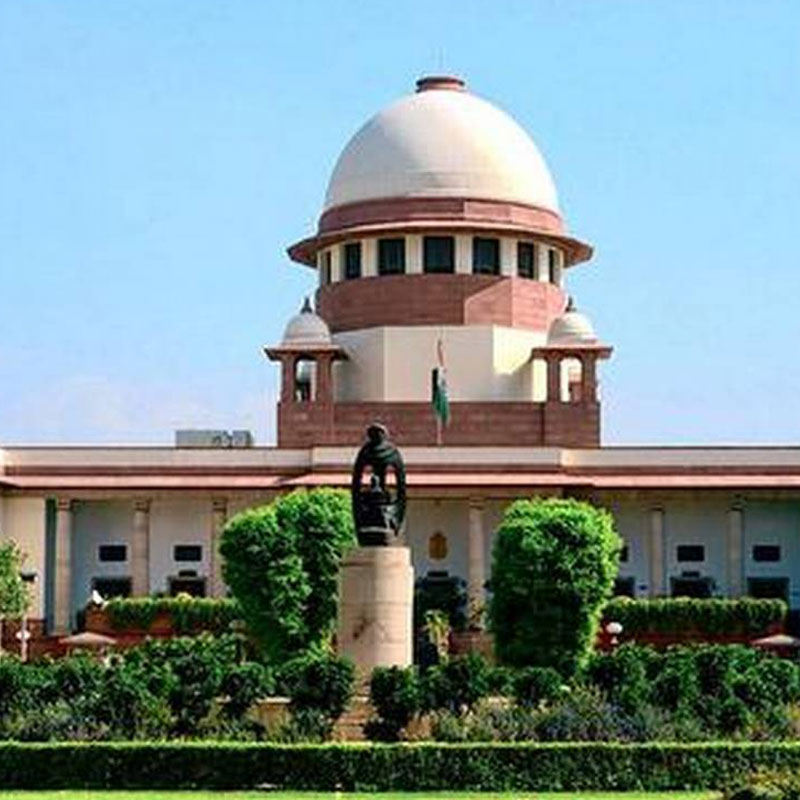
    New Delhi: Supreme Court asked the Centre to file a fresh affidavit dealing with mechanism to regulate electronic media under the Cable TV Network Act while hearing the pleas filed by Jamiat Ulama-I-Hind and others alleging that a section of the media was spreading communal hatred over Tablighi Jamaat congregation during the onset of pandemic. It also expressed displeasure over the Union government’s affidavit in the same case.

    A bench headed by CJI S A Bobde said that the Centre should consider setting up a regulatory mechanism to deal with such content on TV. It sought to know from the Centre about mechanisms available for it under the Cable TV Network Regulation Act.

    The apex court asked the government to create and apprise it of the mechanism. “We want to know as to what is the mechanism to deal with these contents on television. If there is no regulatory mechanism then you create one. Regulation cannot be left to organisation like NBSA.”

    Solicitor general Tushar Mehta on behalf of the Centre replied that it has ample powers to regulate contents of TV channels but takes a very cautious approach, as right to free speech as a fundamental right is available to media.

    The court then asked the solicitor general to create a mechanism for addressing grievances against fake news circulated by TV channels and media, if none such is available currently. “What is shown in TV channels is of great consequences for the country,” it said.

    The ministry of information and broadcasting, in its affidavit filed on 13 November, had informed the Supreme Court that the petition against communal reporting of Tablighi Jamaat incident was based on "vague assertions" and news reports published by certain fact check websites, and the same cannot be relied upon to contend that entire media was spreading communal disharmony.

    The plea before the top court sought directions to the Centre to stop dissemination of fake news and take strict action against the section of the media spreading bigotry and communal hatred in relation to the incident.

  • India has 11.7 cr cable TV subscribers: I&B minister

    India has 11.7 cr cable TV subscribers: I&B minister

    MUMBAI: Replying to a question in the Lok Sabha, the Information and Broadcasting minister Prakash Javadekar said that there are 11.7 crore cable TV subscribers in India as on 30 November 2019. The ministry has accumulated the data through seeding data available from MSOs/LCOs.

    However, accurate figures haven't yet emerged since 100 per cent digitisation is yet to be achieved. Javadekar also mentioned that 100 per cent digitisation of cable TV network has been achieved in 
    Phase-I (4 metro cities), Phase-II (38 cities with population of more
    than 10 lacs) and Phase-III (All other urban areas municipal 
    corporation/ municipalities). In Phase-IV (Rest of India), it is about 
    more than 90 per cent at present.

    The government had adopted an ambitious digitisation plan a few years back to ensure proper flow in the cable TV system that would allow better revenue to be channeled and reduce piracy.

  • Newsy expands to Cable via Fioptics

    Newsy expands to Cable via Fioptics

    MUMBAI: Scripps’ subsidiary Newsy is now available to the cable television audiences through a partnership with Cincinnati Bell’s Fioptics. The over-the-top news network will feature news live.

    Newsy offers analysis and perspective on the day’s top stories, spanning world and national news, policy, culture, science and technology.

    “Cable is still the most powerful television viewing platform in the world,” said Newsy GM Blake Sabatinelli. “Partnering with Cincinnati Bell allows us to deliver our award-winning news coverage to an
    audience hungry for a new perspective.”

    “As we continue to expand the Fioptics channel lineup, we’re committed to providing our subscribers with the best content. Newsy provides a fresh take on news coverage that our customers will embrace,” added Cincinnati Bell director of content and consumer product marketing strategy Michael Morrison.

    The partnership marks Newsy’s first carriage with a cable TV network. In the last 18 months, Newsy has added distribution on services including Sling TV, Roku, Watchable from Comcast and Apple TV.

    E.W. Scripps, the storied owner of 19 local television stations and daily newspapers in 13 markets across the U.S., announced that it has acquired Newsy, a digital video news platform, for $35 million in
    cash. Newsy will become a subsidiary of Scripps

  • Newsy expands to Cable via Fioptics

    Newsy expands to Cable via Fioptics

    MUMBAI: Scripps’ subsidiary Newsy is now available to the cable television audiences through a partnership with Cincinnati Bell’s Fioptics. The over-the-top news network will feature news live.

    Newsy offers analysis and perspective on the day’s top stories, spanning world and national news, policy, culture, science and technology.

    “Cable is still the most powerful television viewing platform in the world,” said Newsy GM Blake Sabatinelli. “Partnering with Cincinnati Bell allows us to deliver our award-winning news coverage to an
    audience hungry for a new perspective.”

    “As we continue to expand the Fioptics channel lineup, we’re committed to providing our subscribers with the best content. Newsy provides a fresh take on news coverage that our customers will embrace,” added Cincinnati Bell director of content and consumer product marketing strategy Michael Morrison.

    The partnership marks Newsy’s first carriage with a cable TV network. In the last 18 months, Newsy has added distribution on services including Sling TV, Roku, Watchable from Comcast and Apple TV.

    E.W. Scripps, the storied owner of 19 local television stations and daily newspapers in 13 markets across the U.S., announced that it has acquired Newsy, a digital video news platform, for $35 million in
    cash. Newsy will become a subsidiary of Scripps

  • TDSAT directs West Bengal network Saptak Digital to clear Taj TV dues

    TDSAT directs West Bengal network Saptak Digital to clear Taj TV dues

    NEW DELHI: West Bengal cable TV network Saptak Digital has been asked by the Telecom Disputes Settlement & Appellate Tribunal (TDSAT) to clear its outstanding dues to Taj TV of Rs 2,11,989 and Rs 2,48,006 for non-DAS and DAS areas as per terms and agreement of the previous agreement.

    Listing the matter for 7 September, member B B Srivastava also directed that for enjoying the signals the monthly payment will also have to continue to be made in accordance with the terms of the same agreement.

    The Tribunal said in its order of 9 August that the payment has to positively be made within two weeks.

    It however clarified that all these payments would be without prejudice to the rights and contentions of Saptak and subject to the final decision of the Tribunal.

    Meanwhile, the two sides were again asked to “sit down immediately after effecting the payment to resolve their differences and for signing the interconnect agreement in accordance with the TRAI regulation of March 2016.

  • TDSAT directs West Bengal network Saptak Digital to clear Taj TV dues

    TDSAT directs West Bengal network Saptak Digital to clear Taj TV dues

    NEW DELHI: West Bengal cable TV network Saptak Digital has been asked by the Telecom Disputes Settlement & Appellate Tribunal (TDSAT) to clear its outstanding dues to Taj TV of Rs 2,11,989 and Rs 2,48,006 for non-DAS and DAS areas as per terms and agreement of the previous agreement.

    Listing the matter for 7 September, member B B Srivastava also directed that for enjoying the signals the monthly payment will also have to continue to be made in accordance with the terms of the same agreement.

    The Tribunal said in its order of 9 August that the payment has to positively be made within two weeks.

    It however clarified that all these payments would be without prejudice to the rights and contentions of Saptak and subject to the final decision of the Tribunal.

    Meanwhile, the two sides were again asked to “sit down immediately after effecting the payment to resolve their differences and for signing the interconnect agreement in accordance with the TRAI regulation of March 2016.

  • Cable digitisation: IMCL makes third purchase in Kolkata

    Cable digitisation: IMCL makes third purchase in Kolkata

    MUMBAI: IndusInd Media & Communications Ltd (IMCL) has made its third acquisition in Kolkata as it plans to expand in that marketplace where it sees a lot of demand coming from small-sized cable companies who are unable to fund for digital set-top boxes (STBs).

    “We have acquired 51 per cent stake in a small cable TV network in Kolkata. We are looking at seeding 100,000 STBs through this company. This is our third purchase in Kolkata,” IMCL chief executive officer Nagesh Chabria told Indiantelevision.com.

    In 2012, IMCL had picked up 51 per cent stake in two cable networks – Hooghly-based Advance Multisystem Broadband Communications (AMBC) and Skyvision.

    Advance Multisystem Broadband Communications Limited (AMBC) has become a subsidiary of IMCL with effect from 9 November 2012. IMCL had on 18 May acquired AMBC by subscribing to 51 per cent of the paid up equity capital of AMBC by provision of STBs and digital head-end valued at Rs 80.1 million.

    Meanwhile, Hinduja Ventures Limited (HVL) has reported a fall in its third quarter profit before tax from its media and communications segment (IMCL) to Rs 50.81 million from Rs 199.9 million in the trailing quarter.

    The revenue from this segment, which houses the HVL’s cable TV business InCablenet, is Rs 1.52 billion compared to Rs 1.36 billion in the second quarter of the fiscal.

    The media and communications business resides in IMCL, a subsidiary of HVL.

    HVL has exercised the put option to increase its holding in subsidiary IMCL to 61.71 per cent from 61.17 per cent as a result of conversion of seven years, 12 per cent Cumulative Convertible Redeemable Preference shares aggregating to Rs 150 million into 1.03 million equity shares of Rs 10 each, at a premium of Rs 135 per share.

  • Draft Broadcast Bill: Big brother wants to do more than just watch

    Draft Broadcast Bill: Big brother wants to do more than just watch

    The draft broadcast regulations that the government is trying to put in place has its merits and demerits, but what is shocking is the way the lawmakers are going about the whole thing, most of which is shrouded in secrecy.

    That the draft Broadcasting Services Regulation Bill 2006, doing the rounds of ministries for feedback, is restrictive — to put it mildly — and draconian in parts is a story itself. But what is a bigger story is an attempt by the Congress-led coalition government to steamroll legislation through without taking industry stakeholders and others into confidence, thus making a mockery of democratic norms.

    It is a calculated effort to muzzle the media in general and incapacitate the electronic medium, which has its own powers because of the impact of visuals, in particular.
    _____****_____

    The attempt of the information and broadcasting ministry to quietly draft regulations for the Cabinet’s consideration, while denying at the same time that anything of that sort even exists, amplifies that the blustering of I&B minister Priya Ranjan Dasmunsi is not all gas. It is a calculated effort to muzzle the media in general and incapacitate the electronic medium, which has its own powers because of the impact of visuals, in particular.

    Cross media restrictions, powers bestowed on authorities to take action against the media and TV channels on the flimsiest of grounds, content censorship (which is being drafted separately, but could be made part of this Bill or legislation at a later stage) are all aimed at strangling the media.

    What make things scary is that the proposed autonomous Broadcast Regulatory Authority of India (Brai) has been given powers that permit it to run amok if interpreted incorrectly by it. Especially when Brai’s chief executive would be a serving government official of additional secretary’s rank, drawing a salary from the government and, naturally, having allegiance to the government.

    The flip side is that not all the clauses in the draft Broadcast Bill 2006 are new. Some of them do exist in some form or other in the Cable TV Network (Regulation) Act and other pieces of media legislation. References to cross media restrictions were made in the Broadcast Bill of 1997 too. And remember that never got past a joint parliamentary committee set up to examine it after being tabled in Parliament.

    The 1997 Bill stated that a person or a company will be allowed to hold licences in only one of the following category of services: Terrestrial Radio Broadcasting, Terrestrial Television Broadcasting, Satellite Television or Radio Broadcasting, DTH Broadcasting, Local Delivery Services and any other category of services, which may be notified by the Central government.

    In 1997, restriction of monopolies was more targeted towards newspaper houses. The Bill then had said that no proprietor of a newspaper will either be a participant with “more than 20 per cent interest in or control a body corporate, which is the holder of a licence to provide a licensed service under this Act.”

    Without criticizing a government’s right to make a law, what needs to be seen in a broader context is the way that right is used in a democratic setup.
    _____****_____

    This time round, the government has allowed interest in various segments of the media business, but capped them so low that effective concentration of power is totally neutralised to the extent of threatening to destroy various business models.

    Without criticizing a government’s right to make a law, what needs to be seen in a broader context is the way that right is used in a democratic setup.

    If we examine the draft of the content regulation, prepared by a sub-panel of a 30-member committee overseen by I&B secretary SK Arora, it hints at stringent content regulation, particularly for news channels. If okayed by lawmakers in its present state, it could well be the end of sting operations and coverage of issues where high profile politicians and personalities are involved.

    Sample this part: “TV channels must not use material relating to a person’s personal or private affairs or which invades an individual’s privacy unless there is an identifiable public interest reason for the material to be broadcast.”

    Who decides what constitutes an individual’s privacy? The government or the regulator? What this means of course is that it’s all up for interpretation.

    It is this scope for interpretation that is the most fearful aspect of this bill. More so since the onus of proving identifiable public interest lies with the TV channel and not the other way round.

    Additionally, the flat-footedness of the media industry and lack of consensus on important issues amongst the various stakeholders is incomprehensible, to say the least. The surprise that the draft Broadcast Bill 2006 — even if it’s an early draft for argument’s sake — has sprung on the TV industry, shows that people have been caught napping. Or, the industry thought the government was just talking gas.

    Either way, Delhi seems to be having the last laugh. Hang on, maybe not yet. There may still be some time left for saner voices in the government to stand up.

    But for that to happen, the media industry needs to project a united stand. Something like what was demonstrated when the Rajiv Gandhi government in 1988 had attempted to bring in a piece of legislation to muzzle the media. It took weeks of concerted opposition from Indian journalists to scupper an initiative to revise the law on defamation. It may be recalled that the government had rushed the Defamation Bill through the lower house of Parliament in August of that year.

    When we last commented on the ramifications of the Broadcast Bill, we expressed the view that there is a feeling of déj? vu that it may be another exercise in futility.

    It could well be in the industry’s collective interest to ensure that the draconian aspects of the Broadcast Bill suffer the same fate as the Defamation Bill of 1988.

    There are several ways of voicing their grievances and making sure that the industry voice reaches the powers-that-be. Indiantelevision.com believes it can function as a forum for debate, and would love to have comments from various constituents of the industry on the Broadcast Bill 2006.

    Send in your mails to editor@indiantelevision.com. And let’s work towards building a more robust television sector – keeping in mind the government, the industry and foremost of all, the consumer.