Tag: Cable TV Digitisation

  • STB import duty doubled to 20%

    STB import duty doubled to 20%

    NEW DELHI: In a fresh bid to boost domestic production under the Make in India project, the Indian government has increased the import duty on set-top boxes (STBs) to 20 per cent, including a host of other electronic items such as TVs sets and smartphones.

    The duty hike from 10 per cent could impact the ongoing digitisation of TV services in India. Experts and stakeholders in the country’s broadcast and cable industry are still assessing the directive, including the fact whether the move is aimed at arresting imports from China.

    A ministry of finance notification dated 14 December 2017 stated the federal government was “satisfied” that the import duty on certain goods, including electronics, should be increased as “circumstances exist” that render it “necessary to take immediate action”.

    Though officially over, India’s digitisation of TV services is still a work in progress with many big MSOs admitting in private that the last and fourth phase is still far from over.

    A cable industry source highlighted that India’s DTH operators annually import about 10 million STBs, while an additional 20 million boxes approximately would still be needed to fully cover areas falling under phase IV of digitisation.

    While many India companies, including big companies like the Hero group, are manufacturing and/or assembling STBs in India, the supply, according to industry sources, isn’t enough to meet the demand. It is also expected that whenever the next round of survey is undertaken, the total number of TV homes in India would increase much beyond the figure of 183 million (as indicated by BARC India).

    Will this increase in import duty also up the cost of STBs for consumers via a mixed business model of rentals and outright purchase of the product? It’s still not clear.

    An industry source, however, said whether this government move would give a fillip to domestic manufacturing is not yet known. Most Indian DTH operators have already started importing STBs from countries like Thailand and Vietnam to take advantage of an ASEAN (Association of Southeast Asian Nations) trade pact, which is aimed at lowering trade barriers and help economic growth in general.

    STBs can be now imported by Indian companies from ASEAN countries at very low tax rate that is in the range of 2-3 per cent, the source elaborated.

    ALSO READ:

    Budget 2016: STBs exempt from basic customs duty

    DAS: Even official figures show digitization is incomplete

    DAS phase IV pace slack; MIB to make Indian STB makers


  • Analogue signals: MIB to take action against defaulters

    NEW DELHI: Reiterating the switch-off of analogue signals of cable television from 1 April 2017, all broadcasters, MSOs and local cable operators were today warned by the Indian government that action would be taken against defaulters.

    Issuing a notice, Ministry of Information and Broadcasting (MIB) instructed all stakeholders to ensure that no analogue signals are transmitted over the cable networks in phase IV areas after 31 March 2017.

    The notice said the Cable Television Networks (Regulation) Amendment Act 2011 had made it mandatory for switch-over of the existing analogue Cable TV networks to Digital Addressable System (DAS) in four phases. Digital switch-over has already taken place in phases I, II and III.

    The Ministry by notification of 23 December 2016 last had extended the cut-off date for phase IV of cable TV digitisation to 31 March 2017.

    Also Read:

    Final phase STB seeding is 35% even as deadline nears

    DAS deadline extension ruled out, govt claims 66% seeding done

    TV industry gives mixed reaction to MIB’s DAS III & IV extension

    DAS 4 deadline extended to 31 Mar

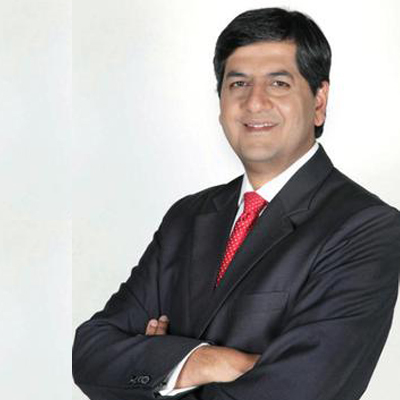
  • ‘Channels will stop chasing TRPs if we had a proper subscription revenue model:’ Vikram Chandra

    ‘Channels will stop chasing TRPs if we had a proper subscription revenue model:’ Vikram Chandra

    In an industry where people change jobs every few years in order to quickly climb the ranks, his association spanning more than two decades with Dr Prannoy Roy’s NDTV Group speaks volumes about his commitment and stability. One of India’s leading journalists, he now helms NDTV Group as executive director and CEO. He is also the executive chairperson of the company’s online venture – NDTV Convergence.


    What’s more, even with the increasing managerial responsibilities, he manages to find time to anchor shows like Gadget Guru and The Big Fight and therein reflects his love for the Fourth Estate. He also flirted with the pen when he wrote his first fiction thriller titled The Srinagar Conspiracy in the year 2000. He is none other than Vikram Chandra.


    With many a feathers in his cap, Chandra is now well poised to take NDTV to newer heights with the expansion in the digital space. Tapping new avenues, NDTV now has its fingers dipped in multiple segments like wedding, fashion, auto, gadgets et al… and all under Chandra’s stewardship.


    In a chat with Indiantelevision.com’s Megha Parmar, Chandra sheds light on his journey, NDTV’s businesses ventures, cable TV digitisation, social media and the road ahead for the company.


    Read on for excerpts:


    NDTV is now expanding its digital footprint with gadgets, auto and retail. What drives you towards digital despite being a traditional broadcaster?


    This has been one of NDTV’s key strategies from a long time. Going digital is a key part of NDTV from several years. Way back in 1999 and 2000s, we started to believe that Internet is going to be a dominant part of our lives. While TV is still a core part of our DNA and plays an important role in everything that we do, we then wanted to expand into digital from a long time.


    Today, people can consume the same NDTV news though different streams. You can watch it on your TV, phone and the NDTV app. There are different ways to get the content that we are enabling for people. Going forward, we took a decision that there were individual niche areas where we want to make a major impact. That is what we are building on from the past couple of years; be it food, auto, wedding, retail and there are other things also coming into place.


    How much does digital contribute towards the company’s revenue?


    Digital’s contribution to the company’s revenues has been growing. It used to be around three – four per cent sometime back, but today because digital revenues are growing at a faster rate, digital accounts 20 – 22 per cent of NDTV’s revenue. The number is growing rapidly.


    What was the idea behind NDTV entering the online wedding market?


    Everything that we are doing in these areas has a very specific planned execution strategy. We thought it is a good proposition to be in and we got into it. We followed the same thing with Gadgets360 and the other portals. In weddings, we have found the same niche that we think is going to be very attractive. 


    Are revenues from television on the decline?


    The revenue from TV has grown over the years and will continue to grow. It’s just that the revenues from digital are growing at a faster rate almost at 15 per cent a year from a long period of time. While the share of digital revenue is increasing, it’s not that the TV revenues are declining.


    How long before revenue from digital will surpass that from television?


    We’re a long way from there. There is a lot of action going on TV also and we are also expecting regulatory changes to happen soon. If everything goes fine, the revenues from TV will also grow at a faster rate. There is no competition between the two. As long as the both are growing and are doing well, that is what we want.


    What are your plans with Gadgets360 and Auto? Do you see enough monetisation opportunities?


    Gadgets360 is by now a very dominant property. It is not just the number one gadget site in the country, it’s four or five times far than the number two in the entire world and has gained a very massive position. With Gadgets360, we tend to hold a position of considerable dominance in the space. If the people want to buy a gadget and want to know about anything related to it be it news or reviews, they have to refer to some or the other NDTV’s properties. It gives us a good position to build a strong community around the gadget loving and gadget dying population. We have now started to do some select launches of individual products that we think are interesting on the website. Many e-commerce transactions have also started to happen on Gadgets360 and the initial response has been quite astonishing. The first two three phones that we tried to sell were sold out in a month’s time, which surprised us. So now we are planning to do more such things, which will surprise us in many other ways.


    Auto is an area where we have built a powerful franchise over a long period of time. We have a good combination of content like carandbike.com and technology package combined with good engineering. This will help the auto portal also scale up both from the content side and from the transactions point of view.


    Do you see enough monetisation opportunities in Gadgets360 and Auto?


    Gadgets360 is doing well for us and has stayed ahead of our expectations. The monetisation is coming in. Once you have strong communication in various communities, it’s not just an attractive proposition from the revenue point of view but also from advertising. From an advertiser’s perspective, where else would you want to put your money than on a leading portal in that space? If you have a leading tech, auto or food content portal, that’s where you will want to put your money. Auto is also emerging successfully.


    What kind of investment is being pumped in for these new ventures?


    Well these have raised funds already. Food is the recent one, which has raised funds to the tune of $12 million roughly. Each of these have been visualised as an individual entity and they have a life of their own. Each of them have been done in a very entrepreneurial manner like start-ups. We don’t have the group dynamics playing; it’s all done by individual entrepreneurial team. They have raised their own money including some of the top investors.


    Can you share your overall plans for NDTV Convergence? It’s already the leader in its space but now there have been others joining in too.


    There will always be competition and that’s good. We are not scared of the competition. The more the activity and action in the field, the more it will help in growing the market. Today, only a small fraction of our population has access to the internet but the number of people who are going to use the service five years down the line is huge. It’s a vast untapped market. If more people come in, it will just expand the market. So far, with competition, it has not changed our position, market share or even the traffic that we get. We are in a comfortable position.


    In the age of clutter, competition & multiple start-ups mushrooming in the country, how does NDTV plan to have an edge over the others in the new areas that it has ventured into? 


    There are things that we do and focus on. So far we have managed the competition right. If you look at the page views or the traffic, it’s clear that there are a couple of clear leaders and while a few competitors are at some distance behind. We know how to manage the space.


    How do you see digitisation changing the game in India for broadcasters in terms of content, revenues, etc?


    Digitisation was always anticipated to be a game changer but to some extent we are disappointed. What is causing disappointment in the market is that the business models have not changed after digitisation.


    Digitisation was supposed to transform the business models for broadcasters where distribution revenues start to become a very major contributor, where subscription money starts to flow and also lower the reliance on advertising. That was the logic that digitisation was supposed to drive.


    There was also a strong economic business rational for this that in analog systems you only had 40 slots for 200 channels but now you have no capacity constraints. What we really would want to see in 2016 is concerting actions to be taken especially by the government and the regulators to try and persuade people that the model needs to change and formulate what the correct model should be.


    There is an effect on the content model as well. If subscription revenues were robust, then it sets up a business model where quality channels will have money to invest in quality content and a channel’s revenue will be based on subscription and not around chasing the advertising. Then what will be the need of content if one is chasing advertising? It’s not only chasing advertising; the channels are chasing TRPs, which is to some extent evident in the news space. They are clearly following tabloid type of news content, creating sensationalism and other things that are basically designed to get more TRPs. If you had a proper model wherein channels could make money from subscription, then people will not want to chase the TRP game. They will do good quality content and would gain some money from subscription.


    How much importance do you give social media? Do social media insights play a vital role in penning down your strategy?


    Social media is a very powerful tool and helps people connect with each other. There are obviously issues around and you should not think that social media is everything, which sometimes you pretend to do. Social media sometimes acts as a platform for the loudest voices but with a disproportionate scare. For a journalist too, it’s one of the first bases where you might get breaking news and information about what’s happening around you. But you do need to be careful about how you use social media and how you engage with social media. You should not believe on everything that goes around.


    Having said that, I don’t think social media plays any key role in driving our strategy back at NDTV.


    The credibility of a news story is now defined by a trending hashtag. If your story leads to a trending tag, it’s a successful story, otherwise it’s not. Is it a fair proposition?


    I don’t agree to that. It’s good to have your story trending but you can do a very successful strong and powerful story, which does not necessarily need to trend. It should not be the only metric. As a journalist, I think that it’s not necessary that something that drives more clarity or will trend means that it’s the only form of journalism you can do. You can still do very powerful journalism in various areas, which may not drive TRPs or trend on Twitter.


    Do trending #tags like presstitutes bother you?


    I think on social media a lot of the language and discourses have become disappointing. The language used, at times, is inappropriate. There are some people using abusive language. I think this is dangerous as at times you will find accusations, which aren’t true. People are straightforward and mature and also are definitely using social media for the right purpose but there is a possibility that they sometimes might pick up something, which is incorrect or not accurate and is a total fabrication. Someone will put something on social media and then it will be re-tweeted repeatedly and will be passed around, which is not true and will cause damage. 


    Social media has helped us in democratically using the voice of the people. Anyone can access it and express their views on anything, which should be rolled forward. But everything has a sad part attached to it and here the issue is about how we control the worst impulses of a few people putting something, which is invalid or not factual. We have to find a solution to how we can control such things from taking place on social media.


    Suppose a journalist is doing a hard hitting story like on child smuggling or malnutrition or about what is going in the Vidarbha region; these are not negative stories but are strong powerful development stories and may lead to some transformation happening in one place or other.


    We often hear people commenting on why we don’t publish positive stories or development stories. The answer is, these stories are done but are not the kind of social stories that will either make TRPs or be trending on Twitter. You do a great story on solar power and publish it; it will not work that much. But the story should be done. We should find ways to tweak the model that those stories are done on and are broadcast without anyone worrying about TRPs or trends.


    How important are ratings in the larger scheme of things?


    Ratings are a currency. TRPs will always reward a certain type of content over another type of content. That is one another intrinsic problem with the rating system. Now we are seeing new methods of measurement also coming out with a much larger monitoring system and a larger sample of people, which is interesting. At some point, I am sure BARC India and others will start monitoring digital data as many consume news not only from television but also from live streams.


    For a long time, NDTV has not been trying to sell on the basis of TRPs alone. I think the sales team has done a great job. Many of the powerful and important brands are keen to be a part of NDTV now.


    Is digital gradually taking over TV when it comes to news? What should TV players be doing to keep the audience intact?


    I don’t think it is going to be an either or situation… just as television and print have co-existed from such a long time. It’s not that after the invention of TV the newspapers shut down. Digital is another facet of it.


    We at NDTV are content providers and will provide content to  consumers in whichever format we can. It will be on TV, desktops, mobiles, etc. Wherever the consumer is consuming content, we will be there in that space. We are visible in most of the areas. So I think TV and digital will go together.


    From Doon School to journalism to Chief Executive Officer, how would you define your journey so far?


    Well, it’s been an interesting journey. I have worn so many hats so far. I have always enjoyed my years as a journalist and I still enjoy my anchoring. I get a lot of satisfaction especially from things like the special projects that I do and the big campaigns in which I play an active role as an anchor.


    Other than Gadget Guru and The Big Fight, I don’t get to do so much journalistically, which taps some area of regret within me. 


    What role has Dr Prannoy Roy played in your career?


    He has been a guide and a mentor in more ways than one. I went to TV because I saw Prannoy anchoring a show. That’s when I decided to make a career in the same field. He has been a role model for me and many of us. I wouldn’t have been a journalist if it wouldn’t have been for him.


    What can we expect from NDTV in the coming year?


    We are hoping for another change in the TV business model in 2016. On TV, we will continue to target growth and profitability. We will focus on our three basic aspects of TV, i.e. digital content, TV  and e-commerce business. Each have their own targets and matrices against which we will be evaluating them. We will go to the bottom line and get the profitability up as much possible.


    In digital content, we will try to consolidate our leadership position. On the e-commerce side, this is a crucial and critical year of all our new ventures that we are launching and we are hoping that the success that they have seen in the initial stage will turn into strong marketing business model.

  • FY-2015: Indian cable industry – long haul work in progress

    FY-2015: Indian cable industry – long haul work in progress

    BENGALURU: The cable industry in India has made a remarkable amount of progress in implementing DAS in phase I and phase II considering the weak balance sheets that most players carry, but all still have a long way to go before they actually start making profits. However, the promise of addressability, greater transparency and higher average revenue per user (ARPU) is yet to be realized by the cable industry.

    Current Status

    As on 31 December, 2014, 138 multi system operators (MSOs) have been granted permanent registration (for 10 years) for providing Cable TV services through Digital Addressable Systems (DAS) by the Ministry of Information and Broadcasting (MIB).

    DAS roll out in phases III and IV is expected to be more challenging on account of larger geographical spread, poor balance sheets of the cable industry players and low potential for ARPUs from the conventional cable carriage and subscription business. Implementation of phases I and II was challenging, tiered packages have yet to be offered to the viewer and billing is still work in progress as MSOs still face resistance from local cable operators (LCOs) in giving up ownership of customers in some cases.

    Cable players in India have started giving broadband services a lot of serious attention in fiscal 2015. A few players such as the medium sized MSO Atria Convergence Technologies Private Limited (ACT) had actually changed strategy since 2012 and started focusing more on broadband services, without losing focus on its MSO operations. Despite being a regional player, ACT is the second largest private wired broadband player in the country with a market share of 3.24 per cent and over 6.11 lakh broadband subscribers as on 31 December, 2104, just after the behemoth Airtel (15 lakh subscribers, 7.95 per cent market share). ACT had 4.25 lakh (includes numbers of Beam Telecom Limited which was merged with ACT on 1 April, 2014) broadband customers as on 31 December, 2013 and hence, its broadband subscriber base has grown by 43.76 per cent in the 12 months until 31 December, 2014. As on April 30, 2015, Atria had a wired broadband subscriber base of 6.8 lakh.

    Public sector companies such as BSNL (the largest wired internet services player in India with 69.83 per cent market share, 1.317 crore subscribers) and MTNL (6.02 per cent market share and 11.3 lakh subscribers) are of course bigger players in the wired broadband services than ACT. Among the major MSOs in the country, Indusind Media & Communications Limited is probably the only player whose broadband subscriber base has not grown much until 31 December, 2014, during which the company reported 29,709 internet subscribers (including 3539 narrowband subscribers) as compared to the 28,337 subscribers (including 4750 narrowband subscribers) as on 31 December, 2013.

    Internet services has turned into a heavy capex exercise for many MSOs where the last mile is owned by LCOs mainly because an MSO may not be allowed access to the customer for sales and service by the LCO, and/or the quality of the cable may not be at par.

    This report takes four MSOs – Den Networks Limited (Den), Siti Cable Network Limited (Siti), Hathway Cable and Datacom Limited (Hathway) and Ortel Communications Limited (Ortel), financials as a sample size.

    Note: 100,00,000 = 100 lakh = 10 million = 1 crore

    Let’s look at FY-2015 numbers reported by these companies:

    (Please refer to Fig 1 below) The sum total of operating revenue (OR) for these companies in FY-2015 grew 9.94 per cent to Rs 3213.27 crore from Rs 2922.86 crore in the previous year. Den, the company with the highest operating revenue numbers and subscriber base amongst the three, showed the lowest operating revenue growth of just 1.16 per cent to Rs 1129.64 crore in FY-2015 from Rs 1116.69 per cent in FY-2014. Siti showed the highest operating revenue growth at 29.93 per cent in FY-2015 at Rs 905.93 crore from Rs 627.24 crore in FY-2014. The minnow – Ortel’s operating revenue grew 20.46 per cent to Rs 158.79 crore in FY-2015 from Rs 128.50 crore in the previous fiscal, while that of the second largest player among the four, Hathway grew 4.33 per cent to Rs 1022.91 crore in the current year from Rs 980.43 crore in FY-2014.

    Cable Subscription Numbers

    Most MSOs’ revenue model is subscription, carriage plus advertising charges for cable services and broadband. Set- top-box (STB) seeding is a one time periodic revenue (maybe once every five years?) for the companies that could later erode the profits – considering the depreciation and the interest cost on the STB subsidy that many MSOs offer to subscribers.

    In its FY-2014 annual report, Den said it serves an estimated 1.3 crore households of which over 64 lakh had opted for digital subscription as on 31 March, 2014. The company has a digital subscriber base of 70 lakh (53.85 per cent of total number of 1.3 crore subscribers) as on 31 March, 2015, of which 51 lakh are in phases I and II of DAS, and Den continues to bill about 80 per cent of these subscribers.

    On the other hand, Siti has reported 1.05 crore subscribers and a digital subscriber base of 53.8 lakh (51.24 per cent of total subscribers) for FY-2015, a conversion of 13.8 lakh subscribers to digital over a 12 month period, from the 40 lakh digital subscribers it had reported at the end of FY-2014. As a matter of fact, in Q4-2015, the company deployed 5.3 lakh STBs, and a big portion of its seeding had taken place then.

    Hathway has a subscriber base of 1.18 crore of which 85 lakh (72 per cent of total subscribers) are digital and 65 lakh are paying subscribers. This makes it the biggest player in the country in terms of digital subscribers.

    Ortel reported a subscriber base of 4.72 lakh in FY-2015 as compared to 4.61 lakh in FY-2014. The company reports 1.07 lakh (22.73 per cent of total subscribers) digital subscribers as on 31 March, 2015.

    Ortel CEO and President Bibhu Prasad Rath said, “Ortel Communications’ direct-to-consumer offering with full control over the ‘last mile’ network has enabled us to emerge as a dominant regional player in the cable TV and broadband business. With increasing penetration in our core and emerging markets along with the inorganic LCO buy out strategy, we believe we are well-positioned to achieve our immediate target of approximately 1 million RGUs by the end of FY-2017.”

    Subscription income for all the four mentioned companies has grown, with Siti showing the highest jump at 56.41 per cent – from Rs 339.5 crore in FY-2014 to Rs 531 crore in FY-2015. (Please refer to figure 2 below) Ortel’s subscription revenue grew the least 4.36 per cent – from Rs 75.7 crore in the previous year to Rs 79 crore in FY-2015.

    Siti Cable executive director and CEO V D Wadhwa said, “Our focus on monetization of existing business in phase I and II cities in FY-2015, led to a strong subscription revenue growth of 57 per cent y-o-y and operating EBITDA margin expansion. Siti Cable is engaged in proactive seeding and well placed to benefit from the ongoing digitization process.”

    Internet Services

    As mentioned above, offering internet service is a part of many of the major MSOs’ business and revenue expansion strategy. Internet services, and more so broadband services of all the four companies mentioned in this report have in general shown higher revenue growth than their cable services revenues.

    Den commenced its broadband services in Q1-2015 and has garnered 23,000 subscribers since then. Den CEO Pradeep Parameswaram said, ”We are laying the foundations of building a powerful consumer franchisee in broadband, cable television and television shopping. Significant investments are being made to bring disruptive consumer offerings to the market. We are augmenting out historical strengths in cable operations with high quality talent in all functions.”

    Siti Cable’s broadband revenue in FY-2015 grew 53.3 per cent to Rs 26.5 crore from Rs 17 crore in FY-2015. The company reported a broadband subscriber base of 70,100 in FY-2015 as compared to 54,000 in FY-2014.

    “We are looking to expand our broadband presence on Docsis technology in our endeavour to diversify our revenue stream and provide the consumer with a compelling experience,” added Wadhwa.

    Hathway’s broadband revenue jumped 47 per cent to Rs 247.5 crore in FY-2015. With the addition of Delhi and Central Mumbai to Docsis 3.0 and upgradation of Surat Network, Hathway is the only MSO to offer high speed 50 mbps broadband services in Delhi, Mumbai, Pune, Bangalore, Hyderabad and Surat.

    Ortel’s broadband revenue increased five per cent to Rs 28.9 crore in FY-2015 from Rs 27.5 crore in FY-2014. The company’s broadband subscribers increased 7.52 per cent in FY-2015 to 58,519 from 54,427 in the previous year.

    “We anticipate further improvement in margins going forward as a result of deeper penetration in the Cable business along with our continued focus on the high-margin Broadband segment,” said Ortel’s Rath.

    EBIDTA

    The financials of three of the four sample players showed an increase in operating profits (simple EBIDTA including other income). (Please refer to Fig 3 below) Den EBIDTA dropped to half at Rs 180.23 crore in FY-2015 from the Rs 360.41 crore in FY-2014. With an increase of 94.17 per cent, Siti’s FY-2015 EBIDTA almost doubled to Rs 168.43 crore from Rs 86.74 crore in FY-2014. Hathway’s EBIDTA in FY-2015 increased 16.13 per cent to Rs 560.9 crore from Rs 483 crore in the previous year. Ortel’s EBIDTA increasd 44.6 per cent to Rs 59.05 crore from Rs 40.84 crore in the previous fiscal.

    Profit/Loss

    (Please refer to figure 4 below) Two of the three large players in this sample – Siti Cable and Hatway have reported higher loss in FY-2015, while Den’s results have turned to the red in FY-2015 from the black in FY-2014. Ortel, which was listed a few months ago on the bourses, is the only one among the four that has reported a small profit of Rs 5.90 crore (3.62 per cent margin) in the current year as compared to a loss of Rs 13.79 crore in the previous year.

    “We have seen the positive results on subscription revenues and collections in Q4 of the current year. The profitability has been impacted because of the new business initiatives of the company including broadband, TV Shop and football as we build Den for future,” said Den’s Parameswaran.

    Last year, Den became the owner of the Hero Indian Super League’s Delhi Team – Delhi Dynamos FC. With the introduction of Delhi Dynamos FC, the company aims to become the default destination for entertainment, information and interactivity for the Indian family.

    End Points

    As the value chain shifts to addressable systems and tiering, growth in cable TV ARPUs will be driven by customized channel packs, premium content channels, HD channels and other value added services. It will not be easy going because cable industry players have to contend with DTH players who have strong balance sheets and are backed by deep pockets – be it Airtel, Tata Sky, Videocon d2h, Sun Direct or Reliance.

    The cable industry players need to sort out the ambiguity about revenue shares between the MSOs and LCOs and between the MSOs and broadcasters. The one positive is that larger MSOs appeared to have stopped poaching LCOs from each other, at least in phases I and II areas. “It’s not because the industry has turned goodie-goodie all of a sudden. Generally, it is just not worth the cost to pay to an LCO to switch loyalties in a phase I and II areas, or any area where digitsation has happened in a major way,” reveals an MSO on condition on anonymity. That attitude has to change for the common good of the industry.

    An industry source cites instances of LCOs still trying to fudge numbers despite deployment of STBs, with the LCOs claiming that a customer has relocated without returning the STB, or fudging with the number of STBs received. On the other hand, some LCOs need help in developing a robust last mile infrastructure.

    The cable industry has to leverage whatever advantages it has – this could be providing local information and relevant local news, local advertisements, etc., on MSOs’ own channels and services.

    A key differentiator could be the service quality and the personal connect that many operators have developed with consumers. Industry players need to change the impression they create right from ground up. This includes approach to customers for bill collection, to how each individual is perceived by anyone and everyone in the value chain, and more so banks and financers. Big as well as multiple middle sized players have already brought in a degree of professionalism across many levels and hence have relatively easier access to funding.

    Long term common purpose unity is what the cable industry needs desperately. Each player has to mature, has to understand and accept that one cannot do without the other. The road is still long and arduous.

  • New opportunities from cable TV digitisation in India

    New opportunities from cable TV digitisation in India

    India is home to approximately 60,000 to 100,000 cable TV operators. Assuming 20 kilometres of cable laid by every operator on an average, India has 1.2 to 2 million kilometres of cable! With digitisation of cable TV, the cable networks are transitioning from coaxial to optic fiber in the last mile. So, with access to so much optic fiber in premises where people live and work, why is digitisation of cable TV still not leading to a large upswing in broadband availability, quality of connections, and consumer use? After all, optic fiber can carry a much larger amount of data and video than coaxial cable can.

    What is the Last Mile?

    The last mile is called the ‘access’ network. It is called so since this network is accessed by end-consumers. The last mile network stretches all the way from the cable operator’s control room (seen in the picture below to the left) to a junction box (picture below to the right) near the consumer premises. At the junction box, the electrical signals carried on the optic fiber are converted into RF signals that are then transmitter through coaxial cable for the final few metres to the set top box at the consumer premises.

     Caption: (L-R) Typical View of a Cable Operator’s Control Room and Junction Box near customer premises.

    In most places, the last mile network is in the form of an overhead cable, whilst sometimes it is laid underground.

    The missing ‘Middle Mile’

    Several last mile ‘access’ networks are aggregated at one point and then connected to the core network. This ‘aggregator’ network is where most challenges arise. Ranging from 0.5 kilometres to 3 kilometres and more in most cases, the aggregator network has to carry large amounts of traffic. Assuming a requirement of 2 Mbps per TV channel, a typical cable feed will have 400 channels or around 800 Mbps of video at any point in time. If we add any internet or data traffic to this, then the aggregator networks have to carry at least a few gigabits of data every second. Lack of rights of way for optic fiber and very high costs of laying any fiber running into a few lakhs of rupees for every 100 meters make fiber unviable commercially at low cable TV ARPU of Rs 200-300 per home per month. The missing ‘middle mile’ and the resulting adverse effect on monetization of the last mile networks is the bane of the cable TV industry today. Negative or zero returns on investment on last mile networks and set top boxes is the main reason behind the opposition digitization of cable TV in India has faced.

    Making the model commercially viable

    Investments in the last mile and advanced consumer premise equipment that deliver entertainment and a large number of other services can be justified only if monthly earnings per consumer or ARPU increase. This is possible only if the last mile carry internet/IP or data traffic which has better ARPU than cable TV. However, cable networks have to lay more optic fiber in the last mile for this data traffic to reach consumers. The only other solution is to turn the last mile network into an all IP network. However, this is not feasible in most cases since cable Multi-System Operator (MSO) networks transmit one-way RF feeds and not two-way IP feeds.

    The Lukup Media model

    This model relies on making the last mile network capable of carrying IP/data traffic along with RF traffic. The IP feed in this case carry both TV signals and Internet access, thereby potentially increasing the earnings from every connection the last mile network provides to consumers. This model also makes TV channels available on demand. Instead of broadcasting TV channels, on demand TV implies that channels are unicasted or streamed on demand. This reduces the stress on quality of service in the last mile network. This model also takes advantage of innovation in transporting IP traffic in the ‘middle mile’ by making it possible to transport gigabits of data per second without laying optic fiber or resorting to using unlicensed or lightly licensed microwave or wireless bands that do not guarantee quality of service for video traffic or assure availability of such large bandwidth.

    Additional Revenue opportunities for Cable operators

    In the scenario where the last mile carries IP/data traffic which enables cable operators to provide both TV and internet access through a single connection to consumers, vast revenue opportunities open up. In addition to TV revenue, cable operators can earn from providing internet access and services such as media storage in the cloud, delivery of educational content, high definition gaming, home automation and monitoring services and more.

    Just like the US market where digitized cable TV networks deliver 60 per cent of America’s data traffic, cable TV networks in India are also poised to evolve in a similar manner providing dual play and eventually triple play services to consumers.

     (These are purely personal views of Lukup Media chief executive officer Kallol Borah and Indiantelevision.com does not necessarily subscribe to these views.)

  • Government should set aside Rs 10,000 crore for cable modernisation: Arvind Prabhoo

    Government should set aside Rs 10,000 crore for cable modernisation: Arvind Prabhoo

    MUMBAI: The seed of the dream of seeing a ‘Digital India’ was sown by Prime Minister Narendra Modi, as he took charge to make India a better and developed country. And now to make this dream come true are the cable TV operators, who are looking at achieving this through cable TV transformation.


    In keeping with this, Maharashtra Cable Operators Foundation (MCOF) president Arvind Prabhoo has already sent a presentation to the Information and Broadcasting Ministry (I&B) to not only update them of the needs of the industry, but also how the government could help push the agenda.


    According to Prabhoo, the sector needs regulatory support. This includes cable Internet Service Provider (ISP) licence on soft terms, last mile cable operator licensing, price control on content and level playing field for domestic voice over IP (VoIP). The MCOF president has also requested the Ministry for infrastructure support including long haul fibre and BSNL networking sharing, innovative per customer/month fees and cable modernisation fund. With the industry moving to a whole new system of cable TV viewing, the industry needs re-skilling and incentives for innovations.    


    MCOF in its proposition to the I&B has also said that the government needs to become the national data pipe in order to act as a digital courier. “Set one country, one service, one price,” informed Prabhoo. 


    Not only this, the government should look at setting aside a cable modernisation fund of around Rs 10,000 crore. Of this, according to Prabhoo, Rs 4000 crore will be used in set top box (STB) financing at Rs 300 per SD STB, Rs 5500 crore at Rs 600 per home passed will be used in infrastructure upgrade and Rs 500 crore will be used towards technology R&D. “The Ministry could fund the industry for a tenure of five years. With this funding, the government will be the biggest beneficiary as it would be collecting taxes on the funds,” opined Prabhoo.


    Cable TV currently reaches to close to 60 per cent homes (12 crore) of which around 9 crore are in DAS phase III and IV areas. “The sector which has a workforce of close to 300,000, has the potential to serve some 50 crore data users,” he added.


    In the presentation to the Ministry, MCOF has also highlighted the challenges faced by the digital India. These include the high customer acquisition cost, resulting in unavailability of basic data services, shortages in last mile local loop and predominance of concrete in civil structures which is eroding fidelity of wireless services.


    “We had sent the presentation to the Ministry for a robust cable TV industry, but have not heard from them so far,” concluded Prabhoo.

  • Date extended for MSO registration for DAS phase III

    Date extended for MSO registration for DAS phase III

    NEW DELHI: Following an assurance in the last Task Force meeting, the Government has extended till 6 February the last date for multi-system operators for registration for Phase III of digital addressable systems (DAS) for cable television.
     
    The earlier date was 21 December.
     
    The Ministry noted that Cable TV digitisation in remaining urban areas not covered in phases I and II is slated for completion by 1 December 2O15.
     
    Cable TV Digitisation Security clearance from the Home Ministry – a prerequisite for permanent registration – takes about three to four months.
     
    The extension is being given as MSOs complained at the last meeting of the Task Force for phase III that they needed sufficient time to operationalise their digital set ups after the issue of the registration.


    Speaking at the task force meeting last week, several stakeholders also wanted online registration for MSOs wanting to enter their names for phase III.
    Information and Broadcasting Ministry Additional Secretary J S Mathur, who chaired the meeting, also said that meetings were being organised between manufacturers of indigenous set top boxes and the Ministry of Information and Technology.


    Mathur responding to queries from some MSO’s wanted them to prepare a list of areas in phase III which were currently not being reached by cable television. A member had pointed out that a Headend In The Sky (HITS) platform could be used in such areas.


  • Phase III of digitisation likely to begin from April 2015: Javadekar

    Phase III of digitisation likely to begin from April 2015: Javadekar

    NEW DELHI: Just two days after the Information and Broadcasting (I&B) Minister Prakash Javadekar officially announced the extension of deadlines for phase III and phase IV of digitisation, he has now announced that the phase III of digitisation is likely to begin from April 2015 and will end the same year in December. “And phase IV will commence as soon as the phase III is completed,” Javadekar said.


    The I&B Minister made the announcement at the ongoing CII Big Summit 2014. “There is some confusion with regards to the extension of digitisation dates.  Tentatively, it will start from 1 April 2015, the final decision on this will be taken soon,” he added.


    The Ministry will also form a committee consisting of all the stakeholders. “So unlike what people feel, we are not delaying digitisation. Our commitment is having a ‘Digital India’. Even a household in a remote village has the right to experience digital viewing,” he informed.


    He also asked the direct to home (DTH) and multi system operators (MSOs) to advertise to the consumers how they are selling expensive set top boxes at cheaper rates. “If the customers understand that they are benefitting with digitisation, they will be supportive of the action,” said Javadekar adding that digitisation is on track.


    Elaborating on the theme of the summit: ‘Monetising strategies: The tryst for a $100 billion Indian M&E industry’, he said, “Aiming low is a crime. So an industry which in 2014 is already a $50 billion industry, cannot say that by 2020, it will become a $100 billion industry. This is not correct. We must aim high. This industry has immense potential to grow.”


    Javadekar in order to boost the fraternity said that no one had thought in 1992 when cable TV started that so many crore of households will be connected to cable, but it happened. No one had also thought that people would pay anywhere between Rs 200 to Rs 500 for entertainment, but people are paying. “Entertainment has become a necessity today and so people are ready to spend. So $100 billion is achievable and so we need to aim high,” he said.


  • 100 days of the I&B Ministry

    100 days of the I&B Ministry

    NEW DELHI: The Narendra Modi led NDA government has completed 100 successful days in power. And in these days, the Information & Broadcasting (I&B) Ministry has done its bit to woo the Media and Entertainment industry.


    Listing the achievements was I&B Minister Prakash Javadekar, through a press meet in Delhi.


    The government is launching a new 24×7 channel for the northeast called Arun Prabha in order to provide a strong platform for expression of cultural identities and for creating greater awareness regarding the region.


    Even as a Task Force has been constituted to steer the remaining two phases i.e. phase III and phase IV of digitisation in India, the government has made efforts towards fulfilling the long pending demand of domestic manufacturers of Set Top Boxes to get tax concession (C Form benefit) in order to compete with imported STBs.


    He said this will pave the way for implementation of digitisation initiative in India and see digitisation of about 80 million Cable TV homes in India. It is also a step towards the Prime Minister’s dream of a Digital India as digitisation will enable quick penetration of broadband connectivity in India.


    The Minister talked of initiatives taken in different sectors aimed at enhancing the outreach of policies and programmes across platforms. Some of the initiatives undertaken have been innovative involving people’s participation, enhancing government’s presence on the social media platforms and strengthening communication at the grassroots.


    He said Rs 100 crore had been allocated to Kisan Channel, which will disseminate real time information to the farmers regarding new farming techniques, water conservation, organic farming etc.


    In order to facilitate Ministries/Departments in registering their presence on social media the Ministry had organised a half day training workshop on 11 July.


    The Telecom Regulatory Authority of India (TRAI) has on the request of the Ministry given recommendations on migration of FM Radio Broadcasters from phase-II to phase-III which is under examination.


    Goa has been declared the permanent destination for the International Films Festival of India to develop the “Brand IFFI” on the lines of other International Film Festivals. Although the decision to move IFFI to Goa was taken in 2004 when the National Democratic Alliance was in power, a fresh Memorandum of Understanding was being signed year-to-year for the Festival.


    The three-day North East Film Festival held in Delhi recently will henceforth be an annual feature organised by the Directorate of Film Festivals.


    The Film and Television Institute of India and the Satyajit Ray Film and TV Institute are to be institutes of National Importance and an Act of Parliament will be passed for this. The proposed Bill would enable both the Institutes to award its own degrees and diplomas and start new activities on the lines of IITs and IIMs.


    The office of the Registrar of Newspapers for India (RNI) has streamlined its Single Window Public dealing mechanism at its office. RNI has achieved 100 per cent success in online e-filing of annual statements by publishers for 2013-14.


    Under the Rs 100 crore set aside for “Supporting Community Radio Movement in India,” 600 community radio stations will be set up across the country in the 12th Five Year Plan. This major initiative of the new government will strengthen the link with the population living in rural and marginalized areas.


    The Home Ministry has agreed to the proposal of the Ministry for not seeking security clearance for such channels whose security clearance have already been sought earlier along with the Board of Directors. This decision has paved the way for speedy clearance of additional television channel permissions, which will benefit the broadcast industry in a big way.  After the decision was taken, 23 TV channels have already been permitted by the Ministry.


    The proposal has been cleared for Rs.600 crore National Film Heritage Mission (NFHM) to preserve India’s film legacy by the Expenditure Finance Committee in the Finance Ministry. The draft Cabinet Note has been circulated to the concerned Ministries and the Note will shortly be submitted for approval of the Cabinet.


    To ensure people’s participation in Government Advertising through Crowd-Sourcing of Advertisements, the advertisement for important events are to be designed by the people. The Independence Day advertisement designed on these lines and DAVP has invited suggestions for the proposed advertisement to be brought out on 5 September to observe “Teachers Day”.


    For Independence Day, the advertisements were crowd sourced for the first time and Independence Day coverage was extended to all media platforms. Similarly, a series of press conferences being organised to highlight the initiatives of the Government and the same approach is being adopted to ensure information dissemination across all platforms.

  • The year of the big risk

    The year of the big risk

    MUMBAI: As the headline states, Year 2013 will go down in history as the year of the big risk in Indian television and media. Whether it was with big jump into cable TV digitisation or in the area of experimenting with new programming formats or working on changing the status quo in TV ratings or in battling the Telecom Regulatory Authority of India’s (TRAI’s) ad cap, the year saw everyone playing a long hand. India’s economic growth slowed down; inflation went on the rampage as did the dollar when it appreciated drastically against the rupee, but the industry took things in its stride.

    The biggest of the gambles was the leap of faith the industry took (as though it had a choice) on the government mandate of digitising India’s fragmented nearly 100 million subscriber strong cable TV market. With no clarity on how it would roll out, everyone in the ecosystem plunged ahead – almost recklessly – into phase I and phase II, distributing nearly 18 million set top boxes (STBs). This at a time – when even a year later after digitisation commenced – there is no understanding between the multi-system operators (MSOs) and the local cable operators (LCOs) or the broadcasters on who would do the billing and take a call on how the revenues would be split post the completion of the set top box (STB) seeding and who would own the subscriber.

    The other pieces of good news during mid-2013 were the $110 million investment the Sameer Manchanda-led MSO DEN Networks attracted from Goldman Sachs and the $18.5 million that Hathway got from Prudence.

    The industry, however, took to digitisation in fits and starts. Some cities such as Chennai, thanks to a state government with a vested interest in cable TV, chose to not obey the centre’s digitisation order. Others went to court and delayed things a bit. The TRAI and the ministry of information and broadcasting (MIB) however kept at it doggedly. Though both played a soft hand, they pushed the industry hard. Deadlines were extended, consultation and supplementary consultation papers were issued and recommendations made to accommodate the industry. But they kept at it and the fact is that STBs moved into Indian cable TV homes on a scale unprecedented globally.

    Some roadblocks remained in the 42 towns where digitisation has made some progress: complete collection of Consumer Application Forms (CAFs), incorporation of subscriber information into the subscriber management system and consumer billing. LCOs have been loathe to part with all their subscriber data, as there is no surety that the MSOs will not cut them off once they have all the info.

    But just as the year was ending, light was showing through, with Hathway and the Maharashtra Cable Operators Federation (MCOF) working on hammering an agreement that could put in place a business model for LCOs and MSOs that could be replicated nationally. The other pieces of good news during mid-2013 were the $110 million investment the Sameer Manchanda-led MSO DEN Networks attracted from Goldman Sachs and the $18.5 million that Hathway got from Prudence. The efforts of InCable to set up HITS under the leadership of Tony D’Silva and the Rs 300 crore investment by Grant Investrade Limited (GIL) in InCableNet and InDigital was also notable. The cherry on the cake was the setting up of cooperatives across the country.

    DTH players, were not so lucky. Their efforts to consolidate or expand or raise capital did not meet with much success.

    DTH players, however, were not so lucky. Their efforts to consolidate or expand or raise capital did not meet with much success. Reliance Digital TV and the Sun group talked for a large part of the year to merge their respective DTH services, but the dialogue stopped when expectations on valuations by each of them did not match. Airtel also had many conversations to raise capital from investors, but was unsuccessful. Tata Sky, however, managed to get an injection of funds from the Tata group, even as it failed to convince ISRO to give it its transponders which it so desperately needs to expand its consumer offering. But it has not deterred it as it went ahead and started a massive box replacement programme, upgrading millions of consumer STB’s to MPEG-4 so that it could pack more channels into homes.

    The second gamble that the broadcast industry took was when it took on the advertiser and advertising agency fraternity in the gross vs net billing issue and on who is liable for the tax on the commission that agencies get from marketers. Advertisers and agencies had threatened to cut off the advertising lifeline for broadcasters if they even tried to change the century old tradition of gross billing. Indian broadcasters called their bluff, and even blacked out TV commercials for a day. Belligerent agencies, advertisers and broadcasters glared at each other for a while. Finally, a solution was worked out; net billing was introduced – in a format which was to the satisfaction of all concerned, including the tax collector who accepted that broadcasters need not make any payments for past commissions made to agencies by advertisers.

    At one stage, seven TV networks walked away from TAM, leaving its future uncertain. TAM, broadcasters, marketers and agencies once again sat across the table and the ratings agency agreed to change the way it would deliver the viewership numbers. TV ratings were jettisoned and viewership per thousand was ushered in.

    The third punt the industry took was in the area of reaching a consensus on changing the Indian TV ratings currency run by TAM Media Research for more than a decade. The year commenced with news broadcaster NDTV continuing with its case in a New York Supreme Court, charging TAM Media and AC Nielsen of corruption and manipulation of TV ratings. The court turned down NDTV’s plea. Though later, it went in appeal, which was also dismissed by an American judge, who asked the Indian newscaster to fight its case in Indian courts.

    TAM  Media spent the year fighting fires on several fronts. The pubcaster DD was pretty irked with it as the network’s shows did not generate much rating despite its wider reach and penetration in both urban and rural India. TAM at the beginning of the year added less than class 1 (LC1) towns to its reporting to find a solution around that. Simultaneously, it started reporting on the digitised phase I and phase II towns. The change in the universe saw the ratings of some private broadcasters plummet, while those of others went up. Sony Entertainment Television attributed the drop in ratings for its much touted IPL to the addition of LC1 towns.

    This got the private broadcasters’ goose. One by one like dominoes around mid-this year, they announced that they were cancelling their subscriptions to TAM as they had lost faith in the currency. At one stage, seven TV networks walked away from TAM, leaving its future uncertain. TAM, broadcasters, marketers and agencies once again sat across the table and the ratings agency agreed to change the way it would deliver the viewership numbers. TV ratings were jettisoned and viewership per thousand was ushered in.  

    BARC remained in the news throughout the year, with its several meetings, road shows and several biddings. As we came to the end of the year, BARC had finalised the French audience measurement company Médiamétrie as its ratings partner, using audio watermarking technology.

    The industry also quickly revived a comatose Broadcast Audience Research Council (BARC), hired a CEO in Partho Dasgupta, and quickly went about shortlisting vendors, suppliers in a bid to have another ratings system in place by mid-2014. BARC remained in the news throughout the year, with its several meetings, road shows and several biddings. As we came to the end of the year, BARC had finalised the French audience measurement company Médiamétrie as its ratings partner, using audio watermarking technology.

    2013 was also the year of the TRAI, which is led by its warlike and extremely determined chieftain Rahul Khullar. He went around whipping almost everyone in the TV ecosystem in a bid to drive ahead digitisation and also the seeding of boxes in phase I and II towns. And then he pursued the MSOs diligently to get aggressive on customer application forms and billing. The TRAI was hyperactive to say the least. Consultation papers, open houses, private meetings – it went the whole hog in trying to bring about some change and order in the way the industry operates. At the time of writing, an extremely irritated regulator had once again pulled up broadcasters and MSOs asking them to sign inter connection agreements with the latter being told to announce subscriber packages, so that true digitisation could be said to have been achieved.

    Amassive shot in the dark that the broadcast industry took was in challenging the TRAI’s stance on curtailing TV commercial air time to 12 minutes. TV channels and networks approached the TDSAT and appealed that the TRAI had no right to do what it was threatening to implement and that it would damage the industry permanently.

    A massive shot in the dark that the broadcast industry took was in challenging the TRAI’s stance on curtailing TV commercial air time to 12 minutes. TV channels and networks approached the TDSAT and appealed that the TRAI had no right to do what it was threatening to implement and that it would damage the industry permanently. Just as its arguments were beginning to sink in through several hearings, there came the news that the Supreme Court, in another hearing, had declared that TDSAT is not the right platform to challenge TRAI regulations, the High Court is. What that meant was that the months of work done by TRAI, broadcasters and TDSAT came to nought and the argument moved to the High Court where the appeal would begin afresh.

    Year 2013 saw some new risk takers diving into the already competitive television market. Among these figure: News Nation, Zee Rajasthan Plus, Jia News, &Pictures, Zee Anmol, Star World Premiere HD, InSync and Romedy Now. But several others who were willing to roll their dice did not get government clearances. Estimates are that around 50 channels are awaiting licensing from MIB. Epic TV, Blue TV, Maha Movie are some of those which figure in this list. But the MIB released data in early December 2013 which revealed that around 784 channels have been licensed to beam over India. The MIB also cancelled 61 licences of broadcasters, in the wake of the collapse of the Saradha group, as they had provided insufficient information about changes they had made in the management or their operations after being licensed.

    Year 2013 saw some new risk takers diving into the already competitive television market. But several others who were willing to roll their dice did not get government clearances.

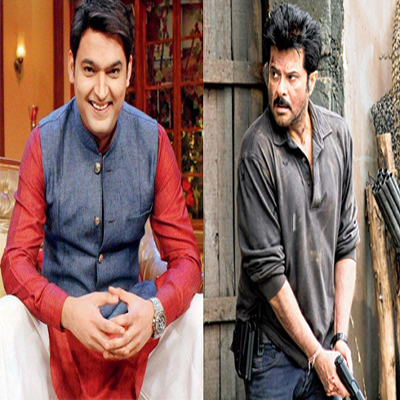
    On the Hindi GEC front, channels for the most part walked the tried and tested path in soap, drama, reality TV, though attempts at mythogolicals and historicals did bear fruit. Colors walked unknown terrain when its CEO Raj Nayak wagered with the Indian adaptation of American thriller24 with Anil Kapoor in the lead role, and also with a new stand-up comedy show Comedy Nights with Kapil. The first got critical acclaim; the second, a vast popular following. Nayak also gambled with seasons, bringing back shows such Na Bole Tum Na Maine Kuch Kaha for its second season.

    Star Plus continued to lead the genre for almost the entire year, with second, third and fourth places being traded between Colors, Zee TV, Sony, Life Ok and Sab. Period dramas and mythological drams such as Saraswati ChandraMahadevMahabharata from Star Plus and Life Ok did well with viewers. Staid old Zee was the real risk taker this year with its reality show –Connected Hum Tum (adapated from Armozia Formats). It tracks the life of ordinary folks on TV. India’s oldest existing private network flagged off shows such as Jodha AkbarBudha and added another leg to its DID franchise in DID Super Moms. It did phenomenally well for Zee TV. Sony too had a winner in its period drama – Maharana Pratap, even as its long serving CID,Adalat continue to keep it amongst the top six Hindi GEC roster. Life Ok was the surprise of the year as it has emerged as a strong contender. Channel V, Sony, Zee TV all refreshed their packaging and branding through the year.

    Colors walked unknown terrain when its CEO Raj Nayak wagered with the Indian adaptation of American thriller 24 with Anil Kapoor in the lead role, and also with a new stand-up comedy show Comedy Nights with Kapil.

    The year also saw channels risking with the film industry in a big way. Star India announced that it was forking out almost Rs 900 crore for exclusive telecast rights of all of Salman Khan’s and Ajay Devgn’s films which will be released till 2017. Then film maker Kamal Hassan attempted to premiere his film Vishwaroopam on DTH platforms but had to retreat when theatre owners protested.

    What started with Amitabh Bachchan in 2000, has now snowballed with Madhuri Dixit, Salman Khan, Mithun Chakraborty, Karan Johar, Shilpa Shetty, Anil Kapoor all becoming permanent fixtures on the small screen. Other film stars too made TV shows a must stop to promote their films. Whether it is a Hrithik Roshan or an Ajay Devgn, they definitely stopped over on the sets of a Taarak Mehta Ka Ooltah Chashmah or a reality show to promote their films. While this helps create excitement on the respective shows, too many appearances on television has made them seem rather deja vu for viewers.

    Whether it is a Hrithik Roshan or an Ajay Devgn, they definitely stopped over on the sets of a Taarak Mehta Ka Ooltah Chashmah or a reality show to promote their films. 

    Film folks turned to TV production too during 2013. Anil Kapoor co-produced 24, Sanjay Leela Bhansali produced Saraswati Chandra, Anurag Kashyap announced a fictional show starring Amitabh Bachchan, who is also reviving his production house Saraswati Audio Visuals to co-produce the show with Endemol. His wife Jaya Bachchan has also announced that she is going to make her TV debut. The Bachchans’ TV fiction show debut is much awaited as it is the septuagenarian who opened the doors for Bollywood’s big stars to host or be a part of non-fiction shows with his fabulous performance on Kaun Banega Crorepati.  

    Sports in India still means cricket for the masses. However, the year 2013 saw efforts being made to kick start other sports such as football, hockey, and even badminton through leagues. At the forefront of this was the Rupert Murdoch-owned Star India which coughed up Rs 3,851 crore to acquire the rights to domestic and international cricket from the Board of Control for Cricket in India until 2018. The deal covers 96 matches, including all the international matches India plays at home and local tournaments such as Ranji Trophy, Duleep Trophy and Irani Trophy. It even invested huge monies in becoming an associate sponsor of the Indian Premier League and followed it by paying close to Rs 200 crore to become the sponsor for Team India. This just a year after it scooped out close to Rs 1,700 crore to Disney to acquire its 50 per cent stake in their ESPN Star joint venture. The year also saw Star India rebranding and relaunching the six channels under the Star Sports umbrella Star 1,2,3,4,5,6 and introducing Hindi language commentary.

    Sports in India still means cricket for the masses. However, the year 2013 saw efforts being made to kick start other sports such as football, hockey, and even badminton through leagues. At the forefront of this was the Rupert Murdoch-owned Star India which coughed up Rs 3,851 crore to acquire the rights to domestic and international cricket from the Board of Control for Cricket in India until 2018.

    2013 has also been the year when Sony Entertainment’s billion dollar plus investment to acquire the rights to broadcast the Indian Premier League for 10 years was being questioned. Viewership ratings showed some slack, even as the entire league was embroiled in a betting and fixing scandal, which involved players from different teams. Fears were that viewers would be put off, but these were short lived and it is evident from the fact that Sony has started selling inventory for the 2014 edition at higher advertising rates than earlier years.

    In the meanwhile, on the news front, it was the year of pink slips. Almost every news network trimmed the fat on bloated payrolls as the economic crisis bit deeply. Efficiency is the buzzword today in television as TV networks grapple with a tough competitive environment, high costs, and shrinking margins. News channels like NDTV, Network 18 and Bloomberg reorganised their operations, and told excess staff to go home, with journos and camera crews being the hardest hit. Zee Media (earlier Zee News) too got shareholder approval to merge the group’s English newspaper DNA with itself. Its plan is to create an integrated newsroom serving TV, internet and print. It is quite likely that the process of doing this will result in excess staff being ejaculated. Already, its cousin sister channel Ten Sports relocated staff from Dubai to Noida, a move that saw many of them putting in their papers.

    On the news front, it was the year of pink slips. Almost every news network trimmed the fat on bloated payrolls as the economic crisis bit deeply.

    Efficiency was also the buzzword with advertisers, this year, in getting a better bang for the buck. Hence, companies such as Amagi Media saw takers for its geotargeting advertising service. Bengaluru-based Amagi Media announced its deal with Hindustan Unilever (HUL) and the Viacom18 kid’s channel Nickelodeon. The deal meant that an HUL TV commercial could run simultaneously on Nick nationally in different versions, depending on geographical location using Amagi’s DART platform. The platform also entered in a partnership with Zee TV, Zee News and Zee Business.

    With all the twists and turns in the year 2013, the upcoming year looks set to be even more interesting. Will the industry earn rewards for all the risks it took? Or, will it be forced to to continue to play the role of the great gambler?  That’s a bet we at indiantelevision.com  are not willing to wager on.