Tag: Cable Television Network

  • Cable operators who worked with Arasu, Sumangali ‘blocking’ new digital players, plaint lodged

    Cable operators who worked with Arasu, Sumangali ‘blocking’ new digital players, plaint lodged

    MUMBAI: A district collector in Tamil Nadu has reportedly received a complaint against a cable operators’ group that had worked with Arasu Cable for not allowing new digital operators to enter the market.

    The plaint has been lodged against the group of about 20 operators which had earlier worked with (then) analogue cable operators such as Arasu Cable and Sumangali Cable Vision (SCV), the Times of India reported.

    The Tamil Nadu Arasu Cable TV Corporation (TACTV)’s digital operations  (DAS) were launched on 1 September with the inauguration of upgraded MPEG 4 control room. The Centre had in April this year given a provisional MSO licence to Arasu on the condition that it adopts DAS within three months. TACTV had sought extension, but the Centre had only agreed to one month — till 17 August.

    Around a fortnight ago, a Tamil Nadu federation of unions had alleged that the Arasu MSO had been following  ‘monopolistic practices’. TACTV had set the subscription fee as Rs 70, which was below the fee recommended by TRAO. Of this, cable operators were expected to pay 50 per cent to Arasu, the federation alleged.  

    Now, on Monday, the petition submitted before the Coimbatore district collector TN Hariharan by a local digital cable television operator said the group of 20 has taken over around 85,000 connections in the district and put pressure on BSNL not to allot fibre-optic cables to new digital players.

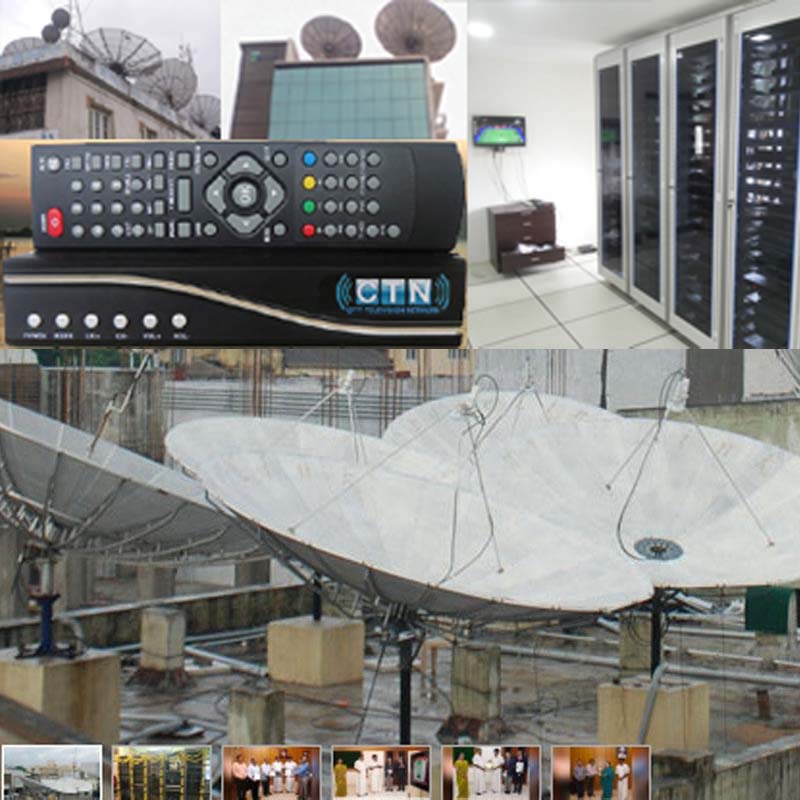
    Cable Television Network (CTN), a Coonoor-based digital cable television operator, which claims to have around 500 connections, alleged that the ‘cable mafia’ had misled the BSNL by lodging false complaints against the new entrants.

    ALSO READ :

    Delayed Arasu DAS starts, 7 mn subs to get 180 channels in Rs 125

    Arasu ‘monopolistic practices’ decried by LCOs, TN body seeks GST exemption

    Punjab govt. studying Arasu & other regulatory models on distribution


  • No cases of obsccenity in ads on DD; 41 in last 42 months in private channels: Naidu

    No cases of obsccenity in ads on DD; 41 in last 42 months in private channels: Naidu

    NEW DELHI: While denying that there were any cases of obscenity in advertisements on Doordarshan, the Government recently said a total of forty-one instances of obscene advertisements on private television channels had been acted on between 2013 and 2016.

    Information and Broadcasting Minister M. Venkaiaih Naidu said all programmes and advertisements of Doordarshan are telecast as per the Doordarshan broadcast/commercial code for advertising and in conformity of programme and advertising codes prescribed under the Cable Television Networks Rules 1994 enshrined under the Cable Television Networks (Regulation) Act 1995.

    He told the Lok Sabha that while there was no pre-censorship of content telecast on private TV channels, there were adequate provisions to deal with violations.

    The Act prescribes that all programmes and advertisements telecast on such TV channels should be in conformity with the prescribed Programme Code and Advertising Code enshrined in the Act and the rules framed thereunder. The codes contain parameters to regulate programmes and advertisements on TV channels including those which may contain obscene and vulgar programmes and advertisements.

    He said there were 21 cases of obscenity in advertisements in 2013, five in 2014, eleven in 2015 and four in 2016.

    In most cases, warnings and advisories were issued and in some cases apology scolls had to be run for a fixed period.

  • No cases of obsccenity in ads on DD; 41 in last 42 months in private channels: Naidu

    No cases of obsccenity in ads on DD; 41 in last 42 months in private channels: Naidu

    NEW DELHI: While denying that there were any cases of obscenity in advertisements on Doordarshan, the Government recently said a total of forty-one instances of obscene advertisements on private television channels had been acted on between 2013 and 2016.

    Information and Broadcasting Minister M. Venkaiaih Naidu said all programmes and advertisements of Doordarshan are telecast as per the Doordarshan broadcast/commercial code for advertising and in conformity of programme and advertising codes prescribed under the Cable Television Networks Rules 1994 enshrined under the Cable Television Networks (Regulation) Act 1995.

    He told the Lok Sabha that while there was no pre-censorship of content telecast on private TV channels, there were adequate provisions to deal with violations.

    The Act prescribes that all programmes and advertisements telecast on such TV channels should be in conformity with the prescribed Programme Code and Advertising Code enshrined in the Act and the rules framed thereunder. The codes contain parameters to regulate programmes and advertisements on TV channels including those which may contain obscene and vulgar programmes and advertisements.

    He said there were 21 cases of obscenity in advertisements in 2013, five in 2014, eleven in 2015 and four in 2016.

    In most cases, warnings and advisories were issued and in some cases apology scolls had to be run for a fixed period.

  • Telangana state government sets up committees to track the television sector

    Telangana state government sets up committees to track the television sector

    MUMBAI: This is one state which is taking the central government’s order to keep a check on the content being aired satellite TV channels following the hue and cry which was raised after the Peace TV controversy. We are referring to the Telangana state government.

    Yesterday it constituted the State and District level monitoring committees whose job will be to ensure effective implementation of the Cable Television Network (Regulation) Act.

    The committees are expected to meet at least once a year and submit a detailed annual report for Telangan, including district-wise data of cable operators registered within the state and estimated number of TV homes/viewers, to the I&B ministry before 31 December 31 annually. Their job would also be to recommend action and forwarding complaints against satellite television channels that are violating the government’s orders on the programme and advertising codes to the I&B ministry, to ensure that respect, dignity and self-esteem of children and women and other sections of society are duly protected, to see whether the authorised officers are effectively performing their duties, to see how many cases are handled by them and what decisions are arrived at, to give suggestion/ guidance to district/ local level committee, to take decision on the matters referred to it by district/ local level committee, to collect data/ information from district/ local level committee and forward it to I&B secretary.

    On the state level committee would be the following: the principal secretaries of revenue and home, secretary and commissioner of I&PR department, Doordarshan Kendra Hyderabad director and commercial taxes commissioner.

    The district level committee would have the following members: district collector, superintendent of police, commercial taxes deputy commissioner or his representative and the district public relations officer.

    Observers believe that the setting up of the committees is a step in the right direction, but the state would have done well to have other representatives from society and the private sector to give a more holistic perspective.

  • Telangana state government sets up committees to track the television sector

    Telangana state government sets up committees to track the television sector

    MUMBAI: This is one state which is taking the central government’s order to keep a check on the content being aired satellite TV channels following the hue and cry which was raised after the Peace TV controversy. We are referring to the Telangana state government.

    Yesterday it constituted the State and District level monitoring committees whose job will be to ensure effective implementation of the Cable Television Network (Regulation) Act.

    The committees are expected to meet at least once a year and submit a detailed annual report for Telangan, including district-wise data of cable operators registered within the state and estimated number of TV homes/viewers, to the I&B ministry before 31 December 31 annually. Their job would also be to recommend action and forwarding complaints against satellite television channels that are violating the government’s orders on the programme and advertising codes to the I&B ministry, to ensure that respect, dignity and self-esteem of children and women and other sections of society are duly protected, to see whether the authorised officers are effectively performing their duties, to see how many cases are handled by them and what decisions are arrived at, to give suggestion/ guidance to district/ local level committee, to take decision on the matters referred to it by district/ local level committee, to collect data/ information from district/ local level committee and forward it to I&B secretary.

    On the state level committee would be the following: the principal secretaries of revenue and home, secretary and commissioner of I&PR department, Doordarshan Kendra Hyderabad director and commercial taxes commissioner.

    The district level committee would have the following members: district collector, superintendent of police, commercial taxes deputy commissioner or his representative and the district public relations officer.

    Observers believe that the setting up of the committees is a step in the right direction, but the state would have done well to have other representatives from society and the private sector to give a more holistic perspective.

  • MIB reminds broadcasters & MSOs of DAS Phase III signal transmission laws

    MIB reminds broadcasters & MSOs of DAS Phase III signal transmission laws

    NEW DELHI: After the Telecom Regulatory Authority of India (TRAI) firmly ruled out any extension of Phase III of digital addressable systems (DAS), the Information and Broadcasting Ministry today told broadcasters that “it is obligatory to stop TV signals to multi system operators (MSOs) and local cable operators (LCOs) who are not registered with the Ministry for operation in DAS notified areas.”


    In a letter sent to all broadcasters and MSOs, Ministry joint secretary (broadcasting) R Jaya said, “All the broadcasters are requested to ensure to stop TV signals to those MSOs who are not registered with this Ministry for operation in DAS notified areas under Phase Ill and/or those who are not transmitting digitally encrypted TV signals in phase Ill areas after the cut-off date of 31 December, 2015.”


    The letter aimed at drawing the attention of all broadcasters is drawn to certain rules, regulations and guidelines related to transmission of television signals in connection with approaching cut-off date for Phase Ill of cable digitisation in the country.


    The letter said under Section 4A of the Cable Television Network (Regulation) Act 1995, it is obligatory for every cable operator to transmit or re-transmit programmes of any channel in an encrypted form through a digital addressable system with effect from the date as may be specified in the notification.


    Under para 5.6 of the Policy Guidelines for downlinking of Television Channels, the company will provide satellite TV channel signal reception decoders only to MSOs/cable operators registered under the Act or to a direct-to-home operator registered under the DTH guidelines issued by the Government or to an Internet Protocol Television Service (IPTV) provider duly permitted under their existing Telecom license or authorised by the Telecommunications Department or to Headend In The Sky (HITS) operator duly permitted under the policy guidelines for HITS operators issued by I&B Ministry to provide such service.


    Furthermore, the letter said under sub-regulation 3(2) (Chapter II- Interconnection) of Interconnect (Digital Addressable System) Regulations 2012, every broadcaster will provide signals of its TV channels to MSOs registered under rule 11 of the Cable Television Networks Rules 1994, making request for the same.

  • Govt to spend 40% of its TV ad budget on regional channels

    Govt to spend 40% of its TV ad budget on regional channels

    NEW DELHI: The Government has announced that 40 per cent of the annual budget for television media campaigns will be reserved for regional channels.

    In its new policy guidelines for empanelment of private cable and satellite television channels for entitlement to government advertisements released by the Information and Broadcasting Ministry, the primary objective is to fix their telecast and broadcast rates.

    It is expected that the new guidelines would obtain the widest possible coverage for the media campaigns released by Directorate of Advertising and Visual Publicity (DAVP) on behalf of Central government ministries/departments.

    The existing criterion of 0.02 per cent all India channel share for empanelment with DAVP has been done away with under the new guidelines. This will ensure more regional channels to be empanelled by DAVP.

    The policy mentions that while finalising the media plan for any region, it has to be ensured that bottom up approach is adopted: channels in that region should be first widely covered, followed by other mainstream channels.

    A regional channel, satisfying the criterion for empanelment at any point of time in the year, can apply to DAVP for empanelment without waiting for the annual schedule, and DAVP, after scrutinizing the applications and verification of laid down criteria, may include the channel in the panel.

    The new rates have increased rates substantially. There shall be no rate for ticker/scroll, as running of scrolls etc. using lower part of the screen apparently contravenes the Rule 10 of the Cable Television Network Rules 1994. Interestingly, there will be separate rates for live cricket matches.

    Under the new policy guidelines, the rate structures are:

    • Rs.23000/- shall be adopted as CPRP (cost per one percent rating point) and Rs150 as constant (a) to calculate the rates in terms of the above formula.

    • Unit Rate – The unit rate for Government Spot shall be for 10 second duration.

    • Time Bands – There shall be six time bands – i.e. 7 AM to 9 AM, 9 AM to 12 Noon, 12 Noon to 7 PM, 7 PM to 8 PM, 8 PM to 10 PM and 10 PM to 11 PM.

    • In case of advertisement of 15, 25, 35, 45 seconds or any other duration which is in multiple of 5 seconds, the same will be payable on proportionate basis.

    • For second year and third year, increase of CPRP and constant element shall be done with the prior approval of the Ministry.

    No rate has been fixed for sponsored programmes. However, DAVP will call for rates for a particular time band from the channels having similar TVRs in a given genre for any specific requirement. The channel quoting the lowest CPRP may be offered the rate for telecasting the programme.

    A rate may only be offered provided DAVP receives quotes from a minimum of four channels. The rate so fixed by DAVP shall apply to DAVP as well as to all AAs.

    The policy also stipulates that there shall be a ceiling of 2 per cent on allocation of annual advertisement budget for Groups/Companies owning 1 to 3 channels and 5 per cent for Groups/Companies owning four or more channels. This provision shall be scrupulously adhered to by DAVP and the advertising agencies.

    For the empanelment of agencies with DAVP, certain criterion will have to be met at the time of application. This includes a minimum telecast period of one year of commercial broadcast with at least 16 hours telecast per day – that is, 7 am to 11 pm. The Government permission to the company for up-linking and down-linking and sufficient evidence of such operation, a certificate by either EMMC or any other reputed agency that a channel is continuously being aired, the programme scheduling (Fixed Point Chart) for the previous 12 months from 7 am to 11 pm, during which the companies operated; a certificate from the Teleport operator through which the channel uplinks its programmes regarding the average time of operation of the channel, certificate duly signed by the Auditor/Company Secretary for the prescribed revenue details, latest profit & loss accounts, balance sheet and actual tax payment including service tax for previous financial year and the amount of advertisement revenue generated by the channel during the previous financial year.

    The policy stipulates that all applications seeking empanelment shall be placed before a panel advisory committee constituted for taking a final decision. The policy stipulates that a channel once empanelled shall remain on the panel of DAVP for a period of three years.

  • Govt warns two news channels on ‘Big Bang’ coverage

    Govt warns two news channels on ‘Big Bang’ coverage

    MUMBAI: The government has issued an advisory to two private TV channels to exercise restraint in their programming. The TV channels, Aaj Tak and India TV, have been going overboard with their coverage of the “Big Bang” experiment and speculating about its “catastrophic effect on the world”.

    Ministry of Information and Broadcasting has issued an advisory “showing content that appears to be spreading panic and fear.”

    A ministry official said that the advisory has been sent quoting Sub Rule 6 1(O) and 6 (5) of Cable Television Network and Regulation Act 1995, related to unrestricted public exhibition, and programme affecting children respectively, according to a PTI report.

    The official added that the ministry has issued the advisory to the said TV channels as an act of first warning to the channels on its own, though normally it acts on complaints received from people regarding objectionable content being shown on TV. “But on certain occasions, when it is felt by the ministry that the content regulation guidelines are being violated, we issue such advisories,” the official said.

    Incidentally the airing of the “Big Bang” experiment on television channels and various interpretations being done on it by television channels allegedly led to the death of a farmer’s daughter in Madhya Pradesh.

    Indian Broadcasting Foundation and News Broadcasters Association have also been intimated by the ministry about the advisory.

  • Ahead of deadline, 41 TV channels apply for downlinking in India

    Ahead of deadline, 41 TV channels apply for downlinking in India

    NEW DELHI: Talk about cutting it close. With just a day remaining (10 May 5:00 pm to be exact) for the deadline to adhere to downlink norms, 41 television channels have applied for registration in India.

    “Around 40 channels have submitted their applications for registration in India,” the Press Trust of India quoted an an official in the Information and Broadcasting Ministry as saying.
    PTI quoted the I&B official as saying that the channels seeking registration include the Star Group, Sony, Zee, Discovery, Anil Planet, Cartoon Network, CNN, Pogo, MTV, Channel V, Toon Disney, Hallmark, HBO, Ten Sports, Channel News Asia and Times Now

    Those yet to send in their applications include Fashion TV, ESPN-Star Sports and BBC, the report adds.

    Speaking to Indiantelevision.com on the matter yesterday, a BBC spokesperson had said, ”BBC World is aware of the timetable set out by the Indian government for completion of all formalities of registration under the new down linking guidelines issued on 11 November 2005. In compliance with the timetable, BBC World has prepared its application and will submit the same within the 10 May deadline set.”

    The government, meanwhile, clarified that all those channels that have applied for landing rights on or before 11 May 2006 could continue to be carried on cable networks till the channels’ are denied the right.

    “A cable operator may continue to carry or include in his cable service any television broadcast or channel, which has made an application for registration to the central government on or before the date of commencement of the notification, for a period of six months from the date of such commencement or till such registration has been granted or refused, whichever is earlier,” a government statement posted on the site of I&B
    ministry said.

    The statement also said that amendments to the Cable Television Network Rules 1994 and DTH guidelines will be notified separately and issued on 11 May 2006.

    Those channels that had been granted permission for uplinking from India before 2 December 2005 shall be treated as “registered” television channels and can be carried or included in the cable service. The full list is available under Codes & Guidelines section at mib.nic.in.

    Yesterday, a senior government official had admitted to Indiantelevision.com that the number of applicants seeking landing rights in the country is still “very low” compared to doubts and queries being raised. “This is surprising
    considering the deadline is 10 May,” the official added.

    The government issued an ultimatum last week that those channels not fulfilling all the downlink criteria by 10 May 2006 would be denied landing rights.

    The I&B ministry also posted on its website communications sent to the Indian Broadcasting Foundation, Star Group, Time Warner and a lawyer. The missive made it clear that the deadline of 10 May stays.

    The lobbying against the downlink norms as a whole and partly is understandable. The moment a television company sets up a permanent establishment (PE) in India, as per downlink norms, its tax liabilities in India would go up drastically. Rather, more the revenues collected in India, higher would be the tax component.

    Recently, Economic Times reiterated this fact in a report also. “After unveiling the downlinking policy for satellite television channels, the government is set to re-examine the tax treatment of revenues earned by foreign TV channels (FTCs). These companies earn advertising revenues from ad agencies, sponsors, and subscription revenues from cable operators.

    “The task force on emerging issues in non-resident taxation, constituted by the finance ministry, is understood to have made an attempt to bring greater clarity and certainty in the tax treatment of FTCs. This, in turn, may enable India to get a larger share of the pie. Going by the recommendations,
    FTCs will be liable to pay tax in India if they have a permanent
    establishment (PE) here. Alternatively, a dependent agent who has the authority to conclude contracts, also constitutes a PE,” the newspaper said.

    Before 2001, foreign TV channels used to pay taxes on a presumptive basis on their advertisement revenues earned in India, which ranged between 35-40 per cent.