Tag: cable television

  • India’s news industry is eating itself, warns veteran publisher

    India’s news industry is eating itself, warns veteran publisher

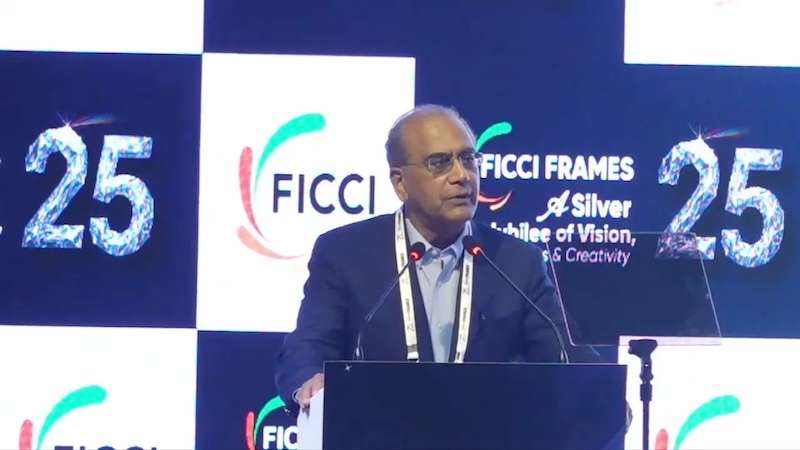
    MUMBAI: Fifty years in the media business buys you the right to speak bluntly. Aroon Purie exercised that right at Ficci Frames 2025 in Mumbai, delivering a blistering critique of India’s news industry—an ecosystem he says is simultaneously massive, unprofitable and increasingly compromised.

    The numbers are staggering. India has over 140,000 registered publications, 375 twenty-four-hour news channels (with more in the pipeline), and a broadcasting industry employing 1.7 million people. Delhi alone wakes up to dozens of English and regional newspapers daily. No other country comes close to this scale. Yet 99 per cent of news channels lose money.

    The problem, Purie argues, is structural. India’s news industry runs on what he calls “raddi economics”—newspapers priced so low that readers profit from selling them as scrap. Broadcasters pay cable operators carriage fees just to reach viewers, a practice that persisted even after digitisation. The Telecom Regulatory Authority of India’s price controls strangle market forces, treating cable television like wheat or rice. “The government has made a mess of the broadcasting industry due to lack of foresight and regressive policies,” Purie said.

    Worse still is the funding model. With consumers paying next to nothing, advertisers bankroll nearly the entire industry. “When journalism’s survival depends almost entirely on advertising from corporations and governments, its independence is under a constant threat of compromise,” Purie warned. The hand that gives can also take away.

    Enter what Purie calls “billionaire news channels”—industrial houses launching news operations not as businesses but as tools for influence and access. They have deep pockets and no profit motive, destroying economic models for legitimate players. “Their entrance makes the public believe that every channel is a mouthpiece for a vested interest,” he said. It’s the only business, Purie noted drily, where the industry loses money yet people queue to enter it.

    Digital promised salvation but delivered more of the same. Publishers chased scale and eyeballs, giving content away for free. Google, Facebook, YouTube and Twitter became the world’s “new editors-in-chief”, controlling distribution and monetisation whilst producing no journalism. They hoover up over 70 per cent of total media revenue—digital advertising now claims 55 per cent of all ad spending—leaving crumbs for actual newsrooms. The algorithm rewards outrage and virality, not depth or accuracy. “Newsrooms that once invested in reporters now have to invest in SEO specialists,” Purie said.

    Artificial intelligence poses the next existential threat. AI can scrape, synthesise and regurgitate news without credit or revenue, summarising five articles into one paragraph. “What happens to the original news organisations—the ones who pay reporters and fight court cases—when our content is scraped?” Purie asked. It’s a question the industry is only beginning to grapple with.

    Purie, whose India Today Group reaches 750 million viewers, readers and subscribers, doesn’t claim to have all the answers. But he’s clear about the solution’s shape: stop apologising for journalism’s value, innovate business models, and persuade audiences that credible news is a public good with a price. “A subscription is not just a transaction; it’s a vote for the kind of media you want to exist,” he said.

    After five decades navigating disruption—from print to television to digital to AI—Purie’s diagnosis is stark. The old models are broken, the new gatekeepers ruthless, and professionally generated content under siege. Yet he remains defiant. “Disruption is not the enemy, it’s the new normal,” he said. “The real question is, do we have the courage, imagination, innovation, resilience and integrity to seize it?”

    Whether India’s news industry can answer that question may determine the health of its democracy. No pressure, then.

  • GTPL Hathway navigates challenging quarter, eyes future growth

    GTPL Hathway navigates challenging quarter, eyes future growth

    MUMBAI: GTPL Hathway has unveiled its unaudited financial results for the first quarter ended 30 June 2025, revealing a mixed bag for the entertainment and broadband major. While the company saw an uptick in its top line, profitability faced a squeeze during the period.

    The consolidated revenue from operations for Q1 FY26 stood at Rs 5,946.79 million, a healthy increase from Rs 5,359.94 million reported in the same quarter last year. Total income also reflected this growth, climbing to Rs 5,990.20 million from Rs 5,432.95 million year-on-year. On a consolidated basis, total income for the quarter reached Rs 9,091 million, marking a 7 per cent rise year-on-year and a 1 per cent increase quarter-on-quarter.

    However, the spotlight falls on the company’s profitability. Net profit after tax (Pat) saw a significant decline, coming in at Rs 56.25 million for Q1 FY26, a stark contrast to Rs 150.23 million in Q1 FY25. Consolidated PAT was Rs 105 million, consistent with the previous quarter but down from Rs 143 million in Q1 FY25. Consolidated earnings before interest, taxes, depreciation, and amortisation (EBITDA) was recorded at Rs 1,123 million, with an EBITDA margin of 12.4 per cent. This is a decrease from Rs 1,205 million and a 14.2 per cent margin in the corresponding quarter of the prior fiscal year.

    Operationally, GTPL Hathway continues to expand its reach. The cable television business maintained a strong subscriber base, with 9.60 million active set-top boxes and 8.90 million paying subscribers as of Q1 FY26. The broadband segment also showed progress, reaching 1.05 million active subscribers and a home-pass count of 5.95 million. Average data consumption per customer soared to 410 GB per month, a 17 per cent increase year-on-year, while average revenue per user (ARPU) held steady at Rs 465..

    In a strategic move, the board of directors approved the re-appointment of Anirudhsinh Jadeja as managing director for a further three-year term, effective from 8 December 2025.

    The company also highlighted a contingent liability related to a demand from the Department of Telecommunications (DOT) for licence fees totalling Rs 9,754.15 million. GTPL Hathway remains confident in its legal position and has not recognised any provision for this matter.

    (If you are an Anime fan and love Anime like Demon Slayer, Spy X Family, Hunter X Hunter, Tokyo Revengers, Dan Da Dan and Slime, Buy your favourite Anime merchandise on AnimeOriginals.com.)

  • Consumer fail to get adequate information on packages and so any agreement remains unilateral, says Chrome study

    Consumer fail to get adequate information on packages and so any agreement remains unilateral, says Chrome study

    New Delhi, 28 March: Even when the third phase of digitization of cable television is underway and the country is proceeding towards the final phase, the average consumer remains unaware of answers to simple questions that can be provided by the local distributor/direct-to-home operator or cable operator.

    Thus, a bilateral transaction remains unilateral as consumers pay for a certain package consisting of a series of channels but are not made aware when a package is revised, leaving them to continue paying the same amount, regardless of whether the revised price of the package is lesser.

    A Chrome DM report says that “the broadcasters and consumers are both left in the dark. Similarly, consumers may not necessarily require all the channels provided in the package, and would be watching channels worth less than the amount they are paying. For example, they may pay Rs. 400 per month, whereby their content affinity may be towards channels that cost only Rs. 250”.

    In fact, the Report says even basic questions remain unanswered despite the Telecom Regulatory Authority of India have introduced the e-CAF (Consumer Application Forms) to increase the efficiency in the system, and giving it priority by advertising on all TV channels.

    For example, few consumes know what DTH platform they use at home, the package they are subscribed to, or the channels available on those packages, as they accept a lucrative offer that comes their way and accept it without asking questions.

    The Report says these basic questions give rise to huge discrepancies on-ground, impacting the stakeholders in the scenario, in various ways; namely the government, broadcasters, cable operators and consumers.

    Interestingly, the study found that consumers are under the misconception that à la carte is only for sports channels. And though there may be curious consumers who visit respective websites to get information, they find that these may or may not be updated.

    Thus, the notion that the flow of information should be two-way is undermined as the key stakeholders – the consumers – remain uninformed.

    “The total package implementation that collectively took place in Phase I and Phase II is 16 per cent, across the digital universe, with a subscriber base of 2,90,14,214. Despite Phase I and Phase II being implemented in November, 2012 and December, 2013, respectively, the package implementation in Phase I has only been 24 per cent and 13 per cent in Phase II,” the study claims.

    PHASE
    PACKAGES IMPLEMENTED
    PACKAGES NOT IMPLEMENTED
    GRAND TOTAL
    % OF IMPLEMENTATION
    Phase 1
    20
    63
    83
    24%
    Phase 2
    32
    213
    245
    13%
    Grand Total
    52
    276
    328
    16%

    “Discrepancies have definitely arisen from the problem of package implementation. The overall scenario requires much more clarity and I always believe that this is purely contingent on basics. For instance, a leading DTH provider launches a brilliant mobile application meant to be paired with a certain set-top box – however, they go wrong by not seeding the new boxes before launching the application itself! Transparency in the system facilitates concrete addressability. If there were no electricity metres and individuals were to pay electricity bills based purely on negotiations, havoc would ensue.”

    The primary data Chrome DM collected from the ground showed some grave discrepancies. In two areas in Kolkata (Rajabazar and Radhamadhav Dutta, Garden Lane), two respondents in the respective areas are paying two separate prices to their cable operators (Rs 330 and Rs 350 respectively), whereas the former is receiving only 228 available channels and the latter is receiving 342. The respondents are not even provided with receipts.

    Chrome Data Analytics & Media founder and CEO Pankaj Krishna said that “the basics should be very carefully focused upon in order to create a strong and successful foundation upon which the rest of the infrastructure can be implemented.”

    The lack of awareness of the end-consumers and the gravity of this issue as a whole has to be addressed as early as possible if digital addressable system has to succeed, says the study.


  • Consumer fail to get adequate information on packages and so any agreement remains unilateral, says Chrome study

    Consumer fail to get adequate information on packages and so any agreement remains unilateral, says Chrome study

    New Delhi, 28 March: Even when the third phase of digitization of cable television is underway and the country is proceeding towards the final phase, the average consumer remains unaware of answers to simple questions that can be provided by the local distributor/direct-to-home operator or cable operator.

    Thus, a bilateral transaction remains unilateral as consumers pay for a certain package consisting of a series of channels but are not made aware when a package is revised, leaving them to continue paying the same amount, regardless of whether the revised price of the package is lesser.

    A Chrome DM report says that “the broadcasters and consumers are both left in the dark. Similarly, consumers may not necessarily require all the channels provided in the package, and would be watching channels worth less than the amount they are paying. For example, they may pay Rs. 400 per month, whereby their content affinity may be towards channels that cost only Rs. 250”.

    In fact, the Report says even basic questions remain unanswered despite the Telecom Regulatory Authority of India have introduced the e-CAF (Consumer Application Forms) to increase the efficiency in the system, and giving it priority by advertising on all TV channels.

    For example, few consumes know what DTH platform they use at home, the package they are subscribed to, or the channels available on those packages, as they accept a lucrative offer that comes their way and accept it without asking questions.

    The Report says these basic questions give rise to huge discrepancies on-ground, impacting the stakeholders in the scenario, in various ways; namely the government, broadcasters, cable operators and consumers.

    Interestingly, the study found that consumers are under the misconception that à la carte is only for sports channels. And though there may be curious consumers who visit respective websites to get information, they find that these may or may not be updated.

    Thus, the notion that the flow of information should be two-way is undermined as the key stakeholders – the consumers – remain uninformed.

    “The total package implementation that collectively took place in Phase I and Phase II is 16 per cent, across the digital universe, with a subscriber base of 2,90,14,214. Despite Phase I and Phase II being implemented in November, 2012 and December, 2013, respectively, the package implementation in Phase I has only been 24 per cent and 13 per cent in Phase II,” the study claims.

    PHASE
    PACKAGES IMPLEMENTED
    PACKAGES NOT IMPLEMENTED
    GRAND TOTAL
    % OF IMPLEMENTATION
    Phase 1
    20
    63
    83
    24%
    Phase 2
    32
    213
    245
    13%
    Grand Total
    52
    276
    328
    16%

    “Discrepancies have definitely arisen from the problem of package implementation. The overall scenario requires much more clarity and I always believe that this is purely contingent on basics. For instance, a leading DTH provider launches a brilliant mobile application meant to be paired with a certain set-top box – however, they go wrong by not seeding the new boxes before launching the application itself! Transparency in the system facilitates concrete addressability. If there were no electricity metres and individuals were to pay electricity bills based purely on negotiations, havoc would ensue.”

    The primary data Chrome DM collected from the ground showed some grave discrepancies. In two areas in Kolkata (Rajabazar and Radhamadhav Dutta, Garden Lane), two respondents in the respective areas are paying two separate prices to their cable operators (Rs 330 and Rs 350 respectively), whereas the former is receiving only 228 available channels and the latter is receiving 342. The respondents are not even provided with receipts.

    Chrome Data Analytics & Media founder and CEO Pankaj Krishna said that “the basics should be very carefully focused upon in order to create a strong and successful foundation upon which the rest of the infrastructure can be implemented.”

    The lack of awareness of the end-consumers and the gravity of this issue as a whole has to be addressed as early as possible if digital addressable system has to succeed, says the study.


  • DTH subs in Jharkhand, West Bengal, J&K jump manifold with DAS Phase III

    DTH subs in Jharkhand, West Bengal, J&K jump manifold with DAS Phase III

    MUMBAI: As a result of being the major beneficiaries of cable television digitisation in the country, direct to home (DTH) operators in January have seen an increase of 62 per cent in their subscriber base, with states like Jharkhand, West Bengal and Jammu & Kashmir being the major contributors as per Chrome Data Analytics & Media.

    While Jharkhand’s DTH subscriber base jumped to 54 per cent in January from a meagre one per cent; in West Bengal, where there was almost nil DTH penetration, a jump to 42 per cent has been seen. Jammu & Kashmir, on the other hand, upped its DTH subscriber base from 22 per cent to 61 per cent post the Digital Addressable System (DAS) Phase III deadline of 31 December, 2015.

    Bihar followed next with a 32 per cent jump in DTH subscriber base. The state’s 13 per cent DTH penetration has now has increased to 45 per cent.

    With a 31 per cent jump in subscriber base, Gujarat’s DTH penetration now stands at 34 per cent, while Chhastisgarh registered a hike of 22 per cent and achieved 39 per cent DTH penetration in January.

    Karnataka’s DTH subscriber base saw an increase of 12 per cent with the state achieving 21 per cent DTH penetration. While Goa saw a 11 per cent jump at 21 per cent. 

    With an increase ranging from four – 10 per cent, the DTH penetration percentage in other states stood as follows: Uttar Pradesh – 78 per cent, Haryana – 32 per cent, Rajasthan – 41 per cent, Punjab – 22 per cent and Uttrakhand – 45 per cent as per Chrome Data Analytics & Media.

    As of 30 June, 2015 there were 78.74 million registered DTH subscribers, of which only 39.74 million were active subscriber being served by six private DTH operators. As of October 2015, the market share of these DTH operators was as follows: Dish TV – 27 per cent, Tata Sky – 20 per cent, Airtel Digital – 19 per cent, Videocon d2h – 16 per cent, Sun Direct – 12 per cent and Big TV – six per cent.

    As of 31 December, 2015, while Dish TV’s subscriber base stood at 1.4 crore, Videocon d2h boasted of 1.13 crore subscribers and Airtel Digital TV had 1.11 crore subscribers. The subscriber numbers for Tata Sky, Sun Direct and and Big TV are not known.

    Now with the share of DTH subscribers increasing across the country, it will be interesting to note, which operator has benefited the maximum with DAS Phase III. 

    What’s more, despite the stay by the High Court in five states on the implementation of DAS Phase III due to shortage of set top boxes (STBs), there has been a successful 50 per cent digitisation for phase III across the country according to Chrome.

    It may be recalled that earlier this year, Chrome had claimed that post the Phase III deadline of 31 December, 2015, over 70 per cent digitisation had been achieved when analogue signals were completely switched off in various cities. However, the company has now revised its figures in the wake of analog signals being switched on again in various states, which has been stated as the cause for the steep fall in digitisation percentage in a place like Goa.

    According to the revised data provided by Chrome, three states namely Andhra Pradesh, Kerala and Punjab have achieved more than 90 per cent digitisation as of January 2016.

    Below is the percentage of digitisation achieved by Indian states in descending order:

    Andhra Pradesh – 94 per cent

    Kerala – 93.5 per cent

    Punjab – 90 per cent

    Uttar Pradesh – 89.2 per cent

    Bihar – 68.4 per cent

    Haryana – 66.7 per cent

    Goa – 64.9 per cent

    Rajasthan – 64.2 per cent

    Jammu & Kashmir – 61.2 per cent

    West Bengal – 60 per cent

    Jharkhand – 59.5 per cent

    Chhattisgarh – 56.2 per cent

    Uttarakhand – 53.4 per cent

    Karnataka – 51.8 per cent

    Gujarat – 51.6 per cent

  • DTH subs in Jharkhand, West Bengal, J&K jump manifold with DAS Phase III

    DTH subs in Jharkhand, West Bengal, J&K jump manifold with DAS Phase III

    MUMBAI: As a result of being the major beneficiaries of cable television digitisation in the country, direct to home (DTH) operators in January have seen an increase of 62 per cent in their subscriber base, with states like Jharkhand, West Bengal and Jammu & Kashmir being the major contributors as per Chrome Data Analytics & Media.

    While Jharkhand’s DTH subscriber base jumped to 54 per cent in January from a meagre one per cent; in West Bengal, where there was almost nil DTH penetration, a jump to 42 per cent has been seen. Jammu & Kashmir, on the other hand, upped its DTH subscriber base from 22 per cent to 61 per cent post the Digital Addressable System (DAS) Phase III deadline of 31 December, 2015.

    Bihar followed next with a 32 per cent jump in DTH subscriber base. The state’s 13 per cent DTH penetration has now has increased to 45 per cent.

    With a 31 per cent jump in subscriber base, Gujarat’s DTH penetration now stands at 34 per cent, while Chhastisgarh registered a hike of 22 per cent and achieved 39 per cent DTH penetration in January.

    Karnataka’s DTH subscriber base saw an increase of 12 per cent with the state achieving 21 per cent DTH penetration. While Goa saw a 11 per cent jump at 21 per cent. 

    With an increase ranging from four – 10 per cent, the DTH penetration percentage in other states stood as follows: Uttar Pradesh – 78 per cent, Haryana – 32 per cent, Rajasthan – 41 per cent, Punjab – 22 per cent and Uttrakhand – 45 per cent as per Chrome Data Analytics & Media.

    As of 30 June, 2015 there were 78.74 million registered DTH subscribers, of which only 39.74 million were active subscriber being served by six private DTH operators. As of October 2015, the market share of these DTH operators was as follows: Dish TV – 27 per cent, Tata Sky – 20 per cent, Airtel Digital – 19 per cent, Videocon d2h – 16 per cent, Sun Direct – 12 per cent and Big TV – six per cent.

    As of 31 December, 2015, while Dish TV’s subscriber base stood at 1.4 crore, Videocon d2h boasted of 1.13 crore subscribers and Airtel Digital TV had 1.11 crore subscribers. The subscriber numbers for Tata Sky, Sun Direct and and Big TV are not known.

    Now with the share of DTH subscribers increasing across the country, it will be interesting to note, which operator has benefited the maximum with DAS Phase III. 

    What’s more, despite the stay by the High Court in five states on the implementation of DAS Phase III due to shortage of set top boxes (STBs), there has been a successful 50 per cent digitisation for phase III across the country according to Chrome.

    It may be recalled that earlier this year, Chrome had claimed that post the Phase III deadline of 31 December, 2015, over 70 per cent digitisation had been achieved when analogue signals were completely switched off in various cities. However, the company has now revised its figures in the wake of analog signals being switched on again in various states, which has been stated as the cause for the steep fall in digitisation percentage in a place like Goa.

    According to the revised data provided by Chrome, three states namely Andhra Pradesh, Kerala and Punjab have achieved more than 90 per cent digitisation as of January 2016.

    Below is the percentage of digitisation achieved by Indian states in descending order:

    Andhra Pradesh – 94 per cent

    Kerala – 93.5 per cent

    Punjab – 90 per cent

    Uttar Pradesh – 89.2 per cent

    Bihar – 68.4 per cent

    Haryana – 66.7 per cent

    Goa – 64.9 per cent

    Rajasthan – 64.2 per cent

    Jammu & Kashmir – 61.2 per cent

    West Bengal – 60 per cent

    Jharkhand – 59.5 per cent

    Chhattisgarh – 56.2 per cent

    Uttarakhand – 53.4 per cent

    Karnataka – 51.8 per cent

    Gujarat – 51.6 per cent

  • Gemporia targets revenue of Rs 60-100 crore; to launch on Tata Sky

    Gemporia targets revenue of Rs 60-100 crore; to launch on Tata Sky

    MUMBAI: Digitisation of cable television in India has opened up the space for many a niche channels. And taking advantage of this are brands and companies operating in diverse fields. One such company is Gemporia – jewellers from the United Kingdom, which forayed into India with the launch of a television channel back in September 2015. The channel, which is already available on direct to home (DTH) platforms like Dish TV and Videocon d2h, is all set to launch on Tata Sky in the next fortnight.

    What’s more, the channel is eyeing revenue between Rs 60 – 100 crore by the end of 2016. With the ethos of ‘Janiye aur Kharide’ (Know and Buy), the channel has a marketing budget of over Rs 25 crore, which it will strategically dish out with time. “The end goal is to be the largest selling jeweller in terms units and to reach that goal we will need to have an interactive marketing campaign. We are moving ahead towards that, the medium will depend on the marketing strategy, but we will innovate across platforms,” said Gemporia India co-founder Manuj Goyal.

    With the proliferation of the e-commerce space, there are a number of online stores selling jewellery in India. However, the online retailing of original jewels is yet to pick pace. Keeping the scenario in mind, Gemporia has taken TV route and has over 14 hours of live programming.

    The channel’s distribution and operation cost is predicted to be over Rs 50 crore. Goyal informs that the channel’s initial target is to be available on DTH platforms and then gradually move having a presence on cable.

    Gemporia has over eight per cent market share when it comes jewellery in the UK. “Majority of the jewellery shopping happens online across the globe. And I believe the same can happen in India too,” says Goyal.

    The venture has a target set to reach 100 million television audiences. Set up in Jaipur, Gemporia has 160 employees, of which 30 are equipped with GIA certificate.

    “All our products are hallmarked and we don’t sell imitation jewellery. We are the first dedicated jewellery channel with live programming. We stand by the purity of our jewellery and hence give our consumers the option of returning the jewellery within 30 days with full refund. Since we cannot offer consumers the touch and feel of our products, we create 360 degree videos of the product that consumers will eventually invest in,” informs Goyal.

    In a bid to stay ahead of online jewellery marketplaces, Gemporia decided to take the TV route. “Next to touch and feel is video and that’s where we have an advantage. Additionally, in most online stores, the products displaced are not ready and hence the delivery time is way more than us. Ours is a dedicated jewellery company and the product displayed is available for consumers to buy. The moment they buy a piece of jewellery, we can ship it and hence the logistics are way faster than the existing online stores,” says Goyal.

    A home shopping channel media expert says on condition of anonymity, “The jewellery space can pick up as it has the potential. But the product pricing has to be lower than traditional physical stores. All across the globe, the products that sells on home shopping channels are unique and priced lower than those in brick and mortar stores. Putting common products up will go no where. Gemporia’s biggest challenge and competition will be from the channels selling imitation jewellery. The first year will be challenging and will define the fate.”   

    Besides TV, Gemporia also has an online presence. Through the website, an on-screen anchor addresses consumers’ questions. Additionally, Gemporia also has a mobile app to sort out size issues. The Gemporia Ring Sizer app enables consumers to asses the ring size by just putting it up on the mobile screen. “We send ring sizer with our every order to sort out the size issue,” informs Goyal.

    With innovation, novel offerings and customer service being the key factors for success for a venture, it now remains to be seen how this one of a kind television channel orchestrates its voyage in the cluttered and unpredictable Indian market.

  • Gemporia targets revenue of Rs 60-100 crore; to launch on Tata Sky

    Gemporia targets revenue of Rs 60-100 crore; to launch on Tata Sky

    MUMBAI: Digitisation of cable television in India has opened up the space for many a niche channels. And taking advantage of this are brands and companies operating in diverse fields. One such company is Gemporia – jewellers from the United Kingdom, which forayed into India with the launch of a television channel back in September 2015. The channel, which is already available on direct to home (DTH) platforms like Dish TV and Videocon d2h, is all set to launch on Tata Sky in the next fortnight.

    What’s more, the channel is eyeing revenue between Rs 60 – 100 crore by the end of 2016. With the ethos of ‘Janiye aur Kharide’ (Know and Buy), the channel has a marketing budget of over Rs 25 crore, which it will strategically dish out with time. “The end goal is to be the largest selling jeweller in terms units and to reach that goal we will need to have an interactive marketing campaign. We are moving ahead towards that, the medium will depend on the marketing strategy, but we will innovate across platforms,” said Gemporia India co-founder Manuj Goyal.

    With the proliferation of the e-commerce space, there are a number of online stores selling jewellery in India. However, the online retailing of original jewels is yet to pick pace. Keeping the scenario in mind, Gemporia has taken TV route and has over 14 hours of live programming.

    The channel’s distribution and operation cost is predicted to be over Rs 50 crore. Goyal informs that the channel’s initial target is to be available on DTH platforms and then gradually move having a presence on cable.

    Gemporia has over eight per cent market share when it comes jewellery in the UK. “Majority of the jewellery shopping happens online across the globe. And I believe the same can happen in India too,” says Goyal.

    The venture has a target set to reach 100 million television audiences. Set up in Jaipur, Gemporia has 160 employees, of which 30 are equipped with GIA certificate.

    “All our products are hallmarked and we don’t sell imitation jewellery. We are the first dedicated jewellery channel with live programming. We stand by the purity of our jewellery and hence give our consumers the option of returning the jewellery within 30 days with full refund. Since we cannot offer consumers the touch and feel of our products, we create 360 degree videos of the product that consumers will eventually invest in,” informs Goyal.

    In a bid to stay ahead of online jewellery marketplaces, Gemporia decided to take the TV route. “Next to touch and feel is video and that’s where we have an advantage. Additionally, in most online stores, the products displaced are not ready and hence the delivery time is way more than us. Ours is a dedicated jewellery company and the product displayed is available for consumers to buy. The moment they buy a piece of jewellery, we can ship it and hence the logistics are way faster than the existing online stores,” says Goyal.

    A home shopping channel media expert says on condition of anonymity, “The jewellery space can pick up as it has the potential. But the product pricing has to be lower than traditional physical stores. All across the globe, the products that sells on home shopping channels are unique and priced lower than those in brick and mortar stores. Putting common products up will go no where. Gemporia’s biggest challenge and competition will be from the channels selling imitation jewellery. The first year will be challenging and will define the fate.”   

    Besides TV, Gemporia also has an online presence. Through the website, an on-screen anchor addresses consumers’ questions. Additionally, Gemporia also has a mobile app to sort out size issues. The Gemporia Ring Sizer app enables consumers to asses the ring size by just putting it up on the mobile screen. “We send ring sizer with our every order to sort out the size issue,” informs Goyal.

    With innovation, novel offerings and customer service being the key factors for success for a venture, it now remains to be seen how this one of a kind television channel orchestrates its voyage in the cluttered and unpredictable Indian market.

  • FY-2014: Charter Communications reports loss of $183 million

    FY-2014: Charter Communications reports loss of $183 million

    BENGALURU: US cable television, high-speed Internet, and telephone services company Charter Communications, Inc (Charter) reported 5.7 per cent lower loss at $183 million for FY-2014 as compared to the $194 million in FY-2013. For the quarter ended December 31, 2015 (Q4-2014, current quarter) the company reported loss of $48 million versus a net income of $39 million in the corresponding year ago quarter.


     For the year ended 31 December, 2014, revenues rose to $9.1 billion, 8.2 per cent higher on a pro forma basis than in 2013, driven by continued growth in Internet, video and commercial revenues. On an actual basis, full year 2014 revenues rose 11.7 per cent year-over-year. 


    Fourth quarter 2014 revenues rose to $2.4 billion, 9.9 per cent higher than the year-ago quarter, driven primarily by growth in Internet, video and commercial revenues says the company. 


    Video revenues totalled $1.1 billion in the fourth quarter, an increase of 8.1 per cent compared to the prior year period. Video revenue growth was driven by higher expanded basic and digital penetration, annual and promotional rate adjustments, higher advanced services penetration, and revenue allocation from higher bundling, partially offset by a decrease in residential limited basic video customers.


    Internet revenues grew 13.5 per cent compared to the year-ago quarter to $670 million, driven by an increase of 383,000 Internet customers during the last year and by promotional rolloff, legacy price adjustments and revenue allocation from higher bundling.


    Voice revenues totalled $139 million, a decline of 9.7 per cent versus the fourth quarter of 2013, due to value-based pricing and revenue allocation from higher bundling, partially offset by the addition of 166,000 voice customers in the last twelve months.


    Commercial revenues rose to $262 million, an increase of 16.1 per cent over the prior-year  period, and was driven by higher sales to small and medium business customers and to carrier customers. 


    Fourth quarter advertising sales revenues of $107 million increased 28.9 per cent compared to the year ago quarter, primarily driven by an increase in political advertising revenue. Excluding the benefit of political advertising revenue generated in the fourth quarter of 2014, and during the corresponding prior-year period, total fourth quarter advertising sales revenues grew by approximately 8.9 per cent year-over-year.


    Customer numbers 


    During the fourth quarter of 2014, Charter’s residential customer relationships grew by 73,000, with triple play sell-in improving year-over-year, to 62 per cent of total residential video sales. Commercial customer relationships grew by 6,000 in the fourth quarter of 2014. Residential PSUs increased by 157,000, while commercial PSUs increased 14,000 during Q4-2014.


    During Q4-2014, Charter says that it continued to introduce its new product suite, Charter Spectrum, in markets that were recently converted to all-digital. Charter customers in these markets now have access to an industry-leading suite of video, data, and voice services that includes over 200 HD channels, in addition to minimum offered Internet speeds of 60 Mbps, and a fully featured voice service, delivered at a highly competitive price. Charter Spectrum is available to new Charter customers, and to existing customers within the Company’s new pricing and packaging structure launched in 2012. As of the end of Q4-2014, the company claims that 86 per cent of residential customers were in Charter’s new pricing and packaging, excluding customers in the former Bresnan properties.


    Residential video customers increased by 3,000 in Q4-2014, versus a loss of 2,000 in the year-ago period. For the past two years Charter says that it has significantly increased the competitiveness of its video product, by including more HD channels and video on demand offerings, attractive packaging of advanced services, improved selling methods, and enhanced service quality.


    Charter added 104,000 residential Internet customers in Q4-2014, compared to 93,000 a year ago. As of December 31, 2014, 80 percent of Charter’s residential Internet customers subscribed to tiers that provided speeds of 60 Mbps or more informs Charter.


    During the Q4-2014, the company added 50,000 residential voice customers, versus a gain of 56,000 during Q4-2013. Fourth quarter residential revenue per customer relationship totalled $111.52, and grew by 3.1 per cent as compared to the prior-year period, driven by rate adjustments, higher product sell-in and promotional rate step-ups, partially offset by continued single play Internet sell-in and bulk digital upgrades. In September 2014, Charter increased its broadcast TV surcharge. Excluding this rate adjustment, residential revenue per customer relationship grew by 2.2 per cent year-over-year.

  • DAS: Kolkata cable TV rates rise; consumers resist

    DAS: Kolkata cable TV rates rise; consumers resist

    KOLKATA: At a time when some cable television viewers in Kolkata are worried about their TV sets going blank for not filling up consumer application forms (CAF) from 24 August, some are worried as they have been rudely presented with a hike in subscription prices of between 30 per cent and 50 per cent, for watching their preferred TV channels.

    Hitherto, the monthly tab for cable TV subscribers was between Rs 150-Rs 180 but with digital DAS, the sticker prices are slated to escalate for the same number of channels as earlier, disclosed Cable Operators Digitalisation committee of the Association of Cable Operators convener Swapan Chowdhury said: “It can go high up to Rs 325 plus service tax which is 12.36 per cent at present,” he said.

    “Now customers will have to pay extra,” he agreed.

    City based cable operators said the basic package would start at Rs 180 and then with the choice of the channel and packages, it would be Rs180, Rs 230, Rs 280 and Rs 325 respectively exclusive of service tax, going forward.

    Apart from the increased monthly subscription fee, the consumers will have to bear another Rs 10 as amusement tax charged by the state government.

    Explaining the various packages, the operators said in the basic DAS packages, the consumer might just be offered one sports channel like DD Sports but on upgrading to the second package he might have access to Star Cricket and Sony Six apart from DD Sports. “But now if the person is interested to watch Ten Sports, ESPN among others, he will have to pay more and go for the higher package,” the operators added. Cable TV subscribers are already experiencing sticker price shock and have expressed their ire against it.

    City based cable operators said the basic package would start at Rs 180 and then with the choice of the channel and packages, it would be Rs180, Rs 230, Rs 280 and Rs 325 respectively exclusive of service tax, going forward.

    Apart from the increased monthly subscription fee, the consumers will have to bear another 10 per cent as amusement tax charged by the state government.

    Explaining the various packages, the operators said in the basic DAS packages, the consumer might just be offered one sports channel like DD Sports but on upgrading to the second package he might have access to Star Cricket and Sony Six apart from DD Sports. “But now if the person is interested to watch Ten Sports, ESPN among others, he will have to pay more and go for the higher package,” the operators added. Cable TV subscribers are already experiencing sticker price shock and have expressed their ire against it.

    A cable operator on the condition of anonymity said in Barrack pore subscribers not only protested the hike in rental but informed the local police authorities that they were being cheated and especially after the Saradha scam. Citing his meeting with the authorities as a ‘peculiar meeting’ he said he was ordered by the police not to charge a penny more than Rs 180 a month.

    While cable TV operators in Shyam Bazaar and north Kolkata vicinity said the customers who are paying Rs 120 every month at present, when asked to pay Rs 150, raised a hue and cry. “We really do not know how to explain things and convince people,” they said.

    “All new emerging delivery platforms like DTH use CAS. Which is going to happen in the case of cable TV too with the spread of digitisation and addressable systems. Subscribers will pay for only the channels they want to watch,” explains a cable operator.

    On the other hand, Manthan Broadband Services director Sudip Ghosh feels that with the implementation of the DAS package, the monthly tariffs are likely to be rationalised. “These have been streamlined in a way that the consumer will pay according to his channel consumption.”