Tag: cable operators

  • Netherlands’ Exset to tap cable ops in India

    Netherlands’ Exset to tap cable ops in India

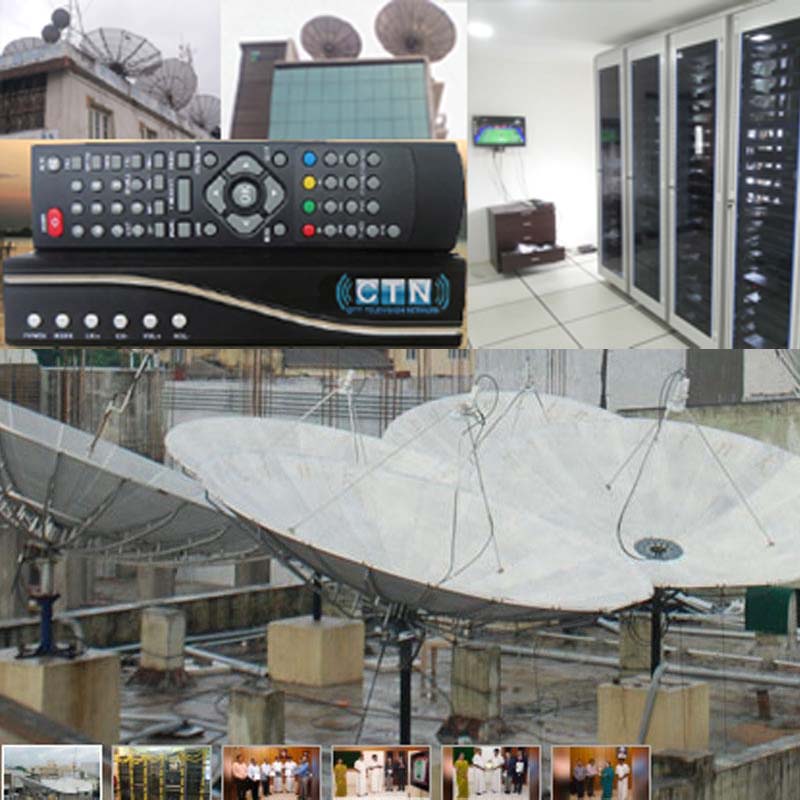
    MUMBAI: Netherland-based Exset has entered into a strategic technology and business partnership with Delhi-based Surbhi Broadband to provide solutions aimed at small and medium-sized cable TV operators in India.

    As per the agreement, Surbhi will promote market and manage Exset CAS/Middleware/Application/Advertising Modules and VAS alliances.

    Both the entities shall assist the Indian cable operators to adopt the flagship product of DMS from Exset‘s stable in their digital migration and monetisation efforts.

    The strategic partnership will enable the Indian cable operators to have access to Surbhi‘s expertise in hardware and software system integration.

    "The two companies will bring new partnership models to the doorsteps of Cable Operators ranging from outright purchase, rental and revenue-share models to assist the Small and Medium sized cable operators in their digital transition," said Exset Global Head, Sales & Marketing Rahul Nehra.

    With the combined offer from Surbhi and Exset, cable operators shall get access to reliable, market-leading digital migration solutions for digital cable TV platforms and services all under one roof. This shall enable the cable operator to deploy digital TV more efficiently and be more cost-effective.

    "Exset‘s technologies including the award winning DMS are of immense benefit to the small and medium sized cable customers. We trust that our collaboration with Exset and the availability of cost-effective solutions and various business models will help promote the growth of the Indian digital cable TV market," said Surbhi Broadband VP – Sales Piyush Mishra.

    NI VP production, development, factual programming Elizabeth McIntyre said, “ ‘Inside The Gangsters‘ Code‘ offers exclusive insight into empires that operate both within and beneath the apparent culture. The knowledge and passion, risks and challenges undertaken by Lou give a completely new perception to organized crime. We have seen in the past scripted dramas about mob life, but by exploring the operation beyond mere stereotypes, the audience gains a real and vivid understanding that spans globally.”

    Nerd TV executive producer Jago Lee said, “In this series, Lou is able to combine his long experience as a New York mobster with a wit, intelligence, and appetite for truth-seeking that is all his own. Lou is a remarkable new talent, and his unique approach compellingly reinvents the story of gangs and gangster life on television.”
  • Kolkata misses DAS deadline the third time

    Kolkata misses DAS deadline the third time

    NEW DELHI: West Bengal government is again headed for a showdown with the Information & Broadcasting Ministry as the deadline for compulsory switchover to digital cable ends today, the third time since digitisation in the four metros was notified.

    The Multi-System Operators (MSOs) have been given strict instructions by the state government against switching-off analogue signals to cable TV homes.

    According to TAM, around 70 per cent of TV homes in Kolkata have gone digital by mid-December. Going by industry estimates, 25-30 per cent homes are still to be seeded with set-top boxes (STBs) required to receive signals of television channels in digital mode.

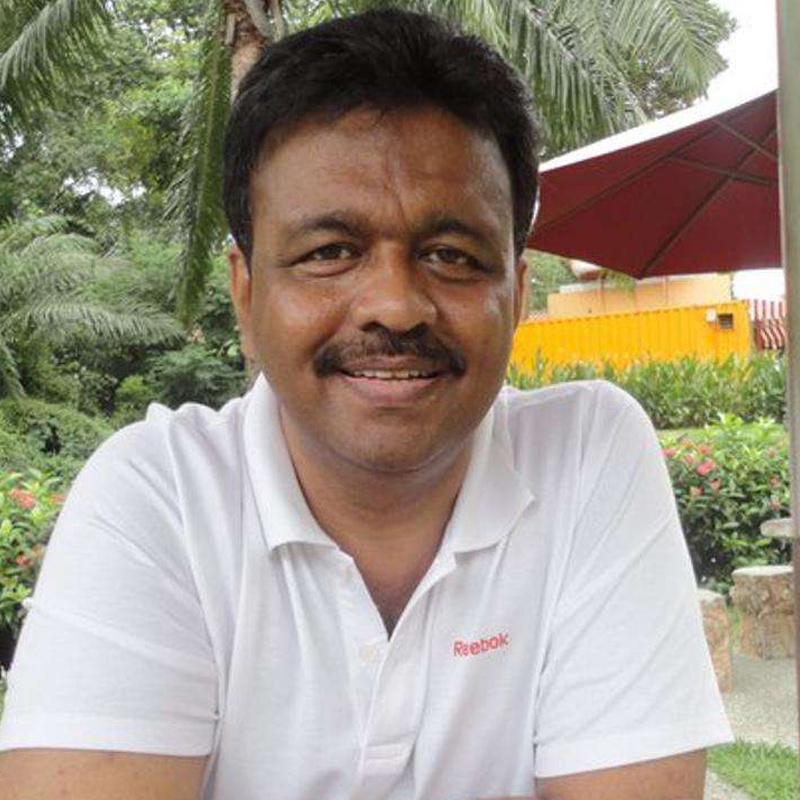
    West Bengal Urban Development Minister Firhad Hakim has made it clear that the central government cannot force cable operators in Kolkata to switch to digital addressable systems.

    The minister has also warned of action against operators who switch-off analogue signals, which will lead to television sets going blank with no STBs.
     
    He said, "The Centre cannot arbitrarily announce these deadlines for compulsory switchover to digital signals. We have written to the Centre and emphasised that such an exercise can only be attempted through a proper dialogue, but we have not received any response."

    Hakim said I&B ministry is yet to respond to the letters by him and the state‘s Chief Secretary Sanjoy Mitra on the matter.

    While analogue signals of some television channels would continue, the number of channels being carried by MSOs in analogue has reduced significantly. The MSOs had begun the process of switching off of analogue signals from 16 December. The Bengali language channels were expected to go dark by 27 December.

    "While we have switched off a lot of channels but at the same time we have to do a balancing act," an executive from a leading MSO said on the condition of anonymity.

    The executive said the off-take of STBs for installing in cable TV homes has been very good and complete switchover is only a matter of time.

    Echoing his sentiment, an executive from another MSO said, "We have to go along with the I&B Ministry as well as the state government. In the last one month, STB seeding progressed very smoothly."

    The executive said the state government has called for a meeting in the first week of January to take stock of the situation.

    Cable operators in the city told Indiantelevision.com that West Bengal Chief Minister Mamata Banerjee had been a member of the Union Cabinet when it had decided to go in for digitisation in four phases, beginning with the metros.

    But now the operators felt they were being put in an awkward situation with the centre and the state at loggerheads on the situation.

    "We have to operate in West Bengal and it will not be prudent to act against the instructions of the state government. But if the MSOs do not follow the directives of the Centre then they risk losing their licences," said Cable & Broadband Operators’ Welfare Association Secretary Swapan Chowdhury. 
     
    It must be noted that the original deadline for the first phase of digitisation in the four metros was 30 June which was extended to 31 October by the ministry to allow MSOs more time to prepare.

    While Mumbai and Delhi adhered to the 31 October deadline by switching off analogue signals (although pirated signals were available in many parts of Delhi), in Kolkata the signals were not switched off by MSOs on the state government‘s diktat.

    After maintaining a studied silence on the issue for more than a month, the ministry had finally cracked the whip on Kolkata MSOs to switch off analogue television signals in a phased manner in Kolkata by 27 December.

    Meanwhile, broadcasters have begun carrying scrolls on their channels about the 38 cities that will be digitised in the second phase by 31 March even as Chennai is yet to be digitised.

  • Justice Janarthanaraja recuses himself from Chennai digitisation case

    Justice Janarthanaraja recuses himself from Chennai digitisation case

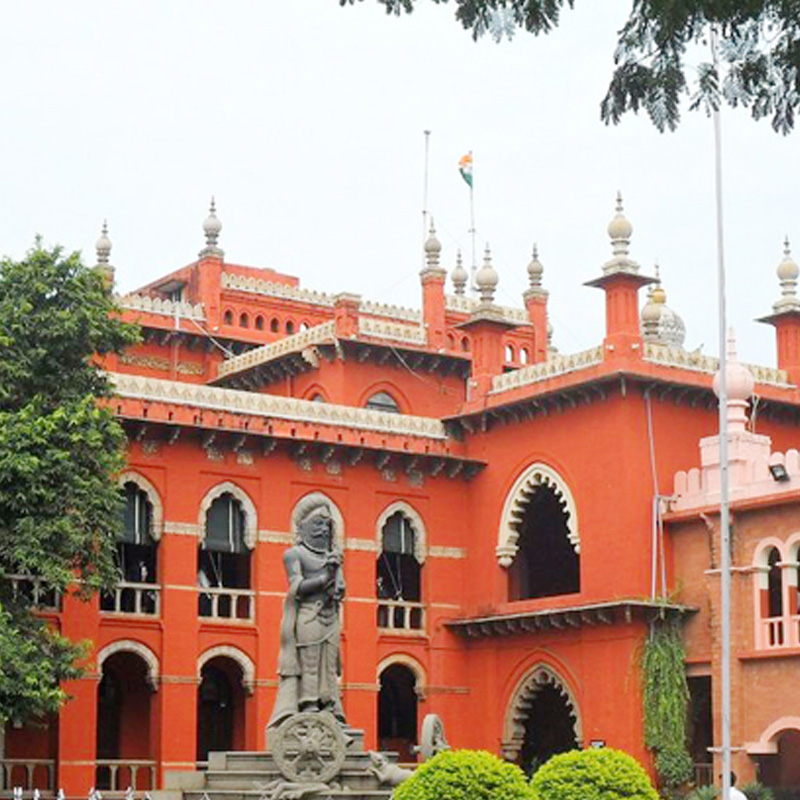
    MUMBAI: The Madras High Court has adjourned the hearing of Chennai cable operators petition for extension of digitisation deadline to Wednesday due to recusal of Justice P.P.S. Janarthanaraja from the case.

    Justice Janarthanaraja recused himself from the case citing possible conflict of interest since his son works for Sun TV, whose lawyer is representing one of the respondents in the case.

    Janarthanaraja along with Justice Paul Vasanthakumar formed the two-member bench that would have decided the fate of the petition filed by cable operators.
    The case was expected to come up for hearing today after it got adjourned on Monday.

    The court had on 9 November extended the stay on digitisation in Chennai till 19 November seeking details of the number of digital set top boxes available and seeded.

    The petition by Chennai Metro Cable Operators Association (CMCOA) through its general secretary M R Srinivasan is seeking extension of digitisation deadline by three months.

    Justice N Paul Vasanthakumar, who was hearing the petition filed by CMCOA, said the matter should be heard by a division bench since it involved a larger public interest.

    The Information and Broadcasting (I&B) Ministry had told the Madras High Court that it was prepared to give an extension for implementation of digitisation in Chennai till 31 December provided the stakeholders gave affidavits that they will implement it by then and not seek further extension.

  • Terror strike: News channels asked to delay live telecast

    Terror strike: News channels asked to delay live telecast

    MUMBAI: The news channels, which were boasting of fast and latest footage of terror attacks in Mumbai, were finally asked to discontinue live reportage, following the fear of security threat.

    Agreeing to the request of the securities agencies, the channels agreed to delay live telecast. Reportedly, the agencies had asked news channels to stop their live coverage of the terrorist activities and rescue operations fearing that the terrorists may get information about their movements.

    The news channels, which were on wild run since late night of 26 November, immediately accepted to the request of the agencies.

    Meanwhile, Maharashtra government had issued notification to the cable operators on Thursday night, prohibiting transmission of news channels. “We received notification from the state government,” says a cable operator. “We were asked to shut off news channels, and we had to blackout news channels for a brief period.”

    A senior executive of a leading news channel confirmed of the development. “There was disruption in the signals in morning as cable operators blacked us out. The issue was resolved in minutes and we are back.” 

  • STB availability key to Cas success

    STB availability key to Cas success

    MUMBAI: Availability of set-top boxes (STBs) is one of the key concerns for the successful roll out of conditional access system, speakers at a workshop on “Cas and Digital CATV” said here today.

    Cable operators should not only look at the price of the boxes but also the quality of features it offers as there is revenue to be earned from the consumers. “While what is being pushed now in India is basic boxes, there is need also to go in for middleware that enables enhanced facilities. The important question to be asked is what the boxes can do. Cable operators will be able to, after all, earn revenues from features like video-on-demand and gaming,” said Technosat managing director Irshad M Contractor.

    The Dubai-based company is prepared to set up a manufacturing facility in India if the demand for STBs pick up. Technosat has boxes ranging from basic to premium features on MPEG-2 and is currently conducting trials on MPEG-4.

    Though multi-system operators (MSOs) are currently importing boxes, several manufacturers in India are keen to come up with local production facilities. “We are introducing 4-5 flavours of STBs that are fully developed in India. The boxes will have personal video recorder (PVR) and digital video recorder (DVR). We are integrating the encryption system with Conax. We are also in talks with other Cas technology providers,” said Surbhi Broadband general manager sales P C Mishra.

    The two-day workshop, which concluded today, was organised by Satellite & Cable TV (SCaT) magazine and attracted over 250 delegates. The focus was on facilitating cable operators to make the transition from analogue to digital cable. The issues covered ranged from digital headends to billing solutions for Cas.

    Speaking on digital headends for simulcasting digital video broadcasting – cable (DVB-C), Peter Batt of Teleste said there was need to offer on demand TV and other value-added services. The third generation headends improved footprint and power consumption while offering unicast/multicast video services and triple play. But the fourth generation IP-centric headend for DVB-C and IPTV combined everything and offered “ultimate flexibility.”

    Earlier SCaT editor and executive director Dinyar Contractor said Headend-In-The-Sky (HITS) would mean rapid digital and Cas roll out as it would reach out to the smallest and far flung last mile operators (LMOs). Even as Cas made it unviable for LMOs to set up a digital Cas headend and offer a large pay bouquet, HITS offered several advantages to them.

    “The transmodulator cost is as low as Rs 2000 per channel and the LMOs can assemble their own, local basic tier. It is economically attractive if the Telecom Regulatory Authority of India (Trai) permits nationwide Cas,” he said.

    SCaT chairman Sudeep Malhotra spoke on uplink and downlink policies, elaborating on the regulatory framework prescribed for the different genres of channels such as news and sports. “There are 164 Indian channels licensed to be uplinked from India. The channels that are registered and allowed to be downlinked into India amount to a total of 54 channels,” he said.

  • Cisco offers debt to cable operators, pushes Scientific Atlanta STBs

    Cisco offers debt to cable operators, pushes Scientific Atlanta STBs

    MUMBAI: Cable operators dry of cash for digital implementation can now look forward to Cisco Systems, Inc. The global networking equipment and network management giant is willing to finance cable operators in India as it sees opportunity in riding the digital cable wave to push its set-top boxes (STBs).

    There is a catch, though: operators will have access to the loan only if they use STBs from Scientific Atlanta, the company that Cisco acquired to bulk up on businesses that cater to consumers.

    The debt will be provided through its wholly owned subsidiary company, Cisco Capital.

    Cisco has approached several small and medium-sized operators in the Cas (conditional access system) areas, offering a variety of financing options. “We are willing to provide soft loans to cable operators which can be paid over a period of time. This way we can push our digital end-to-end solutions including headend, encryption system and boxes,” says a source in the company.

    The loan size will depend upon the credit worthiness of the operator and the funding will be made available in phases. “We won’t be funding the cable network in one go, but infuse it in several doses,” says the source.

    Cisco realises how tough it will be to evaluate the health of the cable networks. “Most of them do not have proper documents and it is difficult to rate their creditworthiness,” the source adds.

    Among the cable operators Cisco has initiated talks are Kolkata-based Manthan and JPR Network, an independent operator in Mumbai. But there are no takers yet.

    “We are more interested in equity than in debt. As we will have to subsidise the STBs, it will be very difficult to recover and repay the loan. The average revenue per user (ARPU) from Cas subscribers is also low. Besides, Scientific Atlanta boxes are more expensive than what is available in China and Korea,” says JPR Network promoter Raja Nadar.

    Cisco, however, believes its end-to-end digital solutions and the pressure cable operators face to put quality infrastructure in place will drive in good business. “There is just a 20 per cent difference between what we provide and what others are offering. But we have a better system and bridge an end-to-end requirement,” the source says.

    Rajan Raheja-promoted Hathway Cable & Datacom and Asianet are using the Scientific Atlanta headend, STBs and encryption system, the source adds. Hathway, in which Star has a 26 per cent stake, already has seeded Humax STBs and uses News Corp-owned NDS encryption systems.

    For Hathway, Scientific Atlanta is going to be a second supply vendor as the market for digital cable expands.

    Cisco acquired Scientific Atlanta so that it could tap the rapidly growing cable, satellite and IPTV markets across the world.

  • Trai slashes Nimbus bouquet price by Rs 21.25

    Trai slashes Nimbus bouquet price by Rs 21.25

    NEW DELHI: The Telecom Regulatory Authority of India (Trai) has directed Nimbus Sports Broadcast Pvt Ltd to reduce the price of its two channels by Rs 21.25 to Rs 37.25. Nimbus had priced the bouquet at Rs 58.50.

    The regulator has asked Nimbus to furnish a report of compliance within seven days from the date of receipt of this direction. The directive was issued yesterday.

    Reacting to the decision, Nimbus officials have told Indiantelevision.com that they would be filing a challenge to Trai’s directive before the Telecom Disputes Settlement and Appellate Tribunal (TDSAT).

    Trai ordered this in relation to a complaint filed by Cable Operators’ Federation of India, after reviewing the prices charged by other broadcasters in the the same genre, that is, sport.

    In the Cas (Conditional access system) areas, Nimbus will have to stick to Trai’s tariff order where a la carte channels can be priced at a maximum of Rs 5.

    A clearly jubilant Cable Operators’ Federation of India president Roop Sharma told Indiantelevision.com that “this was a great decision as customers were being fleeced.”

    Trai has held that the decision was based on Clause 3 of its principal Tariff Order relating to charges, and said that Nimbus’ contentions were irrelevant especially because review of the prices charged by channels of the same genre showed that these are much less.

    Nimbus had argued that the prices for its two channels, Neo Sports and Neo Sports Plus, were higher than those of other sports channels because their content, composition and structure were different than such other rival sports channels.

    Trai in its decision observed that clause 3 of the principal Tariff Order specifies that the charges, excluding taxes, payable by (a) Cable subscribers to cable operator; (b) Cable Operators to multi system operators / broadcasters (including their authorised distribution agencies); and (c) Multi System operators to broadcasters(including their authorised distribution agencies) prevalent as on the 26th December 2003 shall be the ceiling with respect to both free-to-air and pay channels.

    Tra said that basically, channels of the same genre are required to charge the same price and this is a reasonable basic for fixing of prices.

    But the “thrust of the arguments of Nimbus does not bring out facts, which would justify a higher price being charged by them for its said sports channels as compared with other similar channels of the same genre”, Trai observed.

    The regulator compared the prices charged by Star Sports and ESPN and said that after due consideration, it has decided that Nimbus would have to slash the rate by Rs 21.25.

    Trai said that the argument that the prices charged were based on composition, content and structure of a sports channel did not hold ground.

    “Being business decisions, these may undergo a change in view of changing perception of the market and other perceptions, and such changes will not have a bearing on deciding the similarity of channels, as required under clause 3B, so long as the genre of the channel does not get altered on account of such changes,” Trai said.

    Trai observed that even in the case of Nimbus’ own two channels, Neo Sports and Neo Sports Plus, which were different in their respective compositions, contents and structures “both the said sports channels are having the same price”.

    “This shows that the broadcaster has not resorted to differential pricing even where composition, content and structure are different,” Trai observed.

    Commenting on the Trai directive WWIL senior executive vice president Arvind Mohanl said, “This is a seminal order and will go a long way to ease the burden on consumers.”

  • Sun TV to turn pay from 2 December; priced at Rs 12

    Sun TV to turn pay from 2 December; priced at Rs 12

    MUMBAI: Southern Indian broadcast powerhouse Sun TV Ltd will switch its flagship channel Sun TV to the pay mode starting 2 December.

    The channel has been tagged at a price of Rs 12 per month per subscriber for the cable operators to access the channel.

    The Kalanithi Maran promoted network is also likely to turn its Malayalam language entertainment channel Surya TV pay in the near future.

    At present, it has three pay channels – KTV, Sun News and Sun Music. But in Chennai, which is a conditional access system (CAS) market, the consumers can view the pay channels through a set-top box (STB). But all these pay channels are free-to-air.

    Ahead of the implementation of CAS in the southern zones of the three metros — Delhi, Kolkata and Mumbai — Sun TV accepted the Telecom Regulatory Authority of India (Trai) fixing a common price of Rs 5/- per channel per subscriber per month (excluding taxes).

    However, the pay channel price cap is not applicable in Chennai, which is already a CAS-driven market.

    The Sun TV scrip opened the trading day at Rs 1210.25 and closed at Rs1219.50 and touched a high of Rs 1249.

  • Kerala cable operators protest luxury tax; go on token strike

    Kerala cable operators protest luxury tax; go on token strike

    MUMBAI: Cable operators in Kerala went on a ‘6 am to 6 pm’ strike demanding rollback of the five per cent luxury tax proposed in the state budget for 2006-07.

    “The strike paralysed the television viewing in Kerala during the day time. This was a token strike, and it is learnt that the Cable Operators’ Association is planning to meet the minister before planning its next move,” an executive of a leading Malayalam channel told indiantelevision.com.

    News agency PTI reports that cable operators in all towns joined the strike, making it a dull and dreary day for television viewers. A spokesman of the Cable Operators’ Association has been quoted as saying that, the strike was a major success as big and small service providers joined in the protest.

  • Star One in truce with cable operators in Mumbai

    Star One in truce with cable operators in Mumbai

    MUMBAI: Star One will be back on prime band location in cable networks across Mumbai following an agreement with operators. The channel was pushed into a higher frequency since January as Star India was asking for an increase in payout from cable TV operators.

    “As part of the truce, Star has withdrawn its demand of a 10 per cent increase in paying subscribers from us. We have agreed to carry the channel on a better location in our networks,” says Cable Operators and Distributors Association (CODA) vice president Ravi Singh.

    Star was blamed by the association of distributors and last mile operators in Mumbai for forcing the second bouquet comprising channels like Star One and Walt Disney on cable operators.

    Opposition was also against Tata Sky, in which Star is a 20 per cent joint venture partner, for approaching housing societies with the proposal of offering residents a central dish antenna through which it could connect individual installations and offer direct-to-home (DTH) service.

    A few days back, the Star group of channels were back on the cable networks in Kolkata. Manthan Cable Network and Indian Cable Net (which was bought out by Siticable) had in April blacked out the Star channels opposing a seven per cent rate hike. Claiming outstandings of over Rs 20 million, Star, in fact, had switched off Manthan.

    Following this the last mile operators had blacked out carriage of the Star channels, led by the Forum of Cable Operators and Cable Operators Sanjukta, two association bodies of the last mile operators in the city.