|
|
|
|
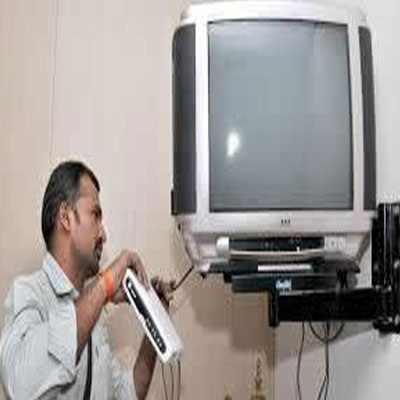
NEW DELHI: The Telecom Regulatory Authority of India (TRAI) has expressed serious concern over the slow progress in filling up of consumer details in Kolkata despite a deadline of 23 August for subscriber application forms (CAF).
After a meeting in Kolkata with multi-system operators who are required to update their subscriber management system for supplying signals to cable operators, TRAI said only around 30 per cent of the subscriber information was available with the MSOs. The meeting was addressed by N Parameswaram, Principal Advisor (Broadcasting) in TRAI.
‘This situation is totally unacceptable and alarming’, a press note signed by Parameswaram said, adding that all MSOs have been asked to initiate immediate steps to remedy the situation.
He said TRAI may be forced to take penal action against MSOs/ local cable operators in case the deadline is not met.
While requesting subscribers to cooperate, he said that MSOs would have no option but to switch off signals to those subscribers who have not given complete CAFs by 23 August.
Furthermore, he said MSOs who do not switch off the signals to offending subscribers would be in breach of the law.
NEW DELHI: It has been saying it will bring some order to the TV channel aggregation and distribution business. And the Telecom Regulatory Authority of India (TRAI) is now showing that it means what it has been saying.
It today issued a consultation paper attempting to regulate the distribution of television channels from broadcaster to platform operators and discipline the distributors (aggregators). The paper involves amendments to the Tariff and Interconnection orders, and Register of Interconnect Regulations, and so TRAI has given stakeholders time till 27 August to send in their comments.
The essence of these is that it wants to clip the immense clout that the four main aggregators MediaPro Enterprises (distributes 75 channels), IndiaCast UTV Media Distribution (distributes 35 channels), Sun Distribution Services and MSM Discovery (distributeing 30 channels each) have on the TV ecosystem in India.
The main points of the consultation paper are that:
* Broadcasters and not the authorised distribution agency shall publish the reference interconnect offers (RIO) and enter into interconnection agreements with the distribution platform operators.
* If a broadcaster appoints a person as its distribution agent, it shall ensure that –
a) The authorised distribution agent does not change the composition of the bouquet formed by the broadcaster while providing it to the distributors of TV channels.
b) The authorised distribution agent does not bundle bouquet or channels of the broadcasters with the bouquet or channels of other broadcasters. In other words, in case the authorised distribution agency represents more than one broadcaster, they shall not link offerings of broadcasters they represent.
c) While acting as an authorised distribution agent, such person acts for, on behalf and in the name of the broadcaster.
The regulator has also proposed that it will give broadcasters three months to rework the RIOs and to enter into fresh interconnect agreements and filing the same with it.
Based on the above, it has issued several orders under which it has chosen to amend earlier orders issued by it.
These include:
* The Telecommunication (Broadcasting & Cable) Services (Fourth) (Addressable Systems) Tariff (Third Amendment) Order 2013 to amend The Telecommunication (Broadcasting & Cable) Services (Fourth) (Addressable Systems) Tariff Order 2010 (1 of 2010)
* The Telecommunication (Broadcasting & Cable) Services (Second) Tariff (Tenth Amendment) Order 2013 to amend The Telecommunication (Broadcasting & Cable) Services (Second) Tariff Order 2004 (6 of 2004)
* The Telecommunication (Broadcasting & Cable Services) Interconnection (Seventh Amendment) Regulations 2013 to amend The Telecommunication (Broadcasting & Cable Services) Interconnection Regulation 2004 (13 of 2004).
* The Telecommunication (Broadcasting & Cable Services) Interconnection (Digital Addressable Cable Television Systems) (Second Amendment) Regulations 2013 to amend The Telecommunication (Broadcasting & Cable Services) Interconnection (Digital Addressable Cable Television Systems) Regulations 2012 (9 of 2012).
* The Register of Interconnect Agreements (Broadcasting & Cable Services) (Fifth Amendment) Regulations 2013 to amend The Register of Interconnect Agreements (Broadcasting & Cable Services) Regulation 2004 (15 of 2004)
Background to TRAI’s attempt to regulate Aggregators
In the paper, the TRAI says that broadcasters, MSOs, cable operators, DTH, HITS and IPTV operators are recognised as entities in the policy guidelines and regulatory framework of the Ministry and TRAI respectively. Aggregators have not been specifically defined anywhere; neither in the law or the statutory rules, nor in the regulatory framework for the broadcasting and cable TV services sector.
As on date there are around 233 pay channels (including HD and advertisement-free channels) offered by 59 pay broadcasters. These channels are distributed by 30 broadcasters/aggregators/ agents of broadcasters.
In the broadcasting and cable TV sector, TV channels are distributed by the broadcasters themselves or through their authorised distribution agencies to the distribution platforms viz cable TV, DTH, IPTV, HITS etc. Many such agencies operate as authorised agents (aggregators) for more than one broadcaster. After obtaining the distribution rights from one or more broadcasters, such distribution agencies form bouquets, many of which also consist of channels of one or more broadcasters. They publish Reference Interconnect Offers (RIOs), negotiate the rates for these bouquets/channels with operators of various distribution platforms and enter into interconnection agreement(s) with them.
As on date, the distribution business of around 73 per cent of the total pay TV market, including high definition (HD) TV channels, is controlled by a few authorised distribution agencies. These channels include almost all the popular pay TV channels. These authorised distribution agencies wield substantial negotiating power which can be, and is, often misused leading to several market distortions.
Explaining its move, TRAI said the business of distribution of TV channels from the broadcaster to the consumer has two levels:
i) Bulk or wholesale level – wherein the distribution platform operator obtains the TV channels from the broadcasters, and ii) Retail level – where the distribution platform operator offers these channels to the consumers, either directly or through the last mile operator.
Even as TRAI was in the process of reviewing the regulatory framework for broadcasters and their authorised agencies, the Information and Broadcasting Ministry said there have been several complaints from Multi system operators (MSOs) about the modus operandi of such entities, e.g. it has been highlighted that MSOs are forced to subscribe to certain packages. Concerns have been vehemently voiced by various MSOs and LCOs regarding the monopolistic practices of such major authorised distribution agencies of broadcasters, in view of their control over a large number of popular channels.
The MSOs have complained that the aggregators have abused their market power by forcing them to accept all the channels of the aggregator, fixed fee deals, charging based on the entire subscriber base and not as per actual uptake of channels, insisting on minimum guarantee and other unreasonable terms and conditions.
The TRAI further adds, in the consultation paper, that in the absence of any regulatory framework for the aggregators (including possible restrictions on the authorised agencies), they started to bundle channels of more than one broadcaster and form bouquets. These bouquets, having popular channels of a number of broadcasters, provided a better marketing proposition. These bouquets grew larger and larger with time, as the aggregator started to piggy back more and more channels, especially those having lesser standalone market values.
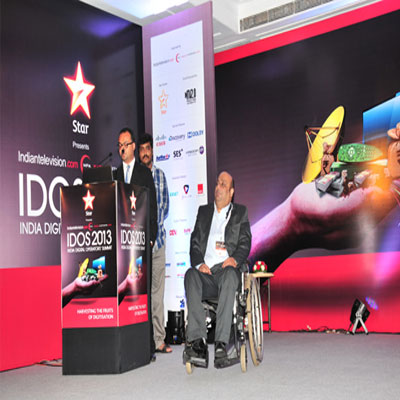
MUMBAI: The ongoing struggle, regarding the entertainment tax, between the Cable Operators & Distributors Association (CODA) and the Maharashtra State government has reached the next level. After postponing the decision to blackout all Hindi, English and Marathi news channels on state revenue minister Balasaheb Thorat’s request a couple of weeks ago, the organisation met with him last week.
“He has asked us to give a detailed presentation about the current cable TV scenario in the state, the revenue generation in the current tax regime and also compare it with what will happen when entertainment tax on subscribers and set top boxes will be brought down,” confesses Anil Parab.
The Maharashtra regime currently levies entertainment tax on cable TV subscribers at the rate of Rs 45 per sub; CODA has been imploring and lobbying with the government to scale this down to Rs 15 or Rs 20 as is the practice in many other states and cities.
According to Parab, the current rate is too high considering that transparency in the cable TV sector has really gone up and leakages have reduced with the introduction of set top boxes and digitisation. “The only only reason we had agreed to a hike to Rs 45 per sub was because there was under-declaration in the ecosystem and hence a perceived loss to the state exchequer. But with declarations of cable TV subs by cable operators and MSOs more than doubling, rate needs to be brought down as the burden on the industry is crippling us and really hurting our viability,” he reveals.
CODA is slated to meet the minister this week and make its presentation. As of now, Delhi’s rate is Rs 20 while in other cities it is less than five per cent. “The current rate is too much. We would be happy with anything between Rs 15 and Rs 20,” says Parab.
NEW DELHI: Around 3000 cable operators in the eastern metropolis of Kolkata came on the streets today headed by the Cable Operators Sangram Committee to protest the various packages being offered by broadcasters and multi-service operators as these were not being accepted by the consumers.
These LCOs also decided to hold a 24-hour bandh tomorrow from 9.00 am in support of their demands, which they claimed had the full support of the end consumer.
A memorandum of demands was also presented to the office of West Bengal Chief Minster Mamata Banerjee, who personally holds the Information portfolio.
The LCOs marched from Ramakrishna Mission`s Swami Vivekanda Ancient House in North Kolkata to Subodh Mullick Square in Central Kolkata to protect the Freedom of Subscribers choice.
The memorandum said it was very strange that many MSOs had not yet published any PAF from were a Subscriber choose there package, and no a la cart rate had been provided. The LCOs also opposed the attitude of MSOs towards LCOs, still demanding unfair and unjustified monthly amounts by raising invoices on LCOs. In case of non payment against their illegal invoices, they deactivate all the STBs of that LCO without any notice.

NEW DELHI: The West Bengal government has directed multi-system operators to maintain status quo with regard to charges relating to digital access system (DAS) till the upcoming panchayat elections in the state, which should come to an end by 15 July.
The state municipal affairs and urban development minister Firhad Hakkim directed MSOs not to switch off any channel during this period, without consulting the cable operators.
The minister said this during a meeting yesterday evening with a delegation of the cable operators sangram committe and chief executive officer Soumen Roy Chowdhary and Surendra Agarwal of Indian Cable Net Company Ltd, a unit of Siti Cable.
Ratan Jaiswal who represents the sangram committee of the LCOs told indiantelevision.com that this follows an agitation against the MSOs for failing to set proper rates and bouquets for the consumer.
He said the MSOs were charging Rs 70 apart from service tax and other charges amounting to another Rs 20 for every set top box installed, which the LCOs feel is illegal as there is no provision by the telecom regulatory authority of India in this connection. In any case, such a charge can only be levied on the consumer.
Even though the revenue share between the LCO s and MSOs is not clear and the packages being offered to the consumers are vague with no agreements having been signed, the LCOs say that Siti Cable and Indian Cable Network Company Ltd have sought help from the police which has imposed Section 144 for restricting entry of LCOs.
While the number of digital STBs installed at present is around 90 per cent in Kolkata, less than forty per cent of agreements relating to billing etc have been signed.
NEW DELHI: The Telecom Regulatory Authority of India (TRAI) has initiated action against cable operators who are violating the new laws relating to digitisation.
It is learnt from LCOs that around fourteen operators have so far been issued notices.
When questioned about this, a TRAI official confirmed to indiantelevision.com that the regulatory body had been contemplating action for some time against offending cable operators.
However, he said a press release would be issued in due course as and when such action is taken.
Complaints have been raised against LCOs for not filling the forms with details about the consumers.
However, several cable operators contacted by this website said the form had to be filled by the consumer, who was refusing to comply because his charges were going up manifold.
MUMBAI: Lukup Media has launched on-demand TV service powered by the Lukup Player, a hybrid set top box that delivers both mainstream TV channels and a large catalogue of content that can be viewed on demand.
The on-demand service is exclusively available on the Lukup Play.
Lukup Media Director Kallol Borah said, “The Lukup Player is designed to empower the viewer to personalize and take control of their media experience. They get to choose the time, place and device to view the content of their choice.”
The Lukup Player can be used as an extension to existing set top boxes from DTH and cable operators. It will enable subscribers to view content on multiple TV screens in their homes using a single connection. The Lukup Player will also serve as a wireless hub inside homes, making it capable of streaming content to laptops, tablets and mobile phones. Subscribers can choose to view content on their devices outside home as well.
According to the company, the Lukup Player’s touch screen based remote control personalises content search, enables personalised channels by importing content from cloud based services, social media sharing, intelligent alerts and recommendations, and multi-touch gaming.
The product is expected to start shipping from June and will charge users a subscription fee for content that is bundled along with it. It is also available for pre-ordering. Some salient technical features of the product are- HD 1080p and 3D display, support for existing satellite, cable and terrestrial TV connections, WiFi, Ethernet based IP connectivity, unlimited recording and capacitive multi-touch remote control.

NEW DELHI: The second phase of Digital Addressable System (DAS) in India marched on even as the month of March 2013 came to and end as envisioned by the Information & Broadcasting (I&B) Ministry. Analogue television signals in 36 cities all over India were clipped even as stay orders were imposed by high courts in Ahmedabad and Bengaluru.
However, I&B Ministry sources told Indiantelevision.com that the level of digitisation achieved as on 30 March was 70 per cent in phase II towns, and admitted there was a likelihood of viewers facing blank TV screens in some places.
The sources said that these problems primarily existed in Srinagar which has just 4,300 set top boxes (STBs) installed. The situation in Coimbatore and Vishakapatnam was more serious with almost zero STB deployment on 20 March.
They also added that the estimates had been made based on information received from multi-system operators (MSOs) and making a provision of 20 per cent for multiple TVs in households and TVs in offices/showrooms.
While the seeding of STBs and switch-off of analogue was being overseen by nodal officers in all the cities, the sources said teams would be dispatched to all these cities in the coming days to study the impact and ensure implementation. They insisted that there were ample digital STBs available.
However, Uttar Pradesh Chief Minister Akhilesh Yadav in a letter to I&B Minister Manish Tewari over the weekend requested for an extension of six months in the seven cities in the state that were to switch over to digital addressable system from today: Agra, Allahabad, Ghaziabad, Kanpur, Lucknow, Meerut, and Varanasi.
While the Gujarat High Court in Ahmedabad stayed the introduction of DAS till 9 April in Ahmedabad, the Karnataka High Court issued the stay till 1 April in Bengaluru. The Karnataka High Court will hear cases relating to both Bengaluru and Mysore on 1 April.
Ministry sources confirmed that both High Courts had issued notices to the Union government and the I&B Ministry.
In both case, the petitioners Cable Operators Association of Gujarat through its president Pramod Pandya andKarnataka Cable TV Operators Association president V S Patrick Raju, have said there is confusion about availability of STBs and MSOs are also helpless. Raju has also raised the issue of who owns the STB that is installed at the home of a subscriber – the customer or the LCO.
For the second phase, the 38 specific cities and towns in fourteen states and one union territory which have been listed in the notification are – Bangalore, Hyderabad, Ahmedabad, Pune, Surat, Kanpur, Jaipur, Lucknow, Nagpur, Patna, Indore, Bhopal, Thane, Ludhiana, Agra, Pimpri-Chinchwad, Nashik, Vadodara, Faridabad, Ghaziabad, Rajkot, Meerut, Kalyan-Dombivali, Varanasi, Amritsar, Navi Mumbai, Aurangabad, Solapur, Allahabad, Jabalpur, Srinagar, Visakhapatnam, Ranchi, Howrah, Chandigarh, Coimbatore, Mysore and Jodhpur.
A high-level Monitoring Committee has also been set up to oversee the digitisation process in the entire country, which is expected to be achieved by the end of next year.
In order to facilitate digitization, the Ministry has already issued provisional registration to 30 Independent MSOs to operate in Phase II cities. This would enable these MSOs to operate in their respective cities to provide digital cable TV services.
The Ministry has set up a Task Force exclusively for Phase II cities to oversee and monitor the digitization process. A public awareness Committee has also been constituted in the Ministry for spearheading awareness campaign and all TV channels ran a scroll informing consumers about the deadline for cable TV digitization, as well as an animated commercial.
All India Radio has also started broadcasting radio jingles on its national and regional networks to get the DAS message across. Several other initiatives like an SMS campaign, video spots and prints are on the anvil. The state governments/UTs have already nominated nodal officers in 38 cities of Phase II. The Ministry had recently conducted a workshop for them.
Workshops have been held at some places to take stock of preparedness in Phase II cities and sensitize local MSOs, cable operators and other stakeholders.
The Ministry had set up a Control Room during Phase I, which has continued to function to address the queries of consumers, cable operators and others. The Control Room which also has a toll free number has been receiving a number of calls from consumers of Phase II cities.
NEW DELHI: Around one million households in north-east and east Delhi will go without their favourite television programmes as cable operators are observing a blackout on 20 January to protest against the "unfair and unworkable" revenue-sharing formula under the digital addressable system (DAS).
About 200 cable operators from the two areas of the capital will join in the blackout, which will be for 24 hours to begin with.
Ashok Pandit, representing the cable operators from the trans-Yamuna east Delhi areas, told indiantelevision.com the cable operators fully supported the decision to go digital, but the revenue sharing where the cable operator who did the entire ground work got only Rs 45 out of every basic service tier of free to air 100 channels costing Rs 100.
The balance is shared with the multi-system operator (MSO).
Pandit said residents who were paying just Rs 100 to Rs 150 under the analogue system would now have to pay two or three times more than that, and will also have to purchase a digital set-top box (STB).
The cable TV operators have already submitted memorandums to the Delhi government and the Information and Broadcasting (I&B) Ministry in this connection but failed to get satisfactory replies.
Pandit said if the blackout proves successful, cable operators from other areas of the capital may also join the protest demanding a higher revenue share and lower tariffs for consumers.
The Cable Operators Federation of India President Roop Sharma, who is also a member of the I&B Ministry‘s Task Force on Digitisation, said the blackout will be in phases and will be held in other parts of the capital as well, and may later be taken to other metros.