Tag: cable operators

  • Kolkata LMOs appeal to TRAI

    Kolkata LMOs appeal to TRAI

    KOLKATA: The last mile owners (LMO) in Kolkata have appealed to the Telecom Regulatory Authority of India (TRAI) to allow them to air events related to the region through their local cable TV channels. 
     

    The appeal has come after the Authority released its consultation paper to regulate the local cable TV channels of cable operators in June, this year. “We have appealed to the Authority to allow us to run the local video channels as we did during the analogue times,” informs Cable Operators’ Sangram Committee secretary Apurba Bhattacharya.


    In the consultation paper, TRAI had said that MSOs, LMOs, DTH operators, HITS and IPTV service providers (all called as distribution platform operators – or DPOs-  henceforth) are running local channels aka platform services (PS) that don’t have the MIB’s permission. And some channels that are transmitted by the DPOs through the PS channels have content similar to regular TV channels.

     
    DAS, according to TRAI has changed the context for DPOs and their PS as far as cable TV operators are concerned. The reason: with digitisation, it is only the MSOs who can transmit encrypted signals from their headends on cable TV networks; LMOs can no longer transmit their own local ground based channels. 


    “Cable TV operators have no intention to violate the rules and regulations set up by the most competent authority concerning local video channel,” informs Bhattacharya, who feels that the LMOs have never in the past 25 years violated any of the rules.


    According to Bhattacharya, digitisation has made local cable TV channels necessary, as it gets more localised and informative. “Cable TV subscribers through these channels can get information about the upcoming events, change of channel packages and TRAI recommendations,” he adds.


    To make their voices heard, cable operators in West Bengal, presented their plea not only through forums, but have also written letters to the TRAI. 


    During the analogue regime, these local cable TV channels were available on LCN five. “The channel is used not only to telecast popular movies, but also helps people get acquainted with important announcements of local law and order, events, traffic condition of the area, weather report and educational/academic programmes,” informs a cable operator. 

  • Is India ready for HD HEVC set top boxes?

    Is India ready for HD HEVC set top boxes?

    MUMBAI: India may be struggling with completing the strenuous task of digitising the close to 9.4 crore cable TV homes, but when it comes to keeping pace with technology as compared to the rest of the world, we are not very far behind.

    While it was direct to home (DTH) player Videocon d2h which first announced that it was working out to launch its 4K Ultra HD service, Tata Sky followed soon. And with this, came the one big question: is the country ready for a technology such as this? Answers Broadcom Corporation associate product line director Brett Tischler, “The consumer is ready for 4K technology, which gives a clearer, sharper and brighter viewing experience. When people see it, they want it.”

    Worldwide, when the first 4K Ultra HD TV was launched, it cost close to $20,000. “This has now come down to $1000. This makes the TV much more affordable. The premium consumer is quick to respond,” he adds.

    The chip making company, Broadcom has forayed into 4K technology as well. And if sources are to be believed, it is Broadcom’s chip that has been used in the 4K Ultra HD set top boxes (STBs) introduced by both Videocon d2h and Tata Sky.

    While one may feel that there is not enough 4K content available the world over, Tischler feels otherwise. According to him, 4K content can be made available on Over the Top (OTT) platforms or through Live TV, Video on Demand (VOD) and web based content. Sports and movies are the two genres which will be popular in 4K. “There are a few Hollywood movies which are being made in 4K. Also the last three or four 2014 FIFA World Cup matches were broadcast in 4K in South America,” adds Tischler.

    Broadcom, in the past had also telecast the winter Olympics using 4K technology. According to Broadcom managing director Rajiv Kapur 4K will be adopted faster world over.

    Ultra HD filming, transmission and broadcast requires a significant increase in bandwidth. “Our Ultra HD video decoder solutions with integrated high efficiency video codec (HEVC) technology reduces bandwidth usage by 50 per cent, allowing users to download Ultra HD content in half the time,” informs Tischler.

    Both Kapur and Tishler are of the view that HEVC is the standard that the industry will move towards now. And if the duo is to be believed, the operators in India will soon move towards HD HEVC set top boxes (STBs), since the technology compresses the content and reduces the bandwidth needed to half.

    “India has the potential. We have developed an optimised technology that works well in the country. It is an exciting time for the country,” opines Tischler.

    Content today is generally produced and transmitted in 8 bit but HEVC take it up to 10 bit, giving a wider colour gamut. And so a lot of the content creators will now be looking at adopting this technology. “Most producers and broadcasters know that they will need to create content in 10 bit for better experience, but if they make it in 8 bit, even that will work,” informs Tischler.

    On the flip side, with Indian DTH operators facing transponder space constraints, will the technology be accepted? Answers Tischler, “HEVC content at the same resolution is about half the size. So the 10 megabit AVC content can be reduced to 5 megabit HEVC content, without having any effect on the quality of the content. HD moving to 4K is a multiplier by four and by using the HEVC, this can be halved, and so it’s a multiplier by two.”

    For both Kapur and Tischler, cable satellite and IP TV operators either have definite plans to move to HEVC or are planning to move to it. “It is a better codec for them to use. They are already putting it in their next generation equipments,” says Kapur.

    4K Ultra HD is a premium service, which according to Kapur will start as VOD and then move to OTT and then to full channels.

    The primary obstacle for introducing 4K is gone. With TV sets being sold, the operator cannot ask the consumer to first go and buy TV and then launch the service. “TVs are selling and  the service can’t be far behind. 4K initially will be a premium product, but HEVC as an HD codec, applies to everybody. So some operators who are doing HD will go right into HEVC, and will only do HD in HEVC. So we see HEVC being adopted by some of the biggest and most developed DTH operators in the world and also some of the emerging markets which are going into digitisation,” opines Tischler.

    HEVC is future-proof and will give better returns on investment. “We have a range of HEVC chips, but the 4K p60 10 bit HEVC chip is what we are planning to put in people’s houses,” adds Kapur.

    If the operator chooses to do VOD in HEVC, they can do it using half the bandwidth. According to Kapur, the early decision of deploying boxes by the operators will now play a critical role, since changing the boxes, after the operator has installed them over a large subscriber base will be a tedious task. 

    The HEVC boxes will move into production this year and will be available by 2015. “We are right at the cusp of these developments,” informs Tischler.

    Both Tischler and Kapur are of the view that the phase III and phase IV markets in India will not be using HEVC, since MPEG 2 SD boxes will dominate these markets. “Currently, the operators are looking at grabbing as many subscribers as possible. So they want to push as many and cheapest boxes as possible. It is only later they will introduce newer technology boxes. Then they will try to grow their revenue and give more services to their consumers,” opines Kapur.

    Unlike DTH, the cable TV market in India is still dominated by the SD STBs. Will that also see introduction of HD HEVC boxes? Says Kapur, “DTH also took decades to grow from basic SD boxes to some of the latest technologies. Cable will go through similar evolution.”

    Broadcom which has some 70 offices worldwide, invests heavily on R&D. The company which has close to 35 R&D offices, spends close to 21-23 per cent of its total revenue on R&D.

  • JAINHITS to invest Rs 1,500 crore on 3,000 mini headends by Dec 2014

    JAINHITS to invest Rs 1,500 crore on 3,000 mini headends by Dec 2014

    KOLKATA: JAINHITS, a provider of headend-in-the-sky (HITS) based services to cable operators, would invest Rs 1,500 crore for setting up over 3,000 mini down-link headends in 640 districts across the country by December 2014.

    “We plan to invest Rs 1,500 crore on the installation of mini downlink headends. We have partnered with Motorola (now ARRIS) for technology and Intelsat for satellite engagement,” JAINHITS’ National Sales Head Jeet Narayan Singh told Indiantelevision.com, on the sidelines of ‘Cable TV Show 2014’.
    With the county set to witness digitalisation of around 100 million homes by the end of the current year, the company is looking at a market share of around 25 per cent.


    Singh did not elaborate on the sources of the funds needed for setting up of the mini headends.
    “From May onwards, we aim to install 200-300 headends every month,” he said.

    The company would also strengthen its presence in the growing eastern India market. Singh said the eastern Indian market has more than 25 million television homes, providing a significant growth opportunity for the company.
    Talking about headends in the eastern region, Singh said JAINHITS has already installed 20 headends in the eastern region and four of them are already operating in West Bengal alone. Including these, JAINHITS has so far installed 250 mini headends.


    “Our DTN (direct to network) service based on the headed-in-the-sky offers triple service offering including video, voice and data,” he said.
    Currently, JAINHITS offers more than 250 television channels and plans to soon provide full HD and multi-screen services. “We plan to offer 100 HD channels in 2 phases,” he said.

    “We aim to convert the LCOs (local cable operators) to MSOs (multi-system operators) with minimum cost and provide all end-to-end solutions for digital cable and broadband services,” he said.

  • Kolkata LCOs against having to obtain NOCs from MSOs

    Kolkata LCOs against having to obtain NOCs from MSOs

    KOLKATA: It’s their fight for survival. Local cable operators (LOC) from Kolkata are now up in arms against the regulation that requires them to obtain no-objection certificates (NOCs) from multi-system operators (MSOs) to be able to get their licences renewed.


    It’s not just the billing, inter-connect agreements or revenue sharing issues that is of concern to the LCOs. The requirement of having to obtain NOCs from MSOs for their annual licences is another issue they are preparing to fight against.


    LCOs across the country now come under an amended rule which states that LCOs have to take NOCs from their respective MSOs for renewal of their annual licence from the Post and Telegraph department, which, the LCOs feel, makes their survival at the mercy of the MSOs.


    Swapan Chowdhury, convener of the Joint Forum of Cable Operators’ Association (JFCOA), said earlier the LCOs, the last mile operators, had to apply to the government for renewal of their licences but now have to take NOCs from private companies, the MSOs. “It shall be difficult for the LCOs to exist and operate,” he argued.


    “The forum will raise its objection with TRAI (Telecom Regulatory Auhtority of India) and shall (also) challenge the merit of such an amendment in the appropriate court of law shortly,” Chowdhury said.


    “This mandatory digitisation has adversely affected our livelihood and has proved detrimental to our interests. If TRAI wants the LCOs to be wiped out from the cable TV industry business, it is fine but asking us to get NOCs from MSOs is not a fair idea at all,” said an LCO from the Cable Operators Sangram Committee.


    The LCOs are also against the practice of having to renew licences every year. They want the Ministry of Information & Broadcasting to issue LCOs licences for 10 years.


    “The LCOs are registered with post offices for 1 year whereas the MSOs get the licenses for 10 years from the ministry. This is making LCO business uncertain,” Chowdhury rued.


    Kolkata-based MSOs when contacted said they would adhere to the rules and regulations prescribed by the authorities and ensure that digitisation of cable TV happens smoothly.

  • Arasu has a provisional MSO licence to operate: Manish Tewari

    Arasu has a provisional MSO licence to operate: Manish Tewari

    NEW DELHI: The Tamil Nadu Arasu Cable TV Corporation, a multi-system operator (MSO) run by the TN government – has been claiming that the government has not given it an operational licence, thereby restricting it from transmitting digital signals to its subscribers. The MSO even filed a case in the Madras High Court in December, 2013 and got a stay over Telecom Regulatory Authority of India’s (TRAI) earlier order which stated that MSOs transmitting analogue signals in Chennai would be prosecuted.


    While the case is yet to get its second date of hearing, the Information and Broadcasting (I&B) minister Manish Tewari, in a response to a question in the Parliament, said that on 26 November, 2007 Arasu had applied for grant of MSO registration in conditional access system (CAS) notified area of Chennai. The Ministry had granted provisional permission on 2 April, 2008. It was on the condition that after TRAI recommendations are considered, the Ministry will decide whether state governments/PSUs and other entities can enter into broadcasting activities including MSO/Cable operations.


    Along with Arasu, four other MSOs in Chennai were also given CAS licences in 2006 including IMCL, Hathway Cable and Datacom, Kal Cable and JAK communications.


    In response to a question about licences given to private players in other southern states, Tewari said that CAS was implemented in the notified areas of Delhi, Mumbai and Kolkata on 31.12.2006; while in Chennai, it was implemented since 2003 under notifications of 14 January, 2003 and 31 July, 2006. Since CAS was implemented only in Chennai, no CAS permission was granted to MSOs in other southern states.


    The entire episode has in a way turned everything around. The case is pending in court till the time TRAI submits its response. So while TRAI – which is completely against the idea of govt. owned MSOs and awaits Ministry’s response to its recommendations – awaits the responses, it could mean that Arasu is free to operate. Moreover, it can even give digital signals or seed STBs as TRAI can’t take any action against it, given that the MSO has a temporary licence.


    The picture will be clear only after the Ministry brings out its regulation and the case in the Madras High Court proceeds.

  • Disappointed Assam cable ops to meet to decide on further agitation

    Disappointed Assam cable ops to meet to decide on further agitation

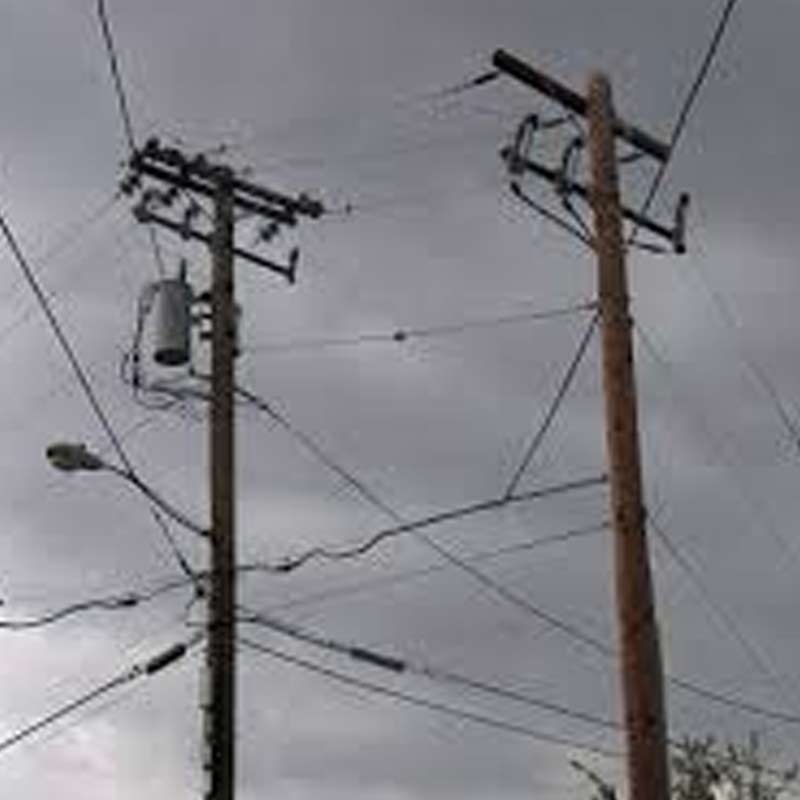
    MUMBAI: A huge remonstration by the cable operators of Guwahati Metro seems to be in the coming. After all their measures to get a respite from the troubles that has come in their lives after the Assam Power Distribution Company Limited (APDCL) asked them to pay Rs 25 for the usage of poles failed, this seems to be the last rescue.

    The troubled cable operators are now organising an all Assam cable operators meet on 29 December to decide the date for the next blackout. They will also decide the date for the meeting with Assam chief minister Tarun Gogoi.

    The Greater Guwahati Cable TV Operators’ Association (GGCTOA) is disappointed with the outcome of the meeting with Assam Power Minister Pradyut Bordloi. On 24 December, a 10-member committee had met the minister to discuss the issue. The meeting was organised after the Assam Power Distribution Company Limited (APDCL) on 17 December issued a letter to the cable operators in Guwahati Metro to pay for the electric poles.

    Another thing disturbing the operators is a newspaper announcement made by APDCL on 25 December. “The APDCL has issued a public notice, stating that the cable operators are not following the safety norms by laying cable wires on electric poles and also that the cable operators are not ready to pay for using the services of APDCL,” informs GGCTOA general secretary Md Iquebal Ahmed. “But, this is all false. We are abiding by the safety rules and also are ready to pay. Our demand is to reduce the fee from Rs 25 to Rs 8 – Rs 10. The issue of this notice has brought all our negotiations to zero,” he adds.

    Earlier, on 23 December, the operators in order to show their discontent towards the decision of APDCL had already carried a blackout. The next blackout, the date for which is yet to be decided, will be due to the non-conclusive meeting with Bordloi and also the newspaper announcement made by APDCL.

    “The minister has neither fully supported us, nor has gone against our demand. But, he has avoided any commitment,” remarks Ahmed.

    Stating that APDCL is a private company, Bordloi told the cable operators that he cannot compel them to do anything. “I can only talk to them and put forth your demands to them,” is what the minister told the 10 member committee.

    “This is not the response that we had expected,” says Ahmed.

    While the blackout on Monday lasted for five hours, the next blackout will be for 12 hours. “We will decide the date in the meeting on 29 December. Our first attempt of blackout was successful and well supported by the consumers as well,” says Ahmed.

    The cable operators may also go for a “dharna” as an option to ensure their voice is heard.

  • MCOF takes Maharashtra govt to court on ent tax

    MCOF takes Maharashtra govt to court on ent tax

    MUMBAI: The Maharashtra Cable Operators’ Federation (MCOF) moved the Bombay High Court on 13 December challenging the Maharashtra state government’s amended gazette resolution (GR) regarding entertainment tax. The association will send a notice to the state government on 14 December.

    Both MCOF and the Nashik District Cable Operators Federation had in April challenged the first GR issued by the government on 7 March in the courts, according to which multi-system operators (MSOs) were made responsible for paying entertainment tax. Now, MCOF has challenged the second GR which the government released in November as an interim solution.

    “What we don’t understand is that how can the government come out with an amended GR when the first GR is already in court,” asks MCOF president Arvind Prabhoo.

    The association has filed the petition on two issues. “The first issue is on renewal of licence for last mile owners (LMOs) according to section 4(2)(b) of the Entertainment Duty Act, Bombay 1923. Second, is the amended GR, which makes it compulsory for the LMOs to file a joint affidavit with the MSOs to pay entertainment tax,” informs Prabhoo.

    The Maharashtra government issued the new GR, stating it was losing out on tax collections. “What is the need for a joint affidavit, when with digitisation the whole system has become transparent? Also when we are depositing the entertainment tax to the court, till no verdict is announced, why this GR?” he questions.

    MCOF has filed the petition to ensure that the government doesn’t indulge in anymore GRs till the verdict is declared. The earlier petition filed in April is up for hearing in the Bombay High Court on 10 January.

    “We hope that while the first issue is resolved in the coming hearing, our new petition comes up for hearing soon,” he adds. The case will be represented by advocate-High Court Sudeep Nargolkar.

    It should be noted, that the joint affidavit means that in case of any irregularity in paying the entertainment tax, both the MSOs and LMOs will be either jointly or separately made responsible.

    “We are ready to pay the tax directly to the government. Why should the LMOs suffer, if the MSO doesn’t deposit the entertainment tax to the government collected by the LMOs?” asks Prabhoo.

  • Cable TV subscribers unhappy with raised subscription fees

    Cable TV subscribers unhappy with raised subscription fees

    KOLKATA: Indiantelevision.com has done a series of reports on the concerns of local cable operators (LCOs) and multi system operators (MSOs) around the process of digitisation.

    However, what we haven’t touched upon yet is the response of city-based cable TV consumers to DAS, especially the 30 to 50 per cent increase in subscription charges over the past two months.
    Cable subscribers in Barasat, Hooghly, Khardah, some parts of Salt Lake and northern Kolkata – regions that fall under DAS 1 – are learnt to be fuming over LCOs’ decision to randomly increase subscription rates.

    So much so, some of them are refusing to pay subscription fees while others are willing to pay just the fees, sans the service tax and amusement tax components and without getting proper bills from the LCOs.

    Cable Operators Digitalisation Committee of the Association of Cable Operators convener Swapan Chowdhury says: “Customers were expecting to get the bills and now, on not getting the bills, are upset. Some are not willing to pay even the monthly rental.”

    Analyst Namit Dave feels customers who were used to paying on an average Rs 60 – Rs 90 during the analogue regime are uncomfortable shelling out higher viewing charges.

    According to cable ops in Shyam Bazaar and north Kolkata, customers who used to pay Rs 120 per month are raising a hue and cry when asked to pay Rs 150 as monthly rental.

    “We really do not know how to explain things and convince people,” said a cable operator.

    Barasat resident Tumpai Das argued that the sudden increase of subscription fee from Rs 150 to Rs 280 was unjustified.

    “The local cable operators have not added anything new in terms of quality in connection or channels. They have started collecting this amount for the past two months. If they are not controlled, soon they may hike again,” he rues.

    “We are not being issued a valid bill. When we ask for a bill, they just write it in a white paper and issue it. If the cable operators are not controlled, they would fleece us to any extent. We would have no other option but to opt for DTH connection if they hike the charges further,” says a retired teacher from Hooghly.

    Meanwhile, Cable Operators Sangram Committee general secretary Apurba Bhattacharya feels that going forward the situation is unlikely to change unless billing begins.

  • New technology simplifies collection for cable ops

    New technology simplifies collection for cable ops

    MUMBAI: Even as industry prepares for phase III of digitisation, here comes a technology that is likely to get more than a warm welcome from cable operators.

    UPASS, a front-end automation for the cable sector and mobility solutions provider, has announced that it has successfully integrated with the subscriber management system of Media Nucleus; a development set to change the collection system. While Kottayam-based Star Vision Cable Networks is the first LCO to use the integrated solution, Media Nucleus is in talks with three other operators for installing the solution to their systems.

    It was at the recently concluded SCaT that the collaboration took place. “We finished the integration and also showcased a part of it during SCaT,” informed Media Nucleus director Santosh Nair. He explained the working of the solution as: “Each subscriber will have an ID, subscriber number or name that will be stored in the subscriber database. Once the subscriber pays the monthly fees, the collection agent will type it on the mobile phone that has all the details relating to the package etc. Also, there is a Bluetooth printer connected to this device, which will help him print a receipt immediately.  The same data will also be sent to the database, which clears the subscriber’s outstanding amount.”

    Technically speaking, UPASS’s cloud model acts as data bridge between the mobile device and the SMS server. There is an option for collection entries to be made either in cash or cheque and the relevant data is passed on to the SMS server in real-time.

    UPASS managing director Ravindra Deshmukh said: “We are excited that Media Nucleus and UPASS are collaborating to help operators overcome the challenges of billing and collection hurdles by providing data in real-time as trusted and actionable information. Our system benefits end users quickly and with self-service, regardless of data volumes and variety, or whether the data is on-premise or in the cloud.”

    The advantages of the solution are three-fold. One, it will make the collection process easier. Two, it will make the system more transparent and help MSOs with instant data on subscribers and revenue collected per day. Three, it is more economical, since it can be used even on a simple Rs 500 mobile phone.

    Nair said every operator had collection issues and with this system in place, “MSOs will just have to follow up on the data. They will get instant information, unlike earlier, when LCOs would collect data and sometimes, not even reveal it. The information will give an upper hand to MSOs as well, who can show it to their investors.”

    The new solution will help both the MSOs and LCOs by making collection easier, says Santosh Nair Explained Media Nucleus director technology and delivery Rajiv Tomer: “We had been providing the core solution of subscriber management solution and were looking at integration services to enable collection at the ground level become a part of our solution to our clients.  UPASS, having an industry benchmark solution, gave us the right option to be a go-to-market, providing end-to-end technology with a single integrated platform. We have enabled it in such a way that operators can provide the basic handset to the collection agents, which gets integrated with our SMS.”

    The solution will be available to operators at a one-time investment of Rs 2500. This apart, “the operator will have to pay less than Re 1 per transaction per month,” informed Nair, adding, “We will be meeting operators from Pune next week. We have been getting a good response for the technology.”

    Maharashtra Cable Operators Federation president Arvind Prabhoo said the technology would address the biggest problem of digitisation, which is collection. “The cost of collection for the operator is approximately Rs 25. Also, there is a huge process involved with it- right from collecting money from each subscriber to putting the data on computer etc. The solution will reduce this burden and make the system more transparent.”

    “Rs 2500 is just 10 customers for an operator, so it is very economical for them. Also, getting two-three handhelds will also reduce their burden. As for the MSO, they have for long wanted a transparent system, which they can achieve through this,” Prabhoo said.

    The UPASS solution claims that it provides customer data capture and STB activation in real time, channel/package activation from the LMO phone as well. 

  • Exset introduces DMS for the cable operators of Uttarakhand

    MUMBAI: Netherland-based Exset has announced the availability of its award winning Digital Monetisation Solution (DMS) for the Television Cable Operators of Uttarakhand. 


    DMS is a revolutionary all-encompassing service which includes technology at the core, surrounded by localised applications, supported by business alliances delivering the objectives on the TV screens via a low cost Set Top Box (STB). One advantage via DMS – an operator asset has the potential to give the largest thrust to governance in the coming decade. 

    The Uttarkhand initiative announcement was made at the Press Conference at Dehradun recently. During the Conference, various models which could be adopted by the Cable Operators during the digitization process across Uttarakhand were also shared. 


    “Keeping in view the digitisation of the Cable Television in this country, we have introduced a unique proposition for the cable operators which will enable them to meet the challenges of digitisation, and also result in positive impact on their revenue stream,” said Exset BV MD and CEO Alex Borland.   


    “With adoption of DMS, the local cable operators of Uttarakhand will not only witness an increase in their revenues, but will also enable them to further enhance the end customer experience. This way they will be able to retain and satisfy their customers also,” said Exset BV director-business development for strategic markets Hema Suri. 


    Till recently, the Cable Operators across India were depended on monthly subscription fee for their revenue, which is bound to change with the digitization of television cable industry across the Country. “Once implemented, DMS would enhance the revenue stream for the local cable operators will enhance once they offer more value added services to the end customers. Exset’s solution will enable them to do so by connecting them to the flow of information,” said Exset BV regional director south Asia Pradeep Acharya. 


    Exset technology has already been adopted by RMEC in Cambodia, Lybid in Ukraine, Koffee Media and is used by one of the world’s largest DTH operators based in Russia.