Tag: Cable Network

  • Vodafone TV expands footprint in nine countries

    Vodafone TV expands footprint in nine countries

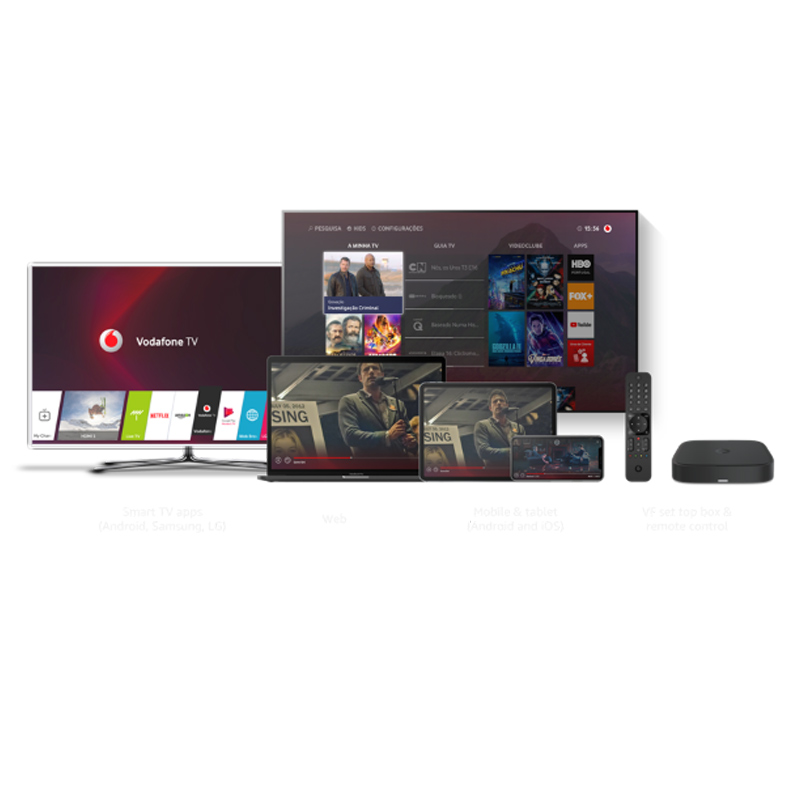
    Mumbai: Vodafone’s multi-tenant cloud TV service – Vodafone TV has expanded its footprint in as many as nine countries across the globe. The service’s latest launch in Germany has further bolstered its reach to two million subscribers worldwide.

    Kaltura, the video experience cloud that has strengthened Vodafone TV since its inception in 2014 has announced that its Kaltura TV Platform is set to expand Vodafone TV into new markets.

    The Kaltura-powered service is accessible to users in all of Vodafone’s networks and in Unitymedia’s cable network. The service was launched in Germany in February 2021 and is offered under the brand “GigaTV”. The German launch follows earlier Vodafone TV launches in Hungary and Czech Republic in 2020. The service is also LIVE in Romania, Portugal, Greece, New Zealand, Spain and Italy, bringing the total to nine active Vodafone TV markets today, all powered by Kaltura technology.

    “Seven years ago, we selected Kaltura as our Cloud TV partner because its vision of innovation fits perfectly with ours; together we’ve built a Cloud TV platform that combines the best of OTT and pay-TV into a single service,” said Vodafone group head of video Wolfgang Zeller. “The flexibility, agility and scalability of Kaltura’s future-ready TV Platform is enabling Vodafone TV to reap all the advantages of being a single, cloud-based service available in many markets around the world via a range of network architectures and across devices.”

    The Kaltura TV Platform enables Vodafone operating companies to efficiently and quickly launch Vodafone TV within their countries, said the company, highlighting its single, cloud-based system, upgrades and new features that can be introduced across the global Vodafone TV service in a unified way.

    “We are honored to support Vodafone TV’s expansion into new territories and congratulate Vodafone for most recently going live in Germany, a key Vodafone TV market,” said Kaltura co-founder CEO and chairman Ron Yekutiel. “Vodafone continues to lead the market in creating a multi-country, full-featured Cloud TV solution that we are proud to power with our technology.”

  • Fox beat analyst expectations in fiscal Q2 earning

    Fox beat analyst expectations in fiscal Q2 earning

    MUMBAI– Fox Corporation reported financial results for the three months ended December 31, 2019.

     The Company reported total quarterly revenues of $3.78 bn, a 5 per cent increase from the $3.58 bn of revenues in the prior year quarter. This increase includes affiliate revenue growth of 7 per cent, reflecting growth at both the Television and Cable Network Programming segments, and advertising revenue growth of 1%, which was achieved despite the comparative effect of record political advertising revenues from the mid-term elections at the Company’s owned and operated television stations in the prior year quarter.

    The Company also reported a 32 per cent increase in other revenues, led by growth at the Cable Network Programming segment and higher revenues at the Other, Corporate and Eliminations segment attributable to the operation of the FOX Studios Lot for third parties and the consolidation of Credible Labs Inc.

    Quarterly net income increased to $314 million from the $24 million in the prior year quarter, primarily due to unrealized gains recognized in other, net related to changes in the fair values of the Company’s investments in Roku, Inc. and The Stars Group Inc., partially offset by higher operating, selling, general and administrative and net interest expenses. The increases in selling, general and administrative and net interest expenses primarily reflect higher costs related to FOX operating as a standalone public company following the Distribution.

    Quarterly net income attributable to Fox Corporation stockholders increased to $300 million ($0.48 per share) compared to $8 million ($0.01 per share) in the prior year quarter. Quarterly Adjusted EBITDA2 of $261 million was lower than the prior year quarter, primarily due to lower contributions at the Television segment. Adjusted net income attributable to Fox Corporation stockholders3 was $64 million ($0.10 per share), lower than the $268 million ($0.43 per share) adjusted result in the prior year quarter.

    Commenting on the results, Executive Chairman and Chief Executive Officer Lachlan Murdoch said: “Our results reaffirm that Fox Corporation is delivering on the operational and financial objectives that we established less than twelve months ago. Our brands are exhibiting strength in a competitive marketplace and delivering healthy top-line growth as we continue to invest strategically to expand the reach of our portfolio and further diversify our revenue streams. Meanwhile, we are taking a balanced approach to capital allocation, including the return of $500 million to shareholders in the form of share repurchases since our last earnings release. Coming off an incredibly successful Super Bowl LIV and with the buildup to the November Presidential Election ahead of us, we look forward to continuing our momentum through calendar 2020.”

  • Star India impacts 21st Century Fox Q1-17 numbers

    Star India impacts 21st Century Fox Q1-17 numbers

    BENGALURU: Rupert Murdoch’s Twenty-First Century Fox Inc. (21st Century Fox) reported 7.1 per cent year-on-year (y-o-y) growth in adjusted total revenue (revenue) for its first quarter ended 30 September 2016 (Q1-17, current quarter). Twenty-First Century Fox reported consolidated revenue of $6,506 million in the current quarter as compared to $6,077 million in the corresponding year-ago quarter.

    This revenue growth reflects increase in affiliate fee revenue which was primarily attributable to higher average rates per subscriber across most channels, and the increase in content revenue was led by higher subscription video-on demand (SVOD) revenue from television productions says the company.

    The company’s Operating Income before Depreciation and Amortization (OIBDA) increased 16.7 percent in Q1-17 to $1,791 million from $1,535 million in Q1-16.

    Twenty-First Century has three segments – Cable Network Programming, Television and Filmed Entertainment.

    Cable Network Programming

    Cable Network Programming revenue in the current quarter increased 10 percent y-o-y in the current quarter to $3,810 million from $3,464 million. The segment’s Operating Income before Depreciation and Amortization (OIBDA)increased six per cent y-o-y to $1,384 million from $1,306 million.

    Cable Network Programming has three sub-segments – Affiliate Fees; Advertising; ‘Content and Other’.

    Star India’s contribution

    Twenty-First Century Fox says that International affiliate fee revenue from its segment Cable Network Programming increased as a result of 16 per cent local currency growth, led by additional subscribers, higher rates and new channels in Latin America and Europe at Fox Networks Group International (FNGI) and increases at Star India, partially offset by the adverse impact of the strengthening of the U.S. dollar against local currencies. For Q1-17, international advertising revenue increased as a result of 11 per cent local currency growth, led by the broadcast of the Rio Olympics in fiscal 2017 at FNGI and Star India and higher volume and pricing at Star India’s general entertainment and sports channels, partially offset by the adverse impact of the strengthening of the US dollar against local currencies.

    “Star India’s advertising revenues returned to double digit year-over-year growth on a constant currency basis and we continue to see exceptional growth of our mobile video platform Hotstar,” said James Murdoch during a earnings call on the latest earnings. “Between June and October, average watch time doubled on the platform and minutes viewed is currently more than double, all the mainstream competitors combined and more than 10X the watch time of Netflix, which launched in India earlier this year.”

    The increase in international content and other revenues Q1-17, as compared to the corresponding period of fiscal 2016, was primarily due to higher network and syndication sales in Latin America and Europe at FNGI.

    International channels OIBDA decreased seven per cent, as compared to the corresponding period of fiscal 2016, primarily due to the local currency revenue increases noted above being more than offset by higher expenses an the adverse impact of the strengthening of the US dollar against local currencies. Operating expenses increased by approximately $110 million, for Q1-17, as compared Q1-16, primarily due to the broadcast of the Rio Olympics in fiscal 2017 and increased sports programming rights amortization, including soccer rights at FNGI and cricket rights at Star India.

    James Murdoch responded to a question during the investor call about the IPL rights and other sports properties that the Star Network is developing in India by saying: “..on the IPL, I think it is well known that there’s a – it’s well known that it’s very unclear when those rights will come to market. There has been a delay in that process. But I would say, look with respect to the Indian business we obviously look at different rights packages as they come up, we have really grown the breadth of that business in terms of sports with BCCI domestic cricket contract as well as the growth in Kabbadi and the Indian Super League, so it is really a broad business there and new rights come up where we always will have a look at. There is nothing at this point I can see in the outcome of those things that would deter it from the medium term target that we have laid out for profit growth at Star which were pacing towards pretty well, so we feel confident about that.”

    Domestic (US) Channels

    For Q1-17, Cable Network Programming’s domestic affiliate fee revenue increased primarily due to higher average rates per subscriber led by the

    Regional Sports Networks (RSNs), FX Networks and Fox News Channel (Fox News) partially offset by lower average subscribers.

    For Q1-7, domestic advertising revenue increased primarily due to higher pricing and ratings at Fox News. The increase in domestic content and other revenues for the Q1-17, as compared to the corresponding period of fiscal
    2016, was primarily due to the effect of the acquisition of the NGS Media Business.

    Domestic channels OIBDA increased nine per cent, as compared to the corresponding period of fiscal 2016, primarily due to the revenue increases noted above partially offset by higher expenses which were due to primarily due to the acquisition of the NGS Media Business and higher programming costs, including increased Major League Baseball(MLB) rights amortization at the RSNs and higher entertainment programming amortization at FX Networks.

    Television

    For Q1-17, revenues at the Television segment remained relatively constant, as compared Q1-16 (down one per cent y-o-y in Q1-17 at $1,038 million from $1,049 million), primarily due to higher affiliate fee and content revenues offset by lower advertising revenue. Affiliate fee revenue increased 18 per cent in Q1-17, as compared
    Q1-16, as a result of higher retransmission consent rates. Content and other revenues increased 55 per cent for Q1-17 as compared to Q1-16, primarily as a result of higher SVOD revenue at FOX.

    Television Advertising revenue decreased 11 per cent in Q1-7, as compared to Q1-16, primarily due to lower local advertising resulting from the broadcast of the Rio Olympics on a competitor network, the absence of the Emmy Awards and the Fédération Internationale de Football Association (FIFA) Women’s World Cup events and lower general entertainment ratings at FOX. Partially offsetting these decreases was higher political advertising revenue primarily related to the 2016 presidential election in the US.

    Television segment OIBDA in Q1-7 decreased 2.7 per cent y-o-y to $191 million from $196 million.

    Filmed Entertainment

    Filmed Entertainment revenues increased 6.8 per cent in Q1-17 as compared to Q2-16 to $1,907 million from $1,785 million primarily due to higher SVOD revenue from television productions, led by the licensing of Homeland to Hulu, and higher worldwide theatrical revenue partially offset by lower home entertainment revenue from motion picture productions. For Q1-17, revenues included the worldwide theatrical performance of Ice Age: Collision Course and Independence Day: Resurgence, *as compared to Q1-16, which included the worldwide theatrical releases of Maze Runner: The Scorch Trials and Fantastic Four and the home entertainment release of *Home*.

    In Q1-15, segment OIBDA at the Filmed Entertainment segment more than double (increased $162 million by 2.09 times) to $311 million from $149 million due to the revenue increases noted above and lower expenses of $40 million, or two per cent, as compared to Q1-16. Operating expenses decreased by approximately $20 million for the three months ended September 30, 2016, as compared to the corresponding period of fiscal 2016, primarily due to lower marketing costs due to the mix of theatrical and home entertainment releases in the current quarter compared to the prior year partially offset by higher production amortization and participation costs related to television productions.

    Company speak

    Commenting on the results, Century Fox executive chairmen Rupert and Lachlan Murdoch said, “We delivered a strong quarter, growing our earnings by double digits on solid revenue gains. Whether it was Fox News rating # in basic cable, the 27 primetime Emmy Awards between FX Networks and FOX Broadcasting, producing three of the top five
    scripted shows on television, or our robust international growth, we demonstrated strong operational momentum across our global businesses.”

  • Star India impacts 21st Century Fox Q1-17 numbers

    Star India impacts 21st Century Fox Q1-17 numbers

    BENGALURU: Rupert Murdoch’s Twenty-First Century Fox Inc. (21st Century Fox) reported 7.1 per cent year-on-year (y-o-y) growth in adjusted total revenue (revenue) for its first quarter ended 30 September 2016 (Q1-17, current quarter). Twenty-First Century Fox reported consolidated revenue of $6,506 million in the current quarter as compared to $6,077 million in the corresponding year-ago quarter.

    This revenue growth reflects increase in affiliate fee revenue which was primarily attributable to higher average rates per subscriber across most channels, and the increase in content revenue was led by higher subscription video-on demand (SVOD) revenue from television productions says the company.

    The company’s Operating Income before Depreciation and Amortization (OIBDA) increased 16.7 percent in Q1-17 to $1,791 million from $1,535 million in Q1-16.

    Twenty-First Century has three segments – Cable Network Programming, Television and Filmed Entertainment.

    Cable Network Programming

    Cable Network Programming revenue in the current quarter increased 10 percent y-o-y in the current quarter to $3,810 million from $3,464 million. The segment’s Operating Income before Depreciation and Amortization (OIBDA)increased six per cent y-o-y to $1,384 million from $1,306 million.

    Cable Network Programming has three sub-segments – Affiliate Fees; Advertising; ‘Content and Other’.

    Star India’s contribution

    Twenty-First Century Fox says that International affiliate fee revenue from its segment Cable Network Programming increased as a result of 16 per cent local currency growth, led by additional subscribers, higher rates and new channels in Latin America and Europe at Fox Networks Group International (FNGI) and increases at Star India, partially offset by the adverse impact of the strengthening of the U.S. dollar against local currencies. For Q1-17, international advertising revenue increased as a result of 11 per cent local currency growth, led by the broadcast of the Rio Olympics in fiscal 2017 at FNGI and Star India and higher volume and pricing at Star India’s general entertainment and sports channels, partially offset by the adverse impact of the strengthening of the US dollar against local currencies.

    “Star India’s advertising revenues returned to double digit year-over-year growth on a constant currency basis and we continue to see exceptional growth of our mobile video platform Hotstar,” said James Murdoch during a earnings call on the latest earnings. “Between June and October, average watch time doubled on the platform and minutes viewed is currently more than double, all the mainstream competitors combined and more than 10X the watch time of Netflix, which launched in India earlier this year.”

    The increase in international content and other revenues Q1-17, as compared to the corresponding period of fiscal 2016, was primarily due to higher network and syndication sales in Latin America and Europe at FNGI.

    International channels OIBDA decreased seven per cent, as compared to the corresponding period of fiscal 2016, primarily due to the local currency revenue increases noted above being more than offset by higher expenses an the adverse impact of the strengthening of the US dollar against local currencies. Operating expenses increased by approximately $110 million, for Q1-17, as compared Q1-16, primarily due to the broadcast of the Rio Olympics in fiscal 2017 and increased sports programming rights amortization, including soccer rights at FNGI and cricket rights at Star India.

    James Murdoch responded to a question during the investor call about the IPL rights and other sports properties that the Star Network is developing in India by saying: “..on the IPL, I think it is well known that there’s a – it’s well known that it’s very unclear when those rights will come to market. There has been a delay in that process. But I would say, look with respect to the Indian business we obviously look at different rights packages as they come up, we have really grown the breadth of that business in terms of sports with BCCI domestic cricket contract as well as the growth in Kabbadi and the Indian Super League, so it is really a broad business there and new rights come up where we always will have a look at. There is nothing at this point I can see in the outcome of those things that would deter it from the medium term target that we have laid out for profit growth at Star which were pacing towards pretty well, so we feel confident about that.”

    Domestic (US) Channels

    For Q1-17, Cable Network Programming’s domestic affiliate fee revenue increased primarily due to higher average rates per subscriber led by the

    Regional Sports Networks (RSNs), FX Networks and Fox News Channel (Fox News) partially offset by lower average subscribers.

    For Q1-7, domestic advertising revenue increased primarily due to higher pricing and ratings at Fox News. The increase in domestic content and other revenues for the Q1-17, as compared to the corresponding period of fiscal
    2016, was primarily due to the effect of the acquisition of the NGS Media Business.

    Domestic channels OIBDA increased nine per cent, as compared to the corresponding period of fiscal 2016, primarily due to the revenue increases noted above partially offset by higher expenses which were due to primarily due to the acquisition of the NGS Media Business and higher programming costs, including increased Major League Baseball(MLB) rights amortization at the RSNs and higher entertainment programming amortization at FX Networks.

    Television

    For Q1-17, revenues at the Television segment remained relatively constant, as compared Q1-16 (down one per cent y-o-y in Q1-17 at $1,038 million from $1,049 million), primarily due to higher affiliate fee and content revenues offset by lower advertising revenue. Affiliate fee revenue increased 18 per cent in Q1-17, as compared
    Q1-16, as a result of higher retransmission consent rates. Content and other revenues increased 55 per cent for Q1-17 as compared to Q1-16, primarily as a result of higher SVOD revenue at FOX.

    Television Advertising revenue decreased 11 per cent in Q1-7, as compared to Q1-16, primarily due to lower local advertising resulting from the broadcast of the Rio Olympics on a competitor network, the absence of the Emmy Awards and the Fédération Internationale de Football Association (FIFA) Women’s World Cup events and lower general entertainment ratings at FOX. Partially offsetting these decreases was higher political advertising revenue primarily related to the 2016 presidential election in the US.

    Television segment OIBDA in Q1-7 decreased 2.7 per cent y-o-y to $191 million from $196 million.

    Filmed Entertainment

    Filmed Entertainment revenues increased 6.8 per cent in Q1-17 as compared to Q2-16 to $1,907 million from $1,785 million primarily due to higher SVOD revenue from television productions, led by the licensing of Homeland to Hulu, and higher worldwide theatrical revenue partially offset by lower home entertainment revenue from motion picture productions. For Q1-17, revenues included the worldwide theatrical performance of Ice Age: Collision Course and Independence Day: Resurgence, *as compared to Q1-16, which included the worldwide theatrical releases of Maze Runner: The Scorch Trials and Fantastic Four and the home entertainment release of *Home*.

    In Q1-15, segment OIBDA at the Filmed Entertainment segment more than double (increased $162 million by 2.09 times) to $311 million from $149 million due to the revenue increases noted above and lower expenses of $40 million, or two per cent, as compared to Q1-16. Operating expenses decreased by approximately $20 million for the three months ended September 30, 2016, as compared to the corresponding period of fiscal 2016, primarily due to lower marketing costs due to the mix of theatrical and home entertainment releases in the current quarter compared to the prior year partially offset by higher production amortization and participation costs related to television productions.

    Company speak

    Commenting on the results, Century Fox executive chairmen Rupert and Lachlan Murdoch said, “We delivered a strong quarter, growing our earnings by double digits on solid revenue gains. Whether it was Fox News rating # in basic cable, the 27 primetime Emmy Awards between FX Networks and FOX Broadcasting, producing three of the top five
    scripted shows on television, or our robust international growth, we demonstrated strong operational momentum across our global businesses.”

  • TDSAT asks Star to show cause on Rudhrapur Cable Network’s contempt proceeding

    TDSAT asks Star to show cause on Rudhrapur Cable Network’s contempt proceeding

    NEW DELHI: Notice has been issued to Star India to show cause why contempt proceedings should not be initiated against it for not complying with the Telecom Disputes Settlement and Arbitration Tribunal (TDSAT) order of 18 August relating to Rudhrapur Cable Network.


    Star India was asked to respond within a week with TDSAT listing the matter for 7 October. 


    The Cable Network had come to the Tribunal seeking a direction to Star India for supply of its signals to the petitioner for retransmission in the areas of Rudrapur, Gadarpur, Kichha and rural areas.


    The Tribunal after arguments had directed that the parties should enter into an interconnect agreement without any delay applicable till 31 December, 2015. The areas under the interconnect agreement would be exactly same as the areas of the STN Television Network in Rudrapur, the Tribunal had said and added that following the execution of the agreement, the decoder boxes will be issued simultaneously to the petitioner for all the channels. 


    It had been argued by Star at that time that areas under question are in the third phase of DAS notification, hence as currently these areas are in the analogue mode and they are due to come under the DAS regime after 31 December, 2015. Star also declined to give signals to the petitioner on ground that STN has objected to any supply of signals to the petitioner on the ground that it owed large sum of money to STN. 

  • CBS revenue up 2 per cent for Q3-2014, operating income down 2.4 per cent

    CBS revenue up 2 per cent for Q3-2014, operating income down 2.4 per cent

    BENGALURU: CBS Corporation (CBS) reported a 2 per cent growth in revenue in Q3-2014 at $  3367 million from $  3302 million reported in the year ago quarter. However, 9M-2014 revenue fell 3 per cent to $ 10125 million from $ 10434 million in 9M-2013.


    The company’s operating income before depreciation and amortisation (OIBDA) in Q3-2014 at $ 814 million was 2.4 per cent less than the $ 834 million in Q3-2013. 9M-2014 at $ 2477 million was 2 per cent lower than the $  2527 million in 9M-2013.


    Entertainment, Cable Networks, Publishing; and Local Broadcasting segments contribute to CBS numbers. Poor OIBDA results from CBS Entertainment segment which contributes a major portion to revenue and OIBDA, resulted in lower operating income.


    Segment results


    Entertainment


    CBS Entertainment segment reported revenue growth of 1.4 per cent in Q3-2014 to $ 1911 million from $ 1884 million in Q3-2013. However, for 9M-2014, revenue at $ 6049 million fell 5.9 per cent from $ 6431 million in 9M-2013.


    Entertainment segment’s OIBDA fell sharply by 22.3 per cent q-o-q to $ 335 million in Q3-2014 from $ 431 million.  OIBDA during 9M-2014 fell 12.8 per cent to $ 1168 million from $ 1340 million in 9M-2013.


    Cable Networks


    This segment reported 4.7 per cent growth in revenue to $ 624 million in Q3-2014 from $ 596 million in the corresponding year ago quarter. Revenue during HY-2014 at $ 1677 million was 5.3 per cent more than the $ 1592 million in 9M-2013.


    OIBDA from this segment rose 4.2 per cent to $ 272 million in Q3-2014 from $ 261 million in Q3-2013. During 9M-2014, OIBDA from CBS Cable Network segment rose 7.3 per cent to $ 750 million from $ 699 million.


    Publishing


    CBS Publishing segment saw a 11.2 per cent fall in revenue to $ 199 million in Q3-2014 from $ 224 million in Q3-2013. Revenue from this segment fell 3.6 per cent to $ 563 million in 9M-2014 from $ 584 million in 9M-2013.


    OIBDA for publishing segment remained flat at $ 43 million in Q3-2014 and Q3-2013. For 9M-2014, OIBDA was 5.3 per cent more at $ 80 million as compared to the $ 76 million in 9M-2013.


    Local Broadcasting


    Revenue from this segment increased 6.1 per cent to $ 680 million in Q3-2014 from $ 641 million in Q3-2013. Revenue from local broadcasting in 9M-2014 fell by a 0.3 per cent to $ 1971 million from $ 1977 million in 9M-2013.


    OIBDA for this segment rose 18.2 per cent in Q3-2014 to $ 214 million from $ 181 million in Q3-2013. 9M-2014 OIBDA rose 2.7 per cent to $ 652 million from $ 635 million in 9M-2013.


    Company Quotes


    “CBS continues to succeed on the strength of its tremendous content,” said CBS executive chairman, Sumner Redstone. “Les and his team are optimising the Company for future growth at every turn, and I have the utmost confidence in their ability to increasingly drive shareholder value in these dynamic times of great opportunity.”


    “Our third quarter growth reflects the success of our efforts to create and monetize our premium content,” said CBS president and CEO Leslie Moonves. “I am particularly pleased with the CBS Television Network’s encouraging start to the fall season, which has reloaded our owned content pipeline in a big way with Madam Secretary, Scorpion, and NCIS: New Orleans, along with new owned hits from Showtime and The CW. Our local businesses had a strong quarter as well, including increasing political spending and higher retransmission consent fees. Also during the quarter, we renegotiated new station affiliate contracts with LIN Media, Tribune Broadcasting, Media General, and Gray Television with more to come later this year, bringing us that much closer toward our stated goal of $ 2 billion in retransmission consent and reverse compensation revenues by 2020. We are also capitalizing on growing consumer demand by expanding into emerging platforms. This includes the recent launch of CBS All Access, which allows our “super fans” to watch CBS wherever they are. At the same time, we are returning more value to shareholders than ever before, and we continue to have great confidence in our future as a content company in this ever-expanding marketplace.”


    Company speak


    Revenues of $ 3.37 billion for the third quarter of 2014 increased 2 per cent from $ 3.30 billion for the same quarter a year ago. This growth was driven by a 4 per cent increase in content licensing and distribution revenues from higher international and domestic licensing of television programming.


    Advertising revenues grew 2 per cent, driven by the broadcast of Thursday Night Football on CBS and political revenues associated with midterm elections. Affiliate and subscription fees were even with the third quarter of 2013, because of a significant pay-per-view boxing event a year ago that affected the revenue stream comparison by six percentage points. Cable affiliate fees, retransmission revenues, and fees from CBS Television Network affiliated stations all continued to grow in this year’s third quarter.


    Adjusted OIBDA of $ 814 million was down 2 per cent as a result of an increased investment in television programming, mainly associated with new contracts with the National Football League (“NFL”). The investment in NFL programming contributed to the successful launch of three new CBS-owned television series in the 2014/2015 television broadcast season, which all generated higher ratings in their respective time periods compared with the prior year.


    Adjusted net earnings from continuing operations were $ 400 million for the third quarter of 2014 compared with net earnings from continuing operations of $ 431 million for the same prior-year period. The decline primarily reflects the higher programming investment as well as losses of $ 23 million ($ .04 per diluted share) associated with changes in foreign exchange rates. Adjusted net earnings from continuing operations per diluted share for the third quarter of 2014 grew 6 per cent, to $ .74, from diluted net earnings per share from continuing operations of $ .70 for the same quarter in 2013.


    The increase was driven by lower weighted average shares outstanding from the split-off of CBS Outdoor Americas Inc. (“Outdoor Americas”) on 16 July 2014, as well as the Company’s ongoing share repurchase programme.


    Operating income was $ 668 million for the third quarter of 2014 compared with $ 764 million for the same prior-year period. Operating income for the third quarter of 2014 included restructuring charges of $ 26 million and a noncash impairment charge of $ 52 million in connection with a radio station swap. Net earnings from continuing operations were $ 72 million for this year’s third quarter compared with $ 431 million for the same quarter a year ago. In addition to the items above, net earnings for the third quarter of 2014 included a loss on early extinguishment of debt of $ 219 million, net of tax ($ .40 per diluted share), associated with the Company’s debt refinancing and a discrete tax item of $19 million. Adjusted results exclude the impact from all of these non-comparable items.


    Net earnings per diluted share of $3.03 for the third quarter of 2014 include a gain of $1.56 billion recognised in connection with the split-off of Outdoor Americas.


    Click here to read the financial release


    Click here to read the consolidated results 

  • From Russia with love

    From Russia with love

    MUMBAI: As the second largest television market in the world which is only expanding with each passing year, India has witnessed a steady inflow of international channels in recent times.

    As purveyor of all things TV, indiantelevision.com, today kicks-off a brand new series which profiles all such channels aiming to bring a more global, all-round perspective to Indian drawing rooms.

    We debut with the Russian news channel Russia Today (RT), which arrived on Indian shores in 2009, courtesy a deal with GlobeCast.

    The first channel to report live from the North Pole, RT’s maiden broadcast was on 10 December 2005. Two years later, its Arabic counterpart Rusiya Al-Yaum was launched. Following suit were: RT en Espanol (Spanish) in 2009, RT America in 2010 and RT Documentary in 2011.

    Having made its mark internationally, RT proceeded to test Indian waters in 2009 as part of its endeavour to expand its Asian footprint.

    Back then, it was available for viewing in around seven million homes. Today, it boasts a reach of 60 million subscribers with a viewership of about 300 million.

    Three satellites carry RT for viewers in India: Measat 3a, Insat 4B and AsiaSat 3S. Denizens of Mumbai, Delhi, Kolkata, Bangalore and Hyderabad can watch RT on their cable network and major satellite platforms across the rest of the country.
        
    On the day it was launched, RT was available for viewing only on WWIL, Dish Hits, InCable, 7 Star (cable operators), Big TV and Sun Direct DTH platforms.

    Today, it is also available on InCable Net, Hathway (cable operators), Dish TV, DD Direct Plus and Airtel DTH.

    However, it is highly unlikely that RT is making any money out of its distribution in the country. In fact it is highly probably that it is digging deep into its pockets to pay carriage fees to the cable and DTH operators. “In the case of DD Direct Plus it could be paying anywhere between Rs 1.5 to Rs 2.5 crore as carriage fees per year while on private DTH operators it could go up to Rs 5 crore per annum,” says a senior media consultant.

    With a tagline that reads ‘Question More’, who does RT cater to in India? While the country is home to a sizeable Russian population – either expats or regular tourists, RT claims it does not necessarily cater to the Russian diaspora but to ‘anybody who can speak English’.

    What do viewers get to watch on RT? Says RT MD Alexey Nikolov: “RT covers major international stories and significant regional developments in politics, society and finance for viewers of all backgrounds and nationalities.”

    Regular RT viewers observe that the channel discusses all major political issues and current affairs, albeit with a Russian perspective. While the news caters to a global audience, there’s some amount of India-specific content too. Of late, the coverage has included the Delhi gang rape, India being awarded permanent observer status in the Arctic Council, defence contracts with Russia, Indo-China military cooperation and potential expansion of major foreign multi-brand retailers in India.

    More specifically, some of the popular shows on RT include ‘Cross Talk’, ‘The Kieser Report’, ‘Breaking the Set’, ‘The Big Picture’ and ‘Larry King Live’ hosted by Larry King who switched from CNN to RT with this show. “What makes RT stand out among other news channels is that we cover stories that most other media outlets either ignore or dismiss, or on which, they provide a one-sided take,” exults Nikolov.

    As things stand, RT does not have any bureau in India to cover news from here. While it works with a number of stringers across the country, when asked, it was unwilling to share the exact number with indiantelevision.com.

    However, in April this year, RT did launch their own video news agency named Ruptly, which works with various stringers and videographers across the globe. Earlier on, the channel also had a dedicated correspondent named Priya Sridhar, who would report about happenings in India. She has now moved on.

    A huge list of hotels show RT on their screens, including the Taj Mahal, The Leela, Hyatt, Marriot, The Lalit and others. Hotels are keen to carry international channels because of the diverse visitors they attract from foreign countries. Although it is available in HD (high definition), as of now, it is limited to the SD format.

    On Airtel DTH (Direct to Home), RT is available a la carte for Rs 5 while on Big TV, the rate is Rs 20. Sun DTH and Dish TV air the channel only in packs, along with other English news channels, while DD Direct Plus is the only channel which offers it free.

  • TDSAT directs Media Pro to restore signals to Lucknow MSO

    TDSAT directs Media Pro to restore signals to Lucknow MSO

    NEW DELHI: In an order that may help multi-system operators whose applications for DAS licence are pending with the government, the Telecom Disputes Settlement and Appellate Tribunal (TDSAT) has directed Media Pro Enterprises to restore television signals to Lucknow-9 Cable Network of Lucknow as an interim measure.

    The Lucknow-based operator had said that its application for licence under Digital Access System (DAS) has been pending before the Information and Broadcasting Ministry for several months.

    Chairperson Justice Aftab Alam and member Kuldeep Singh also directed the Lucknow network to file an affidavit to the effect that its application filed in the Ministry for grant of license under Rule 11 C of the Cable Television Networks Rules, 1994 was not defective but was complete and in order, in all respects. It would also file a copy of the application in a sealed cover.

    Meanwhile, the Lucknow-based operator would pay to content aggregator Media Pro all dues following a reconciliation of accounts and further to file an undertaking before this Tribunal that it would transmit or retransmit programmes of any channels following the provisions of section 4 A of the Cable Television Networks (Regulation) Act, 1995. This undertaking has already been filed.

    Media Pro counsel Tejveer Singh Bhatia had told the Tribunal that his client could not supply the signals as it was prohibited from doing so under clause 3(2) of the Telecommunication (Broadcasting and Cable Services) Interconnection (Digital Addressable Television Systems) Regulations, 2012 ‘for the simple reason that the Petitioner did not have a license under Regulation 11 C of the Cable Television Networks Rules, 1994.’

    But Counsel for the operator Vikram Singh said as there was inordinate delay in the grant of license, the operator had approached the Lucknow Bench of the Allahabad High Court which had disposed off the Petition by order dated 2 June 2013 directing the concerned authority to rid the application for license within 15 days from the date of receipt of the certified copy of that order. Counsel also stated that the date stipulated in the High Court’s order has expired on 2 July 2013 but it has so far not received any communication in regard to its application for the license.

  • Cas paves way for consolidation

    Cas paves way for consolidation

    MUMBAI: The complexion of the cable TV industry is fast changing. Cas (conditional access system) is paving the way for consolidation as cable operators need to find money to subsidise set-top boxes (STBs), set up a digital system, and build a proper service network.

    The might of the three big multi-system operators (MSOs) is prevailing with the weaker players tumbling down under in the markets opened for Cas barely a month ago. Delhi has already gone that way with Home Cable Network, Spectranet, Satellite Channels, Sanjay Cable Network and Star Broadband Services aligning with Hinduja-owned Incablenet, Hathway Cable & Datacom or Zee Group’s Wire & Wireless India Ltd (WWIL).

    Soon Mumbai’s Cas subscribers will also get shared between these three MSOs. Raja Nadar, an independent cable operator, says his JPR Network will surrender its independent status and partner with an MSO by the end of this month. Though he has seeded 5,000 STBs, he is struggling to fund new arrivals and is losing subscribers to WWIL. “There is no business model left for us. We can’t raise debt and even if we somehow do, we can’t recover revenues large enough from our digital subscribers to work out a repayment schedule,” he says.

    Cas in Delhi and Mumbai is becoming a three-MSO battle. “That’s the record for everybody to see. That’s the reality. There were 14 independent headends in Delhi who had shown interest to operate but not one could launch. In Mumbai, it is the same story,” says the head of a leading MSO on request of anonymity.

    Making the ground tough is the fact that digitalisation is coming cheap in India. Cable operators are offering a subsidy of Rs 1000-1500 per STB while average revenue per user (ARPU) is set to fall with the Telecom Regulatory Authority of India (Trai) capping a la carte pay channels at Rs 5. The revenue share is also regulated with broadcasters taking away 45 per cent while 30 per cent stays with the MSOs and 25 per cent with the local cable operators.

    “Digital cable is a game for those who have deep pockets. Cable operators will not only have to subsidise the boxes but the service as well,” says WWIL managing director Jagjit Singh Kohli.

    If Kolkata has not seen enough of bulldozing, it is because there is not much of demand for STBs. But Sristi has crumbled down with WWIL and Manthan sharing the spoils. Cablecom is tottering but has survived.

    As STBs pick up in Kolkata, Incablenet and Hathway will look at entering the market. This will pave the way for further consolidation as penetration will mean financing more boxes. Manthan has already raised a debt of Rs 100 million from individuals and is looking at another Rs 200 million as way of bank financing.

    The need for pumping in big money will be larger as Cas spreads. In the initial phase, Hathway is arranging for a Rs 1 billion debt while WWIL wants to pump in Rs 7.14 billion over two years with a plan also to acquire last mile of cable operators.

    What can be disturbing is that after the initial euphoria, the demand for boxes seems to be already slowing when we have just crossed 400000 in a Cas market which has over 1.5 million cable and satellite homes. “If this trend is true, it should be a matter of concern for all the stakeholders except the local cable operators,” says Zee Turner CEO Arun Poddar. In the Cas areas, local cable operators are allowed to pocket the entire Rs 77 they collect from subscribers for the free-to-air (FTA) channels.

    With not as many boxes moving, broadcasters are particularly worried as they were forced to drop the rates of their pay channels. The sector regulator has chalked out a policy that makes business sense only on high volumes. “We will need higher volumes to make up for the pricing policy prescribed by Trai. Besides, the boxes are not yet entirely synchronised with the subscriber management system that would register what channels are subscribed by the consumers. The whole project will depend on how fast and effective SMS gets activised,” says Poddar.

    A surge in demand for the boxes is expected before the ICC World Cup starts in March. Besides, marketing campaigns will have to be launched promoting digitalisation. “MSOs will have to start marketing the boxes more aggressively. Broadcasters can also launch joint campaigns with them,” says SET Discovery president Anuj Gandhi.

    Nobody knows how the market will finally emerge. But the trend is clear: smaller MSOs in the Cas areas will find it difficult to subsidise the boxes and will need to take support of the bigger ones.

    “Consolidation can start with Cas and spread out in other areas. In many non Cas places, we are also seeing consolidation because of fear of losing subscribers to direct-to-home operators,” says the head of a MSO.

  • MSOs on prowl, Incablenet to support Home Cable in Delhi

    MSOs on prowl, Incablenet to support Home Cable in Delhi

    MUMBAI: Conditional access system (Cas) is forcing multi-system operators (MSOs) to strike alliances as they take up the challenge of expanding their digital subscribers.

    The latest to join hands is Incablenet and Vikki Choudhry’s Home Cable Network. Incablenet will be supplying its feed and digital set-top boxes (STBs) to the subscribers of Home Cable Network in South Delhi.

    “We have entered into a strategic alliance with Incablenet. They will be providing STBs to our subscribers. For those consumers who want to take our advanced boxes which are priced at Rs 2150, we will be providing them our systems. Others will have an option to take the Incablenet STBs,” says Choudhry.

    Incablenet uses a different encryption system and its boxes will not support the feed from Home Cable Network. “We have agreed to share each others fibre and infrastructure as we go ahead,” says Choudhry.

    Incablenet offers subscribers digital STBs at Rs 1500 (plus taxes) while cable TV subscription is free for six months on three bouquet packages. Home Cable, on the other hand, has an outright purchase scheme with the STB priced at Rs 2150. It offers 10 pay channels on a monthly subscription fee of Rs 45 while the 60-channel package is available for Rs 225.

    “Smaller MSOs in the Cas areas will find it difficult to subsidise the boxes and will take support of the bigger ones. Besides, they do not have enough boxes and know that any delay will mean that their subscribers will go away to other available options,” says an analyst who tracks the cable industry.

    Earlier, Wire & Wireless India Ltd (WWIL) had expanded its footprint in Delhi by acquiring a 51 per cent stake in Satellite Channels and signing up with Spectranet and Sanjay Cable Network for supplying digital services.

    In Kolkata, Sristi Broadband takes the feed from Manthan Cable Network. A group of operators of Sristi Cable TV are using the feed from Mathan and Zee’s Indian Cable Net as it could not make arrangements for STBs.

    “Sristi Broadband and a group of operators from Sristi Cable are taking feed from us,” says Manthan director Gurmeet Singh. Manthan has recently introduced a package for the second TV set where subscribers will have to pay Rs 90 a month for 50 pay channels. Manthan’s STB costs Rs 2599.