Tag: C.I.D

  • The making of ‘Junior’ stars

    The making of ‘Junior’ stars

    It was a countdown that began in the year 2004. Armed with a huge promotional blitz, Sony Entertainment Television (SET) launched its ‘big one’: an ambitious project that threatened to challenge the viewing habits of the telly loyals.

    Be it a lack of hit since Bade Achhe Lagte Hain, or the obvious threat posed by the ‘youth or women oriented’ focus of several other general entertainment channels (GECs), SET has a huge stake with the desi version of FremantleMedia’s Pop Idol.

    The mega budget Indian Idol is SET’s bid to fortify its youth viewer base. Multi Screen Media (MSM) calls this talent hunt a power brand created by Sony in the past 15 years, which stands above a few other powerful brands created by the channel including CID, Aahat, Boogie Woogie among others.

    Indian Idol so far has produced six successful seasons. Worried of the show reaching a fatigue level, the channel introduced a sub-franchise targeting kids with Indian Idol Junior in 2013. On the back of a successful first season, Sony has come back with the second edition this year.

    Indian Idol Junior2 currently showcasing the audition round, will see the ‘juniors’ paying tribute to the maestros of Indian music at the season’s grand launch. What’s more, the talent quotient has gone a notch higher with the inclusion of actor Sonakshi Sinha as one of the judges.

    A look at the journey

    While all looks glamorous when one watches the show on TV, producing half an hour to one hour of reality show is no child’s play.

    At any given time, more than 100-200 people work to make a reality show. The production team and the crew are as important as the talent and really make the show happen. When a fiction show is penned, one has to simply write all the relevant beats to that week’s tale, but with reality programmes, things are a bit different.

    Let’s take a look at all the madness that goes backstage while making a show like Indian Idol Junior2.

    For FremantleMedia India managing director Anupama Mandloi the blueprint of these formats is simple, uncomplicated, clean and universally adaptable. A reality show like Indian Idol while is relevant to any culture across the globe, it also has the ability to absorb the local DNA, thus becoming a true representation of the region they are produced in.

    “The audience enjoys the predictability of the journey, the range of talent, as well as the fresh and exclusive energy each season brings. Characters and storytelling define any good show. These shows are all about creating strong, memorable, aspirational and yet relatable characters whose journey and endgame is contained within a finite number of weeks,” she explains.

    Considering the basic blueprint remains the same, making any new edition look fresh is the biggest challenge. “We look at various elements: right from the talent to choosing areas for getting fresh, new voices to the panel of judges depicting their camaraderie and journey through the show. We also look at scheduling, how to differentiate various phases of the show as well as the larger story that we want to convey through the programme. These shows are all representative of current times and there is a definite change in narrative that comes through the contestants on the show,” Mandloi explains.

    She believes that when they first started the journey of reality shows, it gave audiences a sense of opportunity, scale and transformation. Over the years, it has reflected the pathos of underprivileged lives, their acceptance of destiny and the rooted middle class values.

    But, the narrative now is of achievers, children wanting the best and working towards it as well as a growing sense of community through technology. “It is about expecting the best and taking destiny into their hands. These shows are fascinating in what they throw up as you gather stories from across India,” she adds.

    Content Creation

    For starters, broader and thematic links for hosts is written before hand after a lot of internal discussions. A large part of the script is written on the ground based on situations as they unfold. As per Mandloi, this year the show witnessed the turnout of an unprecedented number of twins.

    She further goes on to say that the writers do not write scripts for judges because that never works. “The judges are articulate and capable of phrasing their thoughts. Scripting for the judges or the kids would make the show fake and we have a fairly purist approach to this aspect of the show. The viewers can tell if a show is over produced,” she asserts.

    There is only one writer who works closely with the creative director, associate creative director and the anchor director. It is all about the brief and how the writer links it with existing social norms and then how he wants the show to resonate. “The idea is to give the show consistency and a sense of purpose. Be it celebration, search, revelation, wish fulfillment,” she explains.

    There was no extensive research for this season, says Mandloi.  But, with a successful first edition, the makers were keen to establish the junior brand with the second season.

    “This season is a celebration of talent rather than a discovery and that is probably what is showing up through all interactions. There was a reflection on elements that worked and those that could have been better and we moved forward with those learnings in place. The top 13 is a true reflection of India from north, south, east and west. The top 13 is a wide range of voices as well as personalities and the talent is fresh and memorable,” she reasons.

    Reality shows are exhausting & relentless

    According to Mandloi, Indian Idol Junior took almost nine intense months of work and the crew usually faces a vacuum once the show gets over. “These shows are exhausting as they are relentless and require dedicated commitment from the team. At FremantleMedia, we are very careful to work with the best in the industry. They take pride in their work and that is always reflected in the quality of the show.”

    For IIJ, the makers had a one year window to find the talent and according to Mandloi that is clearly coming across in the show.

    It was a three months journey for the talent hunt to finally complete the auditions. While a number of children are called through an established network of music schools, institutions and gharaanas, there is also an open audition for which people register and audition.

    Since the show deals with kids, the makers ensure that children come with guardians. Food and water is provided and while the wait can be long, it does not allow entries after 5 pm. Moreover, the crew has contestant managers and their teams as well as a large ground team that helps address any issues that may crop up.

    “We are very careful with children. As far as possible we do try and ensure that the children are treated gently and with care. The entire team is briefed and prepped before the unit hits the road,” she says.

    How do the makers ensure a good turnout for auditions? Says Mandloi, “We can’t really control this beyond a point. In some cities the turnout is fabulous and in some it is sometimes underwhelming but for us the focus is not on the volume as much as it is on the talent. We make sure that a fair opportunity is provided to all those who are present.”

    According to Mandloi, she has been very fortunate with her channel interactions. “There is great faith in the team as well as belief in the format. There is a lot of creative freedom for this reason and the show is eventually a collaboration of creative ideas and execution.”

    Live, Camera & Action

    The show began the actual shoot approximately three months before going on-air.

    The audition phase is an accumulation of shoot footage of over two months which is then sifted through and assembled into episodes. “It is a tough process though now we have very good teams that have understood the process and are very skilled at connecting the dots,” she opines.

    The theatre phase is shot over three days. The concert episodes are shot every Sunday with a live result episode.

    One single episode takes anywhere from three weeks to five hours depending on the nature of the episode. The audition episodes take the longest as there is hours and hours of footage that needs to be culled, assembled and structured into a narrative. The live result takes approximately five hours and the concert episodes take close to three days.

    For all these, the production house has a large set-up with multiple machines and large post teams. A very tight core team drives the show. It hires the technical, creative as well as production teams on project basis. For a show of this size it is usually around 200 people on ground.

    To manage the crowd and ensure enough eyeballs in the studio, a large part of the crowd is sourced through audience co-coordinators. Moreover, there is a floor manager and his team that takes care of audience management as well as all the ground show flow.

    Every season needs to focus on bringing together fresh, exquisite talent that people align themselves with. This alignment dictates how they feel about the judge panel and the judges’ personal graphs within the show.

    For IIJ season2, judges like Vishal Dadlani, Shalmali Kholgade and Salim Merchant were selected for their credibility, their ease with children, ability to connect with viewers, personality and a very strong sense of who they are as opposed to who they are trying to project.

    Host Hussain Kuwajerwala and co-host Asha Negi were selected for their ability to be spontaneous, charming as well as the ability to connect with kids and viewers.

    This season the makers have conceived a set that is unlike any so far in its true 360 degree design. It’s intimate, glamorous and yet very fresh. A wireless cam does a 360 degree revolution around the centre stage. The families, contestants, audience and judges are all seated around the circular stage so that the contestant feels connected to all.

    The contestant performs in a central arena surrounded by graphics and the live band fills the set with its magic. IIJ 2 is being shot with 15 cameras.

    Reality shows costs a bomb

    One cannot deny the fact that reality shows are expensive. The production house is allocated with a budget and it has to work under those tight budgets.

    A media planner believes that though they are high budget shows, it is not in the cost of content. “The focus is to make sets bigger and shiny with more lights.  But, that is not what attracts the audience anyways.”

    According to a planner, it is the celebrity quotient that increases the cost of production.  “If you are working on a budget, you usually have to figure out what level of celebrity you can afford and that decides the costing. While the scale of the show is controllable, it is the demand for a particular celebrity which takes the cost high,” adds the planner.

    The production cost per episode of IIJ season 2 is somewhere between Rs 30-35 lakh.

    Sony, which currently is at the sixth position at the television ratings chart, has high hopes from this season of Indian Idol Junior. While the stage is set for the star performers, whether it will open up the stars for the channel is yet to be seen.   

  • Peel smart Remote app generates 100 billion commands

    Peel smart Remote app generates 100 billion commands

    MUMBAI: Peel, a California-based company funded by e-commerce giant, Alibaba, has announced that its Peel Smart Remote app has generated 100 billion remote commands since its launch three years ago.


    Half of these remote commands have been registered in the last eight months only. Peel has also released a revamped version of its android app, including a customizable remote widget that can appear on a phone’s lock screen without launching the app. Peel is also available as a free app on the iTunes app Store for Apple iOS devices.


    The company recently topped 100 million registered users worldwide, out of which 25 million are in Asia. India has emerged as one of the fastest growing markets for Peel, doubling every six months. The large number of TV viewers give the company unprecedented insights into global viewing habits.


    “Our users have peeled in to 5 billion TV shows since we launched. We currently have viewer data on six shows every second that helps us improve our content discovery features and the overall performance of the app. It also provides us a unique real-time window into the living rooms of millions of households in India and 200 other countries that can help serve content that viewers really want,” said Peel co-founder and chief product officer Bala Krishnan.


    As an example of the insights gained, Peel looked at the top show, the top genre and the top TV brand in four metros across India based on a sampling of the insights gathered from users of the Peel app and platform.


    Even after nearly 1,700 episodes over the last eight years, family entertainer sitcom Taarak Mehta Ka Ooltah Chashmah remains the most popular show in New Delhi, Mumbai and Bangalore, but ranks at number second in Hyderabad, where C.I.D. tops the charts.


    Comedy Night with Kapil grabs the number two spot in Delhi, but is pushed down to number three spot in Mumbai, Hyderabad and Bangalore, with C.I.D. taking up the second position in Mumbai and Bangalore.


    In terms of content genre, Mumbai and Bangalore viewers prefer comedies, followed by dramas and then news. They prefer comedies in New Delhi, too, followed by thrillers, then dramas. While in Hyderabad, news tops the list, followed by sports talk, then consumer programming.


    Among the most popular TV set brands in New Delhi, Mumbai, Hyderabad, and Bangalore, Samsung comes first, followed by Sony and then LG. In contrast, Samsung and LG edge Sony out in the top two spots across TV brand positions among homes in Seoul, Dallas, Barcelona, Cairo and Rio de Janeiro. 


    In addition to being used to control TVs, set-top boxes and other entertainment devices, the Peel Smart Remote app is also optimised to control hundreds of brands of air conditioners and heaters, with more smart home devices planned for the future. “We are already the number one home control app in the world and a major source of entertainment content discovery for our users,” added Krishnan.


    In India, the Peel app comes preloaded on many of the leading smartphones, including the Samsung Galaxy S4, S5 and S6, HTC’s M8 and M9, and models from Karbonn, Celkon, Xolo and Panasonic in India. Peel makes it easy for Indian consumers to switch to a smartphone remote because it works with all popular brands of TVs sold in India, and 600 different types of set-top boxes, including those from Airtel, Tata Sky, Dish TV, Hathway, Den and Siti Cable. For Indian consumers, Peel features TV listings from WhatsOnIndia.

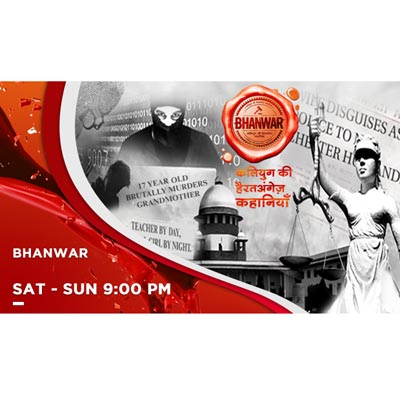
  • ‘Bhanwar’: Sony revives its tried and tested label in the crime genre

    ‘Bhanwar’: Sony revives its tried and tested label in the crime genre

    MUMBAI: It’s survival of the fittest in a highly-competitive TV world. One needs to keep re-inventing oneself and that’s exactly what works wonders in the end. Likewise, Sony Entertainment Television (SET), has gone back to its tried and tested formula gory crime!


    The crime genre has until now, been the bread and butter for the channel.  Programmes like C.I.D, Crime Patrol and at times, Adaalat have gripped audiences and thus, Sony has unanimously got a thumbs-up for its non-fiction, criminal offerings.


    SET literally takes the viewer through a virtual reality show. It gives them a gripping courtroom drama series, an enthralling and emotional journey, engaging their consciences in matters of right and wrong, and the ultimate balance of justice.


    Christened – Bhanwar – Kalyug Ki Hairatangez Kahaniyaa, its provocative stories will compel our society to sit up and take cognizance of the fact, that for every crime committed under the Indian Penal Code, there is an equally harsh justice system meted out.


    You may recall, in the late 1990s, Sony had launched a series with an identical name that dealt with landmark judgements from the Indian judicial system. Produced by TV18, the show was so popular that it enjoyed re-runs on SAB and Fox History to boot. Its audiences were treated royally for over two years on Sony, and its episodes were remarkably directed by Sanjay Ray Chaudhari.


    It’s back with a bang with a fresh menu of juicy, judicial cases. Come 10 January, 2015, the two veterans of TV production, Contiloe Entertainment’s Abhimanyu Singh and Sunshine Rise Productions’ Anshuman Kishore Singh, will present true-to-life stories of human excesses, which depict volatile social relationships of today.


    SET chief creative director, Ajay Bhalwankar, believes that the name of this series is defined by the twists and turns of true events, which often shows that ‘truth is stranger than fiction.’ “Presented in a unique style, the show promises to raise the benchmark of crime shows on Indian television.”


    He feels, “The channel has invested a lot of time in researching and digging out real-life stories that take place in a courtroom. It took three months for the channel to pick up the best stories, which were then executed in a fictional manner.”


    With this new property, the channel now has a complete portfolio focusing only on crime properties on weekends, starting with Adaalat at 8 pm, Bhanwar in close succession at 9 pm, followed by C.I.D and Crime Patrol at 10 pm and 11 pm respectively. “Sony has been a pioneer in crime genre. We have made a lot of sense and the outcome has turned out very well. We are confident that audiences will relate to this kind of drama that occurs in a courtroom,” asserts Bhalwankar.


    “I think this is a good move that the channel has made. In a way, they want audiences to stay tuned to the channel and sample the content one after the other. C.I.D and Crime Patrol both have been consistently delivering decent numbers and Bhanwar will follow suit and jump on the bandwagon, considering its different content. But on the other hand, experimentations have happened on the channel, but viewers haven’t really accepted it; I hope this one pays off for Sony,” says a media planner.


    The one-hour courtroom drama TV series is going to face tough competition from Bigg Boss eight on Colors, Sa Re Ga Ma Pa L’il Champs five on Zee TV, Diya aur Baati Hum and Yeh Rishta Kya Kehlata Hai (Saturday) and Airlines (Sunday) on Star Plus, Supercops vs Supervillains… Shapath on Life OK and The Great Indian Family Drama on Sab.

  • MSM’s “new initiative”:  A Hindi  GEC?

    MSM’s “new initiative”: A Hindi GEC?

    MUMBAI: It was around 10 days ago that Multi Screen Media (MSM) announced the reshuffling and restructuring of its senior management. At that time the press release had said: “Anooj Kapoor will assume additional responsibilities as senior EVP and Business Head, SAB TV, and also a new initiative in the Hindi entertainment space.”


    When we contacted Kapoor, he was quite enigmatic when quizzed about the new initiative. Ditto with MSM president Rohit Gupta who confirmed that the Network is in the process of putting together “something new” but the details about it would be shared when the time comes.


    But we, at Indiantelevision.com, were not willing to be stonewalled and continued to dig around. So far what we have gathered is that the new Sony Entertainment Television offering will be another general entertainment channel – the third in the bouquet after SET and SAB. And it will have mainly fiction shows on its FPC. A senior media planner disclosed that he had been told by Sony executives that the launch is slated to take place within the next six weeks – that is before the financial year ends. 


    Sony Entertainment Television is likely to continue to air its existing successful shows such as C.I.D., Crime Patrol (in the crime/thriller genre), Boogie WoogieEntertainment Ke Liye Kuch Bhi Karega (talent and reality show genre), Comedy Circus (comedy genre) and Kaun Banega Crorepati (quiz genre). SAB, which is among the more profitable services in the Sony Entertainment Television Network, will of course continue with its focus on lighter fare and comedies. 


    Industry sources reveal that an example of the type of programming the new channel will air are the shows it has signed on with Amitabh Bachchan and Jaya Bachachan and their under-revival production house Saraswati Creations.


    Interestingly, headhunters are reportedly scouting for new hires to fill up the positions that are cropping up courtesy Sony’s new foray, and the mandate has been put out to strengthen the MSM communications team. 


    The Network has already got the required government licences for the upcoming channel, confirms a highly placed source, who goes on to say that the launch might be hurried if the TV ratings blackout becomes a reality by March when the High Court is supposed to announce its decision on TAM’s and Kantar’s future.


    Star India already has three Hindi GECs – Star Plus, Life Ok, Channel V – while a fourth, Star Utsav airs reruns from it old TV show catalogue. Zee Entertainment has the successful Zee TV and launched Zee Anmol last year, work on a third GEC is believed to be on currently. 


    Clearly, India’s TV networks believe in dishing out more to the country’s entertainment hungry TV viewers.

  • ‘Success of a TV channel is to find homogeneity in a heterogeneous market condition’ : Sony Entertainment Television VP marketing Danish Khan

    ‘Success of a TV channel is to find homogeneity in a heterogeneous market condition’ : Sony Entertainment Television VP marketing Danish Khan

    2009 was an eventful year for Sony Entertainment Television (SET). Languishing behind the top three Hindi general entertainment channels (GECs) and even newcomer NDTV Imagine, the channel relaunched with a bunch of differentiated shows. Some worked, some didn‘t, and the programming overhaul failed to lift the ratings to any position of strength.


    Sony then discovered the value of its old horses in C.I.D and Aahat. The channel zoomed to a GRP (gross ratings point) of 180 and the road ahead looked promising with the launch of YRF shows. But the leading film producing house evoked a tepid response among audiences for its TV shows, leaving Sony in hunt for new properties that would aid it to move up the ratings ladder.


    Marketing several new properties and the relaunched channel has been a challenging task under these circumstances.


    In an interview with Indiantelevision.com‘s Anuradha Ramamirtham, Sony Entertainment Television VP marketing Danish Khan talks about the strategies that Sony adopted during this period as it searched for width and depth of reach across markets.


    Excerpts:
     
     
    How tough was it to market Sony Entertainment Television in a year when a bruising battle was fought at the top among the three leading Hindi general entertainment channels?

    The GECs were in a growth mode last year and the leadership battle became intense. Marketing, thus, became much more strategic and key to a channel‘s fortune. Sony was clearly on the growth path and we were able to build the brand with high impact campaigns for our bigger properties like Indian Idol 4, Dus Ka Dum, Bhaskar Bharti, Aahat -the all new series and Iss Jungle Se Mujhe Bachao. We also rejuvenated the brand CID. All these shows were successfully marketed in challenging times and conditions.


    What exactly were you looking at marketing when the channel went for an overall overhaul?

    SET has existed as a brand for long and our aim was to refresh the look and feel of the channel. The relaunch wasn‘t just of getting a bunch of new shows to appear on the channel; it was also about refreshing the channel‘s identity. While we retained the logo, we went for a new packaging and brand identity. On the programming front, we retained some of our old properties like CID, Boogie Woogie and Comedy Circus and introduced some new fiction shows including Bhaskar Bharti and Ladies Special. This helped us in improving the channel‘s ratings by over 150 per cent over a nine-month period.
     
     
    Did your marketing spend expand during this makeover period of the channel?

    The channel‘s marketing budget stayed almost flat. We were fortunate in that for the first half of the year, the media cost was stagnant due to recession. We also changed our media buying mix a bit by increasing our exposure to low-cost mediums like digital and experiential marketing. We could have a similar impact at lesser cost. The marketing was much more rigorous and we did all to stretch the value of every rupee that we spent.
     
     
    With the Tam panel expanding and new markets opening up, will you have to tweak the marketing plan for the channel?

    With the TAM panel expanding, it‘s going to be a challenge not only for us but for all marketers in the channel space. Thankfully, we have a strong distribution network. In 2003, when Tam was moving to smaller cities and towns, Sony was the fastest to reach to new markets and develop a strong brand affinity. With the new markets opening up, it will be a good opportunity for us.
     
     
    How different is it to market in smaller towns as compared to tier I cities?

    The tier I cities and metros are mature markets and are organised in nature. In these markets, there are multiple media options available to reach to the consumer like availability of FM stations and organised outdoor media. Consumers in these markets are early adopters to new trends and there are huge amounts of touch points available to reach out to them. Hence, these markets are easier to monitor.


    These markets are, however, cluttered. The challenge here is not restricted to reaching to the consumers but also creating a high impact as they are bombarded today with hundreds of messages. In addition to availability of multiple media options, the markets have also become expensive. So, the challenge is both being impactful and cost effective.


    The smaller markets are not organised. There is lesser number of touch points and everyone wants to reach there. Experiential marketing works wonder in small towns if it is sprinkled with mass media applications. Consumers here are fresh to meeting celebrities and such activities are hugely accepted and help in creating the right buzz.


    ‘For the first half of the year, the media cost was stagnant due to recession. We also changed our media buying mix a bit by increasing our exposure to low-cost mediums like digital and experiential marketing‘


    What was the most cost effective medium for marketing during recessionary times?

    Recession or no recession, television is the most cost effective medium for marketers. Thankfully, we have a very robust network with five performing channels; these form the base for all our marketing plans. Outside television, we use different mediums. In 2009, Internet and mobile (digital medium) were used more judiciously to reach to the youth who are tech savvy. Also, experiential marketing (BTL activities) was pushed hard last year and they yielded good results.


    With advertisers spreading their focus into smaller markets, how will GECs and particularly Sony benefit from this?

    Like television, most categories and brands today have a pan India presence. TV is increasingly becoming relevant across categories as its spreads out both geographically and demographically. Like any other marketer, Sony is also keen on small towns. Besides, the channel enjoys a robust distribution platform across India.


    How do you address such a heterogeneous market?

    The success of a television channel is to find homogeneity in a heterogeneous market condition. In India, the markets which we cater to are extremely heterogeneous in nature. A Punjab market, for example, will think and behave differently than a Maharashtra market which, in turn, will be different from Uttar Pradesh. But there are certain universal themes that work across markets. The content and communication has to be based on this. Media behaviour and mediums can differ. As far as the message is concerned, it should always be built around something that works universally. That applies to successful shows as well; they have messages that are universal. 

     
    YRF is a strong movie brand. What marketing steps did you take to extend it into a television brand?

    It was challenging to work on the YRF shows. These are early days yet and the five weekend shows have started attracting a definite set of loyal audiences. We are doing a lot of on-air promotions and experiential marketing to build the popularity for these shows.