Tag: C-DOT

  • BSNL dials up pride with India’s first homegrown 4G telecom stack

    BSNL dials up pride with India’s first homegrown 4G telecom stack

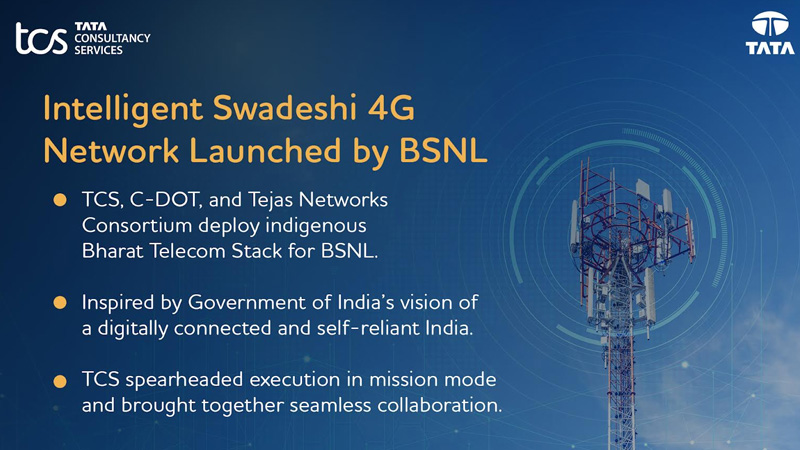
    MUMBAI: India has just made a call that will echo worldwide and it’s a truly Swadeshi one. BSNL, in collaboration with Tata Consultancy Services (TCS), C-DOT, and Tejas Networks, has unveiled the Bharat Telecom Stack, a fully indigenous solution powering 4G and beyond, marking a historic stride towards a digitally self-reliant nation.

    With this rollout, India joins an elite club of just five countries globally to have built a homegrown telecom technology stack. What makes it remarkable is the scale and speed the entire project, spanning 100,000 sites, was completed in just two years, making it one of the fastest 4G deployments worldwide.

    Executed under a “mission mode” governance model, the project saw TCS establish data centres, integrate C-DOT’s EPC Core Application, and deploy Tejas Networks’ base stations and radio infrastructure, all stitched together with TCS CNOPS, a cognitive platform for 24/7 real-time network management. The rollout integrates seamlessly into BSNL’s existing 2G/3G systems, ensuring connectivity continuity while boosting capacity for the digital era.

    For BSNL CMD A Robert J Ravi, the launch was more than technology, it was symbolism: “The nationwide rollout of our indigenous 4G network, built with TCS, Tejas, and C-DOT, is a resounding declaration of an Atmanirbhar Bharat. This ‘Made in Bharat’ stack secures our digital future and bridges the divide like never before.”

    The technology isn’t just about speed or spectrum; it’s about sovereignty. By delivering ultra-secure, standards-compliant connectivity, the stack safeguards national security while democratising access enabling online education, telemedicine, e-governance, and citizen services for rural and urban India alike.

    BSNL’s director (Consumer Mobility) Sandeep Govil highlighted its transformative potential: “This Swadeshi 4G technology, the result of innovation by C-DOT, Tejas, TCS, and BSNL’s workforce, is engineered for scalability. It is a cornerstone for a digitally inclusive society, ready to evolve to 5G and beyond.”

    For TCS and Tejas Networks chairman N Ganapathy Subramaniam, the achievement reinforces India’s tech legacy: “We have put India on the map of only a handful of countries with a comprehensive, trusted, and software-upgradable telecom technology stack. The successful deployment at BSNL is historic, laying the foundation for India’s further contribution to global standards.”

    The launch also reflects TCS’s longstanding role in shaping India’s digital infrastructure from modernising stock exchanges and passport services to healthcare and pensions for defence personnel touching millions of lives across decades.

    With ultra-high bandwidth, energy efficiency (0.1 W/Gbit, 65 per cent lower than average), and intelligence boosting O&M efficiency by 40 per cent, the Bharat Telecom Stack is more than a national achievement. It is a signal loud and clear that India is ready to lead in telecom innovation, connecting every citizen while setting global benchmarks.

    In short: India just built its own dial tone for the future and it’s calling the world to listen.

  • C-DOT-Silizium Circuits partner to develop LEO satellite components

    C-DOT-Silizium Circuits partner to develop LEO satellite components

    MUMBAI: In a breakthrough collaboration poised to revolutionise India’s telecommunications sector, the Centre for Development of Telematics (C-DOT) and Silizium Circuits Pvt Ltd have joined hands to design and develop cutting-edge LEO satellite components and GNSS RF Front-End ASIC. This ambitious partnership signifies an exciting chapter in India’s pursuit of self-reliant, next-generation telecom technology, laying the groundwork for state-of-the-art advancements that will shape the future of connectivity.

    From the depths of innovation to the skies above, something transformative is being engineered—technology that not only strengthens India’s telecom infrastructure but also places the nation firmly on the global map of telecom leadership.

    Stay tuned, because this is just the beginning of something extraordinary.

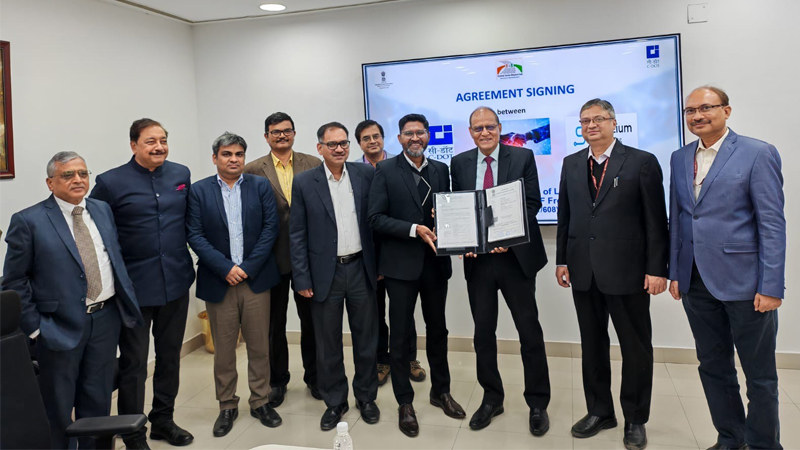
    The agreement was signed under the Telecom Technology Development Fund (TTDF) scheme, launched by the department of telecommunications (DoT), Government of India. The scheme supports Indian startups, academic institutions, and R&D bodies in developing affordable and innovative telecommunication solutions to bridge the nation’s digital divide.

    Silizium Circuits, leveraging the support of TTDF, will focus on creating advanced semiconductor solutions addressing critical challenges in the satellite communication ecosystem, including power efficiency, high-speed data transmission, and signal integrity. By utilising its expertise in analog, RF, and mixed-signal technologies, the company will contribute to reliable, high-performance LEO satellite infrastructure. The project targets both the global market and India’s goal of enhancing urban and rural connectivity while strengthening next-generation broadband services.

    The agreement was formalised during a ceremony attended by C-DOT CEO, Rajkumar Upadhyay; Silizium Circuits, co-founder & CEO, Rijin John; C-DOT directors, Pankaj Kumar Dalela & Shikha Srivastava; and senior officials from DoT, including DDG (TTDF), Parag Agarwal, and DDG (SRI), Vinod Kumar.

    Upadhyay underlined the importance of developing own chips for communication needs and emphasised the support of C-DOT including its infrastructure during the project implementation.

    This partnership showcases India’s resolve to innovate and build indigenous solutions for satellite communication, advancing the country’s self-reliance in semiconductor technology and telecommunications.

  • Three new products developed by C-DOT launched on its Foundation Day

    Three new products developed by C-DOT launched on its Foundation Day

    NEW DELHI: Communications Minister Manoj Sinha today expressed the hope that 100,000 Gram Panchayats (GPs) will be connected through Optical Fibre Cable (OFC) by March next to set up a network infrastructure to serve the rural masses.

    Delivering the key-note address here at the C-DOT Foundation Day, he said everyone was working with zeal to achieve the target of connecting 2,50,000 Gram Panchayats with Broadband Network within the stipulated timeframe which is the vision of Prime Minister Narendra Modi.

    Sinha praised C-DOT for launching 18 products and 56 technology transfers, which he said should be taken to Century and also lauded the role of C-DOT for its stellar role in providing security solutions including cyber related.

    Stressing the need for innovation as India cannot afford to emulate the Developed Economies due to limited resources, he urged C-DOT to find new invention, new research and new technology and to give World Class products for achieving the vision of Transforming India through Digital Revolution.

    Sinha said if India lags in catching up with emerging technologies in the coming 15 to 20 years, the very existence of the country will be at stake. He exhorted officials and other stakeholders to “Walk the Talk” and underlined that it is our bounden duty to digitally empower the huge chunk of population particularly in rural areas who are still deprived of IT revolution. He added that Digital divide should end as fast as possible.

    Telecom Secretary J.S.Deepak said as India is on the verge of Data Revolution, the future of C-DOT is very bright as it is involved in making multi-terabit router, providing smart city solutions and security solutions to the Defence and Civil sectors. He urged C-DOT to partner with PSUs and dream big to make India truly a Digital India.

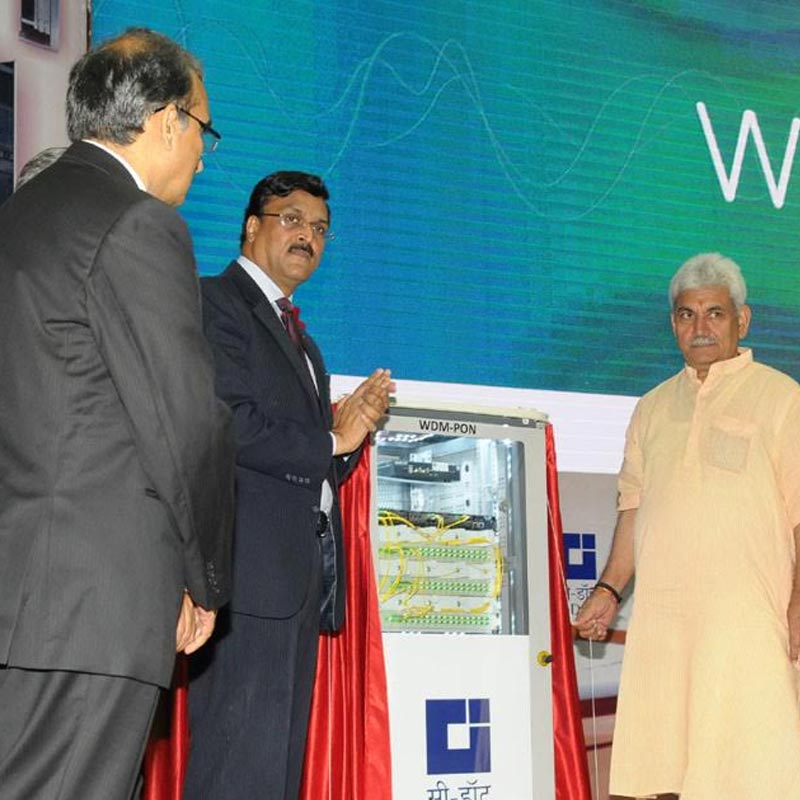
    The Minister also launched three new Products developed by C-DOT on the occasion- WDM PON (WDAN) and Samvad App.

  • Three new products developed by C-DOT launched on its Foundation Day

    Three new products developed by C-DOT launched on its Foundation Day

    NEW DELHI: Communications Minister Manoj Sinha today expressed the hope that 100,000 Gram Panchayats (GPs) will be connected through Optical Fibre Cable (OFC) by March next to set up a network infrastructure to serve the rural masses.

    Delivering the key-note address here at the C-DOT Foundation Day, he said everyone was working with zeal to achieve the target of connecting 2,50,000 Gram Panchayats with Broadband Network within the stipulated timeframe which is the vision of Prime Minister Narendra Modi.

    Sinha praised C-DOT for launching 18 products and 56 technology transfers, which he said should be taken to Century and also lauded the role of C-DOT for its stellar role in providing security solutions including cyber related.

    Stressing the need for innovation as India cannot afford to emulate the Developed Economies due to limited resources, he urged C-DOT to find new invention, new research and new technology and to give World Class products for achieving the vision of Transforming India through Digital Revolution.

    Sinha said if India lags in catching up with emerging technologies in the coming 15 to 20 years, the very existence of the country will be at stake. He exhorted officials and other stakeholders to “Walk the Talk” and underlined that it is our bounden duty to digitally empower the huge chunk of population particularly in rural areas who are still deprived of IT revolution. He added that Digital divide should end as fast as possible.

    Telecom Secretary J.S.Deepak said as India is on the verge of Data Revolution, the future of C-DOT is very bright as it is involved in making multi-terabit router, providing smart city solutions and security solutions to the Defence and Civil sectors. He urged C-DOT to partner with PSUs and dream big to make India truly a Digital India.

    The Minister also launched three new Products developed by C-DOT on the occasion- WDM PON (WDAN) and Samvad App.

  • Innovations needed to meet ‘Digital India’ goals

    Innovations needed to meet ‘Digital India’ goals

    NEW DELHI: While the telecom industry is on track, there is need for innovation to meet the goals of Digital India. This was the general outcome of discussions at South Asia’s largest ICT, broadcast and digital media event, which ended today.


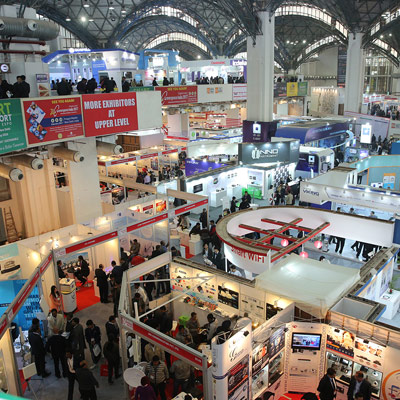
    The expo witnessed 434 companies from 29 countries around the world showcasing the latest technologies and innovations. Over 125 eminent speakers took the dais to deliberate on the theme ‘Digital India’ – roadmap, opportunities, challenges, infrastructure and investments.


    The third day of the expo deliberated on affordable broadband for rural India at the third Telecom Summit, powered by Microsoft, thus facilitating Prime Minister Narendra Modi’s vision of making India a digitally empowered economy.


    Microsoft group director, government affairs & public policy S. Chandrasekhar said, “Exhibitions India and Convergence India provide a good platform for all telecom and ICT eco-systems to come together and exchange ideas, best practices and the best of technology.”


    A presentation on ‘Internet of Things in Mobile Workforce Management’ was given by Cyient – India senior manager Venkata Satyadeep Mane. “Technology is an enabler to build smart solutions for rapid growth. Industries in India are therefore aiming to build cutting-edge technology solutions and services that will shape the digital revolution. Accordingly, the Indian ICT marketplace is going to experience substantial shifts in the coming days! In this content, I believe Convergence India is a fantastic platform to share and learn not just technology but various other elements of business solutions,” he said.


    Key session on ‘Opportunities in telecom sector arising from Big Data & Cloud’ panelist HP India country leader – future cities & CTO – technology services Lux Rao said, “The promise of Digital India has been successful in capturing the aspirations of a young India and the unbridled optimism is palpable. Smart Cities & Digital India is lending traction to the country’s modernisation agenda.”


    He added, “Convergence India holds a mirror to the current state of programmes and their progress and is a convergence of philosophy, ideas and action. The three-day program packs in an eclectic combination of knowledge and experience sharing, networking opportunities and a deep dive into fast emerging ethos of an empowered nation – Truly Digital, Truly India.”


    Exhibitions India Group chairman Prem Behl, who conceived Convergence India, said, “The exhibitors have received quality visitors and have had a positive response on all three days of the expo. The concurrent conferences were productive with detailed discussions and presentations on Digital India.”


    A landmark session on the third day included the SCTE India Awards for Technical Excellence and Innovation in Digital Cable and Broadband.


    ‘GSMA India open day 2016’ hosted a discussion on India’s mobile industry growth trends and forecasts, challenges in this fast changing market, mechanisms being used to ease efforts in monetising this market and the innovations India will need to deliver a Digital India from industry leaders.


    Participating exhibiting names included Broadcom, C-Dot, Conax, Cyient, Ericsson, EMC, Harmonic, MediaTek, Microsoft, M-Star, Nagra, Sandisk, Telenor, and Thomson to name a few.


    Convergence India 2016 expo was endorsed by the Department of Electronics & Information Technology, the Communications & Information Technology, and the Information and Broadcasting Ministries.


    Exhibitions India Group (EIG) has been organising the annual International Convergence India series of expos since 1992, and will witness its silver jubilee edition at Pragati Maidan, New Delhi from 8 to 10 February next year.

  • Innovations needed to meet ‘Digital India’ goals

    Innovations needed to meet ‘Digital India’ goals

    NEW DELHI: While the telecom industry is on track, there is need for innovation to meet the goals of Digital India. This was the general outcome of discussions at South Asia’s largest ICT, broadcast and digital media event, which ended today.


    The expo witnessed 434 companies from 29 countries around the world showcasing the latest technologies and innovations. Over 125 eminent speakers took the dais to deliberate on the theme ‘Digital India’ – roadmap, opportunities, challenges, infrastructure and investments.


    The third day of the expo deliberated on affordable broadband for rural India at the third Telecom Summit, powered by Microsoft, thus facilitating Prime Minister Narendra Modi’s vision of making India a digitally empowered economy.


    Microsoft group director, government affairs & public policy S. Chandrasekhar said, “Exhibitions India and Convergence India provide a good platform for all telecom and ICT eco-systems to come together and exchange ideas, best practices and the best of technology.”


    A presentation on ‘Internet of Things in Mobile Workforce Management’ was given by Cyient – India senior manager Venkata Satyadeep Mane. “Technology is an enabler to build smart solutions for rapid growth. Industries in India are therefore aiming to build cutting-edge technology solutions and services that will shape the digital revolution. Accordingly, the Indian ICT marketplace is going to experience substantial shifts in the coming days! In this content, I believe Convergence India is a fantastic platform to share and learn not just technology but various other elements of business solutions,” he said.


    Key session on ‘Opportunities in telecom sector arising from Big Data & Cloud’ panelist HP India country leader – future cities & CTO – technology services Lux Rao said, “The promise of Digital India has been successful in capturing the aspirations of a young India and the unbridled optimism is palpable. Smart Cities & Digital India is lending traction to the country’s modernisation agenda.”


    He added, “Convergence India holds a mirror to the current state of programmes and their progress and is a convergence of philosophy, ideas and action. The three-day program packs in an eclectic combination of knowledge and experience sharing, networking opportunities and a deep dive into fast emerging ethos of an empowered nation – Truly Digital, Truly India.”


    Exhibitions India Group chairman Prem Behl, who conceived Convergence India, said, “The exhibitors have received quality visitors and have had a positive response on all three days of the expo. The concurrent conferences were productive with detailed discussions and presentations on Digital India.”


    A landmark session on the third day included the SCTE India Awards for Technical Excellence and Innovation in Digital Cable and Broadband.


    ‘GSMA India open day 2016’ hosted a discussion on India’s mobile industry growth trends and forecasts, challenges in this fast changing market, mechanisms being used to ease efforts in monetising this market and the innovations India will need to deliver a Digital India from industry leaders.


    Participating exhibiting names included Broadcom, C-Dot, Conax, Cyient, Ericsson, EMC, Harmonic, MediaTek, Microsoft, M-Star, Nagra, Sandisk, Telenor, and Thomson to name a few.


    Convergence India 2016 expo was endorsed by the Department of Electronics & Information Technology, the Communications & Information Technology, and the Information and Broadcasting Ministries.


    Exhibitions India Group (EIG) has been organising the annual International Convergence India series of expos since 1992, and will witness its silver jubilee edition at Pragati Maidan, New Delhi from 8 to 10 February next year.

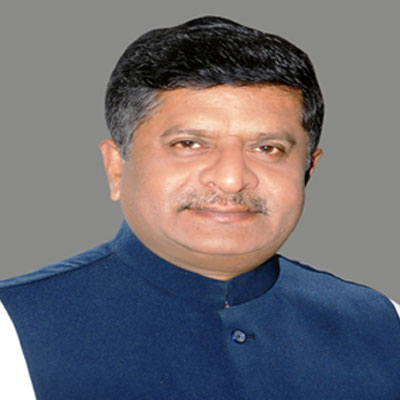
  • “We will enhance internet penetration from 300 mil to 500 mil within 2.5 years:” Ravi Shankar Prasad

    “We will enhance internet penetration from 300 mil to 500 mil within 2.5 years:” Ravi Shankar Prasad

    MUMBAI: India today launched four world class broadband products by Centre for Development of Telematics (C-DOT). With this, the country has come at par with all other developed countries in the world in respect of quality telecommunication services and effective penetration of advanced broadband based services.


    Union Minister for communication and IT, Ravi Shankar Prasad while launching the new products indigenously developed by C-DOT stated that the NDA Government is committed to bring all 2.5 lakh villages under broadband services and enhance internet penetration from 300 million to 500 million within two and half years. 


    Prasad launched the products in the presence of his Kenyan counterpart, cabinet secretary, ICT in a function organised at C-DOT campus, New Delhi. Prasad further stated that the new products have been launched with an aim to provide an advanced digital infrastructure for ‘Digital India’ Initiative launched by Prime Minister Narendra Modi.


    He further stated that ‘Digital India’ initiative is bound to bring governance available in the palm of every Indian. It is more for the poor, underprivileged and the marginal people like masons and carpenters etc.


    Prasad stressed on the fact that, ‘Digital India’ is a transformational programme and a dream to bring a positive change. The initiative would also go a long way in digital empowerment of the people of India. The initiative launched by Modi would make India developed, globally credible, affluent and would further sync with Make in India and Skill India programme.


    Prasad elaborated the importance of skill development and said that there are ample opportunities of earning in mobile maintenance profession as the number of mobile sets are surging day by day. 

    He also appreciated the role of C-DOT in transforming the telecommunication scenario in the country, especially in the rural India. C-DOT has rendered significant contribution in providing broadband coverage across the nation. He also appreciated the products developed by C-DOT and stated that the long distance Wi-Fi is going to solve the problem of distance, whereas Solar powered Wi-Fi would do away the dependence on the power availability.


    He stated that the Next Generation Network technology is quite important for the service providers for converging landline/ mobile/ data network. MTNL and BSNL users are going to be benefitted as they would be able to transform their landline network into the most advanced network. He called upon C-DOT to come out with more advanced innovative products in order to ensure foolproof telecom services, apart from lending a hand in ensuring digital literacy across the country in respective local languages.


    The Union Minister further stated that digital connectivity leads to good governance and the C-DOT products are great, innovative and dependable, but he would be happier if the products are savvy and are used by more people.


    He exhorted the private sector to go for C-DOT products on large scale as these have been developed after a sustained research and analysis for which the Government invested a substantial amount keeping in view the need to match with the fast changing world. 


    The next generation land line network would not only revolutionise the basic telephony but would upgrade the entire landline services. He added that presently all gram panchayats are connected with broadband, the government is committed to connect all gram panchayats in the country with broadband. 

    C-DOT executive director Vipin Tyagi said that its efforts are in the way of taking dream of Digital India further as he delivered his welcome address.


    He also stated that the C-DOT has been innovating with an aim to empower the weaker strata of the society and developing indigenous products to facilitate continuous telecom up-gradation. He said that technology is big enabler and broadband is big leveler. Roti, Kapda, Makan and Broadband are the basic needs of the human being.