Tag: buyers

  • Creators boost Mipcom 2025 as television’s old guard opens the door

    Creators boost Mipcom 2025 as television’s old guard opens the door

    CANNES: The suits and the streamers are finally doing business. Mipcom 2024 pulled in 10,600 delegates—a modest uptick from last year’s 10,500—but the real story wasn’t in the numbers. It was in who showed up and what they were selling.

    Buyers rose to 3,340, up 100 from 2023, with Britain leading the pack, followed by the US , France, Germany, Turkey, Canada, Spain, Italy, Japan and South Korea. Yet the buzz on the Cannes market floor centred on a new breed of attendee: the creator economy, which Lucy Smith, RX France’s Mipcom and Mip London boss, called “the biggest shift in a generation for Mipcom.”

    YouTube planted its flag with a prominent presence, including a packed keynote featuring Pedro Pina, the platform’s EMEA chief, media cartographer Evan Shapiro and BBC Studios’ Jasmine Dawson. The session offered what Smith described as the “definitive playbook on partnerships,” demonstrating how traditional media can tap new audiences and build fandoms through collaboration.

    The convergence went beyond talk. Deals between legacy players and digital creators flowed throughout the week. “It feels like a tipping point for the industry,” Smith told reporters at a wrap press conference. “The relationship between the creator and mainstream economies isn’t binary. The opportunities come from collaboration, not from working in isolation.”

    Mipcom’s pitch to creators was simple: meet everyone worth meeting in one place, at one time, and figure out who can help build new business models. The market staged its first brand-funded content summit, BrandStorytelling, bringing agencies and brands face-to-face with the global production and distribution world. Early feedback suggests it’s here to stay.

    Traditional sales and distribution—”the engine of MIPCOM,” as Smith put it—roared back to life. Every major American studio turned up. Three big international advance screenings drew talent from around the world. Rights deals showed fresh flexibility, with windowing making a comeback, albeit in more complex forms than before.

    The market floor hosted 350 exhibitors, including 88 newcomers such as YouTube. Yet not everything pointed upward: MIPJunior attendance slipped to 940 from 1,000, reflecting ongoing headwinds in children’s programming.

    Smith struck a bullish note. “From change comes opportunity. The industry is resilient, it regenerates. The fact that this definitive global market has been held here every year for the past four decades is testament to that.”

    Next year’s edition runs from 12 to 15  October. The creators will be back. So will everyone else.

  • MIP London set to welcome over 2,000 delegates

    MIP London set to welcome over 2,000 delegates

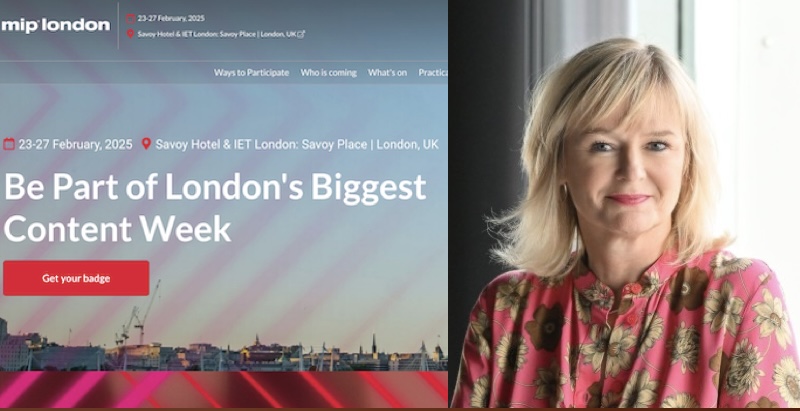
    MUMBAI: MIP London is on track to welcome more than 2,000 delegates from 75 countries for its inaugural edition, with strong representation from Europe, North America, Turkey, MENA, Latin America and Asia, said RX France entertainment division director Lucy Smith in an interview to World Screen News. 

    The event has confirmed country pavilions from Belgium, China, France, Korea and Spain, alongside more than 30 Canadian companies supported by Telefilm Canada and SODEC. Major companies including Boat Rocker, DLT Entertainment, Electric Entertainment, Global Agency, Moonbug Entertainment, Movistar Plus+ and Raw Cut have joined previously announced participants A+E Networks, Al Jazeera, Beta Film and others.

    “More than 900 buyers are registered across all genres, with approximately one-third being first-time visitors to London,” said Lucy. “The event has attracted significant interest from digital-first players, FAST channels, AVoD platforms and CTV operators.”

    The conference programme features over 50 speakers from major media companies including BBC, TF1, ZDF, Prime Video, Netflix, YouTube and TikTok. Highlights include Talpa Studios’ launch of new talent format The Headliner, showcases of Asian formats, and a world premiere screening of crypto-currency drama Paper Empire.

    A special fireside chat with David Beckham and Netflix’s Bela Bajaria will take place on the main stage, while the opening cocktail event will feature performances from West End shows including Hamilton and The Lion King.
    The five-day event, priced at £500 for registration, aims to complement existing industry gatherings in London and create additional business opportunities for the content industry.

  • Boosting local market manufacturing will help the Indian M&E industry to become a supplier to the world: CII Big Picture Summit 2022

    Boosting local market manufacturing will help the Indian M&E industry to become a supplier to the world: CII Big Picture Summit 2022

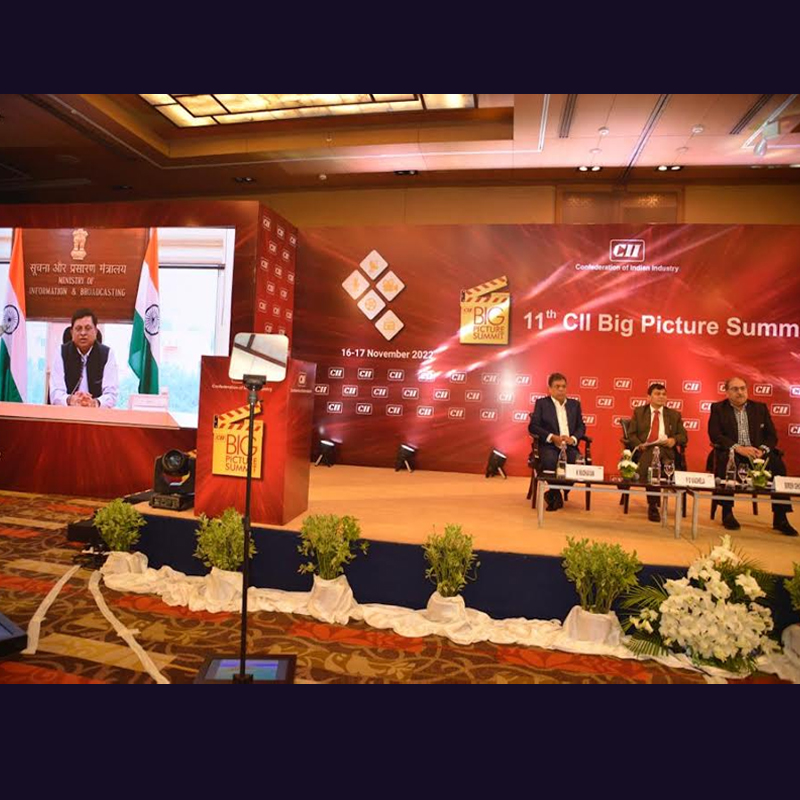
    Mumbai: The 11th edition of the Big Picture Summit 2022, organised by the Confederation of Indian Industry (CII), is a two-day event that is taking place on 16-17 November. The Summit witnessed the participation of various eminent panellists and marked the release of the CII-BCG report on “Shaping the Future of Indian M&E” and the CII-IBDF-KPMG report on “Sports Broadcasting in India.”

    CII Big Picture Summit 2022, with a range of sessions, has participation from content creators, broadcasters, buyers, studios, production companies, publishers, distributors, and developers across the gamut of the Media & Entertainment (M&E) landscape.

    On 16 November, the first day of the event, discussions centred around global trends and opportunities, the bounce-back of revenues to pre-pandemic levels, domestic consumer preferences, and local opportunities for a global audience through digital platforms that have never existed before, especially for the creative industry, storytellers, and technology providers.

    Speaking at the event, the ministry of information and broadcasting (MIB) secretary Apurva Chandra, stated that MIB, along with the Indian M&E industry, has set a goal of making the M&E sector a $100 billion industry by 2030. Chandra acknowledged the announcement by the ministry on the incentive policy for cinema at the Cannes Film Festival this year, out of which many proposals have been accepted for foreign productions in India.

    He further revealed, “The animation, visual graphics, gaming, and comics (AVGC) taskforce, which was launched as a part of the budget 2022, has completed its deliberations and is in the process of finalisation. The government will soon work towards actioning on the recommendations that come out of the report.” As regards the broadcasting sector, Chandra stated that the ministry has recently revised the guidelines for uplinking and downlinking for satellite television channels in India to ease the burden of compliance on channels.

    Telecom Regulatory Authority of India (Trai) chairman Dr. P.D. Vaghela highlighted the significance of the Indian M&E sector in the national growth story and economic prosperity. With about half of the population being young, the Indian demographic dividend presents a huge opportunity for Indian M&E services. Television is the largest and fastest-growing segment, representing around 50 per cent of the total media and entertainment revenue.

    He added that during the last decade, the M&E sector in the country has undergone several radical changes and is experiencing a paradigm shift due to the advancement of technologies and innovations in the creation, distribution, and consumption of media. He stressed that the traditional media would lose ground unless it understands, adopts, and merges its own business models with society 5.0, AI, machine learning, and other technologies that are being unleashed. Vaghela further mentioned, “The government needs to come out with policies that are flexible in nature and allow new players to easily enter the industry while at the same time not strangling the traditional sector with numerous regulations.”

    MIB joint secretary Sanjiv Shankar mentioned the various efforts made by the ministry in the recent past to ensure significant interventions in the regulatory framework, largely based on ease of doing business, Atmanirbhar Bharat, and Make in India. He stressed on the Broadcast Seva portal, which offers a single point facility to various stakeholders and applicants to apply for various permissions, registrations, licences, etc., for the development and integration of the broadcast industry.

    CII National Committee on media & entertainment chairman and Disney Star country manager & president K Madhavan, in his opening remarks commended CII for bringing together key stakeholders and policy makers together to discuss the future of India’s M&E industry and its potential in shaping societies. The M&E sector in India is underpenetrated, with a contribution of 0.9 per cent to the GDP compared to 3-4 per cent for many developed countries.

    He further advocated the potential for growth for the industry, owing to the presence of 300 million households in India, of which about 100 million households still have no access to television headsets. He further urged for timely support by policymakers in the areas of privacy, ensuring a supportive IPR protection measure, and announcing content-related policies while taking note of changing consumer habits and helping the industry to reinvent itself and adapt to creating travelable content.

    CII National Committee on media & entertainment chair & CII sub committee for AVGC & Immersive Media – vice chairman, and Technicolor India country head Biren Ghose in his closing remarks mentioned about the need to evolve in the ways content is being created and urged the stakeholders to look at growth from a different lens, particularly away from a linear vertical growth. Moreover, he mentioned fostering collaboration between government, industry, and academia for the continued growth of the M&E sector.

    Furthermore, Trai advisor Anil Bharadwaj said that while Trai is trying to enable a positive, consultative-based, industry-friendly approach with regards to the new tariff order (NTO), the industry needs to focus on building capacities and centres of excellence.

    CII has been driving several initiatives to take the Indian M&E sector to new heights and expand its global footprint in close collaboration with MIB. These include representing the Indian film and entertainment industries at the prestigious Cannes Film Market for the past 20 years, at the Berlin Film Festival for the past five years, and at the Toronto Film Festival for the past three years. CII’s strength in policy advocacy is acknowledged and accepted by both the government and media industries.

  • Tata Sky opens Actve Series to advertisers

    Tata Sky opens Actve Series to advertisers

    MUMBAI: Indian DTH players have been scouting for newer revenue opportunities in order to reduce their dependency on subscription revenues. One of the bigger ones,  Tata Sky, yesterday announced that it would be selling advertising space on its Actve Series platform allowing advertisers and brands to effectively reach out to the desired TG through either commercials or integrate brand communication in the programmes.


    Some of the popular series include Actve Fun Learn for kids under 10 years, Actve English, Actve Cooking, Actve Vedic Maths and Actve Music. According to the DTH provider, almost 2 million of its subscribers watch the Actve Series with cooking and English being the preferred choices, especially in tier II cities and towns. Brands such as McCain Foods, Google, Yakult, Maggi and Britannia have already been signed on to showcase their infomercials on Actve Cooking.


    “Reaching out to the audience based on research and preferences has helped our Actve services become a huge success in India. Being a paid platform, there is a high level of interaction with repeat viewers every day consuming content that they desire and expect. The infomercials hence integrated aptly with the Actve channels have resulted in a positive impact on our subscribers,” states Tata Sky CCO Vikram Mehra.


    Media planners seem sold out on the idea of getting segmented viewers for their clients. “It is a good way to reach out to people. Ultimately it is content that could be in any form. 2 million isn’t a small audience. The key thing is that it gives you a focused audience,” says MindShare India principle partner Jai Lala.


     “Each of these DTH players has launched such content platforms of their own so that they get to know the profile of their users. It is a thing we have been waiting for since long,” adds Lodestar UM CEO Nandini Dias.


    Some brand names have been signed up already, but that apparently is only the tip of the iceberg, as bigger advertisers will surely get on board.   Dias is of the opinion that personalised brands will do well in this series and FMCG brands will surely advertise as they advertise on an overall basis. Lala feels that brands that can integrate well with the programme will work best. “Consumers are getting onto this platform to learn. So educational brands, retail brands would work well here,” he says.


    However, this being a first attempt the ad rates  will be at a bare minimum. “The ad rates need to be evolved. They have to be competitively priced because there should be a logic as to why should money be invested into these active services. If there is better segmentation for clients then we can invest and ensure that money is not wasted,” points out Dias.


    Tata Sky claims that through its various interactive series, advertisers can directly target customised TGs. Currently, the only way to advertise on the DTH provider is on its channel 100, its initiation channel.