Tag: business

  • Column-Policy Cross-Connections

    Column-Policy Cross-Connections

    Point 1: With over 1.2 billion population, India is a dream market for any product or service. In short, a land of opportunities.

    Point 2: Despite economic liberalisation started in early 1990s and followed through by successive governments, including the present one in New Delhi, India is still termed a challenging market.

    Just like any other sector, India’s INR 1,157 billion media and entertainment (M&E) industry too gets affected by the two aforementioned points.

    That the M&E industry holds immense potential can be easily seen in various crystal-ball gazing done.

    Indian Government Economic Survey 2016, an annual report card for Indian economy released every February, states the M&E recorded “unprecedented growth” over the last two decades making it one of the fastest growing industries in India. It is projected to grow at a CAGR of 13.9 percent to reach INR 1964 billion by 2019, the Survey states, adding digital advertising and gaming are projected to drive the growth of this sector in the coming years.

    The FICCI-KPMG annual report on Indian M&E sector, released in March, also reiterates the optimism. According to the report, the sector is expected to be worth INR 2,260 billion by 2020 and the advertising sector grew by 14.7 percent from INR 414 billion in 2014 to INR 475 billion in 2015.

    But then what’s holding back big bang investments not only from Indian investors but also foreign ones? Especially when China, the only other market in Asia that outstrips India in terms of size and opportunities, is mostly closed for foreign investors with stringent rules relating to M&E sectors.

    My theory is that despite successive governments from 1990 (it was in 1991 that economic liberalisation was set in motion in India and Indians also got exposed to satellite TV in few years from then) following up on that, full benefits have failed to accrue to the country. Reason? Various liberalisation processes and easing norms of doing business get enmeshed with other policy decisions— some taken in isolation — thereby continuing to make India a challenging market.

    Take, for example, the much talked about government step in June in liberalising FDI investment norms for various sectors, including media, defence, pharmaceuticals and retail.

    FDI policy on broadcasting carriage services as of June 2016


    Sector/Activity

    New Cap and Route

    5.2.7.1.1

    (1)Teleports(setting up of up-linking Hubs/Teleports);

    (2)Direct to Home (DTH);

    (3)Cable Networks (Multi System operators (MSOs) operating at National or State or District level and undertaking upgradation of networks towards digitalization and addressability);

    (4)Mobile TV;

    (5)Headend-in-the Sky Broadcasting Service(HITS)

    100%


    Automatic

    5.2.7.1.2 Cable Networks (Other MSOs not undertaking upgradation of networks towards digitalization and addressability and Local Cable Operators (LCOs))

    Infusion of fresh foreign investment, beyond 49% in a company not seeking license/permission from sectoral Ministry, resulting in change in the ownership pattern or transfer of stake by existing investor to new foreign investor, will require FIPB approval

    (Source: Commerce Ministry)


    The government in June said that FDI in all broadcast carriage services like cable, MSO, DTH, mobile TV, HITS have been upped to 100 percent and brought under automatic route, which means bureaucratic and lengthy permission processes have been lessened.

    Small caveat in automatic route investment norms notwithstanding, Indian companies and foreign investors should have been popping the champagne bottles. But industry reactions were sober to the extent of being subdued.

    General analysis of the aforementioned decision, in short, was: the government took a big step, but not a giant one. Why?

    According to government data, total FDI flow into India since April 2000 to December 2015 stood at US$ 408.68 billion. But the media sector’s share of FDI inflows from 2000-2015 was pegged at $4.48 billion.

    Considering the burgeoning media industry and newer technologies coming in, this sector’s share of FDI during this 15-year period should have been higher.

    So, why are foreign investors hesitant in investing in India, especially when PM Modi’s dream of Digital India can dovetail into building digital infrastructure capable of delivering many media services?

    The federal government may be trying its best to ease norms of doing business in India and live up to its claim of ‘India being a fav destination for foreign investors’, other proposed and existing policy decisions not only send out confused signals, but, actually, create more impediments.

    Take, for example, broadcast carriage regulator TRAI’s two discussion papers on infrastructure sharing in TV broadcasting distribution and  set-top-box interoperability .
    TRAI’s contentions for floating these discussion subjects are to explore avenues to reduce expenditure of companies providing these services by doing away with duplication (in the first case) and examine whether interoperable STBs can largely benefit the consumers.

    Critics of both these TRAI discussion subjects opine that if followed through and converted into regulations, both measures could add another layer of restrictions on the industry.

    Hong Kong-based Asian media industry organisation CASBAA, which also has Indian members, doesn’t mince words when it said in its submission on STB interoperability that the TRAI paper was based on a “number of untested, unproven presuppositions concerning the practice of technical interoperability”.

    Countering TRAI assertions, CASBAA said, “Regulator-imposed technical interoperability requirements will impose very large burdens on Indian consumers and industry players and risk stifling innovation in development of new features of interest to consumers.”

    If a holistic view is taken of both the TRAI consultations, surprisingly aimed at bringing down media services to a common denominator having little USPs, it’s no wonder the likes of Comcast and Liberty Media or closer home the Hong Kong-headquartered PCCW, for instance, have not been enthused much to invest in Indian broadcast carriage segment despite FDI norms liberalisation and a whopping over 100 million TV homes still on the plate.

    It’s not only TRAI, but also the general layout of the taxation and financial environment, apart from other cross-media restrictions, which would deter foreign investors.

    A DTH service provider in India, for example, on an average pays 40 percent tax, including an annual 10 percent licence fee, while ARPUs range between INR 175-220 for most of the six DTH companies. Why would AT&T, parent company of American DirecTV, invest in a DTH operation in India?

    Or, for that matter, why would Comcast or PCCW invest in Indian cable TV distribution when a large number of LCO operations are still far from transparent?

    Add to that a slowing down of the digital rollout — the earlier two phases of the proposed four-phased digitisation of TV services did manage to bring about increased transparency resulting in higher tax revenues for the government — and you have a pitch that’s not conducive for fair foreign investment game.

    Singapore-based market media market research company Media Partners Asia estimates approximately $2 billion has been invested by strategic and foreign institutional investors in Indian pay-TV distribution platforms, which certainly is peanuts considering  over 250 million TV homes are target consumers.

    If confusing policy signals were not enough, stellar performer ISRO’s new-found love for Make In India and resultant insistence on weaning away all Indian users of satellite-based services from foreign satellites to INSAT — informal as of now but gaining currency — is also fodder to scare a foreign investor as such moves smack of throwback to pre-90s when India was dubbed a closed market and not an open economy.

    That’s why, I would insist, till systematic changes are brought about in the country and various government organisations and regulators also see the big picture on regulations instead of functioning within their own small islands, attempts by any Indian government to make India the most favoured destination for foreign investments will not bear ripened fruit. And, in the process, full benefits won’t accrue to the consumers.

    (1 USD= INR 67)

    (Anjan Mitra is Consulting Editor of Indiantelevision.com and will write a fortnightly column on media matters.)
     

  • Column-Policy Cross-Connections

    Column-Policy Cross-Connections

    Point 1: With over 1.2 billion population, India is a dream market for any product or service. In short, a land of opportunities.

    Point 2: Despite economic liberalisation started in early 1990s and followed through by successive governments, including the present one in New Delhi, India is still termed a challenging market.

    Just like any other sector, India’s INR 1,157 billion media and entertainment (M&E) industry too gets affected by the two aforementioned points.

    That the M&E industry holds immense potential can be easily seen in various crystal-ball gazing done.

    Indian Government Economic Survey 2016, an annual report card for Indian economy released every February, states the M&E recorded “unprecedented growth” over the last two decades making it one of the fastest growing industries in India. It is projected to grow at a CAGR of 13.9 percent to reach INR 1964 billion by 2019, the Survey states, adding digital advertising and gaming are projected to drive the growth of this sector in the coming years.

    The FICCI-KPMG annual report on Indian M&E sector, released in March, also reiterates the optimism. According to the report, the sector is expected to be worth INR 2,260 billion by 2020 and the advertising sector grew by 14.7 percent from INR 414 billion in 2014 to INR 475 billion in 2015.

    But then what’s holding back big bang investments not only from Indian investors but also foreign ones? Especially when China, the only other market in Asia that outstrips India in terms of size and opportunities, is mostly closed for foreign investors with stringent rules relating to M&E sectors.

    My theory is that despite successive governments from 1990 (it was in 1991 that economic liberalisation was set in motion in India and Indians also got exposed to satellite TV in few years from then) following up on that, full benefits have failed to accrue to the country. Reason? Various liberalisation processes and easing norms of doing business get enmeshed with other policy decisions— some taken in isolation — thereby continuing to make India a challenging market.

    Take, for example, the much talked about government step in June in liberalising FDI investment norms for various sectors, including media, defence, pharmaceuticals and retail.

    FDI policy on broadcasting carriage services as of June 2016


    Sector/Activity

    New Cap and Route

    5.2.7.1.1

    (1)Teleports(setting up of up-linking Hubs/Teleports);

    (2)Direct to Home (DTH);

    (3)Cable Networks (Multi System operators (MSOs) operating at National or State or District level and undertaking upgradation of networks towards digitalization and addressability);

    (4)Mobile TV;

    (5)Headend-in-the Sky Broadcasting Service(HITS)

    100%


    Automatic

    5.2.7.1.2 Cable Networks (Other MSOs not undertaking upgradation of networks towards digitalization and addressability and Local Cable Operators (LCOs))

    Infusion of fresh foreign investment, beyond 49% in a company not seeking license/permission from sectoral Ministry, resulting in change in the ownership pattern or transfer of stake by existing investor to new foreign investor, will require FIPB approval

    (Source: Commerce Ministry)


    The government in June said that FDI in all broadcast carriage services like cable, MSO, DTH, mobile TV, HITS have been upped to 100 percent and brought under automatic route, which means bureaucratic and lengthy permission processes have been lessened.

    Small caveat in automatic route investment norms notwithstanding, Indian companies and foreign investors should have been popping the champagne bottles. But industry reactions were sober to the extent of being subdued.

    General analysis of the aforementioned decision, in short, was: the government took a big step, but not a giant one. Why?

    According to government data, total FDI flow into India since April 2000 to December 2015 stood at US$ 408.68 billion. But the media sector’s share of FDI inflows from 2000-2015 was pegged at $4.48 billion.

    Considering the burgeoning media industry and newer technologies coming in, this sector’s share of FDI during this 15-year period should have been higher.

    So, why are foreign investors hesitant in investing in India, especially when PM Modi’s dream of Digital India can dovetail into building digital infrastructure capable of delivering many media services?

    The federal government may be trying its best to ease norms of doing business in India and live up to its claim of ‘India being a fav destination for foreign investors’, other proposed and existing policy decisions not only send out confused signals, but, actually, create more impediments.

    Take, for example, broadcast carriage regulator TRAI’s two discussion papers on infrastructure sharing in TV broadcasting distribution and  set-top-box interoperability .
    TRAI’s contentions for floating these discussion subjects are to explore avenues to reduce expenditure of companies providing these services by doing away with duplication (in the first case) and examine whether interoperable STBs can largely benefit the consumers.

    Critics of both these TRAI discussion subjects opine that if followed through and converted into regulations, both measures could add another layer of restrictions on the industry.

    Hong Kong-based Asian media industry organisation CASBAA, which also has Indian members, doesn’t mince words when it said in its submission on STB interoperability that the TRAI paper was based on a “number of untested, unproven presuppositions concerning the practice of technical interoperability”.

    Countering TRAI assertions, CASBAA said, “Regulator-imposed technical interoperability requirements will impose very large burdens on Indian consumers and industry players and risk stifling innovation in development of new features of interest to consumers.”

    If a holistic view is taken of both the TRAI consultations, surprisingly aimed at bringing down media services to a common denominator having little USPs, it’s no wonder the likes of Comcast and Liberty Media or closer home the Hong Kong-headquartered PCCW, for instance, have not been enthused much to invest in Indian broadcast carriage segment despite FDI norms liberalisation and a whopping over 100 million TV homes still on the plate.

    It’s not only TRAI, but also the general layout of the taxation and financial environment, apart from other cross-media restrictions, which would deter foreign investors.

    A DTH service provider in India, for example, on an average pays 40 percent tax, including an annual 10 percent licence fee, while ARPUs range between INR 175-220 for most of the six DTH companies. Why would AT&T, parent company of American DirecTV, invest in a DTH operation in India?

    Or, for that matter, why would Comcast or PCCW invest in Indian cable TV distribution when a large number of LCO operations are still far from transparent?

    Add to that a slowing down of the digital rollout — the earlier two phases of the proposed four-phased digitisation of TV services did manage to bring about increased transparency resulting in higher tax revenues for the government — and you have a pitch that’s not conducive for fair foreign investment game.

    Singapore-based market media market research company Media Partners Asia estimates approximately $2 billion has been invested by strategic and foreign institutional investors in Indian pay-TV distribution platforms, which certainly is peanuts considering  over 250 million TV homes are target consumers.

    If confusing policy signals were not enough, stellar performer ISRO’s new-found love for Make In India and resultant insistence on weaning away all Indian users of satellite-based services from foreign satellites to INSAT — informal as of now but gaining currency — is also fodder to scare a foreign investor as such moves smack of throwback to pre-90s when India was dubbed a closed market and not an open economy.

    That’s why, I would insist, till systematic changes are brought about in the country and various government organisations and regulators also see the big picture on regulations instead of functioning within their own small islands, attempts by any Indian government to make India the most favoured destination for foreign investments will not bear ripened fruit. And, in the process, full benefits won’t accrue to the consumers.

    (1 USD= INR 67)

    (Anjan Mitra is Consulting Editor of Indiantelevision.com and will write a fortnightly column on media matters.)

     

  • Gujarat bags National award for Ease of Doing business in cinema, UP and Kerala get special mentions

    Gujarat bags National award for Ease of Doing business in cinema, UP and Kerala get special mentions

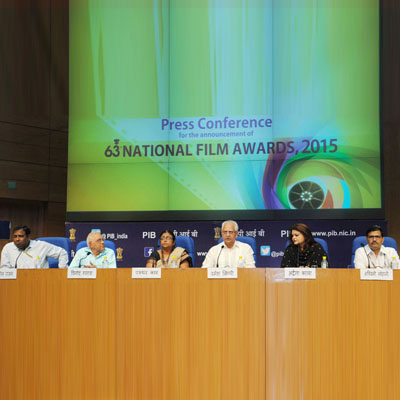
    New Delhi: Gujarat was named the Most Film-Friendly State at the 63rd National Film Awards here today. This is the first time that the Information and Broadcasting Ministry has bestowed this award in order to promote film tourism in states.

    Film Festivals Director Senthil Rajan said: “We had 16 entries from different states, and this is a major step by the Indian government to promote film tourism in the states because this sort of an award will enthuse the states.”

    He added: “We chose Gujarat primarily because of the efforts in the direction of ease of doing business and facilitation of films and towards the promotion of Indian cinema.”

    A special mention was also given to Uttar Pradesh for its single window clearance efforts and incentives offered by the government, and to Kerala.

    The awards were selected by a separate jury constituted by the Directorate of Film Festivals.


  • Gujarat bags National award for Ease of Doing business in cinema, UP and Kerala get special mentions

    Gujarat bags National award for Ease of Doing business in cinema, UP and Kerala get special mentions

    New Delhi: Gujarat was named the Most Film-Friendly State at the 63rd National Film Awards here today. This is the first time that the Information and Broadcasting Ministry has bestowed this award in order to promote film tourism in states.

    Film Festivals Director Senthil Rajan said: “We had 16 entries from different states, and this is a major step by the Indian government to promote film tourism in the states because this sort of an award will enthuse the states.”

    He added: “We chose Gujarat primarily because of the efforts in the direction of ease of doing business and facilitation of films and towards the promotion of Indian cinema.”

    A special mention was also given to Uttar Pradesh for its single window clearance efforts and incentives offered by the government, and to Kerala.

    The awards were selected by a separate jury constituted by the Directorate of Film Festivals.


  • Bloomberg TV India unveils theme for Union Budget 2016

    Bloomberg TV India unveils theme for Union Budget 2016

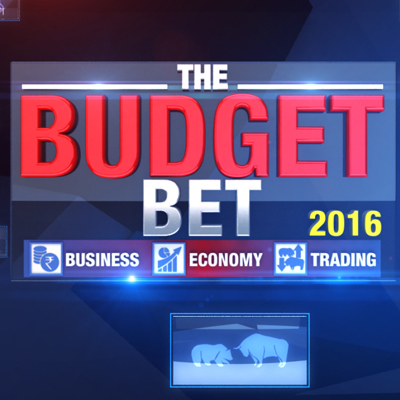
    MUMBAI: The year 2016 brings with it sky-high expectations from the government with the Union Budget 2016.  Bloomberg TV India, part of the world’s largest financial news network has unveiled the Union Budget 2016 theme. The theme was unveiled by Rakesh Jhunjhunwala, partner at Rare Enterprises during the biggest market conversation of 2016 exclusively on Bloomberg TV India.


     While the roller coaster at global markets continue, Rakesh Jhunjhunwala is betting on a better year ahead for India and doesn’t expect the United States to slip into recession or China to collapse as it is being feared by many investors. Pointing out that the market fall was driven by fear and apprehension, the Warren Buffet of India remains bullish on the market.


    Holding a contrarian view on the world’s largest economy, Jhunjhunwala said there is no evidence that the US will grow slower in 2016 than 2015. No event has taken place to anticipate fall in US growth, he said exclusively to Bloomberg TV India. For Budget 2016, Bloomberg TV India will lay out a comprehensive line-up of special shows which will showcase the best-in-class insights from Business, Economy and Trading with overarching theme The Budget BET 2016.


    India is poised to take a giant leap towards attaining a holistic growth in the coming days. It’s all up to the finance minister to seize the moment in Budget 2016. For all the action, stay tuned to Bloomberg TV India all through February and March.

  • DataWind receives Amity Leadership Award for Business Excellence

    DataWind receives Amity Leadership Award for Business Excellence

    New Delhi, 16 January: DataWind Innovations which specializes in affordable internet access has been awarded with “Amity Leadership Award for Business Excellence by leveraging IT in Designing Innovative Mobile for Education” in Noida.

    The award was presented by Amity School of Engineering and Technology Founder President Dr Ashok K Chauhan during the 6th International Conference on Cloud System and Big Data Engineering Confluence 2016 in Amity University Campus, Noida.

    The award recognized DataWind’s revolutionary and innovative approach to bridge the digital divide for the forgotten billions with its launch offree internet access on low-cost smartphones and tablets.

    Amity University had organized Confluence 2016 in association with EMC Corporation where IET (Institution of Engineering and Technology, UK), IETE (The Institution of Electronics and Telecommunication Engineers), ACM (Association for Computing Machinery, USA) and CSI (Computer Society of India, India). The academic partners of the Confluence were University of Massachusetts, USA; Memorial University, Newfoundland, Canada; Purdue University, USA; University of Cape Town, South Africa; Cloud Lab University of Melbourne, Australia.

    It was stated that DataWind’s products break the affordability barrier and deliver internet access across traditional mobile networks as the company executes a vision to empower the next three billion internet users. The DataWind Pocket Surfer smartphones and tablets incorporate the most powerful technology thatallows fastest internet access on the remotest locations of India’s mobile networks.

    DataWind CEO Suneet Singh Tuli said “It’s a great honor to receive the Leadership Award from one of the most renowned education institution in India today. Our Pocket surfer Smartphones are the most economical and technology advance devices which comes bundled with free internet browsing for one year on Telenor and Reliance networks.”

    Tuli added that in order to help close the gap of the existing ‘digital divide’ in classroom education we have recently launched new Ubiclass Application which shows our commitment towards education on bringing the socio- economic and educational benefits of the Internet to emerging markets around the world.

  • CNN International expands its Asia Pacific editorial team

    CNN International expands its Asia Pacific editorial team

    MUMBAI: CNN International has announced the expansion of its Asia Pacific editorial team with CNNMoney to have a presence in New Delhi plus additional staff in its Hong Kong bureau.


    CNNMoney is CNN’s top destination for money news, reporting the latest business headlines and top financial stories for viewers and readers all over the world. Headquartered in New York, with a presence in London and Hong Kong, the new India position marks the next phase of CNNMoney’s expansion for Asia Pacific and further strengthens the world’s largest global business news source.


    The New Delhi post will be held by associate editor Charles Riley who will be responsible for reporting on key economic stories and developing new editorial content from India and expanding the network’s business coverage from the region. Riley was most recently based in Hong Kong where he pioneered CNNMoney’s coverage from Asia. His Hong Kong role will be filled by CNN Digital producer Jethro Mullen who will join the CNNMoney team in January.


    CNN International has also appointed an additional three new members to the Hong Kong editorial team, further cementing its position as a centre for newsgathering excellence. Juliet Perry joins as a digital producer and Natalie Leung takes on the role of associate designer – both charged with enhancing desktop, mobile and social platform capabilities. On the news desk, Zahra Ullah joins as an assignment editor bolstering the already strong line-up of senior producers.


    “Nothing gives me greater pleasure than finishing the year with expanding our editorial presence in India and Hong Kong,” said CNN International senior VP and managing editor Ellana Lee. “Increasing our resources shows once again our commitment to Asia-Pacific and the strength of our newsgathering capabilities.”


    The Hong Kong bureau will continue to grow in 2016 with further staff appointments expected to be made in the first quarter of next year.

  • Indian of the year: honouring Indias iconic Ambassadors

    Indian of the year: honouring Indias iconic Ambassadors

    MUMBAI: Acknowledging the achievements and contributions of the Iconic Indians who have made us proud and strengthened the foundation of our society, CNN-IBN has announced the winners of the Indian of the Year 2013. In an award ceremony held at the Taj Palace in New Delhi, the channel honoured 11 such extraordinary Indians across Politics, Sports, Entertainment, Business and Public Service categories.

    Instituted in 2006, this is the eighth edition of CNN-IBN Indian of the Year awards. Over the years, these awards have become the benchmark for credibility and excellence in media awards. They have been held in high regard for precision, providing complete information about the process of nomination and selection of the winners. The selection process involves the IBN Editorial Board drawing a list of nominees, which is then authorised by a highly distinguished jury comprising personalities bestowed with the most prestigious Padma honours.

    The winners across different categories are:
    POLITICS: Arvind Kejriwal: For pulling off a stunning political debut and forcing two national parties to substantially alter their electoral strategies in less than 18 months.
    SPORTS: PV Sindhu: For keeping the great run of Indian Badminton going and winning the singles medal at the World Championship.

    BUSINESS: Rajiv Bajaj: For being the world’s most profitable auto company with 20 per cent margins, a sound export strategy and being a key differentiator in a tough year.
    ENTERTAINMENT: Kapil Sharma: For creating India’s most successful stand-up comedy show that finds a universal appeal across audiences.

    PUBLIC SERVICE: ADR & Lily Thomas: For piloting the PIL which led to amendment of the law that prevents convicted politicians from contesting in polls.

    SPECIAL ACHIEVEMENT: Team ITBP & NDRF: For their sterling work in the aftermath of the Uttarakhand tragedy.

    SPECIAL ACHIEVEMENT: Deepika Padukone: For constantly reinventing herself as a leading lady with exceptional acting abilities and for delivering a slew of mega hits in 2013, including ‘Yeh Jawaani Hai Deewani’, ‘Chennai Express’ and ‘Goliyon Ki Raasleela Ram-Leela’.

    OUTSTANDING ACHIEVEMENT: Leander Paes: For being an ageless wonder and becoming the oldest man to win a tennis Grand Slam at the age of 40.
    OUTSTANDING ACHIEVEMENT: Ramakant Achrekar: Fo

    r being the most dynamic Indian cricket coach and nurturing exceptional young cricketing talents in Mumbai which includes the ‘God of Cricket’, Sachin Tendulkar.

    LIFETIME ACHIEVEMENT: Late Justice Jagdish Sharan Verma: For being the face of Judicial activism in India through his landmark judgements and for his lifelong contribution in the field of law and justice.

    CNN-IBN INDIAN OF THE YEAR 2013: Stop Acid Attacks: For bringing together survivors of acid attacks, educating people about the abuse and pushing the government for long-term medical treatment of victims.

    Rajdeep Sardesai, Editor-in-Chief, CNN-IBN, IBN7 & IBN-Lokmat, said, “Every year, along with our countrymen, we have a set of people at the forefront, who are doing their best to take our country forward. We feel privileged to acknowledge some of our fellow Indians who have made us proud with their efforts and contribution to society. I wish all the winners hearty congratulations”.

  • GroupM promotes Gaurav Hirey as chief talent officer, South Asia

    GroupM promotes Gaurav Hirey as chief talent officer, South Asia

    MUMBAI: GroupM has announced the appointment of Gaurav Hirey as chief talent officer, south Asia.

    Hirey has been a part of GroupM since 2008 and is currently the regional HR director, APAC. In his new expanded role as CTO, South Asia, he will be responsible for driving the agenda on people, culture and values at GroupM which will include employee acquisition, training, development, retention and growth for India, Pakistan, Bangladesh and Sri Lanka.

    On his new role, Hirey said “India and South Asian markets are exciting markets. We have been able to innovate and raise the bar year after year. Mumbai is home ground and so always a pleasure to be back! I am very excited about the new leadership and the new vision at GroupM South Asia and look forward to leveraging the last 2 years of my international exposure and the network to help and impact business results.”

    He will continue to work with GroupM APAC regional talent team and will be based out of Mumbai from 1 January, 2014. And will also be a part of the GroupM aouth Asia executive committee and will report to GroupM South Asia CEO CVL Srinivas and GroupM global CTO Angela Ryan.

    Speaking on the appointment, CVL Srinivas said, “GroupM has always placed a lot of emphasis on Talent and over the years we have built a strong talent team. As we move to the next stage of the People Transformation journey, I am pleased to welcome Gaurav Hirey back as our Chief Talent Officer (CTO) – South Asia. Gaurav has a successful track record of making things happen and is the best person to lead our people agenda. We look forward to having him back with us.”

    Hirey had joined GroupM in 2008 in Mumbai and built the human resources function at GroupM India, making it one the best employer brands in the country, before moving into a regional role in Singapore. Under his direction, GroupM is the only media agency to have won the Employer Branding Award for ‘Best Employer’ three years in a row from 2009 to 2011. For the last two years Hirey was based in Singapore where he worked on GroupM APAC projects and also had the mandate of being a business partner for Maxus APAC.

  • CNN-IBN indian of the year: sports nominees announced

    CNN-IBN indian of the year: sports nominees announced

    MUMBAI: CNN-IBN is back again with one of the biggest and the most credible awards in Indian media, CNN-IBN Indian of the Year 2013, in association with GMR, where the most inspirational faces of India in the present calendar year are recognized. A highly distinguished Jury panel comprising of personalities bestowed with the most prestigious Padma honours chose the winners from five different categories: Politics, Sports, Entertainment, Business and Public Service.

    CNN-IBN unveiled the nominees in the sports category of ‘Indian of the Year’. The contenders for the 8th edition of the upcoming award includes renowned sports personalities like Aditya Mehta for becoming the first Indian to reach the finals of a professional snooker event, Amit Kumar for winning a silver at the Wrestling World Championships, Heena Sidhu for becoming the first pistol shooter to win Gold at the ISSF World Cup Final, Leander Paes for becoming the oldest man to win a Tennis Grand Slam, PV Sindhu for keeping the great run of Indian Badminton going and winning the Singles medal at the World Championship and Virat Kohli for being Mr. Consistent and performing in all three formats of Cricket.

    Don’t forget to catch the Business Nominees on Tuesday, 10th December @10.30 PM & repeat telecast on Wednesday, 11th December @12:30 noon only on CNN-IBN.

    To nominate, please visit https://www.facebook.com/indianoftheyear/app_1439162886303532
    Log on to IndianoftheYear.com for more information.