Tag: business

  • Sangeeta Chacko honoured with ‘Outstanding International Business Communicator’

    Sangeeta Chacko honoured with ‘Outstanding International Business Communicator’

    MUMBAI: Percept’s corporate communication head Sangeeta Chacko was conferred with the esteemed ‘Outstanding International Business Communicator 2013 Award’ by the National Organisation of Commerce and Industry (NOCI) in Thailand.

    The award recognised her dynamic and proactive role in conceptualising and leading a wide spectrum of communication activities including ATL & BTL stakeholder communication, advertising, PR, brand marketing, business development, digital & social media marketing and corporate social responsibility (CSR). It also recognised and honoured her multifaceted and innovative styles in communication designs, platforms and methodologies.

    The National Organisation of Commerce and Industry (NOCI) instituted the first edition of the ‘Outstanding International Awards’ in the APAC region with an aim to felicitate excellence in business and outstanding contribution made by individuals and institutions towards Society and National Welfare. The award recognised the international influence and impact the recipients demonstrated via their exemplary work across the fields of Business, Leadership, Communications, Health, Education, Tourism, Entrepreneurship, Banking and Social Causes.

    The Jury panel comprised senior stalwarts from various industrial fields renowned for their contribution towards the economic, professional and educational fields in India and overseas. The awards are a testimony towards the proactive attitude, innovation, contribution and global perspective reflected by the recipient towards business and economy.

  • Bajaj Electricals signs up Soho Square for creative business

    Bajaj Electricals signs up Soho Square for creative business

    Bajaj Electricals vice president & head, advertising & brand development Beena Koshy

    MUMBAI: Bajaj Electricals, one of the leading consumer durables brand in home appliances, fans and lighting has signed a deal with Soho Square, Mumbai for its creative business.

    This decision has been taken after a multi-agency pitch. The new agency will be handling communication for kitchen and domestic appliances apart from the fan portfolio.
    Soho Square office head Samrat Bedi

    Bajaj Electricals vice president & head, advertising & brand development Beena Koshy said in a press release: “After much deliberation we decided upon Soho Square, Mumbai. In addition to the Ogilvy lineage, what tilted the scale in their favour is the exciting mix of creative and strategy that the agency has displayed on its current clients.”

    The agency, Soho Square Mumbai recently won the Franklin Templeton business. And now with clients like Bajaj Electricals, Bisleri, H&R Johnson, Vespa, Perfetti’s Stop Not, Hockey India League, Oberoi Realty, Pidilite’s Dr. Fixit Raincoat and ITC soaps and shampoos, it boasts of a strong portfolio.
    Soho Square Sr VP Planning Shashank Lanjekar

    Soho Square office head Samrat Bedi said: “This has been a good year, winning H&R Johnson, Franklin Templeton and now Bajaj Electricals. The management at Bajaj has very ambitious plans in terms of brand portfolio and the way forward for their future campaigns. We are excited about partnering them in this journey. It is indeed an honour for Soho Square Mumbai.”

    It was the vision that won them the deal, believes Sr VP Planning Shashank Lanjekar. “The vision resonated well with the Bajaj team,” he added. 

  • Everest bags Pantaloons strategic and creative duties

    Everest bags Pantaloons strategic and creative duties

    Mumbai: Everest has won the strategic and creative duties for Pantaloons.


    This is an additional account from the Aditya Birla Group for Everest that handles the More Retail business from the same group. There was no formal pitch process involved.


    Talking about the brand, Everest president Dhunji Wadia said, “We are happy to increase our presence with the Aditya Birla Group.  There is great joy when existing clients repose their faith in us with additional business. We are delighted to get an opportunity to work with Pantaloons. It’s a sharp and aspirational brand. Besides, it’s always a pleasure to work with a company whose business is also about creativity and fashion.”


    Adding Everest NCD Rahul Jauhari said, “It’s always a lot more fulfilling when an existing client gives you more business. We are delighted that the Aditya Birla Group has entrusted us with Pantaloons.  We look forward to creating some visible magic with them.”


    With a strong national presence in exclusive stores, Pantaloons houses over a 100 prestigious brands that have something fashionable for everyone.


    Commenting on the appointment, Pantaloons Fashion Retail CEO Shital Mehta said, “Everest are a young and energetic team and they will be a good match for us at this point of time since we are poised for substantial growth in market share and revenue in the Multi Brand Retail industry. We were looking for a team who could provide a new perspective and put in the necessary effort as a partner to take the brand to the next level.”


    Pantaloons Fashion Retail head (marketing & loyalty) Gaurav Chakravarty added, “We believe Everest will work with us as partners in building our brand equity.  We welcome them on board and look forward to working on some great campaigns together.”

  • India leads in those using video conferencing for new businesses

    India leads in those using video conferencing for new businesses

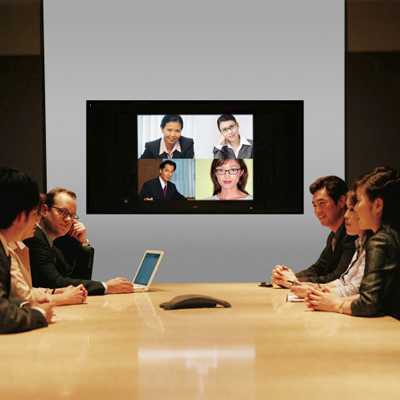
    NEW DELHI: Polycom, has announced that almost all (96 per cent) business decision makers believe video conferencing removes distance barriers and improves productivity between teams in different cities and countries, with India, Brazil and Singapore showing significant usage.

    According to the “Global View: Business Video Conferencing Usage and Trends” survey of more than 1,200 business decision makers, conducted by Redshift Research and commissioned by Polycom, video conferencing is an essential tool helping improve team collaboration and closing the physical and cultural gap between colleagues doing business across distances. 

    India leads the way in using video conferencing for new business with 60 per cent of respondents saying they use or would use video conferencing for new business. This was followed by Russia and Brazil at 49 and 44 per cent, respectively.  Across the globe, 38 per cent of respondents use video, or would use video, for new business.

    The survey found that video is becoming more pervasive in businesses across the globe.  When asked to choose their preferred methods of communications today, respondents ranked video conferencing third (47 per cent) after e-mail (89 per cent) and voice/conference calls (64 per cent), and those same business leaders and managers expect video to be their most preferred collaboration tool in three years (52 per cent), followed by e-mail (51 per cent) and voice/conference calls (37 per cent).  Respondents who use video conferencing today said the three biggest advantages are: better collaboration between globally dispersed colleagues (54 per cent), greater clarity of topics being discussed (45 per cent) and more efficient meetings (44 per cent).

    Over three quarters of decision-maker respondents (76 per cent) are now using video conferencing at work with 56 per cent of video users taking part in video calls at least once a week.  The survey found that in Brazil, India and Singapore that number jumps up significantly, as more than two-thirds of respondents in those countries use video conferencing at least once a week. 

    The survey also revealed that 83 per cent of respondents, and almost 90 per cent of those in their 20s and 30s, use consumer video conferencing solutions at home today, and almost half of all respondents use video conferencing at home at least once a week. 

    “The growing popularity of video conferencing at home, especially by millennials entering the workforce, is a big driver of increased preference for and adoption of video collaboration in the workplace,” said Polycom EVP and chief marketing operator Jim Kruger.

    “Some key factors to making video as popular in the office as it is at home is ensuring it’s easy to use, providing a high quality connection, delivering enterprise-grade security, and participants’ willingness to accept and adapt to cultural differences as they communicate across borders.  We’re seeing businesses around the world defy distance every day using video collaboration, including increasing productivity, enhancing employee engagement, improving time to market and helping to save lives,” he added. 

    The study also showed that laptops and desktops are the most popular devices for business video conferencing (75 per cent of respondents), followed by conference rooms (48 per cent) and mobile devices (42 per cent).  As video conferencing continues to become more pervasive, in three years laptops and desktops are still expected to be the most preferred device (72 per cent), while mobile devices and conference room usage will increase to 55 and 51 per cent, respectively.

    The survey provided sharp insights from video conferencing users into which behaviours constitute an ideal video meeting, and which are distracting for business decision makers. 

    The survey found the top three most important criteria for an ideal video meeting are: the ability to hear everyone clearly (69 per cent); technology that is straight forward and easy to use (60 per cent); and Good eye contact with colleagues/ everyone is clearly visible (58 per cent).

    Respondents who use video conferencing said the most distracting things, which should be avoided during video meetings, are: Mobile phone going off during a meeting (58 per cent), people attending from inappropriate places – e.g., public transit, in stores (52 per cent), people who are multi-tasking or look distracted – e.g., tapping on keyboard – (51 per cent), and inappropriate background distractions such as colleagues, music, noise (50 per cent).

    The Polycom survey shed light on different opinions between users of video collaboration in various countries, where one activity may be distracting in one country but accepted in another. 

    When asked if people not wearing business attire was a distraction, respondents from India, Singapore and Poland topped the list (30, 26 and 21 per cent, respectively), and on the other end of the spectrum, 13 per cent or fewer of respondents in the UK, France, Russia and The Netherlands find attire to be a distraction.

     In the Asia-Pacific (APAC) region, international communications (between colleagues in different countries) ranked as the most important use of video conferencing (65 per cent), versus 57 per cent for inter-country communications. 

    The U.S. leads the way in leveraging video conferencing for recruitment and hiring, as 32 per cent of video respondents said they use or would use video for this purpose, followed by APAC at 28 per cent.  

    In the Europe, Middle-East and Africa (EMEA) region, respondents were mostly using video conferencing to empower flexible working environments, which was cited as the second highest reason for using the technology, after “connecting with colleagues across the country.” 

    As access to video conferencing increases to virtually all employees with a mobile device or laptop, the survey found that video users in various business functions within organisations use video to defy distance in slightly differing ways: 

    CEOs and founders rated flexible working and inter- office/local meetings (50 per cent each) as their top reasons they use or would use video conferencing, followed by international meetings (46 per cent), new business/sales and company/department meetings (39 per cent each), and during an average week, the marketing function uses video collaboration the most frequently (64 per cent use video at least weekly) in an organisation, followed by IT/engineering and facilities (62 per cent use video at least weekly).  However, when it comes to daily usage of video at work, the HR function is the power user (32 per cent indicate they use video conferencing daily), followed by sales executives (28 per cent indicate they use video conferencing daily). The IT/engineering and manufacturing/supply chain functions are most likely to use video collaboration for international meetings, with 61 and 58 per cent of respondents, respectively, saying they use or would use video to collaborate face to face with colleagues internationally. In fact, according to the survey results, these are the two job functions that use video collaboration more for international meetings than local, in-country video meetings.

    All respondents, regardless of role, predominantly used video conferencing for inter-office meetings, followed by international inter-office meetings. Overwhelmingly, respondents said it is important to try and understand different country cultures when meeting using video conferencing (97 per cent) and 89 per cent of respondents called for etiquette rules to be established to help them better use video conferencing for business. 

    To help business better navigate these differences and drive more effective use of video conferencing, Polycom is launching Polycom’s Guide to Collaborating Across Borders, an insightful new guide designed to help readers understand the nuances of doing business across the globe.  This guide is one of several new resources for business leaders across almost every enterprise function – from IT to HR to the C-suite – to learn how video conferencing can help them defy distance and achieve their goals more quickly and efficiently. 

  • IDOS 2013 to kick off in Goa on 27 Sep

    IDOS 2013 to kick off in Goa on 27 Sep

    MUMBAI: The countdown to the ninth edition (and second under its current
    nomenclature) of the annual India Digital Operators Summit (IDOS) has begun with the two-day event kicking off tomorrow at The Leela in Goa.

    A joint initiative of the Indiantelevision.com Group and Media Partners Asia, the summit will discuss and debate the hot-button topic of the digital television opportunity in India, what with the implementation of Phase II of digitisation nearing completion in three major metros – Delhi, Kolkata and Mumbai and in another 38 cities all over India.

    IDOS 2013, themed ‘Harvesting the fruits of digitisation’ will highlight pertinent issues faced by industry and offer valuable insights into how other key Asian markets have succeeded in their digital transition.

    Participants include leaders from regulatory, cable distribution, DTH, broadcast, TV distribution and technology segments as also content providers and investors in the broadcasting and pay TV industries.

    Flagging off the summit will be Indiantelevision.com Group founder, CEO and Editor-in-Chief Anil Wanvari, who will share the vision behind the event. Following suit will be Media Partners Asia executive director Vivek Couto with a presentation on India’s digital TV ecosystem and lessons learnt from other global markets.

    Day one’s inaugural session titled ‘Opening Keynotes and In Conversation’
    will discuss how digitisation is no longer a goal but the means to a critical end, where national economic benefit, advanced infrastructure and content democratisation converge to create a win-win for all. The panelists include TRAI principal advisor N Parameswaran, DEN Networks chairman & MD Sameer Manchanda, Tata Sky CEO Harit Nagpal and Star India president & general counsel Deepak Jacob. They will share their views on the progress so far in Phase II of digitisation. The session will be moderated by Couto and Wanvari.
        
    The second session, ‘Cable 2.0 – Profits across the pipe’ will see leaders across the cable and distribution industry share insights into the key challenges faced by industry as it moves into billing, tiering and rolling out of new services. The session will be moderated by NDTV head-affiliate sales & network distribution Rahul Sood while the panellists include Hathway Cable and Datacom MD & CEO Jagdish Kumar, Den Network CEO S N Sharma, HSBC Securities lead analyst – telecom & media Rajiv Sharma, Media Pro COO Gurjeev Singh Kapoor, Digicable MD & CEO Jagjit Singh Kohli, SITI Cable Network ED & CEO VD Wadhwa and Indiacast Group COO Gaurav Gandhi.

    Next up, ‘DTH – Driving the value equation’, will be moderated by Couto with panelists including Dish TV India’s Gaurav Goel, Videocon D2H CEO Anil Khera, Kotak Securities senior analyst Amit Kumar and Macquarie Capital Sr
    VP Ausang Shukla. The session will seek to answer the question: What are the key catalysts for the next phase of DTH’s value creation story?

    Titled ‘The business of specialised and premium channels’ and powered by BBC World News, the fourth session will study the proliferation of niche channel launches. To be moderated by BBC Global News COO – Indian Operations Preet Dhupar, the participants include Viacom18 SVP & GM – English Entertainment Ferzad Palia, Discovery Networks Asia-Pacific SVP and GM -South Asia Rahul Johri, FoodFood promoter & director Sanjeev Kapoor, Disney UTV Media Networks MD MK Anand and HBO India MD Monica Tata.

    This will be followed by a session on ‘HD as a mass driver for distribution platforms’ chaired by Castle Media director Vynsley Fernandes along with Videocon D2H deputy CEO Rohit Jain, Times Television Network CEO – English Entertainment Channels Ajay Trigunayat, Dolby Laboratories India country manager Pankaj Kedia and Chrome Data Analytics & Media founder & MD Pankaj Krishna.

    The next session, ‘Hidden gems riding the digital wave’ will look at how on the back of digitisation, distribution majors (MSOs and DTH) hold the promise to create ample value. The panelists include What’s-On CEO Atul Phadnis, Amagi Media Labs co-founder Srinivasan K A and Cisco Sr. business development manager – APAC Fabien Gauthier with Castle Media director Vynsley Fernandes as moderator.

    Day one’s closing session, ‘New media monetisation’ will discuss how Hindi GECs and youth channels are increasingly making content available across newer media platforms. Chaired by Wanvari, the discussion will see participation from Zenga TV CTO & MD Shabir Momin, IBM India ED & partner Raman Kalra and Exset global head – sales and marketing Rahul Nehra.
        
    Day two will start with a presentation on ‘Sports & Pay-TV – The Path to Value Creation’ by Couto followed by a Q&A session. The Last mile operator community will be represented by a presentation by Maharashtra Cable Operators Federation head Arvind Prabhu, who will talk about their role in a digitised ecosystem.

    The closing session ‘Driving digitisation deeper’ will be moderated by Wanvari and Couto and will analyse how action is going to shift next to India’s heartland which houses nearly 70-80 million TV homes among other key issues. The panellists include DEN Networks CEO S N Sharma, Hathway Cable and Datacom MD & CEO Jagdish Kumar, TRAI principal advisor N Parameswaran, Indian Broadcasting Foundation secretary general Shailesh Shah, Chrome Data Analytics & Media founder and MD Pankaj Krishna, Founder & MD, Magnaquest CMO Ramakrishna Mashetty and HSBC Securities lead analyst – telecom & media Rajiv Sharma.
    “As organizers of IDOS, our aim is to provide unity and strategic vision to drive forward digitalization and bring new value, profit and sustainable growth across the television ecosystem,” read a joint statement by Indiantelevision.com group founder Anil Wanvari executive director and cofounder Media Partners Asia Vivek Couto.

    “The next year is critical as the cable industry steps up on its B2C execution with billing, tiering and subscriber management,” added VivekCouto.”IDOS will explore the issue of co-operation with last mile local cable partners to create a valuable ecosystem for the consumer; one in which differentiated content, customer service and value added offerings are at the highest level. That will be worth paying more for and will drive ARPUs higher.”

    “It’s an important evolution,” said Wanvari, “as it helps scale and grow the cable industry and enables broadcasters and content providers gain the ROI they so desperately need to invest. It also eases the burden on the DTH sector and provides effective competition at the ground and consumer level And the entire evolution gives the regulators to mull over deregulating pricing.”

    *IDOS 2013 is powered by Star India, while summit partners include Discovery Channel, Dolby, CISCO, Hathway Cable and Datacom, SES, and Videocon d2h. The associate partners are BBC World News, Exset, Indiacast and Media Pro. 24 Frames is the webcast partner.

  • The Indian Media Business gets a new edition

    The Indian Media Business gets a new edition

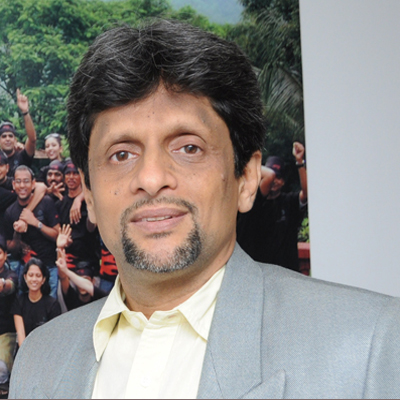
    MUMBAI: Her tome has become a reference book for students of Indian media courses. Media watcher Vanita Kohli-Khandekar released the fourth edition to her book on the Indian media business earlier this month. It has been titled matter of factly The Indian Media Business (TIMB) like in the past.

    She, however, reveals that things are different this time around in the book. Says she: “This edition has three major changes. One, there is a completely new chapter on digital media and I have dropped the chapters on telecom and internet. Two, I have focused a lot on regulation since it is very critical at this stage of the industry’s growth. And three, I have tackled a whole lot of the textural issues whether it is falling standards in news or the rising quality of Indian cinema in more detail.”

    TIMB gives a perspective and information to readers on eight segments: print, TV, film, radio, music, digital, outdoor, and events. It presents business history, current dynamics, regulation, economics, technology, valuations, case studies, trends (Indian and global) and a clear sense of how the business operates.

    The outstanding feature of the fourth edition is the chapter on digital media – arguably, the first ever serious and in-depth look at digital media from a comprehensive business perspective.  
    “This is the first time that anyone has focused on the progress of digital media in such detail, as there is no conceptual framework for the same. This chapter took a lot of effort and research,” adds Vanita.

    TIMB’s fourth edition tackles regulation in more detail than any of the previous ones. There is one large case study on the quality of regulation in India and several case-lets such as the ones on copyright law, defamation law and how it works for social media. Additionally, there are case-lets on the changes in readership methodology, on the trouble with news broadcasting and on the rising power of Hindi newspapers and the impact of digital on both print and TV among others.

    “At this stage of the growth in the industry the focus on good regulation is critical, and that can be seen in television where digitisation has finally been mandated and will have a huge impact on the top-line of the industry. So this time, this edition has a lot of focus on regulation as against earlier editions,” Vanita expounds.
    Sage Publications has been publishing TIMB for the past 11 years now. The book is also available on Flipkart.com, Amazon.com and Infibeam.com at a tab of Rs 650.   “I believe that this book will do better online as it is not in the realm of fiction. It is non-fiction and for a very specific audience,” says Vanita.

    In all 10,000 copies of the previous three editions have been sold thus far.

    Journalist, columnist and writer for Business Standard and Mid-Day, Vanita has been tracking the Indian media and entertainment business for over a decade now. Her earlier stints include one at Businessworld and Ernst & Young. A Cambridge University fellow (2000), Vanita teaches at some of the top communication schools in India as well.

    “For me professionally, it brings a lot of rigor to my work. Since I do the book every two years it forces me to sit back and read a lot of material which I would not have been able to read on the job, and this enables me to build phenomenal perspective. I ended up getting many story and column ideas while doing the research and analysis so it feels good,” Vanita exults.

    Vanita highlights that writing the book disciplines her as far as research and analysis go, and for her the whole idea of the book was that it helps those in the periphery of the media world – whether foreigner or student – get an understanding of it. A noble intent, and which many would agree has helped this generation of media professionals.

  • Allied Media appoints Saurabh Gupta in his new role as business head

    Allied Media appoints Saurabh Gupta in his new role as business head

    MUMBAI: In his new role as business head, digital media Saurabh will be responsible for providing holistic digital solutions for all clients of Percept Media and also only Digital direct clients. He would be taking care of India region, and integrate digital in the marcom solutions of all Percept Group clients.

    With his experience of almost 10 years in the industry, he has worked with renowned companies like Reliance Entertainment Digital and Wipro Technologies. He played a major role in Zapak Digital as national sales head and has serviced brands like PepsiCo (Change the Game Campaign and Pepsi T20 Football), Mountain Dew (Dew Extreme Tours, Hrithik launch and MTV Roadies Integration), Michelin Tires (Malaysia Pilot Experience, Lemans), Airtel (F1 Online Activity) and many more

    He is a professional with qualitative experience in brand building, business development, sales, process implementation, client servicing and team management.

    Allied Media CEO Shripad Kulkarni said, “It’s not about digital marketing but a fresh way of looking at marketing to digital savvy customers of our clients. So, we will have two digital teams – a digital strategy team which is a part of the core strategy team of Percept Media and a business team”.

    On the digital strategy, business head – digital Saurabh Gupta added, “Digital media behaves in a very different form factors according to businesses and categories. But, most businesses are shortsighted and consider digital media as only a marcom instrument. We are here to change the way brands perceive digital as a medium and transform the entire marketing making it a catalyst to achieve business objective and transform the brand life stage. Our digital strategy blueprint will be: digital led business re-engineering customised for brands.”

  • Discovery’s Hollinger to step down in June 2014

    Discovery’s Hollinger to step down in June 2014

    MUMBAI: For many broadcast vets in Asia, Mark Hollinger is a familiar face. The president & CEO of Discovery Networks International has pushed growth for the network outside of the US, especially in Europe and Asia in its early days of expansion globally. Come June 2014, Hollinger will no longer be winging it to Asia on Discovery business. The reason: he has decided not to renew his contract with the network when in it expires mid next year.

    The 20 plus year old Discovery veteran informed president and CEO David Zaslav of his decision last week, the network says. What prompted him to do so was the fact that he is tired of the many air miles his job demands in countries in times zones out of kilter with the US (more than 150 days each year for the past several years). Hollinger added that he wants to spend more time staying rooted in Uncle Sam and with family.

    Hollinger joined Discovery in 1991 as Vice-President & Deputy General Counsel. In 1994, he was named Acting General Manager for Discovery Channel Asia. Based in Hong Kong, he was responsible for overseeing and coordinating all activities related to the operation and launch of the flagship network in Asia.

    Hollinger today oversees the strategic development and daily operations for a division that distributes 42 entertainment brands, in 45 languages, to more than 1.6 billion cumulative subscribers in 224 countries and territories across Europe, the Middle East, Africa, Asia-Pacific and Latin America.

    In 2012 and 2013, Hollinger oversaw the expansion Discovery’s international operations with the acquisitions of Takhayal Entertainment and its affiliated companies in Dubai and Egypt, including its flagship TV network, Fatafeat, the No 1 food network in the Middle East; Switchover Media in Italy and its portfolio of four free-to-air channels and one pay-TV channel, making Discovery the third largest broadcaster in the country; and the largest transaction in Discovery’s history with SBS Nordics, a top-three portfolio of television brands across Denmark, Norway, Sweden and Finland that feature leading nonfiction content, locally produced entertainment programs, sports and the best scripted series and movies from major studios. Hollinger also engineered the investment of a 20 per cent stake in TF1’s Eurosport, a top destination for live sporting action for viewers across Europe and Asia-Pacific.

    Said Zaslav: “Mark is a consummate professional and amazing leader who has made a huge impact on all of us at Discovery Communications over the 23 years he has been at the company, and I am so grateful for his contributions, leadership and unwavering integrity.”

    Discovery Communications announced that it would be looking for a successor for Hollinger immediately.

  • BBC to boost business coverage with new programmes

    BBC to boost business coverage with new programmes

    MUMBAI: BBC World News and BBC.com plan to boost their business coverage in the upcoming months with new coverage and analysis to give audiences the story behind the headlines at a time of vast economic change.

    Starting this month the BBC will premiere a fresh line up of programmes and online features from London, Johannesburg, Singapore and around the world. From Talking Business with Linda Yueh to Escape from the Boardroom, Africa Business Report to Young and Jobless, BBC World News and BBC.com will deliver the latest on today’s business world to audiences around the globe.

    A world-renowned economist, each week Linda will sit down with big thinkers and news makers to talk about the latest business stories and economic trends; and what they mean not just for companies, but for consumers around the world. Linda will draw on her skill at cutting through the figures and get behind the headlines to make sense of a complex world. Clever discussions, distinctive news packages, and Linda’s analysis will make this show a must-watch for viewers around the globe.

    On the new line-up, Linda Yueh said: “With the vast changes in the global economy, understanding what lies behind the headlines matters more than ever. As part of a wider push to increase coverage of global business and the world economy on the BBC, I am delighted to host a new global business programme that will highlight the key trends that are re-shaping our world. Talking Business with Linda Yueh will focus on what these changes mean for our everyday lives through insightful discussions and interviews with key personalities.”

    Based in Singapore, Linda will travel extensively to cover the main global economics and business news stories. Prior to joining the BBC she was the Economics Editor for Bloomberg Television.

    Also on 5 October, BBC World News will launch Africa Business Report, a new weekly business TV programme, fronted by well-known presenter Lerato Mbele, covering key business stories and trends from across Africa. Africa Business Report will be produced by the BBC‘s new Africa Business unit from its production centre in Johannesburg and will report from across Africa showcasing the latest business trends across the continent, through a mixture of on the ground reports and high profile interviews.

    BBC Global News controller of English Richard Porter said: “Our role as a global broadcaster is to help the audience understand the constantly evolving economic landscape around them. Through in-depth analysis and background explanations, our new business programming on BBC World News and BBC.com takes our audience behind the headlines to get to the root of the stories that shape today’s economy both at home and around the world.”

  • Smartube Entertainment launches trendspotters.tv

    Smartube Entertainment launches trendspotters.tv

    MUMBAI: Now track trends across all genres online with www.trendspotters.tv. This online channel launched by Smartube Entertainment comprehends trends from fashion and lifestyle to business, politics, sports, music, gadgets and much more.

    The inauguration took place at APREE 2013 at Riviera De Goa, a three day event which kick-started today and will be on till 25 August. APREE is an annual interactive knowledge exchange platform that brings advertising, PR, entertainment and event management companies together on one platform for social and business networking.

    www.trendspotters.tv founder Kunal Kishore Sinha elaborated, “APREE has achieved immense credibility over the past few years and is a buzzing congregation of industry experts, marketing geniuses and thought leaders. We could not have asked for a better platform than this to unveil the first look of trendspotters.tv. APREE has always given special emphasis to emerging social media and we are confident of trendspotters.tv becoming a significant part of this social media gamut. ”

    The website is a medium for bringing the next generation trends and talents to light, especially for the upwardly mobile audience. It brings out a cluster of micro trends every day for the new age audience who take inspiration from out-of-the-ordinary discoveries.

    Expressing excitement on the launch he said, “We are glad to launch India’s first digital TV which promises to be an exciting platform for next generation consumers. In the initial phase, we have launched trends for music, fashion and entertainment, and going ahead, we will be extending content pertaining to sports, advertising and consumer technology.”