Tag: Business Today

  • Business Today announces the 5th edition of BT MindRush

    Business Today announces the 5th edition of BT MindRush

    MUMBAI: Business Today will host the 5th Edition of MindRush – India Today Group’s annual flagship business event. The one-day conference will take place on 13th January 2018 at The St Regis, Mumbai. 

    The business conclave is designed as a thought exchange platform and brings together a galaxy of international thought leaders and industry captains. The objective of this integrated platform is to shape the industry agenda and engage business leaders, academicians, opinion makers and motivational speakers to collaborate to script breakthroughs.

    This year’s edition will include detailed Master Classes by international domain experts like Eduardo Briceño – Mindset Master, Growth Mindset and Improvement Expert; Lisa Gill – Learning Disrupter; Mark Inglis – Incredible Mountain Ranger; among many others. 

    The day-long event will have sessions targeting contemporary business problems like workforce management through discussions on How to Make Baby Boomers, Gen-Xers, Millennials Work in One Frame by invited panellists including S.V. Nathan, Group HR Head, Deloitte; Rajkamal Vempatti, CHRO, Axis Bank; Sunil Lulla, Chairman & MD, Grey Group; Abhinav Chopra, CHRO, Viacom 18.

    The second half of the event starts with a session on Life Post Demonetisation & GST by invited panellists Ajit Ranade, Chief Economist,  Aditya Birla Group; R S Sodhi, MD & CEO, Amul; Nimesh Shah, MD & CEO, ICICI  Prudential AMC;  Saugata Gupta, CEO, Marico; Soumya Kanti Ghosh, Chief Economist, SBI.

    The earlier editions of the conference have hosted international luminaries like Jimmy Wales, Ram Charan, John Kao, Peter Docker, Devdutt Pattanaik, Ashwin Sanghi, Jamling Tenzing, Murali Doraiswamy, among others.

    The delegates can log on to www.businesstodaymindrush.com and register for Business Today MindRush.

  • TV Today Network independent director Sudhir Mehra resigns

    TV Today Network independent director Sudhir Mehra resigns

    BENGALURU: TV Today Network Limited (TVTN) has informed the bourses that Sudhir Mehra has resigned from the directorship of the company. The letter to the stock exchanges mentions that Mehra has resigned with effect from 31 October 2017 due to personal reasons.

    Mehra had been appointed as an independent director with effect from 2 February 2017 for a period of five years up to 1 February 2021 subject to the approval of shareholders. Mehra’s appointment was confirmed by the shareholders by an ordinary resolution during the company’s annual general meeting on 31 August 2016.

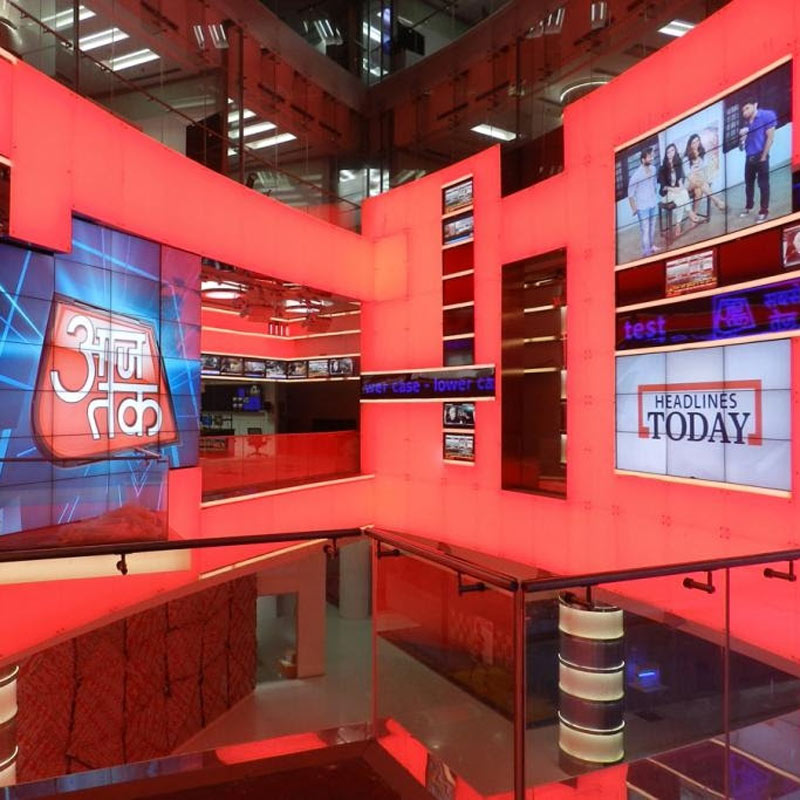
    The TV Today Network is an English-Hindi news television network based in India. It is listed on the Bombay Stock Exchange and the National Stock Exchange and consists of the several news channels that inlcude Aaj Tak (Hindi), India Today Television (English), Tez TV (Hindi), Business Today (English) and Delhi Aaj Tak (Hindi) news channel. The network is associated with the Arun Purie controlled Living Media Inc which publishes India Today magazine. Purie is the chairman and managing director of TVTN.

  • Business Today honours ZEEL MD & CEO Punit Goenka with ‘Best CEO’ award

    Business Today honours ZEEL MD & CEO Punit Goenka with ‘Best CEO’ award

    MUMBAI: Zee Entertainment Enterprises Limited (ZEEL) MD & CEO Punit Goenka has received the coveted Business Today ‘Best CEO’ award in the Media and Entertainment category for 2016. The award was presented by the minister of law & justice and electronics & information technology Ravi Shankar Prasad, India Today group chairman & editor-in-chief Aroon Purie & Wave group vice chairman Manpreet Chadha, at the BT Best CEO Awards ceremony in New Delhi.

    Acknowledging the award, Goenka said, “I accept this award with pride on behalf of our visionary chairman, Dr. Subhash Chandra, and my team at ZEE, whose dedication, hard work and support have enabled the organisation to reach greater heights. We have consistently grown ahead of market, expanded our network viewership share and experienced growth of our product bouquet, both in India and internationally.”

    The methodology of Business Today’s Best CEO Awards focused on the operational performance of companies and their shareholders returns which was conducted by BT’s Knowledge support partner for the process PwC India. To arrive at the BT Best CEO Award winners for 2016, Business Today first used the BT500 list of Most Valuable Indian Companies as a base and then analysed three-year data, using parameters such as growth in total income, total shareholder returns and PBIT. Based on this analysis, an independent jury comprising renowned business leaders — JM Financial Group chairman Nimesh Kampani, JP Morgan India CEO Kalpana Morparia, Khaitan & Co. senior partner Haigreve Khaitan, and Bain & Co. India chairman Sri Rajan chose the final winners.

    Other recipients of the BT Best CEO Awards 2016 include Airtel chairman Sunil Bharti Mittal, Tech Mahindra CEO & MD C P Gurnani, and Dabur India CEO Sunil Duggal, among other.

  • Business Today honours ZEEL MD & CEO Punit Goenka with ‘Best CEO’ award

    Business Today honours ZEEL MD & CEO Punit Goenka with ‘Best CEO’ award

    MUMBAI: Zee Entertainment Enterprises Limited (ZEEL) MD & CEO Punit Goenka has received the coveted Business Today ‘Best CEO’ award in the Media and Entertainment category for 2016. The award was presented by the minister of law & justice and electronics & information technology Ravi Shankar Prasad, India Today group chairman & editor-in-chief Aroon Purie & Wave group vice chairman Manpreet Chadha, at the BT Best CEO Awards ceremony in New Delhi.

    Acknowledging the award, Goenka said, “I accept this award with pride on behalf of our visionary chairman, Dr. Subhash Chandra, and my team at ZEE, whose dedication, hard work and support have enabled the organisation to reach greater heights. We have consistently grown ahead of market, expanded our network viewership share and experienced growth of our product bouquet, both in India and internationally.”

    The methodology of Business Today’s Best CEO Awards focused on the operational performance of companies and their shareholders returns which was conducted by BT’s Knowledge support partner for the process PwC India. To arrive at the BT Best CEO Award winners for 2016, Business Today first used the BT500 list of Most Valuable Indian Companies as a base and then analysed three-year data, using parameters such as growth in total income, total shareholder returns and PBIT. Based on this analysis, an independent jury comprising renowned business leaders — JM Financial Group chairman Nimesh Kampani, JP Morgan India CEO Kalpana Morparia, Khaitan & Co. senior partner Haigreve Khaitan, and Bain & Co. India chairman Sri Rajan chose the final winners.

    Other recipients of the BT Best CEO Awards 2016 include Airtel chairman Sunil Bharti Mittal, Tech Mahindra CEO & MD C P Gurnani, and Dabur India CEO Sunil Duggal, among other.

  • SC grants relief to MS Dhoni in case over portrayal as Lord Vishnu

    SC grants relief to MS Dhoni in case over portrayal as Lord Vishnu

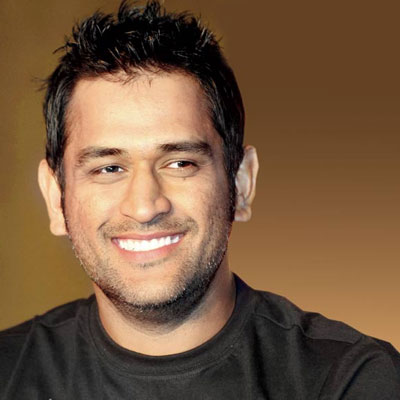
    NEW DELHI: Ace cricketer M S Dhoni got a stay from the Supreme Court on criminal proceedings initiated against him for hurting religious sentiments for being portrayed as Lord Vishnu in a magazine cover. 


    The apex court bunched his petition with plea of TV Today group head Aroon Purie who had also moved the court in the same case. The court had earlier stayed proceeding against Purie also. He was named in complaint for being editor-in-chief of Business Today, which published Dhoni’s photo. 


    The Special Leave Petition was against an order of the Karnataka High Court, which had refused to quash the criminal proceedings pending against him before a trial court in Bengaluru that was slated for today.


    The cricketer pleaded that the complaint filed against him was frivolous and the criminal proceedings needed to be quashed as it was filed just to harass him in the case.


    The High Court had said, “A celebrity and a cricketer like Dhoni should know the consequences of hurting religious sentiments of people. He should have known the consequences of doing such ads. These celebrities are signing ads without any responsibility. Their aim is to earn easy money without considering the problems it may create.”


    The complaint, filed by social activist Jayakumar Hiremath, had alleged that Dhoni was seen on the cover of a business magazine as Lord Vishnu, holding several things, including a shoe in his hands.


    Taking cognisance of the complaint filed by Hiremath, the Additional Chief Metropolitan Magistrate had registered a case against Dhoni under section 295 (injuring or defiling place of worship with intent to insult the religion of any class) along with 34 of the IPC.


    Dhoni had moved the High Court when summons were issued by the Magistrate to appear before him.

  • IRS Q3: Vanitha retains top spot among magazines

    IRS Q3: Vanitha retains top spot among magazines

    MUMBAI: The Indian Readership Survey (IRS) 2011 for the third quarter carried out and released by Media Research Users Council (MRUC) and Hansa Research revealed that there isn’t much change in the readership base of the top five magazines in the country.

    Retaining its numero uno position, Malayalam fortnightly Vanitha recorded an average issue readership (AIR) of 2.59 million. Pratiyogita Darpan also maintained its position at number two with an AIR of 2.02 million.

    Last quarter‘s number nine and ten, Kumudam (Tamil) and Grehlakshmi (hindi) respectively lost their positions to English magazine General Knowledge Today (with an AIR of 1.09 million at number nine) and Bengali magazine Karmakshetra (AIR 1.05 million at number 10).

    Among the Hindi magazines Pratiyogita Darpan‘s AIR stood at 2.02 million topping the list while Saras Salil followed second with an AIR of 1.94 million.

    Slipping down to seventh position, Grehlakshmi recorded an AIR of 983,000 while Grih Shobha, which took its place at number six, clocked in an AIR of 990,000.

    Among the English magazines, India Today continues to lead with 1.64 million AIR. Reader‘s Digest (AIR 998,000) made way for General Knowledge Today (AIR 1.09 million) at number two while it slipped down to number three.

    Further down the list Stardust climbed up to number seven with AIR of 385,000 and while Business Today moved up to number eight (from number 10 last quarter) with an AIR of 345,000. Recording the deep plunge in the ranking, Filmfare fell to number 10 from previous quarter’s number seven with an AIR of 327,000.

    In the regional languages sector, the Malayala Manorama continued to be second with an AIR of 1.31 million while Kumudam slipped down to number four with an AIR of 1.03 million. Taking its place, Bengali weekly magazine Karmakshetra recorded a readership of 1.05 million.

    Tamil weekly Ananda Vikatan fell from number six in the last quarter to number nine in Q3 with a readership of 781,000 while Bengali weekly Karmasangsthaan climbed three spots to reach number six with a readership of 855,000.

  • 2010 will be known as the year of radio -By ENIL CEO Prashant Panday

    2010 will be known as the year of radio -By ENIL CEO Prashant Panday

    The way the world changed in the first decade of the 21st century can be gauged by the year-end covers of two prominent magazines. Time Magazine (Dec 7th issue) called this decade the “Decade from Hell”. In contrast, Business Today‘s cover (Dec 27th issue) called this decade “India‘s best decade.” Clearly, the center of gravity of the world of business has shifted towards the East!

    While Indian industry battled the slowdown of 2009 rather bravely, and the Indian economy still grew at over 7 per cent, the advertising industry wasn‘t that lucky. As the downturn hit the ad industry, the bean counters took over and the focus of CEOs shifted towards management of bottom lines.

    The first item to be cut was obviously the advertising line. Most media companies – who rely heavily on advertising for revenues – saw revenue drops of between 5 and 25 per cent in the first nine months of 2009. While the last quarter of the year looks better, the overall growth in 2009 is still expected to end negative.

    There were more companies recording revenue de-growths than those recording positive growths. For every one Colors coming in and grabbing new revenues, there was a Star Plus and Zee that lost revenues heavily. The sum total: negative growth. Borrowing the terminology of business news channels, the “market width” was negative!

    The few media companies that recorded positive growths in revenues did so on the back of inorganic growth (some parts of the business did not exist last year). Or they were in the early part of their growth cycle (hence last year‘s comparative revenue base was small). In other words, the quarters were incomparable.

    Different media sectors exhibit different growth rates to “maturity” (time taken to grow to a reasonable size). My observation is that radio companies typically take three years to hit maturity – i.e. to max out on ad volumes. After this, revenue growth happens only on the back of pricing increases.

    In the case of newspaper editions, I am told this can extend for up to 10 years. Many Hindi publications (Hindustan for eg) have grown aggressively in recent years on the back of an increase in editions, and these editions obviously represent “inorganic” growths.

    In the case of TV, it‘s more complicated. With unhindered competition, it is difficult to say how much time a channel takes to maturity. A successful channel like Colors appears to be hitting mature levels of GRPs, ad volumes and revenues in record quick time. Another channel like NDTV Imagine still appears some distance away from that. The revenue growth of Colors should be seen as inorganic growth.

    In 2009, almost all “mature” companies experienced air-pockets in their path, and saw revenues tank. The notable exception? Sun TV of course! This one behemoth – much like China – continues to grow with scant regard for the problems the rest are facing!

    How did media companies react to this slowdown? In the most obvious way. Cutting costs. Payroll, marketing, programming, G&A, travel….even electricity were all cut to barebones levels. Headcounts were cut. Incentives were cut. Product companies cut back drastically on R&D (Consumers should expect to see a deficit of innovative products in 2-3 years time). Most media companies also took salary cuts. In the end analysis, anything that could be cut was cut. Today, media companies are structured like they should have been in the first place. Fit and ready to run the marathon!

    So the key question is: Is the worst behind us? Most would respond by saying: Yes. But is the worst really behind us? My strong suspicion is that we have now recovered from last year‘s levels, but are still a few months away from a real recovery. Real turnaround could be delayed till August-September of 2010 (next season). Most media companies are recording growths on year-on-year basis post November 2009 (low base effect of 2008). But how many are recording growths compared to two years back? Very few. Reversing this 2-year decline will take time and I see that happening only by August-September 2010. The pain will continue longer!

    The key challenge for the media going forward in 2010 is managing ad pricing. Pricing has taken a huge hit in 2009. Average media pricing is down by about 25 per cent as advertisers asserted themselves on the back of negative sentiments. To be fair, most advertisers have had big savings in 2009. Media companies have co-operated wholeheartedly as the businesses of their clients got hit.

    As client businesses revive, our hope is that inventory pricing will climb back to at least 2008 levels, if not higher. Now the media companies are looking for an appropriate quid pro quo!

    The second challenge is managing the bottom line as the markets recover – and as costs start to surge. One of the key costs to be cut in 2009 was payroll cost. Now with the media markets opening up, there is a huge pent-up pressure on payrolls that needs to be released slowly. Companies will have to be careful in rewarding key people – while still keeping overall payroll budgets in check. Likewise, programming and marketing costs will tend to surge. Not to mention travel and the G&A.

    Keeping a focus on costs will have to continue for at least another full year if not longer. A connected challenge is one of holding on to key people. As the market booms, there is always a willing “buyer” of managerial and creative talent!

    To be sure, 2010 will be a better year than 2009. There is no doubt about that. At least in terms of profitability. Hopefully, media companies will go back to putting some of that profitability back into what is required for long-term growth: Brand building, programming, training…I also expect that there will be a large number of M&A deals in 2010 and beyond.

    The crippling impact that 2009 had on the weaker players could put many of them on the block. With the stock markets willing to bet again on the more profitable media companies, there should be a large number of deals fructifying. In the TV space, hopefully, some of these acquisitions will lead to an extinguishing of the channel! There‘s just too much unworthy stuff still being broadcast!

    I am quite sure that 2010 will be known as the year of radio. Phase III policy of radio reforms is around the corner. Hat‘s off to the Ministry of I&B for betting big on radio! If they announce the policy quickly, the auctions of as many as 800 channels in 300 new towns could well be completed in 2010 itself.

    And by 2011, the radio industry could start offering a serious alternative to regional print publications. With much economic activity expected in the smaller markets in the next decade, the potential for radio to become a far bigger medium is very tangible.

    But before the government thinks of growth, it has to address the “survival” question first. It‘s a known fact that the radio industry is bleeding from multiple cuts – and this has been going on right from its inception in 2000. With more than Rs 20 billion invested in just Phase II in One Time Entry Fees and capex, and more than Rs 5 billion of accumulated losses incurred in the last three years, there is no way the industry can survive. Unless the government chips in with support yet again.

    The radio industry has requested for the licence period to be extended from 10 years to 15 (if not 20). This would give them some time to get some returns on their capital. The other bugbear, of course, is music royalties.

    In most of the Phase III towns, there is simply no viability till the time that music royalties can become reasonable. In most developed radio markets, radio broadcasters pay up to 4 per cent of their revenues as music royalties. This is when more than 90 per cent of the population listens to radio every week. In India, we are requesting for the same – but scaled down to reflect the percentage of listenership that radio has at present. When radio listenership becomes 90 per cent in India, we are willing to pay 4 per cent then. This is a good time for the music industry to aid in the growth policies of the government. Can they accept this global benchmark for at least the new Phase III stations?

    If the radio industry survives (government extends licence period) and if music royalties are sorted out, it‘s possible that in the next few years, radio will become 8 per cent of the ad industry. It‘s my view that as soon as the government completes Phase III, it has the opportunity to immediately announce Phase IV. It should draw its attention back to the bigger towns and increase the number of channels to at least 25.

    If Colombo and Singapore can have 25 channels, why can‘t Mumbai and Delhi? There are, of course, the usual spectrum problems. The government needs to clean out the current “squatters” on the FM band. And demand more accountability from AIR – either they launch more channels of their own, or they make it available to the private sector. After all, air waves are public property – let there be good use of the same.

    If this happens, and if a multitude of programming formats becomes available, radio listenership will grow fast. And with that the share of radio could rise to upwards of 10 per cent of the total ad industry. Of course, there will be a lot more investment needed to be made – but if there is viability and a semblance of profitability, then the radio industry will not be found lacking!

    All in all, I expect the tide to change soon. I expect a lot more radio to become available in 2010 and then, again, going forward. The next five years could well be the most glorious years for radio – a great future….if, of course, it survives the present!