Tag: business journalism

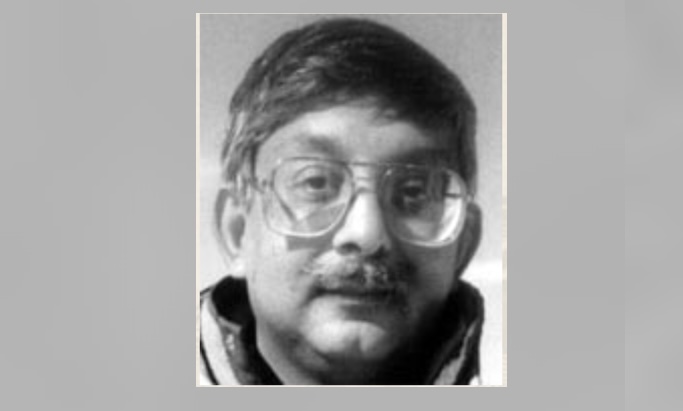
  • A journalist with soild values:  RIP  Subrata N Chakravarty

    A journalist with soild values: RIP Subrata N Chakravarty

    MUMBAI: In 2007, Subrata N. Chakravarty wrote a remembrance piece  on Forbes editor and his mentor James W Michaels for India Abroad. This what he had to say: “Jim was far more to me than my editor. He was also my mentor and friend. He brought me into journalism, taught me, supported me when others were sceptical of my analysis, and helped me succeed.”

    Little did Subrata  know that 18 years later another respected scribe Raju Narisetti would be writing to inform the world about his passing while at the same time thanking him for his goodness when he was alive. This is how Raju  described Subrata: :  “Mourning the loss of a pioneering Indian journalist in America and a friend to many of us who chose to be journalists in the US, and looked up to him and benefited from his friendship and counsel. Subrata was a founding board member of South Asian Journalists Association (SAJA) in 2001. Thank you, Subrata, for your kindness and generosity.”

    Subrata passed away on 1 February 2025 at 4 pm in the United States after a career that saw him stay at Forbes for 27 years from June 1972 to November 1998 with his mentor James Michaels and transform it from a struggling magazine to one of the most respected business publications in the US. (He had been suffering from dementia since 2021.)

    He then served as senior editor for The Boston Consulting Company from November 1998 through April 2000. He worked as an assistant manager and editor for Institutional Investor Magazine from January 2001 through June 2003, and as an editor and reporter for Bloomberg News from July 2003 through November 2006.

    Born in Kolkata, and after an AB in Political Science from Yale University and an MBA from Harvard Business School, Subrata  spent his time at Forbes mentoring scores of young journalists.

    He was greatly influenced by Jim who had told him: in his early days “if a story wasn’t fresh, it should not be written….. if the herd was running one way, the story was quite often in the other direction…..writers have to be “the drama critic of business,” bluntly judging the performance of top management.”

    He made those nuggets of advice his leitmotifs throughout his career always looking for a new angle to a story or development. He also passed on that advice to those he mentored. He set up a company SNC Media, helping journalists to polish their interviewing, research, analytical and writing skills. He used the problem-solving techniques learned at the Harvard Business School with a writing style and attitude developed at Forbes magazine to help journalists tell factually accurate, compelling and entertaining stories. (He had held quite a few training sessions with Indian publishing houses – amongst which figured the then-ABP-owned BusinessWorld before the group sold it.  BusinessWorld too was once rated  as the top business publication in India between the late 1980s and early 2000s.)

    Subrata through his career did in depth interviews with the likes of  futurist Herman Kahn of the Hudson Institute, management thinker Peter Drucker, Edwin Land of Polaroid, and Harold Geneen of ITT.  But most of all he researched everything about companies and predicted the success of many and the downfall of some – rather with a high per centage of accuracy.

    Subrata leaves behind the his wife Barbara, and children  Anjali and Joya.

  • India Today group elevates Siddharth Zarabi as editor of Business Today Multiverse

    India Today group elevates Siddharth Zarabi as editor of Business Today Multiverse

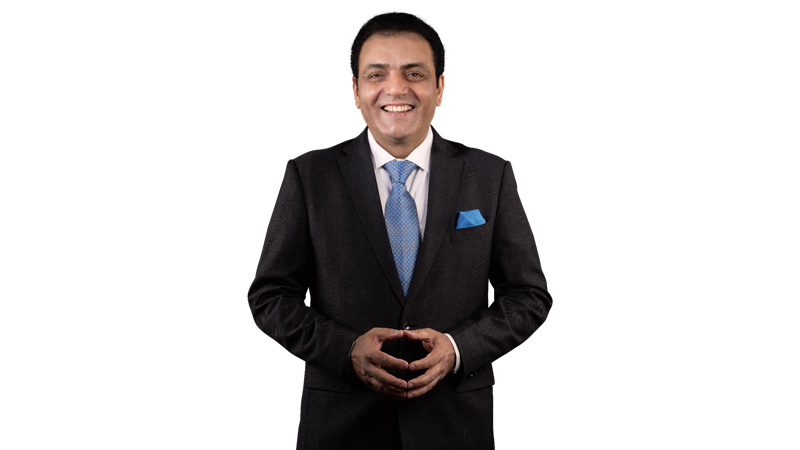
    MUMBAI: In a defining moment for Indian journalism, Siddharth Zarabi steps into the spotlight as editor of Business Today Multiverse. The India Today Group’s announcement marks a pivotal chapter, entrusting Zarabi to orchestrate the editorial symphony across Business Today’s diverse platforms—print, digital, and streaming.

    With a career steeped in financial journalism and a reputation for sharp insights, Zarabi’s elevation signals a bold new era for the brand. This leadership move embodies the spirit of innovation and excellence that continues to define Business Today in an ever-evolving media landscape.

    With over 27 years of journalism experience, Zarabi brings a wealth of expertise and insight to the role. Since joining Business Today as managing editor in 2021, he has played a pivotal role in shaping the brand’s editorial vision, driving impactful coverage and innovative storytelling in business journalism.

  • Shereen Bhan differentiates business news for digital-first audience

    Shereen Bhan differentiates business news for digital-first audience

    NEW DELHI: The managing editor of the top business news channel in India currently, Shereen Bhan is one of the most prominent journalists active in the television industry. With a career spanning over more than two decades, the lady has been behind creating some of the most prominent, renowned, and revered properties like ‘We The People’ and ‘Line of Fire’, 'India Business Hour', 'Restarting India' among many others.  Also the anchor and editor of Young Turks, one of India's longest running shows on entrepreneurs, Bhan, to her credit, has a great bouquet of path breaking work in the business news space. In a candid conversation with Indiantelevision.com, Bhan talks all about her journey in the industry, the changing dynamics of television news production, and the new ‘Clutter Breakers’ programming of the channel.

    Please tell us about your background. How did you end up getting into the journalism business? 

    So, my childhood was pretty much all over the place (chuckles). My father was a fighter pilot in the Indian air force. So, I had to travel a lot and start afresh every two years; new school, new friends, new routine. I spent my childhood across several Indian cities and a few years in Iraq, too. It made me quite adaptable, flexible, and taught me not to take things for granted, and not be complacent. And I think all these qualities have helped me in my professional career as well. 

    How I landed in journalism is a different story. I wanted to be a doctor when I was in school, being heavily influenced by a large part of my family, who were medical professionals. After my class tenth board exams, I did a short stint with my aunt at her nursing home and realised that it was not meant for me. 

    Then I always had an interest in arts and I was always a part of school editorial boards and debating clubs, and I was looking forward to a career in documentary filmmaking. But it so happened that while I was doing my masters, I ended up doing an internship with Sidharth Basu. I was working on a current affairs show that he was anchoring and I got a chance to do some mock interactions with the live audience. I realised that this is what I wanted to do. Basu also told me and motivated me that I had the flair, and it has been more than two decades since. 

    How did your family react to it?

    My family has always been very supportive of what we do. They just want us to excel at whatever we are doing and give our hundred per cent to it. Both, my sister and I, have chosen our careers independently. She is a dancer and has her own academy in San Francisco. Our parents have always supported us. 

    Read more news about CNBC TV18

    So, was business journalism a conscious choice or it just happened? Did you never feel like doing the mainline political reporting? I mean, you have a very small and niche audience in business beat. 

    My first job was with Karan Thapar as a political journalist but when I joined CNBC TV18, 19-years ago, I just happened to fall in love with the work. I was very clear what I wanted to do then. 

    We assume that business news is only for people who are active in business but it is certainly not the case. Business impacts all of our lives in so many different ways. Be it the government reforms or the business of education, or the business of healthcare. So, it is also a human story. It doesn’t need to be seen only from the prism of profit and loss. So, even when I became the managing editor at CNBC TV18, my aim was to expand the crucial view of what gets covered in the business news. 

    Our viewership might be small in comparison but it is more about the influence that we have, for me. Who are the people who are watching CNBC TV18; they are the biggest politicians, biggest entrepreneurs, biggest CEOs. And that is the testament of our credibility. 

    Apart from reporting and anchoring, you have also conceptualised a great many shows during your career. Can you share with us how you go about planning and creating such properties?

    Whenever planning a show, we are very clear about two facts; our programming has to be different, and it has to serve the audience and give them what they are looking for. We have to stay relevant to our consumers. 

    Additionally, TV is all about fieldwork. It’s all about complete alignment and coordination. You have to bring on the same page the anchors, the writers, the graphic teams, the camera team; so you must be able to communicate your vision very clearly to them. 

    If I talk specifically about our new line up called Clutter Breakers, we noticed that TV news viewership is rising in the lockdown. People are locked up inside home and what they are looking for is not just news but reliable and credible information. So, the whole programming was done keeping in mind this very fact and we said let's bring in the most influential voices together, get the premium leaders across industries together and then give a historical perspective to the situation, and then sought out what the future would be like. 

    Read more news stories on Shereen Bhan

    And what are the differentiating factors for this new lineup from other offerings on TV news?

    It is about the content and presentation both. As I said, with the content, we are bringing in the most credible and influential voices within the industry interacting with the audience. We are doing deeper investigation as to how different companies will react to the market situations bound to come. We are bringing in top investors and analysts on board to help people make more informed decisions. 

    In terms of presentation, everything is bite-sized. So, you no longer have to navigate through a half-hour show to get the relevant information out. 

    So, there has been an impact of the digital revolution on TV content too?

    Absolutely. We have to think about the digital-first audience and that’s why bite-sized properties help. We also have to keep in mind that the content remains accessible to those people too who can’t watch us on TV and primarily consume our channel through digital channels and apps. It also helps us take real-time feedback and make our products more relevant to the consumer. 

    What are your thoughts on the current state of journalism in the country? Do you think that a mad race for the TRP justifies the content we are seeing on TV news? 

    I think we are not in the news business anymore; we are in the infotainment business. And that is the sad reflection of our newsrooms today, which are overtaken by a single story. There is a uniformity in content, virtually very little differentiation in the presentation too. It has all become so much studio-driven. And I don’t think that the audience wants only this type of content. If that would have been the case, we might not still be enjoying top position in our category.