Tag: Busan International Film Festival

  • Forum BIFF 2025 marks 30 years of K-Arts with big-picture rethink on Asian film education

    Forum BIFF 2025 marks 30 years of K-Arts with big-picture rethink on Asian film education

    BUSAN: The 30th Busan International Film Festival will stage a special Forum BIFF to mark the 30th anniversary of the Korea National University of Arts’ (K-Arts) school of film, TV & multimedia, with a hard look at how Asian film education can reinvent itself for the future.

    Founded in 1995, K-Arts has been the launchpad for a generation of Korean and Asian filmmakers, building co-production bridges with Japan and China, running pan-Asian short-film labs, and powering the global surge of K-content. This year’s forum, themed Revisiting the path of Asian cinema, will spotlight those achievements while grappling with the future: how to sustain cross-border learning, plug into AI-driven change, and keep Asian schools at the cutting edge.

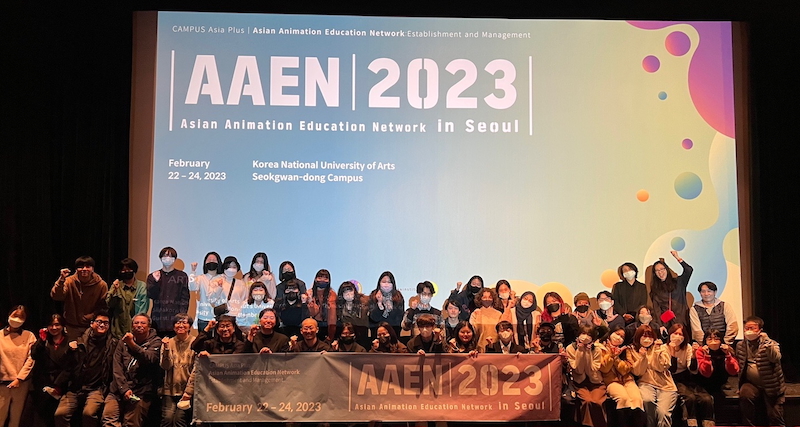
    Sessions will examine collaborative short-film programmes, Korea-Japan and Korea-China co-productions, and the AMA+ scholarship that has seeded talent from across the region. The Campus Asia Plus initiative — linking Korea, Japan, China and Asean — will be in focus for its efforts to build an Asian animation education network that meshes advanced learning, exchange and industry tie-ups.

    The three-part forum will run on 20 September, moderated by professors Choi Yongbae and Steve M. Choe of K-Arts. It will feature a keynote by cinema studies professor Kim Soyoung, presentations from animation professor Lee Jungmin, filmmaking professor Pyeon Jangwan, Cambodian director and AMA+ alumnus Him Sotithya, and producer Ahn Jihye. The closing panel will pull in film critic Lee Seunghee, Japan Institute of the Moving Image president Tengan Daisuke, Beijing Film Academy professor Liu Yu, Yale lecturer Tian Li, and Indonesian director Makbul Mubarak.

    The conversation will stretch from the past three decades of K-Arts’ influence to the next thirty years of Asian cinema education — and what it will take to keep pace with technology and global demand.
     
    BIFF 2025: 17–26 September

    Asian Contents & Film Market: 20–23 September

  • Asian Cinema Fund unveils 14 bold bets for 2025

    Asian Cinema Fund unveils 14 bold bets for 2025

    MUMBAI: The Asian Cinema Fund (ACF), a key pillar of the Busan International Film Festival (BIFF), has unveiled its 14 official selections for 2025 — drawn from a record 850 submissions, up 23 per cent from last year. The picks, spanning three categories, champion fearless storytelling and fresh cinematic forms, offering a snapshot of the region’s creative pulse.

    Three projects have been selected under the ‘Script Development Fund’, each awarded KRW 10 million and a spot at the Asian Project Market 2025. Black Star Angel tells the gripping tale of a woman breaking free from war-fuelled trauma. Heaven Help Us! revisits the Manila Film Center disaster with aching intimacy, and New Life maps the emotional terrain between a grieving mother and daughter.

    The ‘Post-Production Fund’ shortlist includes four films — two Korean, two from the wider region — all set to bow at the 30th Busan International Film Festival this September. Korea’s Coming of Age dives into class and generational shifts, while The Observer’s Journal serves up a quirky, tense thriller. From India, If on a Winter’s Night interweaves complex love stories, and The River that Holds Our Hands traces displacement and memory across borders.

    Meanwhile, the ‘AND Fund’ for feature-length documentaries has backed seven titles with an eye for visual poetry and political poignancy. Korea’s Sea, Star, Woman and Sprouted Potato Lives On explore personal loss and collective memory, while Weathering Architect meditates on Seoul’s vanishing skylines through the lens of veteran architect Joh Sung-yong. From Asia, Kampuchea wrestles with inherited trauma, and Oma profiles a silent yet steely survivor.

    The chosen projects — sharp, subversive, and deeply local — promise to elevate Asia’s voice on the global screen. BIFF 2025 runs 17–26 September at the Busan Cinema Center, with the 20th edition of the Asian Contents & Film Market slated for 20–23 September at BEXCO.

  • MPA unveils new research on the success of K-content

    MPA unveils new research on the success of K-content

    Mumbai: New research prepared by Frontier Economics on behalf of the Motion Picture Association credits the South Korean government’s supportive policy environment and proactive efforts in copyright protection as key factors behind the growth and success of K-content. The MPA released the Frontier Economics report yesterday at an invitation-only event – Secrets of Success: the K-Power Story – during the 29th Busan International Film Festival.

    K-Content has become a cultural phenomenon, known as the “Korean Wave” (Hallyu), that is fueling South Korea’s rise as a global cultural powerhouse. Korean dramas, films and webtoons have gained massive followings around the world, generating an economic boon for the country and increasing Korea’s soft power exponentially.

    The report confirms the premise that sales of Korean content around the world drive Korea’s exports. In 2021, content sector exports reached USD12.4 billion (KRW16.0 trillion), and, recognising this success, the ministry of culture, sports and tourism has set a goal to double Korean cultural exports by 2027.

    Noticeably, the role of international VOD services has been critical to K-content exports. Frontier Economics highlights that 60 per cent of Netflix global subscribers have seen at least one Korean title. K-content’s popularity drives demand for online services in the Asia Pacific region: nearly 50 per cent of audience time spent on subscription VOD services in Asia Pacific involves watching Korean content.

    Opening the forum, MPA president & managing director Asia Pacific Belinda Lui said, “The success of the K-content industry is not accidental. It stems from a combination of creative genius, the freedom to tell stories and smart government action. Action in the form of a policy framework that encourages investment supports world-class production and backs development in talent and infrastructure. What comes next for the sector requires an informed conversation, and Frontier Economics’ findings provide a valuable contribution to that debate.”

    Film critic Yoon Sung-eun moderated a dynamic panel session featuring prominent executives from the film, television and streaming industry.

    “The arrival of streaming services in Korea over the last five to eight years refocused the Korean government on the importance of the screen sector”, said Kim Jong Hak Production CEO Sohn Gi-won. “The spotlight shone brightly on the industry and a wide range of funding was made available to smaller production companies.”

    Detailing some of the smart governance implemented over several decades, Film Business Division, Korean Film Council, director Kim Hyun-soo said, “Financial support ramped up in the 1990s. New SMEs started to invest in film and television. Following the Asian economic crisis, the government realized that more investment was required to stimulate the business. They introduced the idea of project financing. CGV and Lotte started to build multiplexes. These companies also invested in films to screen in their theatres. What is most important is that new films were funded through government agencies. With this injection of investment, screenwriters and directors entered the market. In summary, deregulation fundamentally contributed to positive developments from the government and private sectors.”

    Proposing what the Korean industry might consider as the next phase of its development, Schuyler Weiss, producer of the Academy Award-nominated film Elvis, said, “Opening up the Korean market to international production will benefit the entire Korean entertainment ecosystem and the local economy will profit. Korea has so much to gain from more collaboration with producers from around the world.”

    SLL Central team leader Seong Won-young added, “In the future, it would be good to see a higher proportion of non-scripted content – in the entertainment or sports sectors – shows like Chef in Black and White or Strongest Baseball, produced by Netflix, for example. In other words, I believe we need to diversify the portfolio in addition to series content.”

    The Motion Picture Association has partnered with the Busan International Film Festival for more than a decade. This year, the association is hosting the second annual MPA x KOFIC American Film Night, the MPA Chanel x BIFF Asian Film Academy Workshop: Bridge to Hollywood, and a feature film pitch competition in partnership with the Korean Academy of Film Arts.

    View and download Frontier Economics Policy + The Rise of K-Content 2024 here.
     

  • Nilesh Maniyar & Shonali Bose premiere ‘A Fly On the Wall’ at Busan Film Festival

    Nilesh Maniyar & Shonali Bose premiere ‘A Fly On the Wall’ at Busan Film Festival

    Mumbai: Having co-written landmark titles such as The Sky is Pink and Margarita with a Straw acclaimed filmmaker duo Nilesh Maniyar and Shonali Bose’s latest work, a feature documentary, is set to have its world premiere at the prestigious 29th Busan International Film Festival.

    The film has been selected for the wide-angle documentary competition section, which highlights unique and inspiring cinematic documentary filmmaking voices from around the globe.

    In this powerful and heartfelt film directed by the duo, a friendship walks the distance between life and death. With just a week to go before their friend Chika Kapadia’s appointment for physician-assisted suicide, Nilesh encourages Shonali to turn the camera on herself too and become part of the story. Alongside editor Tushar Ghogale they weave a profound tale of the choice of dignity in death and friendship. The film is set against the stunning backdrop of Switzerland, a location ironically familiar for many iconic Bollywood films.

    Speaking about their selection at Busan, Director Nilesh Maniyar said, “Chika was a friend who gave more than he took. And what a life-altering impression he left on me in his last days. Hence it was only apt to tell his story via a lens of friendship that Chika and Shonali shared for 25 long years. With the premiere at Busan, we hope to further the conversation about the right to dignity in death, as in life.”

    “Fulfilling Chika’s dying wish and shooting this film has been the hardest challenge of my filmmaking career. This film is my love letter to Chika and to life. I am honoured to premiere it at Busan, a festival that values such deeply personal stories.” added Filmmaker Shonali Bose.

    A Fly On the Wall marks the third feature film collaboration between Maniyar and Bose presented at the Busan Film Festival, following The Sky Is Pink and Margarita with a Straw.

  • Busan fest to screen 307 films from 70 countries

    Busan fest to screen 307 films from 70 countries

    MUMBAI: The 16th Busan International Film Festival (BIFF) has announced the lineup of films that will be screened at the festival from 6 to 14 October.


    This year‘s programme has a total of 307 films from 70 countries with 135 World and International premieres.
     
    Among the films from India that would be screened in the ‘A Window On Asian Cinema’ section of the festival are the Sanjay Leela Bhansali’s Hrithik Roshan and Aishwarya Rai Bachchan-starrer Guzaarish. Other films that would be screened in the section are Santosh Sivan’s Urumi, Gurvider Singh’s Alms For A Blind Horse and Amol Gupte’s Stanley Ka Dabba.


    While South Korean director Song Il-gon’s Always will open the festival, Japanese film Chronicle Of My Brother by Harada Masato will be the closing film.

  • Busan fest to honour director Tsui Hark

    Busan fest to honour director Tsui Hark

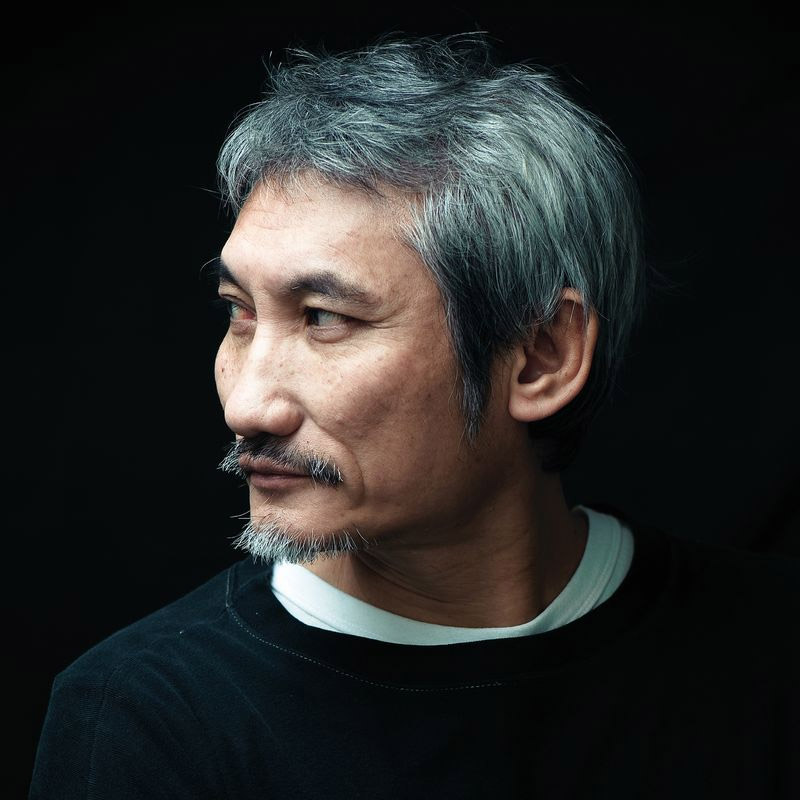
      MUMBAI: The 16th Busan International Film Festival (BIFF) will honour director Tsui Hark as Asian Filmmaker of the Year for his contribution to the advancement of Asian cinema.


    BIFF will celebrate the director‘s career of over three decades and will praise his achievement for bringing Hong Kong films to the international market. It was Tsui whp rewrote the history of Hong Kong films and contributed to the Golden Age of Hong Kong cinema.
     
    Tsui came into prominence in the 1980s after establishing his name as one of the pioneers of the Hong Kong New Wave with films like The Butterfly Murders (1979) and Dangerous Encounters of the First Kind (1980).


    He brought about the special effects era in Hong Kong cinema with Warriors From the Magic Mountain (1982) and revived the martial arts genre with A Chinese Ghost Story (1987) and Once Upon a Time in China (1990).


    Tsui‘s next foray into 3D filmmaking with The Flying Swords of Dragon Gate, is scheduled for release in December.


    Directors who were earlier honoured by the BIFF were Hou Hsiao-hsien, the late Edward Yang and Tsai Ming-liang of Taiwan, Andy Lau of Hong Kong and Yash Chopra of India.

  • Busan fest selects two Indian films for Asian Project Market

    Busan fest selects two Indian films for Asian Project Market

    MUMBAI: The Busan International Film festival has selected two Indian projects for the Asian Project Market at Busan. They are My Ancestral Home by Ritesh Menon and One More by Shivajee Chandrabhushan Deogam.


    The films are among the 30 projects that have been selected for the 2011 edition of Asian Project Market, formerly known as Pusan Promotion Plan (PPP). They have been selected for the Asian Project Market that will be held alongside Busan International Film Festival.