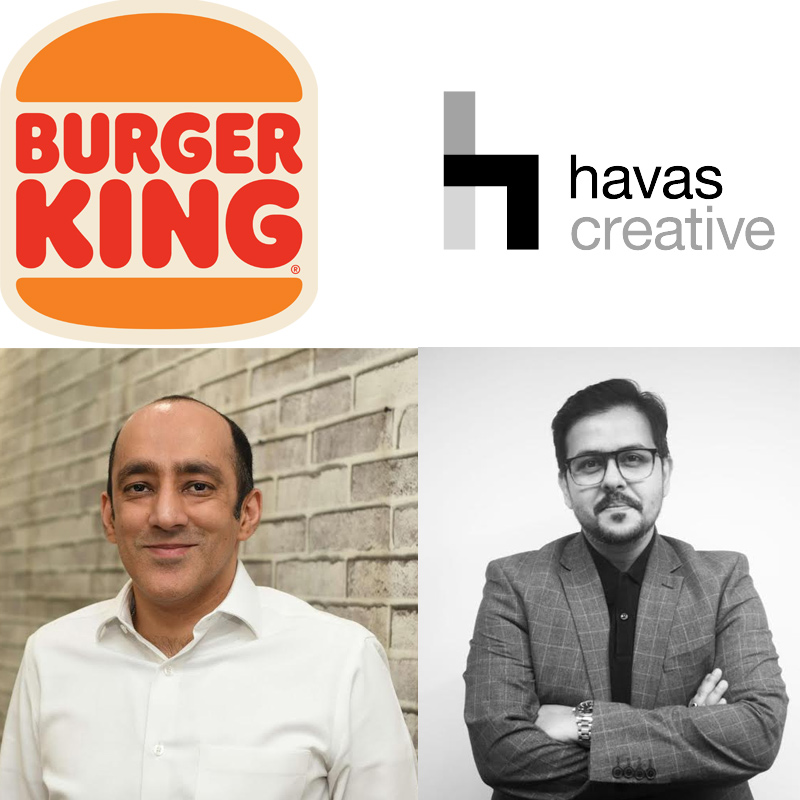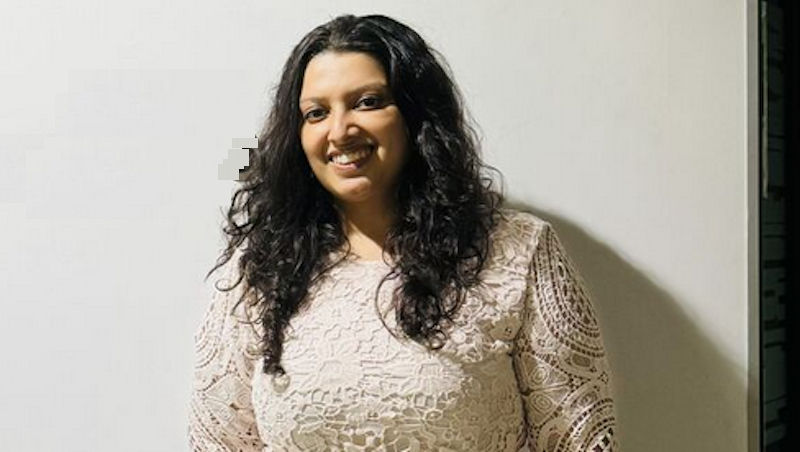
MUMBAI: It’s been four months since she has joined Burger King India, but she’s chosen to make the announcement just as Christmas is approaching. Nazneen Kashikar took to Linkedin a short while ago to tell the world that she has been appointed as general manger marketing at Restaurant Brands Asia which runs the Burger King chain in India.
Prior to this, Nazneen was a partner digital at Mindshare India, a position she occupied for nearly three years. The botany graduate and post-graduate diploma holder (in advertising and public relations) began her career as a senior research associate at Communicate2 where she stayed for three years working on return on marketing investment and performance marketing and digital campaigns.
From there onwards, she got herself going and exposing herself to a variety of roles by doing short stints at companies like Quikr, Sokrati, Equitymaster Agora Research, Liqvd Asia, India Circus, Di-Mentions Studios, Pyxis One, and Asymmetrique. Nazneen has had longer assignments of two years or so with iProspect and GroupM in between the short stints.
Said Nazneen on linkedin: “Excited to contribute, grow, and be a part of this amazing team.”
Mumbai: Burger King India has assigned its digital mandate to Havas Worldwide (Creative) India. As a part of this mandate, the agency will be responsible for creating cornerstone digital campaigns, social media management, and online response management, among other things.
Havas Worldwide India has been focusing on fortifying and updating its core expertise and offerings over the last two years. Havas Worldwide India grew by more than 30 per cent in 2021 across its Mumbai and Delhi offices, thanks to significant business wins such as Tata Cliq Luxury, Bel Cheese, P&G, Vivo, and Celio, to name a few. The agency has also been strengthening its teams to bring in the best talent. As the agency’s growth momentum continues in 2022, it will continue to come up with clutter-breaking work to deliver on its promise of making a meaningful difference in the lives of brands, businesses, and consumers.
Sharing his thoughts on the association, Burger King chief marketing officer Kapil Grover said, “We are excited to have partnered with Havas Worldwide India, which comes with a track record of path-breaking digital campaigns for brands across markets and categories. We are confident that their expertise and market understanding will help us deliver innovative and groundbreaking digital campaigns, thereby further strengthening Burger King India’s position to become the most lovable brand in the digital space. We look forward to a long and fruitful partnership.”
Commenting on the partnership with Burger King, Havas Worldwide (Creative) India managing director Manas Lahiri said, “In today’s cluttered digital ecosystem, only brands that come up with engaging, differentiated content make people sit up and take notice and we at Havas Worldwide India have been doing exactly that over the past few years. Burger King is one of the most audacious brands in the world today, known for creating truly innovative campaigns that become the talk of the town, and we’re confident we will be able to create more such path-breaking, meaningful work for them.”
Mumbai: In this week’s Throwback Thursday segment, we present an ad that isn’t so much of a relic considering it was launched just over a year back. However, the product showcased in the ad – a rotting, aging whopper from Burger King – might qualify as one! It is one of those game-changing ads that make one sit up and rub their eyes in disbelief and ask oneself- Is this for real? But that’s not the only reason this ad features here.
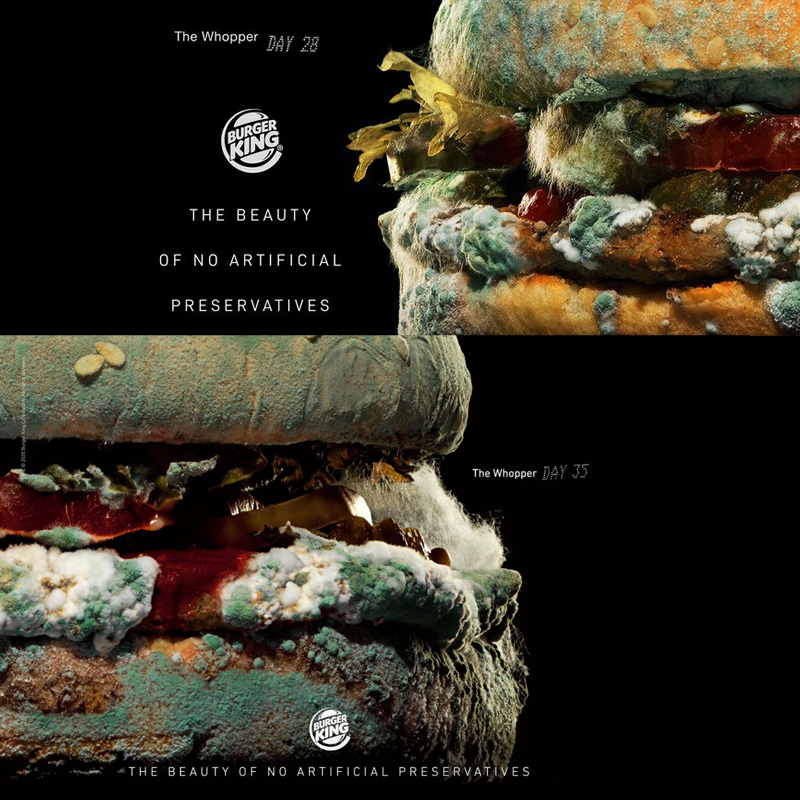
Burger King unveiled a global ad campaign ‘Mouldy Whopper’ in February 2020, aimed at highlighting its commitment to dropping all artificial preservatives from its food products. The ad features a Whopper- one of the signature burgers from the brand- and proceeds to coat it with, believe it or not, mould- layers of it! To say that the Burger King’s ad was a departure from usual food ads would be a gross (in more ways than one) understatement.
Instead of showcasing its food with the classic flawless and often unrealistic, picture-perfect finish- which is the standard norm in fast food advertising, they decided to show the honest, albeit gross reality of natural, ‘free-of-artificial-preservative’ food.
The ad displays a Whopper that looks fresh to start with, and whose components progressively decompose and get engulfed in fungus over a period of time. It depicts this gradual degradation of the burger through a time-lapse video, alongside a date stamp letting you know how long the burger has been exposed to the elements- beginning from day one and concluding at day 34.
The speeded-up action shows the burger deteriorating before our eyes over the course of 30 seconds with intriguingly high-resolution photography. First, the lettuce wilts, then white, fuzzy fungi ravage the meat patty. The burger bun flattens out as the mould spreads all over, and the viewer finds out that the action took place over 34 days. The tagline flashes across the screen: “The beauty of no artificial preservatives”, as it then hits the viewer why the whopper wilts in a matter of hours, going on to rot, decay, and develop grey-green mould in over a month’s span.
The campaign was created through a partnership between three agencies: INGO STHLM, Ogilvy-owned David, and Publicis. It was a far cry from typical food advertising, in which the items are carefully crafted to look as appetising as possible. The idea, of course, was to call attention to the company’s shift away from artificial preservatives and towards a healthier product, even if it came with the tag of ‘junk food’.
The Mouldy Whopper spot accumulated more than 1.7 million YouTube hits within days of its debut. While it left most marketing experts divided, media outlets could not stop breaking the ad down. There were visceral responses on whether the marketing guys at Burger King had lost their minds.
But luckily for the brand, it worked in a counter-intuitive way. It became a talking point, demanded attention, and the central message was also hammered in— that the Whopper grew mouldy because it had no artificial preservatives. The fast-food industry has a reputation of being too processed and full of additives, and this was a welcome departure.
Many of the consumers lauded the brand for its bold but honest and realistic portrayal.
By doing so, the fast-food brand broke all food advertising conventions by marketing its best-selling product in an unappetising, downright disgusting manner. At the same time, such an ad was a huge risk. It could gross loyalists of the brand and turn them off from it.
The work promotes the brand’s pledge to drop all artificial preservatives, which it has accomplished across much of Europe and 400 locations in the US. Plans to have it removed from Whoppers in all the US locations are next on the cards for the brand.
The campaign also seemed to take a cheeky dig at its chief rival, despite never mentioning McDonald’s in the campaign. McDonald’s has come under fire several times in the past for how its food doesn’t appear to decompose as one would expect.
Whether the ad and the shift away from artificial preservatives will work to accomplish Burger King’s ultimate goal—selling more Whoppers—remains to be seen.
Burger King’s CMO Fernando Machado has this to say: “No one in our office was expecting consumers to jump in the car and drive desperately to Burger King to buy a Whopper just because we removed artificial preservatives. The main objective of the Mouldy Whopper campaign was not to drive short-term sales.”
“It is the right thing to do and we don’t see a future where fast food brands will have artificial preservatives. So, by getting there first, we are making our brand future-proof. And, hopefully, in the long run, this will not only help with sales but mostly avoid the brand becoming irrelevant,” he added.
So, was the chain’s controversial mouldy whopper ad a winner? Well, if this year’s Cannes fest is any indicator then it’s a whopping YES for the whopper. The campaign premiered at the recently concluded Cannes Lions International Festival Of Creativity achieving no less than three Grand Prix in the Outdoor category, Retail subcategory. Three posters of the campaign won Grand Prix each, in addition to their correspondent Golden Lion.
But, of course, all that would be a moot point if the communication would have been lost to the ones who matter most – the consumers. Yes, one needs to push hard at the boundaries sometimes, even tear it down to be noticed and become relevant. As a wise guy once said, “If no one notices your advertising, everything else is academic”
CREDITS
CLIENT: Burger King
AGENCY: Ingo, David Miami, Publicis
Executive Creative Director: Björn Ståhl
PRODUCTION
COLONY (Production company)
Producer: Lena von der urg
MUSIC: “What A Difference A Day Makes” by Aretha Franklin
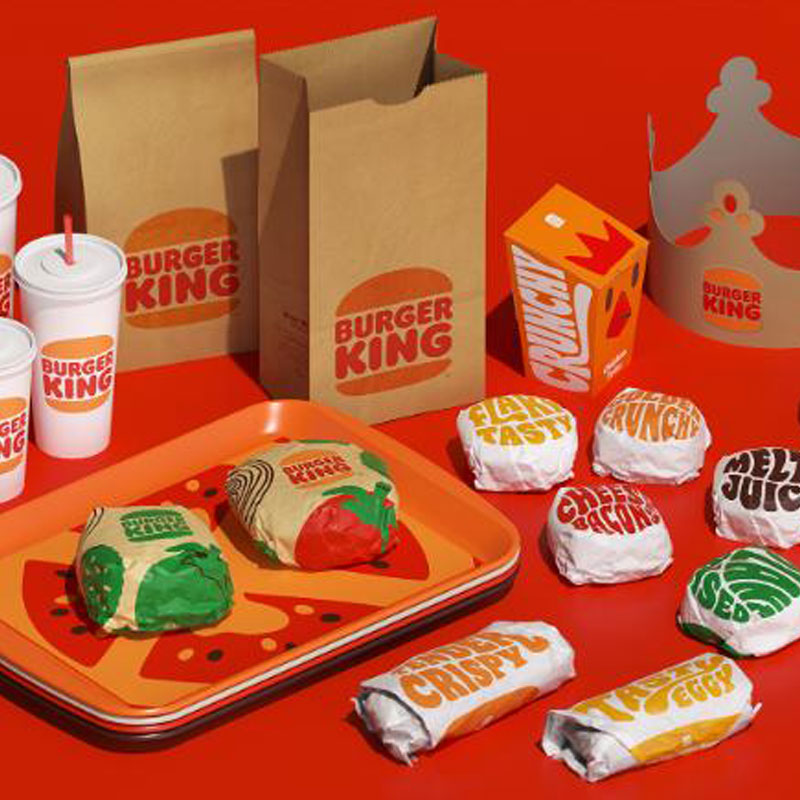
NEW DELHI: Global fast-food giant Burger King has unveiled a revamped brand identity with refreshed logo designs reflecting its removal of conservatives. The redesign is the first in over 20 years.
Restaurant Brands International (which owns Burger King) CMO Fernando Machado said, “We've been doing a lot in terms of food quality and experience. We felt that putting a wrap around all that with an upgrade of our visual identity would help signal to our consumers that this is a brand that's evolving.”
The new logo includes an internally developed font called ‘flames’ with rounded edges in motif shades of brown, red and green. The retro-influenced identity is reflective of the brands “rounded, bold and yummy” food offerings, which will no longer have preservatives and colourings. The change will soon be visible on food packaging, employee uniforms, and soon-to-be remodelled restaurants. The fast food chain will also offer healthier grub options.
In September, Burger King introduced new restaurant designs fit for the Coronavirus era with triple drive-thrus, burger pick-up lockers and takeout counters. The designs will be tweaked to highlight the revamped visual identity. It will take some time for the rebranding to cover all its outlets across the globe.
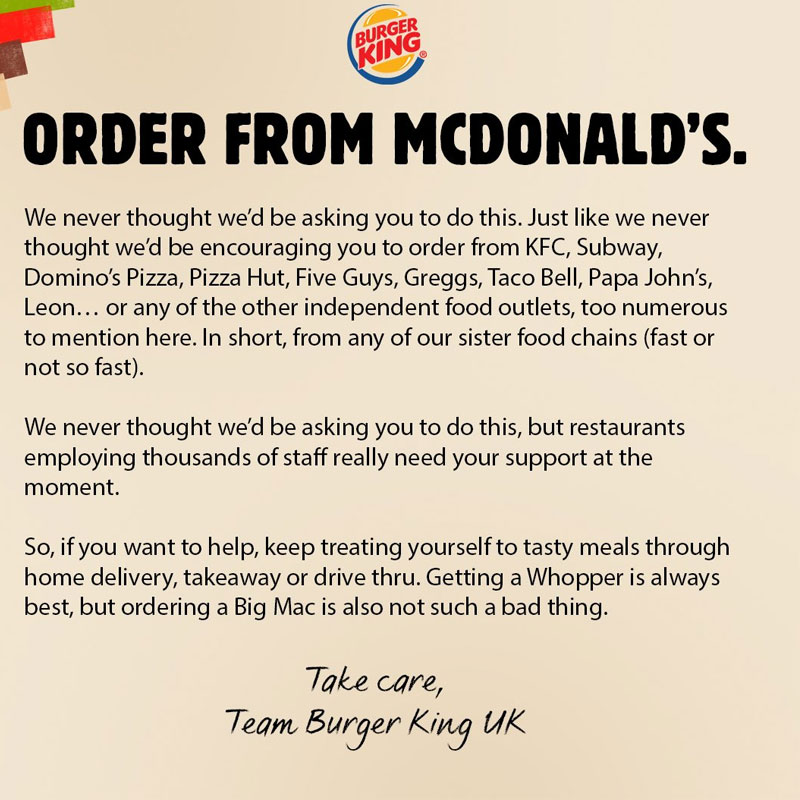
NEW DELHI: Fast food chain Burger King caused a stir on social media when it appealed to patrons to order from arch-rival McDonald’s and other competitors to help them survive the Covid2019 pandemic.
Taking to Twitter, Burger King's UK team encouraged customers to support local restaurants during the four-week-long lockdown recently announced in the country.
“We never thought we would be asking you to do this, but restaurants employing thousands of staff really need your support at the moment. So, if you want to help, keep treating yourself to tasty meals through home delivery, takeaway or drive thru,” it tweeted.
Known for its social media-savvy, Burger King has once again won over netizens with this appeal, while also exemplifying the golden maxim ‘modern problems require modern solutions.’ Titled ‘Order from McDonald's’, the note has been liked over 114,000 times, with comments and reactions lauding the fast food giant for its gesture of goodwill.
"Getting a Whopper is always best, but ordering a Big Mac is also not such a bad thing," the company said.
Pizza Hut, KFC, Subway, Taco Bell and Domino’s were also mentioned in the note, as were several standalone food outlets.
Over the course of their six-decades-long rivalry, Burger King has never lost an opportunity to troll McDonald's through its marketing campaigns. But this may be the first time the brand has displayed sportsmanship and stood in solidarity with not just it’s biggest competitor but the fast food industry as a whole.
The message came after the Boris Johnson-led government initiated a second nationwide lockdown to contain the spread of Covid2019 cases, which have again registered an uptick during the last few weeks in the country.
While Burger King UK has urged people to help all restaurants, the chain's North American arm has decided to give a free Whopper to customers who dare to drive through one of the scariest places on earth – a stretch of now abandoned restaurants which used to be operated by its rivals – as part of Halloween celebrations.
The F&B sector has been reeling under the impact of the Coronavirus-fuelled curfews and restrictions, with thousands of independent as well as global food chain outlets lowering their shutters permanently. Millions of workers in the industry were handed the pink slip or forced to take pay cuts amid an already challenging time.
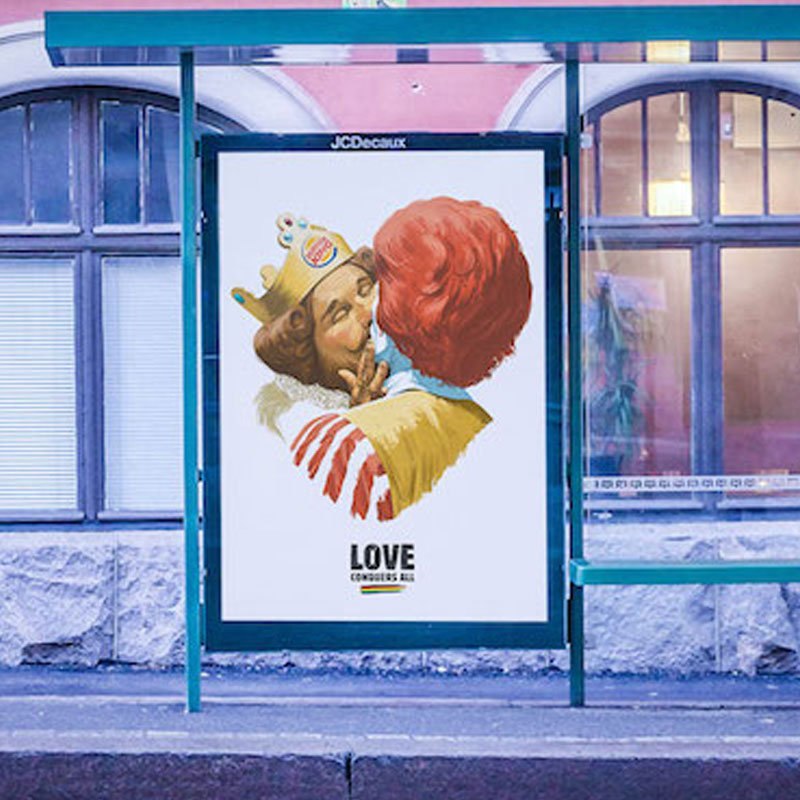
NEW DELHI: Fast food giant Burger King that is globally known for its creative campaigns has once again hit the bull's eye with its latest ad for the Helsinki pride week (September 7 – 13). Their latest campaign showcases Burger King mascot kissing the Ronald of McDonald's with the tag line 'Love conquers all'. The campaign has already garnered massive eyeballs on social media and global press.
Created by TBWAHelsinki, the creative celebrates the LGBTQ+ community. The kiss is featured across print, outdoor sites, and in Burger King’s own channels and restaurants.
Burger King Finland brand manager Kaisa Kasila commented, “Burger King has always stood for equality, love, and everyone’s right to be just the way they are. The only instance where it might not seem so is when we’re bantering with our competitor. But we want to be clear—it all stems from the respect we have for them. And we know McDonald’s stands for the values we stand for, too.
“The idea behind the painting sprang from our desire to celebrate love in all forms. We thought, what better way to convey our values than by portraying an all-encompassing kiss between Burger King and McDonald? We wanted to show that in the end, love always wins.”
Earlier this year, Burger King made news with its Moldy Whooper campaign that showcased the brand's resolve to do away with added preservatives in the burger in the near future. The campaign was much appreciated by consumers and critics.
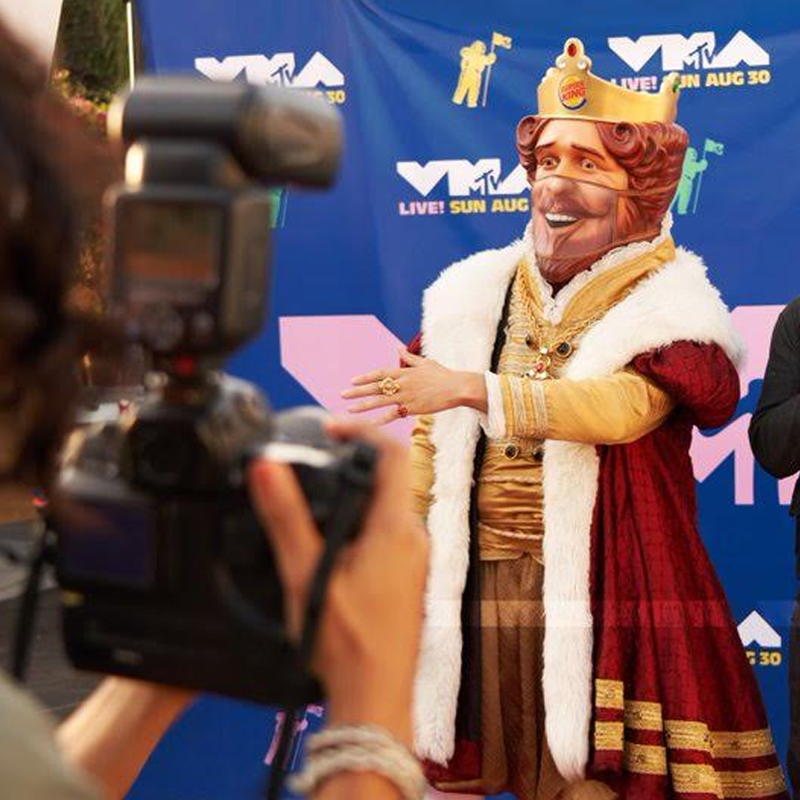
NEW DELHI: Burger King has become synonymous with clutter-breaking advertising campaigns that can cut across audiences across the world. In their latest play, the brand’s mascot and renowned rapper Lil Yachty took over the MTV Video Music Awards last week, with augmented reality appearances.
The burger brand ran an immersive sweepstake during the MTV Video Music Awards (VMAs) that asked viewers to scan a QR code with their smartphone cameras to activate an augmented reality (AR) experience. Scanning the QR codes activated offers including a free Whopper sandwich with a $1 purchase in the BK App, and chance to win a year of free Whoppers along with tickets to the 2021 Video Music Awards.
To roll out this campaign with the AR experience, the brand collaborated with digital content and experience agency Coffee to create. Apart from this, it worked with MullenLowe on the promotional effort, as per the media report.
The brand announced about the campaign on Twitter and created a conversation among netizens.
The duo appeared together on the red carpet throughout the show. After Lil Yachty performed his song “Top Down,” the King awarded him the Burger Fire Medallion.
Burger King also included a consumer promotion in the broadcast. Viewers were encouraged to download the BK app and use it to scan QR codes that appeared on-screen to avail the offers.
this could be you pulling up to the 2021 VMAs… scan our QR codes during tonight’s show pic.twitter.com/Vkrj5dipTE
The campaign is clearly intending to boost downloads for the BK App, which has been a central part of the burger chain’s mobile marketing efforts in the past few years. The QSR brand has already been working to push its app to the users.
Post pandemic, apps have become even more crucial to quick-service brands as the coronavirus has led to the temporary closure of dining rooms or diminished capacity.
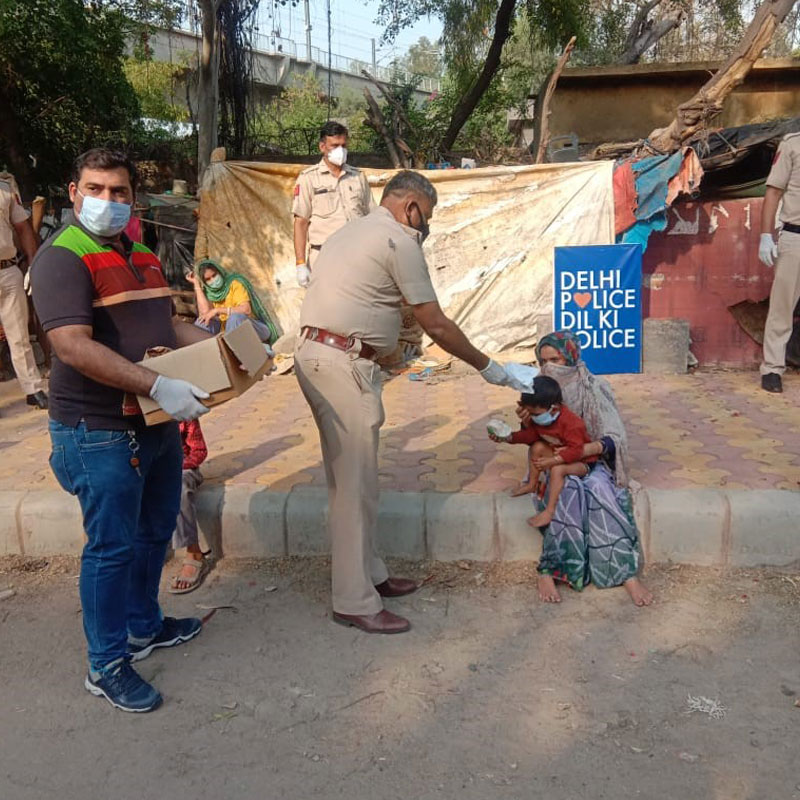
MUMBAI: Burger King India partnered with Delhi Police to distribute burgers to children in orphanages and community clusters amidst the current Covid2019 crisis. The Don Bosco Ashalayam and Auxilium Snehalya in Palam Village and Asha Grah Children Home for Boys and Girls in Dwarka were served with burgers as mid-day snacks. Further, kids of JJ clusters in the area of Vikas Puri, GTB Enclave, Madhu Vihar, R.K Puram and Kalkaji were also served burgers. As part of this partnership, Burger King distributed 5000 burgers.
Burger King India’s ‘Crown Standard Delivery’ ensures safe delivery of food from the kitchen to the communities. The staff delivering the meals wear protective gear like masks and gloves to ensure safety. Since the outbreak, Burger King has further strengthened its robust restaurant procedures around food safety, cleanliness and hygiene and increased its sanitization frequency in all restaurants across the country.
Burger King CMO Srinivas Adapa said, “We work closely with police officers in our communities on a regular basis and in these unprecedented times, we would like to salute them for their selfless service to the nation. We are honoured to partner with the Delhi Police to provide safe and hygienic food to children in this hour of need.”
The Delhi Police also appreciated the brand gesture and were happy to partner with this initiative which brought a smile on the faces of young kids.
MUMBAI: Burger King India continues its growth momentum by launching its 200th restaurant. The brand achieved this milestone in the shortest time span of five years. Burger King had crossed the 100th restaurant mark in the recent past (2017) and the next 100 was accomplished in less than 22 months.
Burger King embarked on its journey in India with the opening of its first restaurant in Nov 2014 at Select Citywalk Mall in South Delhi. In the last five years, Burger King has been the fastest growing QSR in India with presence across 44 cities. The brand enjoys strong presence in metros and tier 1 cities and is also expanding into tier II cities across India.
Burger King is positioned on authenticity and self-expression and has successfully established itself in India as a brand that delivers on taste and value. Known for its 100 per cent locally inspired and developed range of burgers & the world famous ‘Whopper’, the brand has recently added Wraps and Breakfast to its menu.
Burger King has different formats of restaurants that are present across malls, high streets and transit locations like airports, highways and metro stations. The 200th restaurant situated at Chakala Metro station in Andheri in Mumbai is the brand’s first ‘take-away only’ outlet in India.
On this milestone achievement, Mr. Rajeev Varman, CEO, Burger King India Private Limited said, “We are extremely excited and happy with our growth journey so far. We have doubled the store count to 200 stores within a short span of time. Crossing a landmark milestone is a humbling experience and it only pushes us further to ensure the best for our guests. We will continue to upgrade our restaurant experience and delight our guests with customised menu built on regular innovations. We will continue to stay focused on providing highest standards of food quality and best in class service to our guests”
MUMBAI: It wasn’t long back that fast food penetration in India was seriously low. It was only metros and mini metros that had access to burgers, pizza and french fries. But with increasing globalisation and digitisation, multinational fast food players have forayed into the remotest areas of India as well.
According to a report published by Technopak, India’s fast food industry is expected to grow to $4.61 billion by 2020, more than double its value of $2.11 billion in 2014,. As Indians start to spend more, competition is heating up, with foreign chains like Burger King, Wendy’s, Carl’s Jr. and Johnny Rockets setting up shop in the last year.
American global chain of hamburgers and fast food, Burger King entered India in 2014 and has since rapidly grown its presence and reach in the country. Today, over 15 million customers sink their teeth into the burger chain’s menu everyday. Although Burger King has outlets in over 100 countries across the globe, it has not resorted to duplicating the same menu and strategy for India and rather believes in having a tailor-made menu to fit the Indian market and consumers.
Although India is predominantly considered a vegetarian market, multinational fast food chains have an interesting mix of veg and non-veg items on the menu for Indians. Interestingly, for Burger King, most of its products sold in India in terms of quantity are veg.
While United States of America continues to be a primary market for Burger King, the company has a mission to become India’s leading fast food restaurant. For this, Burger King has upped its supply chain, distribution and invests a fair amount on R&D. Burger King global chief marketing officer Fernando Machado says, “We have been growing faster outside US for the last 5-6 years not only due to the number of outlets but because lately we have been paying more attention to advertising and marketing in all the markets.”
India is an iconic and important market for Burger King due to strong franchise partners here. For the company, it was quite a test to create and curate a menu for the Indian audience. Now that they have achieved it, the company want to concentrate on scaling up operations.
Machado says that he is happy with the scale of growth in India. However, he is not ready to rest on his laurels just yet. The Indian market is among the most important ones for the company and Machado sees scope for greater growth.
Where major brands including Dominos, McDonald’s and KFC are aggressively marketing themselves in India, Burger King has always steered away from advertising heavily in India, The reason? The amount of adverting is a function of the size of the account for Burger King. However, as India business scales up, the fast food company will increase its ad spend in the country. “Since we have a master franchise in the west, our marketing budget is a per centre of the sales of the company. It is not like FMCG, where even if you are making loss, you have to advertise.”
Today, every brand wants to connect with the consumer at as many touch points as possible. They tap the audience on social media, print, outdoor and traditionally. Digital however takes the largest pie as the millennials are constantly attached to their mobile devices. Yet, for Burger King, traditional medium still offers a great ROI (return on investment). The digital promotions are restricted to huge campaigns only. They believe that the primary role of traditional medium is to drive short term sales and traffic, whereas digital is more about connecting with people.
Additionally, there’s never been a better time for fitness brands with the younger generation becoming more and more health conscious. With almost sedentary lifestyles, people are opting for healthier eating and exercise options to stay fit. Brands are ensuring their communication shows their commitment to health. However, brands that have stuck to high sugar and salt content for decades are now finding it difficult to change that perception.
This problem can be solved by either promoting the product for its taste and goodness or altering its key ingredient to make it more appealing for the health conscious consumer.
We have all grown up hearing from our elders how consuming fast food can be really unhealthy due to the high amount of sugar and salt in these products. To address the issue, major F&B (Food and Beverage) brands internationally have decided to cut down on the amount of sugar, salt and saturated fats in their products to improve the image of packaged foods.
Certain fast food chains like McDonald’s, KFC and Burger King now have a government-enforced ‘calorie cap’ placed on their heads, in an attempt to make their meals healthier.
F&B majors including Nestle, Mondelez, Jubilant Foods, McDonalds among others are under pressure from a shift in consumer preferences towards healthier food and away from processed products such as instant noodles and frozen pizza. Nestle chief executive Mark Schneider remarked, “The trend towards healthier foods is to be observed worldwide. Combining the convenience of packaged foods with healthy good nutrition, that is where our sweet spot is.”
At such a time, the challenge for Burger King lies in improving the food quality and taste while cutting down on sugar and salt content. For this, the company has dedicated half its team towards cutting down the sugar and salt in all its products while maintaining the taste. “It’s not about what will be our next sandwich but how can we clean all the ingredients in the existing menu so we don’t use preservatives. That’s not because it is a trend but because it’s the right thing to do”, says Machado.