Tag: Budget

  • Budget allocations for Digital India, northeast go up for Communication and Information Technology Ministry

    Budget allocations for Digital India, northeast go up for Communication and Information Technology Ministry

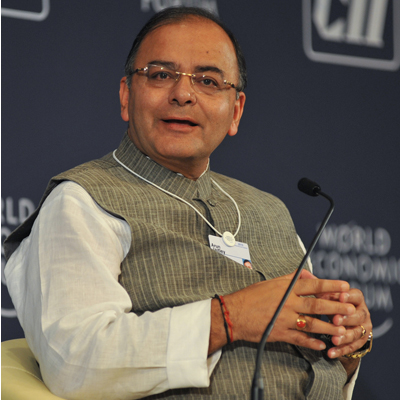
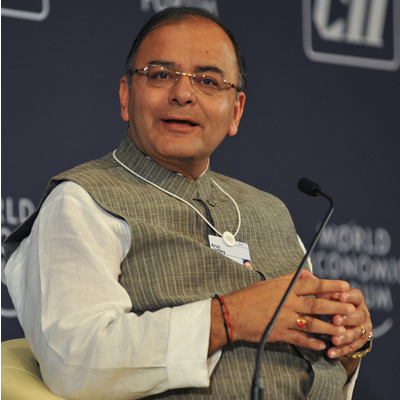
    New Delhi: The allocation for capital outlay on telecommunication and electronic industries is Rs 125 crore for the Departments of Telecommunications Communications and Information Technology (DeiTY), according to the Union Budget presented by Finance Minister Arun Jaitley on February 29.

    While the capital outlay on telecommunication and electronic Industries has been sharply increased for the telecommunications department from Rs 16 crore in the revised budget of 2015-16 to Rs 80 crore for 2016-17, it had been cut from Rs 69 crore in the revised estimates of the DeiTY for 2015-16 to Rs 45 crore for 2016-17.

    Interestingly, this works against the interests of the broadcasting industry, since set top boxes, antennae, headends and other equipment would fall under the DeiTY’ help to public or private industry under the head of  ‘capital outlay on telecommunication and electronic Industries.’

    The total budgetary outlay for the Telecommunication Department is Rs 21214.66 crore, while it is Rs 3328.82 crore for DeiTY for 2016-17

    Under Digital India programme, there are separate allocations for the Manpower Development Programme to ensure availability of trained human resources; Electronics Governance to deliver all Government services electronically to the citizens in his/her locality through integrated and inter-operable systems via multiple modes, while ensuring efficiency, transparency and reliability of such services at affordable costs; the National Knowledge Network with multiple gigabit bandwidth to connect Knowledge Institutions across the country; Promotion of Electronics/IT Hardware Manufacturing;  R&D in IT/Electronics/CCBT; and Foreign Trade and Export Promotion to reimburse Central Sales Tax to Electronics Hardware Technology Parks (EHTP) and Software Technology Park (STP) units.

  • Budget allocations for Digital India, northeast go up for Communication and Information Technology Ministry

    Budget allocations for Digital India, northeast go up for Communication and Information Technology Ministry

    New Delhi: The allocation for capital outlay on telecommunication and electronic industries is Rs 125 crore for the Departments of Telecommunications Communications and Information Technology (DeiTY), according to the Union Budget presented by Finance Minister Arun Jaitley on February 29.

    While the capital outlay on telecommunication and electronic Industries has been sharply increased for the telecommunications department from Rs 16 crore in the revised budget of 2015-16 to Rs 80 crore for 2016-17, it had been cut from Rs 69 crore in the revised estimates of the DeiTY for 2015-16 to Rs 45 crore for 2016-17.

    Interestingly, this works against the interests of the broadcasting industry, since set top boxes, antennae, headends and other equipment would fall under the DeiTY’ help to public or private industry under the head of  ‘capital outlay on telecommunication and electronic Industries.’

    The total budgetary outlay for the Telecommunication Department is Rs 21214.66 crore, while it is Rs 3328.82 crore for DeiTY for 2016-17

    Under Digital India programme, there are separate allocations for the Manpower Development Programme to ensure availability of trained human resources; Electronics Governance to deliver all Government services electronically to the citizens in his/her locality through integrated and inter-operable systems via multiple modes, while ensuring efficiency, transparency and reliability of such services at affordable costs; the National Knowledge Network with multiple gigabit bandwidth to connect Knowledge Institutions across the country; Promotion of Electronics/IT Hardware Manufacturing;  R&D in IT/Electronics/CCBT; and Foreign Trade and Export Promotion to reimburse Central Sales Tax to Electronics Hardware Technology Parks (EHTP) and Software Technology Park (STP) units.

  • Blossoming of a ‘Sunrise’ industry, with help from a ‘Sunshine’ Budget

    Blossoming of a ‘Sunrise’ industry, with help from a ‘Sunshine’ Budget

    Literary purists will expect an op-ed on the media and entertainment sector’s budget wish-list to begin with a reference to Chanakya’s Arthashastra or Manu’s Manusmriti; and rightly so, for they contain priceless public policy principles that hold good even today. However, as someone who is tasked with navigating an innovative organisation that takes pride in its ability to win the hearts of Indians across the world, I will opt for a more recent, relevant and simpler quotation, with a creative twist:

    ‘Kuch to phool khilaye ‘aapne’, aur kuch phool khilane hai Mushkil yeh hai bag me ab tak, kaante ‘kuch’ purane hai’

    Shri Arun Jaitleyji

    Honourable Finance Minister, Government of India

    28 February, 2015, Union Budget Speech

    Last year, the FM listened to two of our industry’s requests. Withholding tax rates on payment of royalty were reduced to 10 per cent and a new, comprehensive foreign trade policy (SEIS) ensured that service sectors are treated at par with their counterparts in manufacturing. This time we have three sets of requests: those that remain from last year, those that are relatively more recent and those that are apply uniformly to all industries.

    Irrespective of which part of the value chain they might represent, all industry stakeholders will agree that consolidation is a much-needed, ongoing business reality that is critical for our sector to flourish. It is only natural that as this trend gathers steam, the regulation should treat our sector at par with other sectors like telecom and software when it comes to the carrying forward of losses in case of a merger or amalgamation. All this needs is an amendment in Section 72A of the IT Act to include the ‘broadcasting, media and entertainment sector.’ The second issue is an oft-repeated one and refers to the treatment of hire charges for transponders as royalty. This leads to an unnecessary tax burden given that there is no transfer of technology taking place. Moreover, even foreign jurisdictions don’t treat these payments as royalty. A simple clarification from the authorities can help resolve this issue.

    Amongst the more recent requests, the first pertains to how we treat payments for content production. These are not ‘fees for technical services’ (u/s 194J) and should instead be treated as ‘work’ (u/s 194C). This will bring clarity regarding the applicability of withholding taxes and help reduce litigation. The other pertains to the sponsorship of ground events. Currently, despite the recipient of the service paying service tax in entirety, set off of CENVAT credit is not available to the sponsorship service provider. This anomaly needs to be corrected.

    The final category pertains to requests that will help industry at large and not just our sector. However, this very aspect makes them even more critical for the M&E sector given our role as a ‘force-multiplier.’ Around $18 billion of investment proposals have been received in electronics manufacturing under the ambitious ‘Make in India’ programme, driven mainly by mobile handset manufacturers. Without high-quality engaging video content, that device with a 5-inch HD screen, 64GB storage and oodles of computing power has practically no use. Media rights are the single largest contributor to almost all sporting leagues in this country. FMCG companies spend a significant portion of their top-line (~10-15 per cent) on advertising because it contributes significantly to their growth. The moot point here is that we power several ecosystems, beyond our own. In keeping with this philosophy the top four requests are (1) reduction in Minimum Alternate Tax (MAT) rate (2) utilisation of credit of Education Cess and Secondary and Higher Education Cess lying in CENVAT balance (3) allowing CENVAT credit on Swachh Bharat Cess (SBC) and (4) removing restrictions on claiming CENVAT Credit.

    While MAT may eventually have lesser relevance (as corporate tax rates and the number of exemptions available to companies reduce), it is in the transitory period that a reduction in the MAT Rate (ideally coupled with the possibility of claiming MAT Credit over an indefinite period of time) can be extremely beneficial. On the issue of Education Cess and Secondary and Higher Education Cess, a simple clarification will suffice. Finally, the Swachh Bharat mission is a unique, much-needed effort that has several positive externalities. So much so, that many organisations are, in their individual capacity, trying their best to support it. At MTV we’ve launched the Junkyard Project, where we are helping with the cleaning and beautification of junkyards. In its current avatar, it is likely that the burden of the SBC will be passed on to the end consumer, after the effects of cascading. Therefore, it will be helpful if CENVAT Credit is allowed on the Swachh Bharat Cess. The government has placed huge emphasis on the ease of doing business. A smooth, seamless flow of tax credits is a critical aim in this regard. As a precursor to the GST regime, it will be helpful if all restrictions on claiming CENVAT credit are removed, including those related to timelines and specific inputs and input services.

    At Viacom18 we take the value of ‘listening deeply’ very seriously. In addition to some of the points above, my op-ed before the last year’s Budget had also argued for a more ‘innovative’ style of dissemination of the budget speech (‘engaging, multi-lingual, audio-visual with info graphics’). I hear that this time around the Finance Ministry has launched an official YouTube channel. Clearly the prashaasan is listening. Now it’s our turn to switch on the TV sets on and grab the popcorn. We’re all ears for Budget 2016.

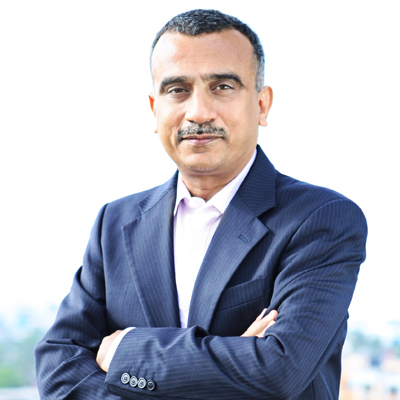
    (These are purely personal views of Viacom18 group CEO by Sudhanshu Vats and Indiantelevision.com does not necessarily subscribe to these views.)

  • Blossoming of a ‘Sunrise’ industry, with help from a ‘Sunshine’ Budget

    Blossoming of a ‘Sunrise’ industry, with help from a ‘Sunshine’ Budget

    Literary purists will expect an op-ed on the media and entertainment sector’s budget wish-list to begin with a reference to Chanakya’s Arthashastra or Manu’s Manusmriti; and rightly so, for they contain priceless public policy principles that hold good even today. However, as someone who is tasked with navigating an innovative organisation that takes pride in its ability to win the hearts of Indians across the world, I will opt for a more recent, relevant and simpler quotation, with a creative twist:

    ‘Kuch to phool khilaye ‘aapne’, aur kuch phool khilane hai Mushkil yeh hai bag me ab tak, kaante ‘kuch’ purane hai’

    Shri Arun Jaitleyji

    Honourable Finance Minister, Government of India

    28 February, 2015, Union Budget Speech

    Last year, the FM listened to two of our industry’s requests. Withholding tax rates on payment of royalty were reduced to 10 per cent and a new, comprehensive foreign trade policy (SEIS) ensured that service sectors are treated at par with their counterparts in manufacturing. This time we have three sets of requests: those that remain from last year, those that are relatively more recent and those that are apply uniformly to all industries.

    Irrespective of which part of the value chain they might represent, all industry stakeholders will agree that consolidation is a much-needed, ongoing business reality that is critical for our sector to flourish. It is only natural that as this trend gathers steam, the regulation should treat our sector at par with other sectors like telecom and software when it comes to the carrying forward of losses in case of a merger or amalgamation. All this needs is an amendment in Section 72A of the IT Act to include the ‘broadcasting, media and entertainment sector.’ The second issue is an oft-repeated one and refers to the treatment of hire charges for transponders as royalty. This leads to an unnecessary tax burden given that there is no transfer of technology taking place. Moreover, even foreign jurisdictions don’t treat these payments as royalty. A simple clarification from the authorities can help resolve this issue.

    Amongst the more recent requests, the first pertains to how we treat payments for content production. These are not ‘fees for technical services’ (u/s 194J) and should instead be treated as ‘work’ (u/s 194C). This will bring clarity regarding the applicability of withholding taxes and help reduce litigation. The other pertains to the sponsorship of ground events. Currently, despite the recipient of the service paying service tax in entirety, set off of CENVAT credit is not available to the sponsorship service provider. This anomaly needs to be corrected.

    The final category pertains to requests that will help industry at large and not just our sector. However, this very aspect makes them even more critical for the M&E sector given our role as a ‘force-multiplier.’ Around $18 billion of investment proposals have been received in electronics manufacturing under the ambitious ‘Make in India’ programme, driven mainly by mobile handset manufacturers. Without high-quality engaging video content, that device with a 5-inch HD screen, 64GB storage and oodles of computing power has practically no use. Media rights are the single largest contributor to almost all sporting leagues in this country. FMCG companies spend a significant portion of their top-line (~10-15 per cent) on advertising because it contributes significantly to their growth. The moot point here is that we power several ecosystems, beyond our own. In keeping with this philosophy the top four requests are (1) reduction in Minimum Alternate Tax (MAT) rate (2) utilisation of credit of Education Cess and Secondary and Higher Education Cess lying in CENVAT balance (3) allowing CENVAT credit on Swachh Bharat Cess (SBC) and (4) removing restrictions on claiming CENVAT Credit.

    While MAT may eventually have lesser relevance (as corporate tax rates and the number of exemptions available to companies reduce), it is in the transitory period that a reduction in the MAT Rate (ideally coupled with the possibility of claiming MAT Credit over an indefinite period of time) can be extremely beneficial. On the issue of Education Cess and Secondary and Higher Education Cess, a simple clarification will suffice. Finally, the Swachh Bharat mission is a unique, much-needed effort that has several positive externalities. So much so, that many organisations are, in their individual capacity, trying their best to support it. At MTV we’ve launched the Junkyard Project, where we are helping with the cleaning and beautification of junkyards. In its current avatar, it is likely that the burden of the SBC will be passed on to the end consumer, after the effects of cascading. Therefore, it will be helpful if CENVAT Credit is allowed on the Swachh Bharat Cess. The government has placed huge emphasis on the ease of doing business. A smooth, seamless flow of tax credits is a critical aim in this regard. As a precursor to the GST regime, it will be helpful if all restrictions on claiming CENVAT credit are removed, including those related to timelines and specific inputs and input services.

    At Viacom18 we take the value of ‘listening deeply’ very seriously. In addition to some of the points above, my op-ed before the last year’s Budget had also argued for a more ‘innovative’ style of dissemination of the budget speech (‘engaging, multi-lingual, audio-visual with info graphics’). I hear that this time around the Finance Ministry has launched an official YouTube channel. Clearly the prashaasan is listening. Now it’s our turn to switch on the TV sets on and grab the popcorn. We’re all ears for Budget 2016.

    (These are purely personal views of Viacom18 group CEO by Sudhanshu Vats and Indiantelevision.com does not necessarily subscribe to these views.)

  • DTH & cable ops miffed as AAP hikes entertainment tax in Delhi

    DTH & cable ops miffed as AAP hikes entertainment tax in Delhi

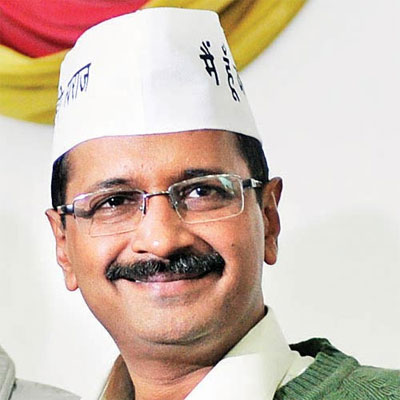
    MUMBAI: Delhiites can expect to dole out more cash for their weekly dose of entertainment courtesy the new budget presented by the Arvind Kejriwal led Aam Aadmi Party (AAP). Under the new budget, while entertainment tax (ET) on cable TV and direct to home (DTH) in the national capital has gone up from the current Rs 20 to Rs 40, that for cinema halls has been hiked by 20-40 per cent. This, even as Maharashtra based cable operators, paying a hefty sum of Rs 45 as entertainment tax, are still fighting a case in the Bombay High Court for slashing the taxes, with little respite.

    According to Delhi based cable operators, while there aren’t any issues per se with increasing the entertainment tax, their grouse is that the government should have devised a way of collection from consumers before increasing the ET.


    As for now, it is the local cable operator who collects the ET from consumers and then gives it to the multi system operator (MSO). The system sees a number of leakages and blame game. While LCOs lament that the customer does not pay ET, MSOs believe that the LCO fail to pass on the collected ET to them. Since the onus of finally submitting the ET collection to the government is on the MSO, not surprisingly they are held guilty more often than not.


    While Delhi fell in phase I of DAS, where interconnect agreement should have been signed and billing started, thus protecting leakages, the same has yet not been achieved. Thus, increasing the ET by Rs 20 seems no less than a burden to both LCOs and MSOs.


    “The government can increase the entertainment tax, but then what are the measures it has put in place to be able to facilitate collection,” says Cable Operators Federation of India (COFI) president Roop Sharma.

    Sharma believes that the government should give incentives to cable operators for collecting entertainment tax from consumers. “The LCOs are the biggest sufferers in the whole process as they face the task of extracting this additional amount from their customers,” she adds.


    According to a Delhi based MSO, hiking entertainment tax is an unwelcome move. “With the earlier tax system, the exact amount was not being collected and this resulted in the MSOs getting penalized. The LCOs will not be able to collect the extra money from the ground, which will mean that the MSOs will have to pay the remaining from their own pocket,” the MSO tells Indiantelevision.com on condition of anonymity.


    The MSO is also of the opinion that while digitization was aimed at bringing in transparency, which ensured lesser leakages, hiking taxes and thus increasing the cable bill was unjustified.


    DTH Operators Association of India president and Videocon d2h CEO Anil Khera said, “The recent announcement of doubling of entertainment tax on cable TV and DTH services made by the Aam Admi Party government seems unfair and illogical. DTH as a platform is considered as critical to citizen’s right to information, news, education and entertainment. The sector is already saddled with high tax, where 33 per cent of revenues are taxed between the Centre and State. DTH operators that comprises Tata Sky, Dish TV, Airtel Digital TV, Videocon d2h, Sun Direct and Reliance Big TV, will have no choice but to hike their tariffs in Delhi to accommodate this hike in entertainment tax and the load will finally fall on the customer. By dropping electricity prices on the one hand and increasing entertainment tax on DTH on the other, does not seem like a move in favour of the aam aadmi! Is this how we plan to achieve a balance budget and reduce fiscal deficit?”


    On the other hand, Sharma informs that while the hike in entertainment tax is applicable for private DTH players, DD Freedish has been kept away from it. “Surprisingly the DD Freedish service is not taxed, but the same channels forced upon the cable TV networks will demand a tax. It appears there is no co-ordination between the central and Delhi government and in the bargain the aam aadmi has to suffer,” she adds.


    MSOs and DTH players will now have to come up with a campaign to inform consumers of the hike in entertainment tax, so that it is easier to collect from the ground.


    This also could be the trigger for going prepaid, something that Mumbai based MSO IMCL has started, where the customers pays for the channels they want to watch in advance. Defaulters, if any, face disconnection of set top boxes. The mechanism can at least help in collection and not make the LCOs or MSOs fall in the defaulter category. However, one thing remains unchanged, which is that the consumer will surely have to have deep pockets for their entertainment needs and demands going forward. 
  • Sports broadcasters expect reforms from budget 2015

    Sports broadcasters expect reforms from budget 2015

    MUMBAI: Private sector is one of the largest contributor to Indian economy the first step towards economic reform would be making an investor friendly scenario. With a vast market like India if private sector is refraining from investing then there are certain issues at the bureaucratic level, which are hampering the economic growth. In such a scenario the biggest challenge is to garner trust, not by compromising with national security independence but by policies. Policies that rejuvenate investors to invest exp. Be it in Madison Square or Sydney Allphones Arena, the entire Indian diaspora was promised a better business friendly India by Prime Minister Narendra Modi, which laid foundation to skyscrapers of aspirations.


    Now emphasising on the current business workflow in India, a company has to abide by both central state laws, which turns out as an obstacle. Moreover government often intervenes in the financial strategic affairs of a private company. Sports broadcasting industry is one of the sufferer of such obligations. Broadcasters purchase content from  firms by paying the amount demed, but while producing the content they are forced to follow certain regulations, which indirectly decides how much should be charged for the content.


    Opposing such intervention Ten Sports CEO Rajesh Sethi told Indiantelevision.com, “In India, private sector is a huge contributor to the economy with digitization process in its final stages sports media can play a key role in economic growth provided we are backed with business friendly policies. The matory sharing of sports feed is something that directly hits us, though it’s not an issue related to the budget, I would certainly like the government to look into such issues. Moreover, we purchase content from somewhere by paying certain amount regulations restricts us when it comes to selling it. So the next level of de-regularisation or de-tarrifisation is something that I expect from this budget. I have high expectations from Arun Jaitley as he is someone who has immense knowledge of finance economics understs the problems that we are facing. He has delivered so far I hope he does in this budget too.”


    That somehow sums up the private sports broadcasting industry’s aspirations from budget Jaitley.


    The perspective of government broadcasting sector came from Doordarshan (DD) deputy director general C K Jain. Hailing the concept of Make in India he insisted that the government should reduce dependence on Chinese products. “I expect the government to remove service taxes from advertisements as we also have the same functions responsibilities. Also I would request the government to treat us as a government entity exempt us from various taxes liabilities. From sports perspective, service tax on advertisements is certainly a botheration should be dealt with.”


    Sharing his personal expectation Jain added, “Make In India has the potential to play a key role in economic growth provided government pays special attention to it. The local manufacturers need to be backed financially with loans tax rebates. The poor of the country needs to be benefited from the budget, as the goal is to uplift the poor to middle class, which will reduce the dependence in subsidies. If subsidies are reduced government will have more money which they can spend other important sectors.”     


    The Finance Minster has been criticised as pro private sector in recent past after he decided not to intervene in a legal battle between DD Star regarding World Cup. The Sports Act of Prasar Bharati forces private channels to share feed of any event of international importance with pubcaster DD, which enables them to showcase it live. Now the act was brought to ensure that one who cannot afford private channels gets access to events of such magnitude. Which is a fair call considering every citizen in the country has a right to information should not miss the World Cup or Olympics as they cannot afford private channels. The problem is with sharing the feed with cable subscribers. BCCI, Nimbus Communications the two sports channels (ESPN Star) went to court with a plea that no cable television network could broadcast such sports events without a licence from the content owners. 


    In an affidavit, Star Sports had said that it was losing around Rs 290 crore every year by sharing its sports signals with Doordarshan was expecting to lose around Rs 120 crore by sharing the telecast of the World Cup this year. Under the Act, the rights holder gets 75 per cent of the revenue from the telecast on DD. The remaining 25 per cent is retained by DD.


    While Jaitley plans to increase GDP reduce fiscal deficit through his financial proposal policies the entire nation’s eyes ears are glued to his words even as you read this report today (28 February, 2015) with immense expectations aspirations. It remains to be seen if Jaitley company makes it or breaks it.

  • Sports broadcasters expect reforms from budget 2015

    Sports broadcasters expect reforms from budget 2015

    MUMBAI: Private sector is one of the largest contributor to Indian economy and the first step towards economic reform would be making an investor friendly scenario. With a vast market like India if private sector is refraining from investing then there are certain issues at the bureaucratic level, which are hampering the economic growth. In such a scenario the biggest challenge is to garner trust, not by compromising with national security and independence but by policies. Policies that rejuvenate investors to invest and expand. Be it in Madison Square or Sydney Allphones Arena, the entire Indian diaspora was promised a better business friendly India by Prime Minister Narendra Modi, which laid foundation to skyscrapers of aspirations.


    Now emphasising on the current business workflow in India, a company has to abide by both central and state laws, which turns out as an obstacle. Moreover government often intervenes in the financial and strategic affairs of a private company. Sports broadcasting industry is one of the sufferer of such obligations. Broadcasters purchase content from  firms by paying the amount demanded, but while producing the content they are forced to follow certain regulations, which indirectly decides how much should be charged for the content.


    Opposing such intervention Ten Sports CEO Rajesh Sethi told Indiantelevision.com, “In India, private sector is a huge contributor to the economy and with digitization process in its final stages sports media can play a key role in economic growth provided we are backed with business friendly policies. The mandatory sharing of sports feed is something that directly hits us, though it’s not an issue related to the budget, I would certainly like the government to look into such issues. Moreover, we purchase content from somewhere by paying certain amount and regulations restricts us when it comes to selling it. So the next level of de-regularisation or de-tarrifisation is something that I expect from this budget. I have high expectations from Arun Jaitley as he is someone who has immense knowledge of finance and economics and understands the problems that we are facing. He has delivered so far and I hope he does in this budget too.”


    That somehow sums up the private sports broadcasting industry’s aspirations from budget and Jaitley.


    The perspective of government broadcasting sector came from Doordarshan (DD) deputy director general C K Jain. Hailing the concept of Make in India he insisted that the government should reduce dependence on Chinese products. “I expect the government to remove service taxes from advertisements as we also have the same functions and responsibilities. Also I would request the government to treat us as a government entity and exempt us from various taxes and liabilities. From sports perspective, service tax on advertisements is certainly a botheration and should be dealt with.”


    Sharing his personal expectation Jain added, “Make In India has the potential to play a key role in economic growth provided government pays special attention to it. The local manufacturers need to be backed financially with loans and tax rebates. The poor of the country needs to be benefited from the budget, as the goal is to uplift the poor to middle class, which will reduce the dependence in subsidies. If subsidies are reduced government will have more money which they can spend other important sectors.”     


    The Finance Minster has been criticised as pro private sector in recent past after he decided not to intervene in a legal battle between DD and Star regarding World Cup. The Sports Act of Prasar Bharati forces private channels to share feed of any event of international importance with pubcaster DD, which enables them to showcase it live. Now the act was brought to ensure that one who cannot afford private channels gets access to events of such magnitude. Which is a fair call considering every citizen in the country has a right to information and should not miss the World Cup or Olympics as they cannot afford private channels. The problem is with sharing the feed with cable subscribers. BCCI, Nimbus Communications and the two sports channels (ESPN and Star) went to court with a plea that no cable television network could broadcast such sports events without a licence from the content owners. 


    In an affidavit, Star Sports had said that it was losing around Rs 290 crore every year by sharing its sports signals with Doordarshan and was expecting to lose around Rs 120 crore by sharing the telecast of the World Cup this year. Under the Act, the rights holder gets 75 per cent of the revenue from the telecast on DD. The remaining 25 per cent is retained by DD.


    While Jaitley plans to increase GDP and reduce fiscal deficit through his financial proposal and policies the entire nation’s eyes and ears are glued to his words even as you read this report today (28 February, 2015) with immense expectations and aspirations. It remains to be seen if Jaitley and company makes it or breaks it.

  • SRFTI lauds proposed ‘Institute of National Importance Status’ by FM

    SRFTI lauds proposed ‘Institute of National Importance Status’ by FM

    KOLKATA: Praising the proposal made by Finance Minister Arun Jaitley to accord Satyajit Ray Film and Television Institute (SRFTI) in Kolkata the status of ‘Institute of National Importance,’ its director has said that the move would open up new vistas in education of aspirants as well as boost international collaborations.


    FTII Pune and SRFTI Kolkata, the two premium film institutes in the country, would be accorded the status of institutes of national importance, Finance Minister Arun Jaitley said in his budget speech in Lok Sabha on Thursday.


    “It is good to know that SRFTI is being considered important on a national scale. It will open up new avenues for education in cinema and television. We have collaborative projects but this status will provide a boost to further partnerships globally,” SRFTI director Sanjaya Pattanayak said.


    Veterans from the Bengal film and television industry also lauded the decision. “Education in filmmaking is important,” they added.


    Experts feel that though Bengal was supposed to get more in terms of textile, agriculture and farming, the Budget mentioned nothing on those lines. “It is good that the minister at least thought about SRFTI. It will help students who are keen to take television and cinema as career options,” experts added.

  • Advertising agencies keenly await Budget 2014

    Advertising agencies keenly await Budget 2014

    MUMBAI: Thanks to elections, the year started with a bang for the media and entertainment (M&E) industry.

    The political parties didn’t hesitate to spend on the various mediums – print, TV, digital, OOH – to woo the voters. Various studies by media agencies also estimated that advertising by political parties will boost the AdEx by up to +2.5 per cent.

    This apart, the year is estimated to be good for the industry. With ad spends of most FMCG companies on the rise to ride on the back of higher disposable income due to election spending and recent RBI policies leading to a more favourable business environment, the industry is hoping for healthy year even with various issues (digitisation, ad cap, service tax, FDI etc) gripping it.

    Indiantelevision.com spoke to various advertising agencies heads to know what they are expecting from the budget.

    Dentsu Aegis Network chairman & CEO South Asia Ashish Bhasin

    Service tax should be rationalised, the surcharge on it should be removed and also the quantum of it should be reduced a bit. It can be noted that the process and procedure of collecting service tax is cumbersome. What we as an industry want is transparency in this process. I am also keen to watch some FDI in media in the coming days.

    Perfect Relations founding partner Dilip Cherian

    Undoubtedly, there are high expectations from the Budget and it remains to be seen how Finance Minister Arun Jaitley goes about restoring growth while reining in the deficit. We need something that in the next six months will start generating revenue for the long run. A push in the infrastructure sector is vital because that will help growth of the core sectors — steel, cement, construction etc and create jobs. I would like to see Jaitley spell out his plans for this vital sector, which will also have a long lasting impact on the economy. The introduction of the goods and services tax (GST) has been delayed for far too long. Though this is a point of contention between the Centre and the states, I would be happy to see some positive movement on this front.

    FCB Ulka Group chairman Nagesh Alai

    The days of seeking specific tax sops or concessions are really over, more so when over the years a fair amount of tax rationalisation has already happened. How do you expect the government to run the country? However I do expect the government to stick to its promise of withdrawing the one time surcharge of 10 per cent which was imposed for the FY 2013-14, but there has been no notice of that withdrawal yet. Secondly, the authorities should also honour their commitment of timely refunds to assesses rather than putting counter pressures in the months running up to March every year by arbitrary add-backs and demands, which is just a ruse to keep refunds on hold.   In the interest of avoiding short termism and addressing the macro-economic issues effectively so that the fiscal and revenue deficits can be plugged, we should seriously consider having a fixed budget for say three or five years. This will bring about a stability of tax regime and also help all constituents plan better, including the government. The annual budget exercise has perhaps become a lobbying exercise for political and power brokers.  Lastly, agriculture income should be brought into the tax net. It is an anachronism – and is perpetuated for the benefit of the few rich politically powerful people.

    Madison World chairman and MD Sam Balsara

    I don’t think my expectations from the budget are unique or different from what the nation expects. I expect the budget to do more than its bit to grow the economy which is the major need of the hour. Whatever is required to give a shot in the arm to the economy, the budget must do. This year’s budget is going to be specially important because it is the first budget that the BJP will present after its landslide victory and all Indians, as well as global businesses are going to evaluate it and form an impression about the future of India. The Finance Minister is keenly aware of this and being an intelligent and practical man, I am sure he will not miss this opportunity, nor will he try to pull wool over our eyes. Whatever it takes to spearhead growth, he should do, be it GST, divestment, roping in more tax payers especially at the top end or abolishing retrospective tax loss, etc. What is good for the economy is good for the advertising industry.

    Global Advertisers MD Sanjeev Gupta

    After achieving a historic victory in General Elections 2014, we have high expectations from the newly-elected Modi-led government. From an outdoor advertising industry perspective, we believe that our growth is the reflection of development in our country.  Better infrastructure, improved road connectivity, advance transport mediums, enhanced public spaces give us opportunities to connect with end consumer. India is likely to emerge as the world’s largest middle class consumer market with aggregated consumer spends of $ 13 trillion by 2030. With increasing population and their demand, it has become essential for MNCs / SMEs to be visible on different advertising mediums to promote their services / products. Therefore, outdoor advertising industry needs government support to grow in the future. We would like the center government to focus on creating new opportunities for us, allow FDIs, develop transparent policies and reforms, and address tax issues and licensing procedure of public structures. We wish to see changing India, growing India.

  • Ajay Devgn to promote indie films with a US production house

    Ajay Devgn to promote indie films with a US production house

    MUMBAI: Usually made on a shoestring budget and with limited resources, independent films have to grapple a lot to find their place among the right audience. But it seems there’s some help at hand for the indie filmmakers now.


    Bollywood actor Ajay Devgn and Brillstein Entertainment Partners (BEP) have announced a partnership to form LA-based Shivalaya Entertainment. The development and financing outfit will focus on independent films that will aim for broad appeal.


    Shivalaya has given a go ahead to its first film, Parched, that is centered on the bitter-sweet journey of women in the parched rural landscape of India. It was written and is to be directed by Leena Yadav who has directed Teen Patti, starring Amitabh Bachchan and Ben Kingsley.


    “At one end, traditional films continue to entertain and make business sense. At the other, there is a resounding presence of some new forms and voices making a mark in this ever expanding medium. I am keen to be a part of that growth, that change,” said Devgn in a release.


    “I am coming forth to support the independent film process where we can share important stories that need to be told — global stories that will resonate with international audiences. Our collaboration with Brillstein is an important step in that direction, to ensure we have the best resources from the west to engage a wider audience,” he added.


    BEP executive Jai Khanna said that the production house has projects in the pipeline targeted for an international appeal. “We will also be looking at working on projects with a diversity of talent, American or otherwise, with an aim to reach out to wider audiences,” he said Khanna in a release.


    “The stories could be from any culture but with a universal appeal. We at Brillstein are perfectly positioned to bring these kinds of films to the table while packaging the appropriate talent that such stories merit.”