Tag: Budget 2019

  • M&E industry welcomes FDI in media, TV channel for startups from budget 2019

    M&E industry welcomes FDI in media, TV channel for startups from budget 2019

    MUMBAI: The media and entertainment industry had high expectations from the first budget of Modi 2.0 government, announced by new finance minister Nirmala Sitharaman on 5 July. From reduced GST on smartphones and advertising to increased focus on the development of digital India, they had varied expectations from the budget.

    While not all their wishes have come true, the industry is quite pleased with the budget and has been lauding initiatives like allowing FDI in the media sector, launching a channel for startups under the DD umbrella, and easing the environment for SMEs and startups.

    BARC India CEO Partho Dasgupta says, “The budget directionally augurs well for boosting long-term economic growth by focus shown on infrastructure improvements, strengthening benefits to MSME sector and investments on improved skill sets of human recourses. Steps taken to attract investments by relaxing FDI, FPI and NRI norms, coupled with boosting public sector banks and NBFC, will trigger the much-desired credit boost.”

    He further adds, “Coming to the M&E industry, one will have to carefully look at the impact of allowing FDI in the media sector. We are happy as BARC India, for the impetus given to startups which will further propel efforts of the overall industry on innovation and digitisation.”

    Hailing the extended focus of the government on Digital India, Gaana CEO Prashan Agarwal quips, “This budget, we are particularly excited about the potential of Bharat Net in facilitating free access to digital-first services like governance, education, banking and entertainment across rural India. As every panchayat in the country gets internet connectivity, it will make way for an entire generation of digitally literate citizens who live better lives and create a vibrant market for internet entrepreneurs & businesses.”

    Times Internet CEO Gautam Sinha is also appreciating the FDI and tax benefits. “The government’s progressive steps in opening up FDI further in the media, tax benefits for corporate taxpayers and annual meet to get industrialists, corporate leaders and venture funds on the same table would offer significant impetus to the private sector. We are hopeful these measures along with efforts to improve the skills of our youth in newer areas such as artificial intelligence, big data, robotics, etc will trigger a virtuous cycle of investment & consumption that will catapult us towards becoming a $5 trillion economy.”

    Worldwide Media Ltd CEO Deepak Lamba adds, “The current budget is well and truly encouraging. The opening up of FDI in the media and entertainment sector is a welcoming and promising initiative. This is a big step for content creators like us, for it now opens up a host of different avenues for the digital world. It's a budget that the digital entertainment industry will certainly benefit from this. The growth of India’s FDI inflows for 2018-19 was a resounding 6 per cent increase compared to last year will have a positive impact for all players across sectors in the long run.”

    Batooni Mobile Advertising startup director and co-founder Jitendra Chaturvedi says, “If the budget proposals are followed up this should mean, for small businesses, relief in compliance and opening up of new sources of funding courtesy the proposed changes in venture funding scrutiny and taxation. If the money does find its way in infrastructure the way the FM has laid out, the economy should see some pick up that is absolutely necessary for the survival of small businesses. This will help the economy turn a corner soon.”

    Pleased with the announcement around the launch of TV channels for startups, My Operator founder Ankit Jain notes, “Startups are an integral catalyst for boosting Indian economy landscape. The proposed TV channel for supporting startups and entrepreneurs in India would certainly spread a new wave of hope in the startup community. It will benefit talented startups which dealt with challenges like exposure, branding, and may help in receiving funding from investors.”

    Headsup Corporation director Sumit Kumar adds, “This is a good initiative by government. However, the real benefit will come in terms of the kind of content which is generated. The platform must simple and easy to grasp which provides “Start up Literacy”. Further, the platform must focus on budding entrepreneurs and help them understand the ‘Why? How? When?’ of starting up. Further, if the platform can also be created in multi-languages then it will help in penetrating to the rural areas across the country.”

    “Indian economy is all set to become a $3 trillion economy and the first Budget by the Modi government has introduced several benefits. Budget Proposes More Foreign Investment in Media, currently the FDI stands at 49% for the private FM radio industry which we now hope will be opened up to 100% like DTH and Entertainment. Liberalization of same will also majorly help in private FM station to reach the current media dark cities in India and adapt new era digital technologies and best practices being followed globally,” RED FM and Magic FM COO and Director Nisha Narayanan says.

    “The budget facilitates the transformation of the Indian economy into a digital economy with special focus on cash less transactions . We hope that in long run, we will be able to derive the benefits of the special initiatives and incentives announced by the Financial Minister for tax rebate on e-vehicles, push for affordable housing, increase in the turnover limit of 400 crore for companies to fall in the tax bracket of 25%. Additional deduction benefit on home loans, focus on empowering women and announcing infrastructure push for railways, highways and education will also be beneficial for the radio sector,” she adds.

    The industry is also upbeat about the initiatives taken in the budget to strengthen digital technologies like AI. It was also a prime concern for them in their pre-budget expectations.

    Makani Creatives co-founder and managing director Sameer Makani is hopeful that the new budget will bolster innovation and growth. “The advertising and digital industry need an additional skilled workforce. The proposal to train 10 million personnel in industry-relevant skills like AI, IoT and Big Data is a welcome move. This investment will result in creating jobs and also boost long-term growth for the digital industry. Also, the overall economic development and ease of business proposed will encourage Indian and international companies to invest more in allied functions like advertising and promotions. This will have a positive impact on our sector and is likely to generate more growth and

    Bobble AI CEO and founder Ankit Prasad says, “We welcome the move by honourable finance minister to improve the skills of our youth in newer areas such as AI, big data, etc. In fact, we at Bobble AI would be happy to contribute in such moves, given a chance. We feel India is lagging behind big time and we have to catch up with the US and China on AI front faster. Due to the scarcity of such talent in India, we had to bring back people like Mrinal Sourav from the US to India in such roles.”

    He adds, “Again, we appreciate the move to resolve the issue of angel tax and the government's intent but we don't see the plan in action yet given multiple cases where startups including us were harassed by the IT department for no good reason. We are hopeful that the situation will change with increased intervention and checks and balances being introduced by govt.”

    Dentsu Aegis Network CEO Greater South and chairman and CEO India Ashish Bhasin says, “The Budget is certainly more inclusive and is focused towards providing a better lifestyle to the common man. From providing better access to toilets, better connectivity by roads and digitally, to promoting the ease of living, this year the budget actually showcases a lot of good stuff.”

    “The government's decision to examine the opening up of foreign direct investment (FDI) in media, is beneficial for the sector. However, some of the actions of the government do seem contradictory and a letdown. The expectations from a government coming with such a majority was that they would undertake substantial reforms, stimulate growth and cut tax rates. However, they have missed the opportunity to do so and have acted contradictorily by implementing surcharge on HNI individuals. Despite everything I expect the next 10 years to be very bright for India,” he adds.

    GOQUEST Media Ventures managing director Vivek Lath says, “The easing of angel tax is a very positive measure by the government. The startup community is at the forefront of innovation in this country and across the world. Angel tax was becoming a draconian issue and was stifling innovation at its stem. There is more investment chasing the media and entertainment sector today than ever before. It is important we encourage this investment and not penalise the entrepreneurs and investors for contributing to the economy.”
  • Budget 2019: Finance Minister reveals plan for TV programme dedicated to startups

    Budget 2019: Finance Minister reveals plan for TV programme dedicated to startups

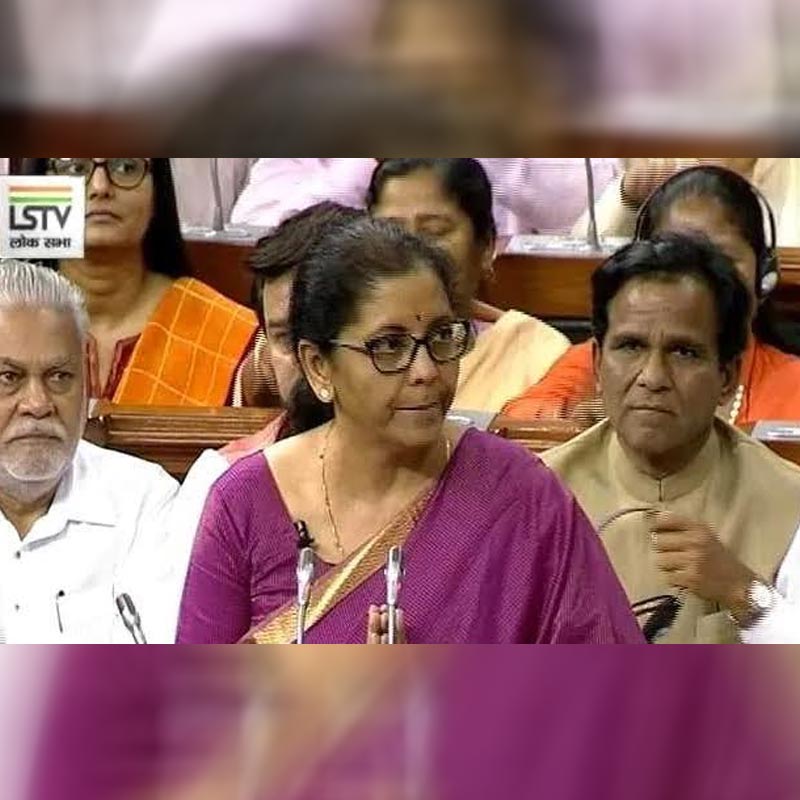
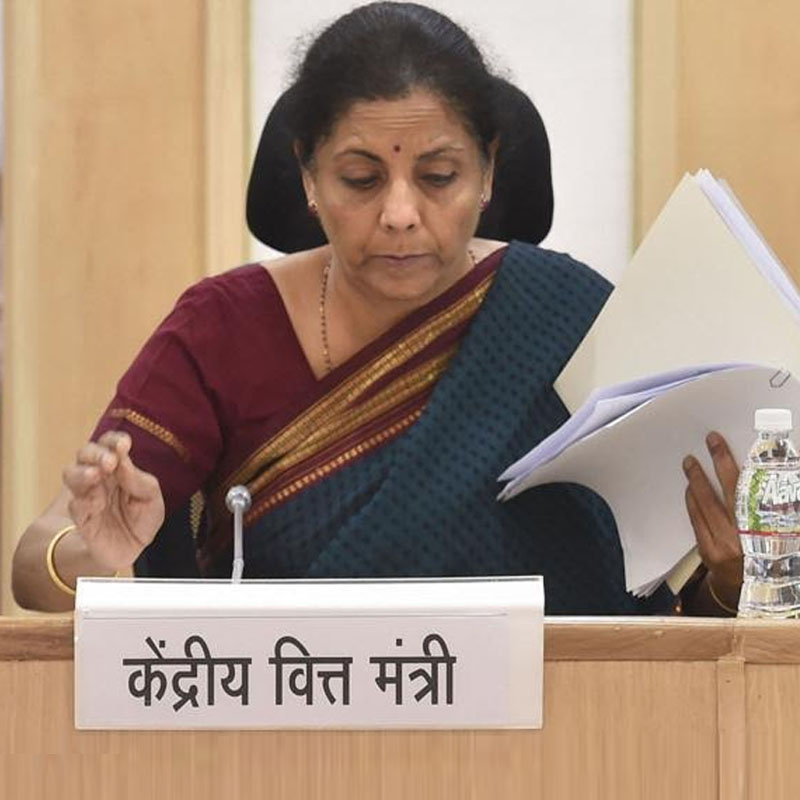
    MUMBAI: While presenting the first Union budget under Prime Minster Narendra Modi's second term, finance minister Nirmala Sitharaman announced a plan to come up with television programme dedicated to startups.

    "We propose to start a television programme within the DD bouquet of channels exclusively for start-ups. This shall serve as a platform for promoting start-ups, discussing issues affecting their growth, matchmaking with venture capitalists and for funding and tax planning. This channel shall be designed and executed by start-ups themselves. Later in this speech, I shall deal with taxation matters of the start-ups." Sitharaman said. 

    It was highlighted in the latest Economic Survey of India that nearly 85 per cent of companies in India were small-scale firms that employed fewer people. With the emerging importance of media and entertainment industry, nine pages have been devoted the sector in Economic Survey this year from zero space in previous editions.

  • GST cut on advertising & smartphones, focus on AI are M&E industry’s expectations from Union Budget 2019

    GST cut on advertising & smartphones, focus on AI are M&E industry’s expectations from Union Budget 2019

    MUMBAI: The interim budget of 2019 bolstered the preface of a ‘Digital India 2030’ with measures to aid the spread of digital technologies in India, getting positive responses from the industry insiders. With the budget announcement for the year today, the industry is now expecting the Modi government to extend the focus on these technologies and a reduction in the tax slab on electronic products to accomplish the digital-first mission efficiently.

    The ad world is expecting a tax cut on ad spends. Madison World executive director Lara Balsara Vajifdar is expectant of a boost to the economy. “Many sectors of the industry are reporting a slowdown, which is not good for the industry in particular and India in general. Hope the budget proposes active proposals to boost the economy. Whilst sops for the weaker sections are necessary, the only long term and sustainable solution is to have a fast-growing economy,” she said.

    Havas Group India CEO Rana Barua says, “Like all industries the media and entertainment industry is also looking forward to some key announcements that will give it a boost this year, like reduction of GST across mediums. An added focus on schemes to increase digital penetration in India (IT infrastructure improvement, fibre optic cable deployment, so that the last mile village also gets digitally connected). Special incentives for certain categories like automobiles, which are huge advertisers but have been seeing a slowdown for the last many months would also help boost these categories.”

    Dentsu Aegis Network CEO greater south and chairman & CEO India Ashish Bhasin wants the new budget to be growth-oriented, which can put more money in the pockets of the rural and urban consumers to propel spending. “Advertising is a very sentiment-driven business in India. Anything that drives GDP growth drives advertising growth even more. In fact, the rule of thumb is that for every 10 per cent growth in GDP, advertising grows by 1.5 per cent.”

    He adds, “Further, there is an urgent need for tax reforms. Direct tax rates for both corporate and individuals need to be brought down noticeably and immediately. GST on advertising at 18 per cent is just too high. It needs to be rationalised at 12 per cent and the process and procedures need to be simplified as they are cumbersome, unproductive and wasting a lot of time.”

    The broadcasting industry is very positive towards the provisions expected to be announced by Nirmala Sitharaman on 5 July.

    Times Network MD and CEO MK Anand shares, “We expect some clear signals from the government to improve credit growth and investment cycle. There are signs of a slowdown which we expect this budget to address. That includes increased outlay on infrastructure and addressing a distressed farm sector urgently. The new tariff order has a positive impact in the long term. But in the immediate term consumers are complaining of change in price: value equation. There may be a case to look at reducing GST for a year. This will be a great solace to consumers and the industry.”

    BARC India CEO Partho Dasgupta mentions, “Over recent years, the broadcast sector has been experiencing dynamic changes. It has also become an aspirational sector for the youth of this country. Given the nature of the changes and the rising digitisation, we hope the investments by the government will not only result in creating jobs in the M&E sector but will also boost long-term growth for the industry which will also indirectly aide the social fabric of the economy. Additionally, being an insights company that works closely with big data, investments in R&D is an ongoing practice and therefore we are hopeful that provisions for exemptions are made since it will also fuel growth across the sector.”

    9X Media chief revenue officer Pawan Jailkhani says that the overall economic slowdown in the economy for the past 3-5 months calls for rationalisation of GST on advertisers spends, which in turn will help the broadcasting sector. “If the GST (on advertisers’ spends) goes down from 18 per cent to 12 per cent, it will encourage them to spend more,” he said.

    Jaikhani adds, “I also think that there should be some reduction and some relief on corporate tax. Another vertical should be that the government itself should allocate budget for promoting its own schemes and PSUs.”

    He also wants the government to infuse some economic growth steps to turn consumer sentiments positive as advertising is largely based on sentiments.

    Vertoz founder and chairman Hiren Shah is looking forward to newer policies from the government to encourage digital India and smart cities. He adds, “With the current discussions revolving around data security and data localisation, especially the Personal Data Protection Bill 2018 now in the spotlight, India will need to create a better digital infrastructure for the storage of the huge volumes of data. We hope that the upcoming budget encapsulates the importance of better digital infrastructure along with their focus on AI and big data.”

    He expects these moves will directly benefit the digital advertising sector as well, propelling the growth of programmatic as the go-to solution provider for the industry.

    ADOHM chief executive officer Kuldeep Chaudhary also feels the same. “I believe that the presence of technologies based on artificial intelligence can further increase the interaction between consumers and companies. The advertising industry is capable of fostering the growth of other sectors, and they are interconnected. Regarding the 2019 Budget, I hope to see an increase in incentives for the national program in artificial intelligence, at the same time an increase of points of Wi-Fi connection, making it possible to bring new users, then customers, to Indian companies. Also, discuss angel tax provisions in order to bring transparency into the angel funding process, something very important for startups, like us.”

    White Rivers Media chief executive officer and co-founder Shrenik Gandhi adds, “The government has realised the value of investing in digital technology for India to spearhead the ‘Industry 4.0’ globally. Increased fund allocation towards AI, robotics, and machine learning during the interim budget reflected the same. Budget 2019 should now specifically address the application of these accelerators across sectors, be it agri-tech, digi-payments, smart cities or digitised villages. Parallel to Digital India, tax reforms should be looked into to promote mobile manufacturing as it has been a key accelerator of the Make in India program and is also of strategic importance to develop India as a digital superpower."

    Vertoz founder and CEO Ashish Shah is also expecting the GST on mobile phones and laptops to be lowered from 12 and 18 per cent respectively. “Today, a mobile phone is no longer a luxury. It has rather become more of a necessity. Moreover, mobiles and laptops are fundamental digital touchpoints. With the government stressing on transforming India into a “Digital India”, we are expecting the GST rates on these products to be lowered in order to make them more affordable. This will help increase the mobile penetration in rural and semi-urban areas, which will in turn help realise the recently announced vision of digital villages.”

    Gaana CEO Prashan Agarwal is extremely positive of the newly appointed government's vision and efforts to give impetus to the OTT industry in India. “With a greater emphasis on artificial intelligence and lower data costs in the interim budget, this step in the right direction will nudge home-grown brands to launch disruptive products and services. Given the online user-base for music streaming is expected to reach 400 million by 2021, this potential influx of a wider set of internet users will encourage more advertisers to employ OTT platforms for audience segmentation and targeting to drive higher revenue.”

    He too shares the view that provisions to lower GST rates on mobiles, laptops, and related products would translate into more smartphone sales, thus providing significant impetus to Indian entrepreneurs working on digital-first products and boosting our digital economy at large.

    1702 digital group head legal, finance and human capital Aamir Aziz notes, “To make good on the promise of a ‘Digital India’, everyone needs to not only have access to but also be able to afford the services. If the GST rates on mobiles, laptops, as well as other related devices are slashed in this budget, the cheaper prices would be directly proportional to an increase in the sales of these devices and would attract more spending on the digital platforms. Slashing the GST rate is necessary as it would definitely help businesses in times of slow growth rate.”

    Tonic Worldwide CEO Chetan Asher says, “With Modi government’s second term there is hope that the focus on spurring economic growth will be strong. Economic growth will directly affect the growth of the advertising industry. I am also optimistic that we will see a renewed focus on growing digital infrastructure and smart cities. This will lead to faster digital adoption. Lastly, I wish taxation would be further simplified and angel tax is removed completely and there's enough provision to help India become the start-up capital of the world.”

    The industry’s main demand is a GST cut on equipment like mobile phones and laptops to facilitate digital penetration in India and boost growth.

  • M&E industry appreciate film, Digital India-focussed interim budget 2019

    M&E industry appreciate film, Digital India-focussed interim budget 2019

    MUMBAI: The government today announced the interim budget for 2019 in the parliament and has been gaining a lot of praise from the people for its pro-poor and pro-middle class approach. However, the media and entertainment section received little attention this time. Apart from a slight reference to anti-piracy laws and single-window clearance for ease of shooting films, the budget speech refrained from mentioning the industry.

    However, there is still positivity in the media sector regarding the budget, especially from the entertainment fraternity. Producers Guild of India president Siddharth Roy Kapur said, “We are delighted that the immense contribution of Indian cinema towards employment generation in the country has been acknowledged and applauded in Parliament during the presentation of the Union Budget. The announcement of a single-window clearance mechanism for Indian filmmakers filming within India is a significant step and has the potential to play a huge role in boosting tourism in the country. The amendments in the anti-camcording provisions will support the industry’s growth by curtailing illegal recordings of films in cinema halls and will go a long way towards reducing piracy.”

    Film producer Anand Pandit lauded the interim budget saying, “As a member of the film industry and a producer, I believe that the single window clearance that is being given by the government in this budget to filmmakers is an extremely welcome move. It will make the ease of getting shooting permissions very accessible and a lot less time will be spent in getting the same. I believe this budget looks at filmmakers and the industry as a major force in the country and I congratulate Shri Modiji for his vision in understanding our problems and finding a solution for us. By streamlining the process, producers like me will be able to make films far easier and in shorter amount of time."

    Harkness Screens senior vice president sales and marketing – Asia Preetham Daniel reflected the same sentiments saying, “In relation to entertainment industry, single window clearance for filmmakers is a good move as it will remove the hurdles in content generation.  Anti-piracy initiatives by the government is a big step forward. Moving from smart cities, digital villages will pave way for better penetration of content in all formats. India has an average screen density of 1 screen per population of 155000. Such positive measures in fiscal budget for entertainment industry coming along with GST rates rationalisation for film exhibition sector will certainly add steam and bring impetus to the growth pace of Indian Entertainment Industry. We are now well positioned to see the industry flourishing.”

    BookMyShow appreciated the budget’s recognition of India’s startup ecosystem’s contribution to the economy and the creation of a Digital India in Vision 2030. It also said, “It is probably for the first time in several years that the entertainment industry has been hailed as a force of employment generation. We whole-heartedly support the government’s move to curb piracy through the introduction of the anti-camcording provision in the Cinematography Act. With these measures, we expect the regulatory framework of the entertainment industry to significantly change for the better.”

    The statement further added, “While the Finance Minister has offered incentives to the film industry, it is also worth recognising the huge scope that live entertainment offers, for employment and growth of the Indian economy. We hope that the GST Council along with the government can find solutions to streamline the existing tax structures for this sector as well and bring it below the current rate of 28 per cent, to enable a well-rounded ecosystem.”

    MX Player CEO Karan Bedi said, “The Union Budget’s provision for a single clearance window for Indian filmmakers would come as a welcome and positive step to film producers and movie studios across the country. The amendments in the Anti-Camcording provisions would also complement the industry’s efforts to snub illegal movie recordings in theatres and encourage the consumption of original content.” 

    Viacom18 group CEO and MD Sudhanshu Vats said, “The Hon’ble FM Shri Piyush Goyal has provided a tremendous fillip to the Indian entertainment industry with the provision of single window clearance for films, in the Union Budget 2019. Such policy provisions that seek to enhance ease of doing business will help the ~Rs 156 billion industry grow at a faster clip. I also welcome the move to include anti-camcording provisions as part of the Cinematography Act. This will ensure that in-theatre pirated recordings now become a penal offence and will act as a strong deterrent to piracy.”

    Apart from that, digital agencies are also very positive about the interim budget 2019. The emphasis on Digital India, including conversion of one lakh villages into digital over next five years, by the government in its budget speech has got the hopes high for them.

    Ethinos Digital Marketing MD Siddharth Hegde said, “This is a positive budget from digital perspective and clearly the government is determined not only on delivering on its current promises but also delivering on its promise of a complete digital revolution in India. The 10 point agenda for 2030 and the set up of digital villages are going to drive digital inclusion. The low data costs are going to drive more for the rural population online and we are likely to see an explosion in vernacular content. This is also likely to give marketers an option to have a more measurable pipe to the rural masses. This budget is a great start and we welcome the move by the government."

    Vertoz founder and chairman Hiren Shah mentioned, “The interim budget has laid out a clear vision for the country’s development in the coming decade, and Digital India plays an important role with the government stressing on the development of digital infrastructure and digital economy. Coupled with the government’s vision of converting one lakh villages into digital villages, we will see a deeper penetration of the internet not only in tier II and III markets but also in rural areas. Currently, we have only scratched the surface and the support from the government can help the industry reach its full potential with respect to market penetration.”

    He added, “This will broaden the horizon for digital advertising, and consequently for programmatic advertising, in these markets, thus providing an opportunity to brands and marketers to cater to the customer needs with bespoke products and services.”

    Speaking on the artificial intelligence program that the government has introduced with the budget, Hiren shared, “We are also happy to see artificial intelligence (AI) as a focal part of the budget for Digital India. This support will ensure that AI, supported by big data, will enable the industry to successfully analyse consumer patterns with minimized human intervention. This also brings in the benefits of automation such as more efficiency and faster processing of data for advertising, thus allowing brands to get sales faster and within an effective timeline.”

    White Rivers Media co-founder and CEO Shrenik Gandhi contended, “The interim budget, as expected was short yet powerful. A lakh digital villages will not only strengthen the bottom of the pyramid but also empower them with the digital universe. Rebate in tax slabs is a great move for not only the middle class but also young self-made professionals. Not many budgets empower this section of voters and the same is an applaud-worthy move.”

    TRA CEO N Chandramouli shared an interesting insight into how easing of loans for MSME sector, in turn, will benefit the advertising market. He said, “The 2 per cent interest subvention for MSME is definitely a great thought along with the easing of loans through PSB loans under 59 minutes scheme. Together they will give a boost to the industry which contributes to 69 per cent employment in the country.  This will also boost the adjunct services industry that caters to MSME sectors like advertising, market research, training and public relations which in turn will also have a positive cascade on the services sector.”