Tag: BSNL

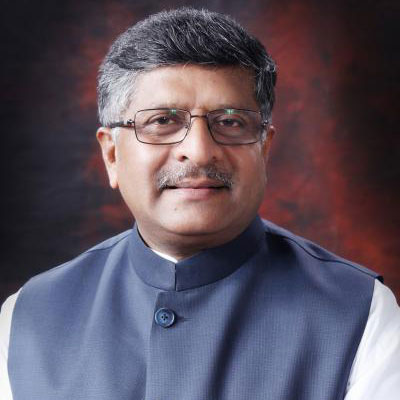
  • Ravi Shankar Prasad to inaugurate free Wi-fi connection for tourists at Taj Mahal

    Ravi Shankar Prasad to inaugurate free Wi-fi connection for tourists at Taj Mahal

    NEW DELHI: Within days of Telecom Minister Ravi Shankar Prasad’s announcement about strengthening broadband base throughout the country, BSNL has said visitors to the Taj Mahal in Agra will get free Wi-Fi internet facility across the sprawling campus for 30 minutes from 16 June.


    However, any browsing or usage like downloading, surfing after this period would invite charges at Rs 30 an hour, a Bharat Sanchar Nigam Limited official said.


    The trials have been completed and the service will be launched by Prasad in Agra on 16 June.


    While the bandwidth is being provided by BSNL, the system integrator – Bengaluru based Quadgen – is providing the wireless support.


    Due to security and other reasons, the ASI has only permitted the Wi-Fi availability in a radius of 30 metres from the main gate of the Taj Mahal, officials further said.


    Millions of domestic and foreign tourists visit the Taj Mahal, often considered as the epitome of love as it was built by Mughal emperor Shah Jahan in memory of his beloved wife Mumtaz Mahal.


    The Archaeological Survey of India (ASI) had requested the BSNL to work on the project to start the facility in the complex. Wi-Fi internet facility at public places in Agra is currently available only at the Agra Cantonment railway station.


    If the trials are successful, BSNL may extend the facility to Fatehpur Sikri as well.
  • Full mobile number portability from July: Ravi Shankar Prasad

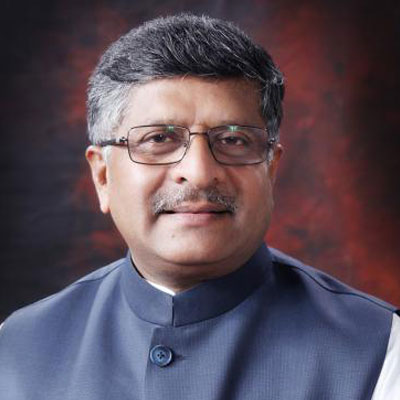
    Full mobile number portability from July: Ravi Shankar Prasad

    NEW DELHI: Communications and Information Technology minister Ravi Shankar Prasad has said that full mobile number portability will become operational across the country from July and consumers will get to keep the same numbers even when changing the telecom service provider.


    He also announced on 2 June 2015 that Bharat Sanchar Nigam Limited (BSNL) will offer free roaming all over the country from 15 June.


    The telecom minister further added that spectrum sharing and trading policy would go to the Cabinet this month.


    Last month, BSNL introduced an unlimited free calling scheme from 9 pm and 7 am to revive its landline business. BSNL has the largest number of landline customers, with a market share of 62.26 per cent.


    The Minister regretted that BSNL, which had shown profits in 2004, was showing a deficit at present.


    When asked about frequent call drop complaints by consumers, the Minister said he has asked officials if a scheme of disincentive for the operators can be put in place.


    “Call drops are due to lack of towers. As far as installation is concerned it is subject to local law. No point to raise bogey of cell tower radiation and then complain of call drop,” Prasad said.  


    Additionally, answering a question relating to the controversial Section 66A of the IT Act 2000, Prasad said that the government fully backs freedom of speech.


    Section 66A defines the punishment for sending “offensive” messages through a computer or any other communication device like a mobile phone or a tablet. A conviction can fetch a maximum of three years in jail and a fine.


    The Supreme Court is already examining the constitutional validity of Section 66A of the amended IT Act following a batch of petitions alleging the section impinges upon the Fundamental Right to freedom of speech and expression.


    The Minister said, “The case was pending in the court before I joined the ministry.”

  • Digital India fails to impact growth of broadband subscribers

    Digital India fails to impact growth of broadband subscribers

    NEW DELHI: At a time when the government is working on programmes like Digital India, there has been an increase of a meager 1.88 per cent in the number of broadband subscribers between February and March this year.


    According to a Telecom Regulatory Authority of India (TRAI) report, the number rose from 97.37 million at the end of February to 99.20 million.


    As in previous months, the largest increase was in the mobile devices users (phones and dongles) segment from 81.48 million to 83.24 million, showing an increase of 2.17 per cent.


    The increase in fixed wire subscribers (Wi-Fi, Wi-Max, Point to Point Radio and VSAT) was from 440,000 to a little above that figure. The rise in wired subscribers was from 15.45 million to 15.45 million to 15.52 million.


    The top five service providers constituted 83.39 per cent market share of total broadband subscribers at the end of March. These service providers were Bharti Airtel (22.01 million), Vodafone (19.37 million), BSNL (18.88 million), Idea Cellular Ltd (14.52 million) and Reliance Communications Group (7.94 million).


    Some wireless service providers exclude incidental data users from their subscriber base, based on minimum usage decided by them.


    As on 31 March, the top five Wired Broadband Service providers were BSNL (9.96 million), Bharti Airtel (1.43 million), MTNL (1.14 million), Atria Convergence Technologies (0.67 million) and YOU Broadband (0.44 million).


    The top five Wireless Broadband Service providers were Bharti Airtel (20.58 million), Vodafone (19.37 million), Idea Cellular (14.52 million), BSNL (8.92 million) and Reliance Communications Group (7.83 million).

  • Govt. mulls setting up BSNL cell to monitor working in border areas

    Govt. mulls setting up BSNL cell to monitor working in border areas

    NEW DELHI: The Government is committed to revive Bharat Sanchar Nigam Limited (BSNL) and several initiatives are in the pipeline to bring it back to the position of market leader.


    Communication and Information Technology Minister Ravi Shankar Prasad directed the Department of Telecom to explore the possibility of setting up a dedicated cell in BSNL to monitor the effectiveness of its network in border areas and also in areas badly affected by extremism. 


    Prasad said that the management of BSNL would also regain lost confidence of people by improving services and response.


    According to him, BSNL has launched a major initiative to improve quality of signal for which it plans to add another 1150 towers during this fiscal in Bihar alone.


    The minister has also asked BSNL to improve services and ensure that better quality of signal is maintained specially in the border and extremism affected areas. Prasad was addressing members of Parliament from the States of Bihar, Meghalaya, Manipur and Nagaland. The meeting was part of the series of meetings planned to make telecom officials directly answerable to the parliamentary representatives so as to have a firsthand account of public sectors performance, problems faced and possible solutions.


    Members of Parliament from the States of Rajasthan, Himachal Pradesh and North Eastern States participated in the first meeting. Prasad directed the Department to call five such meetings so that all members of Parliament are given opportunity to raise issues directly with officials concerned. 


    At the meeting, officials were also informed that the public sector, which came into being only in October 2000, has a net worth of Rs 51,203 crore with an equity capital of Rs 12,500 crore only. 


    New initiatives taken to improve viability include Wi-FI services, data centre services and introduction of next generation network switching technology. It was pointed out that four million lines in Phase I will have NGN by the end of this fiscal while total number of 14 million ports are planned. 2500 hot spots are planned for the year of which 41 hot spots have already been deployed.  


    Interestingly, the meeting took place within days of a meeting held by the Telecom Ministry with private telecom service providers to improve their services, following complaints by Members of Parliament.

  • Broadband usage in India sees just over 5% growth between Jan-Feb

    Broadband usage in India sees just over 5% growth between Jan-Feb

    NEW DELHI: At a time when the government is stressing on Digital India and using social media over the Internet to the full, there was a growth of a mere 5.11 per cent in the number of broadband subscribers between January (94.49 million) and February (97.37 million).


    The number of subscribers using mobile devices (phones and dongles) went up from 78.66 million to 81.49 million, showing the largest growth of 3.59 per cent.


    In comparison, the growth of wired subscribers was 14.45 million in February as against 15.39 in January and the growth of fixed wireless subscribers (Wi-Fi, Wi-Max, Point-to- Point Radio & amp; VSAT) went up from 440,000 to just over that same figure, thus signifying an increase of just 0.63 per cent.


    The top five service providers constituted 83.53 per cent market share of total broadband subscribers at the end of February. These service providers were Bharti Airtel (20.88 million), BSNL (20.67 million), Vodafone (17.93 million), Idea Cellular Ltd (14.08 million) and Reliance Communications Group (7.78 million).


    The top five Wired Broadband Service providers were: BSNL (9.98 million), Bharti Airtel (1.43 million), MTNL (1.14 million), Atria Convergence Technologies (0.65 million) and YOU Broadband (0.44 million).


    The top five Wireless Broadband Service providers were Bharti Airtel (19.45 million), Vodafone (17.92 million), Idea Cellular (14.08 million), BSNL (10.69 million) and Reliance Communications Group (7.67 million).


    Wireless subscribers with less than 1MB and 5MB data usage in a month have not been considered as internet/broadband subscribers by Reliance Communication Group and Idea Cellular Ltd respectively. 


  • Mobile subscribers continue to contribute to broadband growth in the country

    Mobile subscribers continue to contribute to broadband growth in the country

    NEW DELHI: Thanks to a growth of 5.16 per cent among mobile device users (phones and dongles) during December 2014, there was a growth of 4.28 per cent with the number of broadband subscribers increasing from 82.22 million at the end of November 2014 to 85.74 million at the end of December 2014.


    The subscribers of mobile subscribers grew from 66.56 million to 69.99 million, according to a report by the Telecom Regulatory Authority of India ITRAI) based on inputs by service providers.


    There was a minimal growth of 0.56 per cent from 15.23 million to 15.32 million amongst wired subscribers, while the number of fixed wireless subscribers remained static at 430,000.


    The top five service providers constituted 87.24 per cent market share of total broadband subscribers at the end of December 2014. These service providers were Bharti Airtel (19.19 million), BSNL (18.90 million), Vodafone (16.65 million), Idea Cellular (12.95 million) and Reliance Communications Group (7.11 million).


    (Wireless subscribers with less than 1MB data usage in a month have not been considered as internet/broadband subscribers by Reliance Communication Group and Idea Cellular)


    As on 31 December 2014, the top five Wired Broadband Service providers were BSNL (9.98 million), Bharti Airtel (1.41 million), MTNL (1.13 million), Atria Convergence Technologies (0.61 million) and YOU Broadband (0.42 million).


    The top five Wireless Broadband Service providers were Bharti Airtel (17.78 million), Vodafone (16.64 million), Idea Cellular (12.95 million), BSNL (8.92 million) and Reliance Communications Group (7.00 million). 

  • Broadband users rise to 82.22 million in November

    Broadband users rise to 82.22 million in November

    NEW DELHI: Showing an appreciable increase owing to mobile subscribers, the number of broadband subscribers increased from 79.21 million at the end of October 2014 to 82.22 million at the end of November 2014 showing a monthly growth rate of 3.79 per cent.

    The top five service providers constituted 86.97 per cent market share of total broadband subscribers at the end of November 2014. These service providers were BSNL (18.70 million), Bharti Airtel (18.17 million), Vodafone (15.61 million), Idea Cellular (12.26 million) and Reliance Communications Group (6.77 million).

    Wireless subscribers with less than 1MB data usage in a month have not been considered as internet/broadband subscribers by Reliance Communication Group and Idea Cellular.

    As on 30 November 2014, the top five Wired Broadband Service providers were BSNL (9.98 million), Bharti Airtel (1.40 million), MTNL (1.13 million), Beam Telecom (0.44 million) and YOU Broadband (0.42 million).

    The top five Wireless Broadband Service providers were Bharti Airtel (16.77 million), Vodafone (15.60 million), Idea Cellular (12.25 million), BSNL (8.72 million) and Reliance Communications Group (6.67 million).

    Segment-wise, the largest growth of 4.57 per cent in Mobile devices users (Phones and dongles) from 63.65 million subscribers to 66.56 million, followed by a growth of 3.52 per cent from 420,000 to 430,000 broadband subscribers, and 530,000 in wired subscribers from 15.15 million to 15.23 million between October end and November end.                                                                                                        


  • Broadband subscribers show growth of 4.5 per cent between Sept and Oct

    Broadband subscribers show growth of 4.5 per cent between Sept and Oct

    NEW DELHI: As in the past few months, the largest growth in broadband during October this year was among mobile devices users (phones and dongles), registering a growth of 5.75 per cent growth.

    The number of broadband subscribers between September and October has increased from 75.73 million to 79.21 million, thus registering an overall growth of 4.59 per cent.

     There was no change between September and October in fixed wireless subscribers (Wi-Fi, Wi-Max, Point-to-point radio and VSAT) with the figures remaining at 4,20,000.

     Wired subscriptions showed a minimal growth going up from 15.13 million to 15.15 million, registering a monthly growth rate of 0.16 per cent.

     The Telecom Regulatory Authority of India (TRAI) which based the figures on reports from service providers said Wireless subscribers with less than 1MB data usage in a month have not been considered as internet/broadband subscribers by Reliance Communication Group and Idea Cellular.

     As on 31 October, the top five Wired Broadband Service providers were BSNL (9.97 million), Bharti Airtel (1.40 million), MTNL (1.13 million), Beam Telecom (0.43 million) and YOU Broadband (0.41 million).

     The top five Wireless Broadband Service providers were Bharti Airtel (15.91 million), Vodafone (14.15 million), Idea Cellular (11.47 million), BSNL (9.16 million) and Reliance Communications Group (6.48 million).


  • TRAI gives recommendation for reserve price per MHz in 800 MHz band

    TRAI gives recommendation for reserve price per MHz in 800 MHz band

    NEW DELHI: The Telecom Regulatory Authority of India (TRAI) has recommended fresh reserve prices per MHz for auction of 800 MHz spectrum in the light of current data trends and other relevant factors since the valuation exercise was carried out in February 2014.

    Accordingly, the recommended reserve price per MHz in the metros of Delhi, Mumbai and Kolkata is Rs 494 crore, Rs 352 crore, and Rs 117 crore, respectively.

    The reserve price for the north-east is Rs 11 crore and for Jammu and Kashmir it is Rs 28 crore per MHz.

    The authority has once again reiterated its recommendation that the entire available spectrum with the DoT in the 800 MHz band should be put to auction.

    As the PSUs (MTNL/BSNL) are not using the spectrum in the 800 MHz band, the authority has reiterated its recommendations that the DoT should take back from MTNL its entire spectrum holding in the 800MHz band. The BSNL should be allowed to retain only one CDMA carrier in all the LSAs except in Jammu and Kashmir, Assam and North-East LSAs, where it can retain both the carriers. The DoT should take back other carriers assigned to BSNL in the 800 MHz band.”

    The chances of participation by a prospective new bidder will be more if it is offered contiguous 5 MHz of spectrum. It would make it feasible to deploy any technology. Therefore, the authority has reiterated its recommendations that “at least one chunk  of contiguous  5 MHz spectrum (i.e. 4  carriers)  should  be  carved  out  before  the  auction.  New ‘entrants must be assigned the earmarked  contiguous  carriers.”


  • TRAI says get spectrum from Defence, denies Govt. has no authority to ask BSNL to return unused spectrum

    TRAI says get spectrum from Defence, denies Govt. has no authority to ask BSNL to return unused spectrum

    NEW DELHI: Expressing concern that the constrained supply of spectrum poses a real threat to the continuity of services being provided to millions of subscribers by the expiry licensees, the Telecom Regulatory Authority of India (TRAI) has reiterated its earlier recommendation for a dialogue at the level of the Ministers for Finance, Communications, Defence to ensure the availability of additional spectrum for commercial use.
     
    In a letter to the Telecom Secretary, the Authority has said the non-availability of sufficient spectrum is the biggest impediment to the realisation of the stated goals in NTP- 2012 for broadband proliferation. The Authority re-emphasised the need to increase the supply of spectrum.
     
    The letter was in response to the DoT’s reference of 14 November seeking some clarifications on recommendations on Valuation and Reserve Price of Spectrum Licenses expiring in 2015-16 sent on 15 October.  
     
    There is no change in the reserve prices for spectrum in the 900 MHz and 1800 MHz bands from what were recommended earlier.
     
    The   Authority reiterated that steps should be  taken to  make available additional spectrum in  the  900, 1800 and 2100 MHz bands by  taking back 1.2  MHz of 900 MHz spectrum from BSNL,  utilising idle  1800 MHz spectrum in  the  Defence band and vacating spectrum held in excess of 20 MHz by Defence in the 1800 MHz ban.
     
    The Authority’s recommendation for the implementation of E-GSM band is one of the ways to enhance the supply of 900 MHz band spectrum which is considered by operators (the market) to be the most valuable spectrum. The option needs to be given serious consideration by the government.
     
    In the 2100 MHz band, an additional 3 blocks of 2×5 MHz of spectrum can be made available by swapping spectrum in this band with Defence which can be assigned spectrum in the 1900 MHz   band (1910-1920/1980-1990 MHz).
     
    The spectrum in the 800 MHz, 900 MHz, 1800 MHz and 2100 MHz bands should be auctioned together (simultaneously). Uncertainty would continue if auction of spectrum in the 2100 MHz is taken up later.
     
    The government should announce its decision on the adoption of APT700 band plan. It should also announce the roadmap for the auction of spectrum in 700 MHz band. This should be done before the conduct of the upcoming auctions in 900/1800 MHz band. These two decisions will help in the faster development of the device eco-system. It will also help TSPs to take an informed decision when bidding for the upcoming auction in 800/900/1800 MHz bands.
     
    The Authority had recommended that 1.2 MHz spectrum in 900 MHz band should be taken back from BSNL from all the LSAs where licences expire in 2015-16 except in Punjab. In lieu, BSNL should be assigned 1.2 MHz in the 1800 MHz band only in those LSAs where its spectrum holding in that band is less than 3.8 MHz in this band i.e. in Gujarat, Rajasthan and West Bengal. However, the DoT said it had no jurisdiction to take back spectrum from BSNL to which TRAI has said the PSUs (MTNL/BSNL) were awarded the spectrum in the 900 MHz band administratively and free of charge. Both the PSUs are government-owned companies and the government has every right to take the spectrum back from them if they are not using it optimally and efficiently. “It is inexplicable to take the stand that the government, being a sovereign and as owner of the PSU companies cannot resume spectrum given to the PSUs free of charge.” Besides, the DoT, being the licensor, has to ensure that spectrum is put to optimal use and an operator does not squat on invaluable spectrum.
     
    In this context, TRAI said it was worth recalling that being government companies, the government assigned 3G and BWA spectrum to them without their participation in the auctions. This spectrum was literally foisted on the PSUs. Later, when they just could not use the BWA spectrum, the government allowed them to surrender BWA spectrum and decided to refund the payment made by these PSUs.