Tag: BSNL

  • BSNL dials up pride with India’s first homegrown 4G telecom stack

    BSNL dials up pride with India’s first homegrown 4G telecom stack

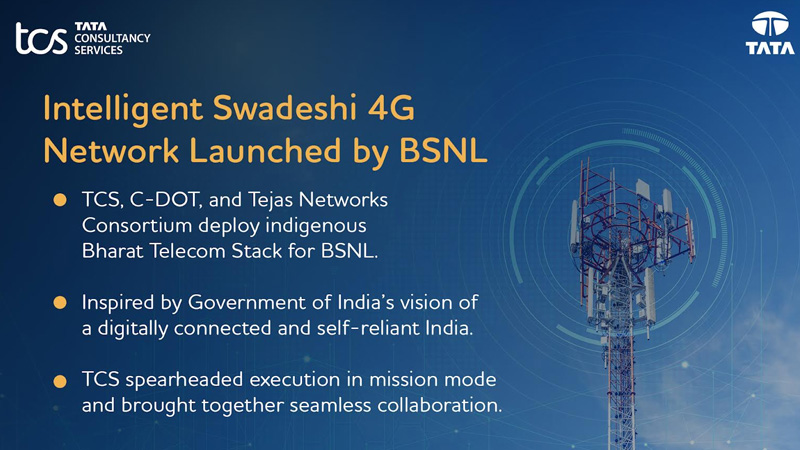
    MUMBAI: India has just made a call that will echo worldwide and it’s a truly Swadeshi one. BSNL, in collaboration with Tata Consultancy Services (TCS), C-DOT, and Tejas Networks, has unveiled the Bharat Telecom Stack, a fully indigenous solution powering 4G and beyond, marking a historic stride towards a digitally self-reliant nation.

    With this rollout, India joins an elite club of just five countries globally to have built a homegrown telecom technology stack. What makes it remarkable is the scale and speed the entire project, spanning 100,000 sites, was completed in just two years, making it one of the fastest 4G deployments worldwide.

    Executed under a “mission mode” governance model, the project saw TCS establish data centres, integrate C-DOT’s EPC Core Application, and deploy Tejas Networks’ base stations and radio infrastructure, all stitched together with TCS CNOPS, a cognitive platform for 24/7 real-time network management. The rollout integrates seamlessly into BSNL’s existing 2G/3G systems, ensuring connectivity continuity while boosting capacity for the digital era.

    For BSNL CMD A Robert J Ravi, the launch was more than technology, it was symbolism: “The nationwide rollout of our indigenous 4G network, built with TCS, Tejas, and C-DOT, is a resounding declaration of an Atmanirbhar Bharat. This ‘Made in Bharat’ stack secures our digital future and bridges the divide like never before.”

    The technology isn’t just about speed or spectrum; it’s about sovereignty. By delivering ultra-secure, standards-compliant connectivity, the stack safeguards national security while democratising access enabling online education, telemedicine, e-governance, and citizen services for rural and urban India alike.

    BSNL’s director (Consumer Mobility) Sandeep Govil highlighted its transformative potential: “This Swadeshi 4G technology, the result of innovation by C-DOT, Tejas, TCS, and BSNL’s workforce, is engineered for scalability. It is a cornerstone for a digitally inclusive society, ready to evolve to 5G and beyond.”

    For TCS and Tejas Networks chairman N Ganapathy Subramaniam, the achievement reinforces India’s tech legacy: “We have put India on the map of only a handful of countries with a comprehensive, trusted, and software-upgradable telecom technology stack. The successful deployment at BSNL is historic, laying the foundation for India’s further contribution to global standards.”

    The launch also reflects TCS’s longstanding role in shaping India’s digital infrastructure from modernising stock exchanges and passport services to healthcare and pensions for defence personnel touching millions of lives across decades.

    With ultra-high bandwidth, energy efficiency (0.1 W/Gbit, 65 per cent lower than average), and intelligence boosting O&M efficiency by 40 per cent, the Bharat Telecom Stack is more than a national achievement. It is a signal loud and clear that India is ready to lead in telecom innovation, connecting every citizen while setting global benchmarks.

    In short: India just built its own dial tone for the future and it’s calling the world to listen.

  • BSNL dials up drama with OTTplay packs and 300 plus live TV channels

    BSNL dials up drama with OTTplay packs and 300 plus live TV channels

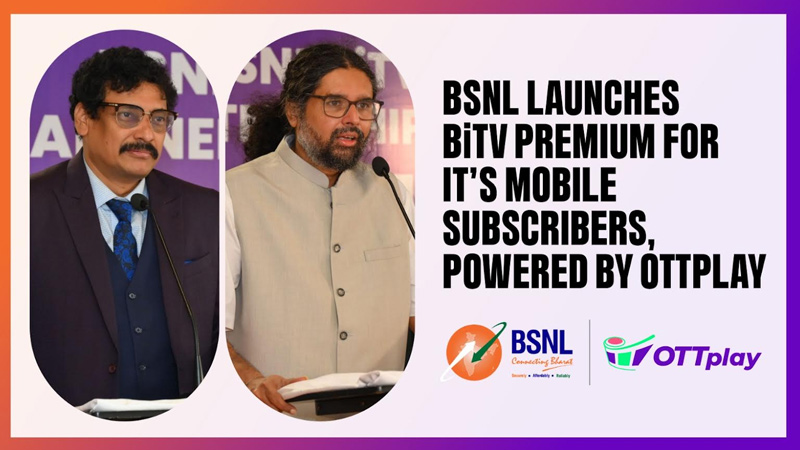
    MUMBAI: BSNL is turning up the volume on entertainment. After January’s free BiTV rollout drew in massive traffic and fuelled a surge in demand for premium content, the state-run telco has now unveiled its Premium Content Packs, bringing OTTplay-powered streaming and 300 plus live TV channels straight to mobile users. The new packs, accessible via the BSNL Self Care App, Gpay, Phonepe and more, promise an all-in-one destination for films, shows, sports, news and regional gems. Robert J Ravi, chairman and managing director, BSNL, called it an “unmatched entertainment destination,” adding that the offering blends connectivity with curated OTT content.

    For BSNL director Sandeep Govil the move is as much about convenience as it is about content: “From flexible payment options to seamless access, we’ve made sure even the remotest corner of India can enjoy world-class content without barriers.”

    OTTplay’s co-founder and CEO Avinash Mudaliar, highlighted the scale of the collaboration, noting that with BSNL’s reach across Tier 2 and Tier 3 markets, millions of new viewers will gain access to premium streaming. “Together, we are not only offering great content but also bridging the digital divide,” he said.

    With 300 plus live channels, dozens of leading OTT platforms, and AI-powered content discovery, BSNL’s packs are designed to compete with the biggest players in streaming. If BiTV was the starter, this new chapter is the full-course binge.

  • India adds 2.7 million new telecom users in July, led by Jio

    India adds 2.7 million new telecom users in July, led by Jio

    MUMBAI: India’s telecom dial tone got a bit louder this July, as the country added a net 2.7 million new telephone connections, taking the total subscriber base to 1,180.87 million, according to TRAI’s latest figures. That’s a ring in the right direction especially with wireless connections doing the heavy lifting. Wireless subscriptions grew by 2.74 million, pushing the total to 1,172.57 million. On the other hand, wireline subscriptions held relatively steady, dipping slightly by 7,747 users, ending the month at 8.29 million.

    The urban-rural divide saw rural India catching up, with rural wireless users increasing to 526.27 million while urban counterparts stood at 646.30 million. Urban tele-density saw a slight decline to 126.62 per cent, while rural tele-density edged up to 58.66 per cent as reported by TRAI.

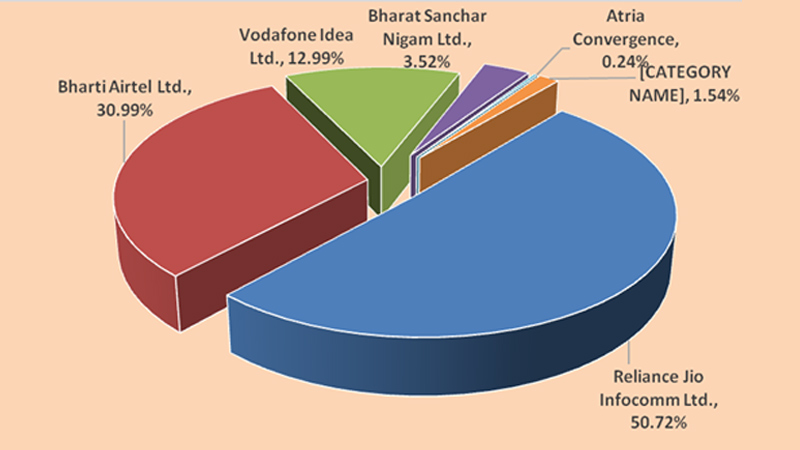
    Jio continued to be the star caller in town, adding a whopping 3.16 million wireless subscribers, cementing its lead with 458.95 million users. Bharti Airtel held strong in second with 383.57 million, gaining 1.11 million subscribers. Vodafone Idea continued its slow slide, losing 1.32 million subscribers, taking its count to 218.49 million.

    But not all subscribers are equal when it comes to active users, Jio again leads with a 104.08 per cent VLR (visitor location register), indicating some dual SIM overlap. Airtel boasted a healthy 99.21 per cent active base, while Vi clocked in at 87.17 per cent. BSNL trailed behind with only 50.64 per cent of its users actively using services.

    On the MNP (mobile number portability) front, Indians are still keeping their digits mobile with 12.94 million requests in July alone, bringing the all-time total to a staggering 921.94 million.

    In the wireline game, Jio added 0.25 million subscribers, now holding 33.11 per cent market share, while BSNL shed 0.20 million, dropping to 23.03 per cent. Airtel’s steady ship saw it maintain a 22.97 per cent slice.

    Meanwhile, broadband connections both wired and wireless stood strong at 940.52 million, led by Reliance Jio (487.59 million), Airtel (264.33 million), and Vodafone Idea (125.08 million).

    So, while some telcos may be dropping calls and customers India’s telecom sector as a whole is still very much in signal, especially as it tunes into deeper rural penetration and data-led digital expansion.

    (If you are an Anime fan and love Anime like Demon Slayer, Spy X Family, Hunter X Hunter, Tokyo Revengers, Dan Da Dan and Slime, Buy your favourite Anime merchandise on AnimeOriginals.com.)

  • India adds 3.2 million phone users in May, total hits 1.2 billion

    India adds 3.2 million phone users in May, total hits 1.2 billion

    MUMBAI: Dialling up its digital growth, India’s telecom sector added 3.24 million new telephone subscribers in May 2025, pushing the country’s total subscriber base to a staggering 1.207 billion. While urban India remained saturated with 131.76 per cent tele-density, rural areas rang in gains too, growing 0.14 per cent month-on-month to hit 537.39 million subscribers.

    The data, released by the Telecom Regulatory Authority of India (TRAI), also showed a strong wireline comeback with 1.25 million new connections pushing wireline growth to 3.34 per cent, led by aggressive additions from Jio and Airtel.

    India’s broadband base surged 3.37 per cent to reach 974.87 million subscribers, thanks largely to mobile broadband (up 2.92 per cent) and a 60 per cent spike in fixed wireless (5G FWA, Wi-Fi, satellite) subscriptions. However, 5G FWA itself dipped slightly from 7.50 million to 7.40 million users, indicating early volatility in the still-nascent category.

    Jio led the broadband brigade with 494.47 million subscribers, followed by Airtel (302.15 million) and Vodafone Idea (126.68 million), together accounting for a whopping 98.47 per cent of the market.

    Overall wireless subscriptions grew modestly by 0.17 per cent to 1.168 billion, with rural India contributing 0.38 million new users. Urban wireless teledensity climbed to 124.91 per cent, while rural teledensity inched up to 58.90 per cent. Wireline adoption in rural India saw a sharper surge of 10.44 per cent, albeit from a much smaller base.
    Who’s Winning the Race?

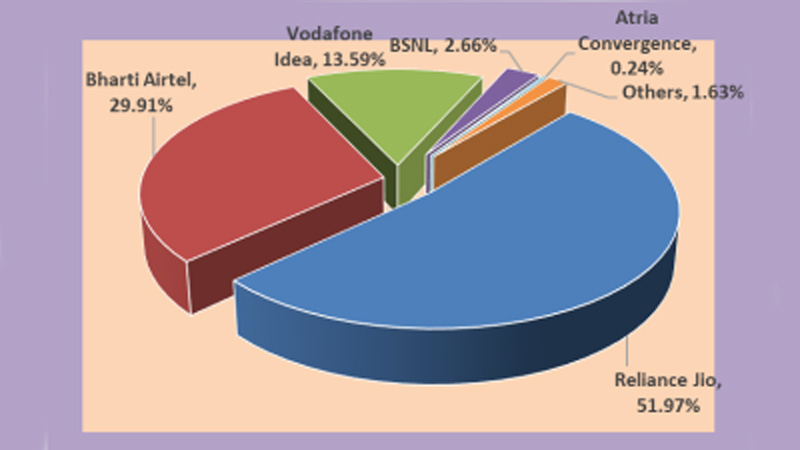
    .  Reliance Jio: 494.47 million broadband subs, 40.92 per cent mobile market share.

    .  Bharti Airtel: 302.15 million broadband subs, 33.61 per cent mobile market share.

    . Vodafone Idea: 126.68 million broadband subs, 17.61 per cent mobile market share.

    Jio also led wireline subscriber additions with 1.28 million new connections, while Vodafone Idea continued to see a decline of over 1.35 lakh users in the wireline segment.

    Indians are clearly still keen to keep their digits. 14.03 million MNP requests were made in May alone. Uttar Pradesh (East) topped the chart with 115.77 million cumulative porting requests, followed by Maharashtra at 92.72 million.

    Out of the total 1.161 billion mobile subscribers, 1.08 billion were active as per VLR (Visitor Location Register) data about 93 per cent. BSNL had the lowest active subscriber rate (63.73 per cent), while Reliance Communications registered a perfect 100 per cent, albeit on a very small base.

    With over 85.36per cent teledensity nationwide and close to a billion broadband users, India’s telecom story continues to evolve rapidly. But the future lies beyond just numbers, rural wireline expansion, M2M growth (now at 73.91 million connections), and the true test of 5G fixed wireless adoption could be the next chapters in this digital saga.

    So, whether it’s smartphones in metros or landlines in tier-3 towns, India’s telecom tune is still playing and the country’s clearly not hanging up any time soon.

    (If you are an Anime fan and love Anime like Demon Slayer, Spy X Family, Hunter X Hunter, Tokyo Revengers, Dan Da Dan and Slime, Buy your favourite Anime merchandise on AnimeOriginals.com.)

  • TRAI telecom data:  India’s rural surge, internet binge and DTH downfall ring loud in March

    TRAI telecom data: India’s rural surge, internet binge and DTH downfall ring loud in March

    MUMBAI: India’s telecom scene in March 2025 was a tale of two Indias—rural Bharat rising on data dreams and legacy players like BSNL and MTNL gasping for bars. According to TRAI’s fresh data, it was a month of gains for mobile and broadband, and growing static for DTH.

    The total number of wireless subscribers climbed slightly to 1,160.65 million, with rural India accounting for nearly 80 per cent of new additions. Villages added 1.1 million users, urban India added just 296,000—proof that the real action is beyond city limits.

    Reliance Jio was on fire, gaining 2.15 million wireless users and reinforcing its market leadership with 39.6 per cent share. Bharti Airtel added 1.03 million, keeping pace. Vodafone Idea lost nearly 700,000 subscribers, and BSNL continued its freefall with a 1.25 million loss.

    India’s broadband subscriber base touched 946.32 million, a monthly growth of 0.21 per cent. Unsurprisingly, 4G/5G mobile broadband accounted for 921.4 million of those connections—soaring on reels, reels, and more reels.

    On the wireline broadband front, Jio continued to hustle, adding over 320,000 subscribers, bringing its fixed-line share to 33.6 per cent. Airtel stayed solid with over 100,000 adds, while government dinosaurs BSNL and MTNL lost tens of thousands more. Between sluggish service and vanishing relevance, they’ve become the landline’s last rites.

    In the home entertainment arena, the direct-to-home (DTH) sector saw a slide. Total active DTH subscribers dropped to 64.17 million from 64.45 million—a fall of over 278,000 users in just one month.

    Cord-cutting is no longer a western trend; it’s happening across Indian homes as OTT apps and smart TVs eat into satellite’s share. Operators like Tata Play and Airtel Digital are still holding their ground, but the writing is on the (living room) wall.

    The big takeaway? Rural India is dialling up, streaming more, and finally enjoying digital parity. Jio’s aggressive expansion is paying off across both mobile and fibre, while BSNL’s steady subscriber bleed raises existential questions.

    DTH is beginning to look like the landline of television. The OTT wave is here, and it’s pulling viewers—and revenue—away from satellite.

    With spectrum auctions around the corner and AI-fuelled data demands skyrocketing, India’s telecom race is less about who picks up the call—and more about who controls the cloud.

  • Indian mobile count goes up as does broadband: TRAI data Jan 2025

    Indian mobile count goes up as does broadband: TRAI data Jan 2025

    MUMBAI: India’s telecom sector added a modest 2.1 million net subscribers in January 2025, nudging the total count to 1.19 billion, according to the Telecom Regulatory Authority of India’s monthly data release. But it wasn’t all smooth signal—wireline connections tanked, dropping over 10 per cent as TRAI shifted 5G Fixed Wireless Access (FWA) from wired to wireless accounting.

    Mobile still rules the roost, with 1.16 billion users riding the wireless wave, including 5.7 million FWA users. Urban India continued to drive growth, adding over 5 million new mobile connections. Meanwhile, rural areas quietly chipped in with just under a million more.

    Broadband subscriptions inched up 0.04 per cent to 945.16 million—an uninspiring climb, considering Reliance Jio and Bharti Airtel hold over 80 per cent of the market. Wireline broadband, meanwhile, shrank slightly as users cut the cord in favour of FWA.
    MARKETSHAREDATAMobile Number Portability (MNP) remained red-hot with 14.14 million requests in Jan alone—pushing the all-time tally past 1.09 billion. Uttar Pradesh (East) and Maharashtra topped the charts for most switched loyalties.
    The market remains firmly in private hands, with Jio and Airtel leading across broadband and mobile. 

    Government-owned players like BSNL and MTNL continue to struggle, holding just 8 per cent of wireless subscribers and less than a quarter of the wireline market.

    Tele-density stood at 84.54 per cent—Delhi being the most connected with an eye-popping 274 per cent, while Bihar lagged behind at 56.6 per cent.

    And while fixed lines may be flatlining, India’s telecom story continues to be a mostly wireless wonder.

  • Indian households embrace the telecom multiplay game

    Indian households embrace the telecom multiplay game

    MUMBAI: India’s appetite for bundled telecoms services shows no signs of slowing, with multiplay service revenue expected to waltz from $2.4bn in 2024 to a handsome $3bn by 2029, growing at a steady 4.2 per cent annually, according to analytics firm GlobalData.

    The country’s telecoms operators are engaged in a fierce tango for customers, laying fibre-optic cables faster than monsoon flooding as they tempt households with bundled services that promise both convenience and cost savings.

    Double-play packages—typically pairing broadband with unlimited voice calls—currently dominate the landscape, accounting for a hefty 78.4 per cent of multiplay subscriptions. Triple-play bundles trail at 12.2 per cent, with the premium quad-play offerings taking a modest 9.4 per cent slice of the pie.

    “Double-play services is currently the largest multiplay service category,” notes Sarwat Zeeshan, telecom analyst at GlobalData. “All major operators—Airtel, Jio and BSNL—are bundling unlimited telephony along with their basic fibre broadband plans.”

    Reliance Jio, for instance, offers unlimited calls along with unlimited data at speeds up to 30Mbps for a mere Rs 399 monthly—a proposition that has helped it shimmy into market leadership.

    While double-play will maintain its dominant position through 2029, triple-play subscriptions are expected to fox-trot ahead at a sprightly 16.6 per cent annually. Operators are wooing India’s vast pay-TV audience with packages that marry television, broadband and voice services, often throwing in access to streaming platforms as a  bonus.

    Bharti Airtel’s Rs 699 “Black” plan exemplifies this trend, bundling fibre broadband with television channels worth Rs 260, subscriptions to more than 18 streaming apps, and unlimited landline calls—a veritable smorgasbord of digital delights.

    In this high-stakes dance of telecommunications, Reliance Jio currently leads the pack, with Bharti Airtel following closely behind. Jio’s dominance stems largely from its extensive fibre network, which allows it to transition customers to bundled services with the smoothness of a well-rehearsed ballroom routine.

    As India’s digital transformation continues its merry jig, the multiplay market appears poised for a lively performance in the years ahead.

  • BSNL rings in a revival with Rs 4,969 crore revenue

    BSNL rings in a revival with Rs 4,969 crore revenue

    MUMBAI: BSNL has dialled up a major financial comeback, posting a profit before tax of Rs 262 crore in Q3 FY25, a staggering reversal from a Rs 1,569 crore loss in the same quarter last year. With revenue growth, strategic cost reductions, and a push for 4G and fibre-optic expansion, the state-run telecom operator is charting a path to profitability while reinforcing its position in India’s evolving telecom landscape.

    BSNL’s revenue from operations climbed to Rs 4,969 crore in Q3 FY25, up from Rs 4,546 crore in Q3 FY24, reflecting a steady rise in demand for its mobility, fibre-to-the-home (FTTH), and leased line services. These key growth segments saw year-on-year increases of 15 per cent, 18 per cent, and 14 per cent, respectively.

    “This milestone reflects the company’s focus on innovation, aggressive network expansion, cost optimisation, and customer-centric service improvements,” the BSNL said in an official statement.

    With improved revenue and reduced costs, BSNL’s EBITDA surged to Rs 1,466 crore in Q3 FY25, up from just Rs 316 crore in the same quarter last year, marking a 364 per cent increase. For the nine-month period, EBITDA stood at Rs 2,369 crore, nearly tripling from Rs 893 crore in the previous year. 
    Total expenditure for Q3 FY25 (excluding depreciation and finance costs) was Rs 4,210 crore, significantly lower than Rs 4,741 crore in Q3 FY24, demonstrating effective cost control measures.

    For the nine-month period ending December 2024, revenue grew to Rs 14,197 crore, up from Rs 12,905 crore in the same period last year, demonstrating consistent business expansion. Other income for Q3 stood at Rs 706 crore, a significant 38 per cent increase from Rs 511 crore in the same quarter last year. However, for the nine-month period, other income was Rs 1,406 crore, slightly lower than Rs 1,528 crore in FY24. BSNL’s loss before tax for the nine-month period ending December 2024 was Rs 2,527 crore, a sharp improvement from the Rs 4,522 crore loss recorded last year. Significantly, 20 BSNL circles reported EBITDA-positive performance in Q3 FY25, compared to just 12 in Q3 FY24.

    Announcing the quarterly financial results, BSNL chairman & managing director Robert J. Ravi stated, “We are pleased with our financial performance this quarter, which reflects our focus on innovation, customer satisfaction, and aggressive network expansion.”

    “With these efforts, we expect revenue growth to improve further, exceeding 20 per cent by the end of the financial year. BSNL has successfully reduced its finance cost and overall expenditure, leading to a decline in losses by over Rs 1,800 crore compared to last year. To enhance our customer experience, we have introduced new innovations such as national wifi roaming, BiTV – free entertainment for all mobile customers, and IFTV for all FTTH customers. Our continuous focus on quality of service and service assurance has further strengthened customer trust and reinforced BSNL’s position as a leading telecom service provider in India.” Ravi added.

    Today is a significant day in the history of the Indian telecom industry, according to minister Jyotiraditya Scindia. He added, “the prime minister intends for the telecom industry to lead India’s digital future, and all the nation’s telecom service providers are honestly working towards this goal.”

    With total quarterly income touching Rs 5,675 crore, up from Rs 5,057 crore in Q3 FY24, BSNL is firmly on a growth trajectory as it expands its digital footprint. One of the biggest reductions came in network operating expenses, which dropped to Rs 1,336 crore, down from Rs 1,397 crore in Q3 FY24. This streamlined network management approach is helping BSNL maximise efficiency while maintaining service quality.

    Employee benefits expenses also saw a notable decline, falling to Rs 1,735 crore from Rs 2,011 crore in the same quarter last year. The reduction in workforce-related costs has played a crucial role in improving BSNL’s financial health while ensuring operational effectiveness.

    A significant shift in BSNL’s financial strategy is reflected in its depreciation and amortisation costs (DAC), which nearly halved to Rs 814 crore from Rs 1,443 crore. This sharp reduction underscores the company’s commitment to next-gen infrastructure and digital transformation, as BSNL accelerates investments in modern telecom technology while efficiently managing legacy assets.

    Meanwhile, finance costs saw a 12 per cent decline, falling to Rs 389 crore from Rs 442 crore, further easing financial pressure and contributing to stronger bottom-line performance.

    Ever since it last posted a quarterly net profit in 2007, the state-owned telecom services company turned a profit for the first time in the last quarter. In a remarkable turnaround, BSNL’s subscriber base has risen to about nine crore in December from 8.4 crore in June. During the same quarter, leased line services revenue increased by 14 per cent, mobility services revenue by 15 per cent, and fibre-to-the-home (FTTH) revenue by 18 per cent. A key priority is fast-tracking 4G and 5G rollouts, aimed at enhancing network coverage and service quality while keeping pace with industry advancements. 

  • BSNL dials up entertainment with BiTV launch across India

    BSNL dials up entertainment with BiTV launch across India

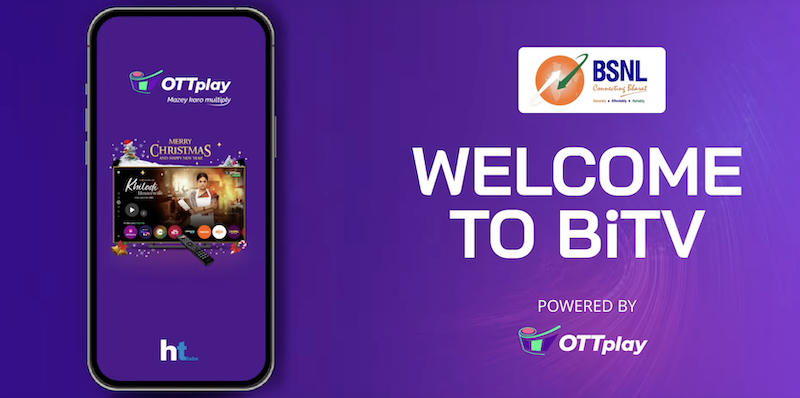
    MUMBAI- BSNL isn’t just about dial tones and broadband anymore, it’s now in the business of binge-watching! The state-run telecom giant has teamed up with OTTplay to roll out BiTV, a next-gen internet TV service offering 450+ live channels, including premium content, alongside exclusive shows from Bhaktiflix, Kanccha Lannka, Stage, Shortfundly, Om TV, Playflix, Fancode, Hubhopper, Distro, and Runn TV.

    After a successful pilot in Pudicherry, BSNL – India’s public sector telco which has been making waves by snaring wireless (32.68 million) and wired line broadband (4.24 million)  subscribers to touch 36.92 million broadbad subscribers – has taken the plunge into pan-India streaming, betting big on its expansive telecom network to deliver seamless, high-quality entertainment straight to users’ smartphones.  The PSU also has close to 90 million wired and wireless telephony subscribers. 

    But in a market flooded with OTT services, can BSNL’s BiTV truly dial up a new era in digital entertainment, or will it be just another signal lost in the noise?

    For mobile users of BSNL, getting on BiTV is the simplest thing:
    * Visit fms.bsnl.in/iptvreg
    * Choose their state, input registered mobile number and get OTP authentication
    * Get the OTTplay app through SMS link or download directly from the App Store/Google Play Store
    * Login with the registered number and stream away!

    BSNL FTTH users aren’t  being left behind either. BiTV can be accessed through BSNL Wi-Fi hotspots and FTTH home connections so that users do not have data woes while high-speed streaming is ensured. Non-BSNL users can join the party as well by paying through UPI to access the high-speed Wi-Fi network of BSNL.

    BSNL, says  in reality, it  is trying to build through digital transformation, whereas private telecom giants and OTT disruptors create more competition. 

    BSNL, chairman & managing director Robert J Ravi at the BiTV launch called it a “game-changing moment, making the company not just a provider of telecom services but enabler of a digital lifestyle. The simplicity of our interface ensures that even the least tech-savvy users can navigate BiTV with ease. This is the first of many efforts to make premium entertainment accessible to our customers, even in areas with limited digital reach,” said Ravi.

    The enthusiasm was echoed by OTTPLAY CEO  & co-founder AvinashMudaliar who goes thus: “It was a lightning-fast execution of the partnership from discussion on 21 December 2024 to a full-scale national rollout on 30 January 2025. That is practically warp-speed launch in the world of public-sector projects!”

    BSNL aims to stream into the future without breaking the bank, BSNL’s secret weapon? Affordability.

    While others charge premium for their premium content, BSNL is gifting BiTV free of charge to its customers. It can be streamed in high definition with low data usage through intranet and the navigation is simple and user-friendly.

    And the best part? There’s more to come. Mudaliar hinted at an exciting IPL-related announcement in the pipeline, which might turn BiTV into a go-to platform for sports lovers.

    Competition is tough with JioCinema, Disney+ Hotstar, and Netflix, and  BSNL has its work cut out. But it isn’t just relying on content—it’s leveraging its nationwide network, low-cost model, and accessibility-first approach to break into India’s OTT space.

    The big question is:  can BSNL sustain the momentum, or will this be another case of a promising public-sector project losing steam? 

    For now, the company is holding its ground, streaming strong, and promising more surprises ahead. BSNL is no longer just connecting calls; it is now connecting entertainment too. 

    Wait and watch; the next quarter’s user adoption numbers will show whether BiTV is a blockbuster hit or background noise in India’s OTT revolution!

  • BSNL signs IPTV provider Skypro to offer entertainment services to its customers

    BSNL signs IPTV provider Skypro to offer entertainment services to its customers

    MUMBAI:: It’s a connection that they are hoping will work out for the best. State-owned telecoms provider Bharat Sanchar Nigam Ltd (BSNL) has announced a strategic link up  with IPTV provider Skypro as a part of which it hopes to bring next generation TV  and internet experiences to the telco’s consumers across India.

    A press release states that BSNL’s FTTH  customers will gain free-of-cost access to Skypro’s IPTV services through the Skypro TV app in their smart TVs. The app will offer  500 plus  HD/SD/live channels, 20+ OTT and various other value added services, interactive features, with no set-top required.

    BSNL CGM Punjab circle Ajay Kumar Karaha said – “On 28 November CMD  Robert Ravi launched our new internet TV service, powered by Skypro’s state-of-the-art IPTV platform. This service offers FTTH customers access to popular channels like Colors, Star, Zee, and sports channels like Star Sports, with no need for separate bandwidth and set-top box. After thorough testing, we’re ready to roll it out in Chandigarh, starting with 8,000 customers. We also plan to expand internationally, providing BSNL users with easy access to this exciting new feature.”

    Skypro chief technology officer Pawanpreet Dhaliwal said “ This partnership with BSNL is a proud moment for Skypro as we continue our mission to revolutionise entertainment in India. We are starting from Punjab circle and the service will extend to other circles soon. Our focus has always been on delivering innovative solutions that transform the way people consume content. By joining forces with BSNL, we are combining reliable connectivity with cutting-edge entertainment to make world-class viewing experiences accessible to every home.” 

    “We are excited to partner with BSNL to bring Indians a truly modern and immersive entertainment experience,” added  Skypro business head Nitin Sood. “At Skypro we have been working towards building solutions that bring the quality of the theatre screen in the comfort of your living rooms. This partnership represents a major milestone for us, enabling Skypro to expand its reach and deliver cutting-edge entertainment solutions to a wider audience. By combining our expertise with BSNL’s extensive network, we are setting a new benchmark for home entertainment in India.”

    Skypro claims that its service offers the lowest latency, multi CDN, low bandwidth, low channel zap time and crystal clear viewing experience for the customer.  

    “By joining forces with BSNL, Skypro is stepping into a new era of entertainment,” said Skypro president emeritus Ranjit Singh Sandhu. “This collaboration is a huge leap towards our vision of making premium content accessible to all, combining BSNL’s reliable network with Skypro’s innovative technology to deliver an unparalleled viewing experience that connects and engages audiences across India.“

    To date, Skypro has partnered with over 100+ ISPs across the country, expanding their reach and ensuring high-quality services for users nationwide. Additionally, it is also planning the launch of Oneplay – an online cloud gaming platform. 

    With Oneplay, consumers will be able to stream their favourite games anytime, anywhere, on any device, especially on TVs without the need for high-end gaming consoles with players’ progress securely saved in the cloud for seamless gaming experiences. This service will enable rural India access to high-end games at a fraction of the cost.