Tag: Broadcom

  • Intel chips in with TSMC for US fab fix amid foundry fatigue

    Intel chips in with TSMC for US fab fix amid foundry fatigue

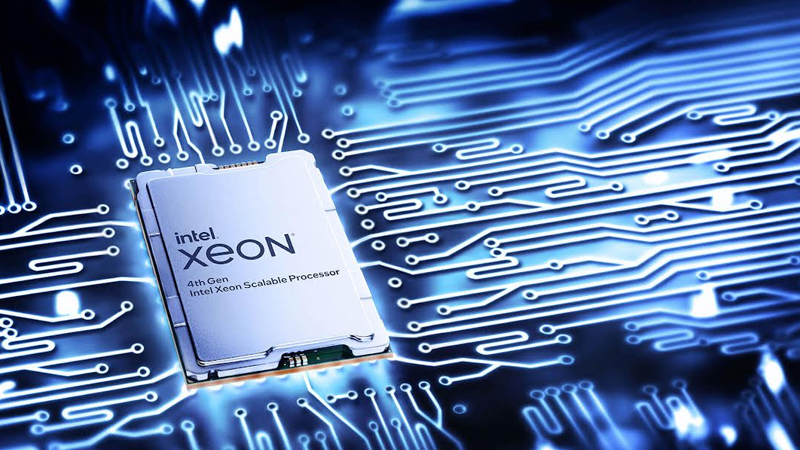
    MUMBAI: Fab mates in the making? In a twist worthy of Silicon Valley drama, Intel and Taiwan’s TSMC are reportedly close to a blockbuster chip deal with Washington pulling a few strings from the wings.

    According to The Information, via Reuters, the two semiconductor giants have reached a preliminary agreement to form a joint venture that would see TSMC operate a 20 per cent stake in Intel’s U.S.-based fabs. The rest of the ownership remains under wraps, though whispers of potential investor pitches to AMD, Nvidia, Broadcom, and Qualcomm have swirled since early 2024, despite public denials by some of the players involved.

    Behind the scenes, the Biden administration and the U.S. Department of Commerce are said to be stage-directing the high-stakes collaboration. With Intel’s IDM 2.0 strategy stalling and its fabs failing to fire on all cylinders, this venture appears designed to stabilise an American chip titan without handing over control to foreign ownership, something the U.S. government has firmly resisted.

    The stakes are silicon-sharp. Intel has spent tens of billions of dollars on its domestic fabs, but only a select few are equipped for advanced 18A process technologies, the bedrock for Intel’s next-gen processors. The challenge? Many of these fabs are tailored for Intel’s own chips, not contract manufacturing, a space where TSMC reigns supreme.

    TSMC’s planned 20 per cent stake also raises eyebrows given its existing 165 million dollars investment in Arizona’s Fab 21, which already serves top-tier clients like Apple. How the Taiwanese foundry plans to juggle its own fab expansion with the new Intel tie-up remains unclear.

    Chip watchers say this uneasy alliance may be less about synergies and more about survival, with the White House acting as the matchmaker. As part of a broader push to keep chipmaking competitive and domestic, Washington seems determined to bring Intel back into the game, even if it means nudging rivals into bed together.

    Adding to the plot, Intel recently brought in industry veteran Lip-Bu Tan as CEO to guide its comeback after it fumbled the AI-driven semiconductor surge. While Intel and TSMC have stayed silent on the matter so far, industry insiders suggest that this deal, if sealed, could redefine global chip geopolitics.

  • Innovations needed to meet ‘Digital India’ goals

    Innovations needed to meet ‘Digital India’ goals

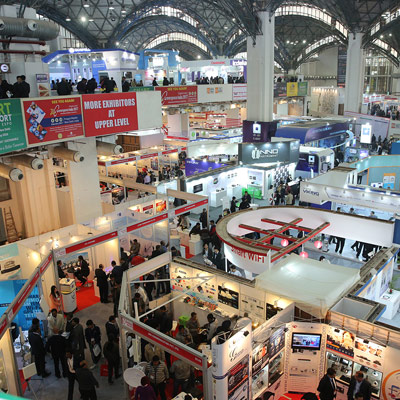
    NEW DELHI: While the telecom industry is on track, there is need for innovation to meet the goals of Digital India. This was the general outcome of discussions at South Asia’s largest ICT, broadcast and digital media event, which ended today.


    The expo witnessed 434 companies from 29 countries around the world showcasing the latest technologies and innovations. Over 125 eminent speakers took the dais to deliberate on the theme ‘Digital India’ – roadmap, opportunities, challenges, infrastructure and investments.


    The third day of the expo deliberated on affordable broadband for rural India at the third Telecom Summit, powered by Microsoft, thus facilitating Prime Minister Narendra Modi’s vision of making India a digitally empowered economy.


    Microsoft group director, government affairs & public policy S. Chandrasekhar said, “Exhibitions India and Convergence India provide a good platform for all telecom and ICT eco-systems to come together and exchange ideas, best practices and the best of technology.”


    A presentation on ‘Internet of Things in Mobile Workforce Management’ was given by Cyient – India senior manager Venkata Satyadeep Mane. “Technology is an enabler to build smart solutions for rapid growth. Industries in India are therefore aiming to build cutting-edge technology solutions and services that will shape the digital revolution. Accordingly, the Indian ICT marketplace is going to experience substantial shifts in the coming days! In this content, I believe Convergence India is a fantastic platform to share and learn not just technology but various other elements of business solutions,” he said.


    Key session on ‘Opportunities in telecom sector arising from Big Data & Cloud’ panelist HP India country leader – future cities & CTO – technology services Lux Rao said, “The promise of Digital India has been successful in capturing the aspirations of a young India and the unbridled optimism is palpable. Smart Cities & Digital India is lending traction to the country’s modernisation agenda.”


    He added, “Convergence India holds a mirror to the current state of programmes and their progress and is a convergence of philosophy, ideas and action. The three-day program packs in an eclectic combination of knowledge and experience sharing, networking opportunities and a deep dive into fast emerging ethos of an empowered nation – Truly Digital, Truly India.”


    Exhibitions India Group chairman Prem Behl, who conceived Convergence India, said, “The exhibitors have received quality visitors and have had a positive response on all three days of the expo. The concurrent conferences were productive with detailed discussions and presentations on Digital India.”


    A landmark session on the third day included the SCTE India Awards for Technical Excellence and Innovation in Digital Cable and Broadband.


    ‘GSMA India open day 2016’ hosted a discussion on India’s mobile industry growth trends and forecasts, challenges in this fast changing market, mechanisms being used to ease efforts in monetising this market and the innovations India will need to deliver a Digital India from industry leaders.


    Participating exhibiting names included Broadcom, C-Dot, Conax, Cyient, Ericsson, EMC, Harmonic, MediaTek, Microsoft, M-Star, Nagra, Sandisk, Telenor, and Thomson to name a few.


    Convergence India 2016 expo was endorsed by the Department of Electronics & Information Technology, the Communications & Information Technology, and the Information and Broadcasting Ministries.


    Exhibitions India Group (EIG) has been organising the annual International Convergence India series of expos since 1992, and will witness its silver jubilee edition at Pragati Maidan, New Delhi from 8 to 10 February next year.

  • Innovations needed to meet ‘Digital India’ goals

    Innovations needed to meet ‘Digital India’ goals

    NEW DELHI: While the telecom industry is on track, there is need for innovation to meet the goals of Digital India. This was the general outcome of discussions at South Asia’s largest ICT, broadcast and digital media event, which ended today.


    The expo witnessed 434 companies from 29 countries around the world showcasing the latest technologies and innovations. Over 125 eminent speakers took the dais to deliberate on the theme ‘Digital India’ – roadmap, opportunities, challenges, infrastructure and investments.


    The third day of the expo deliberated on affordable broadband for rural India at the third Telecom Summit, powered by Microsoft, thus facilitating Prime Minister Narendra Modi’s vision of making India a digitally empowered economy.


    Microsoft group director, government affairs & public policy S. Chandrasekhar said, “Exhibitions India and Convergence India provide a good platform for all telecom and ICT eco-systems to come together and exchange ideas, best practices and the best of technology.”


    A presentation on ‘Internet of Things in Mobile Workforce Management’ was given by Cyient – India senior manager Venkata Satyadeep Mane. “Technology is an enabler to build smart solutions for rapid growth. Industries in India are therefore aiming to build cutting-edge technology solutions and services that will shape the digital revolution. Accordingly, the Indian ICT marketplace is going to experience substantial shifts in the coming days! In this content, I believe Convergence India is a fantastic platform to share and learn not just technology but various other elements of business solutions,” he said.


    Key session on ‘Opportunities in telecom sector arising from Big Data & Cloud’ panelist HP India country leader – future cities & CTO – technology services Lux Rao said, “The promise of Digital India has been successful in capturing the aspirations of a young India and the unbridled optimism is palpable. Smart Cities & Digital India is lending traction to the country’s modernisation agenda.”


    He added, “Convergence India holds a mirror to the current state of programmes and their progress and is a convergence of philosophy, ideas and action. The three-day program packs in an eclectic combination of knowledge and experience sharing, networking opportunities and a deep dive into fast emerging ethos of an empowered nation – Truly Digital, Truly India.”


    Exhibitions India Group chairman Prem Behl, who conceived Convergence India, said, “The exhibitors have received quality visitors and have had a positive response on all three days of the expo. The concurrent conferences were productive with detailed discussions and presentations on Digital India.”


    A landmark session on the third day included the SCTE India Awards for Technical Excellence and Innovation in Digital Cable and Broadband.


    ‘GSMA India open day 2016’ hosted a discussion on India’s mobile industry growth trends and forecasts, challenges in this fast changing market, mechanisms being used to ease efforts in monetising this market and the innovations India will need to deliver a Digital India from industry leaders.


    Participating exhibiting names included Broadcom, C-Dot, Conax, Cyient, Ericsson, EMC, Harmonic, MediaTek, Microsoft, M-Star, Nagra, Sandisk, Telenor, and Thomson to name a few.


    Convergence India 2016 expo was endorsed by the Department of Electronics & Information Technology, the Communications & Information Technology, and the Information and Broadcasting Ministries.


    Exhibitions India Group (EIG) has been organising the annual International Convergence India series of expos since 1992, and will witness its silver jubilee edition at Pragati Maidan, New Delhi from 8 to 10 February next year.

  • Broadcom launches low power combo chip for mobile platforms

    Broadcom launches low power combo chip for mobile platforms

    MUMBAI: Broadcom Corporation has launched its latest and lowest power Wi-Fi/Bluetooth combo chip for mobile platforms and accessories.


    The BCM43012 delivers up to 3X longer battery life compared to Broadcom’s previous combo chips, enabling OEMs to design a new wave of high-performance connected devices.


    The BCM43012 allows OEMs to integrate Wi-Fi into platforms that have traditionally been powered by Bluetooth alone due to battery size or constrained power budgets. 


    In some applications, the BCM43012 Wi-Fi consumes 80 per cent less power than the most common Bluetooth solutions today. This reduction in Wi-Fi power consumption enables OEMs to leverage the increased throughput and range of Wi-Fi to deliver new use cases in a wide variety of devices. Using integrated Wi-Fi, accessories can also connect directly to the cloud without an intermediary smartphone.


    “For more than a decade, Broadcom has achieved a market leadership position in connectivity combos by setting the standard for performance, features, and power consumption,” said Broadcom wireless connectivity combos vice president – marketing Dino Bekis. “We have applied this expertise to launch a family of products for the promising mobile accessories markets with solutions that allow our customers to deliver a new generation of connected platforms with breakthrough capabilities.”

  • Rajiv Kapur’s views on India scenario

    Rajiv Kapur’s views on India scenario

    MUMBAI: When it comes to content consumption, India is no different from the rest of the world. The Indian consumers’ appetite for content, for when to watch, for where to watch, and for how to watch, along with customisation is growing. With the internet, content consumers are becoming device agnostic, moving from one media to another and enlarging contact points to access content and information. Media consumption habits are changing. People in such a scenario will not be happy with just the basic offerings. In terms of phones which were primarily made for voice calls, people look for additional facilities like video, whereas for television which is meant for video, people want a wide variety of features.


    Keeping the emerging scenario in mind, Broadcom has devised a number of technological innovations.  These offerings can only be utilized  fully if there is supporting broadband infrastructure and connectivity.


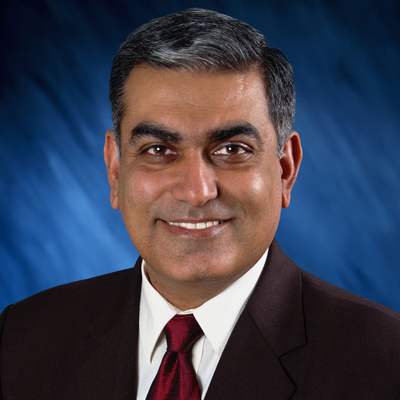
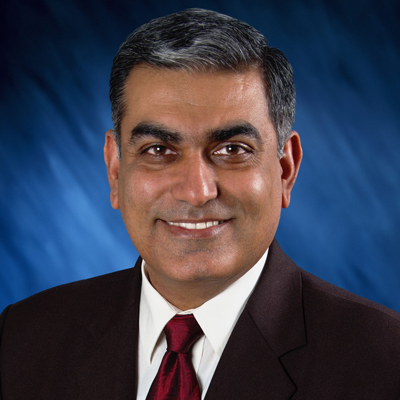
    Broadcom MD Rajiv Kapur believes that Reliance Jio can emerge as disruptor in India. He says, “Reliance Jio, with whatever they are doing is going to be a game changer, and the competition should be worried. Its foresight and deep pockets make the future look extremely interesting.”


    The cable industry is at a cusp. To start making money from avenues besides just carriage of television, the industry has to make the right technological upgradations. Internet data services must ride on the back of its existing infrastructure. Though all the players might not immediately realize the need for the right kind of upgradation, a few progressive minded ones can be the torch bearers, and their success will draw the rest in. Cable television or video ARPUs’ are not rising in India at the same rate as in the US or other geographies, where true high speed data ARPUs are a fraction, albeit quite a large fraction of Video ARPUs’. In India, it is the other way around- internet ARPUs’ are anything from twice to five plus times of cable television ARPUs’.


    Kapur says, “In every country there are a set of progressive minded operators and there are a few who reactively catch up. All that is needed is a few operators adapting hybrid technology with a goal of providing enhanced satisfaction to the consumer and in return getting more returns in terms of higher ARPU.”


    Broadcom now has devices based on DOCSIS 3.1 specifications, which obviously is an upgradation of the DOCSIS 3.0 version. DOCSIS 3.1 specifications hardware offer speeds of 1 gbps (Giga byte per second) as compared to the 100 mbps (Megabytes per second) or less that most DOCSIS 3 specification hardware is capable of. Kapur thinks “there is no real need of DOCSIS 3.1 in India at this stage” and he recommends that new innovators in the broadband space could start with DOCSIS 3.0.


    He says, “Let’s be realistic about India as a country. 100 mbps to 1 gbps!  There is no reason why India cannot talk about it, but as a country India still does not have the need for 1 gbps. But to begin with Docsis 2 today certainly makes no sense. It is like setting the ceiling lower than your own height.”


    “Data consumption for video is still the heaviest usage of internet by Indian consumers. For quality 1080 p viewing experience consistent 15 to 20 mbps speed is more than enough. So DOCSIS 3.1 is yet not a necessity in India,” avers Broadcom fellow and vice president Sherman Chen


    Kapur feels OTT will play a pivotal role in driving the need of broadband in India. Referring to the scenario five years back he says, “Today every hotel, coffee shop has Wi-Fi. Go back just five years and this was a rarity, so the evolution is happening. We are seeing taxi services offering Wi-Fi in their cabs during cab rides. OTT, telemedicine services will drive the need and the pipe will subsequently grow to meet the demand.”


    Kapur believes that the default HD box should be a hybrid ready and rest can be customer defined. The DAS phase III deadline is knocking at the door, Kapur opines that the boxes placed should be in a position to serve the needs of consumers for at least five years. “If we place 100 million boxes and in a year we land up in a situation where we have to change the boxes that will be sad. So depending on the need we must deploy the best we can. I don’t want to see them replaced even in 5 to 7 years. Quality is my biggest concern as we do not have a situation of testing arrivals” he concludes.

  • “India will be a huge broadband market over the next 3 years:” Rajiv Kapur

    “India will be a huge broadband market over the next 3 years:” Rajiv Kapur

    MUMBAI: The Indian Cable TV sector has a gargantuan task at hand. Not only does it have to work towards converting analogue cable TV homes to digital, but it also needs to work towards connecting India with high-speed broadband pipes.


    Multi system operators (MSOs) are now working towards strengthening their broadband services. While Hathway Cable & Datacom was the first to launch a 50 mbps broadband service on its Docsis 3.0 ultra high speed network in 2013, Siti Cable and Den Networks were quick to follow suit in 2014. Not only this, several cooperatives that mushroomed post the digitization announcement, are also looking at offering more broadband services. And all this, to improve business as well as their average revenue per user (ARPU).


    So are MSOs in India taking the right approach to build a broadband base in the country? Broadcom India managing director Rajiv Kapur tells Indiantelevision.com, “I applaud the MSOs in the country for what they are doing. They are taking the right approach. If anything, they should do more of it.”


    The satellite versus cable versus IPTV is probably the biggest war in the broadcast universe, where three different ways of delivering live TV compete with each other. “India is at a very nascent stage for IPTV, and that brings us to the satellite versus cable TV war. Like in any other market, both will co-exist with their own unique offerings. Both have existed with a large enough pie of their own and both bring something unique to the table,” opines Kapur.


    Kapur believes that a reason why cable benefits over satellite is because it can provide a two way service. “While one way service is very limited, two way services are way more powerful in customizing things to make them more entertaining, or in gaming context more interactive. Taking a cue from what has happened in the rest of the world, I foresee that the sheer desire to remain competitive against satellite will again lead cable to bring broadband more aggressively in Indian cable market. The market itself isn’t exactly demanding it, so there has to be a little bit of a push to create the demand,” he adds.


    Since Indian subscribers are currently not aware of the advantages of a two way pipe, cable operators will need to start making creative use of the pipe that gives two way cable services, which enhances one’s TV watching experience and not just leave it as a pipe. “Even if it is left as a pipe, there are still some benefits for cable operators because the ARPU will still be way higher,” Kapur informs.


    Broadband will not only benefit cable operators, but also subscribers as there will be less capital expenditures (CAPEX) and a lower total bill, if they get the services from one operator. “So everyone benefits and this will happen whether it’s a sheer data pipe or there are services in the data pipe, which embellishes TV watching experience,” says Kapur.


    According to him, one needs to be a little more patient with broadband as India is going through the basic steps of digitization. “As a country, barely have we been able to figure out how to get such a large footprint of analogue converted to digital. It is a very large market and that makes it that much more difficult. One needs to keep in mind that business relations between broadcasters, MSOs and LCOs are still settling down,” points out Kapur.


    The country definitely needs a broadband push and now. Talking about how it will happen, Kapur suggests two types of push mechanism. “The first push is much easier and has already started, which is offering a higher bandwidth speed at aggressive pricing. This kind of push takes a progressive operator to initiate it and we have seen it happening. The second level of push is TV embellishing two way service. If you fast forward into 2016, there will be at least one progressive like-minded large cable operator who will begin showcasing interactive services that others will either be forced to follow or would want to follow,” he suggests.


    Talking about the right pricing for broadband, Kapur says that the sweet spot of bandwidth and price is between Rs 800 – 1000. “There is always a package, which is above it and there is a package below it. What will happen with time is that higher speeds will come at the same price. This is the beauty of a competitive market. In a year from now, at least a few operators will start aggressive broadband packages in the market. The side effects of this on other operators starting the same, will take another year or two. So in the next two-three years, India will be a much larger broadband market than it is today,” feels Kapur.


    Delay in Digitization


    Kapur believes that even if the country sees a large percentage of digitized homes and not 100 per cent, is still a big step forward. “The only benefit of 100 per cent digitization is that one can do an analogue shut off,” he says.


    Citing the positives of the delay of digitization, Kapur says, “The sheer magnitude of what needs to be done is very large. The delay gives time and opportunity to MSOs, LCOs and broadcasters to sort out their complex relations and their businesses.”


    The pressure to complete seeding of set top boxes (STBs) on time in phase I and II saw many MSOs compromising with the STB quality. “If we have to deploy 50-100 million boxes, it will be a shame to do it without keeping quality in mind. This country shouldn’t waste money in replacing boxes. So there is a big positive in the delay as now the quality matrix of what needs to be looked in hardware procurement will be left uncompromised,” he adds.


    Pay TV channel revenues post digitization


    Currently there is fear in the masses that prices of pay TV channels post digitization will go up. Kapur feels that while there is an element of truth in that, it is only because in the analogue regime, people were not paying for what they were viewing. “The second television was not being paid for and people were slicing the cable and taking feeds. So in the bigger picture, prices will go up just because of that.”


    Citing examples from the telecom sector, where high competition and usage led to reduction of prices, Kapur suggests that hyper competition will force price control even in the cable TV sector. “More services will come, which if taken by subscribers, will increase the ARPU for operators,” he opines.


    In satellite, DTH players have existed since over 10 years, however the country witnessed hyper competition amongst players only in 2008-2009. As the DTH market enters its early stage of maturity, more services are being considered and offered to consumers. “All this took a decade. Cable will not take that long because the market is established due to DTH, but it still needs to go through it,” informs Kapur.

  • Vodafone adds Broadcom Ultra HD technology to next-generation IPTV STB

    Vodafone adds Broadcom Ultra HD technology to next-generation IPTV STB

    NEW DELHI: Broadcom Corporation, which on 10 September announced the first family of eight new hybrid satellite and terrestrial system-on-a-chip (SoC) broadcast devices for set-top boxes (STBs), today said it will power Ultra HD set-top box (STB) technology in collaboration with Vodafone Germany. 


    The full line of Broadcom is being demonstrated at the International Broadcasting Convention in Amsterdam.


    Vodafone’s 4K-enabled consumer set-top box, the first Ultra HD STB to be introduced in Germany, will deliver broadband subscribers Ultra HD content at 4X the resolution of traditional HD displays. Broadcom’s high efficiency video coding (HEVC)-enabled BCM7252 device allows operators such as Vodafone to use bandwidth more efficiently, enabling uninterrupted delivery otherwise bandwidth-intensive 4K, 60 frame-per-second transmissions (4Kp60) at 50 percent of the bit rate previously required.


    “Broadcom’s pioneering Ultra HD technology will enable Ultra HD content for millions of potential Vodafone’s fixed broadband subscribers,” said Broadcom senior vice president of marketing, broadband & connectivity group Rich Nelson. “As a leading provider of silicon for Ultra HD technology, Broadcom’s BCM7252 SoC allows Vodafone to bring crystal-clear Ultra HD definition content to consumer’s home TV sets for the first time in Germany.”

  • World’s first single-chip hybrid direct broadcast satellite terrestrial and IP devices for STBs

    World’s first single-chip hybrid direct broadcast satellite terrestrial and IP devices for STBs

    NEW DELHI: Broadcom Corporation, a global innovation leader in semiconductor solutions for wired and wireless communications, today announced the world’s first family of eight new hybrid satellite and terrestrial system-on-a-chip (SoC) broadcast devices for set-top boxes (STBs).


    The new series unveiled at the International Broadcasting Convention in Amsterdam is engineered with pin-to-pin compatibility, allowing a single set-top design to be leveraged across the entire family. Broadcom will demonstrate the chips at IBC, 12 to 16 September.


    The new series brings Broadcom’s high efficiency video compression (HEVC) technology to terrestrial markets, enabling broadcasters to utilise spectrum more efficiently than with current MPEG-4 video compression standards. As a result, broadcasters gain options to deliver more competitive channel line-ups and improved content quality through the same or lower spectrum footprint. Broadcom’s new family of devices also combines HEVC with the advanced modulation efficiencies of DVB-S2, DVB-T2, ISDB-T and ATSC, and high-performance IP connectivity with MoCA 2.0. This unprecedented level of integration provides set-top manufacturers with a compelling value proposition for broadcasters as they continue service upgrades.


    “The combination of satellite and terrestrial front-ends that this family offers now provides significant benefits to viewers who want the best channel and content selection available,” said Broadcom senior vice president of marketing, broadband & connectivity Rich Nelson.


    “We believe HEVC will continue to be a key driver for the delivery of high-quality content. Today’s announcement demonstrates our commitment to our customers to proliferate HEVC broadly across our set-top box product family.”


    “Broadcasters and regulators throughout Europe and in emerging regions, including Africa, are waiting for the arrival of DVB-T2 with HEVC to launch or extend HD terrestrial services. In addition, we expect the ability to deliver hybrid IP-services using HEVC will benefit broadcasters launching premium add-on services, including some delivered over bandwidth-constrained cellular networks,” said ABI Research practice director Sam Rosen.


    “In addition to allowing the next generation of services, Broadcom’s  integration of HEVC in terrestrial, satellite and cable chipsets provides broadcasters with a future-proof to ensure the set-top boxes they deploy today will provide value through 2020 and beyond.”

  • Broadcom to supply HEVC SoC for Tata Sky Ultra HD STBs

    Broadcom to supply HEVC SoC for Tata Sky Ultra HD STBs

    MUMBAI: Broadcom Corporation has announced that it will be providing its BCM7252 high efficiency video codec (HEVC) H.265 system-on-chip (SoC) to Tata Sky. This will be utilised in the DTH operator’s Ultra HD set top boxes (STBs).


    Tata Sky and Technicolor have teamed up to design and deploy its 4K STBs by 2015. Broadcom’s HEVC-enabled chipsets provide the compression and high-throughput required by operators and OEMs to rapidly introduce Ultra HD subscriber hardware and content. The Broadcom BCM7252 Ultra HD SoC improves coding efficiency and reduces video bandwidth usage by 50 per cent.


    “We are committed to delivering an innovative and world class TV viewing experience. With the arrival of HEVC technology, our subscribers will soon be some of the first in the region to experience the live-action quality that only Ultra HD can provide,” said Tata Sky MD and CEO Harit Nagpal. “As Ultra HD TVs continue to become more affordable and Ultra HD content becomes more widely available, we anticipate increased subscriber demand for Ultra HD-capable set top boxes.”


    “Technicolor is at the forefront of Ultra HD, working to enhance the Ultra HD experience on all screens by providing content preparation and 4K image certification for high quality STBs and video gateways. By leveraging Broadcom’s advanced Ultra HD devices with integrated HEVC compression technology, we can deliver 4K resolution at a frame rate of 60 frames-per-second while substantially reducing the bandwidth required for video transmission, and providing the advanced features and capabilities needed to enable the ultimate home viewing experience,” said Technicolor Connected Home Division senior vice president APAC Georges Laplanche.


    “As consumer interest in Ultra HD continues to grow, Broadcom is delivering advanced devices with market-specific features and price points that allow consumers to enjoy an enhanced viewing experience regardless of their geography,” said Broadcom senior vice president marketing BCG Rich Nelson. “Broadcom continues to demonstrate its commitment to furthering the Ultra HD ecosystem across the globe, providing the innovation required by our customers to drive this technology quickly into the market, particularly as lower-cost Ultra HD TVs drive consumer awareness.”


    Key Features of the BCM7252 Ultra HD SoC

    •    High-performance dual-core Brahma15 10000 DMIPs ARMv7 processors

    •    2180p60 or dual 1080p60 decode and transcode capabilities

    •    Integrated connectivity peripherals including USB 3.0, PCIe, Gigabit Ethernet and MoCA 2.0

    •    Highest level of platform security, content protection and DRM robustness

    •    Dual display allowing presentation of two simultaneous video channels from the same STB via independent HDMI outputs and remote control devices

    •    Dedicated interfaces to a range of Broadcom companion front end cable, DOCSIS, satellite and 802.11ac Wi-Fi devices

  • Videocon d2h and Broadcom partner for HD service

    Videocon d2h and Broadcom partner for HD service

    MUMBAI: A few weeks after Videocon d2h familiarised Indians with 4K Ultra HD technology, it has now announced an official deal with Broadcom, which is a leader in semiconductor solutions for wired and wireless communications, for growing its HD service.


    The DTH provider has selected Broadcom’s integrated satellite set top box (STB) system-on-a-chip (SoC) device to power its HD digital video recorder (DVR). Broadcom’s BCM7358 HD satellite STB SoC enables the operator to fasten the deployment of its HD STBs with reduced design complexity, size and cost.


    Videocon d2h’s DVR is capable of recording on a USB device with digital picture quality and 1080p resolution. The HD USB DVR is supported by Broadcom’s BCM7358 single-channel 1080p HD advanced video coding (AVC) satellite receiver chip, featuring a high performance CPU and graphics engine, digital living network alliance (DLNA) connectivity support and advanced security functionality.


    Says Videocon d2h CEO Anil Khera, “The silicon innovation that Broadcom provides has been a key factor in our continued success in delivering rich content to our growing subscriber base. We’re leveraging a variety of Broadcom STB silicon throughout our portfolio and plan to extend our manufacturing capabilities to meet the needs of other cable operators in the region.”


    “The Indian television market is undergoing a major transition and operators such as Videocon d2h are leading the charge in dramatically improving the quality and variety of content delivery,” adds Broadcom India senior director of business development Rajiv Kapur. “As an established leader in STB silicon innovation around the world, Broadcom is delivering the technology required for a growing number of consumers to enjoy more sophisticated features such as HD quality content, digital video recording and on-demand services.”


    IHS Technology states that STB industry revenue will reach a record $ 22.8 billion in 2015, driven largely by growth in emerging markets and subscriber demand for HD content. “As pay-TV operators move to accommodate changes in delivery platforms and formats, including the adoption of HD, STB shipments will continue to rise, hitting record levels for the next few years,” said IHS Technology director for connected home research Daniel Simmons.


    “Technology-based service differentiation is becoming increasingly important for pay-TV operators in emerging regions, as these markets begin to mature and saturate. Transitioning subscribers from SD to HD at minimal cost will be critical for driving further pay-TV growth in emerging markets.”