Tag: Broadcasting

  • NBA and IBF to approach govt bodies regarding broadcasting woes

    NBA and IBF to approach govt bodies regarding broadcasting woes

    MUMBAI: The broadcasting industry of India has been facing several issues right from carriage fees to the imposition of the ad cap. In order to reduce the burden on the broadcasters, the Indian Broadcasting Foundation (IBF) and the News Broadcasters Association (NBA) have now decided to unite and present their views to the highest authorities in India.  


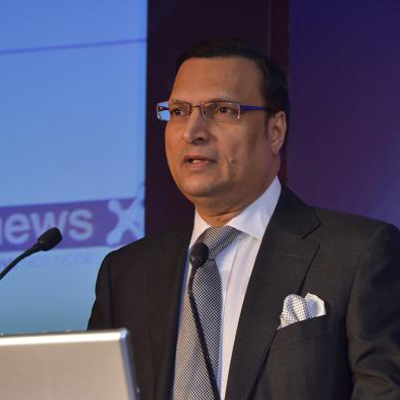
    India TV chairman and editor in chief Rajat Sharma who is also the NBA president and the IBF vice president of strategic affairs, said that the two bodies will meet the Prime Minister Narendra Modi, the Finance Minister Arun Jaitley and the Information and Broadcasting Minister Prakash Javadekar to make them aware about the growing cancer called carriage fees. ”We will also show a revenue model that MSOs can adopt so that we don’t become dependent on carriage fees,” said Sharma.    


    Regarding ad cap he said that they will show the ministers the kind of revenue loss the channels will incur if the 10+2 minute ad cap is implemented. The case is currently being fought by the NBA in the Delhi High Court.  “We will request for the 12 minute advertising cap to be removed from the licencing conditions,” he said. The NBA president added that no channel, be it a news channel or a GEC, wants to show more than five minutes of advertising but the revenue model forces them to do so. “None of us want to compromise on programming,” he said.


    The new ratings system that will be applicable once BARC India starts its operations, should be transparent, he said. ”Till the time these issues are not addressed, the industry will keep suffering,” he opined.   


    While speaking to indiantelevision.com, Sharma said that the meeting is expected to happen in the next few days.


    Sharma was addressing a keynote at the Seventh Indian News Television Summit, organised by indiantelevision.com where he discussed the role of a news channel and the challenges and hurdles that they face.

  • TRAI to host open house meet on cable and TV tariff issues

    TRAI to host open house meet on cable and TV tariff issues

    NEW DELHI: An open house discussion on tariff issues related to broadcasting and cable television services for commercial subscribers will be held later this week in the capital.


    The discussion has been called by the Telecom Regulatory Authority of India (TRAI) on 4 July.


    The meet is expected to be attended by senior officials of TRAI, Information and Broadcasting Ministry and stakeholders, apart from consumer organisations.

  • SureWaves wins BCS Ratna Award

    SureWaves wins BCS Ratna Award

    BANGALORE: SureWaves MediaTech Pvt Ltd, a next-generation media convergence company was awarded ”Best Innovative Technology” for its groundbreaking technology at the 5th BCS Ratna Awards 2014 held yesterday at New Delhi. The awards honored organizations that have been playing the role of a catalyst in Broadcasting, Media, DTH, Technology Providers & Cable TV industry in all areas.  Founded in 2006, SureWaves, with over 30 technology patents, is one of the most innovative Indian start-up in recent times based out of Bangalore.


    SureWaves’ ground-breaking technology enables large scale aggregation of audiences across multiple television channels and offers a single window interface to large national advertisers to effectively reach out to mass audiences on a market by market basis. The SureWaves Spot TV Network, one of the largest connected television networks of its kind anywhere in the world spans across 28 states and 7 union territories in India through partnerships with over 280 local TV channels that reach more than 80 million households and 400 million viewers.


    On receiving the award Mr. Mandar Patwardhan – Chief Operating Officer, SureWaves said “We are extremely delighted and on behalf of SureWaves, I thank BCS Ratna Awards and Aavishkar Media Group for having recognized us with this award. For us, to win the Best Innovative Technology award is, of course, very motivating. We pride ourselves on our innovative flagship product – SureWaves Spot TV Network, which has made advertising on local channels accountable, measurable and is enabling national advertisers to reach out to a hitherto untapped audience.”

    Since its inception in 2010, BCS Ratna Awards have become a symbol of excellence in the broadcasting and Distribution industry. This year, the awards focused not only on the excellence in the traditional media but also on path breaking initiatives in the case of new media as well. It was a one of its kind opportunity for Broadcasters, MSOs, LCOs, Technology & Content Providers, DTH stakeholders to come together on a single platform.

  • BroadcastAsia2014 returns to Singapore

    BroadcastAsia2014 returns to Singapore

    SINGAPORE: BroadcastAisa2014, Asia’s most acclaimed exhibition and knowledge platform for the international broadcasting, film and digital multimedia industry, will return to Marina Bay Sands Singapore from 17 to 20 June 2014. Showcasing the newest innovations and cutting edge technologies, this business event is recognised by industry professionals as the most relevant arena for business networking opportunities. Gather topical knowledge and insights, and get to exchange ideas with leading industry players and thought leaders at the conferences. 


    ProfessionalAudioTechnology2014, incorporated with BroadcastAsia2014, is an international showcase for professional audio equipment, services and technology. Featuring the latest in professional audio technology and solutions, ProfessionalAudioTechnology draws industry professionals from radio broadcasting, audio production / post-production and live event and entertainment production.


    The BroadcastAsia International Conference and Creative Content Production Conference will bring together thought leaders and like-minded professionals from the broadcasting and media arenas to share business strategies for future broadcasting and content production. Visit www.Broadcast-Asia.com for more information.


    BroadcastAsia2014 at a glance:

    Show:

    BroadcastAsia2014 (In conjunction with CommunicAsia2014 and EnterpriseIT2014)

    Incorporating:

    ProfessionalAudioTechnology2014

    Date:

    17 – 20 June 2014

    Venue:

    Marina Bay Sands Singapore

    Opening hours:

    17 – 19 June: 10.30am – 6pm

    20 June: 10.30am – 4pm

    Admission:

    Business and trade professionals only

    Registration:

    www.broadcast-asia.com


    BroadcastAsia2014 International Conference:

    Date:

    17 – 20 June 2014

    Venue:

    Marina Bay Sands Singapore

    Admission:

    Registered delegates only

    Registration:

    http://www.broadcast-asia.com/index.php/conference/fees-registration/


    The Creative Content Production Conference:

    Date:

    17 – 20 June 2014

    Venue:

    Marina Bay Sands Singapore

    Admission:

    Registered delegates only

    Registration:

    http://www.broadcast-asia.com/index.php/conference/fees-registration/

  • MIB urges industry to buck up on implementing TV ratings

    MIB urges industry to buck up on implementing TV ratings

    NEW DELHI: There has been some hue and cry about the manner in which the Ministry of Information & Broadcasting (MIB) has apparently rushed to notify the latest policy guidelines for TV ratings. Following the notification, there have been fears that unless TAM goes to court and gets a stay order on the MIB’s guidelines, industry will most likely be without TV ratings for at least six to seven months. This is because Broadcast Audience Research Council (BARC) states that it will be ready to roll out its ratings only in the third or fourth quarter of 2014. 


    This has alarmed professionals such as Madison chairman Sam Balsara who has gone on record to state that the industry should plead with the Ministry to delay the implementation of the guidelines, and that the industry cannot do with a TV ratings-dark period. 


    MIB officials are pretty clear that this time it is for real. Says a senior Ministry official: “The entire TV ratings shouting match has been going on since 2007. Industry has been complaining that TAM’s methodology is flawed, and they have done nothing about it over the years. And the murmurings against it have been going on for more than a decade.” 


    He goes on to add, that MIB intervened only on the industry’s insistence and now the industry will have to drink its bitter dose of medicine, no matter what. 


    “We have given the industry and TAM enough time to rectify the situation and find an amicable authentic and reliable solution,” says another MIB official. “The Amit Mitra committee report indicated what needs to be done way back n 2010. Why wasn’t it followed and why were corrective steps not taken by TAM or the industry? TAM will have to follow the guidelines and register with us before 30 days are up, otherwise cease operating. We are not against individuals or companies; we are clear that a due process and the rules for TV ratings need to be followed so that transparency and credibility are associated with TV viewership ratings.” 


    In fact, another MIB official was quite critical of the industry-backed TV ratings body BARC too. 


    “It’s taken them three years to get here,” the senior official says. “First, BARC told us that the ratings will be up and running by June 2013, then they told us they would do so by March 2014, and now they are saying September or October 2014. This is simply not acceptable. We timed our rules and regulations based on the fact that BARC would be up by March 2014 and that industry would not have to be troubled by the absence of ratings.” 


    Another senior official appeals that the MIB cannot keep waiting forever for industry to get its act together. “The industry has been dragging its heels for a long time on the TV ratings issue. Now is the time for it to sprint to the finish line, and faster than ever before,” he says. The longer it takes to get its ratings going, the longer it will be without ratings.”


    The fact that TAM Media might challenge the Ministry’s notification in court has not disturbed the MIB at all. “If it goes to court, we will fight it tooth and nail,” says the MIB official. “Industry has to understand, the MIB means business. Let industry also be serious about its business.” 


    “It’s strange, isn’t it?” another official asks rhetorically with a smile on his face. “Industry complains when the ratings are there; they are complaining now that the ratings will not be there for some time. Let it realise that indeed there will be no ratings for a while and come up with a workable solution in their absence which works well for broadcasters, advertisers and agencies. The ball is in industry’s court now. ”

  • India’s Doordarshan selects Harris Broadcast for nationwide digital transition

    India’s Doordarshan selects Harris Broadcast for nationwide digital transition

    NEW DELHI: Harris Broadcast, a market share leader of content management and network infrastructure solutions serving the global broadcast, communication service provider, government and enterprise markets, today announced it has been selected by national broadcaster Doordarshan to deploy a new DVB-T2 transmission infrastructure across the country.


    The government of India is pushing ahead with plans to complete the move from analogue to digital television transmission by 2017. As the leading public service broadcaster in India, Doordarshan has an obligation to cover the whole country and to reflect the diversity of Indian society, including content in the more than 40 languages. At the same time, it is promoting a boost in quality and viewer engagement by rolling out high definition channels, as well as delivering its multi-lingual content across multiple platforms including mobile devices in the future.


    “This is not only a large-scale project for Doordarshan, but it is also one of the most high profile and important projects the broadcaster has undertaken,” said Joe Khodeir, senior vice president Asia at Harris Broadcast. “Our DVB-T2 solution maximises spectrum capacity, allowing Doordarshan to roll out multiple channels serving different communities as well as offer multiple HD channels. For a project of this scope and significance, Doordarshan looked for a partner with a strong local service commitment and presence along with best-in-class technologies that delivered the lowest lifecycle costs.  Our Maxiva™ ULX architecture provides the best power efficiency in the market, which was a critical consideration for Doordarshan when energy consumption is such a large part of the operating cost.”


    The first of two transmission contracts awarded to Harris Broadcast adds HD channels to digital multiplexes in four major metropolitan areas. Each facility will be served with a new 6kW Harris Broadcast Maxiva ULX DVB-T2 transmitter. The second contract is for 19 Maxiva ULX transmitters, which will be used to roll out digital transmission to the regions of India. In the first instance, these will carry standard definition channels in their multiplexes, but the flexibility of the transmitter and infrastructure design allows for an easy upgrade to HD when the time comes.


    The Maxiva ULX is a liquid-cooled, solid-state transmitter built on a modular architecture for maximum flexibility in inputs, transmission standards and power outputs. By incorporating Harris Broadcast PowerSmart® technology, the Maxiva ULX uses the minimum energy for the radiated power, produces less heat and occupies the smallest footprint in the industry. Together, this provides simplified installation, easier maintenance and reduced total cost of ownership over the lifetime of the transmitter.

  • I&B minister  Manish Tewari inaugurates BES Expo 2014

    I&B minister Manish Tewari inaugurates BES Expo 2014

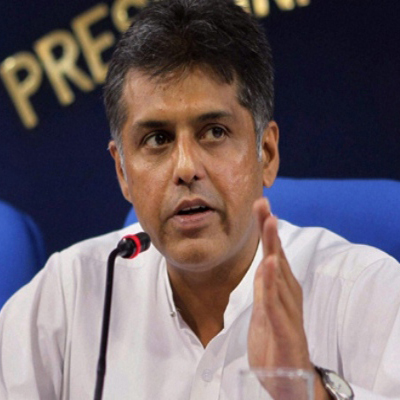
    NEW DELHI: The Information and Broadcasting minister Manish Tewari inaugurated the 20th International Conference and Exhibition on Terrestrial and Satellite Broadcasting – BES Expo 2014, today at New Delhi. Speaking on the occasion he said, “The last two decades have witnessed exponential growth in both the broadcasting and telecom sectors, giving rise to 800 plus television channels.”

    Commenting on the problems and challenges faced by the broadcasting sector due to competition for market share, he said the union cabinet has recently approved the proposal of the Ministry of Information & Broadcasting for a comprehensive regulatory framework in the form of guidelines for Television Rating Agencies in India. These guidelines cover detailed procedures for registration of rating agencies, eligibility norms, terms and conditions of registration, cross-holdings, methodology for audience measurement, a complaint redressal mechanism, sale and use of ratings, audit, disclosure, reporting requirements and action on non-compliance of guidelines. 

    Also speaking at the function, Ministry of Information & Broadcasting secretary Bimal Julka, said the ministry is planning to strengthen community radio movement in India, which would help in giving voice to the voiceless. 

    The BES expo is being attended by over 300 eminent broadcasters, media industry professionals and experts from India and abroad. The three day long expo will have deliberations on issues such as terrestrial broadcasting, future of TV, digitization, disaster broadcast systems for information dissemination, regulatory framework in broadcasting and other important issues related to the broadcasting industry. 

  • Videocon Industries plans new STB capacity by end-2014

    Videocon Industries plans new STB capacity by end-2014

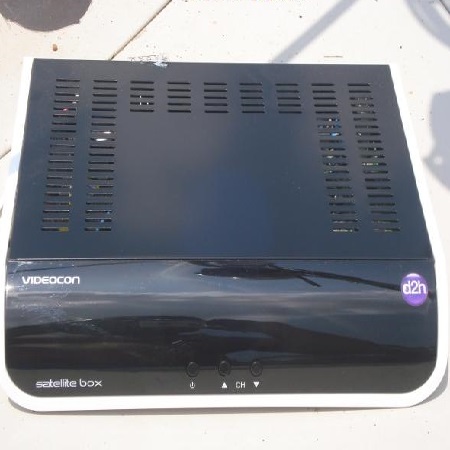
    MUMBAI: The Indian government last year raised the import duties of set top boxes (STBs) from five per cent to 10 per cent in a bid to encourage Indian entrepreneurs to start making them indigenously. To no avail, Indian MSOs, DTH players, continued importing the boxes from China, Korea and Taiwan to meet the government mandate of digitising India’s cable TV sector.

    At least one player yesterday announced that it had taken up the gauntlet: electronics major Videocon Industries. Director Anirudh Dhoot told Press Trust of India that his company is planning to set up a one million STB manufacturing plant by end-2014. Dhoot told PTI that the plant is likely to be set up in either Punjab or Madhya Pradesh. 


    The Videocon group also runs Videocon d2h – one of the fastest growing DTH players in India. 


    The digitisation of cable TV in phase III and phase IV towns is expected to require around 80 million STBs; of which 60 million will likely be rolled out this year itself, totting up to a business potential of an estimated  Rs 7,500 crore at factory prices. The second and third phases of digitisation are scheduled to be completed by end 2014, but everyone in the industry expects a delay of about three to six months. If Videocon manages to get its plant to start churning out STBs by end this year, it could meet some of that demand. 


    The Indian cable TV industry has deployed around 22 million STBs during the first and second phase of digitisation; even as DTH players have deployed around 45-50 million STBs collectively over the years since DTH launched in India.


    Most of these were imports. Videocon, on its part, upped the capacity at its existing STB plant from 700,000 per annum to one million during the festival season last year. Now it plans to set up a new plant. Other players who are involved in the manufacture of STBs domestically include: Noida-based Dixon Technologies and Kortek Electronics.

  • Chennai Corp cracks the whip on cable TV ops

    Chennai Corp cracks the whip on cable TV ops

    MUMBAI: A major crackdown on cable TV operators is taking place in Chennai. 


    The Chennai civic body, The Chennai Corporation has gone on a drive to collect infrastructure usage and registration charges from local cable TV operators in the city.


    Sources in Chennai revealed that around 16 companies were given legal status after they coughed up Rs 1 crore to the corporation. Currently, the civic body charges Rs 9,400 per km as infrastructure use rent to cable TV and telecom operators, though a proposal to hike it to Rs 32,000 is pending with the government. 


    The Chennai Corporation has been trying to clean up the city and had issued orders to its employees and staff to snap cables of the operators who did not pay up. It expects to collect another Rs 1 crore in the coming week. 

    The civic body is expected to next streamline the way the cables have been strung over head all over Chennai, say officials.

  • “My immediate focus is on turning around Sony Ent, our flagship channel”

    “My immediate focus is on turning around Sony Ent, our flagship channel”

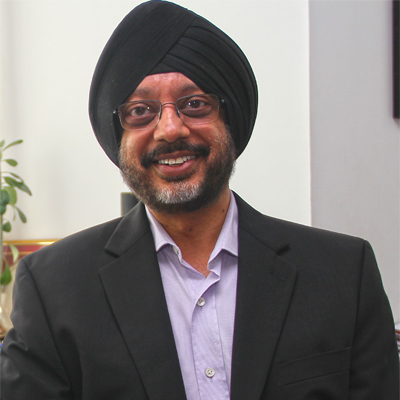
    He has been fairly low profile, mild-mannered and soft spoken. But underneath the soft exterior NP Singh is tough as nails and a fiesty fighter just like many from the Sikh community – to which he belongs – are known to be. Recently, Singh was hoicked to the CEO’s position at Multi Screen Media India – Sony Entertainment Television Network India – after running it as COO for nearly a decade. He replaced Man Jit Singh – who has moved on to a global position looking after its home entertainment business.


    NP is a long time Sony loyalist as he joined it way back in 1999 as CFO.  He has been given charge at a challenging time when the network’s flagship channel Sony Entertainment is at  a lowly sixth position amongst Hindi GECs, just a tad above Sahara. That’s a far cry from the third or fourth spot it occupied until 2012.


    Currently in his mid-50s, has seen the highs and lows of not only the Sony Entertainment Network, but the industry as well. His appointment has put his rivals on alert because it is he who pushed the transformation of Sab into a topnotch Hindi comedy offering, Pix into a channel showcasing Hollywood blockbusters, and successfully launched Mix in a crowded music channel market place. 


    In a conversation with Indiantelevision.com’s Seema Singh, NP speaks of his immediate plans and the road ahead.


    Excerpts:


    15 years in Sony and now becoming the CEO. What is the feeling?


    I have enjoyed every day that I have been here. I joined the company in June 1999 as the CFO and then got elevated to the position of chief operating officer and now the chief executive officer. I have seen the entire journey. The company is 18 years old and I have been here for the past 15 years. I have been a part of a lot of success and have also faced multiple challenges. Overall, it has been a fantastic journey. I am happy that I have been given the role to head the company.


    What are the challenges that lie ahead for the Network?


    The number one priority for me is to turn on the power of the flagship channel, Sony. In the short time, this will be my focus. We have seen success on the flagship channel not too long ago. In 2012, the channel was doing extremely well. Since 2012 end, the channel started seeing a drop in viewership; my objective is to arrest that drop and put the channel on the path of growth.


    Every CEO has a dream team. What is yours? Do we see any management changes in the future? Who do we see as the next COO for the Network?


    We have a strong management team with very good talent across the company. And we have been proud of the team and I will continue to work with them to achieve the dream that we have collectively for the company.


    Changes are a part of life and as we go forward, there may or may not be any changes, but it is too premature to comment on.  


    For now there will be no COO for the company. We have a strong management team and I will work directly with them to achieve the objectives set.


    Will life change for you after becoming a CEO?


    I have been here and have been partnering with Man Jit Singh who was here as CEO earlier. I have been part of all the successes and challenges and am acutely aware of what needs to be done. So it doesn’t have any major impact on my life going forward. Except that I will not have a COO right now and so I will interact with the management team directly. This means I will be spending more time in the office, of which I do not complain.


    What are the opportunities you have as a CEO?


    There are multiple opportunities. In the near term, my first priority is the turnaround of Sony and within that lies an opportunity for growth in revenue of the company. I see growth opportunities on the distribution side as well. That is something we have to stay focused on and we have to help grow the ARPUs at the subscriber level so that the benefit can flow right through the value chain upward to content owners like us.


    I see huge opportunity in the exploitation of digital platforms through mobile phones and tablets. If we can get our content to the audience through this medium, we will see a huge rise in revenue.


    I also see an opportunity in the regional market that we will evaluate over a period of time and then make our choices.


    Sony launched ‘Sony Mahotsav’ in UP, Punjab and Haryana starting from November 2013. What was the reason for it and how has the response been?


    We launched it with the objective to engage with our viewers in these markets. We want to take the brand to these markets and also our artistes from major shows to those cities to make the brand more accessible to them.


    The response has been positive and we will continue to build on this initiative going forward as well because we want to engage audiences of smaller towns with the channel. This is one initiative. We are also trying to build that engagement through our content and communication.


    Phase I and II of digitisation is complete. Do you see that helping the Network in getting better reach and viewership numbers?


    Digitisation will not grow our overall viewership base. It will lead to more transparency from the broadcasters’ perspective. Because digitisation will bring about addressability, there will be more information/ transparency about the viewer or subscriber we have for the network. Having said that phase I and II have been completed, set top boxes (STBs) have been installed in the households, but the real addressability has still not happened.


    There is still time for that. The MSOs do not have the database for those STBs. We are supporting them through campaigns running on our network. Hopefully in the next few months, they can get the data from the local cable operator and create a database and then start invoicing the subscribers directly. That will happen in the next few months and then over next two years complete addressability will come in and there will be benefits right from the viewer up to the broadcaster and content creator.


    Sony has always believed in experimenting with the content. But the past few years have not done too well for the channel. Is it that the channel is too ahead of time? Why aren’t you able to connect with the audience?


    It is a combination of multiple factors. Till 2012, we were clearly the number two ranking channel.  We were also at number one during the nine week period when the ratings did not get reported. But since then we have seen a decline in viewership and there are multiple factors behind it. One of the key factors was the universe update by TAM and the inclusion of LC1 markets in reporting viewership. The LC1 market has a 25 per cent share in the total viewership pie and that impacted our ratings. Secondly, some of our fiction shows also didn’t perform the way we expected them to.


    But we are the pioneers in the many new concepts and ideas. Some of them have been way ahead of time, for example the YRF shows that we brought to our viewers. Those were top quality shows that were accepted and appreciated by one set of audience, while not taken well by the other set of audience. But that doesn’t mean we will stop coming up with path breaking ideas. We have not been successful in the recent past, but that will not stop us from continuing to follow that path.


    The fiction shows have not done well for the channel. Also the non-fiction slate is developing fatigue. How do you plan to strengthen the programming slate?


    We have to continue to innovate. We did that successfully with the last season of Indian Idol in which we introduced kids. Also in Kaun Banega Crorepati (KBC) we brought several innovations. Though it was well received in the beginning, eventually it settled down at a lower number. But that doesn’t mean there is fatigue with the format of the show. We will do something more when we bring KBC the next time.


    We are looking at refreshing our weekend primetimes and that is why we got Boogie Woogie back on TV, which is doing well for the channel. We will be bringing back Entertainment Ke Liye Kuch Bhi Karega as well. The first and foremost task is to look at our fiction strategy and revamp that. Our plan is to bring in new shows to weekday primetime and strengthen it. We realise that it is there where we can build loyalties with the viewer. So that is the focus, followed by refreshing the weekend.


    Though Sony India is doing well and contributes some 40-50 per cent  to the overall revenue of the Sony Pictures’ media networks business, there is pressure on Sony from investors such as Dan Loeb to make Sony’s entertainment business deliver. Is that putting any pressure on you? How do you plan to cope with that?


    MSM is a very strong performer for the entire Sony Corporation. We have performed really well and India has a lot of growth opportunity and we are getting a lot of investment from the parent into the company. Whatever new initiative we come up with, till the time it makes strategic and economic sense we will get investment support from the parent.


    You will be reporting into Andy Kaplan, what is it like to work with him? Are there more challenges now?


    I have worked with Andy for the past several years and I don’t see any change in the dynamics of our relationship. I look forward to working with him even more closely now.


    What do you think is missing in the Sony slate?


    There will always be some unfinished agenda at any point in time. But right now we have everything to make the network more successful. There are some new initiatives that we are working on for the future growth of the network, which we will announce in due course of time, but first and foremost objective is the turnaround of our flagship channel.


    The network bouquet looks weak without any strong regional offerings. Are you looking at strengthening it by moving south?


    We have one channel in West Bengal. So we have one channel as far as the regional space is concerned, but it is a small channel, which has carved a niche for itself. We are looking at some other markets and currently we are evaluating all the options and will make our choice in due course of time.


    Unbundling of bouquets is something which Dish TV has recently encouraged by offering IndiaCast channels on an a la carte basis. Then the TRAI may soon come up with its recommendation paper on aggregators. Do you see that affecting the distribution of channels?


    We always follow very collaborative process in any negotiation that we do with our partners and like everyone else Dish TV is also a strong partner. We have had strong relations with them in the past and even now.


    There has been a lot of conjecture about the TRAI consultation paper on aggregators, but no one knows what will happen. Will cross that bridge when the recommendation comes out.


     Are you looking at launching any new channel?


    We never do something because other networks are doing it. We always do things that are good for our Network. We will do what makes strategic and economic sense for us. And from that perspective, if we have to launch a new channel we will.


    You can watch more of what the Sony Entertainmetnt CEO has to say by clicking here: Executive Dossier with MSM India CEO NP Singh