Tag: Broadcasting

  • The TRAI broadcasting & cable tariff order simplified

    The TRAI broadcasting & cable tariff order simplified

    MUMBAI: The industry could not have asked for a better Dusshera gift. On the eve of 11 October 2016, India’s telecom and TV distribution regulator  The Telecom Regulatory Authority of India (TRAI) announced two draft legislations  – The Telecommunication (Broadcasting and Cable Services) (Eighth) (Addressable Systems) Tariff Order, 2016 and Standards of Quality of Service and Consumer Protection (Digital Addressable Systems) Regulations, 2016 – that definitely look like progressing the stuck-in-quicksand-of-uncertainty broadcast TV and cable TV sector. More than that, they could possibly inject a modicum of organization, professionalism and structure to an otherwise disorganized-free-for-all TV distribution business.

    The first of the draft legislation attempts to put in place a pricing framework for the heavily conflicted cable TV distribution sector. The second seeks to upgrade the quality of services that MSOs, cable TV operators provide to the consumers. Both have been much-awaited pieces of legislation.

    The third which seeks to iron out the much-maligned and disputed subscription revenue stream that flows between broadcasters, MSOs, cable TV operators and consumers is expected to be announced soon.

    Let’s look at the pricing draft whose purpose TRAI says is to ensure:

    –       transparency, non-discrimination, non-exclusivity for all stakeholders in value chain
    –       affordable TV services for customers
    –       adequate choice to consumers
    –       balance the commercial interests of broadcasters and distributors of television  channels to enable the distributors of television channels to recover their network cost and the broadcasters to recover their content cost.

    The TRAI wants the new Tariff Order or the MRP pricing regime to become effective from 1 April 2017.In the new scheme, the authority has in detail defined the role of  broadcasters, LCOs and MSOs or HITS operators. This is an attempt to simplify the order for everyone to be able to understand it.

    The role of the broadcaster

    Under this, broadcasters will have to first declare their channels as a pay channel or a free to air channel, on an a  la carte basis, and in one of the following seven genres: devotional, general entertainment, infotainment, kids, movies, news and current affairs and sports. The TRAI has defined a ceiling on the maximum retail price (MRP) for each of the genres: devotional (Rs 3), general entertainment (Rs 12), infotainment (Rs 9), kids (Rs 7), movies (Rs 10), news and current affairs (Rs 5) and sports (Rs 19).

    Each pay channel has to have a MRP  that can vary depending on the region, but which cannot be changed before the expiry of six months of it being declared. These rates will be platform agnostic – that is, uniform across the platforms (cable TV, DTH, HITS and IPTV) across a relevant geographical market, and will have to be declared on each broadcaster’s website and be transparently available to the TRAI, TV distributors and consumers.

    The pay channels of a network or its subsidiary or holding company or subsidiary of the holding company can be packaged into a bouquet. This can be done while taking the precaution that the bouquet’s MRP is not less than 85 per cent of the sum of the MRPs of the a la carte pay channels forming a part of the bouquet. Similar conditions of holding prices for six months and in geographical areas also apply to bouquets.

    The TRAI has introduced a category called a premium channel. Broadcasters are free to notify any channel as premium channel in their reference interconnect order (RIO). There shall be no price cap on maximum retail price notified by broadcasters for customers. For HD channels, the regulatory authority has, however, stated the price cannot be more than three times the MRP of the corresponding channel transmitted in SD. For those HD channels that do not have a corresponding SD channel, the benchmark will be the ceiling on the MRP of the genre it is in. These independent HD channels will have a price ceiling of three times the ceiling of the MRP of the genre.

    As far as pay per view or VOD goes, the TRAI says it will bring it under its purview at a later date as these services are in their infancy in India and have minimal adoption.

    The television distributor’s role

    On the television distributor side, the TRAI has made them responsible to provide all channels on a la carte basis and it has also  proposed to formalize  a minimum subscription fee of Rs 130 per month per set top box from a subscriber for 100 SD channels.  Now if an HD channel is included in this, it will be equal to 2 SD channels.

    The TRAI has stated that TV distributors cannot change the bouquets formed by broadcasters or its price, but they can form bouquets themselves of pay channels of different broadcasters provided that their price is not less than 85 per cent of the sum of the MRPs of the pay channels forming part of the bouquet. Free to air, HD and SD variants of the same channel and premium channels are not permitted to be included in these bouquets.

    The authority says that the composition of the 100 channel basic tier should be left to the subscriber’s volition. It can consist of FTA, pay, premium channels, broadcast bouquets or even television distributor package bouquets. But it has to have the government mandated channels and at least five channels of each of the seven genres. If the subscriber opts for pay TV or premium or HD channels or broadcast or TV distributor bouquets, he will have to pay the retail price for these separately.

    Subscribers wanting channels beyond the basic tier can opt for other channels by paying the TV distributor Rs 20 – excluding taxes-  for each slab of 25 channels and the broadcaster the MRP of each channel.

    The TV distributors also have another responsibility. The electronic programming guide on the network must display the details of all channels and their MRP genre wise for easy navigation. Broadcasters who are relying on TV distributors to collect and remit the pay channel revenues will provide a 20 per cent distribution fee to them, which the latter can share with the LCOs who are actually doing the collection. Additionally, TV channels can also offer a maximum 15 per cent MRP discount to TV distributors to encourage them. Parameters for discounts will be disclosed by broadcasters in the RIOs that will be transparent and uniform for all distributors of television channels.

     

  • The TRAI broadcasting & cable tariff order simplified

    The TRAI broadcasting & cable tariff order simplified

    MUMBAI: The industry could not have asked for a better Dusshera gift. On the eve of 11 October 2016, India’s telecom and TV distribution regulator  The Telecom Regulatory Authority of India (TRAI) announced two draft legislations  – The Telecommunication (Broadcasting and Cable Services) (Eighth) (Addressable Systems) Tariff Order, 2016 and Standards of Quality of Service and Consumer Protection (Digital Addressable Systems) Regulations, 2016 – that definitely look like progressing the stuck-in-quicksand-of-uncertainty broadcast TV and cable TV sector. More than that, they could possibly inject a modicum of organization, professionalism and structure to an otherwise disorganized-free-for-all TV distribution business.

    The first of the draft legislation attempts to put in place a pricing framework for the heavily conflicted cable TV distribution sector. The second seeks to upgrade the quality of services that MSOs, cable TV operators provide to the consumers. Both have been much-awaited pieces of legislation.

    The third which seeks to iron out the much-maligned and disputed subscription revenue stream that flows between broadcasters, MSOs, cable TV operators and consumers is expected to be announced soon.

    Let’s look at the pricing draft whose purpose TRAI says is to ensure:

    –       transparency, non-discrimination, non-exclusivity for all stakeholders in value chain
    –       affordable TV services for customers
    –       adequate choice to consumers
    –       balance the commercial interests of broadcasters and distributors of television  channels to enable the distributors of television channels to recover their network cost and the broadcasters to recover their content cost.

    The TRAI wants the new Tariff Order or the MRP pricing regime to become effective from 1 April 2017.In the new scheme, the authority has in detail defined the role of  broadcasters, LCOs and MSOs or HITS operators. This is an attempt to simplify the order for everyone to be able to understand it.

    The role of the broadcaster

    Under this, broadcasters will have to first declare their channels as a pay channel or a free to air channel, on an a  la carte basis, and in one of the following seven genres: devotional, general entertainment, infotainment, kids, movies, news and current affairs and sports. The TRAI has defined a ceiling on the maximum retail price (MRP) for each of the genres: devotional (Rs 3), general entertainment (Rs 12), infotainment (Rs 9), kids (Rs 7), movies (Rs 10), news and current affairs (Rs 5) and sports (Rs 19).

    Each pay channel has to have a MRP  that can vary depending on the region, but which cannot be changed before the expiry of six months of it being declared. These rates will be platform agnostic – that is, uniform across the platforms (cable TV, DTH, HITS and IPTV) across a relevant geographical market, and will have to be declared on each broadcaster’s website and be transparently available to the TRAI, TV distributors and consumers.

    The pay channels of a network or its subsidiary or holding company or subsidiary of the holding company can be packaged into a bouquet. This can be done while taking the precaution that the bouquet’s MRP is not less than 85 per cent of the sum of the MRPs of the a la carte pay channels forming a part of the bouquet. Similar conditions of holding prices for six months and in geographical areas also apply to bouquets.

    The TRAI has introduced a category called a premium channel. Broadcasters are free to notify any channel as premium channel in their reference interconnect order (RIO). There shall be no price cap on maximum retail price notified by broadcasters for customers. For HD channels, the regulatory authority has, however, stated the price cannot be more than three times the MRP of the corresponding channel transmitted in SD. For those HD channels that do not have a corresponding SD channel, the benchmark will be the ceiling on the MRP of the genre it is in. These independent HD channels will have a price ceiling of three times the ceiling of the MRP of the genre.

    As far as pay per view or VOD goes, the TRAI says it will bring it under its purview at a later date as these services are in their infancy in India and have minimal adoption.

    The television distributor’s role

    On the television distributor side, the TRAI has made them responsible to provide all channels on a la carte basis and it has also  proposed to formalize  a minimum subscription fee of Rs 130 per month per set top box from a subscriber for 100 SD channels.  Now if an HD channel is included in this, it will be equal to 2 SD channels.

    The TRAI has stated that TV distributors cannot change the bouquets formed by broadcasters or its price, but they can form bouquets themselves of pay channels of different broadcasters provided that their price is not less than 85 per cent of the sum of the MRPs of the pay channels forming part of the bouquet. Free to air, HD and SD variants of the same channel and premium channels are not permitted to be included in these bouquets.

    The authority says that the composition of the 100 channel basic tier should be left to the subscriber’s volition. It can consist of FTA, pay, premium channels, broadcast bouquets or even television distributor package bouquets. But it has to have the government mandated channels and at least five channels of each of the seven genres. If the subscriber opts for pay TV or premium or HD channels or broadcast or TV distributor bouquets, he will have to pay the retail price for these separately.

    Subscribers wanting channels beyond the basic tier can opt for other channels by paying the TV distributor Rs 20 – excluding taxes-  for each slab of 25 channels and the broadcaster the MRP of each channel.

    The TV distributors also have another responsibility. The electronic programming guide on the network must display the details of all channels and their MRP genre wise for easy navigation. Broadcasters who are relying on TV distributors to collect and remit the pay channel revenues will provide a 20 per cent distribution fee to them, which the latter can share with the LCOs who are actually doing the collection. Additionally, TV channels can also offer a maximum 15 per cent MRP discount to TV distributors to encourage them. Parameters for discounts will be disclosed by broadcasters in the RIOs that will be transparent and uniform for all distributors of television channels.


  • XTreme-AsiaSat to provide 4K premium UHD content

    XTreme-AsiaSat to provide 4K premium UHD content

    MUMBAI: 4K-SAT, the Ultra-HD channel operated by Asia’s premier satellite operator Asia Satellite Telecommunications Co. Ltd. (AsiaSat), will be broadcasting premium extreme and outdoor content from XTreme Video on AsiaSat 4.

    XTreme Video is producing the best 4K content for extreme sports fans worldwide. Its UHD content on 4K-SAT will include some of the most stunning extreme and outdoor content, such as the successful mountain biking series ‘MTB Insights’ and the world’s wildest freestyle motocross show ‘Masters of Dirt’.

    “The brilliance of 4K definition truly comes into its own when the subject matter is as visually captivating as extreme and outdoor programming. We’re committed to bringing the highest quality programming to audiences around the globe, via partnerships with platforms, broadcasters and partners like AsiaSat,” said Joe Nilsson, senior director of business

    “XTreme Video offers exciting, adrenaline pumping programs that are very popular amongst viewers of all ages that are interested in extreme sports. We want to bring an immersive quality viewing experience to viewers via our platform on AsiaSat 4,” said Sabrina Cubbon, vice president, marketing and global accounts of AsiaSat.

    ‘4K-SAT’ continues to impress major TV operators and viewers across the region with unique and compelling UHD content in fashion, lifestyle, nature, movies, TV series, documentaries, extreme sports and technology.

    Since 1994, XTreme has been the home of independent creators capturing and documenting the culture, locations and stories of extreme activities. Asia Satellite Telecommunications, the leading satellite operator in Asia, serves over two-thirds of the world’s population with its six satellites.

  • XTreme-AsiaSat to provide 4K premium UHD content

    XTreme-AsiaSat to provide 4K premium UHD content

    MUMBAI: 4K-SAT, the Ultra-HD channel operated by Asia’s premier satellite operator Asia Satellite Telecommunications Co. Ltd. (AsiaSat), will be broadcasting premium extreme and outdoor content from XTreme Video on AsiaSat 4.

    XTreme Video is producing the best 4K content for extreme sports fans worldwide. Its UHD content on 4K-SAT will include some of the most stunning extreme and outdoor content, such as the successful mountain biking series ‘MTB Insights’ and the world’s wildest freestyle motocross show ‘Masters of Dirt’.

    “The brilliance of 4K definition truly comes into its own when the subject matter is as visually captivating as extreme and outdoor programming. We’re committed to bringing the highest quality programming to audiences around the globe, via partnerships with platforms, broadcasters and partners like AsiaSat,” said Joe Nilsson, senior director of business

    “XTreme Video offers exciting, adrenaline pumping programs that are very popular amongst viewers of all ages that are interested in extreme sports. We want to bring an immersive quality viewing experience to viewers via our platform on AsiaSat 4,” said Sabrina Cubbon, vice president, marketing and global accounts of AsiaSat.

    ‘4K-SAT’ continues to impress major TV operators and viewers across the region with unique and compelling UHD content in fashion, lifestyle, nature, movies, TV series, documentaries, extreme sports and technology.

    Since 1994, XTreme has been the home of independent creators capturing and documenting the culture, locations and stories of extreme activities. Asia Satellite Telecommunications, the leading satellite operator in Asia, serves over two-thirds of the world’s population with its six satellites.

  • Govt admits low production of STBs, urges more players to manufacture under Make in India Initiative

    Govt admits low production of STBs, urges more players to manufacture under Make in India Initiative

    MUMBAI: The government today admitted that less than 10 per cent set top boxes being used in India were Indian made. However, Information and Broadcasting Secretary Sunil Arora said the government and his ministry were completely committed to the digitization programme.

    Arora said, “We want the industry to look at this opportunity under the Make In India initiative and produce more STBs in India under the Electronics Manufacturing scheme”.

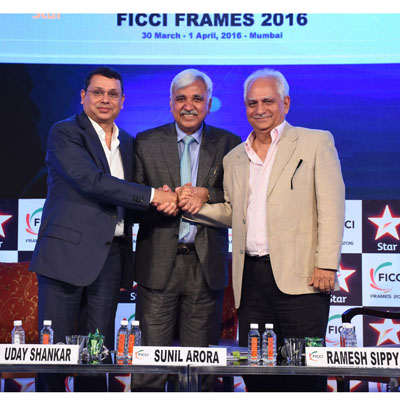
    The ministry remained committed to promoting ease of doing business in the media and entertainment sector, Arora said in a dialogue with Star India CEO Uday Shankar and veteran filmmaker Ramesh Sippy at FICCI Frames 2016.

    He said the Ministry was also guided by the ‘minimum government, maximum governance’ philosophy. “One of our primary objectives is to bring down the number of visitors to Shastri Bhavan to a trickle. We want to move towards less regulation and facilitate India to become the hub of media and entertainment industry.”

    Arora claimed that clearance for new TV channels had been expedited over the last six months under a liberalized regime. He said the home ministry had agreed to most of the suggestions made by the I&B ministry about liberalizing several conditions. Arora stressed that the ministry intends to play a role of a facilitator for the media and entertainment industry to flourish in the country.

    He said a decision had been taken to set up the National Centre of Excellence in Animation, Gaming and Visual Effects in Mumbai.  The Maharashtra Government is providing a 25 acre land near the Film City in Goregaon for the institute.

    The secretary also said the government had approved the Rs 598 crore National Film Heritage Mission to preserve and promote India’s rich film and cultural heritage. He also referred to the National Museum of Indian Cinema coming up in Films Division Complex on Peddar Road in Mumbai with several interactive exhibits. “Prime Minister Narendra Modi has taken a keen interest in this museum which is being curated by the National Council of Science Museums, Kolkata.”

    Focusing on ease of doing business, Arora said a Film Facilitation Office had opened in the National Film Development Corporation to function as a single window service for film related clearances. The secretary said an award had been instituted as part of the National Film Awards from this year to honour the states that are most film friendly. In 2016, Gujarat has been adjudged the most film friendly state, followed by UP and Kerala.

    Participating in the discussion, Shankar, who is also FICCI Entertainment Panel Chairman expressed concern over the viability of stand-alone news channels. He also said the entry of fringe elements in the news broadcasting field for ‘ancillary facilities’ was affecting credibility. Sippy expressed concern over low theatre density in India.


  • Govt admits low production of STBs, urges more players to manufacture under Make in India Initiative

    Govt admits low production of STBs, urges more players to manufacture under Make in India Initiative

    MUMBAI: The government today admitted that less than 10 per cent set top boxes being used in India were Indian made. However, Information and Broadcasting Secretary Sunil Arora said the government and his ministry were completely committed to the digitization programme.

    Arora said, “We want the industry to look at this opportunity under the Make In India initiative and produce more STBs in India under the Electronics Manufacturing scheme”.

    The ministry remained committed to promoting ease of doing business in the media and entertainment sector, Arora said in a dialogue with Star India CEO Uday Shankar and veteran filmmaker Ramesh Sippy at FICCI Frames 2016.

    He said the Ministry was also guided by the ‘minimum government, maximum governance’ philosophy. “One of our primary objectives is to bring down the number of visitors to Shastri Bhavan to a trickle. We want to move towards less regulation and facilitate India to become the hub of media and entertainment industry.”

    Arora claimed that clearance for new TV channels had been expedited over the last six months under a liberalized regime. He said the home ministry had agreed to most of the suggestions made by the I&B ministry about liberalizing several conditions. Arora stressed that the ministry intends to play a role of a facilitator for the media and entertainment industry to flourish in the country.

    He said a decision had been taken to set up the National Centre of Excellence in Animation, Gaming and Visual Effects in Mumbai.  The Maharashtra Government is providing a 25 acre land near the Film City in Goregaon for the institute.

    The secretary also said the government had approved the Rs 598 crore National Film Heritage Mission to preserve and promote India’s rich film and cultural heritage. He also referred to the National Museum of Indian Cinema coming up in Films Division Complex on Peddar Road in Mumbai with several interactive exhibits. “Prime Minister Narendra Modi has taken a keen interest in this museum which is being curated by the National Council of Science Museums, Kolkata.”

    Focusing on ease of doing business, Arora said a Film Facilitation Office had opened in the National Film Development Corporation to function as a single window service for film related clearances. The secretary said an award had been instituted as part of the National Film Awards from this year to honour the states that are most film friendly. In 2016, Gujarat has been adjudged the most film friendly state, followed by UP and Kerala.

    Participating in the discussion, Shankar, who is also FICCI Entertainment Panel Chairman expressed concern over the viability of stand-alone news channels. He also said the entry of fringe elements in the news broadcasting field for ‘ancillary facilities’ was affecting credibility. Sippy expressed concern over low theatre density in India.


  • Expenditure on broadcasting by MIB up by almost Rs 400 crore between 2012 and 2015

    Expenditure on broadcasting by MIB up by almost Rs 400 crore between 2012 and 2015

    New Delhi: Broadcasting has occupied the largest chunk of the plan and non-plan expenditure of the Information and Broadcasting Ministry between 2012 and 2015. An analysis of the ministry’s expenditure shows that the Information sector came next with a slice that is far less than the expenses for the broadcasting sector.

    And though films are probably the highest taxed sector, it got a slice of less than half of that for the Information Sector. Expenditure on Secretarial services is minuscule in comparison to the overall budget for each year.
    The analysis also shows that the expenditure for broadcasting has been going up year on year, going up by almost Rs 400 crore between 2012-12 and 2014-15.

    The total expenditure on broadcasting in three years was Rs 6693.68 crore, while the expenditure on the three other sectors of the Ministry together for these years was less than one-third of this at Rs 1918.63 crore.

    Of the total expenditure of Rs 3158.53 crore in 2014-15, the expenditure on broadcasting was Rs 2467.4 crore, followed by the Information sector with Rs 466.4 crore, the film sector with Rs 176.33 crore, and Secretariat with Rs 48.4 crore.

    In 2013-14 out of the total expenditure of Rs 2828.52 crore, a sum of Rs 2157.19 crore was spent on broadcasting, followed by the Information sector with Rs 474.73 crore, film sector with 154.29 crore, and Secretarial expenses at Rs 42.31 crore.

    The total expenditure in 2012-13 was Rs 2625.26 crore. Of this, the expenditure on broadcasting was Rs 2069.09 crore, followed by Information with Rs 381.22 crore, films with Rs 133.02 crore and Secretariat with Rs 41.93 crore.

  • Expenditure on broadcasting by MIB up by almost Rs 400 crore between 2012 and 2015

    Expenditure on broadcasting by MIB up by almost Rs 400 crore between 2012 and 2015

    New Delhi: Broadcasting has occupied the largest chunk of the plan and non-plan expenditure of the Information and Broadcasting Ministry between 2012 and 2015. An analysis of the ministry’s expenditure shows that the Information sector came next with a slice that is far less than the expenses for the broadcasting sector.

    And though films are probably the highest taxed sector, it got a slice of less than half of that for the Information Sector. Expenditure on Secretarial services is minuscule in comparison to the overall budget for each year.
    The analysis also shows that the expenditure for broadcasting has been going up year on year, going up by almost Rs 400 crore between 2012-12 and 2014-15.

    The total expenditure on broadcasting in three years was Rs 6693.68 crore, while the expenditure on the three other sectors of the Ministry together for these years was less than one-third of this at Rs 1918.63 crore.

    Of the total expenditure of Rs 3158.53 crore in 2014-15, the expenditure on broadcasting was Rs 2467.4 crore, followed by the Information sector with Rs 466.4 crore, the film sector with Rs 176.33 crore, and Secretariat with Rs 48.4 crore.

    In 2013-14 out of the total expenditure of Rs 2828.52 crore, a sum of Rs 2157.19 crore was spent on broadcasting, followed by the Information sector with Rs 474.73 crore, film sector with 154.29 crore, and Secretarial expenses at Rs 42.31 crore.

    The total expenditure in 2012-13 was Rs 2625.26 crore. Of this, the expenditure on broadcasting was Rs 2069.09 crore, followed by Information with Rs 381.22 crore, films with Rs 133.02 crore and Secretariat with Rs 41.93 crore.

  • TRAI permits flexibility in interconnect agreements without dilution of model agreement

    TRAI permits flexibility in interconnect agreements without dilution of model agreement

    New Delhi: In view of several disputes in TDSAT and various high courts on the issue, the Telecom Regulatory Authority of India has prescribed formats of the Model Interconnection Agreement (MIA) and Standard Interconnection Agreement (SIA) to be signed between the multisystem operator and the local cable operator for provisioning of cable TV services through the Digital Addressable Systems (DAS)

    The Telecommunication (Broadcasting and Cable Services) Interconnection (Digital Addressable Cable Television Systems) (Seventh Amendment) Regulations 2016 issued yesterday said MSO and LCO may enter into an interconnection agreement on lines of the MIA, or by signing the agreement strictly in terms of the SIA. Even as flexibility has been allowed on some issues, it has been mandated that the parties shall ensure that no such agreement will have the effect of diluting any of the conditions laid down in the MIA. 

    If the parties decide to enter into interconnection agreement on the terms of SIA, no addition, alteration and deletion of the clauses provided therein is allowed. They have the flexibility to modify clauses 10, 11 and 12 of the MIA through mutual agreement without altering or deleting any other clause of MIA. They also have a freedom to add additional clauses through mutual agreement to the MIA for stipulating any additional conditions.

    In a press release, the Authority said it was of the view that “the prescription of formats of MIA and SIA will pave the way for growth of the sector, result in reduction of disputes between the MSOs and LCOs, provide level playing field to the parties and increase healthy competition in the sector which ultimately will help in better quality of services to the subscribers.”

    Earlier in 2012, the Authority notified a comprehensive regulatory framework for DAS encompassing the interconnection regulation, the quality of service regulation, the tariff order and the consumer complaint redressal regulation.

    The interconnection regulation for DAS prescribes that MSO and LCO shall enter into a written interconnection agreement before provisioning of cable TV services to the subscribers. It was mandated that the interconnection agreement between MSO and LCO shall clearly earmark the roles and responsibilities in conformance to the quality of service regulations issued by the Authority from time to time.

    However, the Authority, while notifying the comprehensive regulatory framework for DAS did not notify any format specifying the terms and conditions for interconnection agreement as there could be various ways in which MSO and LCO can share the responsibilities in the interconnection agreement.

    TRAI received a large number of complaints regarding various issues in signing of the interconnection agreement between MSO and LCO. On the one end, the LCOs represented that the terms and conditions of draft agreements offered by MSOs are one sided and do not provide a level playing field. On the other end, the MSOs indicated that the LCOs are not willing to follow the terms and conditions of interconnection agreement already executed between them.

    It was noticed that the roles and responsibilities of MSO and LCO for meeting the quality of service norms as prescribed in the Quality of Service Regulations 2012 were not clearly defined in the interconnection agreement signed by them; due to which, in the event of any dispute between them the quality of service delivered to the consumers gets adversely affected.

    A comprehensive consultation process was carried out by the Authority to address the issue and the Authority decided to prescribe the terms and conditions for interconnection agreement in such a way that it addresses the various concerns of the stakeholders as well as it provide enough flexibility for accommodating various plausible business models between MSO and LCO.

    The full text of the Regulation is available on TRAI’s website www.trai.gov.in.

  • TRAI permits flexibility in interconnect agreements without dilution of model agreement

    TRAI permits flexibility in interconnect agreements without dilution of model agreement

    New Delhi: In view of several disputes in TDSAT and various high courts on the issue, the Telecom Regulatory Authority of India has prescribed formats of the Model Interconnection Agreement (MIA) and Standard Interconnection Agreement (SIA) to be signed between the multisystem operator and the local cable operator for provisioning of cable TV services through the Digital Addressable Systems (DAS)

    The Telecommunication (Broadcasting and Cable Services) Interconnection (Digital Addressable Cable Television Systems) (Seventh Amendment) Regulations 2016 issued yesterday said MSO and LCO may enter into an interconnection agreement on lines of the MIA, or by signing the agreement strictly in terms of the SIA. Even as flexibility has been allowed on some issues, it has been mandated that the parties shall ensure that no such agreement will have the effect of diluting any of the conditions laid down in the MIA. 

    If the parties decide to enter into interconnection agreement on the terms of SIA, no addition, alteration and deletion of the clauses provided therein is allowed. They have the flexibility to modify clauses 10, 11 and 12 of the MIA through mutual agreement without altering or deleting any other clause of MIA. They also have a freedom to add additional clauses through mutual agreement to the MIA for stipulating any additional conditions.

    In a press release, the Authority said it was of the view that “the prescription of formats of MIA and SIA will pave the way for growth of the sector, result in reduction of disputes between the MSOs and LCOs, provide level playing field to the parties and increase healthy competition in the sector which ultimately will help in better quality of services to the subscribers.”

    Earlier in 2012, the Authority notified a comprehensive regulatory framework for DAS encompassing the interconnection regulation, the quality of service regulation, the tariff order and the consumer complaint redressal regulation.

    The interconnection regulation for DAS prescribes that MSO and LCO shall enter into a written interconnection agreement before provisioning of cable TV services to the subscribers. It was mandated that the interconnection agreement between MSO and LCO shall clearly earmark the roles and responsibilities in conformance to the quality of service regulations issued by the Authority from time to time.

    However, the Authority, while notifying the comprehensive regulatory framework for DAS did not notify any format specifying the terms and conditions for interconnection agreement as there could be various ways in which MSO and LCO can share the responsibilities in the interconnection agreement.

    TRAI received a large number of complaints regarding various issues in signing of the interconnection agreement between MSO and LCO. On the one end, the LCOs represented that the terms and conditions of draft agreements offered by MSOs are one sided and do not provide a level playing field. On the other end, the MSOs indicated that the LCOs are not willing to follow the terms and conditions of interconnection agreement already executed between them.

    It was noticed that the roles and responsibilities of MSO and LCO for meeting the quality of service norms as prescribed in the Quality of Service Regulations 2012 were not clearly defined in the interconnection agreement signed by them; due to which, in the event of any dispute between them the quality of service delivered to the consumers gets adversely affected.

    A comprehensive consultation process was carried out by the Authority to address the issue and the Authority decided to prescribe the terms and conditions for interconnection agreement in such a way that it addresses the various concerns of the stakeholders as well as it provide enough flexibility for accommodating various plausible business models between MSO and LCO.

    The full text of the Regulation is available on TRAI’s website www.trai.gov.in.