Tag: Broadcasting

  • TRAI to get another advisor in Broadcasting and Media

    TRAI to get another advisor in Broadcasting and Media

    NEW DELHI: Often accused of being more telecom-centric, the Telecom Regulatory Authority of India has decided to recruit more persons who are experts in broadcasting and media.

    The regulator has advertised for the post of Advisor (Broadcasting and Media) ‘on deputation on foreign service terms’. According to the TRAI website, the initial deputation will be for two years.

    TRAI already has one Principal Advisor,N Parameswaran, and two Advisors, Wasi Ahmed and Raj Kumar Upadhyay.

    The work entails to the non-technical aspects of broadcasting – covering general management, economic and social dimensions of all forms of the media. Economic work relating to wholesale and retail tariffs and interconnection will form part of the work of the new Advisor.

    The work will also entail specialisation in the digitisation of the media and interaction with all stakeholders.

    TRAI had been set up for the telecom sector in 1997 but was given the work of broadcasting in 2004 at the time of the introduction of the Conditional Access System.

  • Time extended for comments on draft amendments to the Interconnection Regulations and Tariff Order

    Time extended for comments on draft amendments to the Interconnection Regulations and Tariff Order

    NEW DELHI: Stakeholders have been asked by the Telecom Regulatory Authority of India (TRAI) to file by 3 July their comments on interconnect regulations and tariff order under the digital addressable system.

    TRAI has also said no request for any further extension of time for submission of comments will be entertained.

    The “Telecommunication (Broadcasting and Cable Services) Interconnection (Digital Addressable Cable Television Systems) (Second Amendment) Regulations, 2013” and the draft “Telecommunication (Broadcasting and Cable) Services (Fourth) (Addressable Systems) Tariff (Second Amendment) Order 2013” seek to amend some regulations that TRAI had passed earlier in relation to tariffs and interconnect agreements in earlier years. (Earlier, TRAI had notified the Interconnection Regulations for DAS dated 30 April 2012 as amended on 14 May last year and the Tariff Order applicable for the Addressable Systems dated 21 July 2010 as amended on 30 April last year).

    The amendments it has proposed state:

    Multi system operators (MSOs) cannot seeks signals of a particular TV channel from a broadcaster under ‘must provide‘ clause while at the same time demanding carriage fee for carrying that channel on its distribution platform.

    No minimum channel carrying capacity has been prescribed for the MSOs. However, the MSOs are mandated to carry the channels of broadcasters on non-discriminatory basis under the ‘must carry‘ provision.

    The service providers of the addressable systems are allowed to price and package their offering of channels, however, they are required to comply with the modified twin conditions, as proposed in the draft amendment to the tariff order. These twin conditions are (a) the a-la-carte rate of a pay channel forming part of a bouquet shall not exceed two times the a-la carte rate of the channel offered by the broadcaster at wholesale rates for addressable systems (b) the a-la-carte rate of a pay channel forming part of a bouquet shall not exceed three times the ascribed value of the pay channel in the bouquet. The TRAI says it is doing this to ensure that the a-la-carte rates offered to the subscribers are reasonable vis-? -vis the bouquet/package rates.

    As in the case of pay channels, operators can specify a minimum subscription period, not exceeding three months, for Free-to-Air (FTA) channels subscribed on a-la-carte basis by the subscribers.

    Subscribers are free to choose channels on a-la-carte basis or bouquet/package basis or any combination of a-la-carte and bouquet/package.

    Channels, such as HD or 3D, requiring special type of set top boxes are to be offered on a-la-carte basis and if such channels are also offered as a part of a bouquet(s), corresponding to each such bouquet, the operator would be required to offer bouquet(s) excluding the HD and 3D channels, at a reduced price, commensurate to the rates of these HD and 3D channels.

    Telecommunication (Broadcasting and Cable Services) Interconnection (Digital Addressable Cable Television Systems) (Second Amendment) Regulations, 2013

    Telecommunication (Broadcasting and Cable) Services (Fourth) (Addressable Systems) Tariff (Second Amendment) Order 2013

  • Thai Global Network uses Harmonic for end-to-end video workflow

    Thai Global Network uses Harmonic for end-to-end video workflow

    MUMBAI: Harmonic which offers video delivery infrastructure, has announced that Thai Global Network (TGN), Thailand‘s first and only satellite TV broadcasting center, has chosen Harmonic production and playout solutions. TGN has built a seamless workflow, from acquisition to transmission, on a Harmonic media storage, asset management and playout server platform. Installed along with an MXFserver production management system from FilmPartners, the solution has enabled TGN to optimise and streamline its broadcast operations from end to end.

    Thai TV Global Network director Col. Sarawut Karbdecho said, “By implementing tightly integrated solutions from Harmonic and FilmPartners, we have created a highly efficient collaborative editing environment with content stored sitting at the center of the workflow.

    “In day-to-day operations, this powerful pairing enables us to produce and deliver content with much greater speed and flexibility.”

    TGN has installed Harmonic Spectrum MediaCenter media servers, the MediaGrid 3000 shared storage system, the Media Application Server (MAS) asset management platform with ProXplore and the ProDrive media server controller software. Used as an ingest server, the MediaCenter records VTR feeds under the control of ProDrive, which allows operators to capture content automatically according to a schedule or instantly specify a channel with the application‘s crash-record feature.

    As feeds are recorded, the Harmonic ProXplore launches the transfer of growing files in the MediaCenter server system over to the MediaGrid 3000 shared storage system, which supports TGN staff working on Avid nonlinear edit systems. MXFserver enables file sharing and project sharing across multiple Avid editors. The FilmPartners‘ system makes it easy for editors, graphic artists, producers and other users to find the materials they need for both private and collaborative projects.

    Finished projects are exported, at which point ProXplore automatically transfers files to a second MediaCenter server dedicated to playout. ProDrive software allows TGN staff to create scheduled playlists and to control the server‘s playout operations.

    Harmonic Asia-Pacific VP sales Andrew Thornton said, “The Harmonic media storage, asset management and server systems installed by TGN enable a very efficient file-based workflow, with the benefit of optimised file transfers over a Gigabit Ethernet network. Bringing speed, reliability, and flexibility to TGN‘s operations, Harmonic transforms the broadcaster‘s ability to create and deliver timely and compelling content.”

  • Colors to telecast 12th Indian Telly Awards on 26 May at 6 pm

    Colors to telecast 12th Indian Telly Awards on 26 May at 6 pm

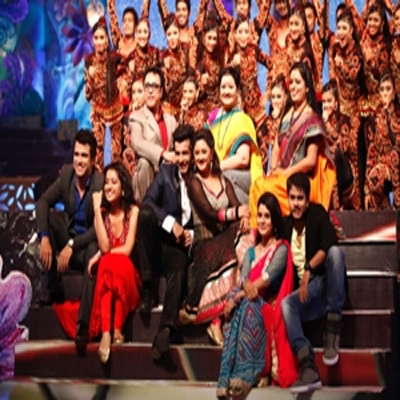
    MUMBAI: Breathtaking performances, rib-tinkling humour, loads of glitz and glamour and your favourite television stars. Find it all at the starry night that is the 12th annual Indian Telly awards, organised by indiantelevision.com.


    indiantelevision.com’s The 12th Indian Telly Awards is all set to entertain one and all and celebrate the best of the Indian television industry only on Colors. One of the most awaited events for those involved in any way in the world of Indian television, the awards promise three things to all its excited viewers- entertainment, entertainment and more entertainment.


    “indiantelevision.com’s Telly Awards is the most prestigious property for the Indian television and broadcasting fraternity. Both Colors and indiantelevision.com have planned a wonderful show for our viewers.We are looking forward to the telecast,” says Colors CEO Raj Nayak.


    Adds Indiantelevision.com and The Indian Telly Awards founder & CEO Anil Wanvari: “Winning an Indian Telly Award is extremely prestigious moment for actors, producers, technicians, and anyone else associated with TV. While we recognise excellence, we also work on putting in more than a high dose of entertainment to keep audiences at home wanting more. The 12th edition of the show is planned as a mega-spectacular with a never before seen set designed by Oomung Kumar. We designed the show to be full of fun and puns for the audiences and lots of entertainment.”


    Be prepared for your television screens to come alive with spectacular performances by the most celebrated talents of the Indian television industry. The very dashing television poster ‘boys’ Ronit Roy and Ram Kapoor will leave the viewers in splits with their quick wit and incredible stage presence as they co-host the evening with panache and bromance. Helping them keep the awards lively as co-hosts are the witty and popular Jay Bhanushali and the child like Rashmi Desai and telly land’s Chautala Kavita Kaushik.


    The sexiest yummy mummies of telly world Barkha Bisht, Shweta Tiwari and Urvashi Dholakia will sizzle the screens on the item songs like Fevicol Se, Halkat Jawani, among other songs.


    The lovely act by the most romantic off-screen TV couple Aamir Ali and Sanjeeda Sheikh will make one fall in love with love. Watch Jay Soni romance his on-screen partner Shamin Mannan. Watch television’s leading leadies – Sanaya Irani, Suhasi Dhami, Mahi Vij and Simran Kaur – performing in an eyecatching and rivetting prop-heavy act denoting the moods of a woman – right from passion, to envy and sorrow.


    What more? Viewers can ogle at television’s hottest hunks – Gurmeet Chaudhary, Manish Raisinghani, Mrunal Jain and Gaurav Chopra – take off their shirts and even their trousers on a foottapping medley of the year’s greatest Bollywood masala hits. Their terrific bare-chested performance is sure to take the breath of female fans away.

    The highlight of the evening was the very thoughtful ‘family relations’ act which saw beautiful and engaging performances by actors who are family in real life with segments of bhabi-nanand (Tanaz Irani and Delnaz) , real life maa- betiyan (Savita Joshi, Ketki Dave and Purbi Joshi), real life bhai-bhai (Rohit Roy and Ronit Roy), real life bhai-bahen (Krushna Abhishek-Aarti Singh) and real life shriman shrimati (Apurva Agnihotri and Shilpa Saklani)


    indiantelevision.com’s The Indian Telly Awards are one of the oldest and most respectable television honours in the industry and have been successfully lauding excellence in the Indian television and broadcasting industry since the past 12 years. Its popularity is only soaring year after year.


    “The response for the 12th Indian Telly Awards has been great,” says Nayak. “While Dabur Glucose D has come on as the title sponsor, Brooke Bond Taj Mahal Tea has taken the powered by status. The associate sponsors include: Aircel, Vasan Eye Care Hospitals, Margo, Pudin Hara, Layer’s Deo, Ponds white beauty and Nycil Gulabjal. It’s great to have them on board, a property we are very pleased to be associated with, as it recognises the very best in our TV industry.”


    The show also has some poignant moments like TV’s hottest personality Karan Singh Grover slow dancing with his wife the ever so popular Jennifer Winget.


    The winners that took the coveted and prestigious Indian Telly Award trophy home were cock-a-hoop Vivian Dsena and Drashti Dhami were declared the most popular television on-screen jodi as RK and Madhu from popular Colors show Madhubala-Ek Ishq Ek Junoon. Star Plus’s TRP garnering Diya Aur Bati emerged as a hearty winner by bagging the awards for the most popular daily show fiction as well as the popular actress and popular actor in a lead role for Deepika Signh as Sandhya and Anas Rashid as Sooraj. The award for popular actor in a lead role was also bagged by Kunal Karan Kapoor for Mohan Bhtanagar in Colors’s Na Bole Tum Na Maine Kuch Kaha- 2. Hot hunk Mohit Raina bagged the jury award for best actor while Manish Paul walked away with the best anchor trophy.


    All in all, the Indian Telly Awards was a spectacular evening to remember with fabulous performances, surprising acts and the shinning television industry at its glamorous and entertaining best. Watch the repeat on Sunday if you are a diehard fan at 6.00 pm.


  • Six bags rights for Uefa Euro 2016

    Six bags rights for Uefa Euro 2016

     MUMBAI: MultiScreenMedia’s (MSM) sports channel Sony Six has added a feather in its cap in its bid to bag marquee properties that appeal to the youth.


    It has won the rights for the Uefa Euro 2016 soccer tourney across the Indian sub-continent. The channel will telecast live all 51 matches of the tournament. Last year’s edition aired on Neo. It has been learnt that Neo had paid around $10 million for it and the MSM deal was a substantial jump.


    The Euro, it is worth noting is the third most valuable soccer property behind the soccer World Cup and the English Premier League (EPL). The top European nations take part in it to find out which is the best in soccer. This acquisition is significant for Six as this marks its first entry into international football. The channel has aired the 2014 Fifa WC Qualifiers. The Euro 2016 event is the first successful acquisition of a major professional football competition by the channel.


    MSM CEO Man Jit Singh said, “Football has grown immensely in India over the past few years and has found great interest amongst the youth. With the successful acquisition of the Uefa Euro 2016 tournament broadcasting rights, we look forward to attracting viewership to Sony Six by leveraging on the growing popularity of European football in the country.”


    MSM COO NP Singh said, “We are delighted to bring one of football’s elite tournaments to the Indian viewers exclusively on Sony Six. As a broadcaster we are always in pursuit of the best of international sport and through our latest acquisition we will take the fans closer to the high impact action that the Uefa Euro 2016 promises to deliver.”


    Uefa marketing director Guy-Laurent Epstein said, “We are pleased to welcome Sony Six to the family of broadcasters for the Uefa Euro 2016. Uefa believes that the Sony Six channel and its commitment to high quality programming and sport is an excellent home for Uefa’s flagship national team competition.”


    Euro 2016 will be held in France with provisional dates of 10 June – 10 July 2016. For the first time in the tournament’s history, the 2016 finals will be a 24 team tournament, having been expanded from the 16 team format that had been used since 1996. At the finals, it is proposed that teams will be eliminated using a new format of six groups of four, followed by three knockout rounds, followed by the final. France has inherited direct entry into finals.


    In terms of other big soccer properties the 2014 World Cup rights are coming up for grabs as well and there would be competition for that as well. MSM president network sales, licensing and telephony Rohit Gupta said that the aim is to acquire marquee properties that appeal to the youth. “We already have the IPL which is the biggest property. We have identified soccer as a sport that we need to have. Euro was a big opportunity. As other properties come along like the World Cup we will evaluate them.”


  • Movies OK says it did not go off air

    Movies OK says it did not go off air

    NEW DELHI: As the Delhi high court ordered a stay on the order of the inter-ministerial committee relating to suspending telecast for 24 hours from midnight of 2 May, Movies OK has clarified that the channel was never taken off the air as reported earlier by indiantelevision.com (based on the ministry of information and broadcasting’s website).


    The ministry had directed the punitive action on the channel for allegedly showing a film ‘Dil Jale’ on 18 June last year with an ‘Adult’ certificate at 6.12 pm, refusing to accept the argument that the certificate was shown by human error as the version shown had been issued a U/V certificate.


    However, the channel got the order stayed on the ground that it was issued the ministry directive only at 5.30 pm on 1 May. The court also heard counsel for the government had listed the case for further hearing on 26 July. Justice Rajiv Shakhder said “I am of the view that since enough time was not available to the petitioner to collect the relevant material in order to challenge the findings to which I have made a reference to above, I am inclined to stay the impinged order till the next date of hearing. It is ordered accordingly.”
    In a statement following a story by this website, the channel said: “Star India would like to clarify that it is factually incorrect to state that the channel faced closure for 24-hours as no such action was taken. Contrary to what the article suggests, the channel wasn’t taken off air at all.”

  • RRsat to provide sports distribution solutions to SIS Live

    RRsat to provide sports distribution solutions to SIS Live

    MUMBAI: RRsat Global Communications Network has entered into an agreement with SIS Live to provide international sports distribution solutions for the Asian market, including uplink and downlink services, satellite-to-satellite turnaround and fiber-to-satellite transmissions as well as other services.

    RRsat, which is a digital content management and global distribution services provider to the television and radio broadcasting industries, was chosen by SIS Live as its partner for providing services for the European Tour Productions golf coverage. RRsat will provide SIS Live solutions for distributing live golf events to and from Asia.

    SIS Live owns and operates a wide portfolio of services including the largest fleet of outside broadcast and uplink vehicles in Europe.

    This engagement with SIS Live establishes a longstanding mutual cooperation which includes a custom fiber link created by RRsat and SIS Live to allow the latter to transfer content directly from its UK teleport to the RRsat Emek Ha‘Ela teleport for uplink and distribution to premium cable headends in the Asian market.
    SIS Live is also RRsat‘s preferred supplier for European teleport and turnaround services to RRsat‘s extensive customer base.

    “We are pleased to extend our close and successful working relationship with RRsat by utilizing their excellent solutions to ensure high quality live broadcasts of international golf coverage to viewers across Asia,” said SIS Live MD David Meynell.

    “RRsat complements SIS Live‘s extensive offerings by providing value-added services and robust access to a global satellite and fiber network. This partnership will enable us to provide enhanced services to our customers.”

    “RRsat is proud to partner with SIS Live, one of the world‘s leading companies in the television broadcasting industry .Together, we work to simplify event coverage and delivery from any site to any destination at highest broadcast quality via our downlink, turnaround and uplink services, as well as via the RRsat fiber network,” said RRsat Global Communications Network CEO Avi Cohen.

    “In addition, RRsat is glad to partner with a high profile and well-respected broadcasting company for Europe and the Americas. We look forward to supporting SIS Live‘s ongoing success by continuing to provide them with cutting edge global distribution solutions.”

  • India heading towards oligopoly in sports broadcasting: Zeel Sports Business CEO Atul Pande

    India heading towards oligopoly in sports broadcasting: Zeel Sports Business CEO Atul Pande

    The events in 2012 could be an indicator at how the sports business will look going forward. An oligopoly, with two primary broadcasters driving the business. This is a similar model to what happens internationally, where one or two large broadcasters drive the business and share most of the content and the platform play. Sports viewing will become more expensive, innovation will drive broadcaster hooks to drive affiliation, and High Definition will start becoming a real player in the business. By definition, therefore, being marginal will not remain an option. And yes, some definitive steps will be made towards profitability.

    This was a very LIVE heavy year. Almost 50 days of live India cricket, and more than 200 days of international cricket from other boards. Fully loaded IPL with nine teams, all the key European football leagues broadcasting most of their wares, new Indian leagues coming up with live products ensured that the sports enthusiast has enough to watch throughout the year.

    Sports penetration increased to 22 million households. The genre share continues to hover around 6 per cent. Most of this is now split between two broadcasters and they are must have bouquets to have for any platform worth its value in a very scattered broadcasting market.

    Internet continued to emerge as a credible platform. With more than three million tablets in India and 15 million broadband users, and growing at a substantial rate, it will become a platform of choice for some users eventually, and it continues to be a space to watch out for. Ten Golf launched an iPad and iOS application for live streaming and the response has been very encouraging. We will see much action on the Streaming side of the business in this area, and pricing scenarios will begin to evolve this year as the user base settles down.

    Indian cricket changed hands once again on record payouts. Cricket viewership growth remained tepid across the board. Football continued its spectacular growth by increasing its reach to 11 million households and in the metro markets it is a credible and a driver product. While the other sports remained marginal, they continue to demonstrate growth and build affiliation. Football content prices are now starting to demonstrate the cricketsque growth rates of the 90s and will put the revenue model of the product under pressure going forward.

    Much touted digitisation has commenced, and could be a game changer for the industry. As I write this, there is confusion on the ground but the landscape is quite positive. Clearly, sports will become a part of high value packs of the operators and full pricing delivery will kick in for discerning customers. To that extent, delivered penetration at the platform level will improve for all players, driving significantly enhanced revenues at the erstwhile analogue customer and the platform levels. This revenue action has been demonstrated at the DTH operators for the last couple of years, and the same should translate at the analogue level now. The key issue I see is the timing of the new industry structure, which may set back the real delivery by a few months as the packaging, MSOs and their LCO brethren settle down in the new regime.

    The other issue that will become transparent and lead to debate is the whole pricing paradigm around niche, and especially sports channels. My hypothesis is that some of the current channels at their current pricing will find it difficult to sustain their operations and the regulator will have to look favorably at pricing changes for key sports channels. There is a market for highly niche, high value channels that needs to be developed. High value and pay per view solutions will have to be considered and approved to help these products retain their quality and their business models. This is an imperative, which cannot be postponed anymore, and the niche and sports operators will have to espouse these causes with the decision makers.

    As we move to a new stage in the sports broadcasting arena, I also see a new dawn in the rural sporting landscape. This is one area where, because of the way sports channels have evolved and have become largely urban, up market products, there has been lack of focus, and initiative. I forecast 2013 as the year when we will see the birth of some rural leagues in India. I see Kabaddi and Kushti (Wrestling) as products, which will garner immediate traction and will be able to generate sponsor support too. The interesting thing to notice would be placement of these products – how do the sports channels with their urban mindset deliver these products to their eventual viewers and build credibility in this segment. So watch this space for some interesting action.

    As the sports broadcasting has moved to the next stage in India, the last few years have been extremely trying financially for the business. The financial model which has evolved mandates that 70 – 80 per cent revenue of the business comes out of the subscription vertical, and most of the acquisition strategy is built around that. The industry has been suffering because the cable analogue side of the business has not supported it as much as it should, and I hope in 2013 all of us collectively are able to drive that part of the business for consumer and enterprise value.

    We deserve it, to support our viewers, our investors and other stakeholders to achieve their ambitions. And above all, to help support local Indian sport and sportsmen, who deserve continued backing from the key stakeholder – the broadcaster – who helps monetise the industry. Make us healthy folks, and watch us give back to them to drive Indian sport to the glory it deserves!

    Have a terrific 2013.

  • I&B Ministry presses for convergence regulation

    I&B Ministry presses for convergence regulation

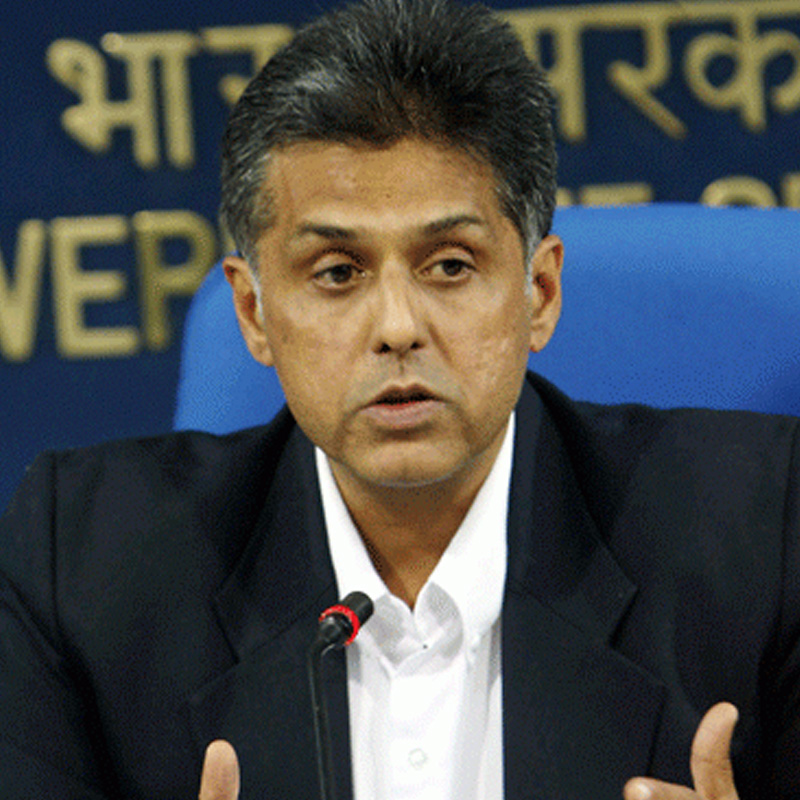
    NEW DELHI: Information & Broadcasting Minister Manish Tewari on Wednesday said he would talk to Telecom Minister Kapil Sibal to impress upon him the need to create a statutory mechanism to address issues related to convergence across media, entertainment and telecom.

    "Convergence across media, entertainment and telecom space specially with digitisation kicking in, is inevitable. Therefore, at some point in time there will have to be an overarching (legal) architecture which looks at it holistically," Tewari told reporters on the sidelines of Convergence India 2013.

    Admitting that convergence is a reality which cannot be ignored, he said: "I will talk to my senior colleague, the minster of telecom (Kapil Sibal) and see if we can work out a modus operandi whereby we can put a statutory architecture on the convergence format."

    Efforts have earlier been made to have a legal framework for convergence of the three sectors. A Convergence Bill was tabled in Parliament more than a decade ago. The bill has sought to create an autonomous commission to regulate carriage of all forms of communications, and for establishment of an appellate tribunal and to provide for matters connected therewith or incidental thereto.

    The bill aimed at promoting, facilitating and developing in an orderly manner the carriage and content of communications (including broadcasting, telecommunications and multimedia). The Convergence Bill had sought amalgamation of Information Technology (IT), Telecommunications and entertainment industry by replacing the Telegraph Act of 1985 and the Indian Wireless Act of 1933.

    Tewari admitted that the convergence bill tabled earlier could not be worked on. "The EGoM (empowered group of ministers) will work on the prevalent conditions," he said.

    Need to encourage production of indigenous STBs

    Tewari said one of the government‘s primary concerns now is to ensure that digital set top box (STB) manufacturing happens in India as the whole process is going to lead to revenue expansion of about $4 to $5 billion, according to a Trai estimate.

    "As we speak today, most of that business is not coming to India. So, that is an overriding priority for us as to how we are able to build an indigenous STB manufacturing model on to it," he said.

    Tewari also said STBs should be inter-operable and wanted enough operators for the consumers to switch to.

  • Eutelsat 21B satellite lofted in space, commercial launch by mid-Dec

    Eutelsat 21B satellite lofted in space, commercial launch by mid-Dec

    MUMBAI: Eutelsat 21B satellite, which will have a fleet of 40 transponders, was lofted into space on Sunday by an Ariane 5 rocket from Kourou, French Guiana.


    Manoeuvres to circularise the new satellite’s orbit and place it into its operational configuration are now underway, managed by Eutelsat from its Rambouillet teleport, using a global network of earth stations. This will be followed by in-orbit testing before Eutelsat 21B enters full commercial service in mid-December.

    Commenting after launch and first manoeuvres, Eutelsat CEO Michel de Rosen said, “Eutelsat 21B is the first of seven satellites we will launch by mid-2015 to increase our commercial flexibility and our overall resources by almost 30 per cent. We are delighted to see this new satellite on its way to an orbital location that is a point of reference for customers providing professional video, data and government applications in Europe, North Africa, the Middle East and Central Asia.”


    The 40-transponder Eutelsat 21B Ku-band satellite will occupy the 21.5° East position, which has become a location of choice for broadcasters, news agencies, telcos, enterprises and government administrations. Its deployment is expected to enable Eutelsat to expand capacity at this sought-after location by more than 50 per cent.

    The satellite will replace Eutelsat 21A which will continue commercial service at another orbital location. Eutelsat’s 70.5° East orbital position that sits at the crossroads between Europe, Africa, Asia and Australia.


    Eutelsat’s launch programme progresses with the lift-off, scheduled for early December, of the Eutelsat 70B satellite, designed to more than double resources at Eutelsat’s 70.5° East orbital position that sits at the crossroads between Europe, Africa, Asia and Australia.