Tag: Broadcasting Bill

  • Broadcasting Bill to be fair and open: Dasmunsi

    Broadcasting Bill to be fair and open: Dasmunsi

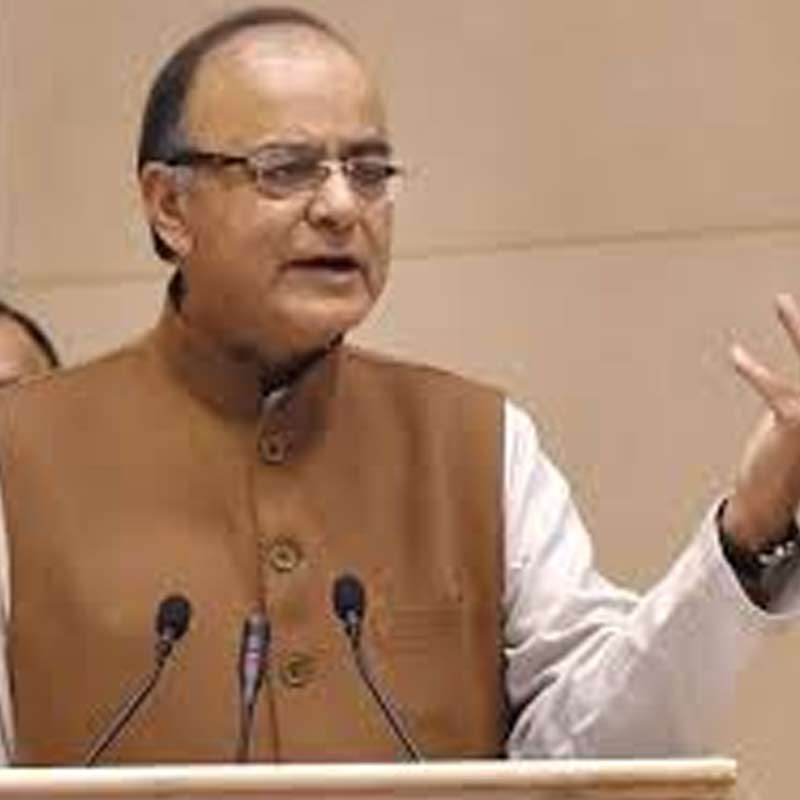
    NEW DELHI: “Investors in the broadcast sector must realise that the government’s policy is open, and when the (broadcasting) bill is ready, the world will see and realise this,” said information and broadcasting minister PR Dasmunsi at the inauguration of the three-day Broadcast Engineering Society Expo 2007 today.

    Dasmunsi said, “There is a huge potential for development of broadcasting in India and we have a lot of advanced technologies available with us. What we need to have is proper selection of technologies suiting our requirements.”
    I&B secretary SK Arora, in his remarks said that in devising a regulatory framework, the interest of the consumer is foremost in government’s mind. The business models have to suit the large number of our consumers. Policy framework and the business models have to be in sync to cater to the consumer interest, he added.

    Sharing with his audience the excitement of living in this amazing age of broadcasting revolution, he stressed nevertheless that the government would ensure a level playing field for all, and more than that, not allow most of the consumers to be deprived of the benefits of technology. Prices need to be controlled to keep them affordable.

    “We must allow full play of technology, business and management to take shape successfully,” he said, adding, “the regulatory regime is crucial for the success of innovative ideas and products.”

    He had a critique of the government sector too, which, he said, lacked management skills. “The public sector must realise the commercial aspects, and be acutely conscious of working out systems to facilitate innovations and business models to become successful,” Arora held.

    He stressed that the core philosophy of the government was simple: the consumer. “Everyone must keep this in mind,” he added for good measure.

    Prasar Bharati’s experience in introducing newer technologies (TV, FM radio, DTH, now digitalisation and mobile TV) has helped develop the regulatory environment.

    “We have depended on the technological expertise of Prasar Bharati while designing the regulatory regime,” he explained.

    He felt that though the regulatory framework must have adequate provision for segmentation and exploitation of the market by investors, the business models they develop must be appropriate and new technology is carried to the people at affordable prices.

    The inauguration ceremony also saw BES president AS Guin, David Astley, secretary general of AsiaPacific Broadcasting Union, and Roger Crumpton, CEO of International Association of Broadcast Manufacturers address the more than 300 persons attending the function.

    ‘BROADCASTING MULTI-FACETED, MULTI-DIMENSIONAL’

    In his keynote address, Crumpton said that broadcasting is not only a multifaceted affair, as the title for this year’s Expo suggested, but a multidimensional one, in which the engineering challenges were just huge.

    Especially in India, he added, explaining that whereas only 19 per cent of the people in the US and 20 per cent in the UK were under 15, the figure is 35 per cent for India, and with this population the multiplicity of platforms is not important: content is everything.

    “It does not matter on what platform they are accessing it, but they want it where and when they choose and what they choose. This is the young demographics we are dealing with, which is cash-positive and time-negative,” Crumpton said.

    What was important in his speech was that he made presentations of when the first TV sets came and then the first colour TV sets came and it all seemed to people like him, and these are the people who are having to design technologies and content, so this aging generation of experts need to be in synch with the young demographics facing them.

    The challenge is that for this generation, there must be a clear agenda for creation and delivery of content, which will be constantly repurposed in real time, a situation where broadcasting will face this problem. Because there is a paradigm shift from tapes-based programming to file-based one, he explained.

    “There has to be a radical shift,” Crumpton argued, “for training, qualifying and accreditation systems.”

    And he saw a huge opportunity for India. He says this paradigm shift, combined with an ageing skilled workforce in the West has already started creating problems of skill shortages in the globally $11 billion broadcasting market, which is also facing revenue streaming threats from telecom and IPTV.

  • Broadcast Bill still has minefields to clear before becoming law

    Broadcast Bill still has minefields to clear before becoming law

    So the government again renews its long-in-the-trying attempt to get broadcast regulation in place. Is it just us or is this feeling of déj? vu that it may be another exercise in futility shared by the industry as well?

    Still, that doesn’t take away the importance of having a comprehensive legislation for the sector that is estimated to be worth Rs 427 billion in 2010 according to the PricewaterhouseCoopers report presented at this year’s Ficci Frames convention.

    The Broadcasting Bill has been dangling on an uncertain thread for close to a decade now. Several information and broadcasting (I&B) ministers in several governments, who have tried to maneuver it past the corridors of the houses of Parliament and into law, have come and gone. All have failed; none have had the drive to push it through. It has proved to be an untouchable piece of legislation; a hot potato that is dropped every time an effort is made.

    The Bill tries to address the issue of encouraging domestic originating content on TV channels by mandating a 15 per cent share for it.
    _____****_____

    Another attempt is being made to enact the covered-with-dust Bill. A draft has been prepared for the Union Cabinet’s persual and initial indications are that it is going to impact almost everyone in the broadcasting food chain. It is slated to be introduced in Parliament during the Monsoon session by not-even-a-year-in-the-seat I&B minister Priya Ranjan Dasmunsi.

    I&B ministry secretary SK Arora has been working for a long time on putting together the document. Help has been sought from several quarters while drafting the Bill: the US FCC, Casbaa in Hong Kong, other consultants, consumer groups and interested parties.

    The Bill tries to address the issue of encouraging domestic originating content on TV channels by mandating a 15 per cent share for it. Then it caps cross media ownership at 20 per cent, and even share of voice for a TV channel or cable TV network nationally at 15 per cent. A Broadcasting Regulatory Authority of India (Brai) is to be set up (have we not heard this one before?), which will monitor the content on TV channels and oversee the broadcast industry in all its aspects the same way as the Telecom Regulatory Authority of India does in the telecom sector.

    No broadcaster or cable TV operator is going to cede power and control they have acquired over the years they have been operating in India.
    _____****_____

    The first piece of legislation is more than welcome and should in the medium to long term give a boost to local TV production and more so animation. Of course, it goes without saying that it is in the interest of local broadcasters to create local content that appeals to audiences and there’s no running away from it if they are seeking to make money out of the market. That they have so largely shied away from doing so, may be part of their business plan. There will be some bickering about this by some of the players.

    Of course, the government will have to specify whether the 15 per cent content cap relates to fresh domestic prime time content or to recycled content. Remember some broadcasters might buy garbage worthy shows dirt cheap and put them on air late at night in order to fulfil the legislative norms.

    Additionally, a transition period will have to be specified so that the domestic production industry gears up to deliver the quality animation and programming that is demanded internationally, so that international broadcasters can – if they want – buy worldwide rights.

    On the whole, over time the 15 per cent imposition could well catapult TV documentary makers and animation studios into the next level. Though some argue that the cap should be higher, it is a good start.

    That is just the soft part of the Bill though. Trying to control share of voice and restricting cross media ownership are two clauses that are arguably going to get the entire Bill stuck in a quagmire; lot of it political. Reason: hectic lobbying is going to commence to do away with them. It is these clauses which in the past have prevented the Bill from becoming a law. And, it is quite likely to do the same once again.

    No broadcaster or cable TV operator is going to cede power and control they have acquired over the years they have been operating in India. Many of their business models are based on this power.

    The setting up of Brai is another moot point. It’s about time a content watchdog was set up. The other option is that the industry kowtows to a xenophobic government’s every content concern and censorship demand.

    Additionally, the draft Bill fails to clearly address broadcasting in a converged era to hand held devices and mobile phones.

    A key question everyone is asking: will the Bill go through this time? It looks unlikely to have an easy ride and, in all probability, will be knocked into another shape and form. Or, it may end up being still born. Its passage will depend on how much pressure the I&B mandarins — and the Congress-led coalition government — are willing to withstand not only from the Opposition, but also allies, some of whose sympathisers have big media dreams in East and South India.