Tag: Broadcasting and Cable

  • TRAI releases telecommunication services DAS audit manual

    TRAI releases telecommunication services DAS audit manual

    MUMBAI: The Telecom Regulatory Authority of India (TRAI) has issued the Telecommunication (Broadcasting and Cable) Services Digital Addressable Systems Audit Manual. The new regulatory framework endeavours to provide a level playing field to all the service providers, effective choice to consumers, and orderly growth of the sector. It envisages a must-carry and must-provide regime where interconnection agreements are based on transparent Reference Interconnect Offer.

    “This manual is the result of the synthesis of all comments, suggestions of BECIL and final analysis by Telecom Regulatory Authority of India. The audit manual will be a guidance document for the audit process as it specifies step-by-step process in simple language. The manual does not supersede any provision of the extant regulations,” said TRAI in its release.

    In order to ensure that the benefits of digitisation are effectively utilised, TRAI, after due consultation process, brought out a common regulatory framework for digital addressable systems. The 'new regulatory framework' comprises Interconnection Regulations, 2017, Quality of Service Regulations, 2017 and Tariff Order, 2017.

    The full benefits of digitisation can accrue to various stakeholders in the value chain only when the business transactions are transparent and based on objective, measurable and computable parameters.

    Effective and factual audit of the systems of DPO will ensure that the equipment and the software (including configuration of systems) comply with the extant regulatory framework.

    “The new framework envisages that the DPO gets its systems audited every year so as to assure the broadcasters that true subscription numbers are being reported. In cases where a broadcaster is not satisfied with the outcomes of audit undertaken by the DPO, a countervailing provision empowers the broadcaster to initiate an audit. Considering the importance of audit to establish the trust-based regime, industry stakeholders suggested to provide an audit manual,” said TRAI.

    Accordingly, the authority constituted a committee comprising of industry stakeholders to prepare and submit draft audit manual to the authority. Consultation Paper on the Telecommunication (Broadcasting and Cable) Services Digital Addressable Systems Audit Manual was issued on 29 March 2019. After receiving the comments, an Open House Discussion (OHD) was held on 20 June 2019 in Delhi to discuss the draft audit manual.

  • TRAI mandates DPOs to let subscribers view, modify subscription through TRAI app, portal

    TRAI mandates DPOs to let subscribers view, modify subscription through TRAI app, portal

    MUMBAI: The Telecom Regulatory Authority of India (TRAI) has mandated DPOs to allow consumers to also use the TRAI app or portal for their subscription-related updates. This includes accessing channels/ bouquets available, ease in the selection of channels and bouquets (addition/ deletion) of their choice, viewing subscription and modifying the same through the TRAI app /portal by sharing APIs with TRAI.

    The authority is in the process of finalising the API specifications which will be communicated separately to the DPOs. DPOs are to share/exchange the information through API with the TRAI whenever the authority asks for the same for ensuring integration with the TRAI's APP or portal.

    In a release, TRAI stated that during the consultative process of TRAI’s Draft Regulation (Second Amendment) to The Telecommunication (Broadcasting and Cable) Services Standards of Quality of Service and Consumer Protection (Addressable Systems) Regulations 2017, stakeholders were generally of the view that they have no objection/hesitation in sharing their APIs with TRAI as their data is secure with the regulator and there will not be issues like leakage/misuse of consumer information and privacy of data.

    The authority has issued the Telecommunication (Broadcasting and Cable) Services Standards of Quality of Service and Consumer Protection (Addressable Systems) (Second Amendment) Regulations, 2019 (6 of 2019). TRAI's prevailing regulations/orders for the television and broadcasting sector gave freedom to consumers to select television channels they want to watch.

    To ensure proper implementation of the new framework, TRAI has made a number of efforts such as a series of meetings with Distribution Platform Operators (DPOs), publicity in electronic and news media, interactions with customer groups etc. Despite this, TRAI was in receipt of several complaints from the consumers that they are not able to choose the TV channels conveniently on the web portal/ apps of the DPOs.

  • Sunil Kumar Gupta promoted as secretary, TRAI

    Sunil Kumar Gupta promoted as secretary, TRAI

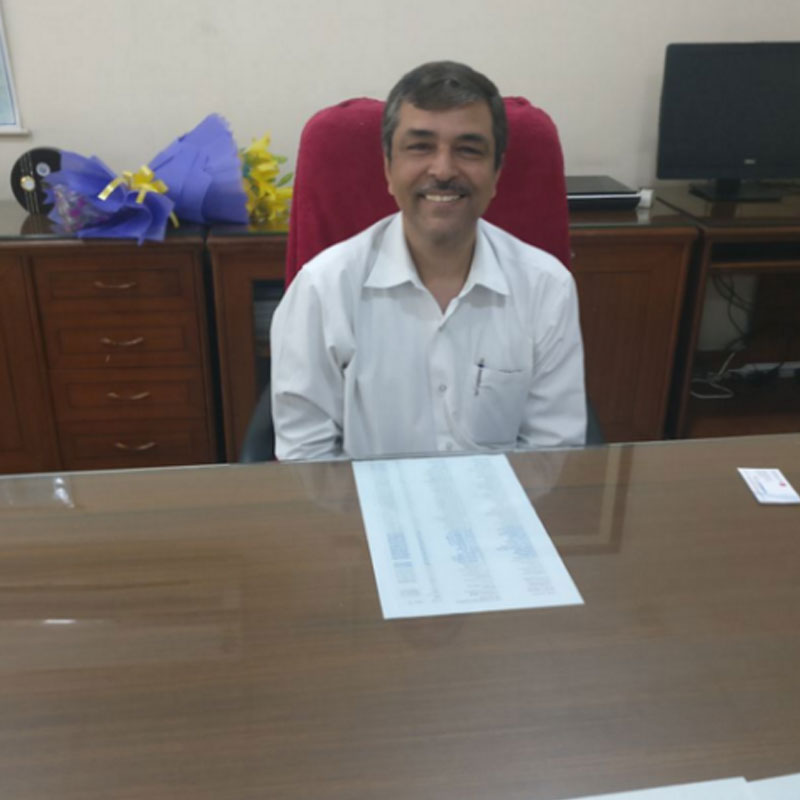
    NEW DELHI: His is a well-known face to most of the Indian broadcasters and TV distributors – whether DTH or cable. Sunil Kumar Gupta, until now Principal Advisor (Broadcasting &  Cable Services) in the  Telecom Regulatory Authority of India (TRAI), has now been appointed Secretary in the Authority.He succeeds Sudhir Gupta who retired on 31 July 2017.

    SK Gupta is a gold medalist of Allahabad University and had done his graduation on “Electronics and Telecommunication” and an MBA from Delhi. He joined Indian Telecom Services (ITS) in 1983 and worked in the Department of Telecommunications in various capacities.

    For the past 10 years, he has been involved in telecom licensing, regulations and its implementation.

    He has dealt with issues relating to broadband, infrastructure sharing, IP addresses, licensing, FM radio and cable TV services.

    He was member of various high profile committees such as “Internet Governance Working Group” constituted by Department of Information Technology, Convener of NGN Expert Committee constituted under the aegis of TRAI, Member of South Asian Telecom Regulatory Council (SATRC) and member of IPv6 focus Group constituted by DOT etc.

    Sunil Gupta has served in TRAI for two terms: first from 2006 to 2011, and again since 2015

  • Pay channel’s a la carte rate to not exceed two times its RIO rate: TRAI

    Pay channel’s a la carte rate to not exceed two times its RIO rate: TRAI

    NEW DELHI: The Telecom Regulatory Authority of India (TRAI) today said that the a la carte rate of a pay channel forming part of a bouquet offered by any digital platform should not exceed two times its RIO order rate offered by the broadcaster for addressable systems.


    TRAI also said that the sum of a la carte rates of all channels in the bouquet should not exceed three times the bouquet rate. 


    This applies to all multi-system operators (MSOs), direct to home (DTH) operators, internet protocol service (ISP) providers and Headend in the Sky (HITS) operators providing broadcasting services or cable service to its subscribers using a digital addressable system (DAS) and offers pay channels or pay and free-to-air (FTA) channels as part of a bouquet.


    These provisions are contained in the draft Telecommunication (Broadcasting and Cable) Services (fourth) (Addressable Systems) Tariff (Amendment order), 2015 that TRAI has prepared consequent to an order of the Telecom Disputes Settlement and Arbitration Tribunal (TDSAT) of 13 July.


    TRAI has also given the definitions of RIO and RIO rates in the draft, to which comments can be filed by 14 October with counter-comments if any, by 21 October.


    TRAI defines “RIO” as Reference Interconnect Offer published by a service provider specifying terms and conditions on which other service providers may seek interconnection from the service provider making the offer. On the other hand, “RIO rate” is the rate specified by the service provider in its Reference Interconnect Offer.


    The a-la-carte rates of all the channels offered by the service provider should be same for all the bouquet of channels formed by the service provider.


    The matter had gone to TDSAT as some platforms had objected to the “twin conditions” that were prescribed at retail level pricing of TV broadcasting services in order to link the a-la carte rates of channels to the bouquet rates in the Tariff order of 20 September, 2013.


    TDSAT, while disposing off the appeal vide its order of 13 July, stated that the Authority will consider the concerns of the appellants and take a final decision on the matter within four months from the date of the order.

  • LCOs challenge TRAI DAS order in High Court By Seema Singh

    LCOs challenge TRAI DAS order in High Court By Seema Singh

    MUMBAI: The Gujarat Cable Operators Association (GCOA) has approached the High Court of Gujarat against the Telecom Regulatory Authority of India (TRAI), the central government of India and state government against the ruling on digitisation.


    In the petition submitted to the HC, the petitioner has challenged the legality of Telecommunication (Broadcasting and Cable) Services Tariff and the Telecommunication (Broadcasting and Cable Services) Interconnection Regulations.


    In the current scenario, as defined by the regulator, the revenue share ratio between the MSOs and LCOs is 55:45 for free-to-air channels and 65:35 with respect to pay channels. The LCOs in Gujarat find it discriminatory and prejudicial to their interest.


    “We have challenged all the notifications passed by TRAI. This includes revenue share, consumer application forms (CAFs) and billing,” informs Gujarat Cable Operators Association president Pramod Pandya. The laws, according to Pandya are complicated and aim at completely removing the presence of LCOs from the cable industry. “We feel that every order passed till date with regards to digitisation is one-sided. All the laws have been drawn up against the LCOs,” he adds.


    The association on 2 September 2013 moved to the Supreme Court with the matter. The SC then ordered them to address the issue to the High Court first. “We then filed a petition to the Gujarat HC on 10 September,” he informs.


    The court during its 13 November hearing has asked the TRAI and government to declare the reasons for formulating the existing laws pertaining to tariff and interconnection in the next 15 days.


    “I don’t understand the basis of these laws. It is the LCOs who build the customer base and now all of a sudden we have been asked to transfer our rights to the MSOs,” says Pandya.


    The LCOs also feel that the issues relating to digitisation have never been discussed with the registered 60,000 cable operators.


    “None of the state cable operator associations were called before the process of digitisation was enforced.”


    The cable operators in Gujarat, say they are only asking for their rights. “If I don’t have a right, then why should I collect revenue or collect CAFs from consumers? We have built the customer base for all these years. The MSO give us the signal, for which we pay them a rent and then bill the customer. How can government all of a sudden ask us to not do the billing?” questions Pandya.


    According to the petition filed, of which indiantelevision.com has a copy of, the members of the petitioning association under the said provisions work under the MSOs as their revenue collecting agents while at the same time provide maintenance and services to the subscribers on behalf of the MSOs at their own cost since the entire cable network has been laid down by them over a number of years.


    The association has some 2500 cable operators as its members. “We are not targeting MSOs…they are only following what the TRAI has asked them to do.”


    The LCOs feel that their roles have been reduced to mere commission agents.


    “We are being forced to depend on the MSOs,” opines Pandya. Under digitisation, it is mandatory for the LCOs to collect and submit CAFs. “This is harsh and oppressive since it would compel the LCOs to share their subscriber’s base with the MSO’s making them more vulnerable,” says Pandya.


    He is clear that till there is no clarification on the notifications passed by TRAI, the cable operators in Gujarat will not even seed set top boxes. When asked if the operators will meet the CAF deadline he says, “It is a court case now. We have challenged every aspect of digitisation. So till this is resolved and the court passes an order on this, there will be no CAF collection or billing in Gujarat.”


    The association had in the beginning of DAS phase II approached the High Court, which had then given a stay order for 16 days for implementation of DAS. “The process of digitisation started only from 16 April in Gujarat. So far only four cities of Gujarat: Surat, Baroda, Ahmedabad and Rajkot have moved ahead on this,” he concludes.

  • TRAI notifies draft DAS tariff & interconnect rules

    TRAI notifies draft DAS tariff & interconnect rules

    NEW DELHI: The Telecom Regulatory Authority of India (TRAI) has made life a little simpler for MSOs. Last weekend (20 September 2013) it notified the amendments to interconnection regulations applicable for Digital Addressable Systems (DAS) and also to the tariff order for DAS the drafts of which it had released for industry consultation on 4 June 2013. 

    It has some further changes following industry feedback. Amongst these include: 

    * The removal of the minimum channel carrying capacity of 500 channels for MSOs.

    * It has clarified that subscribers can either opt for channels on a-la-carte basis or bouquet or combination of both, as per their choice. 

    * It has disallowed MSOs from seeking a channel from a broadcaster while at the same time seeking carriage fees from it. 

    * It has forbidden MSOs from charging placement fees. 

     The amendments in the Telecommunications (Broadcasting and Cable) Services (Fourth) (Addressable) Systems) Tariff (Second Amendment) Order 2013 modify the ‘twin conditions‘ that regulate the a-la-carte rate of channels vis-a-vis the bouquet rates at retail level protecting subscribers’ interests. It also clarifies the position that subscribers can either opt for channels on a-la-carte basis or a bouquet or a combination of both, as per their choice. 

    Considering the fact that the operators would be required to make appropriate changes, both in pricing and packaging, the Authority has decided to make the ‘twin conditions’, prescribed through this tariff order mandatory with effect from 1 January 2014. However, during the period from the notification of this tariff order till 31 December 2013, operators would be required to offer channels, complying to either of the two conditions, specified in the ‘twin conditions’. 

    The operators are, however, free to make their offering, complying to the ‘twin conditions’, if they wish to do so before 1 January 2014. 

    Further, in case a channel forms part of more than one bouquet then the above conditions will have to be satisfied for all such bouquets. Further, if the operator offers discounts to its subscribers on bouquet rates, the above said ‘twin conditions’ should also be satisfied with such discounted bouquet rates. 

    Therefore, the Authority felt it appropriate to extend the a-la-carte provisioning of channels to cover both the FTA and pay channels carried over the network of an operator.

    Accordingly, vide the tariff amendment order dated 30 April 2012, it was mandated that every operator providing services to its subscribers using an addressable system shall offer or cause to offer all channels, whether pay or FTA, offered by it to its subscribers on a-la-carte basis. In sync with this provision, the word “pay” has been deleted from the heading of clause 6 and also from the clause 6(2) of the principle Tariff order dated 27 July 2010. With the removal of word ‘pay’, an operator can specify a minimum commitment period, not exceeding three months for both ‘pay’ and ‘FTA” channels, subscribed on a-la-carte basis. 

    The TRAI has noted that “it has been observed that, some of the DTH service providers have been imposing pre-condition for subscribing to a particular bouquet before add-on-bouquets and/or a-la-carte channel(s) can be subscribed. The Authority is of the view that such conditions are unreasonable and the consumer should be free to choose any combination of the channel(s) or bouquet(s) offered by the operator. In the tariff amendment order dated 30 April 2012, a provision was made which allowed the DAS subscriber to subscribe to basic service tier or basic service tier and one or more pay channel or only free to air channels or only pay channels or pay channels and free to air channels at his option i.e. consumer is free to choose any combination of the channel(s) or bouquet(s) offered by the operator. 

    Accordingly, sub-clause (4) of clause 6, applicable for addressable platforms other than DAS, has been suitably amended and a proviso has been added to bring in parity amongst various addressable platforms as well as to ensure that consumers of these platforms are on equal footing. 

    The Interconnection Regulation applicable for DAS has the following safeguards with regard to charging of carriage fee: carriage fee to be transparently declared in the RIO of the MSO; the carriage fee is to be uniformly charged; the carriage fee not to be revised upwardly for a minimum period of 2 years, and the details of the carriage fee are to be filed with the Authority and the Authority has a right to intervene in cases it deems fit. 

    The Authority has decided that the phrase “having the prescribed channel capacity” appearing in sub-regulation 3(2) of the Telecommunication (Broadcasting and Cable Services) Interconnection (Digital Addressable Cable Systems) Regulations 2013  should be deleted as the same will have no relevance with the deletion of the minimum channel carrying capacity criteria from the regulations.

    For the time being, the Authority has decided not to specify the capacity to carry a minimum number of channels by the MSOs, on the expectation that market dynamics will take care of the emerging situation. However, in the event the Authority notices that the market dynamics are not allowed to function freely by the service providers, resulting in creation of an artificial capacity constraint, it will intervene appropriately. 

    Analysing the issue of placement fee, TRAI has noted that the DAS technology provides for an Electronic Programme Guide wherein the channels being carried on an MSO’s network can be arranged in a simple, easy to understand, manner so that the subscriber can easily go through this guide and select the channel of his choice instead of flipping through all the channels.

    The genre-wise display of channels in the EPG, where all the channels of a particular genre are listed under relevant genre, has been mandated through regulations. Moreover, in digital systems, signal quality of the channels is independent of the placement of the channel. 

    Further, the Interconnection Regulation already has a provision (sub-regulation 3 (11)) that if an MSO, before providing access to its network, insists on placement of the channel in a particular slot or bouquet, such precondition amounts to imposition of unreasonable terms. Thus, adequate provisions already exist in the regulations. Accordingly, sub-regulation 11A of regulation 3 of the interconnection regulation has been deleted. 

    The amendments follow a judgment of the Telecom Disputes Settlement and Arbitration Tribunal and a consequent fresh consultation paper by TRAI and reactions on it from stakeholders.