Tag: Broadcasters

  • Delhi HC stays TDSAT order asking broadcasters to provide OTT content information

    Delhi HC stays TDSAT order asking broadcasters to provide OTT content information

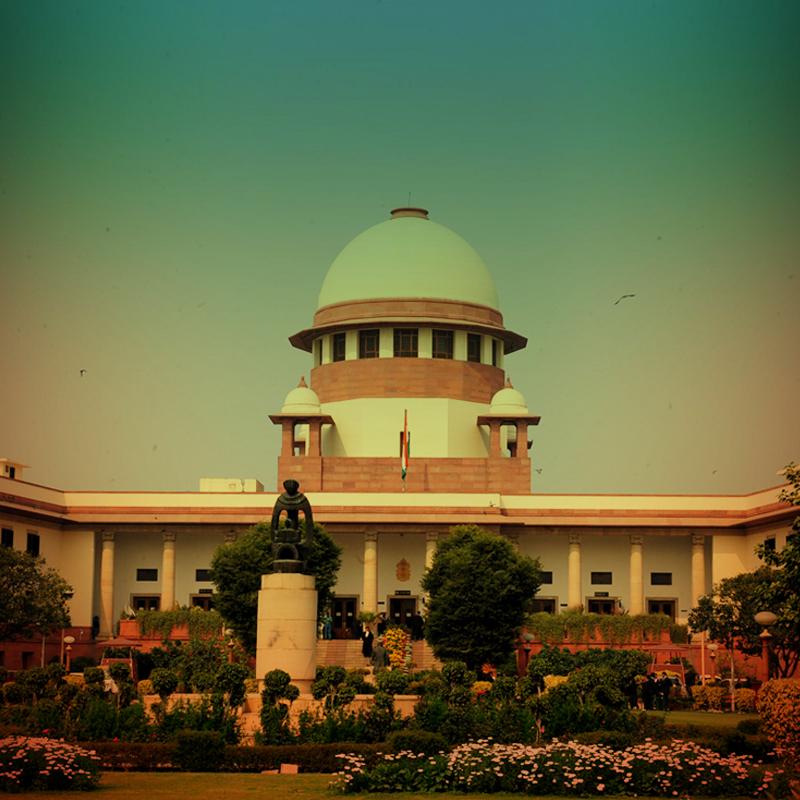
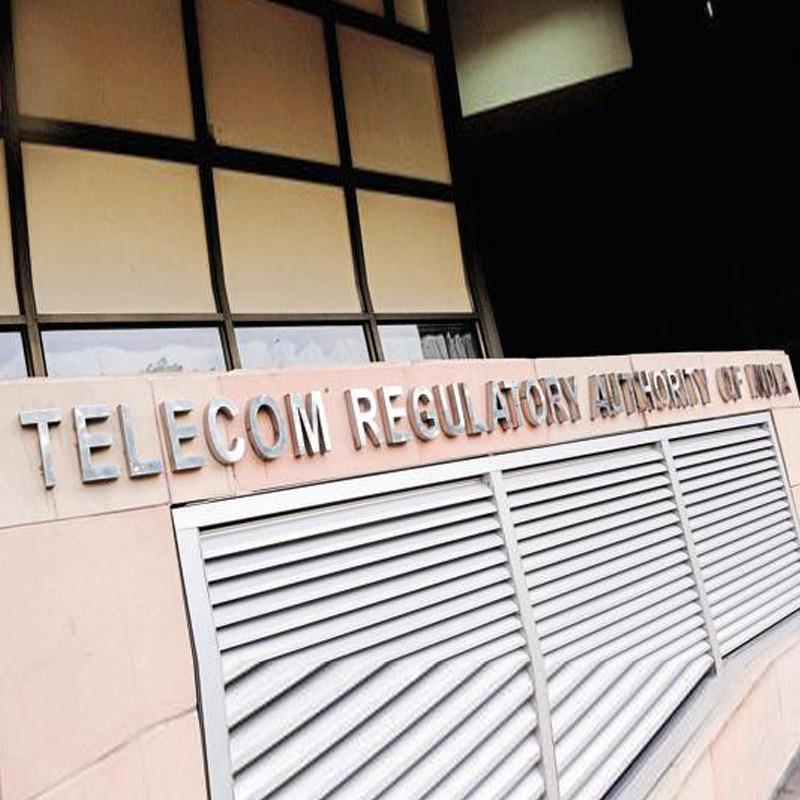
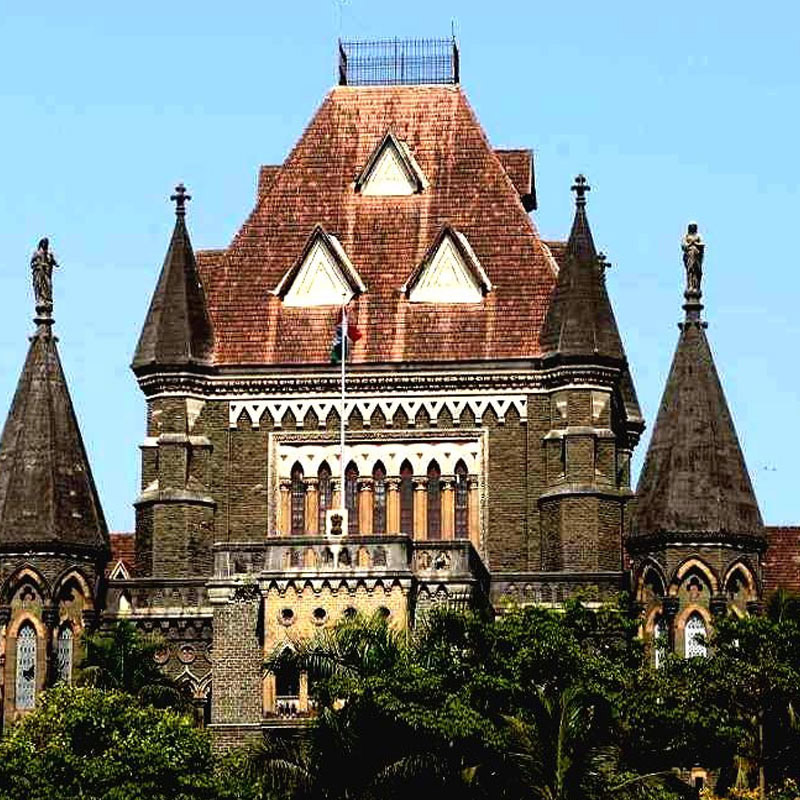
    Mumbai: The Delhi High Court has stayed Telecom Disputes Settlement and Appellate Tribunal (TDSAT) order and the proceedings until the next date of hearing. TDSAT issued an order last week requiring broadcasters to provide information on content available on over-the-top (OTT) platforms.

    In past legal processes, Trai has publicly indicated that it does not regulate OTT platforms or the content that is associated with them.

    “Prima facie, the court finds itself unable to sustain the order of 20 September by TDSAT,” said the order dated 28 September by Delhi HC.

    According to the High Court, the TDSAT was not authorised to make the ‘contested decision’ while the main dispute over whether it had the authority to issue the ‘contested direction’ was still being resolved.

    A source informes Indiantelevision.com that the court judge made oral remarks saying “what kind of order is this? Later he also said (in a lighter vein) there seem to be lofty principles in the order.”

    Broadcasters are allegedly breaking Clause 5.6 of the TV channel uplinking and downlinking guidelines by providing linear channel signals to OTT services, claimed Trai.  

    This clause requires broadcasters to make satellite TV signals available to registered cable operators, multi-system operators, direct-to-home players, and internet protocol TV service providers.

    As the clause reads, “The applicant company shall provide satellite TV channel signal reception decoders only to MSOs/cable operators registered under the Cable Television Networks (Regulation) Act 1995 or to a DTH operator registered under the DTH guidelines issued by the government of India or to an Internet Protocol Television (IPTV) service provider duly permitted under their existing telecom licence or authorised by the department of telecommunications or to a HITS operator duly permitted under the policy guidelines for HITS operators issued by the ministry of information and broadcasting to provide such service.”

    While OTT services are exempt from Trai oversight, broadcasters contend that Clause 5.6 has not been violated. They claim that both platforms controlled by broadcast networks and those owned by independent players are covered by this.

    Broadcasters including Sony, Star, and Sun TV had approached TDSAT to challenge Trai’s directive. The networks, on the other hand, had received no relief from the appellate tribunal, with TDSAT ordering them to provide the information to Trai within a week.

    The Court also questioned Trai’s authority to control OTT and make the requests for information that they did. In past legal proceedings, Trai has publicly indicated that it does not regulate OTT platforms or the content that is associated with them.

    When Trai requested certain broadcasters (such as Star India, Sony, and Sun TV) to submit detailed information on the content of TV channels that were available on OTT, the problem began.

    Dissatisfied broadcasters challenged Trai’s decision, which ordered the disclosure of information and architecture in TDSAT, among other things, by questioning Trai’s authority to request such information.

    Notably, the broadcasters asserted that Trai has always maintained in court proceedings that it does not regulate over-the-top (OTT) content.

    The TDSAT had previously provided broadcasters with ad-interim protection against Trai coercion. However, it later directed broadcasters to provide information, which resulted in the current petition before the Delhi High Court.

  • Trai seeks views of stakeholders on new tariff order

    Trai seeks views of stakeholders on new tariff order

    Mumbai: The Telecom Regulatory Authority of India (Trai) has issued a consultation paper on issues related to the new regulatory framework for broadcasting and cable services. The regulatory body has invited stakeholders to express their written comments on the issues in the consultation paper by 30 May and counter comments by 6 June.

    In December 2021, Trai formed a committee consisting of members from the Indian Broadcasting and Digital Foundation (IBDF), All India Digital Cable Federation (AIDCF) and DTH Association to deliberate on the various issues related to the implementation of the New Regulatory Framework 2020.

    Implementation of tariff order

    The stakeholders’ committee identified several issues related to New Regulatory Framework 2020 for consideration and requested Trai to immediately address the critical issues which could create impediments to the smooth implementation of the tariff order.

    To summarise the issues, Trai addressed seven questions to stakeholders concerning the ‘New Tariff Framework 2020’ in the consultation paper as follows:

    1. Should Trai continue to prescribe a ceiling price of a channel for inclusion in a bouquet?

    A. If yes, please provide the maximum retail price (MRP) of a television channel as a ceiling for inclusion in a bouquet. Please provide details of calculations and methodology followed to derive such ceiling price.

    B. If not, what strategy should be adopted to ensure the transparency of prices for a consumer and safeguard the interest of consumers from perverse pricing?

    2. What steps should be taken to ensure that popular television channels remain accessible to a large segment of viewers. Should there be a ceiling on the MRP of pay channels? Please provide your answer with full justifications/reasons.

    3. Should there be a ceiling on the discount on the sum of a-la-carte prices of channels forming part of bouquets while fixing MRP of bouquets by broadcasters? If so, what should be the appropriate methodology to work out the permissible ceiling on discounts? What should be the value of such a ceiling?

    A. Should channel prices in bouquets be homogeneous? If yes, what should be appropriate criteria for ensuring homogeneity in pricing the channels to be part of the same bouquet?

    B. If not, what measures should be taken to ensure an effective a-la-carte choice which can be made available to consumers without being susceptible to perverse pricing of bouquets?

    C. Should the maximum retail price of an a-la-carte pay channel forming bouquet be capped regarding the average prices of all pay channels forming the same bouquet? If so, what should be the relationship between the capped maximum price of an a-la-carte channel forming the bouquet and the average price of all the pay channels in that bouquet? Or else, suggest any other methodology by which the relationship between the two can be established and consumer choice is not distorted.

    5. Should any other condition be prescribed for ensuring that a bouquet contains channels with homogeneous prices? Please provide your comments with justifications.

    6. Should there be any discount, in addition to the distribution fee, on MRP of a-la-carte channels and bouquets of channels to be provided by broadcasters to DPOs? If yes, what should be the amount and terms and conditions for providing such a discount?

    7. Stakeholders may provide their comments with full details and justification on any other matter relating to the issues raised in the present consultation.

    Trai notified stakeholders of the regulations under the New Regulatory Framework 2020 on 1 January 2020. As per the regulations, Trai allowed for 200 SD channels for the maximum price of Rs 130. It also necessitated that in multi-TV homes distributed platform operators (DPOs) charge a network capacity fee (NCF) for any subsequent TV connection that cannot be more than 40 per cent of the NCF for the first TV.

    The regulations also mandated that only channels with MRP of Rs 12 could be a part of a bouquet. It also called for reasonable pricing of a-la-carte channels and bouquets by providing twin conditions

    a) the sum of the a-la-carte rates of the pay channels (MRP) forming part of a bouquet shall in no case exceed one and half times the rate of the bouquet of which such pay channels are a part and

    b) the a-la-carte rates of each pay channel (MRP), forming part of a bouquet, shall in no case exceed three times the average rate of a pay channel of the bouquet of which such pay channel is a part. In a ruling dated 30 June 2021, the Bombay high court struck down the second twin condition after a challenge issued by broadcasters.

    “The provisions related to Network Capacity Fee (NCF), multi-TV homes and long-term subscriptions of New Regulatory Framework 2020, have already been implemented and due benefits are being passed on to the consumer at large,” said Trai in its statement.

    Pricing of channels

    However, Trai noted, that reference interconnection offers (RIOs) filed by broadcasters, listing the MRP and bouquet price of their channels, reflected a common trend. The broadcasters priced their most popular channels including sports channels beyond Rs 20 per month keeping them out of the bouquet. “The revised RIOs as filed indicate a wide-scale changes in the composition of almost all the bouquets being offered,” said Trai.

    After the RIOs were filed, Trai received representations from DPOs, local cable operators (LCOs) and consumer organisations. The DPOs highlighted the difficulties faced by them in implementing the new rates in the system and migrating the consumers to the new tariff regime through the informed exercise of options impacting almost all bouquets.

    This paper primarily discusses issues related to discounts given in the formation of the bouquet, the ceiling price of channels for inclusion in the bouquet, and discounts offered by broadcasters to DPOs in addition to distribution fees.

  • Broadcasters to withdraw petitions challenging Trai on NTO 2.0 in SC

    Broadcasters to withdraw petitions challenging Trai on NTO 2.0 in SC

    Mumbai: The Indian Broadcasting and Digital Foundation (IBDF) and its members are likely to withdraw their petitions challenging the New Tariff Order (NTO) 2.0 in the Supreme Court, sources told indiantelevision.com. The apex court took up broadcasters’ applications for withdrawal of the petition while hearing the matter on Tuesday.

    Earlier this month, The Telecom Regulatory Authority of India (Trai) had extended the deadline for implementation of the new tariff order (NTO) 2.0 to 1 June. The previous deadline was 1 April.

    Trai had then also allowed broadcasters to revise their reference interconnect offers (RIO) by 28 February and publish the same on their websites. Distribution platform operators (DPOs) were directed to report the distributor retail price and composition of the bouquet of pay channels in compliance with the new regulatory framework by 31 March. Those who have already submitted can revise their RIOs by 31 March.

    In response to the earlier deadlines, broadcasters had come out with their new RIOs in October-November last year, preferring to pull their popular channels out of the bouquets instead of reducing the price to or below Rs 12. Though still above the cap, many of these prices were revised down later.

    Pertinent in this regard is Trai’s intention to form a committee with representation from leading pay-TV industry associations to ensure smooth implementation of the New Regulatory Framework 2020. In a letter dated 22 December 2021, the regulator has asked the IBDF, All India Digital Cable Federation (AIDCF), and the DTH association to nominate a maximum of two representatives to be part of the implementation committee.

    Prior to this, Trai had in November 2021, notified stakeholders that NTO 2.0 implementation would be delayed until 1 April. Speculations regarding backroom parleys between the telecom regulator and broadcasters to end the impasse have also been in the news lately. 

    This copy will be updated.

  • Trai defers NTO 2.0 implementation to 1 June

    Trai defers NTO 2.0 implementation to 1 June

    Mumbai: The Telecom Regulatory Authority of India (Trai) on Thursday extended the deadline for implementation of new tariff order (NTO) 2.0 to 1 June. The previous deadline was 1 April.

    As per the plan, Trai has allowed broadcasters to revise their reference interconnect offers (RIO) by 28 February and publish the same on their websites. It has also asked distributed platform operators (DPOs) to report the distributor retail price and composition of the bouquet of pay channels by 31 March in compliance with the new regulatory framework. Those who have already submitted can revise their RIOs by 31 March.

    “Keeping in view the current pandemic situation across the country and requests received from stakeholders for extension of time for implementation of new regulatory framework 2020, it has been decided to extend the time limit for implementation of new regulatory framework 2020,” said Trai in the statement.  

    Several stakeholders have informed Trai that due to the present Covid situation most of their staff who were affected were unable to attend office due to guidelines by state governments. Cable operators’ staff were finding it difficult to reach Covid affected subscribers/areas for collection of choices.

    Further, Trai has asked all distributors of TV channels to ensure that with effect from 1 June services to the subscribers are provided as per the bouquets or channels opted by the subscribers.

  • Broadcasters promoting pay-TV on Free Dish are shooting themselves in the foot – Saurabh Sancheti

    Broadcasters promoting pay-TV on Free Dish are shooting themselves in the foot – Saurabh Sancheti

    Mumbai: With a 40 million base, which is constantly growing at the cost of Pay-TV, Prasar Bharati’s DD Free Dish is not just another competing platform, but considered by many as a precursor to the success of Free Ad-Supported Television (FAST) model in India. The implementation of NTO 2.0 is going to further intensify this cannibalisation. While broadcasters are riding the FTA wave, some fairly and some in an unfair manner, distribution platform owners are pushing for regulatory intervention and new ways to tackle the challenge.

    Saurabh Sancheti – Business Head | Hathway GTPL,   has long been advocating and working towards building a ‘rupee-a-day’ product that can take on Free Dish. At the Video & Broadband Summit organised by Indiantelevision.com on 19 January, he outlined the approach that is needed to arrive at this solution.

    “Out of the country’s 280-300 million households, nearly 200 million own a television set, and of this, only about 120 million have Pay TV. MSOs and broadcasters have to work together on wooing the remaining 80 mn base with a customised product. LCOs too need to reinvent themselves by adopting digital technology that serves their customers better,” he said. Sancheti is confident that if all players can collaborate on it, not only can the economics be worked out, but the pay-TV basket can be grown by at least 30-40 million in the next couple of years.

    Cog in the wheel

    In the current scenario, (short-term) gains and survival concerns are driving the top and bottom of the pyramid. Elaborating on what he terms as “death by annual plan”, Sancheti remarked, “Broadcasters promoting Pay-TV on Free Dish are shooting themselves in the foot. No matter how big you become on Free Dish, the platform cannot be monetised.”

    “They need to understand the possibilities of working with the DPOs. As people’s income levels increase, they will spend more on subscriptions. Those who join at a Free Dish equivalent pricing today, can become our regular and even premium customers tomorrow. But instead of thinking about taking customers up the funnel, and about the long-term growth of pay-TV, they are worried about their annual and quarterly targets,” he rued.

    Further, he noted that with infrastructure sharing and cheaper bandwidths making it possible to achieve last-mile delivery to the level of a gram panchayat at very low costs, distribution networks will also have to re-engineer themselves to align with the broadband revolution that’s underway.

    It’s obvious that the postulated rupee-a-day product cannot run in the same high-touch manner as the current base is running and hence the requirement of “lot more digital, lot more long-term packs and lot more of DIY”.

    Would that mean LCOs losing control of the last mile and eventually dropping out of the value chain? Commenting on the long-standing issue, Sancehti stated, “The primary models have failed, and MSOs realise that they cannot reach out to consumers directly, but only through the LCOs. That being said, today, consumers want more control. This is the reason why DTH, which has declined globally, is still surviving in India. It is the only medium that allows you to do everything yourself; from channel selection to bill payments. So, the risk of being eliminated is clearly there, however, it’s not because of the large players but the LCOs’ unwillingness to reinvent.”

     The next big opportunity

    Sancheti believes that the linear TV model still has a lot of scope left. Out of the 200 million TV-owning households in India, the top tier of 20-25 mn has both pay-TV and fixed-line connectivity. Their number is growing, and so is their OTT consumption.

    The second set of 100 mn households, which is 70 per cent urban, consumes linear TV on the large screen and OTT on private/mobile screen. It will gradually go the 25 mn way.

    The remaining 80 million (TG for the rupee-a-day product) are the ‘cord nevers’ who are subscribed to either analogue or Free Dish today. As their income levels increase and more content and services suitable for them are made available, they will move up the ladder into the pay-TV base.

    Sancheti, however, finds the 100 million ‘TV nevers’ equally if not more promising than the 80 mn cord nevers. “At Den, Hathway, and GTPL, we believe this is where the opportunity lies to as much as double our base. As the economy progresses, spends on services will increase exponentially, and we are reinventing ourselves for the change; whether it is by way of working on connectivity/network or by value engineering the set-top boxes that begin at an 800 Rupees price point today.”

    Pinpointing the 100 mn challenge and opportunity, he added, “It’s not like the cable hasn’t reached the ‘villages’. The problem is that it has found only 500-odd homes/subscribers there. The art is in doubling this number by offering the right product and pricing.”

    Impact of NTO 2.0

    Winding up the discussion with a word on the present state of regulation and the impact of NTO 2.0, Sancheti observed that “whatever rationalisation had to happen in terms of channel selection at the customer end has already happened with NTO (2019). Beyond a point, more à la carte will only do more harm. With NTO 2.0 we are looking at a 25-30 per cent increase in prices as per published broadcaster RIOs. India being a price-sensitive and value-seeking market, this will further pressurise the PayTV base, leading to more people opting out of it.”


    Please Note : “The views expressed are personal and do not represent the views of Reliance Industries Limited or any of group companies”

  • VBS 2022: Getting ready for the post-pandemic world

    VBS 2022: Getting ready for the post-pandemic world

    Mumbai: Indiantelevision.com is back with the 18th edition of the Video & Broadband Summit (VBS). The day-long summit will be held virtually on 19 January 2022, from 10.00 am to 5.00 pm. VBS 2022 is co-powered by broadpeak. Disney Star is presenting partner and NxtDigital is the summit partner.

    This year’s Video & Broadband Summit will provide a platform for industry and opinion leaders to discuss key issues being faced by the television industry as a result of the Telecom Regulatory Authority of India (Trai)’s New Tariff Order 2.0, broadband-fuelled growth of digital platforms, and the impact of cord-cutting on DPOs, as well as the possible ramifications of the impending 5G launch that has already created a stir among broadcasters and distributors.

    Some of the broad themes to be covered include Rising Cost of Video Entertainment, Changing Business Models and Revenue Models, Value-Added Services, and getting back to basics in a Post-Pandemic World. VBS 2022 will also delve into the concerns and opportunities around the 5G Teleco Threat, Virtual MVPDs, Cable TV’s Technology, and Back-End Challenges, DPO’s Marketing Drive, and the gradual expansion of Over the Top (OTT) Platforms.

    The summit will begin with an introduction by Indiantelevision.com Group founder CEO and editor-in-chief Anil Wanvari, followed by a presentation on the rising cost of video entertainment.

    First on the agenda is a fireside chat with M&E consultant Anuj Gandhi. During the next session moderated by former senior VP Star TV and CEO KCCL Shaji Mathews, Fastway’s Prem Ojha, Travelxp’s Prashant Chothani, Asia Satellite Telecommunications Holdings’ Rajdeepsinh Gohil, Shemaroo Entertainment’s Sandeep Gupta, BBC Global News’ Sunil Joshi, and Zeel’s Anil Malhotra will share their thought on ‘Getting Back to Basics and to a Post Pandemic World’.

    Lined up next is another fireside chat between NxtDigital MD and CEO Vynsley Fernandes and Anil Wanvari. Thereafter Gurjeev Singh Kapoor (Star & Disney India), Vynsley Fernandes, Amit Arora (Indiacast Media Distribution), Sambasivan G (Tata Sky), Ashish Pherwani (E&Y), and SN Sharma (DEN Networks) will delve on ‘Shaping the growth of linear TV distribution and subscription’.  

    In the post-lunch session, a panel consisting of MN Vyas (founder-director PlanetCast), Abhishek Gupta  (vice president IT, Dish TV), Yann Begassat (business development director, Broadpeak), and Salil Thomas (general manager & head ACV & Technology,  Asianet Satellite Communications Ltd) will demystify ‘The 5G Opportunity’ for the viewers. The talk will be moderated by Satcom Industry Association – India, senior director technology and policy Rajeev Gambhir.

    Following a fireside chat with Jio Platform’s Saurabh Sancheti, the event will wrap up with a discussion on ‘Delighting the Indian Consumer – Challenges & Opportunities’ between Rajib Mukherji (EVP-Strategy, IndiaCast Media Distribution Pvt Ltd.), Nagesh Chhabria (promoter, Metrocast), Rouse Koshy (chief operating officer, NXTDigital) and Yatin Gupta (senior VP, GTPL).

    The Video & Broadband Summit (VBS) 2022 will be live-streamed on Indiantelevision.com’s social media handles.

    For more details: https://www.videoandbroadbandsummit.com/ 

  • Broadcasters huddle up, as 5G roll-out plan gathers pace

    Broadcasters huddle up, as 5G roll-out plan gathers pace

    Mumbai: Just as the industry was gearing up to welcome 2022, the Telecom Regulatory Authority of India (Trai) set the ball rolling on the 5G roll-out in India. The next wave of disruption in the telecom sector is set to hit 13 cities in the first phase: Gurugram, Bengaluru, Kolkata, Mumbai, Chandigarh, Delhi, Jamnagar, Ahmedabad, Chennai, Hyderabad, Lucknow, Pune, and Gandhi Nagar.

    The auctions are likely to be held in mid-2022 following the Telcom department’s request for a recommendation on modalities such as reserve price, band plan, block size, and the quantum of spectrum. But amid all this, the broadcasters’ concerns continue to escalate, with apprehensions regarding a potential spectrum clash with 5G.

    5G Vs Broadcasters

    Airwaves in several bands including 526-698 MHz, 700 MHz, 800MHz, 900 MHz, 1800 MHz, 2100 MHz, 2300 MHz, 2500 MHz, 3300-3670 MHz, and 24.25-28.5 GHz have been identified for 5G auctions in India, whereas downlinks by all broadcasters intended for reception by MSOs are in the band of 3700-4200 MHz as prescribed by the International Telecommunication Union (ITU), and are also governed by the downlink policy by the government. Over 600 licensed satellite channels in India operate in this band.

    Ever since the 5G trials started in India in June 2021, broadcasters who claim to have faced interference on downlink frequencies during that period have been raising the issue with the MIB, DoT, and WPC (Wireless Planning and Coordination Wing of DoT), and the Trai. There are concerns regarding potential interference due to the larger C band allocation to 5G and the limited guard band of 30 MHz between the two services.

    The current upper limit of the National Frequency Allocation Plan 2018 is 3600 MHz. “A guard band of 100 MHz is ideal,” broadcasters say. They further contend that the proposed revision of NFAP-18 to include new bands for 5G use by DOT’s arm WPC may even stretch beyond 3670 MHz to 3800 MHz. This could lead to serious disruption of satellite services for media and broadcast in the 3700-4000 MHz band.

    Prasar Bharati joins the chorus against 5G

    Joining the chorus, Prasar Bharati recently raised objections to the auctioning of the 526-582 MHz frequency band that is being used by Doordarshan for providing terrestrial TV broadcasting. According to media reports, the public broadcaster argued that airwaves in this frequency range are required for expansion and modernisation of its services. Prasar Bharati has told Trai that “availability of spectrum is very crucial for planning DD TV Transmitters. Thus, the decision to use frequency band 470-698 for IMT purpose can be taken only after finalisation of terrestrial TV services by Doordarshan or other private broadcasters.”

    “Many analogue, digital-ready and digital terrestrial TV transmitters are operating in the band. Also, digital-ready transmitters are under installation in the Union Territory of Jammu & Kashmir for which the wireless planning & coordination wing (WPC) has provided for in this band only,” it added.

    Another hurdle on the way: Field trials

    Private broadcasters have also expressed displeasure about field trials of 5G services without notifying the framework – specifically the study of emission and interference on already existing C Band satellite service, non-involvement of incumbent users of the C-band who have been using the satellites for over 30 years in the trials, lack of study on the use of band pass filters at cable headends as well as no consideration of their funding, non-determination of emission safeguards and monitoring architecture for 5G emitting towers, and absence of potential options which can be implemented immediately.  

    As a solution, they have suggested the use of alternative bands for 5G – an option unavailable for C&S services. Based on trial information available with the regulator and DoT, they have further urged the authorised bodies to recommend and publish the specifications for appropriate Band Pass Filters to be used by MSOs, IPTV, and HITs operators per downlink chain for receiving satellite TV signals.

    In order to compensate for the lower availability of C-band transponder capacity, the regulators have been requested to allow broadcasters to use foreign satellites without seeking any clarification from them. Fast track approval for newer compression technologies such as HEVC or H.265 that use lower transponder capacity in comparison to present MPEG4 bandwidth recommendation without any reduction in the quality of the television channels has also been sought. The minimum bandwidth recommended for approval by all regulatory bodies for HEVC is 4Mbps per HD channel and 1.5Mbps per SD channel.

    The television broadcasting and distribution industries in India are facing major disruption under the new tariff regime. Even though they welcome the launch of 5G, which holds great opportunity for the M&E sector in the era of convergence, the smaller players have argued for government intervention in the form of subsidies if they have to move to a higher or alternative frequency.

  • Trai asks Cable TV operators to withdraw legal notice

    Trai asks Cable TV operators to withdraw legal notice

    Mumbai: The Telecom Regulatory Authority of India (Trai) on Tuesday wrote to the Tamil Nadu Digital Cable TV Operators Association to withdraw its legal notice filed through Utkrishtha Law Agency seeking directions for pay channels not to inflate the prices of Cable TV channels.

    In a letter dated 4 January, the regulatory body said it had already issued a letter to broadcasters, and distribution platform operators in November 2021 and asked them to report to the authority any change in name, nature, language, MRP per month of channels, the composition of the bouquets of channels as per the New Regulatory Framework 2020 by 31 December 2021. It had also asked them to simultaneously publish such information on their websites.

    The plan was to provide enough time for the migration of consumers to the New Regulatory Framework, 2020 to avoid any inconvenience to consumers. The broadcasters who had already submitted their Reference Interconnect Offers (RIOs) in compliance of the New Regulatory Framework, 2020 were also asked to revise their RIOs by 31 December 2021. Further, it informed the Association that there was no permission granted by MIB for OTT platforms at present, therefore, tariff orders issued by Trai are not applicable to OTT platforms.

    “In light of this, broadcasters including Star India has intimated about deferment of all changes made in the RIO filed on 15 October 2021. Therefore, you are advised to withdraw the legal notice against Trai,” it wrote.

    The Association had filed the legal notice last year, after several TV channels revised their prices, in compliance with Trai’s amended tariff order. The regulatory body had later extended the timeline for implementation of the new order to 1 April, 2022.

  • Trai asks broadcasters, DPOs to comply with interconnection agreements regulations

    Trai asks broadcasters, DPOs to comply with interconnection agreements regulations

    Mumbai: The Telecom Regulatory Authority of India (Trai) has asked broadcasters and distributors of TV channels to immediately implement the provisions of the Telecommunication (Broadcasting and Cable) Services Register of Interconnection Agreements and all such other matters Regulations, 2019.

    The regulator has asked broadcasters and distributors to submit the compliance report within 15 days from the date of issue of the letter on 8 December failing which actions would be taken as per provisions of the said regulations and the Trai Act, 1997.

    The regulations were supposed to come into force on 2 January 2020 but were challenged by the All India Digital Cable Federation (AIDCF) in the Kerala high court. The high court in its order dated 9 January 2020 had ordered that no coercive action will be taken by the respondents.

    The court disposed of the said writ petition, in its judgement dated 12 July, and partially set aside the provisions of the said regulations to the extent they require registration of placement/marketing agreements. Thus, all the provisions of the said regulations, except to the extent they require registration of placement/marketing agreements, are in operation.

    The regulator had developed a B&CS integrated portal system (BIPS) for the purpose of filing data/details pertaining to the said regulations. The regulations require broadcasters and DPOs to furnish, via their compliance officer, its reference interconnection offers when the same is published on their websites.

    The regulations are applicable to all commercial and technical arrangements entered into by broadcasters, distributors of television channels and local cable operators for providing broadcasting services. If broadcasters and distributors default in complying with the provisions, then Trai would take action by imposing a financial disincentive.

  • IBC cancels Amsterdam event amid surge in Covid cases

    IBC cancels Amsterdam event amid surge in Covid cases

    Mumbai: International Broadcasting Convention (IBC) has cancelled the in-person IBC2021 which was scheduled to be held in Amsterdam this December.

    The move follows growing concerns about the Covid-19 situation in The Netherlands, which has deteriorated over the past week, and the decision was taken after feedback from the IBC exhibitor and visitor community, it added. According to the IBC Partnership Board, the decision was made in order to prevent exhibitors and visitors from travelling to The Netherlands.

    IBC20201 will now focus on bringing the content and technology community together via IBC Digital, it announced late on Tuesday.

    On 13 November, The Netherlands government re-imposed lockdown measures on its 17.5 million population for a month to slow a resurgence of the virus, as daily infections have remained at their highest levels since the start of the pandemic. The cases have been surging despite over 84 per cent of the Dutch population being fully vaccinated.

    The World Health Organisation (WHO) has termed the situation serious, and warned that Europe and Central Asia could face another seven lakh Covid-19 deaths by 1 March.

    The annual trade show which is also touted as one of the world’s most influential media, entertainment and technology shows was scheduled to be held from 2-6 December at The RAI in Amsterdam.  The global event brings together broadcasters, content creators, equipment manufacturers, professional and technical associations and other industry players on one platform.

    The 2020 edition was also cancelled due to the pandemic.