Tag: Broadcasters

  • Electronic Media Monitoring Centre to go up to 1500 channels by 2017: Rathore

    Electronic Media Monitoring Centre to go up to 1500 channels by 2017: Rathore

    NEW DELHI: The government hopes to increase the capacity of the state-of-art Electronic Media Monitoring Centre (EMMC), which currently monitors around 300 television channels, to 1500 by 2017.

     
    Minister of State for Information and Broadcasting Rajyavardhan Singh Rathore told Parliament that these 300 channels are chosen randomly out of the 839 channels beaming into Indian homes.

     
    He said that the aim was to first achieve the target of monitoring 600 channels within the next few months, while answering a question about reality shows playing with the sentiments of the people.

    In a reply to a supplementary question about young children being used in dance shows, Rathore said that there are a large number of channels and there is undoubtedly a race to attract as many eyeballs as possible. Therefore, most of these channels, no doubt, are walking a very thin line and working in that grey area. However, there is a freedom of expression. Therefore, the government does not want to impinge on the freedom of expression. Keeping in mind the morality, decency and various levels of acceptance on television, certain guidelines have been issued. “What the Ministry can say is that we will issue advisories and we will also take into account any complaint that comes,” he said.


    He also said that a Task Force had earlier been set up to work on a regulatory body but the channels had opposed this and wanted self-regulation.

     
    Answering the main question, I&B Minister Arun Jaitley said no fact had been brought to the notice of the government alleging shows playing with sentiments of the people. However, the content carried on private satellite TV channels is regulated according to the provisions of the Programme and Advertising Codes contained in the Cable Television Network Rules 1994 and the Cable Television Network (Regulation) Act 1995. The rules provide for a whole range of parameters to regulate programme and advertisements on TV channels including the reality shows.

     
    The programme code says that no programme should be carried which (a) offends good taste or decency (b) contains anything obscene, defamatory, deliberate, false and suggestive innuendos and half truths (c) criticizes, maligns or slanders any individual in person or certain groups, segments of social, public and moral life of the country (d) denigrates women through the depiction in any manner of the figure of a woman, her form or body or any part thereof in such a way as to have the effect of being indecent or derogatory to women, or is likely to deprave, corrupt or injure the public morality or morals (e) denigrates children (f) is not suitable for unrestricted public exhibition (g) is unsuitable for children.


    Action is taken against defaulting channels whenever any violation of the said codes is noticed or brought to the notice of the Ministry.


    The Ministry also has an Inter Ministerial Committee (IMC) to look into the violations of the Programme and Advertisement Codes. IMC has representatives from the Ministry of Home Affairs, Defence, External Affairs, Law, Women and Child Development, Health and Family Welfare, Consumer Affairs and a representative from the industry in Advertising Standards Council of India (ASCI). IMC meets periodically and recommends action against violations.


    Besides, as part of self-regulation by industry, Indian Broadcasting Foundation (IBF), which is a representative body of non-news and current affairs TV channels, has set up Broadcasting Content Complaints Council (BCCC) to examine the complaints about television programmes.

     

  • Broadcasters want tariff to be left to market forces

    Broadcasters want tariff to be left to market forces

    MUMBAI: The Telecom Regulatory Authority of India’s (TRAI) latest tariff order that will come into effect from 1 January 2015 has already got a few stakeholders’ views on it. To be called the Telecommunication (Broadcasting and cable) services (seventh) (non-addressable systems) Tariff Order, 2014 (draft), it will be applicable to broadcasting and cable services provided to cable subscribers throughout India through non addressable systems.


    Tariff


    The main point that the stakeholders who have given their comments agree on is not having any regulation on wholesale tariff and there should be complete forbearance from the Authority. “The presence of a  plethora  of players in the market  clearly  indicates  that there exists enough competition  in  the  market  and  no  monopolistic  practices  or  unfair  trade practices can be practiced in such a scenario,” is the view of agent The One Alliance (A MSM and Discovery JV, which has now parted ways).


    NDTV and Star India also have similar views on tariff. “Given TRAI’s own finding that TV channels fulfill only ‘esteem needs’ of consumers and are as such non-essential, there is all the more no reason whatsoever for regulating channel prices,” is Star’s opinion. The same is shared by The One Alliance.


    If in case TRAI decides that complete forbearance cannot be allowed, then Star India says that it can consider regulating prices at retail level only. The One Alliance on the other hand feels that TRAI needs to keep its nose out of even retail tariff since it will affect the consumer and the entire distribution chain. “The MSOs under the guise of regulated retail pricing would either further renegotiate with the broadcasters or fill their bandwidth with lesser priced channels,” it says.


    According to The One Alliance, in case the TRAI feels that it should control wholesale rate then only it has to consider inflation rate while if it leaves to market forces, it won’t have to do the same.


    The agent also feels that pricing on the basis of genre is illogical since the Ministry of Information and Broadcasting (MIB) recognises only two categories: News and Current Affairs and Non News and Current Affairs while TRAI seeks to differentiate the non-news category into many genres. “Movie channels like Max and Star Gold also show live sports which is another genre with a different price cap,” it states.


    On the issue of HD and 3D channels, The One Alliance feels that since these are niche channels and require high technology, it should not be subjected to any tariff restrictions whereas Star India feels that they should be kept out since they anyway cannot be transmitted in an analogue regime.


    While TRAI says that broadcasters must give all channels in bouquets as well as a-la-carte, Star India says that there shouldn’t be any mandate that channels have to compulsorily be given on a-la-carte. At the same time, the obligation that old bouquets must be offered as per 2007, needs to go away specially after the coming into force of the deaggregation paper.


    Carriage


    Carriage fee is the biggest burden on broadcasters which everyone has askedthe regulator to include in its order. The News Broadcasters Association (NBA) and Times Television Network have just asked for carriage fees to be included as a crucial element.


    The One Alliance on the other hand states that the authority has ‘blatantly ignored’ the issue of carriage fee even after its own view in a 21 July 2010 report which states, “The Authority is of the view that all carriage and placement fee transactions should be a part of inter connection agreements between the broadcasters and MSO/LCOs in the case of pay channels, or separately formalised as carriage and placement fee agreements in the case of FTA channels, and these should be filed with the TRAI. Such filings of carriage and placement fees will enable the authority to monitor carriage and placement fee transactions regularly and regulate the same through interventions where considered necessary.”


    NDTV says that if there is a price control on how much broadcasters can charge MSOs for content, MSOs should also be told how much they can charge broadcasters for carriage and placement. “The charges paid by MCCS have increased by 300 per cent over the years. It is estimated that the carriage and placement fee paid by broadcasters is between Rs 1200 crore to Rs 1500 crore,” reads NDTV’s reply.


    Declaration and reporting


    The fact that MSOs and LCOs have not been asked to provide any reporting requirement is a question raised by them. Broadcasters urge TRAI to ensure that MSOs and LCOs do not under-declare their subscribers.


    “We strongly believe and submit that the inter-connect regulations must allow for Broadcasters to conduct surprise audits and surveys with their respective technical teams to prevent under-reporting of subscriber base,” states The One Alliance.


    Star India opines that strict financial disincentives should be prescribed for illegal transmission, area transgression, under declaration, piracy or any other illegality or non compliance. “Operators who have been found to be violating rules should not be given the protection of the Must Provide or regulated Tariffs.”


    Both The One Alliance and Star India feel that details on advertising need not be declared as they don’t have any relation to tariff or other issues.


    While TRAI says that a new channel launch needs 30 day prior intimation, The One Alliance feels that a seven day notice is sufficient.

  • DD Freedish readies for 18th online e-auction with reserve price of Rs 3.7 crore

    DD Freedish readies for 18th online e-auction with reserve price of Rs 3.7 crore

    NEW DELHI: Aiming at a target of 112 television channels in the next few months, Doordarshan has set a reserve price of Rs 3.7 crore per slot for the 18th online e-auction to be conducted on 28 November.

     However, it is learnt that the bid amount went up to Rs 4.2 crore in the last e-auction held on 12 November. This came shortly after the 16th e-auction on 28 October.


    Prasar Bharati CEO Jawhar Sircar had said recently that the future of Doordarshan was in Freedish and digitisation. He had added that this may mean that some channels would have to be attracted to Freedish by means other than e-auction.
     
    DD sources also said that while Freedish may be encrypted to keep a tab on the number of subscribers, it would remain free-to-air.

     The e-auction will be conducted by Synise Technologies, Pune on behalf of Prasar Bharati.   

     The reserve price in the 15th e-auction was Rs 3 crore and was raised to Rs 3.7 crore in the 16th auction.

     Prior to the sixteenth auction, the total number of channels on Freedish was 58.

     Meanwhile, a Doordarshan official declined to give the number of successful bids on 28 October as engineers of the pubcaster had to test these channels before verifying any numbers.

     A Prasar Bharati official told indiantelevision.com that DD had decided not to disclose the number of slots to be e-auctioned to prevent bidders forming consortia to bid or resort to other malpractices.

     The eligibility terms and conditions including other relevant details for this e-auction are displayed on DD website: www.ddindia.gov.in.

     However, the participation amount (EMD) in the e-auction is Rs.1.5 crore which has been deposited in advance on or before 11 November evening along with processing fee of Rs.10,000 (Non-refundable) in favour of PB (BCI) Doordarshan Commercial Service, New Delhi.

     Applicants have also been asked mandatorily to deposit a demand draft of Rs 5,500 registration amount favouring M/s. Synise Technologies Ltd., payable at Pune at the time of submission of the application. The time for every slot e-auction will be of fifteen minutes duration.

     The applicants must provide details of the uplink/downlink permission documents received from the concerned Ministries with the Applications to ensure they are not rejected.

     The demand drafts of unsuccessful bidders will be returned immediately or within a week after the e-auction process is completed.  


  • MipJunior 2014: Broadcasters look for creative content creators to attract kids

    MipJunior 2014: Broadcasters look for creative content creators to attract kids

    CANNES:  MipJunior 2014 has established one thing for all kids’ content creators and broadcasters: kids want to watch their favourite programme at the place of their choice and time. But the big question now is how to reach these kids who are consuming content using different platforms? This remained the main focus of the panel discussion on ‘What do buyers want: Emerging multi platform acquisition trends’ on day two of MipJunior 2014.


    While a lot is being spoken about kids moving to the second screen to consume content, Australian Broadcasting Corporation head of children’s TV Deirdre Brennan informed that in Australia even now close to 89 per cent of children’s viewing happens on traditional TV.


    Today, kids are ready to watch the content over and over again. “With so many platforms, we will now have to devise ways to reach to these platforms,” said Disney Channels Worldwide VP worldwide programming strategy, acquisitions and co-productions Karen K Miller.


    The increasing number of platforms poses another problem, of not being sure about which platform the consumer is consuming content from.  Citing the example of Germany, ZDF head of international co-production and acquisition Nicole Keeb said, “90 per cent of content viewing happens on TV. Being a public broadcaster, ZDF is also obliged to deliver content for TV first, followed by online or other platforms.


    Broadcasters world over feel that the television monitoring data is still evolving. “The quality of data is important, since we want to monitor the behavior of the consumers. Better data also helps us strategise better and know which platform is better for our audience,” said Cartoon Network VP content acquisitions and co-productions Adina Pitt.


    The session also delved on what these tech-savvy kids are doing on portable devices. “They are watching their favourite shows, playing games, they are using it in every way possible for entertainment,” informed Miller.


    With numerous kids’ channels offering almost the same content, it becomes important for channels to ensure that kids associate with the brand. “Kids are smart. They know the brand and associate with it. For us, word of mouth publicity helps. In fact the consumer becomes the marketer,” said Pitt.


    The broadcasters, while they have their core target audience, they also feel that there should be entry points. “So while Disney is considered more of a girls’ channel, we do have entry points for boys,” added Miller.


    For Australian Broadcasting Corporation, until a few years back, it had started looking at children as a separate audience. “We have now started looking at bringing both parents and kids together through our content,” said Brennan.


    Brennan also feels that reality shows have seeped in Australian television industry. “I want to bring back storytelling on television,” she opined.


    Another key point brought out during the session was that while internet has increased access to content, it is the responsibility of the content creators to ensure that kids are able to find the content.


    On a parting note, when World Screen group editorial director Anna Carugati, the moderator for the session, asked what was missing in the kids broadcasting space, Amazon Studios head of kid’s programming Tara Sorensen said, “There is a need for more creative content. The creators need to spend time in creating content.”

  • Phase III of digitisation likely to begin from April 2015: Javadekar

    Phase III of digitisation likely to begin from April 2015: Javadekar

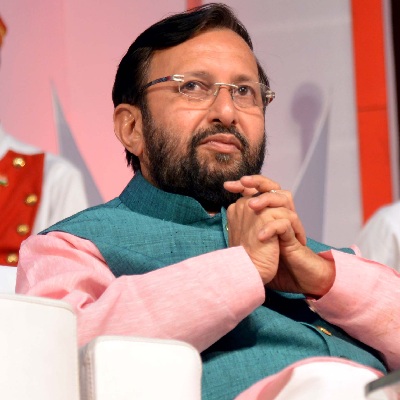
    NEW DELHI: Just two days after the Information and Broadcasting (I&B) Minister Prakash Javadekar officially announced the extension of deadlines for phase III and phase IV of digitisation, he has now announced that the phase III of digitisation is likely to begin from April 2015 and will end the same year in December. “And phase IV will commence as soon as the phase III is completed,” Javadekar said.


    The I&B Minister made the announcement at the ongoing CII Big Summit 2014. “There is some confusion with regards to the extension of digitisation dates.  Tentatively, it will start from 1 April 2015, the final decision on this will be taken soon,” he added.


    The Ministry will also form a committee consisting of all the stakeholders. “So unlike what people feel, we are not delaying digitisation. Our commitment is having a ‘Digital India’. Even a household in a remote village has the right to experience digital viewing,” he informed.


    He also asked the direct to home (DTH) and multi system operators (MSOs) to advertise to the consumers how they are selling expensive set top boxes at cheaper rates. “If the customers understand that they are benefitting with digitisation, they will be supportive of the action,” said Javadekar adding that digitisation is on track.


    Elaborating on the theme of the summit: ‘Monetising strategies: The tryst for a $100 billion Indian M&E industry’, he said, “Aiming low is a crime. So an industry which in 2014 is already a $50 billion industry, cannot say that by 2020, it will become a $100 billion industry. This is not correct. We must aim high. This industry has immense potential to grow.”


    Javadekar in order to boost the fraternity said that no one had thought in 1992 when cable TV started that so many crore of households will be connected to cable, but it happened. No one had also thought that people would pay anywhere between Rs 200 to Rs 500 for entertainment, but people are paying. “Entertainment has become a necessity today and so people are ready to spend. So $100 billion is achievable and so we need to aim high,” he said.


  • BARC India to install 30% of total barometers in rural India

    BARC India to install 30% of total barometers in rural India

    MUMBAI: The Broadcast Audience Research Council India (BARC India) is ensuring that it accurately captures ‘what India watches’ and hence is putting in resources to cover not just urban, but rural India as well. In keeping with this, the research body is installing approximately 30 per cent of its ‘barometers’ (people meters) in rural India.


    But how will BARC India ensure credible ratings, considering the constant power cuts in rural India? Answers BARC India CEO Partho Dasgupta, “Our meters have an inherent capability to store data for up to two months, so in case there are power cuts, we are secure.” The research body is also planning to have 10 per cent buffer homes which will enable them to reduce data vagaries due to any such factor.   
     

    “It is obviously difficult to reach across the rural parts of India, however, it has been a mandate for BARC India to capture ‘what India watches’ and hence it is important to cover that part of India as well,” adds Dasgupta. 


    BARC India, is currently busy with its roadshows, where the body is meeting with broadcasters, advertisers, media agencies and consultants, clarifying their doubts and questions. “We are delighted with the positive feedback we have received. People are receptive to change to a system which they believe will be much more robust and reliable,” says Dasgupta.  
     

    The purpose of the roadshows being held in Delhi, Bengaluru, Chennai and Mumbai is to share with the larger group of stakeholders, BARC India’s current progress, thoughts on sample design and reporting structure. “These sessions enable us to understand the needs of our end customers more closely which will ensure us to fast track the last mile,” he informs.
     

    The roadshows saw discussions looming around the status of the project to-date, initial thoughts on reporting and broad sample designs being presented to the stakeholders.


    BARC India is currently testing meters across various parts of India in the most rugged conditions. So by when will the data be rolled out? “The data is being captured for our internal analysis and this will not be published,” he informs. 
     

    Talking about the feedback from the stakeholders, Dasgupta says, “We have got a very positive response. The proof of this lies in the fact that almost Rs 100 crore has been invested additionally by the broadcasters in installing embedders and related systems. They would not have done it if they didn’t believe in the technology selected.”

    BARC India is developing its system on a future ready technology “which is two generations ahead than what is being used currently,” he informs.
     

    The body has closed deals with 26 vendor partners across 12 processes involved in the broadcast measurement system, who will contribute to the different moving parts of the system. Giving an update on the current status of the measurement body, Dasgupta informs that most of the bigger networks and channels have ordered their watermark embedders and most of them are installed or being installed. The playout monitoring systems are being tested. The sampling design is almost complete. “We are taking feedback from the stakeholders through a series of roadshows that we are doing,” he says.  

    He further adds, “You will appreciate that this will be the largest such audience measurement system globally with cutting edge technology. This requires serious technology and process handshakes all over and then testing. All this is currently underway.”

    The audience measurement body which underwent a logo change recently has been subscribed by 250 channels already. “The numbers are going up every week and there has been a smooth progress on installations as well,” adds Dasgupta.


    BARC India will provide data to Doordarshan as well.

  • Star and Zee not conspiring to drive Hathway out of business: Star India counsel Rakesh Dwivedi

    Star and Zee not conspiring to drive Hathway out of business: Star India counsel Rakesh Dwivedi

    NEW DELHI: Admitting that Star India and Zee Turner had created MediaPro, Star counsel Rakesh Dwivedi said that the arrangement had been dismantled and “MediaPro is dead in the sense that it is no longer an authorised agent of Star India.”


    Arguing before the Telecom Disputes Settlement and Appellate Tribunal in the cases linked to Taj TV signals for Turner and Zee TV and Star India signals to Hathway and other multi-system operators, Dwivedi said that Star had no stake in Den Networks or Zee and had no problems with Siticable.


    Referring to the Regulations which refer to being non-discriminatory and reasonable, he said the petitioners (Hathway and the other MSOs) had not been able to show how Star India was discriminatory.


    In any case, he said Star India was treating all MSOs at par, adding that there was no challenge to the reasonableness of the Reference Interconnect Offer agreement. He said it was also incorrect to say that the RIO was not in consonance with market rates.


    He also pointed out that on the one hand Star India had been accused of only offering packages and not giving the channels on a la carte, the petitioners themselves then bundled some channels into various packages.


    He quoted both the Regulations of the Telecom Regulatory Authority of India and the Competition Commission of India to show that MSOs hold a more dominant position in the cable industry.  


    Dwivedi also said that the previous agreement with MediaPro cannot form the basis of the agreement with Hathway or other MSOs as “they proceed on different methodologies.”


    He again denied the charge that Star and Zee were conspiring with other MSOs to drive the petitioner MSOs out of business.   

  • Hathway being asked to pay more by broadcasters as against other MSOs: Kathpalia

    Hathway being asked to pay more by broadcasters as against other MSOs: Kathpalia

    NEW DELHI: Even as it said that an agreement under the Reference Interconnect Order (RIO) should be for both ala carte and bouquets, Hathway today questioned why multisystem operators like Den and Siticable were being given greater discounts by Taj TV for distribution of their channels.


    Hathway counsel Arun Kathpalia said that the DAS Regulations of 2012 also provided for negotiations that were non-discriminatory, transparent and on reasonable terms and did not merely insist on an RIO.   


    In the ongoing hearing before the Tribunal in the cases linked to Taj TV signals for Turner and Zee TV, Kathpalia said the Regulation says that the broadcaster or distributor ‘may’ seek inter-connection but also provides for mutual agreement within 60 days of request.


    In any case, RIO is not confined to ala carte or bouquets but refers only to commercial terms, whereas Taj TV was offering Hathway RIO only on ala carte. He said under the RIO regime, both ala carte and bouquets can be offered and these have to be mentioned.


    He also said that the Regulations are clear that RIO can come into play only when there is no first agreement, while the issue here was about renewal.  


    He regretted that despite being the largest MSO, it was being offered the smallest discounts by Taj TV and the broadcasters. While Den and Siticable were being charged Rs 30.50 per subscriber, Hathway was being charged Rs 35.


    He alleged that at one stage, Star had wanted the sports channel to be on RIO but the general entertainment channels to be on negotiable terms. “There should be a level playing field,” he said. There was no consistency of relevant factors, he claimed.


    Hathway had wanted that the starting point for negotiations should be the old agreement, whereas Taj TV insisted that the old agreement was only a promotional offer but this was not true, Kathpalia said.


    At one stage, he said that every carrier including DTH was at a loss with the exception of Den.

  • Who controls the remote?

    Who controls the remote?

    A TV remote control is the most sort-after item in a household. From parents to kids, everyone wants to get their hands on the small black device controlling the idiot box in the living room.


    The battle has been going on for decades now. The broadcasters, a very few of them in the beginning, understood it very early wherein they smartly segregated their programmes into time slots pertaining to a particular gender.


    Afternoons were meant for housewives who after finishing their work had their daily dose of soaps to entertain them before the children came back from schools and tune into shows catering to their tastes. It was in the evening that men got hold of the television set to catch-up on the day’s news.


    The pattern has been passed down the history even though the number of channels available to entertain a household has multiplied. Everybody is spoilt of choice, be it the women or men of the house or children.


    Everyone has numerous channels to surf before they pick their favourite.


    As per a new research published by Croma, the electronics megastore from Infiniti Retail, India’s women ‘own’ the household TV throughout the day; however by the time the clock chimes 9 pm it’s the men who take over.


    The findings highlighted in Croma’s ‘Household Habits’ survey reveal that 9 pm as a form of ‘Remote Relay’ hour is when control of the ubiquitous and all-important remote finally passes from female to male jurisdiction. According to the findings nearly 40 per cent of men claim that their female partners dominate the remote control all afternoon (from midday to 9 pm); while over half of all respondents collectively claim that it’s their respective mothers who rule the remote during the same period. Over half of the female respondents actually admit to ‘fighting for control’ of the precious device.


    Before the recently concluded FIFA World Cup even started, the jokes doing the rounds were of men telling their wives to keep away from the remote control at night. Every now and then, the battle intensifies especially during sporting events or some major political development. However, this doesn’t mean that women aren’t interested in sports or politics but in general it’s the soaps that catch their fancy.


    However, with the increase in disposable income and technology wherein multi-device and cross-screen usage has become common in certain sections of our society, the survey demonstrates the importance, protocols and household politics relating to control of the household TV set. And, according to the findings, the females of the household exercise a near monopoly on the remote; at least during daylight hours.


    The 9 pm slot symbolises a form of ‘changing of the guard’ when the females of the household cede control of the TV to their male counterparts.  This form of ‘remote control diplomacy’ confirms the central role and meaning the TV set continues to exert in the Indian household.


    While women clearly rule the noon and evening slot of the remote relay, men take over from 9 pm, with over a quarter of all respondents citing fathers overtaking mothers for control of the remote during this period. The time slot (primetime as per most channels) has seen a significant increase in male partner dominance in terms of control over the TV remote.


    But, if men rule the 9pm slot, one is forced to think about the primetime slot which broadcasters, especially general entertainment channels (GECs), invest in?


    As per various media analysts who study the medium and plan and buy for it every day, the study might be true, but the ‘change of guard’ doesn’t happen sharp at 9!


    They insist that times are changing and men too are interested in watching what their partners watch every night. It is a transition period wherein almost for one to two hours, both men and women, sit and watch two channels overlapping the couple’s or of family’s interest.


    It is family time where everyone watches together. And as kids and others move away from the TV sets as night progresses, men are left as the sole controller of the remote, free to watch whatever interests them.


  • TRAI amends tariff order for commercial subscribers

    TRAI amends tariff order for commercial subscribers

    MUMBAI: After having invited comments from stakeholders regarding the imposition of tariff on commercial subscribers, the Telecom Regulatory Authority of India (TRAI) has come out with the amendment to the Telecommunication (Broadcasting and Cable) Services (Second) Tariff Order, 2004 (6 of 2004).


    The twelfth amendment will come into effect from the date of its publication in the official gazette.


    Going with the 24 responses to the earlier consultation pepper, there is no distinction between an ordinary and a commercial subscriber. The definition of a ‘commercial establishment’ (CE) has been included and ‘commercial subscriber’ (CS) has been amended.


    Accordingly, the new definition of a CE is “any premises wherein any trade, business or any work in connection with, or incidental or ancillary thereto, is carried on and includes a society registered under the Societies Registration Act, 1860 (21 of 1860), and charitable or other trust, whether registered or not, which carries on any business, trade or work in connection with, or incidental or ancillary thereto, journalistic,   printing and  publishing  establishments,  educational,  healthcare  or  other institutions run for private gain, theatres, cinemas, restaurants, eating houses, pubs, bars, residential hotels, malls, airport lounges, clubs or other places of public amusements or entertainment”.


    The definition of a CS is “any person who receives broadcasting services or cable services at a place indicated by him to a cable operator or multi system operator or direct to home operator or head end in the sky operator or Internet Protocol television service provider, as the case may be, and uses such services for the benefit of his clients, customers, members or any other class or group of persons having access to his commercial establishment.”


    Abiding by a recent Supreme Court verdict, TRAI has stated that in the rates of TV services, there should be no differentiation between an ordinary subscriber and a commercial subscriber and the charges for both should be per TV set basis. This is applicable when the establishment does not specifically charge the customer for the service. In case, it does, then the broadcaster and the CS can mutually agree on the tariff.


    A broadcaster cannot directly supply signals to the CS just as the same isn’t done for an ordinary subscriber. The CS can obtain signals only from a distribution platform operator such as MSO, DTH operator, cable operator, IPTV operator or a HITS operator. This is in line with the rule regarding downlinking of TV channels in India, which states that an applicant company can provide decoders only to registered distribution platforms.


    This would also ensure competition to be healthy.


    The point regarding sub categorisation of commercial subscribers into similarly-placed groups has been dismissed with only one distinction of those who provide it as part of their amenities to guests and those who don’t.


    The regulator expects that with this amendment, the distribution of TV services to commercial subscribers will be streamlined and the services would be available at competitive rates.


    Click here for the ammendment


    Click here for the press release