Tag: Broadcasters

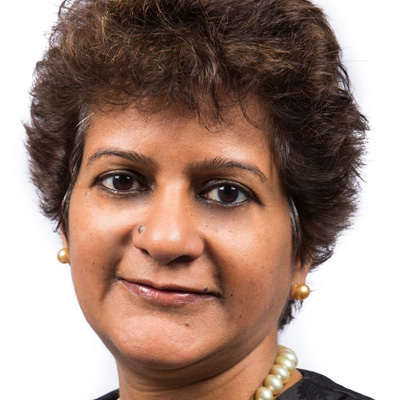
  • ‘There is a ‘church and state’ line between editorial and advertising’ :Sunita Rajan

    ‘There is a ‘church and state’ line between editorial and advertising’ :Sunita Rajan

    MUMBAI: Time and again news media, especially broadcast has come under scrutiny for compromising its editorial because of advertisers. Paid news and native advertising aren’t new to the industry and neither is the eternal debate between editorial and advertorial. Because the fact remains that the industry is heavily dependent on advertisers, and while selling content on entertainment channels is a task by itself, when it comes to news channel or other news media, it’s a completely different ballgame.

    While people are quick to point fingers and accuse media for being ‘sold’ and its content being ‘paid news’, they seldom look at it from the shoes of those who perform the tough balancing act of editorial and advertising sales and keep the machine running so more news is produced and reported.

    To understand how a popular mainstream media goes about doing its ‘business’ while ensuring that its editorial credibility is intact, indiantelevision.com’s Papri Das got in touch with CNN International advertising sales asia pacific VP Sunita Rajan to get some expert insight.

    A key member of the CNN International team, Rajan has been tasked with setting the business strategy to drive advertising revenue for CNN’s global portfolio of multi-platform products among Asia Pacific based advertisers. With an emphasis on integrated advertiser solutions across the full range of CNN’s linear and non-linear properties, she is responsible for managing strategic relationships and brand partnerships. 

    Excerpts from the interaction:

    With broadcast news being heavily dependent on advertising revenue, how does CNN go about creating news content without falling prey to native advertorials?

    I would like to break the response down in three parts. Firstly, as an advertising sales person, I don’t manage or control editorial. That’s part of the business agreement. My role is to run the business which is advertising and sales across the Asia pacific region. I think the best analogy to describe how we look at this is that there should be church and state lines between editorial and advertising. CNN is very clear about it. There is no blurring of those lines. 

    We have maintained that we keep our audiences at the heart of what we do. Our editorial ensures that every piece of content that we produce is of value to the audiences. We don’t make the news, we report the news. 

    Even in the features, long form and analysis pieces that we do, we are mindful and also extremely stringent about selecting the stories that we believe are of value to the audiences. For example, our series on Silk Route, or even a lifestyle series.

    Can you explain the business model for CNN international?

    Our business model for CNN international is of ad sales and content sales. The other stream of revenue is business development which we have initiated in the last couple of years. The three key pillars of all streams of revenue are distribution, content and ad sales.

    What happens when a piece of editorial content has a conflict of interest with an advertiser?

    I wouldn’t say there is a conflict of interest because we are not kept informed of what editorial does. Marketing and ad sales never get into the editorial meets. The only space where there’s a discussion or interface it is with the number of features content that we do special seasons or theme weeks. There are times when the editorial highlights or showcases a particular country. We have a number of franchises, like On The Road, which is focusing on India this time as its relevant to our audiences. India is being talked about and with Modi’s Make In India falling into place, the youth and their aspiration need to be looked at.

    What brings advertisers to CNN?

    We go and talk to brands and partners, we build commercial partnerships. What we sell to clients and what we bring to the conversation is the brand proposition. We talk about our audiences, scale and size, texture and profile and a bit of what these audiences care about and why they consume content on CNN, how they come to CNN for its unique content and CNN as a platform. To be honest, what brands are buying is the quality of the audience, the profile of the audience, and that’s what we showcase when we going for a pitch.

    How do you react to advertisers wanting to get an editorial favour as part of an advertising deal?

    We don’t promise the clients editorial coverage if that is what you are asking. I think the reason the clients come into conversations with CNN is because they recognise the value of the brand and they recognise the principles that CNN as an international platform adheres to. They come to us because of that integrity and the value we bring to the table, and not because they think they can influence the editorial. There are a number of channels that do operate with that market behaviour probably

    From the ad sales point of view, for me and my team, it is our job to identify themes and content relevant to the client. For example we have CNN Money, which is an online vertical that CNN operates and that’s our business proposition as well. It’s about how we present to our audience, what is unique about the content for brands and advertisers, the differentiation between how we capture the story and how others do it. Because we are not just focused in the stock markets, we go beyond that and talk about the aspirational values of stories and stories on finance and wealth etc.

    How different is advertising sales in news channels from that of other entertainment broadcasters?

    Ad sales for news, whether it’s international market or local news is very different from general entertainment channels and sports channels. Those brands and their content are very much a point of view. News, on the other hand is a must have; a daily habit. You dip in and out of it but it’s 24 by 7. It’s less about the specific show. Yes, we do have content on a specific time, be it daily weekly or monthly.  We do offer certain programs for sponsorships, everything except for news and current affairs and business as it can’t be sponsored in Europe like everywhere else. We don’t necessarily take one program to the market and ask for a sponsor for it. That’s because’ when you are buying news, you are buying the brands reach and not its audience at 7 pm or 9 pm like entertainment channels. Now advertisers may choose to place their advertisement at a specific time of the day. That’s where I come in and recommend what the media schedule will look like and which programming would be more relevant to the brand. 

    But there are editorial events such as Heroes which is a very popular franchise and is in its 10th year this year. Or a republican debate, which we do sell as a big point of view. It has specific time bands and exclusives with CNN, so an occasion such as that is sold as a standalone property.

    How important is TV viewership ratings to you from an ad sales perspective? 

    Whole news brands and channels always had a good proportion of viewership command, it is not always that a news broadcaster focuses its ad sales or the opportunity to associate with brands just based on television ratings. We don’t sell on ratings but the reach of the channel across a week and also the context or the value of the environment. It is very much a brands sale than ‘how many people are watching or engaging with the channel.’

    Both in India and in other markets, it is also about brands looking for an international platform and reach. I am not saying that we are not getting the BRAC ratings, but we are not selling on just the BARC ratings. We also very much have a multiscreen and multiplatform presence, be it on TV, desktop or the mobile or through a responsive website. 

    There are a number of digital platforms in India that have started aggregating short form video content on news that audiences can consume on demand. Are they competition to conventional news broadcasters when it comes to the digital footprint?

    From a business owner perspective and media owner perspective, one needs to be able to be where the audiences are, be it on an investment scale or technology scale that drives one’s content. And to be where the audiences are, you need to serve where they consume the content. Rather than concentrating on just creating programming, it is important to recognise who your audiences are, where are they consuming content and what kind of content they prefer. Not forgetting your primary audience on television, it is also increasingly necessary to evolve so that you have as many touch points with your audiences as possible.

    As far as CNN is concerned we look at it positively. It comes as an advantage to have worked in a global market. We own the content we produce and showcase so we work with a number of platforms and partner with them, whether it’s Facebook, Youtube or Snapchat. While we see our content through such platforms, we also aggregate our own content, providing it to enrich the user experience, and driving audiences. So a number of these technology platforms have recognised the value of working with CNN. We don’t see them as threats but as opportunities. 
  • “Think mobile as ad dollars are heading there”: CVL Srinivas

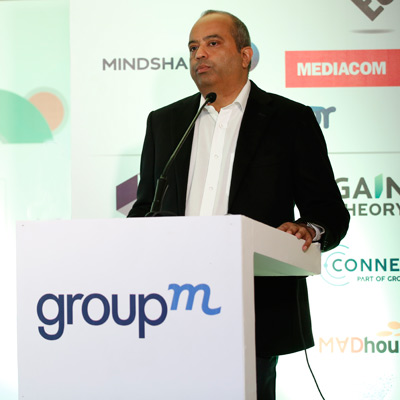
    “Think mobile as ad dollars are heading there”: CVL Srinivas

    MUMBAI: Several market forecasts that we have seen in the past couple of months project digital advertising and marketing growing by leaps and bounds this year. The historical galloping growth rates have led marketers and planners to consider the possibility that the medium will overtake television spends in the near future.
     

    Brand custodians are no longer investing in digital as an added benefit but are thinking about investments on that front from the get-go. So is digital gnawing away at television’s share of ad spends or is its growth coming courtesy a new breed of brand builders?


    Group M South Asia CEO CVL Srinivas does not think that TV is losing its edge. “Television is riding the digital wave, and smartly so”, says the veteran waving off any worries of television ad revenues seeing a dip this year. Not denying the obvious growth one sees in the digital space, Srinivas gives indiantelevison.com a complete breakdown of  how the digital growth works in favor of broadcasters and content providers, while also touching upon the key trends in the market, the changing role of media agencies and his take on the currently mushrooming of several digital agencies in the market. Excerpts from an interview with indiantelevision.coms Papri Das. 


    Here it is:


    How was 2015 for GroupM as a whole? What were the agency’s benchmark developments?


    2015 was a great year for us in GroupM. All our agencies performed well, especially when it comes to client retention which I consider most important. On the client acquisition front as well, we grew our business with several new accounts.


    Last year has also been kind to us when it came to awards. The GroupM Office of Year award, which is given out by GroupM APAC, was given to us last year. That’s something I consider as another high for us.


    For me, 2015 would be the year when we truly broke out of the mould of pure play media agency and delivered a range of different services to our clients to help them keep ahead of the curve. Over the years we have made investments in data, analytics and experiential marketing, cinema advertising and rural marketing and so on. All of that delivered excellent value to our clients last year. That has helped us diversify our offerings and in turn win us new and interesting mandates as well. Apart from that we have actively involved ourselves in the Mobile Marketing Association to help set standards and get some measurements going.


    Out of the four agencies under GroupM in India, which one do you think performed the best?


    I think all of them did exceptionally well and I say this with confidence based on each of the agency’s client retention and the newer arenas that they ventured successfully into.


    How was the year for the industry at large? Did you notice any changes that majorly impacted the industry?


    Last year we projected 12.7 per cent growth in ad expenditure and I must say we erred on the conservative side at the start of the year and we ended up with 14.2 per cent, but no one’s complaining!


    Several factors led to this development. The FMCG sector despite all the pressure it is facing continues to invest big money behind brands. You also saw huge growth coming in through e-commerce and there were quite a few brands that continued to invest throughout the year.


    What key trends do you see emerging in the market in 2016?


    Very clearly, our clients and brands in general are adapting to mobile as a medium. Till few years ago we hardly had ten or twenty clients, today the count is around 150. Advertisers are actively investing in campaign after campaign, month after month, by experimenting with new formats and following the measurements.  That is something I see taking off in a major way this year as several enablers are supposed to come into place in 2016.


    E commerce is emerging as a platform for advertisers in 2016 which can give an interesting spin to ecosystem.


    Apart from this we see several interesting initiatives happening in the content space, especially in the video and branded content space. This can give a further push to mobile advertising. The real big headline for me is mobile driving digital growth and in turn driving ad growth in India, and getting all traditional medium owners – be it broadcasters or be it print publication – to think mobile fast and think mobile first, because that’s where most of the advertising dollars are gonna flow to.


    What do you think will dictate how marketers spend this year?


    Right now we observe that marketers are a bit circumspect on where and when to invest. We are not yet seeing any major budget cuts otherwise our numbers in the GroupM This Year Next Year report for 2016 wouldn’t have looked so good.  But there is definitely an amount of cautiousness creeping in amongst advertisers.


    I think this year they are going to look at a lot more Return On Investment (ROI) and accountability across different media platforms. I also think they will wait and watch the market before deploying any of their long term campaigns and investments across media channels. Unless a property is tried and tested it will go through intense scrutiny before marketers decide to invest. Tracking of ROI and tracking of what the marketing spends are doing to the overall business will be key drivers for brands this year.


    Brands are increasingly seen as the sum of all customer touch points and this in turn increases the scope of marketing. In this context, how is the role of agencies changing?


    We think we are becoming even more relevant in the current scenario and important at the end of the day given the way the marketing and the media landscapes are shaping. Today consumers have multiple choices when it comes to brands and media consumption channels. In the same way advertisers and marketers also have multiple options to invest in. It can become highly confusing for the clients. That’s where GroupM  went ahead of the curve and started investing in multiple media investment management  services so that our clients can have a holistic marketing strategy and solution.


    What percentage of your business is “traditional” or core media now?


    I can’t share the break up but if you look at the market split, and the fact that we are future focused we tend to concentrate on wherever the marketing is moving to step ahead of it.


    A lot has been said about digital advertising overtaking television as the primary medium. What’s the ground reality?


    If you look at the trends in the last few years, not just in India but across markets we see a lot of synergy between television and digital. Looking at it from a consumer’s lens, you and I watch television and also consumer media on our second screen be it mobile or laptop. There is some amount of interplay happening between the screens.


    Looking at it from a broadcaster or content providers angle, most major broadcasters today have their own digital arms. And hence, I say television is actually riding the digital wave. Broadcasters are doing it very smartly, unlike other media which are getting swamped by digital. We see that trend continuing. Inf act if you look at our forecast figures, TV and digital account for close to 60 per cent of the market share of the total ad expenditure, and we see that number move to 70 to 80 per cent in near future.


    Is India truly ready for mobile marketing? Do we have a road map for it?


    There are several developments that have happened in the recent past. I have been personally involved in setting up the Mobile Marketing Association (MMA). Despite India being one of the top markets globally for mobile, we did not did not earlier have a body that monitors the digital marketing space. Therefore we needed this body where all stakeholders can come and ideate and put in place systems and structures for the medium. A lot of useful discussions have happened in the recent past be it on measurement and advertising standards and MMA as a body has done phenomenal work across the market. That is one of such several initiatives that will show its effect in 2016.


    What impact did BARC rural inclusive data have on the TV industry and on advertisers?


    I think it’s still early days to comment on BARC’s rural ratings. It’s only few weeks that they have come out. It is a very positive development. Rural India’s viewership accounts for a sizable chunk of our market. It’s a very aspirational class and important segment for many products and categories. To have data for this segment is a very good development.


    Though we will have to wait on watch how the data impacts the market, it is sure that advertisers are going to look at rural markets a lot more seriously especially in terms of media investment deployment across TV and other media options. Similarly content creators are also going to look at that space a lot more seriously today and come up with relevant products and offerings.


    And over all it is good for the economy and the country because we are finally becoming a lot more inclusive.


    How will the advertising landscape change with the completion of cable television digitization in India?


    Funny thing about India is that nothing ever happens sequentially…..everything happens together….somehow amalgamating. This actually makes our job fun because on the one hand you have the whole cable TV digitization playing out and DAS phase III being rolled out, and a lot of DTH players have gotten very active. On the other hand you have the 4 G launch that will open up a lot more bandwidth and infrastructure in digital and you have mobile crossing 1 billion connections.


    For marketers and advertisers what this means is to be aware of the developments, keep a close eye on them and see what are the opportunities they can capitalize on in short term and where is it that they need to invest, test and learn so that they can start capitalizing on them in the long term.


    The big lesson for us and specially me has been that we need to be constantly in a state of beta. What do we keep testing and learning today which could become a big thing tomorrow. Staying dynamic is the way to go.


    2015 also saw several well-known creatives and executives setting up their own startups, resulting in a mushrooming of several branded content and digital agencies. What is your take on this development?


    I think it is a good thing that bright young individuals are setting up companies on their own.  In fact some of us wouldn’t have jobs if this wasn’t done earlier. It also shows that today there are so many different areas that are emerging, and with the way the industry is being revolutionized there are many different expertise and special skill sets that the marketers need. I believe all of us can co-exist as one happy family because of the way the whole pie is getting fragmented. A lot of them are my dear friends and I wish them all the best.


  • “Think mobile as ad dollars are heading there”: CVL Srinivas

    “Think mobile as ad dollars are heading there”: CVL Srinivas

    MUMBAI: Several market forecasts that we have seen in the past couple of months project digital advertising and marketing growing by leaps and bounds this year. The historical galloping growth rates have led marketers and planners to consider the possibility that the medium will overtake television spends in the near future.
     

    Brand custodians are no longer investing in digital as an added benefit but are thinking about investments on that front from the get-go. So is digital gnawing away at television’s share of ad spends or is its growth coming courtesy a new breed of brand builders?


    Group M South Asia CEO CVL Srinivas does not think that TV is losing its edge. “Television is riding the digital wave, and smartly so”, says the veteran waving off any worries of television ad revenues seeing a dip this year. Not denying the obvious growth one sees in the digital space, Srinivas gives indiantelevison.com a complete breakdown of  how the digital growth works in favor of broadcasters and content providers, while also touching upon the key trends in the market, the changing role of media agencies and his take on the currently mushrooming of several digital agencies in the market. Excerpts from an interview with indiantelevision.coms Papri Das. 


    Here it is:


    How was 2015 for GroupM as a whole? What were the agency’s benchmark developments?


    2015 was a great year for us in GroupM. All our agencies performed well, especially when it comes to client retention which I consider most important. On the client acquisition front as well, we grew our business with several new accounts.


    Last year has also been kind to us when it came to awards. The GroupM Office of Year award, which is given out by GroupM APAC, was given to us last year. That’s something I consider as another high for us.


    For me, 2015 would be the year when we truly broke out of the mould of pure play media agency and delivered a range of different services to our clients to help them keep ahead of the curve. Over the years we have made investments in data, analytics and experiential marketing, cinema advertising and rural marketing and so on. All of that delivered excellent value to our clients last year. That has helped us diversify our offerings and in turn win us new and interesting mandates as well. Apart from that we have actively involved ourselves in the Mobile Marketing Association to help set standards and get some measurements going.


    Out of the four agencies under GroupM in India, which one do you think performed the best?


    I think all of them did exceptionally well and I say this with confidence based on each of the agency’s client retention and the newer arenas that they ventured successfully into.


    How was the year for the industry at large? Did you notice any changes that majorly impacted the industry?


    Last year we projected 12.7 per cent growth in ad expenditure and I must say we erred on the conservative side at the start of the year and we ended up with 14.2 per cent, but no one’s complaining!


    Several factors led to this development. The FMCG sector despite all the pressure it is facing continues to invest big money behind brands. You also saw huge growth coming in through e-commerce and there were quite a few brands that continued to invest throughout the year.


    What key trends do you see emerging in the market in 2016?


    Very clearly, our clients and brands in general are adapting to mobile as a medium. Till few years ago we hardly had ten or twenty clients, today the count is around 150. Advertisers are actively investing in campaign after campaign, month after month, by experimenting with new formats and following the measurements.  That is something I see taking off in a major way this year as several enablers are supposed to come into place in 2016.


    E commerce is emerging as a platform for advertisers in 2016 which can give an interesting spin to ecosystem.


    Apart from this we see several interesting initiatives happening in the content space, especially in the video and branded content space. This can give a further push to mobile advertising. The real big headline for me is mobile driving digital growth and in turn driving ad growth in India, and getting all traditional medium owners – be it broadcasters or be it print publication – to think mobile fast and think mobile first, because that’s where most of the advertising dollars are gonna flow to.


    What do you think will dictate how marketers spend this year?


    Right now we observe that marketers are a bit circumspect on where and when to invest. We are not yet seeing any major budget cuts otherwise our numbers in the GroupM This Year Next Year report for 2016 wouldn’t have looked so good.  But there is definitely an amount of cautiousness creeping in amongst advertisers.


    I think this year they are going to look at a lot more Return On Investment (ROI) and accountability across different media platforms. I also think they will wait and watch the market before deploying any of their long term campaigns and investments across media channels. Unless a property is tried and tested it will go through intense scrutiny before marketers decide to invest. Tracking of ROI and tracking of what the marketing spends are doing to the overall business will be key drivers for brands this year.


    Brands are increasingly seen as the sum of all customer touch points and this in turn increases the scope of marketing. In this context, how is the role of agencies changing?


    We think we are becoming even more relevant in the current scenario and important at the end of the day given the way the marketing and the media landscapes are shaping. Today consumers have multiple choices when it comes to brands and media consumption channels. In the same way advertisers and marketers also have multiple options to invest in. It can become highly confusing for the clients. That’s where GroupM  went ahead of the curve and started investing in multiple media investment management  services so that our clients can have a holistic marketing strategy and solution.


    What percentage of your business is “traditional” or core media now?


    I can’t share the break up but if you look at the market split, and the fact that we are future focused we tend to concentrate on wherever the marketing is moving to step ahead of it.


    A lot has been said about digital advertising overtaking television as the primary medium. What’s the ground reality?


    If you look at the trends in the last few years, not just in India but across markets we see a lot of synergy between television and digital. Looking at it from a consumer’s lens, you and I watch television and also consumer media on our second screen be it mobile or laptop. There is some amount of interplay happening between the screens.


    Looking at it from a broadcaster or content providers angle, most major broadcasters today have their own digital arms. And hence, I say television is actually riding the digital wave. Broadcasters are doing it very smartly, unlike other media which are getting swamped by digital. We see that trend continuing. Inf act if you look at our forecast figures, TV and digital account for close to 60 per cent of the market share of the total ad expenditure, and we see that number move to 70 to 80 per cent in near future.


    Is India truly ready for mobile marketing? Do we have a road map for it?


    There are several developments that have happened in the recent past. I have been personally involved in setting up the Mobile Marketing Association (MMA). Despite India being one of the top markets globally for mobile, we did not did not earlier have a body that monitors the digital marketing space. Therefore we needed this body where all stakeholders can come and ideate and put in place systems and structures for the medium. A lot of useful discussions have happened in the recent past be it on measurement and advertising standards and MMA as a body has done phenomenal work across the market. That is one of such several initiatives that will show its effect in 2016.


    What impact did BARC rural inclusive data have on the TV industry and on advertisers?


    I think it’s still early days to comment on BARC’s rural ratings. It’s only few weeks that they have come out. It is a very positive development. Rural India’s viewership accounts for a sizable chunk of our market. It’s a very aspirational class and important segment for many products and categories. To have data for this segment is a very good development.


    Though we will have to wait on watch how the data impacts the market, it is sure that advertisers are going to look at rural markets a lot more seriously especially in terms of media investment deployment across TV and other media options. Similarly content creators are also going to look at that space a lot more seriously today and come up with relevant products and offerings.


    And over all it is good for the economy and the country because we are finally becoming a lot more inclusive.


    How will the advertising landscape change with the completion of cable television digitization in India?


    Funny thing about India is that nothing ever happens sequentially…..everything happens together….somehow amalgamating. This actually makes our job fun because on the one hand you have the whole cable TV digitization playing out and DAS phase III being rolled out, and a lot of DTH players have gotten very active. On the other hand you have the 4 G launch that will open up a lot more bandwidth and infrastructure in digital and you have mobile crossing 1 billion connections.


    For marketers and advertisers what this means is to be aware of the developments, keep a close eye on them and see what are the opportunities they can capitalize on in short term and where is it that they need to invest, test and learn so that they can start capitalizing on them in the long term.


    The big lesson for us and specially me has been that we need to be constantly in a state of beta. What do we keep testing and learning today which could become a big thing tomorrow. Staying dynamic is the way to go.


    2015 also saw several well-known creatives and executives setting up their own startups, resulting in a mushrooming of several branded content and digital agencies. What is your take on this development?


    I think it is a good thing that bright young individuals are setting up companies on their own.  In fact some of us wouldn’t have jobs if this wasn’t done earlier. It also shows that today there are so many different areas that are emerging, and with the way the industry is being revolutionized there are many different expertise and special skill sets that the marketers need. I believe all of us can co-exist as one happy family because of the way the whole pie is getting fragmented. A lot of them are my dear friends and I wish them all the best.


  • MIB reminds broadcasters & MSOs of DAS Phase III signal transmission laws

    MIB reminds broadcasters & MSOs of DAS Phase III signal transmission laws

    NEW DELHI: After the Telecom Regulatory Authority of India (TRAI) firmly ruled out any extension of Phase III of digital addressable systems (DAS), the Information and Broadcasting Ministry today told broadcasters that “it is obligatory to stop TV signals to multi system operators (MSOs) and local cable operators (LCOs) who are not registered with the Ministry for operation in DAS notified areas.”


    In a letter sent to all broadcasters and MSOs, Ministry joint secretary (broadcasting) R Jaya said, “All the broadcasters are requested to ensure to stop TV signals to those MSOs who are not registered with this Ministry for operation in DAS notified areas under Phase Ill and/or those who are not transmitting digitally encrypted TV signals in phase Ill areas after the cut-off date of 31 December, 2015.”


    The letter aimed at drawing the attention of all broadcasters is drawn to certain rules, regulations and guidelines related to transmission of television signals in connection with approaching cut-off date for Phase Ill of cable digitisation in the country.


    The letter said under Section 4A of the Cable Television Network (Regulation) Act 1995, it is obligatory for every cable operator to transmit or re-transmit programmes of any channel in an encrypted form through a digital addressable system with effect from the date as may be specified in the notification.


    Under para 5.6 of the Policy Guidelines for downlinking of Television Channels, the company will provide satellite TV channel signal reception decoders only to MSOs/cable operators registered under the Act or to a direct-to-home operator registered under the DTH guidelines issued by the Government or to an Internet Protocol Television Service (IPTV) provider duly permitted under their existing Telecom license or authorised by the Telecommunications Department or to Headend In The Sky (HITS) operator duly permitted under the policy guidelines for HITS operators issued by I&B Ministry to provide such service.


    Furthermore, the letter said under sub-regulation 3(2) (Chapter II- Interconnection) of Interconnect (Digital Addressable System) Regulations 2012, every broadcaster will provide signals of its TV channels to MSOs registered under rule 11 of the Cable Television Networks Rules 1994, making request for the same.

  • Preview to Asia TV Forum & Market

    Preview to Asia TV Forum & Market

    MUMBAI: The 16th edition of the Asia TV Forum & Market (ATF) is scheduled to take place from December 1 to 4 at Singapore’s Marina Bay Sands. Running concurrently with the 5th edition of ScreenSingapore, the 2015 edition of ATF is poised to attract more than 5,000 attendees from across 60 countries, according to Yeow Hui Leng, the Senior Project Director of Asia TV Forum & Market (ATF) and ScreenSingapore (SS) at Reed Exhibitions.


    Divided in two parts – market and conferences – ATF market will provide attendees with plenty of business opportunities to buy, sell, network with producers, broadcasters, over-the-top (OTT) players and cable operators in the region.


    With over 850 buying companies attending, Asia TV Forum & Market (ATF) brings you closer to Asia’s buying community, facilitating the sale and export of engaging content across all genres and platforms to the Asian buyer.  With growing interest from Asian content buyers, this year we will also see more exhibitors from China and Japan and new entrants such as Bloomberg, Studio Canal, Fox International Channels, Raya Group, Rainbow, MNC Contents who will be participating in ATF for the first time, the market is likely to expect an even more robust performance.


    Hui Leng says that the overall ATF line-up this year presents a greater variety of the Asian countries covered, “giving ATF 2015 a more holistic view of the industry in Asia”. Participants can expect to gather a great deal of information from the panel of speakers and thought leaders that will be present at ATF.


    Kicking off ATF’s pre-market conference as the keynote speaker for Into the Future of Television: Asia’s Move Forward is TV industry’s well-known business leader  CJ E&M Media Content Business (Korea), president DJ Lee.  This will be one of the most exclusive and progressive insights into one of Asia’s most significant media empires. Another keynote speaker is Maker Studios (USA), International head René Rechtman, who will be elaborating on the Development and Expansion in Asia’s Digital Marketplace.


    Buyers and producers will also be presented with the latest know-how and trends for kids’ content at Junior@ATF, alongside the deployment of a dragnet on narratives for new formats and ideas that can travel across borders at Formats@ATF. Its is an initiative that  was developed with producers in mind as a forum to create, develop and market ideas with format experts through a conference setting, as well as masterclasses conducted by renowned creative talents such as Danny Stack, Writer and Director (UK) of  Thunderbirds Are GO, Octonauts, Who Killed Nelson Nutmeg? and Melodie L. Shaw, Member Representative and Organizer of the Writers Guild of America (USA).


    Highlighting the current business landscape that traditional players face with disrupters and shifts in content consumption, Steve Macallister, CEO of All3Media International (UK), will share how they stay on top of the United Kingdom and foreign markets. 


    Some of Asia’s top buyers like Maggie Xiong, Senior Director of International Acquisitions of Youku Tudou (China) and Charlene Lai, Senior Director, Content Acquisition and Licensing, APAC, Le Corporation Limited (Hong Kong) will discuss more on the evolving role of international acquisitions and the type of new ideas and shows channels that they are looking for among content providers.


    Last year’s edition hosted more than 71 speakers and 658 exhibitors, and Leng acknowledges that 2015’s ATF attendees can expect to be a part of the mechanics within the heart of Asian television. From the dynamically curated market and conference, where they can tap into the growth potential of Asia’s market, to experiencing the robust character of Asia’s entertainment content industry by connecting with international content sellers and Asian buyers, participants will be able to mesh together and be allied to the constantly evolving Asian television landscape.


    Held in conjunction with ATF, the 2015’s edition of ScreenSingapore (SS) will launch a brand new feature, the Southeast Asian Film Financing (SAFF) Project Market. The first of its kind, SAFF seeks to connect promising producers and their projects with commissioners, investors, and co-production partners.


    For more information on ATF’s exciting programme, conference line-up and speakers, please visit www.asiatvforum.com

  • US sports market to grow at 4% to touch $73.5 billion in 2019: PwC

    US sports market to grow at 4% to touch $73.5 billion in 2019: PwC

    MUMBAI: Even as India’s sports industry is on a growth path with broadcasters like Star India, Multi Screen Media and others promoting games like kabbadi, football, wrestling et al, the sports industry in North America has been one of the biggest revenue generators as a business. With North America’s sports market revenue crossing $60 billion in 2015, everyone from broadcasters, sports agencies and sponsors want a slice of the pie.

    So, what does the future hold for the sports industry in North America? How much more value will sports create? And will demand meet a sufficient supply? Let’s have a look. 

    According to a PricewaterhouseCooper (PwC) report titled ‘At the Gate and Beyond: An Outlook for sports Market in North America through 2019,’ the sports market in North America will grow at a compound annual rate of four per cent across four segments analysed, from $60.5 billion in 2014 to touch $73.5 billion in 2019. 

    This year’s edition of report revitalises five-year revenue forecasts through 2019 with four key segment of the North American sports market namely gate revenues, media rights, sponsorship, and merchandising.   

    Gate revenues are primary market ticket sales for live sports events. The adoption of dynamic pricing for single game tickets has changed. With an increase on media rights revenue over gate revenue, it will make selling broadcast rights more important than selling tickets for the live events and making media rights the biggest contributor to gross sports revenue. 

    Local TV rights in Major League Baseball (MLB), National Basketball Federation (NBA) and National Hockey League (NHL) will likely contribute to the overall sector growth with more than 35 per cent of current deals set to expire over the next five years, albeit on a smaller scale than the national rights deals entered by the major pro leagues, athletic conferences and other sanctioning bodies that are predominately driving industry-wide growth. 

    As far as gate revenues are concerned, leagues will have to find ways to bring in the crowds to stadiums. To maintain gate revenues, leagues are coming up with different innovations like rewards, fan (loyalty) rewards program and point systems. And in areas where past generations of rewards programs failed, new innovations will allow clubs to more efficiently track fan activities, understand fan preferences, and disseminate benefits to fans. 

    There will be many hurdles for sports leagues in terms of media ratings, as the popularity of live sports is in demand. There would be an increase in budgets of various sports cable networks for live programming for the viewers, battle over subscriber fees and bidding wars over desirable content. The rise in the compound rate is derived from subscriber base and as long as it stays strong, there might be an increase in the compound annual rate and vice versa. While media rights are projected to become the industry’s largest segment by 2018, its pace of growth is expected to slow towards the end of the five-year period. 

    As per the report, even with strong segment fundamentals, such as long term deals, higher renewal rates, and enhanced inventory yields, sponsorship is expected to be surpassed in size by media rights in 2015. The net effect of new inventory will depend on future economic conditions and the industry’s ability to expand sponsor rosters, while maintaining value proposition to existing partners. Approximately 40 per cent of major pro league teams are currently either without a deal or with existing deals set to expire in the next five years. 

    The report also suggests notable measures, which pro leagues should consider such as to expand retail shops and improve sale results of their representative merchandise, which are in-house operations of the retail business. Another measure would include positioning of official team store locations outside the stadium, arena or ballpark. 

    PwC also advised, “As consumer and advertisers continue to migrate toward internet-connected devices and second-screen activity, it is more likely the traditional pay-TV model will have transformed (e.g. smaller channel packages, reduced rates) by the next deal cycle of major sports property rights. As a result, the next deal cycle, currently outside the outlook period, is unlikely to realize the same rights-fee premiums as were applied during the current cycle as cable providers sought to secure ports content in support of the overall pay-TV package model.” 

    The cyclic nature of sports is a reflection of more stadiums being built, more television contracts being signed and advertising taking a major role in globalization of sports. It shows significance growth prospects for the future.

    With Indian broadcasters, sports enthusiasts and aspiring entrepreneurs now waking up to the potential of the sports telecast and marketing business, a few lessons could be learnt from the west in order to extract the maximum from the various sports that are played in India.

  • Broadcasters ready to extend existing analogue agreements in view of tardy pace of agreements, DAS Task Force told

    Broadcasters ready to extend existing analogue agreements in view of tardy pace of agreements, DAS Task Force told

    New Delhi: With less than three months to go for the deadline of Phase III of Digital Addressable System, the Indian Broadcasting Foundation has said that broadcasters are ready to extend the existing analogue interconnect agreements with multisystem operators for transition from analogue to digital service in view of the slow progress in signing of interconnect agreements.


     The commitment was made in the last meeting of the Task Force set up by the Information and Broadcasting Ministry in its meeting on 22 September. The minutes of the meeting were placed on the Ministry website today.


    The meeting was presided over by special secretary J S Mathur who asked the Telecom Regulatory Authority of India (TRAI) to convene a meeting of broadcasters and MSOs resolve issues. (It may be recalled that TRAI had earlier asked both broadcasters and MSOs to approach it in case of any problems with regard to interconnect agreements.


    Referring to the low number of interconnect agreements, Mathur remarked that without signing of agreements between broadcasters and MSOs, the progress on digitisation was not possible.


    Agreeing there had been slow progress in signing of agreements with major MSOs as the latter were awaiting the decision in a case before the Telecom Disputes Settlement and Arbitration Tribunal, the IBF said broadcasters had signed provisional agreements with many applicant operators, who have digitised their networks under the condition that they would get registered as MSOs for DAS operation before the cut-off date for Phase III.


    IBF was asked to submit an area-wise list indicating the status of signing of agreements to the Ministry. The meeting was told that just 62 of the 300-odd multi system operators had signed agreements with broadcasters.


    Mathur expressed his gratitude to the Indian Broadcasting Foundation for developing the advertisement on cable TV digitization in Phase lll areas and airing it on their member channels. He said All India Radio and Doordarshan were already giving advertisements on cable digitisation on their channels and they need to scale it up. The IBF representative said the Ads had been planned in bilingual format but IBF will consider making it multilingual as requested.


    Joint Secretary (Broadcasting) R Jaya said as a next step towards publicity awareness campaign, broadcasters and MSOs should now inform the cable TV users in Phase III areas through scroll messages on their channels to get STBs installed in their homes before the cut-off date.


    Jaya mentioned that MSOs registration by the Ministry was open. In case broadcasters have entered into agreements with non-registered operators they should ensure that they have applied for MSO registration with MIB. She advised broadcasters to impress upon these operators to immediately register themselves as MSOs with the Ministry failing which they cannot operate digital services.


    Meanwhile announcing that the toll free help line is expected to start operating soon, Jaya told the meeting that seven regional workshops had been held so far with Nodal officers in different cities, and these officers had been advised to provide the right of way (RoW) to the MSOs/LCOs under the provisions of the Cable Television Networks (Regulation) Act 1995 and also give details of those Phase III areas in their districts where no registered MSO is operating.


    The nodal officials were told to disseminate a clear message that the cut off dates are final and the analogue cable viewers should change to digital before the cutoff date.


    She said twelve regional units including the central unit in Delhi have been established for monitoring the implementation of DAS Phase III areas under Mission Digitisation project.


    Referring to the fact that seven regional workshops had been held so far, she said Nodal officers were being advised to provide the right of way (Row) to the MSOs/LCOs under the provisions of the Cable Television Networks (Regulation) Act 1995 and, also intimate Phase III areas in their districts where no registered MSO is operating. The nodal officials were also told to disseminate a clear message that the cut off dates are final and the analogue cable viewers should change to digital before the cutoff date.


    The workshops have been held at Chandigarh, Lucknow, Ahmedabad, Jaipur, Bhopal, Shillong and Hyderabad. A workshop at Patna had to be cancelled due to elections in the state. The workshops had been successful in sensitizing the state nodal officers about their role and responsibilities In the pre and post digitization period in phase lll areas.


    The Siticable representative said broadcasters have not responded to their requests for interconnect agreements for phase III areas so far and so they are unable to fix the channel package rates and get the SAF and CAF forms filled up from subscribers as required under DAS regulations. He questioned the propriety of running of digital cable service by cable operators without first getting registered from MIB as per the DAS regulations,


    The representative of the Telecom Authority of India said it was up to broadcasters and MSOs to continue existing interconnect agreement even after transition from analogue to digital. He added that there was no impropriety in running the digital service by an operator before the cutoff date without registration from the Ministry.


    The representative of IMCL said it had signed 60% of interconnect agreements with broadcasters in Phase III areas. Regarding interconnect agreements with other broadcasters they requested TRAI to intervene.


    The representative of MOCF mentioned that MSOs were not signing interconnect agreements with LCOs and TRAI should intervene and prescribe a standard interconnect agreement.


    A representative of the cable operator association from Assam said since no agreements were being signed in Assam despite requests from MSOs, broadcasters should nominate a nodal officer to deal with the issue at regional level.


    ASSOCHAM said it had along with a Cable Operators Federation already started a Chetna Yatra which was planned mandatorily to cover 450 cities sensitizing the consumers and operators alike about the cable digitisation in Phase III areas by 31 December. He added that a comprehensive report on this will be submitted to the Ministry.


    Members made various suggestions about the awareness campaign. A representative of the local cable operators association from Assam said that to make this effective, the TV Ads should be in regional languages. He wanted to know whether the Chetna Yatra planned to cover north east also.


    A representative of ARTBI said it did not have the facility to dub the ad in different regional languages but said its member channels would run it if this was provided to them.

  • MSOs facing problems in signing interconnect deals with b’casters to inform TRAI by 24 August

    MSOs facing problems in signing interconnect deals with b’casters to inform TRAI by 24 August

    NEW DELHI: With just over four months left for implementation of Phase III of the Digital Addressable System (DAS) for cable operators, the Telecom Regulatory Authority of India (TRAI) has asked multi-system operators and broadcasters to expedite signing of inter-connect agreements.


    Apart from pointing out that it had placed on its website a standardized form for this, TRAI stressed that the rules provide that an agreement has to be signed by registered MSOs with broadcasters within 60 days of receiving a request.  


    TRAI said it had notified a comprehensive regulatory framework encompassing interconnection, quality of service, consumer complaint redressal regulation and tariff orders for implementation of   DAS.


    The MSOs who have been granted registration for providing cable TV services through DAS are required to enter into interconnection agreements with pay TV broadcasters for re-transmission of pay TV channels to subscribers.


    The Regulatory framework for DAS provides that every broadcaster shall provide the signals of TV channels to an MSO in accordance with its reference interconnect offer or as may be mutually agreed, within 60 days from the date of receipt of the request.


    The Authority said that in case the request for providing signals of TV channels is not agreed to, the reasons for such refusal to provide signals will be conveyed to the person making a request within 60 days from the date of request. 


    The MSOs who have approached pay TV broadcasters for providing signals of TV channels in accordance with the provisions of the interconnection regulations but have not been able to enter into interconnection agreements even after the passage of 60 days from the date of making request and also not received the reasons for not entering into interconnection agreement from the broadcaster may write to TRAI by 24 August through e-mail at das@trai.gov.in for initiating action in such cases according to the TRAI Act.


    As the cutoff date for Phase-III areas – 31 December – is fast approaching, the registered MSOs were advised by TRAI to make a written request to the broadcasters of pay channels for provisioning of the signals of TV channels as per their business requirement, so that they get signals of pay TV channels well before the cutoff date.


    The Authority said it had taken a number of initiatives to facilitate timely signing of interconnection agreements between broadcasters and MSOs. The Authority and broadcasters have uploaded standardised application form and contact details on their respective websites. For the convenience of the stakeholders, the details have also been uploaded on TRAI website.

  • TRAI asks MSOs to devise rational channel rates for phase III

    TRAI asks MSOs to devise rational channel rates for phase III

    MUMBAI: Close to 61 multi system operators (MSOs) have approached the broadcaster for signing of interconnect agreements. The statistics were revealed at the eighth task force meeting by the Telecom Regulatory Authority of India (TRAI) advisor Sunil Kumar Singhal.


    Of these, according to the report received by Singhal, while the broadcasters have given their replies to the MSOs, the memorandum of understanding (MoU) is yet to be signed. The TRAI through its meetings with the MSOs and broadcasters, has identified four core issues relating to interconnect agreements. These are:


    1. While the MSOs are expressing interest for getting signals from broadcasters, they are being asked for more information, which is taking time. “Now with the intervention of TRAI, broadcasters have formalized their formats and have placed them on their websites so that all MSOs can submit requests at one go and the agreement signed,” informed Singhal.


    2. The distributors of several broadcasters in a state are also MSOs and that has led to conflict of interest with the MSOs. “We have been able to address this by seeking the details of the core team of the broadcasters to be approached for getting the signals and the broadcasters have provided such details also on their websites,” he said.


    3. The third point was related to pending dispute between MSOs in DAS areas which are both old as well as new. “These disputes need to be resolved mutually as TRAI would not intervene in such disputes,” he opined.


    4. There are differences between MSOs and broadcasters on the rate of channels.   “The larger MSOs are in negotiations with broadcasters to finalise the prices and it is indicated that they will be in a position to finalise them by mid June,” he said.


    Meanwhile, TRAI has asked the MSOs to devise means to have rational rates for phase III areas, as the rates for phase I and II cannot be workable in the remaining phases.


    The TRAI advisor also informed the task force meeting that there was confusion between both MSOs and broadcasters which related to the modus operandi for entering into agreements during the transition period.  The TRAI advisor said that the MSOs and broadcasters were business entities who should know how to communicate with each other in order to expedite and facilitate their business interests. The TRAI has asked the stakeholders to not repeat the mistakes of phase I and II by deploying pre-activated STBs.


    The representative of the MSOs, during the meeting said that whatever be the rate declared by broadcasters, TRAI should come out with a non-discriminative clause which should not push packages but allow the channels to be on a-la-carte basis. “We have been insisting on a-la-carte and not bundling of channels and any delay in the implementation of DAS will result in losses to both MSOs and broadcasters,” informed the TRAI advisor.


    According to a MSO representative, the packaging of channels should be monitored by TRAI. “The LCOs should be trained to spread DAS amongst the consumers as they are close to the consumers and can speedup this process,” opined the MSO representative.


    Information and Broadcasting Ministry (I&B) additional secretary JS Mathur, who was also chairing the meeting said that the publicity campaign for the cutoff date for phase III should start now.


    According to Siti Cable Network’s Anil Malhotra, while the target rate of seeding set top boxes (STBs) requires to be around 2 to 3 lakh per day, the present rate of seeding is about 20-30 thousand boxes which is way short and logistic support has to be planned out in order to step-up the pace of seeding.


    During the meeting, a representative from BIS raised the issue of hacking of STBs and said that a request has been received from some broadcasters to strengthen the BIS Standard of STBs.

  • TRAI asks MSOs, b’casters to sign MoU on interconnect agreements in phase III

    TRAI asks MSOs, b’casters to sign MoU on interconnect agreements in phase III

    MUMBAI: The Telecom Regulatory Authority of India (TRAI) has given time till 30 April, 2015 to both broadcasters and multi system operators (MSOs) to enter into a memorandum of understanding (MoU) with regards to interconnect agreements in phase III of digital addressable system (DAS) areas.  


    During the seventh task force meeting for successful completion of phase III and IV of digitization, a representative from TRAI informed that in case the broadcasters and MSOs fail to reach any agreement, the Authority will intervene in the matter, as per regulations. “While broadcasters were asked to give report every fortnight, the same has not started coming,” said the TRAI representative.  


    The representative also mentioned that in the transition period both analogue as well as digital signals can be provided by the MSOs in phase III areas. “As per the regulations digital signal can be provided in areas undergoing transition without waiting for the cutoff date,” he added.


    The meeting was convened under the chairmanship of Information and Broadcasting Ministry additional secretary JS Mathur, who said, “While there has been some progress on the issue of interconnect agreements for phase III areas but there are still many areas which need to be addressed by broadcasters.”


    During the meeting, an IndusInd Media and Communication Limited (IMCL) representative said that while they had sent interconnect requests to all broadcasters, as per the TRAI directive, they had received response from only one broadcaster, while Siti Cable was still awaiting a response from all. A Siti Cable representative said, “Broadcasters are filing cases of piracy against MSOs if they start providing digital signal in the phase III areas.”


    MSOs pointed out that the situation is critical and TRAI must take immediate necessary action to resolve the issue. MSOs also want the entertainment tax, levied by State Governments, rationalised.


    Representatives of broadcasters said that they would approach TRAI for clarification on the interconnect agreements to be signed for the transition period. “No such issues of interconnect agreements were raised during phase I and phase II of digitisation and the set top boxes (STBs) were still seeded. Why are these issues being raised now?” questioned broadcasters.


    Broadcasters also raised concerns on the HITS (Headends In The Sky) platform of delivery with regard to addressability although it is mentioned that it is addressable from the day one. Broadcasters also opined that DAS regulations should apply from the date MSOs take digital signal.


    According to Mathur, consumers have the right to know what they have to pay for the digital signal and so, it is imperative that broadcasters and MSOs work out agreements between them without further loss of time. He added, “Channel package rates have to be in public domain. Broadcasters must now finalise all issues with MSOs so as to have a lead time of implementation.”


    While the universe for phase I and II was extremely limited, phase III has to cover all the urban areas of the country. This would thus require exhaustive planning along with suitable investments. “Both broadcasters and MSOs must now finalise their agreements and inform TRAI within the stipulated time period of 30 April,” said Mathur, while suggesting that TRAI should convene a meeting soon after the time period it has given for finalising the action plan for smooth and timely transition.


    Mathur also expressed dissatisfaction over the public awareness campaign for digitisation in phase III areas carried out by the stakeholders so far. He asked all stakeholders and particularly the broadcasters to start the publicity campaign forthwith.


    While the Ministry is still awaiting data on carriage fee and subscription revenue from both the Indian Broadcasting Foundation (IBF) and the News Broadcasters Association (NBA), an NBA representative assured that it will be sent before the next meeting.


    Mathur also enquired about the initiatives being taken by MSOs for using indigenously manufactured STBs. Responding to this, an MSO representatives said that the dialogue with indigenous STB manufacturers was on.


    Consumer Electronics and Appliances Manufacturers Association (CEAMA) representative informed that they had fruitful discussions with some MSOs in which they made some financing offers to MSOs for the supply of STBs.


    Representative of CEAMA further added that they were now facing a major competition from the suppliers of ASEAN countries since the government, as per the ASEAN agreement signed in 2009, has reduced the import duty on STBs imported from ASEAN countries to two per cent only against 10 per cent from other countries. He said, “MSOs may neglect local STB manufacturers and start importing from ASEAN countries, but this will be against ‘Make in India’ initiative of the Government.”


    Meanwhile a CEAMA representative requested the I&B Ministry to look into the issue, while informing that they were also in the process of writing to the Ministry of Commerce about this development. In order to know the use of indigenously manufactured STBs, Mathur directed that the information on utilisation of domestically manufactured STBs may also be sought from all MSOs along with the seeding plans.