Tag: Broadcasters

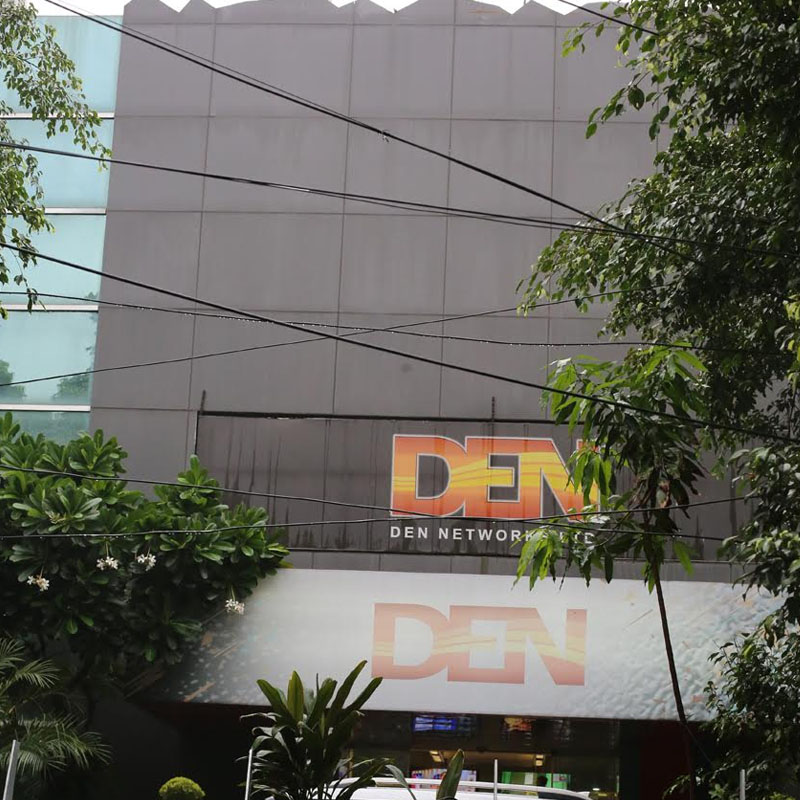
  • Goldman Sachs to up stake in cable TV MSO DEN Networks; to invest Rs 142.43 crore

    Goldman Sachs to up stake in cable TV MSO DEN Networks; to invest Rs 142.43 crore

    MUMBAI: MSO DEN Networks has proved the naysayers – who have been carping that the Indian cable TV sector is as insipid as dry sawdust – wrong. The company’s existing shareholder Goldman Sachs is picking up 1.58 crore equity shares at a price of Rs 90 per share via a preferential allotment. This will take Goldman Sachs’ equity stake in DEN up from 17.79 per cent to 24.49 per cent and involve an injection of much needed capital to the tune of Rs 142.43 crore. The divestment is expected to trim promoter stake in the company to 37 percent.

    Board approval for this transaction came through yesterday and the company is seeking its shareholders’ nod through an extraordinary general meeting which is scheduled for 14 October 2016. DEN Networks informed the BSE about its intentions yesterday.

    Media observers say that the Indian cable TV ecosystem – including the government, the regulator TRAI, broadcasters, MSOs and cable TV operators – has stumbled in the digitization process which was mandated by the ministry of information and broadcasting four years back. They have also been saying that investor sentiment towards the sector is pretty weak. Shares of most leading Indian cable TV companies have been depressed, and have been parked at lows.

    However, DEN Networks has been taking steps to correct the perception. It has brought back its CEO SN Sharma who has since been working on raising revenues and profitability.

    The Goldman investment should come as a shot in the arm for DEN Networks as well as the Indian cable TV sector which is grappling with reinventing its business model.

    The company’s CFO Manish Dawar told CNBC TV18 that the company will be utilising the funds to invest in the broadband business as well as to reduce its debt. Earlier, this month, it had got board approval to demerge its broadband/internet service provider (ISP) business undertaking into its wholly owned subsidiary Skynet Cable Network . The company’s ISP business had a turnover of around Rs 40 crore in FY-2016.

    Dawar told the business news channel that DEN’s performance is on the upswing. “In Q1 we have already turned positive on EBITDA basis and if we were to look at I am talking about pre-activation which is what the investors wanted to kind of look at, so, therefore Q1 on cable business we are already EBITDA positive. Broadband is progressing very well, we have been able to reduce our losses tremendously over the last one year,” he said. “TV-Shop we are very close to break even. So, if you were to look at on a consolidated basis also, in the current quarter and I am talking about on a like-to- like basis, last quarter we were at minus (–) Rs 5 crore and the current quarter is positive Rs 5 crore on consolidated basis.”

    Investors greeted the Goldman Sachs announcement with delight. DEN Networks shares hit a high of Rs 85 during day trading yesterday only to close at Rs 80.85 – a rise of 3.5 per cent. The company’s share had hit a 52 week high of Rs 133 (21 September 2015) and it had dropped to a low of Rs 60.50 on 15 February 2016.

    The company also made an investor presentation yesterday in which it stated that its digital rollout is progressing well. Of the 13 million subscribers it has, almost 9.8 million of them have upgraded to digital in Q1 2017. Five million of these are in DAS Phase I & II areas with the remainder being in Phase III and phase IV.

  • Twitter, broadcasters & brands: Building a win-win partnership

    Twitter, broadcasters & brands: Building a win-win partnership

    MUMBAI: For some time now, the popularity of Facebook and Twitter has majorly concerned broadcasters and other industry stakeholders for its impact on the viewership ratings. The second screen can distract its audience easily and chip away at the already reduced attention span of this attention deficit hyperactivity disorder  (ADHD)  generation.

    Naturally companies like Twitter are mostly seen as competition, especially now that it is equipped with its own video arm. But if we were to say TV audience’s exposure to social media, and the digital chatter over Twitter is actually a plus for the broadcasters, would anyone agree?

    A fine example is the reception that the singing reality show Sa Re Ga Ma Pa got for its  finale episode. It notched  up record ratings for Zee TV, and the latter says it owes a good part of the success to the role Twitter played.

    “We were pleased to partner with Twitter India and set new benchmarks in terms of digital engagement. Twitter’s real-time, conversational capabilities helped audiences connect with the show and experience its world like nothing else can. This collaboration has also helped our contestants and mentors engage better with our viewers,” a Zee Tv spokesperson had earlier shared.

    The show had gained over 25 million tweet impressions, establishing itself as the biggest singing reality TV show on the platform in India and Zee Tv’s twitter handle, @ZeeTV gained more than 100K followers in just three months.

    “#SaReGaMaPa is a great example of how a TV show can leverage a platform like Twitter to celebrate the talent of a reality show, and to foster collaboration between a TV channel, talent and fans. For the first time, a multitude of voices in the TV ecosystem (TV channel, contestants, judges and fans) came together to provide a complementary experience to the reality TV show. Twitter lit up with more than 300,000 Tweets during this iconic social TV moment, and it brought viewers closer to the show via Tweets, behind-the-scenes and highlight videos,” said Twitter India head of TV partnerships Viral Jani.

    In fact the 12 final contestants were given special attention from Twitter team as part of this partnership with Zee TV. “We got them on board the platform and gave them individual training sessions on how to use twitter better, and leverage their stardom with it. We also gave them an idea of how international singing reality stars use twitter both when live and behind the scenes,” Jani explained.

    The result was phenomenal. Contestants tweeted twice the times of  videos than the @ZeeTV handle

    And added 115 per cent more Tweet impressions to @ZeeTV handle through the season (@ZeeTV  with 9.5 million impressions), as per the data shared by Twitter India.

    Zee TV and Sa Re Ga Ma Pa aren’t the only examples of a successful twitter + TV partnership in India in the recent past.

    In July 2015, EPIC TV  and Twitter launched a unique innovation for the channel’s new campaign – #EPICat10, where in the broadcaster used the Twitter Alarm letting followers set a reminder for the 10pm shows for the first time. ColorsTV and BiggBoss created massive engagement with #BB9 viewers using native video uploads on Twitter powered by SnappyTV – including sneak peeks, uncensored videos and live tweeting with fun videos, with Twitter being the only external platform showcasing Bigg Boss videos. India Today Television has joined hands with Twitter in an exclusive partnership to conduct Twitter Town Halls that gives an opportunity to followers on Twitter to engage with newsmakers, opinion makers and other eminent personalities. Apart from  this Twitter also works in regional markets with other partners such as the Sun Network in the south and ZEEL’s  certain regional channels.

    Apart from this Star Plus, CNN IBN and IBN7 have regularly used Twitter’s live-streaming app Periscope to engage with audiences. SPNI’s SAB has also collaborated with Twitter for  brand as well as several show promotions.

    “In fact, for our recent show launches like Khidki and Y.A.R.O Ka Tashan we had collaborated with Twitter at a more comprehensive level. For Khidki, we actively scouted comic content from consumers. We partnered with the micro-blogging site to run a contest titled ‘#Tweetyourfunnystory’ and also did a live Q&A session with the producers of the show JD Majethia and Umesh Shukla on Twitter’s video-streaming app Periscope. This initiative sure got the viewers excited enough to share some of their funniest stories. We received over 12000 plus stories,” shared SAB TV EVP & business head Anooj Kapoor.

    For its show, Y.A.R.O Ka Tashan, SAB  created a unique Twitter BOT representing the Humanoid – Y.A.R.O, a lead character in its new show. The BOT replicated the characteristics of Y.A.R.O by answering all kind of question thrown at it.

    “Adding to this online campaign, we also had live outdoor hoardings in several high-traffic vantage points. Wherein, if someone was around the vicinity and happen to ask a question on Twitter with #SABKaYaro, his/her tweet and the response got displayed on this outdoor medium,” Kapoor said, adding that the broadcaster has attempted several other Twitter centric promotions in the recent past.

    The natural question is: did it have any significant impact in the channel or the shows’ popularity?

    “While we would be unable to directly measure the growth in ratings or viewership being driven from Twitter or any social medium for that matter, we can certainly say one thing that such collaborations and engagement with viewers on the online platform does drives home more youth and newer audiences for our shows. It also helps us gauge their interest levels for our concepts, opinions, feedback and these insights together help us deliver better,” Kapoor states frankly.

    When it comes finding a direct correlation between twitter engagement and a channel’s viewership ratings global info measurement leader Nielsen and  its TV and social media measurement output SocialGuide has the industry covered. In 2013, a study released by data scientists identified Twitter as one of three statistically significant variables (in addition to prior-year rating and advertising spend) to align with TV ratings.

    “Increases in Twitter volume correlate to increases in TV ratings for varying age groups, revealing a stronger correlation for younger audiences. Specifically, the study found that for 18-34 year olds, an 8.5% increase in Twitter volume corresponds to a 1% increase in TV ratings for premiere episodes, and a 4.2% increase in Twitter volume corresponds with a 1% increase in ratings for mid-season episodes,” the study read.

    Albeit the observation was sampled from 32 million unique people in the US, but similar inferences can be drawn from the study for the Indian market as well, as youth in India aren’t a world removed from the global youth when it comes to their online behaviour especially since the explosion in smartphone penetration in the country in the past three years.

    If Tweeting frequently, in greater volume and gaining traction is all there is to it, what advantages does a partnership with Twitter India give any broadcaster that its social management team can’t master on its own?

    “It’s true that being an open platform, anyone can launch their own handle and tweet. When we partner a broadcaster for a brand or show promotion, there are a bunch of advantages that come with it. Firstly we invest time with our partners to create creative strategies that they can follow on Twitter, which includes sharing data and global case studies that help them get a better idea. Secondly, we also give our partners access to certain tools and accessories that are helpful in creating inherently viral content,” answers Jani.

    This includes access to the Twitter India Blue Room that is a great platform for brands, TV personalities  to come and interact live with the twitterati. Twitter Challenger app, the Twitter Q & A app, Twitter Challenger App, Vine and the Twitter Mirror app are some of the other accessories that could be a part of the deal with each broadcaster/ brand.

    “Preferred partners are also given access to tool called Snappytv specially created for broadcasters  to allow them to beam short videos through its handles picked up from its broadcast feed in real time,” adds Jani. Twitter also gives access to its co-monetised product Amplify available to only select partners, that helps them monetise broadcasters/brands its premium content on Twitter.

    Interestingly, not all of these partnerships are commercial contracts per say, but ‘relationship building’ on the social media platform’s part. Most often Twitter only plays the role of a consultant explaining to the broadcaster on how it can use the platform better and more efficiently, without any promised monetary deal. “We work with our partners with the aim of audience growth,” Jani quips.

    So is there anything there for Twitter in these ‘philanthropic’ endeavours?

    “Globally we have seen the TV viewers tweet while watching TV, and carry the conversation online way after the show is over by following their favourite shows, or stars online. We have identified it as one of the verticals that is good to invest in. it is a mutually beneficial initiative as the broadcasters get to grow their audiences, and we get more traction and our users get good content on the platform,” Jani explains.

    And how can broadcasters leverage this to  their commercial benefit? A media planner says that the TV-Twitter metrics can be incorporated in the media planning and buying presence to identify shows with high audience engagement.

    Brands and advertisers either sponsoring or taking up FCT on a show on television can also work with the broadcasters social teams  to forge deeper conversations and engagements about the brand with the series’ audience on Twitter and vice-versa to further build buzz.

    “Collaborations such as this can build brand or show love,” says the planner.  “And it is this love of a brand which drives transactions and engagement with it.”

    Now isn’t that a win-win situation?

    (With inputs from Sonam Saini )
  • Twitter, broadcasters & brands: Building a win-win partnership

    Twitter, broadcasters & brands: Building a win-win partnership

    MUMBAI: For some time now, the popularity of Facebook and Twitter has majorly concerned broadcasters and other industry stakeholders for its impact on the viewership ratings. The second screen can distract its audience easily and chip away at the already reduced attention span of this attention deficit hyperactivity disorder  (ADHD)  generation.

    Naturally companies like Twitter are mostly seen as competition, especially now that it is equipped with its own video arm. But if we were to say TV audience’s exposure to social media, and the digital chatter over Twitter is actually a plus for the broadcasters, would anyone agree?

    A fine example is the reception that the singing reality show Sa Re Ga Ma Pa got for its  finale episode. It notched  up record ratings for Zee TV, and the latter says it owes a good part of the success to the role Twitter played.

    “We were pleased to partner with Twitter India and set new benchmarks in terms of digital engagement. Twitter’s real-time, conversational capabilities helped audiences connect with the show and experience its world like nothing else can. This collaboration has also helped our contestants and mentors engage better with our viewers,” a Zee Tv spokesperson had earlier shared.

    The show had gained over 25 million tweet impressions, establishing itself as the biggest singing reality TV show on the platform in India and Zee Tv’s twitter handle, @ZeeTV gained more than 100K followers in just three months.

    “#SaReGaMaPa is a great example of how a TV show can leverage a platform like Twitter to celebrate the talent of a reality show, and to foster collaboration between a TV channel, talent and fans. For the first time, a multitude of voices in the TV ecosystem (TV channel, contestants, judges and fans) came together to provide a complementary experience to the reality TV show. Twitter lit up with more than 300,000 Tweets during this iconic social TV moment, and it brought viewers closer to the show via Tweets, behind-the-scenes and highlight videos,” said Twitter India head of TV partnerships Viral Jani.

    In fact the 12 final contestants were given special attention from Twitter team as part of this partnership with Zee TV. “We got them on board the platform and gave them individual training sessions on how to use twitter better, and leverage their stardom with it. We also gave them an idea of how international singing reality stars use twitter both when live and behind the scenes,” Jani explained.

    The result was phenomenal. Contestants tweeted twice the times of  videos than the @ZeeTV handle

    And added 115 per cent more Tweet impressions to @ZeeTV handle through the season (@ZeeTV  with 9.5 million impressions), as per the data shared by Twitter India.

    Zee TV and Sa Re Ga Ma Pa aren’t the only examples of a successful twitter + TV partnership in India in the recent past.

    In July 2015, EPIC TV  and Twitter launched a unique innovation for the channel’s new campaign – #EPICat10, where in the broadcaster used the Twitter Alarm letting followers set a reminder for the 10pm shows for the first time. ColorsTV and BiggBoss created massive engagement with #BB9 viewers using native video uploads on Twitter powered by SnappyTV – including sneak peeks, uncensored videos and live tweeting with fun videos, with Twitter being the only external platform showcasing Bigg Boss videos. India Today Television has joined hands with Twitter in an exclusive partnership to conduct Twitter Town Halls that gives an opportunity to followers on Twitter to engage with newsmakers, opinion makers and other eminent personalities. Apart from  this Twitter also works in regional markets with other partners such as the Sun Network in the south and ZEEL’s  certain regional channels.

    Apart from this Star Plus, CNN IBN and IBN7 have regularly used Twitter’s live-streaming app Periscope to engage with audiences. SPNI’s SAB has also collaborated with Twitter for  brand as well as several show promotions.

    “In fact, for our recent show launches like Khidki and Y.A.R.O Ka Tashan we had collaborated with Twitter at a more comprehensive level. For Khidki, we actively scouted comic content from consumers. We partnered with the micro-blogging site to run a contest titled ‘#Tweetyourfunnystory’ and also did a live Q&A session with the producers of the show JD Majethia and Umesh Shukla on Twitter’s video-streaming app Periscope. This initiative sure got the viewers excited enough to share some of their funniest stories. We received over 12000 plus stories,” shared SAB TV EVP & business head Anooj Kapoor.

    For its show, Y.A.R.O Ka Tashan, SAB  created a unique Twitter BOT representing the Humanoid – Y.A.R.O, a lead character in its new show. The BOT replicated the characteristics of Y.A.R.O by answering all kind of question thrown at it.

    “Adding to this online campaign, we also had live outdoor hoardings in several high-traffic vantage points. Wherein, if someone was around the vicinity and happen to ask a question on Twitter with #SABKaYaro, his/her tweet and the response got displayed on this outdoor medium,” Kapoor said, adding that the broadcaster has attempted several other Twitter centric promotions in the recent past.

    The natural question is: did it have any significant impact in the channel or the shows’ popularity?

    “While we would be unable to directly measure the growth in ratings or viewership being driven from Twitter or any social medium for that matter, we can certainly say one thing that such collaborations and engagement with viewers on the online platform does drives home more youth and newer audiences for our shows. It also helps us gauge their interest levels for our concepts, opinions, feedback and these insights together help us deliver better,” Kapoor states frankly.

    When it comes finding a direct correlation between twitter engagement and a channel’s viewership ratings global info measurement leader Nielsen and  its TV and social media measurement output SocialGuide has the industry covered. In 2013, a study released by data scientists identified Twitter as one of three statistically significant variables (in addition to prior-year rating and advertising spend) to align with TV ratings.

    “Increases in Twitter volume correlate to increases in TV ratings for varying age groups, revealing a stronger correlation for younger audiences. Specifically, the study found that for 18-34 year olds, an 8.5% increase in Twitter volume corresponds to a 1% increase in TV ratings for premiere episodes, and a 4.2% increase in Twitter volume corresponds with a 1% increase in ratings for mid-season episodes,” the study read.

    Albeit the observation was sampled from 32 million unique people in the US, but similar inferences can be drawn from the study for the Indian market as well, as youth in India aren’t a world removed from the global youth when it comes to their online behaviour especially since the explosion in smartphone penetration in the country in the past three years.

    If Tweeting frequently, in greater volume and gaining traction is all there is to it, what advantages does a partnership with Twitter India give any broadcaster that its social management team can’t master on its own?

    “It’s true that being an open platform, anyone can launch their own handle and tweet. When we partner a broadcaster for a brand or show promotion, there are a bunch of advantages that come with it. Firstly we invest time with our partners to create creative strategies that they can follow on Twitter, which includes sharing data and global case studies that help them get a better idea. Secondly, we also give our partners access to certain tools and accessories that are helpful in creating inherently viral content,” answers Jani.

    This includes access to the Twitter India Blue Room that is a great platform for brands, TV personalities  to come and interact live with the twitterati. Twitter Challenger app, the Twitter Q & A app, Twitter Challenger App, Vine and the Twitter Mirror app are some of the other accessories that could be a part of the deal with each broadcaster/ brand.

    “Preferred partners are also given access to tool called Snappytv specially created for broadcasters  to allow them to beam short videos through its handles picked up from its broadcast feed in real time,” adds Jani. Twitter also gives access to its co-monetised product Amplify available to only select partners, that helps them monetise broadcasters/brands its premium content on Twitter.

    Interestingly, not all of these partnerships are commercial contracts per say, but ‘relationship building’ on the social media platform’s part. Most often Twitter only plays the role of a consultant explaining to the broadcaster on how it can use the platform better and more efficiently, without any promised monetary deal. “We work with our partners with the aim of audience growth,” Jani quips.

    So is there anything there for Twitter in these ‘philanthropic’ endeavours?

    “Globally we have seen the TV viewers tweet while watching TV, and carry the conversation online way after the show is over by following their favourite shows, or stars online. We have identified it as one of the verticals that is good to invest in. it is a mutually beneficial initiative as the broadcasters get to grow their audiences, and we get more traction and our users get good content on the platform,” Jani explains.

    And how can broadcasters leverage this to  their commercial benefit? A media planner says that the TV-Twitter metrics can be incorporated in the media planning and buying presence to identify shows with high audience engagement.

    Brands and advertisers either sponsoring or taking up FCT on a show on television can also work with the broadcasters social teams  to forge deeper conversations and engagements about the brand with the series’ audience on Twitter and vice-versa to further build buzz.

    “Collaborations such as this can build brand or show love,” says the planner.  “And it is this love of a brand which drives transactions and engagement with it.”

    Now isn’t that a win-win situation?

    (With inputs from Sonam Saini )

  • GST: Both good and bad for the Indian cable TV sector

    GST: Both good and bad for the Indian cable TV sector

    MUMBAI: India’s most ambitious indirect tax reform, the Goods and Service Tax (GST) got the green flag from the Lok Sabah on 8 August.

    While, taxation rates under the GST regime are yet to be finalised, an indicative figure of 18 per cent is being talked of in various circles.

    Indiantelevision.com has already postulated that DTH companies like Dish TV could be beneficiaries when GST goes live. Broadcasters, however, could be slapped on their wrists as GST is likely to result in their tax payment going up.

    However, cable TV distribution sector is going to benefit like its country cousin – the DTH segment. Estimates are that multisystem operators could end up saving around five to 10 per cent in taxes in many Indian states. However, in some the tax payouts could likely go up courtesy GST.

    MSOs operating in states like Punjab (with up to Rs 15000 annual entertainment tax), and Gujarat (Rs 6 per cable TV sub per month), Harayana (no tax), Kerala (Rs 5), Orissa (Rs 3) are going to be impacted negatively with their tax bill climbing up once GST becomes applicable. Other states like Maharashtra (Rs 45 per month subscriber), Jharkhand with Rs 30-50 per month per subscriber, Rs 20 in Delhi, Bihar Rs 15 per month per subscriber, will see a lightening of their tax burden.

    Says a cable TV industry observer: “Cable operators normally maintain three sets of books. One for the tax folks, one for the content providers, and one which has the real facts about their business. Many of them are not tax payers at all. Under the new regime, they will have to clean up their acts, get their registration done, get their subscriber information all in order. And then pay their GST. That’s even if their margins keep coming under pressure on account of this.”

    Keep watching this space for further updates!

  • GST: Both good and bad for the Indian cable TV sector

    GST: Both good and bad for the Indian cable TV sector

    MUMBAI: India’s most ambitious indirect tax reform, the Goods and Service Tax (GST) got the green flag from the Lok Sabah on 8 August.

    While, taxation rates under the GST regime are yet to be finalised, an indicative figure of 18 per cent is being talked of in various circles.

    Indiantelevision.com has already postulated that DTH companies like Dish TV could be beneficiaries when GST goes live. Broadcasters, however, could be slapped on their wrists as GST is likely to result in their tax payment going up.

    However, cable TV distribution sector is going to benefit like its country cousin – the DTH segment. Estimates are that multisystem operators could end up saving around five to 10 per cent in taxes in many Indian states. However, in some the tax payouts could likely go up courtesy GST.

    MSOs operating in states like Punjab (with up to Rs 15000 annual entertainment tax), and Gujarat (Rs 6 per cable TV sub per month), Harayana (no tax), Kerala (Rs 5), Orissa (Rs 3) are going to be impacted negatively with their tax bill climbing up once GST becomes applicable. Other states like Maharashtra (Rs 45 per month subscriber), Jharkhand with Rs 30-50 per month per subscriber, Rs 20 in Delhi, Bihar Rs 15 per month per subscriber, will see a lightening of their tax burden.

    Says a cable TV industry observer: “Cable operators normally maintain three sets of books. One for the tax folks, one for the content providers, and one which has the real facts about their business. Many of them are not tax payers at all. Under the new regime, they will have to clean up their acts, get their registration done, get their subscriber information all in order. And then pay their GST. That’s even if their margins keep coming under pressure on account of this.”

    Keep watching this space for further updates!

  • GST Bill, DTH and broadcasting

    GST Bill, DTH and broadcasting

    MUMBAI: When the The Constitution (122nd Amendment) Bill, 2014 was passed in the Rajya Sabha late Wednesday night, it heralded the rollout of the goods and service tax era in India. In the making for nearly 16 years it is estimated to inject an additional one to two points in growth to the world’s fastest growing economy.

    GST, as envisaged by the government, is one indirect tax for the whole nation, which will make India one unified common market. It will subsume central excise duty, additional excise duty, service tax, additional customs duty commonly known as countervailing duty, and special additional duty of customs at the Central level. GST will also subsume state value added tax/sales tax, entertainment tax, central sales tax, octroi and entry tax, and purchase tax at the state level.

    Last year when finance minister Arun Jaitley had tabled the Bill then for debate, indiantelevision.com had spoken to industry stalwarts. Videocon D2H CEO Anil Khera had at that stage opined: “GST is a welcome move. It will help the DTH sector to prosper. DTH is the biggest victim of multiple taxation policy and GST will simplify that. The industry needs a uniform taxation system and the sooner it comes the better it is.”

    Speaking to CNBC TV18 on 2 August Dish TV chairman and managing director Jawahar Goel had said that the passage of the GST amendments would benefit his company to the tune of three to four per cent initially and this would likely improve to four to five per cent going forward.

    “Currently our outgo on indirect taxes is roughly around 23 percent and then for tax administration also, our expenditure is almost 1-1.5 percent, for managing our logistics in each of the states. The savings should go directly to our bottomline,” he had shared with the business news channel.

    Broadcasters would likely be impacted too as the indirect taxes that they pay currently are around 14-15 per cent. Observers expected the outgo for them could rise to about 18-20 per cent the introduction of GST.

    (Because this is a developing story, more facts may emerge as we go along. Hence it will be updated with new viewpoints then.)

  • GST Bill, DTH and broadcasting

    GST Bill, DTH and broadcasting

    MUMBAI: When the The Constitution (122nd Amendment) Bill, 2014 was passed in the Rajya Sabha late Wednesday night, it heralded the rollout of the goods and service tax era in India. In the making for nearly 16 years it is estimated to inject an additional one to two points in growth to the world’s fastest growing economy.

    GST, as envisaged by the government, is one indirect tax for the whole nation, which will make India one unified common market. It will subsume central excise duty, additional excise duty, service tax, additional customs duty commonly known as countervailing duty, and special additional duty of customs at the Central level. GST will also subsume state value added tax/sales tax, entertainment tax, central sales tax, octroi and entry tax, and purchase tax at the state level.

    Last year when finance minister Arun Jaitley had tabled the Bill then for debate, indiantelevision.com had spoken to industry stalwarts. Videocon D2H CEO Anil Khera had at that stage opined: “GST is a welcome move. It will help the DTH sector to prosper. DTH is the biggest victim of multiple taxation policy and GST will simplify that. The industry needs a uniform taxation system and the sooner it comes the better it is.”

    Speaking to CNBC TV18 on 2 August Dish TV chairman and managing director Jawahar Goel had said that the passage of the GST amendments would benefit his company to the tune of three to four per cent initially and this would likely improve to four to five per cent going forward.

    “Currently our outgo on indirect taxes is roughly around 23 percent and then for tax administration also, our expenditure is almost 1-1.5 percent, for managing our logistics in each of the states. The savings should go directly to our bottomline,” he had shared with the business news channel.

    Broadcasters would likely be impacted too as the indirect taxes that they pay currently are around 14-15 per cent. Observers expected the outgo for them could rise to about 18-20 per cent the introduction of GST.

    (Because this is a developing story, more facts may emerge as we go along. Hence it will be updated with new viewpoints then.)

  • TRAI extends time for interconnect agreement reactions

    TRAI extends time for interconnect agreement reactions

    NEW DELHI: Several stakeholders have complained to the Telecom Regulatory Authority of India that most consumers are not even aware of the rates of various television channels and so the local cable operators were at the receiving end as they had to deal with the viewers.

    At an Open House discussion on the interconnection network for broadcasting TV Services distributed through addressable systems most stakeholders comprosing local cable operators and multi system operators raised issues that they said needed greater introspection. Cable Operators President of India President Roop Sharma said there was shortage of set top boxes and the consumer was not aware of what STB he should acquire.

    K K Sharma who edits Cable Quest said that no attention had been paid to the entry of OTT and the cross ownership that has come with this new phenomenon. The agreement has to be clear on this issue.

    Later, TRAI extended the date by one week to 10 June for comments on its consultation paper on
    Interconnect agreements for DAS areas. The date for counter-comments will remain the same – 17 June.

    TRAI had asked stakeholders to give suggestions on how a level playing can be created among different service providers using different addressable systems.

    It wanted to know whether there should be a common interconnection regulatory framework be mandated for all types of addressable systems.

    In the Consultation Paper issued on 4 May, it asked if there is any need to allow agreements based on mutually agreed terms, which donot form part of RIO, in digital addressable systems where calculation of fee can be based on subscription numbers. .

    The Paper has been issued not merely because the country is marching towards the last phase of DAS, but also in view of several judgments of the Telecom Disputes Settlement and Appellate Tribunal where it has disallowed payments in the absence of agreements despite mutual oral agreements.

    TRAI wants to know how the interconnection agreements entered on mutually agreed terms meet the requirement of providing a levelplaying field amongst service providers can be ensured, and the ways for effectively implementing non-discrimination on ground.

  • TRAI extends time for interconnect agreement reactions

    TRAI extends time for interconnect agreement reactions

    NEW DELHI: Several stakeholders have complained to the Telecom Regulatory Authority of India that most consumers are not even aware of the rates of various television channels and so the local cable operators were at the receiving end as they had to deal with the viewers.

    At an Open House discussion on the interconnection network for broadcasting TV Services distributed through addressable systems most stakeholders comprosing local cable operators and multi system operators raised issues that they said needed greater introspection. Cable Operators President of India President Roop Sharma said there was shortage of set top boxes and the consumer was not aware of what STB he should acquire.

    K K Sharma who edits Cable Quest said that no attention had been paid to the entry of OTT and the cross ownership that has come with this new phenomenon. The agreement has to be clear on this issue.

    Later, TRAI extended the date by one week to 10 June for comments on its consultation paper on
    Interconnect agreements for DAS areas. The date for counter-comments will remain the same – 17 June.

    TRAI had asked stakeholders to give suggestions on how a level playing can be created among different service providers using different addressable systems.

    It wanted to know whether there should be a common interconnection regulatory framework be mandated for all types of addressable systems.

    In the Consultation Paper issued on 4 May, it asked if there is any need to allow agreements based on mutually agreed terms, which donot form part of RIO, in digital addressable systems where calculation of fee can be based on subscription numbers. .

    The Paper has been issued not merely because the country is marching towards the last phase of DAS, but also in view of several judgments of the Telecom Disputes Settlement and Appellate Tribunal where it has disallowed payments in the absence of agreements despite mutual oral agreements.

    TRAI wants to know how the interconnection agreements entered on mutually agreed terms meet the requirement of providing a levelplaying field amongst service providers can be ensured, and the ways for effectively implementing non-discrimination on ground.

  • ‘There is a ‘church and state’ line between editorial and advertising’ :Sunita Rajan

    ‘There is a ‘church and state’ line between editorial and advertising’ :Sunita Rajan

    MUMBAI: Time and again news media, especially broadcast has come under scrutiny for compromising its editorial because of advertisers. Paid news and native advertising aren’t new to the industry and neither is the eternal debate between editorial and advertorial. Because the fact remains that the industry is heavily dependent on advertisers, and while selling content on entertainment channels is a task by itself, when it comes to news channel or other news media, it’s a completely different ballgame.

    While people are quick to point fingers and accuse media for being ‘sold’ and its content being ‘paid news’, they seldom look at it from the shoes of those who perform the tough balancing act of editorial and advertising sales and keep the machine running so more news is produced and reported.

    To understand how a popular mainstream media goes about doing its ‘business’ while ensuring that its editorial credibility is intact, indiantelevision.com’s Papri Das got in touch with CNN International advertising sales asia pacific VP Sunita Rajan to get some expert insight.

    A key member of the CNN International team, Rajan has been tasked with setting the business strategy to drive advertising revenue for CNN’s global portfolio of multi-platform products among Asia Pacific based advertisers. With an emphasis on integrated advertiser solutions across the full range of CNN’s linear and non-linear properties, she is responsible for managing strategic relationships and brand partnerships. 

    Excerpts from the interaction:

    With broadcast news being heavily dependent on advertising revenue, how does CNN go about creating news content without falling prey to native advertorials?

    I would like to break the response down in three parts. Firstly, as an advertising sales person, I don’t manage or control editorial. That’s part of the business agreement. My role is to run the business which is advertising and sales across the Asia pacific region. I think the best analogy to describe how we look at this is that there should be church and state lines between editorial and advertising. CNN is very clear about it. There is no blurring of those lines. 

    We have maintained that we keep our audiences at the heart of what we do. Our editorial ensures that every piece of content that we produce is of value to the audiences. We don’t make the news, we report the news. 

    Even in the features, long form and analysis pieces that we do, we are mindful and also extremely stringent about selecting the stories that we believe are of value to the audiences. For example, our series on Silk Route, or even a lifestyle series.

    Can you explain the business model for CNN international?

    Our business model for CNN international is of ad sales and content sales. The other stream of revenue is business development which we have initiated in the last couple of years. The three key pillars of all streams of revenue are distribution, content and ad sales.

    What happens when a piece of editorial content has a conflict of interest with an advertiser?

    I wouldn’t say there is a conflict of interest because we are not kept informed of what editorial does. Marketing and ad sales never get into the editorial meets. The only space where there’s a discussion or interface it is with the number of features content that we do special seasons or theme weeks. There are times when the editorial highlights or showcases a particular country. We have a number of franchises, like On The Road, which is focusing on India this time as its relevant to our audiences. India is being talked about and with Modi’s Make In India falling into place, the youth and their aspiration need to be looked at.

    What brings advertisers to CNN?

    We go and talk to brands and partners, we build commercial partnerships. What we sell to clients and what we bring to the conversation is the brand proposition. We talk about our audiences, scale and size, texture and profile and a bit of what these audiences care about and why they consume content on CNN, how they come to CNN for its unique content and CNN as a platform. To be honest, what brands are buying is the quality of the audience, the profile of the audience, and that’s what we showcase when we going for a pitch.

    How do you react to advertisers wanting to get an editorial favour as part of an advertising deal?

    We don’t promise the clients editorial coverage if that is what you are asking. I think the reason the clients come into conversations with CNN is because they recognise the value of the brand and they recognise the principles that CNN as an international platform adheres to. They come to us because of that integrity and the value we bring to the table, and not because they think they can influence the editorial. There are a number of channels that do operate with that market behaviour probably

    From the ad sales point of view, for me and my team, it is our job to identify themes and content relevant to the client. For example we have CNN Money, which is an online vertical that CNN operates and that’s our business proposition as well. It’s about how we present to our audience, what is unique about the content for brands and advertisers, the differentiation between how we capture the story and how others do it. Because we are not just focused in the stock markets, we go beyond that and talk about the aspirational values of stories and stories on finance and wealth etc.

    How different is advertising sales in news channels from that of other entertainment broadcasters?

    Ad sales for news, whether it’s international market or local news is very different from general entertainment channels and sports channels. Those brands and their content are very much a point of view. News, on the other hand is a must have; a daily habit. You dip in and out of it but it’s 24 by 7. It’s less about the specific show. Yes, we do have content on a specific time, be it daily weekly or monthly.  We do offer certain programs for sponsorships, everything except for news and current affairs and business as it can’t be sponsored in Europe like everywhere else. We don’t necessarily take one program to the market and ask for a sponsor for it. That’s because’ when you are buying news, you are buying the brands reach and not its audience at 7 pm or 9 pm like entertainment channels. Now advertisers may choose to place their advertisement at a specific time of the day. That’s where I come in and recommend what the media schedule will look like and which programming would be more relevant to the brand. 

    But there are editorial events such as Heroes which is a very popular franchise and is in its 10th year this year. Or a republican debate, which we do sell as a big point of view. It has specific time bands and exclusives with CNN, so an occasion such as that is sold as a standalone property.

    How important is TV viewership ratings to you from an ad sales perspective? 

    Whole news brands and channels always had a good proportion of viewership command, it is not always that a news broadcaster focuses its ad sales or the opportunity to associate with brands just based on television ratings. We don’t sell on ratings but the reach of the channel across a week and also the context or the value of the environment. It is very much a brands sale than ‘how many people are watching or engaging with the channel.’

    Both in India and in other markets, it is also about brands looking for an international platform and reach. I am not saying that we are not getting the BRAC ratings, but we are not selling on just the BARC ratings. We also very much have a multiscreen and multiplatform presence, be it on TV, desktop or the mobile or through a responsive website. 

    There are a number of digital platforms in India that have started aggregating short form video content on news that audiences can consume on demand. Are they competition to conventional news broadcasters when it comes to the digital footprint?

    From a business owner perspective and media owner perspective, one needs to be able to be where the audiences are, be it on an investment scale or technology scale that drives one’s content. And to be where the audiences are, you need to serve where they consume the content. Rather than concentrating on just creating programming, it is important to recognise who your audiences are, where are they consuming content and what kind of content they prefer. Not forgetting your primary audience on television, it is also increasingly necessary to evolve so that you have as many touch points with your audiences as possible.

    As far as CNN is concerned we look at it positively. It comes as an advantage to have worked in a global market. We own the content we produce and showcase so we work with a number of platforms and partner with them, whether it’s Facebook, Youtube or Snapchat. While we see our content through such platforms, we also aggregate our own content, providing it to enrich the user experience, and driving audiences. So a number of these technology platforms have recognised the value of working with CNN. We don’t see them as threats but as opportunities.