Tag: Broadcasters

  • IBC 2025 brings the future of media to Amsterdam

    IBC 2025 brings the future of media to Amsterdam

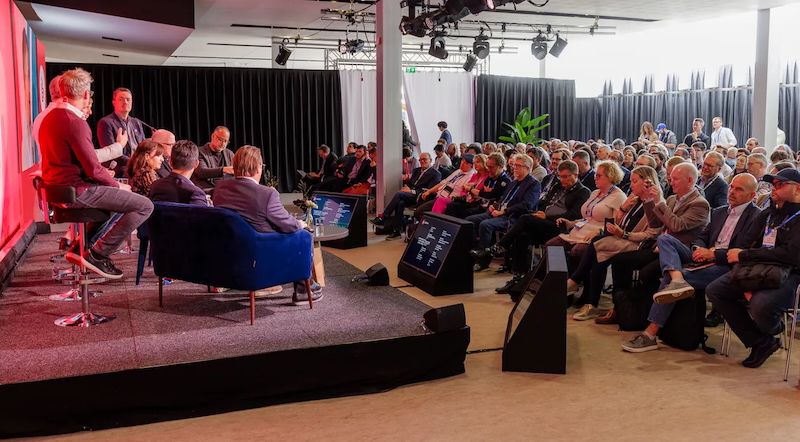
    AMSTERDAM: Amsterdam’s RAI convention centre will become the global capital of media and technology from 12–15 September when IBC 2025 opens its doors to broadcasters, streamers, studios and tech firms from around the world.

    The show will run 10:30–18:00 on opening day, 09:30–18:00 across the weekend and close at 16:00 on Monday. Organisers have built the edition around the theme of innovation, with a newly minted Future Tech hub in Hall 14. Here visitors can test emerging tools such as artificial intelligence, cloud-native production workflows, augmented reality, virtual sets, immersive audio-visual formats and sustainability-driven hardware.

    A three-day conference, from 12–14 September, features more than 300 speakers drawn from major broadcasters, global streaming platforms, technology vendors and creative studios. Panels will probe platform evolution, revenue models, AI integration and the next wave of interactive storytelling. JioStar’s Prashant Khanna is one of the headlined speakers being featured at IBC this year. 

    Elsewhere, the IBC Innovation Awards will celebrate cutting-edge deployments, while the Accelerator Media Innovation Programme offers collaborative trials of experimental tech. Free-to-attend theatres and showcase stages promise continual demos and debate on content delivery, rights management, talent development and the fast-changing business landscape.

    Beyond the exhibition floor, organisers are pitching IBC 2025 as a working laboratory: a place where engineers, producers and executives can handle new kit, swap ideas and chart the next phase of global media transformation.

  • Rode  and Vortex team up to redefine remote audio

    Rode and Vortex team up to redefine remote audio

    AMSTERDAM: Audio specialist Rode and British codec maker Vortex Communications have collaborated in a technology partnership that could change the way creators work remotely.

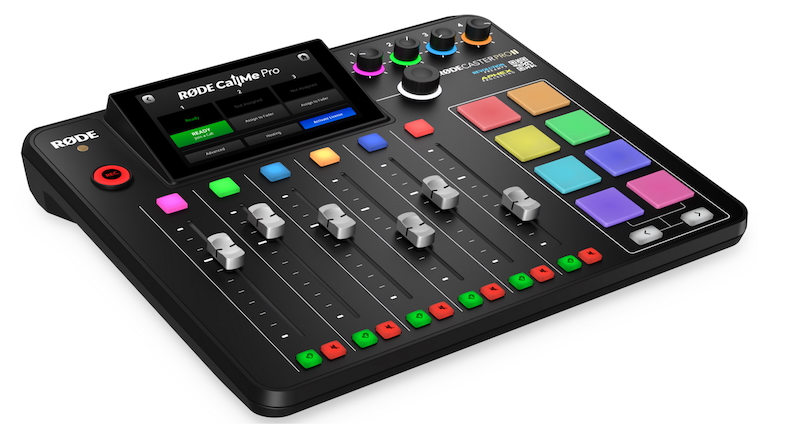
    The collaboration integrates Vortex’s proprietary CallMe codec directly into Rode’s flagship production consoles — the RodeCaster Pro II and its smaller sibling, the RodeCaster Duo. The result is seamless, ultra-low-latency connectivity over WiFi or Ethernet, allowing creators to link up in real time without leaning on third-party software, external hardware or complex setup.

    According to Vortex, CallMe’s secure SIP IP audio connectivity effectively erases geographic boundaries. Users can connect console-to-console anywhere in the world or patch in a guest through a web browser, with a simple invite dispatched via email or QR code. The goal: to deliver clean, broadcast-quality sound with virtually no delay — something that broadcasters, podcasters, internet radio producers and voice-over professionals have long demanded.

    For Rode the integration marks a strategic leap. The company has pitched the RodeCaster range as all-in-one studios for the new wave of independent content makers, but until now remote contribution has been the Achilles heel of many setups. By embedding CallMe at firmware level, Rode is betting it can lure professionals who want plug-and-play reliability without the baggage of expensive ISDN lines, flaky conferencing apps or heavy post-production clean-up.

    The service rolls out via a free firmware update branded Rode CallMe Lite, offering one remote contributor, up to 10 hours of RodeCaster-to-RodeCaster audio per month and five hours of web-to-console calls. Power users can graduate to paid CallMe and CallMe Pro tiers, unlocking multiple guests and extended call time.

    Industry observers say the deal underscores a broader trend: pro-grade broadcast technology is increasingly being miniaturised, simplified and pushed into the hands of independent creators. Just as video conferencing apps democratised face-to-face meetings, Rode and Vortex are betting audio production can leap the same gap — with the quality standards of live radio and network television intact.

    Vortex is exhibiting at stand number 8.F60  during IBC which is to be held from 12-15 September at Rai in Amsterdam.

  • Old Hindi TV shows make a comeback to light up primetime again

    Old Hindi TV shows make a comeback to light up primetime again

    MUMBAI: Ready for a trip down Tele‑vision Lane? Indian TV networks are reaching for the rewind button, dusting off iconic serials from the 90s and 2000s and re-hashing them with a modern twist. From crime procedurals to kitchen politics, old favourites are back to reclaim viewer loyalty, and early signs suggest it’s working. From Kyunki Saas Bhi Kabhi Bahu Thi and CID to Bade Achhe Lagte Hain, broadcasters are betting big on nostalgia to revive TRPs. These revamped shows began dropping between December 2024 and July 2025 CID 2 returned last December, Bade Achhe Lagte Hain 4 launched in June, and Kyunki 2 is all set to make  its grand comeback come 29 July. 

     Why the flashback fix? For starters, the 25–45 age group grew up with these shows, making them more than just content, they’re memories. Channels are cashing in on this emotional bond to draw back viewers amid the OTT onslaught. Legacy titles offer not just a TRP rescue but a cost-efficient revival strategy complete with ready sets, familiar faces, and low marketing spends. As a source at Star India put it, it’s a smart way to “mitigate screen fragmentation.” Plus, the pandemic proved nostalgia’s power when Ramayan and Mahabharat re-aired, they smashed viewership ratings records, outpacing even fresh content.  

    CID

    Ormax Media head of business development for streaming, TV & brands Keerat Grewal said:  “Over the past three to four years, shows with strong protagonists such as Anupamaa, Yeh Rishta Kya Kehlata Hai, Ghum Hai Kisi Ke Pyaar Mein, and Kumkum Bhagya, have managed to sustain high viewership even across multiple leaps. This has been largely driven by the strong emotional equity their lead characters hold. The shows have skillfully introduced a new generation of characters who inherit familiar personality traits while addressing more contemporary issues, allowing the audience to feel a sense of continuity and evolution. 

    “The growing preference for shows with known characters and familiar storylines is not just a trend – it’s deeply rooted in how the human brain works. Neuroscience research shows that nostalgia and familiarity activate the brain’s reward centers, triggering comfort, trust, and emotional safety. Audiences are neurologically wired to return to content that evokes positive memories or past emotional resonance. That’s precisely what the return of a show like Kyunki Saas Bhi Kabhi Bahu Thi will tap into.”

     Kyunki Saas Bhi Kabhi Bahu Thi

    Based on Ormax’s extensive tracking in the HGEC category, we know that the Kyunki brand still holds strong equity among viewers today. This is reflected in the exceptional performance of the show’s new promo on our proprietary awareness tracker Ormax Showbuzz. Within just two days of the promo’s release, the show has recorded unaided awareness levels typically seen only after three to four weeks of sustained marketing in this genre. The data underscores the power of nostalgia, combined with trusted storytelling and iconic characters, to drive early interest and engagement. 

    Kyunki Saas Bhi Kabhi Bahu Thi (2000–2008) is set to return with Smriti Irani reprising her iconic role of Tulsi on Star Plus. CID (1998–2018) made its way back in December 2024 with most of the original cast. Bade Achhe Lagte Hain 4 debuted in June 2025, introducing a next-gen romance against a familiar emotional backdrop. Also making a play for comeback glory: Shaktimaan, slated for an audio reboot and a blockbuster film starring Allu Arjun; Aahat, the spooky staple now re-airing nightly; and evergreen titles like KhichdiOffice OfficeShrimaan Shrimati and Ramayan, all back on air or rumoured to be. 

    Bade Achhe Lagte Hain

    A JioStar spokesperson said, “Bringing back a show like Kyunki Saas Bhi Kabhi Bahu Thi is not just hinged on nostalgia, it is a strategic storytelling move designed for today’s viewers. At Star Plus, we see legacy IPs as powerful cultural assets that can be reimagined to reflect today’s evolving values. By blending familiarity with freshness, we aim to bring together households, unite generations, spark new conversations and reaffirm the enduring relevance of stories rooted in family, identity, and resilience.” 

    A source at Balaji Telefilms revealed that the decision to bring back Kyunki wasn’t an easy one. The creator Ekta Kapoor initially resisted, reportedly saying, “You can’t compete with nostalgia. Why shake it up?” 

    One of the reasons she said yes, sources close to her say, is the creative challenge to make it connect with today’s evolved audience and make an impact by tackling issues which don’t find their way into the current roster of shows on air. (On a lighter note, it will give Balaji Telefilms an opportunity to take the show past a record-breaking 2,000 episodes; remember, it was taken abruptly off-air in its 1,833rd episode). 

    The clincher for the channel and OTT was  not just ratings, it was legacy. Internal research commissioned had once shown that Kyunki helped amplify women’s voices in Indian homes. It tackled domestic abuse, ageism, and marital consent long before these were TV buzzwords. 

    The reboot, sources said, is less about chasing numbers and more about “reclaiming the power to reach millions and change mindsets.” 

    Sources familiar with the strategy at Star noted that Kyunki’s return serves both sentiment and business. “Broadcast reach is still far greater than OTT,” one executive explained. “Advertisers too have bought into the show because of its familiarity, going by the  sponsors who have been tied up: Procter & Gamble (a classic soap advertiser), Colgate and Fortune Oil.” 

    They added that older viewers with their own families who first watched  shows such as Kyunki as youngsters or young adults or are now settled, have disposable income, and more free time.  “This group is now reachable again especially  in slots like 10:30 pm,” said she. 

    With KyunkiCID and Bade Achhe Lagte Hain leading the charge, the revival roster is far from done. Insiders suggest shows like NaaginFIR, and Shrimaan Shrimati could be next in line. Meanwhile, connected TVs and Fast (free ad-supported streaming TV) channels are helping extend the reach of these classics into smaller towns and rural households, where smart TVs and budget broadband are becoming the norm. 

    Indian TV isn’t stuck in a time loop, it’s cleverly remixing the past. This wave of strategic nostalgia blends cultural memory with broadcast savvy, reminding us that some stories never really go out of style. In fact, they just get retold with better twists, lighting, cast and production values.

  • EY-AIDCF report: Indian cable TV faces dire times unless government and regulator step in with regulatory reforms

    EY-AIDCF report: Indian cable TV faces dire times unless government and regulator step in with regulatory reforms

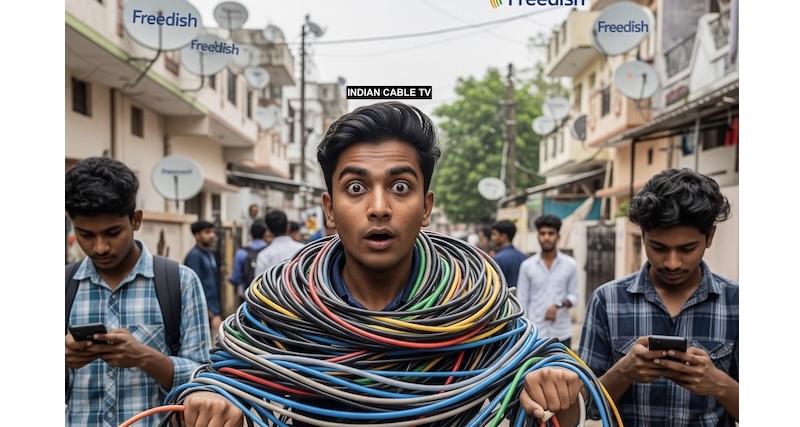
    NEW DELHI: India’s cable TV industry is on the ropes, reeling from a perfect storm of digital disruption, regulatory overkill, and changing viewer habits. A blistering new report by EY and the All India Digital Cable Federation (AIDCF) reveals a 40 million plunge in pay TV homes since 2018—down from 151 million to just 111 million in 2024—and warns that the bleeding isn’t over yet.

    By 2030, the figure could drop to as low as 71 million, as Indians flock to OTT, Free Dish, and smart TVs offering slicker content, better tech, and zero monthly bills. The fallout? A staggering 31 per cent collapse in employment across the Local Cable Operator (LCO) network, with up to 1.95 lakh jobs on the chopping block.
    The pay TV playbook, once defined by “kam daam, zyada samaan,” is now buckling under rising channel rates, bundling woes, and what LCOs call a “regulatory regime rigged for broadcasters.”

    A whopping 93 per cent of LCOs surveyed reported a drop in take-home income, with 79 per cent saying their earnings have nosedived by over 20 per cent since 2018.

    * Revenue for major distribution platform operators (DPOs) has shrunk by over 16 per cent since 2018, while EBITDA margins have plunged by 29 per cent.

    * Cable TV subscriptions have halved to 60 million, while smart TVs connected to the internet hit 50 million monthly active sets in 2024.
    * Pay TV now makes up just 58 per cent of the TV pie, down from 81 per cent in 2018, even as India’s TV household base touched 190 million.

    Despite being the backbone of India’s broadcast reach—physically connecting over 500 million people—LCOs remain the industry’s ignored foot soldiers, calling out a “top-heavy system” that allegedly favours deep-pocketed broadcasters and digital players.

    AIDCF proposes radical surgery: from activating over 20 million inactive set-top boxes and offering subsidies in “TV dark” zones, to limiting near-simultaneous OTT releases of pay TV content, and ensuring a level playing field between cable, OTT, Free TV and FAST channels.

    But with TRAI’s piecemeal tariff reforms (NTO 1.0 to 4.0) fuelling more legal duels than industry stability, stakeholders are demanding a full-blown reset. As OTT juggernauts steam ahead and content increasingly lives in the cloud, the cable industry’s survival may hinge not just on policy support but on reinventing itself as a digital services hub, not just a pipe.

    As the report bluntly puts it: without immediate intervention, the sun may set on the 30-year reign of India’s cable TV kings.

  • Double trouble for broadcasters as Supreme Court green-lights twin tax hit

    Double trouble for broadcasters as Supreme Court green-lights twin tax hit

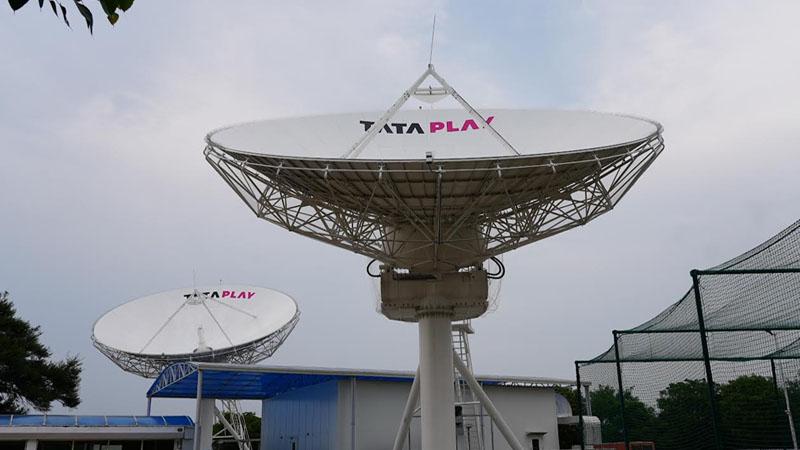
    MUMBAI: The Supreme Court has delivered a one-two punch to India’s broadcasters, ruling on Thursday that they must cough up both service tax and entertainment tax on their activities. The decision ends years of legal wrangling over whether television companies could dodge the double whammy.

    A bench led by justice B V Nagarathna and justice N K Singh declared that parliament and state legislatures both have the constitutional chops to levy their respective taxes. The 321-page judgment—longer than most television programmes—essentially told broadcasters they cannot have their cake and eat it too.

    “The two taxes target different aspects of the same activity,” the court explained, rather like taxing both the recipe and the meal. Parliament’s service tax under the Finance Act hits the broadcasting service itself, whilst states’ entertainment tax treats television as a luxury under Entry 62 of the Constitution’s List II.

    The judges were having none of the broadcasters’ arguments that they should pay only service tax to the central government. “No entertainment can reach viewers unless broadcasters transmit signals,” justice Nagarathna noted. “There are two aspects: transmitting signals and providing entertainment through set-top boxes that decrypt them.”

    This legal drama began with a clutch of cases from various high courts, with Kerala versus Asianet Satellite Communications taking the starring role. Broadcasters had argued they were merely in the signal-transmission business, not the entertainment game. The Supreme Court was not buying this technicality.

    The ruling overturns a 2012 Kerala high court decision that had favoured cable operators over DTH (direct-to-home) providers, calling such discrimination unconstitutional. The Supreme Court said this earlier judgment got it wrong—both cable and DTH operators are in the entertainment business and should be taxed accordingly.

    For India’s broadcasting industry, already grappling with cord-cutting and streaming competition, this represents yet another headache. The ruling makes clear that technological differences in how entertainment is delivered do not exempt anyone from the taxman’s reach.

    The court’s message is unambiguous: whether you beam signals from satellites or snake cables through neighbourhoods, if you are in the business of keeping Indians glued to their screens, you will pay through the nose for the privilege.

  • TRAI website gets a facelift

    TRAI website gets a facelift

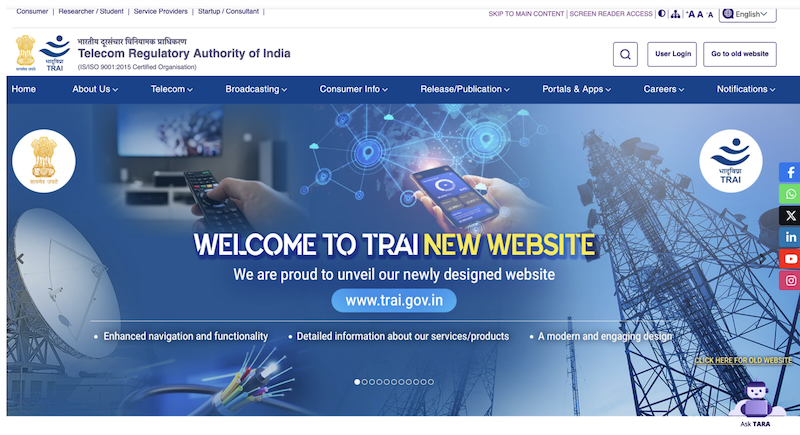
    MUMBAI: Industry watchdog the Telecom Regulatory Authority of India (TRAI) has got a new look online. It unveiled an upgraded website to broaden its reach to connect with a wider audience on 23 December 2024. 

    In recognition of the growing importance of social media, new sharing features facilitate the dissemination of regulatory information to all stakeholders. The website offers comprehensive information on telecom and broadcasting regulations, policies, laws, statistics and trends in India. These resources are easily accessible to the public, stakeholders, researchers, and international audiences.

    The new website includes the following additional features:

    • Introduction of a new dashboard for telecom & broadcasting sector.
    • Provision of data download for research.
    * A grid view feature, allowing users to view data in a new and interactive format.
    • In addition to sharing via email, users can now also share documents directly through major social media platforms, links for visualisation on Instagram, Youtube, Linkedin, Whatsapp, Facebook, X etc.
    • Online registration for subscription to latest TRAI  releases and updates.
    • Brief profile of the authority.
    • New website is compatible with iOS, Android & various platforms.
    • A blog with a facility for registered users to comment.
    • Provision to publish information about upcoming events.
    • Online registration for participation in open house discussions.
    • Compliance to accessibility features.
    • Tenders and notices
    • Concise and compiled regulations at a single place with amendments mentioned in foot notes.

    The new website, says a TRAI release,  will be hosted in the National Informatics Centre  (NIC) Cloud. The old website will run concurrently for three months after the going live of the new website. 

    A chatbot Tara (Telecom Authority Responsive Advisor) has been introduced to facilitate interactive search.

    Says an industry executive unwilling to be named: “It’s good that TRAI has renewed the look of its website online.  Hopefully, it will also start looking at industry with new eyes and listen to what the pay TV, OTT streamers, TV channels and distribution platform operators need to have healthy industry in which everyone benefits – including the government and the lay consumer.” 

  • Challenges we face in the production and broadcast industry are universal: Stefan Pfütze

    Challenges we face in the production and broadcast industry are universal: Stefan Pfütze

    Mumbai: The second day of the Broadcast India Show at the Jio World Convention

    Centre in Mumbai pulsated with the vibrant energy of the broadcast media and

    infotainment sectors. In an industry where technology evolves at lightning speed, the

    impact on broadcast and entertainment is profound. For over 30 years, the Broadcast India Show has served as an interactive platform, showcasing groundbreaking shifts in infotainment technology while connecting attendees with the innovators behind these marvels.

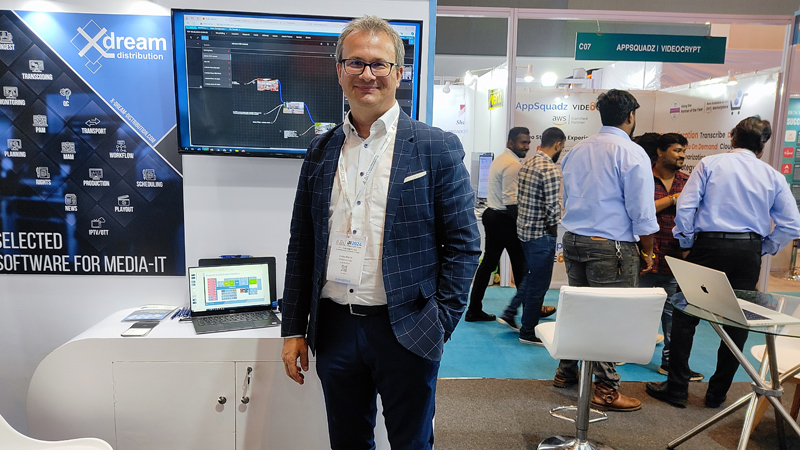
    While exploring the booths, we were particularly drawn to x-dream-group, a full-service provider for the media industry as well as for any commercial or public organisation that utilises audiovisual media. Their clientele includes post-production facilities, broadcasters, telecom operators and public entities.

    Indiantelevision.com’s Rohin Ramesh at the sidelines of this event, caught up with x-dream-group managing director Stefan Pfütze, who shared insights about his organisation with a beaming smile.

    Edited excerpts

    On brief overview of your organisation:

    We are known as x-dream-group, which encompasses three distinct types of activities. One of these is x-media, our company that specialises in software integration, focusing on creating end-to-end solutions using products from other software providers. We are solely dedicated to software and do not engage in hardware manufacturing.

    Through our work at x-dream-media, we’ve identified several established engineering companies that offer excellent products—many now in their second or third generation—but lack international market reach. To address this gap, we established an umbrella organisation called extreme distribution, which serves as a brand ambassador and master distributor for these companies. I am currently representing these various brands at Broadcast India.

    On elaborating some of the productised solutions you have developed for your customers:

    In our journey of development, we began with plugins for transcoders, which have become less relevant over time. From that foundation, we created a business called 1 GUI—a centralised user interface that integrates with various tools such as transcoders, ingest tools, quality control tools, workflow tools, and file transport tools. This interface serves as a cockpit for managing workflow and job queues.

    Over time, we expanded our offerings by adding a workflow starter and a workflow layer. Our latest release is the broadcast suite, a desktop application designed for playback, recording, and multi-viewing—targeted at professional AV users and broadcasters in need of quality control and engineering solutions. While it may not function as a traditional video server in a server room, it provides similar capabilities on a desktop level.

    Our flagship product, extreme fabric, is an end-to-end solution tailored for the media industry. Unlike our software integration approach, which involves customising ecosystems for clients, extreme fabric is a ready-to-go, pre-designed, pre-integrated, and pre-configured solution. Users can simply download and install it to establish a fully functional TV station.

    This may sound ambitious, but our primary target customers are tier one broadcasters who seek custom solutions and want to collaborate closely with us. For tier two and tier three broadcasters, as well as clients from sectors like corporate, banking, insurance, and government, the need is different. These customers often lack broadcast engineering capabilities and require a ready-made solution. When we ask them about their production business processes, they often look at us in confusion—many have little understanding of the necessary workflows.

    We showcase our capabilities on our website and at conferences and trade shows, aiming to enhance the overall process. This challenge is prevalent not only in emerging markets but also in regional TV stations, where organisations may have one or two knowledgeable individuals but lack the capacity to manage large integration projects. They require a more accessible solution. As I travel to various countries, I often hear the excuse that “it’s different in our country” regarding technology, habits, business processes, or even infrastructure. I believe that the challenges we face in the production and broadcast industry are universal whether in India, the Middle East, Europe or America.

    On identifying and addressing the specific needs of your clients:

    To identify and address the specific needs of our clients, we begin with clear demands. For example, when selling individual products, a customer may say they need software to integrate their central ingest desk with their newsroom and post-production systems. From there, we ask probing questions: “Do you also manage remote offices? What about live feeds or social media content?” This often leads to a realisation of additional needs they hadn’t considered.

    When it comes to transcoding, some clients initially believe that open-source solutions are sufficient. However, as they aim for advanced features like 4K Ultra HD, HDR colour spaces, or delivery to professional platforms, they soon realise they must meet strict requirements, such as delivering certified ProRes formats to companies like Apple. This is where we step in to provide the necessary support.

    Monetisation is another crucial area where we see demand for features like ad insertion, graphic overlays, audio track management, and subtitle management—more sophisticated needs than the basics. When we engage with clients, particularly during visits or trade shows, we often hear about inefficiencies in their workflows, such as the inconvenience of using USB devices to transfer content between departments. We can certainly improve these processes, especially for companies with distributed setups that include on-premises installations, cloud services, and multiple facilities across different cities.

    Another significant project category involves managing the business side of operations, particularly through media asset management systems. These systems serve as essential repositories, often involved in both the beginning and end of media business processes. Many vendors offer mini MAM systems for temporary storage, but we approach media management on a larger scale. We focus on publication strategies for marketing, advertising, and B2B or B2C content sales. For B2C, this includes video-on-demand portals, while our B2B offering, called the media market, enables broadcasters and content producers to sell their content online to a global audience.

    Editing is also a critical aspect, where our goal is to manage the bridge between business processes and the editing suite. This includes project management, approval workflows, and remote editing capabilities. Our product portfolio consists of software solutions, allowing customers to select their own hardware, rather than being tied to specific storage systems.

    Additionally, we have introduced a new component we refer to as “storytelling,” which functions as a newsroom system. This terminology resonates with clients outside the media industry, making it more relatable. Our applications are designed to be cross-media, supporting not just TV but also radio, web, and social media. This means that our playout solutions are essentially a form of publication across multiple platforms.

    When it comes to integrating these production systems, aside from editing challenges, we also face issues like ensuring compatibility between various tools and managing different workflows efficiently. We overcome these challenges through thorough assessments of client needs, providing tailored solutions that enhance their overall operations.

    On some common challenges you face when integrating an isolated production system:

    As software developers, it’s natural for us to explore the APIs of various software solutions. Today, most applications typically offer RESTful APIs, though some might have soft APIs, database connections, or file-based integrations. About 99 per cent of software now utilises rest APIs, and when we integrate systems, we prefer this approach because it provides optimal control, monitoring, and failure handling when working with third-party software.

    A common scenario I frequently encounter among system integrators and other vendors involves the use of watch folders. Many systems still rely on a chain of watch folders, where one application drops files into the watch folder of another. This approach is outdated and leads to significant operational overhead, particularly in process management and troubleshooting.

    Another prevalent trend is the transition from on-premises solutions to cloud-based systems. For many of our projects related to publication, we emphasise a hosted approach. However, this doesn’t necessarily mean a public cloud; it could involve dedicated or boutique hosting solutions with either physical servers or virtual machines. While public clouds often rely on virtual machines, they may not be cost-efficient for long-term engagements—though they can be suitable for short-term needs.

    We are witnessing a shift from fully on-premises elements, such as archives and publication systems, to remote data centres. This transition is driven by improved network connections, enhanced security, and better hosting capabilities, including power supply and cooling. Offloading hardware management allows for 24/7 operations without constant oversight, which is a significant advantage of a hosted approach, whether private or public.

    We support this trend through hybrid systems. For instance, high-resolution operations can remain on-premises, where the personnel and content are physically located, and archives may still reside on LTO tapes. Meanwhile, we can move the access components of the system to a hosted solution, connecting both sides to function as a single entity.

    The challenge today is ensuring that these systems operate seamlessly together. Currently, the approach often results in a disruption; the inner system handles publishing to the outer system while the outer system feeds information back to the inner one. Unfortunately, these remain separate systems that do not behave as a unified business process, despite essentially being one.

    On some upcoming trends:

    Discussing trends can be challenging. We’ve seen fads like 3d technology, ultra hd, and hdr come and go. In hindsight, many of these were just hype—something everyone talked about but few actually implemented. Today, most television remains hd and sdr. However, AI is different; it’s here to stay. Currently, we see practical applications like transcriptions and translations being effectively utilised.

    In our portfolio, we offer a product that provides live subtitling with translation capabilities. This tool is actively used in practice, and customers are willing to invest in it because it’s reasonably priced, making it a sensible option.

    One trend I observe is the shift toward on-premises artificial intelligence. Many customers are often unaware of their options and feel compelled to rely on public cloud solutions simply because that’s what vendors are promoting. However, the same software can often be deployed on-premises, which can be advantageous. While it may be challenging to navigate training models and related complexities, the cost savings on data traffic, time, and hosting and processing fees can be substantial.

    Artificial intelligence will also significantly impact storytelling in news, but I view this with some caution. There’s a common misconception that you can simply input a topic into an artificial intelligence and receive a well-formed story. In reality, we still need journalists and reporters in the field, gathering information and engaging with people. Artificial technology can assist in processing and shaping that information into a coherent story, but it cannot create news on its own. While artificial intelligence can generate lyrics or fiction, the essence of news relies on human insight and experience. Ultimately, it is the human mind that remains irreplaceable.

  • Merzigo has reached the leading position in Turkey with a 40% market share, says Yigit Dogan Celik

    Merzigo has reached the leading position in Turkey with a 40% market share, says Yigit Dogan Celik

    Mumbai: Merzigo, a leading Turkey-based technology company that offers video monetisation and channel management solutions for producers, broadcasters, and distributors in the global advertising-based video on demand (AVoD) market, has been a key player in presenting riveting content across the globe. The man behind the success story of the firm is Merzigo’s chairman and founder Yigit Dogan Celik.

    Born in 1988 and a graduate of MEF International School (in Istanbul, in the year 2007), Celik studied law at the University of East Anglia and business administration at Regent’s University (in the UK, in the year 2012). He kicked off his career in 2014 as a country representative at Havelsan, a prominent software and development company.

    In 2015, he went on to establish his own business and serve as the co-founder and head of sales at Merzigo. He became the chairman of the board of directors in 2019 at the content syndication company.

    Celik also continues to draw attention in Turkey and Europe with Key Networks Group’s continued investments in the OTT industry, production, and distribution. PowerHouse, an incubation centre under Key Networks Group, regularly invests in different technology and AI projects.

    He took important and strategic steps that contributed to the level of success that Merzigo has achieved today. His decisions led the organisation towards leadership in the digital marketing sector, both domestically and globally.

    In an interview with Indiantelevision.com, Celik discusses Turkey’s content market, Merzigo’s presence at Mipcom 2022, his interest in Indian content, and much more.

    Excerpts:

    On the objective behind such a big presence of Merzigo at Mipcom 2022

    Merzigo is a video monetisation and digital solution company for content rights owners, production houses, and broadcasters across the globe. We are already doing business with clients in the Americas, Europe, the Middle East and North Africa (MENA), and Asia through our offices in Istanbul, Mumbai, and London.

    At Mipcom 2022, our main goal is to focus on initiating new partnerships with potential clients and strengthening our position in the markets we are already active in. Our aim is to reach out to the ever-increasing base of partners and showcase our strong content offering. We expect to increase our already strong footprint globally and create stronger and more meaningful partnerships with our existing clients and newer prospects. We aim to further expand our global clientele so that Merzigo can become the leader in the AVoD market.

    On achieving the success you have at 34, about your journey pre-Merzigo and after setting it up

    Merzigo was founded in 2015 as a response to the market’s video monetisation needs. Our technological approach, expertise, and our own solutions helped us rapidly increase our market share and provide our domestic and international clientele with the best services available. As per our strategies, we have reached the leading position in Turkey’s market with a 40 per cent market share.

    Also, in line with our global vision, we continue to increase our market share to strengthen our position. As of 2022, Merzigo continues its activities under the newly restructured Key Networks Group, reaching a total of 400 employees. Merzigo’s leadership and knowledge in the digital sector’s monetisation and knowledge are elevated to a new level by these global strategies.

    On the Turkish adex market – whether it’s small or large, how advertising has evolved over time, especially in terms of digital video and AVoD, and how it is growing today

    Merzigo has a global presence. You can say that we are present wherever YouTube is present. We have been in the AVoD business since our establishment, and we have witnessed the market’s growth towards a more positive stance towards the AVoD model. We believe this shift will only accelerate due to the global landscape and the growing importance of accessibility. As you know, even major subscription video on demand (SVoD) platforms are considering AVoD plans that include advertisements. Hence, we believe we are on the right track. 

    On witnessing a tapering off of CPMs post opening up after the lockdowns

    Cost per mile (CPM) is a good indicator of how valuable advertisers find your videos and audience for achieving their own business goals. Your revenue will not be equal to your CPM times your views because CPM reflects what advertisers pay, not what you earn. Advertisers can control which geographies they’d like to reach with their ads. Different locations will have different levels of competition in the ad market, so CPMs will vary by geography.

    If there’s a shift in where most of your views are coming from, you may see a shift in the CPM. For instance, if you previously had views from a geography with higher CPMs but are now getting more views from geographies with lower CPMs, you may see a decrease in your CPM.

    On partners’ asset monetisation that you are managing on Turkish digital video platforms, which ones have managed to generate maximum revenue and why, and why have the others failed

    Survivor Turkey, The Voice Turkey, Turkey Got Talent, Fox TV in Turkey, and globally published Turkish series such as El Sultan (Magnificent Century), El Poder del Amor, and various international series channels launched in India, and from Spain, we signed a deal to monetize RTVE series are among our top channels.

    We also took over the management of some of Turkey’s leading free TV channels, multiplying their revenues per year by 10-fold during our first year. We are providing content in the following languages: Turkish, Spanish, Arabic, Romanian, Portuguese, English, French, Serbian, Italian, Urdu, Hindi, German, and Polish. Our content offerings are a perfect blend of emotion, drama, and variety, which are synonymous with almost all cultures in the world.

    On explaining your interest in international content – especially Indian

    Gripping stories, powerful characters, and edge-of-the-seat entertainment will ensure the viewers’ loyalty and stickiness. We aim to push the boundaries of entertainment by presenting new concepts and engaging content across genres to our audience. We pick up topics that are relatable to almost all cultures in the world and present gripping stories that are a perfect blend of emotion, drama, and variety. We bank on stories, which at their very core are stories about humans – their emotions, challenges, love, relationships, victories, defeats, and courage.

    Our strategy is to strike a good balance of content that works well with our audience and experiment with new and disruptive ideas constantly. And India being one of the world’s oldest and most diverse cultures, its series are a perfect blend of emotion, drama, and variety, which are synonymous with almost all cultures in the world. We believe there is tremendous headroom for growth for international content – and particularly India content – and hence we look at this as one of the key priorities for our content distribution.

    On your app being currently gestated: how will it be different from others, and what is the competition like

    ‘Baslat’ (meaning “start”) is our own OTT AVoD platform, which will be launching in Turkey in January 2023 on all platforms such as the web, phones, and smart TVs. Baslat will have an entirely different vision and intend to stand out in the AVoD market, offering an innovative and unique viewing experience for audiences in Turkey, as the viewers will be able to access premium content & original production for free. SVoD platforms in Turkey are increasing with new players entering the market, increasing the production budget and cost.

    Today, there are more places than ever to consume content. There’s a huge demand for variety in content, and audiences are more interested in the type of content and stories they can relate to. With the rise of OTT players, our focus is on how we can meet the needs of our viewers and focus on delivering different concepts and good stories to cater to the needs of both live and on-demand videos across different devices.

    On the target audience, and how will you monetise it

    We have always adapted to market demands and expectations, maintaining the standards that we have established over time and delivering high-quality content to audiences.

    The series dubbed in Turkish is a perfect blend of emotion, romance, family, and socially relevant issues that will immediately resonate with mainstream audiences. We will ensure content for all age groups.

    The most important issues are viewers’ habits when it comes to video consumption as well as piracy. We will be encouraging people to watch the content they wish to watch on a legal yet free platform. Our revenue model for Baslat will be through advertising sales.

  • Boosting local market manufacturing will help the Indian M&E industry to become a supplier to the world: CII Big Picture Summit 2022

    Boosting local market manufacturing will help the Indian M&E industry to become a supplier to the world: CII Big Picture Summit 2022

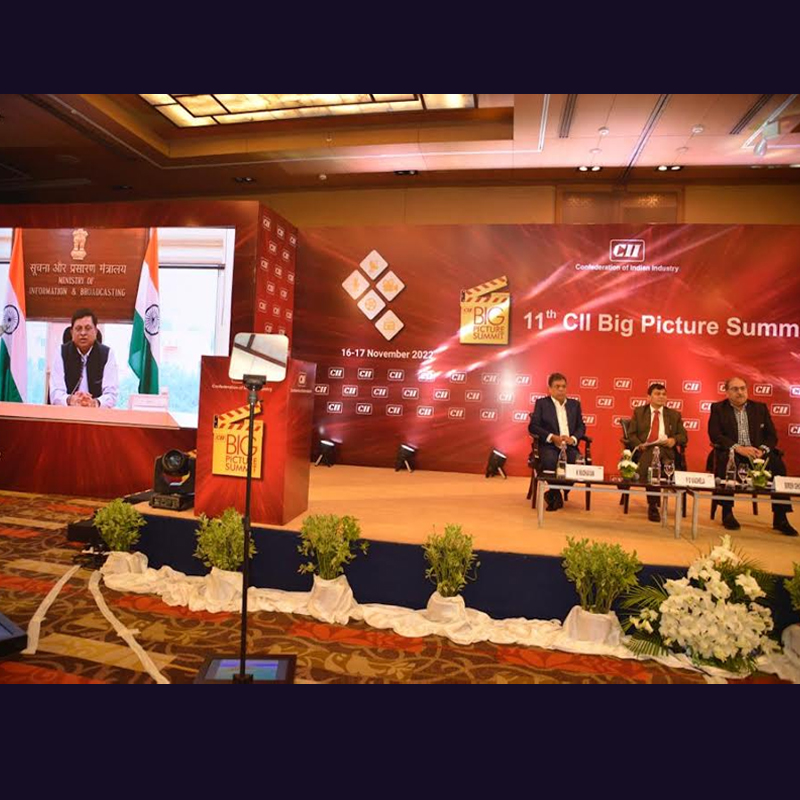
    Mumbai: The 11th edition of the Big Picture Summit 2022, organised by the Confederation of Indian Industry (CII), is a two-day event that is taking place on 16-17 November. The Summit witnessed the participation of various eminent panellists and marked the release of the CII-BCG report on “Shaping the Future of Indian M&E” and the CII-IBDF-KPMG report on “Sports Broadcasting in India.”

    CII Big Picture Summit 2022, with a range of sessions, has participation from content creators, broadcasters, buyers, studios, production companies, publishers, distributors, and developers across the gamut of the Media & Entertainment (M&E) landscape.

    On 16 November, the first day of the event, discussions centred around global trends and opportunities, the bounce-back of revenues to pre-pandemic levels, domestic consumer preferences, and local opportunities for a global audience through digital platforms that have never existed before, especially for the creative industry, storytellers, and technology providers.

    Speaking at the event, the ministry of information and broadcasting (MIB) secretary Apurva Chandra, stated that MIB, along with the Indian M&E industry, has set a goal of making the M&E sector a $100 billion industry by 2030. Chandra acknowledged the announcement by the ministry on the incentive policy for cinema at the Cannes Film Festival this year, out of which many proposals have been accepted for foreign productions in India.

    He further revealed, “The animation, visual graphics, gaming, and comics (AVGC) taskforce, which was launched as a part of the budget 2022, has completed its deliberations and is in the process of finalisation. The government will soon work towards actioning on the recommendations that come out of the report.” As regards the broadcasting sector, Chandra stated that the ministry has recently revised the guidelines for uplinking and downlinking for satellite television channels in India to ease the burden of compliance on channels.

    Telecom Regulatory Authority of India (Trai) chairman Dr. P.D. Vaghela highlighted the significance of the Indian M&E sector in the national growth story and economic prosperity. With about half of the population being young, the Indian demographic dividend presents a huge opportunity for Indian M&E services. Television is the largest and fastest-growing segment, representing around 50 per cent of the total media and entertainment revenue.

    He added that during the last decade, the M&E sector in the country has undergone several radical changes and is experiencing a paradigm shift due to the advancement of technologies and innovations in the creation, distribution, and consumption of media. He stressed that the traditional media would lose ground unless it understands, adopts, and merges its own business models with society 5.0, AI, machine learning, and other technologies that are being unleashed. Vaghela further mentioned, “The government needs to come out with policies that are flexible in nature and allow new players to easily enter the industry while at the same time not strangling the traditional sector with numerous regulations.”

    MIB joint secretary Sanjiv Shankar mentioned the various efforts made by the ministry in the recent past to ensure significant interventions in the regulatory framework, largely based on ease of doing business, Atmanirbhar Bharat, and Make in India. He stressed on the Broadcast Seva portal, which offers a single point facility to various stakeholders and applicants to apply for various permissions, registrations, licences, etc., for the development and integration of the broadcast industry.

    CII National Committee on media & entertainment chairman and Disney Star country manager & president K Madhavan, in his opening remarks commended CII for bringing together key stakeholders and policy makers together to discuss the future of India’s M&E industry and its potential in shaping societies. The M&E sector in India is underpenetrated, with a contribution of 0.9 per cent to the GDP compared to 3-4 per cent for many developed countries.

    He further advocated the potential for growth for the industry, owing to the presence of 300 million households in India, of which about 100 million households still have no access to television headsets. He further urged for timely support by policymakers in the areas of privacy, ensuring a supportive IPR protection measure, and announcing content-related policies while taking note of changing consumer habits and helping the industry to reinvent itself and adapt to creating travelable content.

    CII National Committee on media & entertainment chair & CII sub committee for AVGC & Immersive Media – vice chairman, and Technicolor India country head Biren Ghose in his closing remarks mentioned about the need to evolve in the ways content is being created and urged the stakeholders to look at growth from a different lens, particularly away from a linear vertical growth. Moreover, he mentioned fostering collaboration between government, industry, and academia for the continued growth of the M&E sector.

    Furthermore, Trai advisor Anil Bharadwaj said that while Trai is trying to enable a positive, consultative-based, industry-friendly approach with regards to the new tariff order (NTO), the industry needs to focus on building capacities and centres of excellence.

    CII has been driving several initiatives to take the Indian M&E sector to new heights and expand its global footprint in close collaboration with MIB. These include representing the Indian film and entertainment industries at the prestigious Cannes Film Market for the past 20 years, at the Berlin Film Festival for the past five years, and at the Toronto Film Festival for the past three years. CII’s strength in policy advocacy is acknowledged and accepted by both the government and media industries.

  • YuppTV introduces “Janya”, a disruptive solution in the TV industry

    YuppTV introduces “Janya”, a disruptive solution in the TV industry

    Mumbai: South Asian content provider YuppTv has announced the launch of Janya, a cloud-based playout solution. Janya is a disruptive solution that provides live TV and on-demand playout infrastructure in the cloud.

    Janya’s cloud playout solution enables any news, entertainment, or sports broadcaster the opportunity to immediately set up channels on the cloud-based platform, accessing a larger audience without upfront capital investment, limited resources, and operations. With the evolution and growth of OTT, the Janya cloud playout solution helps broadcasters be compatible with the OTT platforms and monetise through advertising with the implementation of SCTE-35 markers.

    The current market for live TV and on-demand video content is driven by hyperlocal content curated according to mass consumption. Janya addresses the hyperlocal requirements to create multiple channels with a low-cost but efficient setup.

    Leveraging Janya’s multi-channel set-up and ad-monetisation capabilities, broadcasters will be able to launch channels on FAST (free ad-supported television) networks through its cloud playout infrastructure.

    Janya’s cloud playout infrastructure also provides other innovative and interesting features such as interactive polls and graphics, cloud-based video editing, live debates, and live events.

    Speaking on Janya’s launch, YuppTV, Janya founder & CEO Uday Reddy said, “Video content production and distribution is witnessing a transformative phase in the present age. With the introduction of a cloud-based playout, OTTs, news, sports, and entertainment channels have an opportunity like never before. Janya allows various video content providers a platform to reach out to a larger audience, leveraging its technology to cater to the hyperlocal needs of the masses, creating new avenues for revenue generation through advertisements and more, all without the hassle of upfront capital investments, enabling multi-channel opportunities for broadcasters.”