Tag: broadcaster

  • ZEEL clarifies all its TV channels in Tamil Nadu are fully operational

    ZEEL clarifies all its TV channels in Tamil Nadu are fully operational

    MUMBAI: Recently, many consumers from the south market have complained of Zee Entertainment Enterprises Ltd (ZEEL) channels blackout on social media platforms. In thewake of the controversy, ZEEL has clarified that all of its television channels in Tamil Nadu are fully operational across leading cable and DTH operators, including Tamil Nadu Arasu Cable TV Corporation Ltd., SCV and V K Digital.

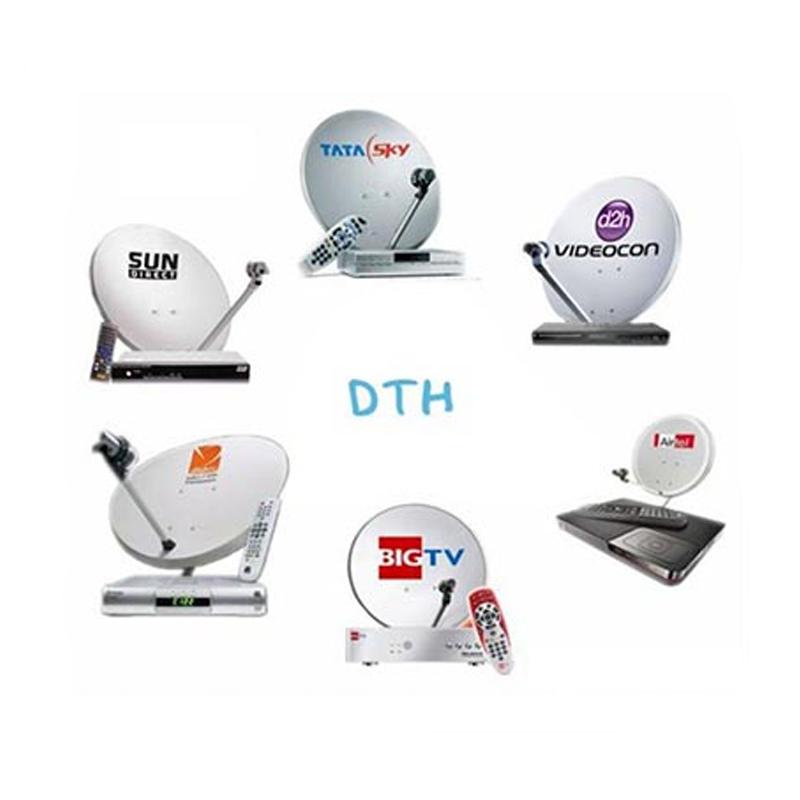
    The broadcaster also clarified that channels are also available across all leading DTH operators viz. Airtel Digital TV, Tata Sky, Dish TV, d2h, and Sun Direct and there has been no change in the consumer price (MRP) of the individual channels or channel packs whatsoever. Zee Prime Tamil SD pack is priced at Rs 10 only.

    It has also been mentioned that ZEEL has issued all the required communications to its esteemed viewers informing and urging them to approach their respective cable operators with a request to reactivate the channels, for which they have already paid Rs 10, as part of their monthly subscription.

    ZEEL had received several complaints and requests through emails and social media platforms, wherein the consumers mentioned that their cable operators have removed the ZEE Bouquet from their channel packs, without any communication or reason.

  • Dish TV pays Star India 2nd instalment towards outstanding arrears

    Dish TV pays Star India 2nd instalment towards outstanding arrears

    MUMBAI: Dish TV has paid the invoice for the month of September to Star India amid the ongoing payment dispute between the leading direct-to-home (DTH) operator and the broadcaster. Along with the current invoice, the second instalment towards the outstanding arrears has been paid as stated in a daily order of the Telecom Disputes Settlements and Appellate Tribunal (TDSAT) dated 21 November.

    Earlier, TDSAT ruled that Dish TV should pay the admitted dues to Star India by the end of November 2019 in three equal instalments by the end of September, October and November 2019.

    The latest order says that senior counsel for the DTH platform hinted that the petitioner is entitled to certain incentives in terms of the agreement enunciated and the circular of the respondent dated 27 September.  He also submitted that the invoices for the incentives have already been raised and submitted.  According to him, an early resolution of the demand for incentive would ease the burden upon them in making further payments.

    At the same time, the counsel for Star India submitted that these invoices have been raised simultaneously for several months and, therefore, verification is taking some time.  However, he assured that the task shall be completed and a suitable reply will be given to the petitioner informing whatever is found admissible by way of incentives. 

    Dish TV filed a petition in TDSAT against a disconnection notice issued by star India in July. Star India supplied a chart supplied to the TDSAT explaining Dish TV’s liabilities which mentioned a balance outstanding of Rs 83,70,895 on 22 July in respect of billing till January 2019. The tribunal noted that for the month of February to May 2019, the DTH operator has been billed for a further amount of Rs 284 crore including the earlier outstanding balance. Star India also mentioned that it has not included the interest component.

    “Having considered the earlier order and the stand of the parties, we are of the view that in addition to the liability to clear the current invoice as indicated above, the petitioner should liquidate the entire arrears to the extent admitted and already noted by end of November 2019 and for this petitioner shall pay the remaining outstanding dues towards the arrears in three equal instalments by end of September, October and November 2019,” TDSAT had said in its order.

    The matter has been posted under the same head to 11 December. 

  • MCOF’s Arvind Prabhu on post-NTO era, LCO concerns, OTT regulation

    MCOF’s Arvind Prabhu on post-NTO era, LCO concerns, OTT regulation

    The cable and broadcasting ecosystem started the year 2019 with a disruption – the new tariff order (NTO). With the implementation of NTO, the most dissatisfied section of the ecosystem was local cable operators (LCO) as they found the revenue-share business model would make their survival difficult which caused massive protests from LCOs. As months passed, the turmoil settled, but the ecosystem is yet to benefit from NTO, according to Maharashtra Cable Operators Foundation (MCOF) president Arvind Prabhu.

    In an interview with Indiantelevision.com, Prabhu spoke on major challenges faced by the ecosystem after NTO, how the industry evolved post-NTO, how LCOs can survive in the future with upgradation in technologies amid OTT onslaught, etc. Prabhu will also share his insights on the current state of industry at Indiantelevision.com's Video and Broadband Summit 2019, India's definitive Pay-TV and video distribution get together. 

    Edited excerpts:

    Has the industry settled down after the NTO was implemented?

    The industry has settled down but not the benefits of the NTO as envisaged by TRAI within the ecosystem. Consumers are not getting the benefits of the NTO. So the actual implementation of NTO is still found pending.

    What are the major changes you noticed post-NTO?

    What we would like to highlight is that because of the lack of proper implementation, the consumer is still not getting his choice of channels. There has been an increase in the monthly rates and we still feel the transparency is not there. The transparency which was required is still not there. Also, earlier there were two TV sets in households. Now, the second TV is still not active in post- NTO era. Only the primary TV set has been activated in the new tariff order. So, almost 20-25 per cent of our connections have still not activated.

    Initially, local cable operators showed strong disagreement to the revenue sharing model with MSOs. Has the situation changed?

    The situation has still not changed. The local cable operators (LCOs) are still not happy, especially with the network capacity fee (NCF) factor. We are still demanding the entire NCF should be given to LMO. So, the sharing with the broadcasters, the sharing of 80-20 is still not agreeable to us. There was an open-house discussion recently where lots of suggestions were given, therefore we are awaiting that to come.

    If the model does not change, have you thought of alternatives to prevent the loss?

    The revenue share model has to change. It looks like the broadcasters are going to be reducing the charges. Earlier, we thought broadcasters inflated their charges. From Rs 19 to they have gone down to Rs 12. Obviously, the ARPU is going down. If the ARPU is going down, then the revenue share also needs to be relooked and everyone in the ecosystem has to survive. If the cable operators do not get their fixed price, then they would not be able to survive. We are seeing a lot of cooperative head-ends coming up, a lot of infrastructure-sharing happening. But traditional TV is also now aligning with telcos. BSNL has opened its doors to providing its services as also Reliance Jio. There is going to be a little bit of turmoil in the market. The traditional linear viewing is changing.

    What are the other major concerns of LCOs?

    ,One of the major problem is who is the owner of the set-top box. Even today, the set-top box is given by the MSOs to LCO at Rs 1,150 or Rs 1,200. The receipt they are giving is the installation charge. As per TRAI, the installation charge is Rs 300 and registration charge is Rs 100. So, they cannot charge more than Rs 400 at any case. But they are giving the box at Rs 1,150 and saying it's installation charge. This is a violation of GST they are doing and the ultimate ownership of the box is still a question mark because the Multi-System Operators (MSOs) are taking money from LMOs, keeping the money to themselves, getting the depreciation themselves and also not paying GST.

    Also, the grievance is we are not given the choice to choose the channel that a consumer wants. As a consumer, I should have freedom of choice. But the DPOs are selling their packs, broadcasters selling their packs. I have no mechanism where I can sell my own packs. So, these all are part of NTO that was supposed to happen and that has not happened and the  tariff has gone up. So, now we are at a cross-roads.

    If you ask me whether NTO is a good thing, I will say NTO is a very good thing. It is bringing a lot of transparency, it gives equitable revenue to everyone but broadcasters and MSOs both are flouting the rules. Broadcasters are still doing fixed fee deals and MSOs are still not giving the actual audits. TRAI had also mentioned consumers be offered both prepaid and postpaid options. Now, as an LMO, LCO I am a consumer to the DPO. I have only got a prepaid option whereas my consumer is postpaid. So, what has happened is the entire liquidity of cable operators goes into prepaid mode whereas when the MSOs have to make the content  payment they make, they are easily getting three months of payment difference. So, basically MSOs are sitting on  cash. They are under-reporting to broadcasters, they have done fixed fee deals, they are not paying broadcasters also on time but they are taking prepaid from cable operators for the entire universe. The MSOs are benefitting more than anybody else.

    During the first phase of NTO implementation, a large number of consumers complained against LCOs for not giving a-la-carte channels? Why did this occur?

    Again, there was no awareness then. LCOs cannot give a-la-carte channels. Who gives a-la-carte channels? It is an MSO who has to facilitate the LCO to pass on the a-la-carte channels. MSOs are not giving a-la-carte channels, only DPO packages or the broadcaster packages. Earlier consumers were not getting that facility. Now, consumers thought the LCOs were not giving. Unfortunately, MSOs were not doing their duties and cable operators were facing the wrath of customers.

    As LCOs work on-the-ground, they are generally aware of consumer feedback. Do they think consumers are happy with the new price regime?

    Few consumers are very very dissatisfied because we are forcing packages on them and the prices have increased. Few of them – who were very very smart and educated and understood –  are very very happy with what is happening. A lot of awareness needs to happen. True pictures will emerge when we allow  consumers to select the a-la-carte channels. By and large, the ratio is 50-50.

    There are other changes in the ecosystem as well. How the OTT onslaught is affecting LCOs?

    OTT is making a lot of inroads. That is one of the points we are trying to make to TRAI that they have to bring OTT under this ambit. Because you are seeing a channel which is Rs 90 on cable or IPTV or DTH, on OTT it's available for free. And most of the people are now watching on their handheld devices. If they are getting all their entertainment and sports on an OTT platform that is not charged, it is not fair. It has to be charged and it has to be brought under regulation.

    Has Jio’s entry impacted the LCOs?

    Not much. Because they are struggling to reach a critical point. The pricing they have done also is quite affordable for LCOs to match and at Rs 699 for their basic internet charges, you know only cable operators can match those. Not much but it can be a threat.

    Why did LCOs lose a huge amount of subscribers during this phase?

    25-30 per cent of second  TV set owners may have gone to OTT or IPTV or they are not just renewing. They are finding it a luxury. Earlier they could get two TV sets coonections in Rs 300-400. Now, it's going to Rs 800-1000.

    With all the changes in technology, the emergence of new players, how do you foresee long-term future of LCOs?

    Those LCOs who upgrade themselves and do FTTH, will survive in the long run. Those LCOs who are not upgrading and think they will only do what they were doing and not invest in infrastructure, they will vanish. 

  • DPOs say broadcasters misusing TRAI tariff order with heavy discounts

    DPOs say broadcasters misusing TRAI tariff order with heavy discounts

    MUMBAI: Distribution platform operators (DPOs) believe that broadcasters have misused the flexibility available to them to give a discount on the sum of a-la-carte as high as 90 per cent. The operators have shared their views on Telecom Regulatory Authority of India's (TRAI) consultation paper (CP) on ‘Tariff related issues for Broadcasters and Cable services. The industry has also given mixed views over the implementation of the 15 per cent cap on discount for a-la-carte by broadcasters.

    TRAI had released the consultation paper seeking responses from stakeholders to review the new tariff regime on 16 August 2019. In its consultation paper, the authority informed that it has observed that broadcasters are offering bouquets at a discount of up to 70 per cent of the sum of a-la-carte rates of pay channels constituting those bouquets. “It indicates that in absence of any restriction on the discount on the offering of bouquets, broadcasters are making prices of a-la-carte channels illusory thereby impacting the a-la-carte choice of channels by consumers and giving huge discounts on bouquets to push even those channels which are not the choice of subscribers,” said TRAI.

    Tata Sky in its responses to TRAI expressed disappointment of not revisiting the entire new regime. It said, “We are glad that TRAI has finally acknowledged these misgivings, however, to our  disappointment, TRAI, instead  of conducting a  holistic exercise of revisiting the new regime in entirety has chosen to selectively focus only on  few issues thereby limiting the scope of the exercise.”

    “Having acknowledged the serious misgivings in the regulations, the current consultation is a piece-meal and isolated effort and not the appropriate way forward,” opined Tata Sky.

    It also suggested that TRAI should allow the price forbearance models at the wholesale and the retail level. Further, the channel pricing framework and methodologies should be left to the parties involved, allowing the market forces and negotiation between the parties to decide the same.

    Tata Sky also informed the authority that it is against implementation of any kind of cap overpricing. It suggested, “The DPO bouquet is much more subscriber-friendly as it caters to the needs of the subscriber for availing channels from multiple broadcasters within a pack rather than having to subscribe to multiple bouquets/ or channels.”

    However Bharati Telemedia, in its responses, said, “We are of the view that at this stage, no changes should be made to any of the provisions of the tariff order including the provision w.r.t discount on sum of a-la-carte channels forming part of bouquets offered either by the broadcaster or the DPOs. Any changes at this stage will be equivalent to migration and this may not be the ideal time to cause any interference as it will also lead to unnecessary disturbances and customer dissatisfaction.”

    DEN Networks said that some broadcasters are indulging in heavy discounting of bouquets by taking advantage of non-implementation of 15 per cent cap on discount which has created a non-level field vis-à-vis other broadcasters.

    DEN Networks also expressed that popular channels are being unnecessarily clubbed with non-popular channels to push their uptake. It said, “The broadcasters who have large number of channels in their repertoire, are engaging in a practice of forming large number of heavily discounted bouquets (with minor changes) to push popular channels with non-driver channels. It can be seen that the channels which were FTA before the implementation of the new regulatory framework have been converted into pay channels with the price range of Rs 0.10-0.50/- just to push them with in a bouquet with popular channels of the broadcaster.”

    The operator believes that the non-implementation of 15 per cent cap on discount clubbed with the ceiling of Rs 19/- on the price of MRP of a-la-carte channels forming part of such bouquets is responsible for pushing unwanted channels along with popular channels.

    All India Digital Cable Federation (AIDCF) in its responses to TRAI said, “The non-implementation of the said proviso has given leverage to the broadcasters to offer their bouquets at discount which is as high as 70 per cent of the sum of a-la-carte channels forming part of such bouquets. This flexibility of giving discounts without a cap, created a non-level playing field for the distributors because the bouquets were priced on a discriminatory basis.”

    Sharing similar views, AIDCF and GTPL Hathway said, “The flexibility available to broadcasters to give discount on sum of a-la-carte channels forming part of bouquets has been grossly misused by the broadcasters. The same has also been acknowledged by the authority. It is pertinent to mention that the broadcasters have not only offered huge discounts as high as 90 per cent on their bouquets but have also created confusion in the minds of consumers, by offering  numerous bouquet(s) comprising of few popular  and bulk of non-popular channel(s) with a clear intent to push their non-popular channels.”

  • MIB makes online mode mandatory for new channel applications

    MIB makes online mode mandatory for new channel applications

    MUMBAI: The Ministry of Information and Broadcasting (MIB) has issued a notice informing all broadcasters that the online module for submitting applications for new TV channels is now operational on web portal www.broadcastseva.gov.in dated 4 February 2019.

    It also stated that henceforth, all such applications for new TV channels should be made through online mode only and no application should be sent through offline mode.

    BroadcastSeva is the effort of MIB to provide efficient and transparent regime for the growth and management of the Broadcast Sector. It provides a single point facility to the various stakeholders and applicants to make their applications for various permission, registrations, licences etc.

    After submitting the online application the broadcasters are required to submit some documents through offline mode. The documents are different for a company already holding channel/teleport permission and a new company.

  • TRAI optimistic about onboarding 90% consumers by tariff order deadline

    TRAI optimistic about onboarding 90% consumers by tariff order deadline

    MUMBAI: Before the 1 February deadline of consumer migration to new plans in line with the Telecom Regulatory Authority of India’s (TRAI) tariff order, chairman RS Sharma seems confident of onboarding 90 per cent consumers to the new regime.

    According to news agency PTI report, Sharma has noted a trend in the past few days of a sudden surge in the recording of customer preferences by service providers. Seeing the positive response from consumers, TRAI chairman thinks the desired figure of 100 per cent onboarding will be reached soon.

    “Looking at the trend, we feel, we will be able to reach the figure of over 90 per cent by January 31 there may be 10 per cent cases where people may be travelling or not present at home,” he said.

    For smooth implementation, as well as consumer awareness, the regulatory body has come out with advertisements and created YouTube videos. It is also holding regular meetings with broadcasters, direct to home (DTH) operators and multi system operators (MSO) to review the customer choice collection progress.

    “We are reviewing it on a day-to-day basis. We are also looking into apps of various DTH operators to see how customer-friendly they are for recording of viewer choices,” Sharma stated.

    The new regulatory framework puts power in hands of consumers to choose the channels they want to watch through a-la-carte and broadcaster or DPO packages as well. 

    Many industry experts have speculated that it will raise the monthly cable bill. Sharma feels that the monthly bills of those customers who only select the channels they watch will certainly go down. He also advised that viewers should not unnecessarily hoard channels as they can addchannels to cart whenever they wish.

    “Many a times, people buy goods they don't need today but think they will need tomorrow. Tomorrow, if they want to watch a channel they can buy it… why should they hoard the channel because it is a costly hoarding as they have to pay for it too,” he said.

    The regulator on 24 January said that 40 per cent of consumers have exercised their options of selecting TV channels under the new tariff order. 

    On the same day, TRAI published a cautionary note writing to all broadcasters and DPOs, asking them to comply by the new regulatory framework within the stipulated time.

  • TRAI reminds consumers they can pick a-la-carte channels

    TRAI reminds consumers they can pick a-la-carte channels

    MUMBAI: In its latest missive the Telecom Regulatory Authority of India (TRAI) has taken note that broadcasters are only advertising bouquets of their channels and not informing customers about a-la-carte options. As per the new regulatory framework, consumers must be given the choice of picking individual channels too.

    “Now it has been noticed that several broadcasters are advertising their channels in the form of bouquets only. However customer may note that they have option to choose channels on a-la-carte also,” TRAI said in the release.

    It went on to state, “Consumer has complete freedom to choose their desired 100 standard definition (SD) channels within the network capacity fee of maximum Rs 130. The desired channels could be in a-Ia-carte free to air channels or pay channels or bouquet of pay channels or any combination thereof. The choice completely rests with the consumers.”

    TRAI has also mentioned that the maximum retail price (MRP) of a channel on a-la-carte can be viewed in the Electronic Programme Guide (EPG) or Menu of the TV screens of customers. However, Distribution Platform Operators (DPO) such as cable operators, DTH operators may provide discount on the MRP.

    For informing consumer properly, DPOs have been requested to run Consumer Information channel preferably on channel number 999 wherein consumer-related information including the prices of channels on a-la-carte and bouquets are made available.

    LCOs, MSOs, DTH operators are coming up with various options to consumers so that they can exercise their choice conveniently. LCOs can be reached by personal contact while the option of calling on call centre number is also available for many DPOs. Along with the website facility, many DPOs are also providing the option of apps.

    It once again reminded subscribers to make their picks in advance to avoid last minute hassles.

  • TRAI says no postponement of tariff order implementation in fresh clarification

    TRAI says no postponement of tariff order implementation in fresh clarification

    MUMBAI: The Telecom Regulatory Authority of India (TRAI) has clarified that it won't be giving any more extensions to the implementation of the new tariff regime beyond the deadline of 31 January. It has given an additional month for customer migration to new tariff regime after which there have been speculations that the authority may be further postponing or stopping or revising the rule. Quashing rumours, TRAI has issued a press release and clarified that the new framework has come into effect on 29 December itself.

    TRAI also states that  it has been monitoring the progress in regards to availability of consumer corner, choices to the consumers, provision of consumers care channel, percentage of consumers whose choice has been obtained etc. on day to day basis. It even noted that almost all the service providers have started providing consumer care channel on channel number 999.

    The authority further added that the schedule of activities has been properly communicated to all the service providers for reaching out to the consumers and obtaining choices. In addition to that, TRAI is conducting review meetings regularly to monitor the progress.

    TRAI has again advised all the service providers to strictly observe the timelines as provided in the migration plan.

    It has also asked subscribers to exercise their options without waiting for the last minute to avoid any inconvenience and to ensure that they continue to view their favourite channels.

    As the date for implementation of tariff order was nearing, stakeholders were highly concerned how the transition would pan out for consumers. Bringing relief to them, TRAI gave time till 31 January for consumers to opt for channels of their choice under the new regime. Customers will be migrated to new plans as per their choice from 1 February.

    Earlier there were speculations about a complete blackout of TV channels in December as the system allegedly is not ready for such a big move. Then too TRAI asserted in a release that it has advised all the broadcasters, DPOs, and LCOs to ensure there is no disruption of TV services.

    Left with less than one month in hand, DPOs have also started updating new channel prices and packages on their websites to inform consumers. Many large MSOs like Hathway, DEN Networks, Siti Cable have come up with "suggestive packs" bundling the popular channel of all major broadcasters.

    As per TRAI, the new tariff order will give consumers the power to choose and will also lower the prices for TV channels. This new framework allows them to select and pick channels that they like to watch and pay accordingly. It also requires the TV broadcasters to disclose maximum retail price (MRP) of their respective channels and also of the channel bouquets.

  • Guest Column: What keeps broadcasters from cracking factual entertainment

    MUMBAI: Worldwide, the business of broadcast is typically categorized into three verticals: the entertainment piece (GECs, English, Hindi, Regional, Music and other entertainment), the News & Sports piece (mostly events driven and current affairs driven) and the Factual Entertainment piece.   

    Factual entertainment refers to ‘lifestyle’ entertainment and ‘Information & Knowledge’ category. Worldwide it is monopolized by the four majors: Discovery, History, National Geographic and Scripps.

    The business of factual entertainment worldwide commands 11.5% of the audience share while contributing nearly 20% of the advertising sales revenue pie.  This business is seen to be an attractive segment therefore. No major TV broadcaster from India or the Eastern part of the world has yet cracked it. Why?

    In India, the ratios for both the above parameters is approximately 1.5% and 2% respectively.  In terms of audience numbers, even as it is bigger than most of the English News Channels and other English entertainment, the ad revenue contribution remains highly under-performed.

    The way to crack this business requires one to reimagine the business of factual entertainment aben issue.

    Business Insights

    Two insights are important for this business to be understood:
    1.    Brand –Unlike GECs where individual programs pull their own weight, in the business of factual entertainment, the Channel is the brand. Channel = Brand. The shows are incidental. The audience is loyal to the channel and not necessarily to an individual program. The genre provides high engagement value and the audience profile can be decoded from channel personality and hence the advertising brand fits. The brand is expected to deliver certain standards and hence no daily valuations and audience ratings do not matter much.
    2.    Imagery – Not only are the content costs high but the marketing investments are also higher as imagery – leading to perception – is everything. You do not have viewers in this category…you need to create fans.

    Reimagining the Business Model

    The business model needs to be looked at absolutely differently as compared to other segments. The revenue streams need to come from five different sources:
    1.    Pre-Sales
    2.    Co-Production
    3.    Broadcast
    4.    Formats, and
    5.    Syndication

    public://Untitled-3_16.jpg

    In this model, while individual contribution shares may vary, broadcast is seen to contribute no more than 25-30%. The shelf life of content is far longer and investments in quality content need to pay off through several channels as above. Example – Co-production can help set-off high initial content costs. No wonder then that Discovery’s annual content budgets are in excess of a few billion dollars.

    The broadcast players therefore need to decide to invest in Brand and Content as above. Most of all they will need to understand that this business has a long gestation period as getting the three unique factors – Audience communities as Fans, impeccable Brand integrity and cutting-edge Content – right makes the business thrive. Over and above this, the business model needs to follow the Five-Point Strategic approach rather than being looked at as a pure-play broadcast business.

    public://Untitled-4_3.jpg

    (Piyush Sharma, a global tech, media and entrepreneurial leader, created the successful foray of Zee Entertainment in India and globally under the ‘Living’ brand. The views expressed here are of the writer’s and Indiantelevision.com may not subscribe to them.)


  • TRAI order: Chrome has new method of analyzing impact on broadcasters

    TRAI order: Chrome has new method of analyzing impact on broadcasters

    MUMBAI: Chrome Data Analytics and Media has launched the Chrome Rate Impact Calculator for broadcasters and distribution service providers, to analyse the impact of TRAI’s latest recommendation at the market, network and channel level vis-à-vis the broadcaster’s current deals.

    Designed to interpret TRAI’s recent Tariff Order, the calculator uses Chrome DM’s proprietary tools to layer the Network-wise/Channel-wise Viewership & project the off-take of channels at a household level.

    With the CRIC, the broadcaster will be able to access the following insights:

    1) A channel- wise potential subscription revenue, post implementation of TRAI’s new price recommendation.

    2) The potential off take of subscribers, split by Channel.

    3) The projected carriage fee payable, split by Channel.

    4) CPS variance, current vis-à-vis the new price recommendation.

    Chrome DM founder and CEO Pankaj Krishna said, “TRAI’s latest tariff order which includes recommendations on the rates applicable for subscription and carriage fee calls for an understanding of its impact on the industry. CRIC has been created to assist broadcasters on the same.”