Tag: broadcaster

  • Network18 & Viacom18 dole out 100% variable pay to employees

    Network18 & Viacom18 dole out 100% variable pay to employees

    KOLKATA: Amid the second wave of the Covid2019 crisis, many organisations are taking initiatives for the well-being of their workforce. Even as several news and media enterprises are slashing salaries or resorting to mass lay-offs, Network18 and Viacom18 has paid all eligible employees the variable portion of remuneration for the last appraisal year ahead of schedule.

    It is to be noted that this measure of variable payout is not related to performance ratings this year.

    This financial relief is in addition to the media group’s drive to get its employees and their families vaccinated against Covid.

    “This gesture of 100 per cent variable payout irrespective of performance this year is a small token of the company’s appreciation of your efforts during these challenging times,” Network18 managing director Rahul Joshi wrote in an internal email to employees.

    In the email, Joshi also requested them to take better care of their health, and to refrain from taking unnecessary risks to prevent health hazards. He also asked employees to reach out to each other, and to the organisation in case of any emergency.

  • Disney and Star India contribute Rs 50 crore for Covid relief efforts

    Disney and Star India contribute Rs 50 crore for Covid relief efforts

    KOLKATA: Amid the ongoing Covid2019 crisis, leading TV network Star India has pledged financial support of Rs 50 crore for relief efforts. The announcement was made through Star India’s Twitter handle today.

    The proceeds will be utilised to aid India’s battle against Covid and towards the procurement of critical healthcare equipment, including oxygen concentrators, BiPAP, and ventilators along with setting up oxygen plants across hospitals.

    This is in addition to the Rs 28 crores that The Walt Disney Company and Star India had contributed towards Covid2019 relief in 2020. In an endeavour to create awareness around Covid appropriate behaviour (CAB), the Star India network has been running an awareness campaign through public service announcements (PSA).

    The Walt Disney Company India and Star India president K Madhavan said, “We stand in solidarity with all of India in our fight against Covid2019. The Walt Disney Company and Star India are humbly contributing Rs 50 crore to aid relief efforts. The need of the hour is to provide critical healthcare supplies and equipment to save lives. This is our common fight and our contribution reaffirms our steadfast commitment to India, and builds upon the Rs 28 crores that our company contributed towards Covid2019 relief in 2020.”

    The media and entertainment giant will also continue supporting relief efforts through its Disney Employee Matching Gifts program, wherein for employee donations to pre-approved charitable organisations, the company will match the amount.

  • Kotwali Police Station in Ludhiana busts illegal STB racket

    Kotwali Police Station in Ludhiana busts illegal STB racket

    KOLKATA: A store in Ludhiana, PAL Electronics, was raided by Kotwali police station on 16 March, after Sony-appointed raiding agency Mediasoft Legal Solution’s service manager Harminder Singh complained that pay channels of Sony, Star, Zee and other major broadcasters were being sold via unauthorised set-top boxes (Pagaria Boxes) without the proper licence or any distribution agreements.

    The store was selling the illegal boxes at Rs 1,500 on the false pretence that the buyer can watch all the leading pay channels like SET, Sony SAB, Star Plus, Zee TV etc without any fee for a period of six months. Once the initial free subscription period would be over, the buyers could recharge it at Rs 200 for another six months, the store informed users.

    When the representative of Mediasoft Legal Solutions led by the Sony Pictures Networks Team, along with the Kotwali Police Station raided the store, the team recovered 11 pre-programmed Pagaria STB boxes, which are currently in police custody. The police is investigating the matter and will be filing the FIR today.

    These illegal boxes work with the help of an internet connection and receive pay channels. These Pagaria STBs are being sold to the subscribers with the aforementioned false promises. Of late, there has been a significant rise in piracy of TV channels causing much concern to broadcasters and large multi-system operators (MSOs).

    Naïve users fall prey to this false claim as authentic cable and DTH operators charge around Rs 300 to 350 per month for the popular pay channels. Now with many more such raids in the pipeline by all the leading broadcasters and local MSO’s, it is a matter of time before the TV screens of the users of such illegal STBs are going to go blank suddenly one fine day, with no one to approach for any complaints or servicing. Sony Pictures Networks team has scheduled many raids across Gujarat, Punjab and other states along with other broadcasters.

    TV piracy is becoming big business in India where the miscreants are giving access to multiple premium channels at lower costs with the help of emerging technologies. But with regulators now on the heels of this form of piracy, it is only a matter of time before stringent action is taken against all such players.

  • Discovery marketing head Vednarayan Sirdeshpande quits

    Discovery marketing head Vednarayan Sirdeshpande quits

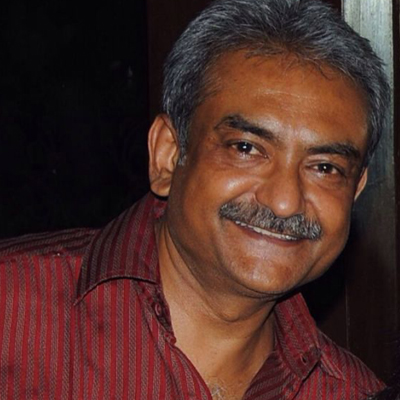
    KOLKATA: Discovery marketing head Vednarayan Sirdeshpande has called it quits at the network. He will exit the company at the end of this month.

    Back in 2016, Sirdeshpande started his journey with the broadcaster as marketing and audience development director. He was elevated as original content and marketing director in 2017. Finally, he was promoted to marketing head in 2019.

    At Discovery, he led brand marketing, IP creation and digital marketing across all network brands. Along with developing 50+ hours of long form, short form original production for premium network brands, he also executed several marketing campaigns, like the widely popular Man vs Wild with Prime Minister Narendra Modi, and Into the Wild with superstar Rajinikanth.

    During his career, Sirdeshpande has worked with reputed brands and advertising agencies including Amazon, Mondelez International, and Ogilvy.

    He has a successful track record in developing brand strategies, heading content development, media management and creation, and delivery of best in class 360 degree campaigns.

  • SPNI goes head to head with Indore-based Digiana Projects  on “piracy”

    SPNI goes head to head with Indore-based Digiana Projects on “piracy”

    KOLKATA: The battles in cable TV land continue, what with life gradually coming to the new normal.  Sony Picture Networks India (SPNI) ,for instance, says it is cracking the whip on Indore-based MSO Digiana Projects for allegedly availing signals through clandestine means. SPNI has gone ahead and switched off the transmission of its TV channels to the distributor as it has allegedly not paid its dues, and is pirating its channels. While the broadcaster has filed a contempt petition in the Delhi high court, the MSO has petitioned the Telecom Disputes Settlement &  Appellate Tribunal (TDSAT) to come to its rescue.

    The court has taken cognisance of piracy and admitted contempt of court case against Digiana along with issuing a notice to submit its response to the said petition. The matter will be listed in the second week of November this year. 

    In its response to TDSAT, SPN has charged that Digiana is continuing piracy even after undertaking before the court that it will not illegally broadcast the network’s signals. The broadcaster stated that it is difficult to deal with such a partner who is choosing unfair means along with withholding a huge amount in arrears – Rs 3.03 crore.

    However, Digiana claimed in its petition that the number is inflated and actually stands at Rs 1.48 crore. TDSAT has not found any good grounds to accept the claim and asked the defaulter to produce further materials and evidence. The next date of hearing is 2 November. In the meantime, the tribunal has directed Digiana to pay Rs 2 crore within ten days of the notice for the restoration of SPNI channels. Apart from payment Rs 2 crore, TDSAT also directed Digiana to clear dues of all forthcoming invoices within a period of 15 days from the receipt of Invoice.

    When indiantelevision.com reached out to the MSO, a senior staff member said that they had requested SPN for a fee waiver due to loss of revenue in Covid2019 crisis. He claimed that instead of waiving fees, the broadcaster hiked its bouquet price, which made the entire situation more difficult for its management. He also added that SPNI did not properly inform the MSO about the disconnection.

    indiantelevision.com tried reaching the CEO of Digiana for comment but he was unavailable at the time of publication.

    This isn't the first time that Digiana is in the dock over illegal transmissions of a broadcaster's signals. Last year, the Madhya Pradesh police registered a case against Digiana Projects after investigations revealed that the MSO had been stealing and broadcasting the signals of Star India at about 26 locations across the country.

    Major broadcasters have frequently complained about unauthorised transmission. Even major MSOs have also raised their voice against illegal theft of signals. A number of complaints before the MIB and TRAI remain unsolved, a senior executive recently said.

    The latest controversy involving SPN and Digiana comes amid an ongoing stand-off between broadcasters and TRAI over the amended new tariff order (NTO 2.0). While the case is sub-judice, the overall instability in the industry due to Covid2019 has precipitated more conflicts regarding signing agreements, timely payments, piracy, etc.

  • Guest Column: TRAI needs to focus on sectoral hygiene rather than economic regulation

    Guest Column: TRAI needs to focus on sectoral hygiene rather than economic regulation

    MUMBAI: A silent crisis has been brewing in the residential segment of TV viewing sector. Even as its viewership increased during the Covid-induced lockdown, sectoral revenues took a severe hit. While Covid was termed an act of god, TV’s current state appears to be a man-made disaster. TV is an integral part of media, the fourth pillar of democracy. Therefore, it is crucial to respect and preserve it.

    TV accounts for over 40 per cent of the Indian media and entertainment ecosystem’s revenues, making it the sector’s largest contributor. As per pre-pandemic estimates, the M&E industry was slated to grow at 10 per cent CAGR to touch $34 billion by 2022. Covid’s impact has slowed down that march, particularly because advertisement revenues have shrunk, production of new entertainment programs remained suspended and the addition of new subscribers, by direct marketing, has become difficult. The alternative lies in adopting a subscription-led model.

    Broadcasters source content from content producers and manage its distribution over electronic media for viewer consumption. There are costs involved in this management such as content editing, server storage, opex for uplinking, transponder rentals and taxes. Broadcasters rely on meeting these expenses through advertisements inserted into and cheek by jowl with content.

    Besides these, distribution platform operators (DPOs) charge broadcasters a fee to carry programs and their placement in their electronic program guides (EPGs). TV players  have to pay this fee even for channels which are free for viewers. Advertisement revenue covers approximately 60 per cent of such costs. The DPOs, in turn charge subscribers for connectivity and pay content charges besides taxes.

    Read more news on Trai

    Since the nineties, business models were skewed in favour of ad-driven revenues because the amount of video content to be distributed over the  networks exceeded network capacity. Further, business practices were not transparent as broadcasters were unable to verify how many subscribers were watching their channels.

    2011 onwards, the TV digitisation process was supposed to usher in transparency and help overcome capacity constraints by relaying encoded and encrypted program streams from broadcasters to consumers via approximately 1,500 MSOs and over 60,000 cable operators. Digitisation improves picture and sound quality and allows more content to be transmitted using the same resources, thus enhancing consumer choice. Coupled with encryption, this system is called the digital addressable system (DAS), which means the facility to enable or disable program viewing selectively and remotely. Encrypted broadcasting signals can only be decoded via a set top box (STB) programmed uniquely for each consumer as per their indicated choice. Consequently, consumers can access and watch only those programs that they have chosen and pay accordingly. Empowering consumers to exercise choice was the intended first step to enable a subscription-led industry model.

    While the government claims that the entire digitisation process was over in March 2017, the truth is otherwise. MIB tracked DAS implementation using only the number of STBs reportedly shipped out of headend service providers’ warehouses. It did not consider if these STBs had been programmed to show only those channels that viewers had opted for. The STBs, therefore, functioned only as digital to analog converters that enabled viewers to watch all programs in the network’s stream. The task force to oversee DAS implementation did not seek proof to verify that ‘addressability’ had actually been implemented in the subscriber management system, which was the very essence of DAS implementation. Thus, a lot of TV subscribers do not have STBs which allow them to watch only those programs that they opt for.

    In 2017, TRAI issued a tariff order that supposedly aligns regulations with the new digital regime. However, the explanatory memorandum of the tariff order is full of contradictions, attributable to limited knowledge of ground realities.

    One possible infirmity, in TRAI’s demonstrated inability, could be that their staff consists of bureaucrats and professionals from the IT enabled services sector. Telecom generically facilitates one-to-one communication without any concern for the content it carries. The charges too cover fixed and variable levies based on usage time. With such a background, TRAI has been entrusted with regulation of broadcast, which is based on content that is intended for mass consumption.  Since 2004, they have not been able to acquire information about how broadcasters price their content.

    Read more news on broadcasters

    In the explanatory memorandum to the tariff order from March 2017, TRAI says that content pricing is a dynamic process, best understood by broadcasters. At the same time, it restricts them from deciding the price of pay programs included in bouquets. A commercial approach to determine prices requires an understanding of the expected channel viewership, and the cost of producing or acquiring content. Addressing ground realities is important to gather accurate data on channel viewership.

    One must understand that most subscribers use cable operators’ networks, which are local monopolies. Such operators get STBs issued in bulk without requisite programming and pairing them with subscriber details. These STBs enable access to all programs contained in the stream net casted from the MSO, since they are not individually programmed to cater to consumer choice. The cable operators then started charging subscribers a fixed monthly sum without any bill or receipt.

    To address this situation, multiple suggestions were made to TRAI. An important one was to incorporate broadcast expertise, which differs from telecom, into regulation. This is especially important for content handling to ensure that the deployed distribution networks meet desired addressability and content security norms. This author too has suggested that an eminent person, with broadcast video distribution experience, should conduct a demonstrative audit for all empaneled auditors. However, TRAI remains reluctant to change its telco-oriented mindset, where the concern for content has never factored in. The most glaring example is  the regulator’s latest list of auditors to audit the digitalization process. Almost all of them are charted accountants with no experience in broadcast audit. The regulations prescribe the employment of a graduate engineer in the empaneled auditors’ teams, without even mentioning his/her educational background. Finding suitable talent is also challenging, as broadcast engineering, in general, and wired line broadcasting, in particular, are yet to find a place in Indian academia. To sum up, one can’t get the TV business right without getting the number of consumers right.

    TRAI will therefore do well to pay attention to the safe and secure delivery of content, rather than economic regulation that is confined to subscription fund flow audits. As it is, the regulator’s misadventure since March 2019, has resulted in a loss of estimated 26 million subscribers, besides reported closing down of multiple video broadcast programs. It can’t and shouldn’t create a situation where more programs are forced to go off air.

    (The author of the article is Lt. Col. V C Khare, a cable TV expert. The views are personal and Indiantelevision.com may not subscribe to them)

  • Zeel embraces technology solutions to create fresh content amidst lockdown

    Zeel embraces technology solutions to create fresh content amidst lockdown

    MUMBAI: Zee Entertainment Enterprises Ltd (Zeel) has embraced and optimally utilised technology solutions amidst lockdown, in order to create and offer fresh content for its consumers.

    The company has leveraged technology and implemented various solutions across its key functions, swiftly and collaboratively, creating the bedrock for creative innovation in the content offering. The teams have enabled innovations through remote production of content over mobile and professional cameras by using video and audio production technologies to support broadcast, digital and social platforms.

    On the television front, it is ready with an array of new shows in multiple languages across its regions. To begin with, Zeel is all set to bring together the entire music industry across ten states with celebrities, music stalwarts, best of SRGMP singers and judges to deliver the SRGMP 25year – Silver Jubilee Concert for a Golden cause. This 25-hour Live Music Marathon, ‘Ek Desh Ek Raag’ will raise funds for India ‘COVID Response Fund’ by GiveIndia. As a first of its kind TV + Digital Musical initiative, the show is all set for a 25 hour Digital Live-athon on 23 May and the Mega Finale TV Concert on 24 May on Zee TV and our other leading channels. The popular SRGMP title song is being rendered in 10 languages with the contribution of musical stalwarts like Pandit Jasraj, Ronu Majumdar, Selva Ganesh, Himesh Reshammiya, Shaan, Udit Narayan and more.

    Keeping the consumer need at the fore, we will bring exciting new offerings across non-fiction with Zee Kannada launching ‘Lockdown Diaries’ and ‘Coffee with Anu’, where the former is a fun filled game-chat show with its own artists. Zee Marathi is geared up to launch three non-fiction shows, titled as Vedh Bhavishyacha – a spiritual chat show, Gharchya Ghari Home Minister – a virtual format of the popular show Home Minister and Gharat Basle Saare – a first-of-its-kind standup comedy puppet show by Ramdas Pandhye.

    Zee Marathi is also set to offer four new fiction shows shot locally in Maharashtra under the new social distancing guidelines. Zee Sarthak has been airing ‘Lockdown Challenge’, a unique non-fiction show, showcasing lives of their leading celebrities during the lockdown. Zee Sarthak is also ready with a two-hour original movie, titled as ‘Mu Tame Lockdown’ to be launched this June 2020. Both, the pieces of content have been shot at the homes of the respective celebrities using mobile phones. 

    Zee Bangla has launched three shows Priyo Tarakar Andarmanal, Abol Tabol – a comedy show and Lockdown Diaries inspired by true human stories. Completely shot on mobile, Lockdown Stories is a tribute to the human spirit of fighting through short stories that aim to portray the human bonding, family strength and positivity this time has allowed us to re-establish. Airing for 6 days, the stories are inspired by real life and includes frontline health workers, young couples, a kid trying to explore his imagination and middle-class inhabitants in a city landscape represented by renowned artists like Gaurav, Debolina, Arunodoy, Tanima Sen and more. With each story, Zee Bangla and its artists intend to take a pledge to be more respectful, more patient, more empathetic and more humane.

    &TV, spearheaded innovation through two special initiatives and brought alive the festive spirit with an interactive episode on Hanuman Jayanti, enabling viewers to sing along Hanuman Chalisa on TV. Ek Desh Ek Awaaz, was a yet another special initiative undertaken on Ambedkar Jayanti. 

  • TRAI directs broadcasters, DPOs to publish updated NTO 2.0 prices

    TRAI directs broadcasters, DPOs to publish updated NTO 2.0 prices

    MUMBAI: The Telecom Regulatory Authority of India (TRAI) has asked broadcasters and distribution platform operators (DPOs) to take necessary steps to ensure a smooth rollout of the amended new tariff order from 1 March. Both broadcasters and distribution platform operators (DPOs)  have also been directed to publish required information on their website to provide consumers sufficient time to exercise their choice of channels and bouquets before the implementation.

    After TRAI came out with the amendments to the new price regime, stakeholders across the industry raised voice against that. There are several petitions pending in the high courts challenging the order. However, the latest directive from TRAI reaffirms that it is firm on rolling out the order.

    The authority also stated that many broadcasters have neither reported nor published the requisite information regarding the changes. It also added that it has been observed from the information available on the websites of many broadcasters that most of the existing bouquets of pay channels are not in compliance with the provisions of the amendments.

    TRAI also pointed out that quite a few DPOs have also not published the required information on their website nor composition of new bouquets compliant to the changes.

    “Further, to ensure that consumers at large are kept fully appraised, all concerned are required to ensure that information about all such existing bouquets which do not conform to the provisions of Tariff Order 2020 and which shall not be available for the consumers on or after 1st March 2020 may be suitably indicated on their website,” TRAI stated.

  • NDTV posts 55 per cent profit in Q3, best quarterly results in 7 years

    NDTV posts 55 per cent profit in Q3, best quarterly results in 7 years

    MUMBAI: New Delhi Television’s consolidated profit rose by 55 percent to Rs 11.3 in third quarter of the financial year of 2019-20 compared to Rs 7.3 crore in the corresponding quarter of the last financial year. The broadcaster posted best Q3 result in last seven years.

    The group’s television business shows a turnaround of Rs 16.82 crore over the preceding quarter, said the broadcaster in filing to Bombay Stock Exchange. “The television business declared a profit of Rs 6.66 crore, which is its best Q3 in more than a decade.”

    NDTV Convergence, the group’s digital company, posted 14th straight profitable quarter. NDTV Convergence being at the core of the group’s business operations, it remains a market leader in the online news space, the press statement said.

    NDTV’s profit for the current financial year so far marked a turnaround of Rs 17.86 crore over the corresponding period for the last year. Moreover, the operating expenses for the group continue to contract, down by Rs 8.5 crore over the same period last financial year.

    Meanwhile, NDTV Ltd’s profit increased by 49 per cent to Rs 6.7 crore in the third quarter of FY20 compared to Rs 4.5 crore in the same quarter of FY19. Whereas the revenue from operations of NDTV Ltd’s rose by 30.5 per cent to Rs 55 crore against Rs 42 crore in the corresponding quarter of FY19.

    Despite profit, the group’s total income fell 7.8 per cent to Rs 98.29 crore during the quarter under review compared to Rs 106.59 crore in the corresponding quarter a year ago. Meanwhile, the total expenses also slumped 10.52 per cent to Rs 85.03 crore against Rs 95.03 crore in the Q3 FY19.

  • Edelweiss, Elara Capital stay bullish on ZEEL; raise target price

    Edelweiss, Elara Capital stay bullish on ZEEL; raise target price

    MUMBAI: Despite a decline in advertising revenue, EBITDA, brokerage firms Edelweiss and Elara Capital are bullish on the target price of Zee Entertainment Enterprises Ltd (ZEEL). The analysts also expect ZEEL to maintain its momentum in subscription revenue growth.

    Edelweiss expects ZEEL to be a key beneficiary of the NTO regime given its strong pan-India viewership, comprehensive bouquet offerings, and entry in new markets. The firm maintains the target PE of 20x and roll forward to June 2021 to arrive at a target price of Rs 424.

    “We expect ZEEL to maintain momentum in subscription revenue growth; however, its secular growth is hinged on the resumption of the advertising momentum, particularly by FMCG and auto players. In our view, though promoters have sought a resolution on share pledging, watch out for the outcome of the ongoing audits. We maintain the target PE of 20x and roll forward to June 2021 to arrive at a TP of Rs 424. The stock is trading at ~14x/12x FY21E/22E EPS. Maintain ‘BUY/SP’,” says Edelweiss in a research report.

    “ZEEL trades at a fair valuation of 15x FY21E P/E and 14x FY22E P/E, which factor in concerns on ad revenues from macroeconomic headwinds and limit scope for potential downside. ZEEL also had an overhang due to strategic partner uncertainty, which negatively affected valuation for over a year; however, post the 22 November announcement that the promoter stake has reduced to 4.9 per cent to resolve group firm debt,” Elara Capital comments.

    It has raised its target P/E by 25 per cent to 17.5x (from 14.0x) forward P/E. It reiterates Accumulate and raise its December 2020E TP to Rs 350 from Rs 310. It predicts ZEEL will continue to trade at a small premium to SUNTV, given better ad growth prospects and scale-up in digital (ZEE5).

    However, it has mentioned that concerns persist on the ad growth front, as the FMCG vertical has yet to show signs of improvement in ad spend while macroeconomic headwinds persist with economic slowdown. Further, implementation to NTO 2.0 also would impact ad spend on the negative, given the transition period.

    It also says that the positive impact of new channel launches for the ad segment is likely to be offset by the negative impact of a decline in international ad spend as ZEEL plans to move away from traditional TV in overseas markets. It also pared off its ad growth estimates to 8 per cent in FY21, given the scope of outperformance has converged for the network, as ad spend remains weak for the GEC genre and some select regional genres seem to have peaked for strong double-digit growth.  However, there may be some respite for ad growth if Zee Anmol becomes a pay channel post NTO 2.0.

    After subscription growth of 23 per cent YoY thanks to NTO1.0, Elara Capital expects this segment to remain flat in FY21, due to NTO 2.0. It also adds that in an adverse scenario, scope exists for low single-digit decline. EBITDA margins remain under pressure, with content investment on the digital side and launch of five new regional channels in Q4FY20, which remain an overhang. Hence, it expects margin to fall below 30 per cent in FY21E.