Tag: Broadcast

  • TRAI suggests simplifying processes for broadcast, cable-related businesses

    TRAI suggests simplifying processes for broadcast, cable-related businesses

    MUMBAI: The Telecom Regulatory Authority of India (TRAI), in its bid to ease business norms relating to the broadcast and cable sector, has urged the government to simplify various licensing and clearance processes, putting time limits in some cases.

    The TRAI has also said that the satellite spectrum allocation process undertaken by various government agencies, such as the WPC in the telecom ministry and the ISRO/Department of Space, should be carried out throughout the year instead of “intermittent” opening of such processes.

    Some of the recommendations that have been suggested in its latest ‘Ease of doing Business in Broadcasting Sector’ paper are:

    http://www.indiantelevision.com/regulators/trai/trai-extends-dates-for-comments-on-uplinking/downlinking-consultation-paper-180116
    http://www.indiantelevision.com/regulators/trai/trai-paper-seeks-to-streamline-uplinking-downlinking-norms-171219 
    http://www.indiantelevision.com/regulators/trai/trai-releases-paper-on-national-telecom-policy-2018-180103

    – The process of granting permission/licence/registration for broadcasting services should be streamlined by removing redundant processes, re-engineering necessary processes and making them efficient using ICT.

    – An integrated portal to be set up by the government for broadcasters, teleport operators and TV channel distributors for filing, processing, tracking applications, payments, frequency assignments, endorsements, renewals etc.

    – Security clearances to be done within 60 days.

    – Setting up a system of self declaration.

    – Total time (including all kinds of ministerial clearances) to not exceed six months for granting licences or permissions.

    – Simpler process for logo, name, format and language change.

    – Create a centre for excellence for broadcasters.

    The TRAI says that the Indian broadcasting sector presents a vibrant picture but it has ‘immense potential to move on to a higher trajectory of growth by removing procedural bottlenecks and making business propositions more attractive.’ It states that checks must be done from time to time to ensure procedures are up to date or removed if no longer needed.

    A consultation paper was issued last year after which an open house was conducted with stakeholders on the topic of ease of doing business.

    Also Read:

    TRAI extends dates for comments on uplinking/downlinking consultation paper

    Trai paper seeks to streamline uplinking, downlinking norms

    TRAI releases paper on National Telecom Policy 2018

  • Guest Column: M&E sector pins hopes on a developmental budget

    Guest Column: M&E sector pins hopes on a developmental budget

    The market size of the Indian media and entertainment (M&E) sector is estimated to be in excess of USD 20 billion. India has more than 180 million television households and approximately 900 television channels (including news and current affairs). The country also produces the highest number of films–around 2,000 films every year in more than 20 languages.

    The key sub-sectors under M&E include (1) broadcasting, (2) print, (3) films, (4) sports, (5) radio, (6) music, (7) digital advertising, (8) out-of-home advertising, (9) animation and VFX, (10) gaming, (11) live events. The M&E sector is expected to outpace GDP growth in 2018. Now, with everyone’s eyes on Budget 2018 proposals, the key expectations of the sector are outlined below:

    Mergers and amalgamations

    Industrial undertakings are allowed to carry forward tax losses in case of merger or amalgamation. The definition of industrial undertaking, includes manufacture of computer software, providing telecommunication services. However, the sector (including broadcasting, radio) has not been included in this definition. Accordingly, the benefit of tax losses is currently not available for M&E players in cases of consolidation.

    On account of evolving business models (including moving to a B2C model), there is a thrust on consolidations within the M&E sector. Considering this and the convergence of the broadcasting and radio sectors with telecommunications, the government should consider including broadcasting and radio under the definition of industrial undertaking for carrying forward tax losses. This would facilitate consolidations in broadcasting and radio.

    Infrastructure status

    Broadcasting is capital intensive and requires huge investment of funds on account of digitisation, upgrade of technology and infrastructure architecture. Currently, broadcasting is not granted infrastructure status and the government should consider granting such status to the sector. This, amongst others, would aid financing for future growth and help the sector achieve its potential.

    Foreign direct investment (FDI) in print

    Currently, FDI in print (news and current affairs) is capped at 26 per cent. This sector is trying to deal with the impact of digitalisation. Considering the trend of liberalising the FDI policy and sector’s needs for investment in digital assets, the government should consider increasing the FDI cap for print to 49 per cent. This would help in attracting foreign funds into the sector.

    Transfer pricing

    Safe harbour is a mechanism under which tax authorities accept the transfer price (under certain circumstances) declared by the taxpayers, without undertaking a detailed audit/scrutiny. The scope of safe harbour transactions has been enlarged in 2017 to provide certainty to taxpayers and transactions such as provision of software development services for IT/ITeS sector are part of the safe-harbour regime. However, transactions specific to the M&E sector are currently not a part of the regime.

    The government should consider including the transaction of distribution of content by an Indian company to its overseas group company under the safe-harbour regime. This would provide relief to M&E players in terms of obtaining certainty from a transfer pricing perspective.

    Withholding tax

    Over the last couple of years, the government has been forthcoming in terms of clarifying tax positions (for instance expense deduction for abandoned films, withholding tax in respect of advertising contracts and content transactions) by way of circulars to avoid litigation. Outlined below are a few issues that the government should consider clarifying the withholding tax position to reduce litigation:

    ·  Channel placement fees: The government should consider clarifying that such payments do not amount to royalty/fees for technical services considering the Bombay high court decision on this issue.

    ·  Live broadcast rights: Clarifying that such payments do not amount to royalty/fees for technical services should be considered based on the Delhi high court and Mumbai tribunal decisions on this issue.

    ·  Transponder fees: The government should also consider clarifying that a non-resident taxpayer can claim the benefit under a tax treaty for transponder fees and domestic tax law explanation of the process should not be       imputed to the tax treaty definition of royalty.

    Goods and services tax (GST)

    Services by way of admission to exhibition of cinematograph films is subject to GST at 18 per cent or 28 per cent, depending on the price of the ticket. In addition to GST levied by state and central governments, the right to levy and collect tax has also been given to local authorities and this right continues even after implementation of GST. It should be ensured by the government that such local bodies do not levy additional tax on exhibition of films. If levied, a corresponding reduction in GST rate should be granted.

    The M&E sector is at the cusp of exponential growth opportunities but to achieve such growth trajectory, the support of the government reforms is of utmost importance. Hopefully, on 1 February 2018, when the Budget proposals are presented, we would take a significant step in that direction.  

    Thakkar is Partner and Bhojwani is Director with Deloitte India. The views expressed are personal and Indiantelevision.com may not

  • TRAI seeks better accessibility for persons with disabilities

    TRAI seeks better accessibility for persons with disabilities

    MUMBAI: The Telecom Regulatory Authority of India (TRAI) has turned the spotlight on one of India’s ignored sections of the society–persons with disabilities (PwD). The regulator is prodding companies to make information and communication technology more accessible to differently abled people. It notes that such people are unable to use the services either because they lack the necessary accessibility features or are incompatible for usage by them.

    The TRAI has released a consultation paper seeking the broadcast sector’s views on identifying and eradicating areas that are pain points for them and where policies are required to be frame so that PwDs don’t feel discriminated. Aids and assistive devices have been made for them but a similar change in services and content is yet to take place. The TRAI states that the law must also consider the various segments within PwDs.

    From 2.13 per cent of the population in 2001, the number of PwDs in India grew to 2.21 per cent, which is 2.68 crore of the total. The consultation paper points out that though set-top boxes (STBs) have been made accessible to them, there is a lack of content that can justify its usage. Certain additions need to be made for the visually impaired such that they can access STBs via audio. The functions they need to access without vision include channel/programme selection, display of programme information, setup options, closed captioning control and display options, video description control, current configuration information, playback controls, and input source selection.

    Similarly, people with visual impairment cannot see screens and find it difficult to navigate the keypad and menu of a TV remote. Buttons on a remote are also not designed while keeping in mind people who are unable to use their limbs or flex their fingers. Special measures, such as giving captions for those who can’t hear and audio descriptions for the blind, need to be taken.

    One section of the Rights of Persons with Disabilities (RPWD) Act 2016 states that government and local authorities must work to ensure that those with hearing impairment can enjoy TV content via subtitles or sign language. The Accessible India campaign aims to ensure that at least 25 per cent of TV shows on government channels are suited for PwDs.

    The TRAI suggests actions such as creating well-designed remote controls with legible buttons, a wireless connection between a television and the viewer’s hearing aid as ways to help them.

    India’s corporate social responsibility (CSR) laws have a provision to help PwDs. Broadcast companies that are required to undertake CSR have a fine way to spend the minimum requirement of at least 2 per cent of the average net profits in the immediate three preceding financial years. This can include developing applications, devices and services for their benefit.

    The US FCC mandates that devices used for watching TV must be accessible to PwDs and a similar case is for the UK as well.

    Also read:

    Trai paper seeks to streamline uplinking, downlinking norms

    TRAI’s final recommendations on net neutrality likely by September

    TRAI open house to discuss ease of doing broadcast biz

  • TRAI open house to discuss ease of doing broadcast biz

    TRAI open house to discuss ease of doing broadcast biz

    NEW DELHI: An Open House Discussion is to be held on 1 November in New Delhi next month on ways to find out easier ways of doing broadcast business and cause least harassment to entrepreneurs.

    With the fast changing regulatory framework for the media and entertainment sector, which in India is one of the fastest growing, the Telecom Regulatory Authority of India (TRAI) had issued a pre-consultation paper in April this year later followed up with a consultation paper in July.

    The Government has launched an ambitious programme of regulatory reforms aimed at making it easier to do business in India. The programme aims to pinpoint the bottlenecks and ease them to create a more business-friendly environment. The efforts have yielded some results with India ranked at 130 according to the World Banks’ Ease of Doing Business report. However, there is still huge scope for further improvement.

    TRAI notes that the International Monetary Fund has branded India as the brightest spot in the Global Economy. Several Global Institutions have projected India as the leading destination for FDI in the World and a number of recent global reports and assessments, show that India has considerably improved its policies, practices and economic profile.

    The aim is also to remove entry barriers by laying down well defined and transparent procedures and processes. This will create a level playing field for competition in the sector and facilitate innovation and technology adoption for providing better quality of services. The sector can then attract investment through investor friendly policies

    Subjects to be covered are related to processes and procedures for obtaining permission/license/registration for the following broadcasting services and subsequent compliances connected with these permissions.

    The fields include:
    Uplinking of TV channels
    (b) Downlinking of TV channels
    (c) Teleport services
    (d) Direct-to-home services
    (e) Private FM services
    (f) Headend-in-the sky services
    (g) Local Cable Operators
    (h) Multi System Operators
    (i) Community Radio Stations

    The questions raised are:

    1. Is there a need for simplification of policy framework to boost growth of satellite TV industry? If yes, what changes do you suggest in present policy framework relating to satellite TV channels and why?
    2. Is there a need in present policy framework relating to seeking permission for making changes in the name, logo, language, format, etc. related to an operational satellite TV channel? If so, what changes do you suggest and why? Is there a need for simplification of policy framework to boost growth of satellite TV industry? If yes, what changes do you suggest in present policy framework relating to satellite TV channels and why?
    3. Do you agree witb some of the stakeholders comments at the pre-consultation stage that Annual Renewal Process of TV channels needs simplification?
    4. Do you agree with stakeholders’ comments that coordination with multiple agencies/ Government departments related to starting and operating of a TV channel can be simplified? If so, what should be the mechanism and framework for such single window system?
    5. Is present framework of seeking permission for temporary uplinking of live coverage of events of national importance including sports events is complicated and restrictive? If yes, what changes do you suggest and why?
    6. Do you feel the need to simplify policy framework for seeking permission/license for starting and running of following services:
    (iii) Teleport services
    (iv) DTH service
    7. As per your understanding, why open sky policy for Ku band has not been adopted when it is permitted for ‘C’ band? What changes do you suggest to simplify hiring of Ku band transponders for provision of DTH/HITS services?
    8. What are the operational issues and bottlenecks in the current policy framework related to:
    (iii) Teleport services
    (iv) DTH service
    How these issues can be simplified and expedited?
    9. What are the specific issues affecting ease of doing business in cable TV sector? What modifications are required to be made in the extant framework to address these issues?
    10. Is there a need to increase validity of LCO registration from one year? In your view, what should be the validity of LCO registration?
    11. What are the issues in the extant policy guidelines that are affecting the ease of doing business in FM sector? What changes and modifications are required to address these issues?
    12. Is there a need to streamline the process of assignment of frequency by WPC and clearances from NOCC to enhance ease of doing business? What changes do you suggest and why?
    13. What are the reasons for delay for allocation of frequencies by WPC? What changes do you suggest to streamline the process?
    14. What are the key issues affecting the indigenous manufacturing of various broadcasting equipments and systems. How these issues can be addressed?
    15. Is there any other issue which will be relevant to ease of doing business in broadcasting sector? .
    16. Are there any issues in conducting trial projects to assess suitability of a new technology in broadcasting sector?
    17. What should the policy framework and process for consideration and approval of such trial projects?

  • How to create live video content sans pros, convert radio broadcast into visual show

    How to create live video content sans pros, convert radio broadcast into visual show

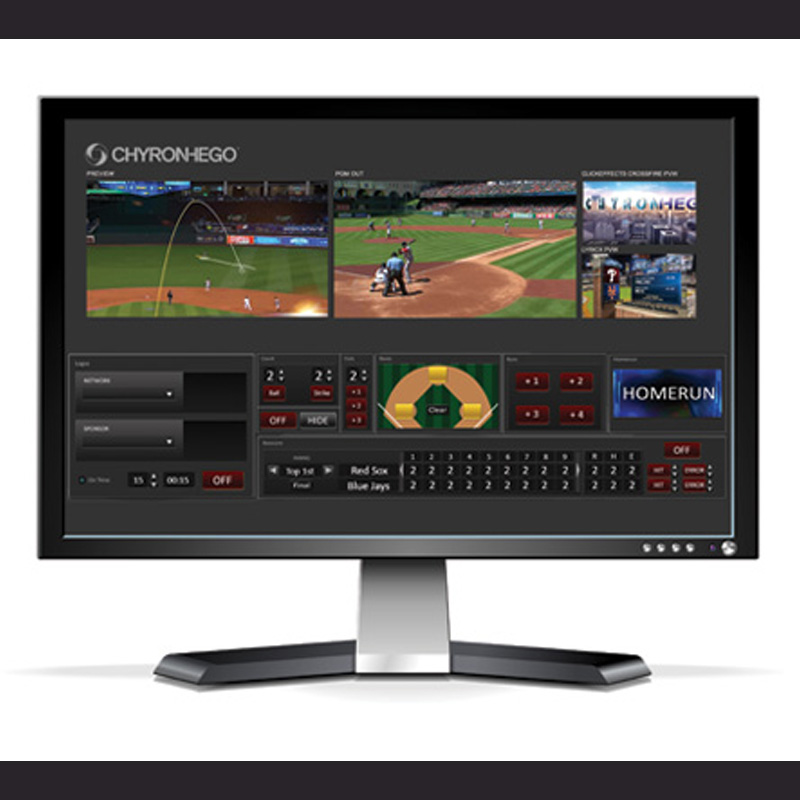
    MUMBAI: ChyronHego will be showcasing its live production, automation solutions at Broadcast India show in Mumbai in mid-October.

    Live compositor with live assist panels: Live Compositor from ChyronHego is a powerful and intuitive software solution for live multicamera production, allowing both new and experienced broadcasters to create compelling live video content without the need for  technically trained personnel. The solution includes video switching and audio mixing, a powerful video effects engine, multichannel graphics, multiple clip players, and robotic camera control, all packaged in an easy-to-use, all-in-one solution. ChyronHego will demonstrate Live Compositor with the Live Assist Panels platform, an all-new user interface and control panel creation tool. The Live Assist Panels platform leverages the latest multiuser web technologies to enable creation of custom-designed user interfaces for control of any ChyronHego product, and it also supports a growing range of protocols used by ChyronHego and by other leading industry vendors.

    Live assist playout automation: Also being showcased is ChyronHego’s Live Assist playout automation engine. Live Assist offers an ultra-intuitive user interface and open API for smooth integration with existing newsroom system.

    Visual radio: ChyronHego’s Visual Radio is a tool that enriches audio content with synced video to transform a radio broadcast into an entertaining and compelling visual show. The solution allows radio stations to take their shows to the next level by giving the audience the chance to experience unique radio moments as they happen and turn listeners into viewers. Visual Radio is a fully automated software solution that automatically switches cameras and plays graphics by analyzing audio signals and XML data from a radio station’s automation system. Visual Radio mimics a real director, leaving the radio presenters to do what they are good at, which is making radio. Visual Radio combines automatic camera switching, dynamic digital video effects (DVE), and graphic overlays with real-time XML updates and audio control. Visual Radio is designed for web, mobile, and TV platforms. Visual Radio is an add-on to a station’s current radio production system and does not require extra staff.

    Toolbox: ChyronHego’s Toolbox provides broadcasters with the flexibility to quickly capture content from a PC or the web and then convert it to air on live TV with just a few simple clicks. Toolbox allows broadcasters to utilize anydesktop content, play back any codec, and use content from video communication tools such as Skype, Google Hangouts, and Viber in their production. Key features of the Toolbox include a grabber, VLC plug-in, and generic return signal for video calls with a separate overlay for each function.

    The grabber feature allows users to select and grab any PC or web content such as a YouTube clip, PowerPoint slide, or Google Earth location and put it on air. The VLC plug-in takes troubled video files with unknown codecs and allows the user to drop the files in the VLC player and easily play back video files in the broadcast. The generic return signal option allows users to include remote interviews over Google Hangouts, Skype, and Viber in a live broadcast.

  • Intelsat signs distribution contract with Indian teleport operator

    Intelsat signs distribution contract with Indian teleport operator

    MUMBAI: Intelsat S.A., an operator of the globalised network and leader in integrated satellite communications, and LAMHAS, a teleport operator in India, have announced a multi-year agreement for satellite services supporting media distribution in India via the Intelsat 20 satellite.

    LAMHAS is using a C-band Multiple Channels per Carrier broadcast platform on Intelsat 20, located at 68.5° East, to deliver broadcast services to new and emerging TV channels in the devotional, spiritual and patriotic genres as well as regional news programming. Under the previously announced agreement, LAMHAS increased its services commitment on Intelsat 20, while also renewing its previous agreement for an extended term.

    “Our natural growth plans include leveraging Intelsat’s satellite services because its technology is well-respected among Indian broadcasters. We look forward to continuing our partnership with Intelsat and using its satellite services to expand our broadcast customer base,” said LAMHAS CEO Ajay Jain.

    Intelsat 20 provides high power distribution of video, voice and broadband services in Asia, Africa, Europe, the Middle East and Russia. The Intelsat 20 C-band video neighborhood provides premium programming that is carried by the top Indian cable multi-system and direct-to-home operators, reaching more than 100 million pay-tv subscribers across India.

    “Understanding our customers’ needs and challenges puts us in the best position to deliver satellite technology that will truly transform their businesses and drive growth,” said Terry Bleakley, Intelsat managing director – Asia-Pacific sales. “LAMHAS’ renewal and expansion of satellite services on Intelsat 20 will strengthen its media services capabilities, elevating its position as a premier teleport operator in India and attracting new broadcast customers,” he added.

    ALSO READ :

    Broadcast media sector FDI norms see minor tweaks in govt’s fresh announcement

    MIB asks teleport operators to give exact location in 7 days

    MDMK’s Vaiko to launch Madhimugam TV

    Goa to get a new news channel – WorldLink News

  • DSport partners with Nodwin for eSports league’s maiden broadcast in India

    MUMBAI: DSport, a sports TV channel launched by Discovery Communications India, has partnered with Nodwin Gaming to showcase the flagship esports tournament in the country – ESL India Premiership. As a part of the partnership, DSportwill telecast 90 minutes of action everyday (2 :30 – 4:00pm) starting Wednesday, 19 July, and will continue until December 2017. eSports has revolutionized the concept of sports and recently has been added as a medal event in the 2022 Asian Games.

    “We are excited to showcase eSports for the first time on television in India. The 90 minutes of intense gaming broadcast daily on DSport, for over six months, will catapult the popularity of eSports further in the country,” said Discovery Communications India senior VP & GM Karan Bajaj.

    Nodwin Gaming MD Akshat Rathee said, “eSports is one of the fastest growing sports in the country and this broadcast of the ESL India Premiership on DSport is sure to elevate their popularity to a new level. eSports has been already announced as a medal event for the 2022 Asian Games and will also hopefully make it to the 2024 Olympics, so we hope this initiative will act as a first step towards bringing glory to the country on global multi-sports platforms.”

    As a part of the ESL India Premiership 2017, DSport will telecast ‘Counter Strike: Global Offensive’ competition which will see participation from over 10,000 gamers from the South Asian region fighting for US$100,000 prize money. The Fall Season Finale of the tournament will take place in Hyderabad while the Winter Season Finale will be held in the national capital, Delhi.

    ESL India is a partnership between Germany based Turtle Entertainment’s Electronic Sports League (ESL) and India’s first-ever gaming solutions company, Nodwin Gaming. The Electronics Sports League (ESL, formerly ESPL) is the oldest and the largest eSports company in the world; globally getting gamers together, and organizing events like ESL One, IEM, Pro League and ESL National Championships.

    Counter-Strike: Global Offensive is one of the most popular multiplayer games in the esports scene. The game is also one to the top five most viewed video games online. India is no stranger to the CS:GO scene, the game has captured the imagination of lakhs of gamers in the country and the number continues to grow daily.

  • Govt wakes up to broadcast tech changes, Prasar manpower audit under way

    NEW DELHI: Even as the government admits to shortage of staff in the public service broadcaster Prasar Bharati, there is a need to re-assess actual requirement of staff keeping in view changes in broadcast technologies.

    Minister of state for information and broadcasting Rajyavardhan Rathore told the Parliament that Prasar Bharati has been advised to carry out a Manpower Audit to identify posts actually needed to be filled up.

    However, he said that limited recruitment has been undertaken as a special dispensation through Staff Selection Commission for critical Group ‘B’ and ‘C’ vacancies which were revived by the Government. In addition, special recruitment drive for filling up of backlog vacancies of Persons with Disabilities has also been carried out in Prasar Bharati.

    No plans to regularise contractual workers

    In reply to another question, the minister said there was no plan at present to regularise contractual workers in Prasar Bharati, Doordarshan, or All India Radio. He said Prasar Bharati has 38, Doordarshan has 749 and AIR has 196 contractual workers.

    These contractual workersare engaged for various categories of work such as news dissemination, programme generation, legal assistance, marketing, computers/ IT consultancy etc, both for AIR and DD, according to requirement.

    The number of casual announcers and casual comperes in various stations of All India Radio is 9722 and 4108, respectively. The casual announcers and comperes are engaged by the stations on assignment basis for a maximum of 6 bookings in a month up to a maximum of 72 days in a year, solely to meet the requirement of adding variety and interest to the programmes for which engagement on regular basis is not justified/ needed.

  • Convergence: Sinclair Broadcast co ties up with India’s Saankhya

    MUMBAI: ONE Media 3.0, a wholly-owned subsidiary of Sinclair Broadcast Group, Inc. has announced an agreement with Saankhya Labs, a leader in the development of Cognitive Software Defined Radio (SDR) chips, to accelerate the development of ATSC 3.0 (the Next Generation standard) chipsets.

    Under the agreement, Saankhya Labs will begin the development of a global standards supporting ATSC 3.0 chipset that will enable various type of consumer devices to receive the Next Generation television standard. Those devices will include televisions, cell phones, tablets, dongles, gateways and automotive units.

    The intent is to accelerate and stimulate the activities associated with the incubation of the ATSC 3.0 chipset development as a pre-cursor to a full-fledged development program. During the project incubation stage, key team members of Saankhya Labs will engage in chip architecture definition and algorithm identification in collaboration with Sinclair and ONE Media 3.0 technical leads.

    The complete ATSC 3.0 standard is on track for final approval by the standard-setting body in the coming months and governmental approval for use in the U.S. is expected by year-end. This new standard promises to revolutionize the broadcast industry by permitting mobility, convergence with broadband Internet platforms, addressability, conditional access, increased capacity and dramatic quality improvements. Early development of the chipsets anticipating final approval should accelerate adoption of the dramatic new capabilities enabled by the standard as broadcasters begin deployment.

    “We are pleased to begin working with Saankhya Labs to fast-track development of a global ATSC 3.0 device ecosystem that is focused on mobility, and provides support for all global broadcast transmission standards,” said Sinclair’s Vice President for Advanced Technology Mark Aitken.

    “ONE Media 3.0 and Sinclair, as digital innovators and the largest U.S. broadcaster, are committed to “mobile first” services, advanced data delivery as well as emergency and educational connectivity. Saankhya Labs’ software defined technology will allow us to exploit the underlying flexibility of the Next Generation standard in evolving beyond ‘3.0’ in support of the unique needs of large markets like the United States and India.”

    “We are excited to partner with One Media 3.0 and Sinclair to develop an ATSC 3.0 chipset that is set to revolutionize the mobility broadcast and data delivery services industry. Based on ‘Pruthvi,’ Saankhya’s award winning Software Defined Radio (SDR) platform, the next generation ATSC 3.0 chipset will enable true convergence of networks and devices. The new-age chipset bears testimony to Sinclair and Saankhya’s commitment to innovate and Make in India,” said Saankhya Labs CEO Parag Naik.

    Sinclair is one of the largest and most diversified television broadcasting companies in the country. Including pending transactions, the Company owns, operates and/or provides services to 173 television stations in 81 markets, broadcasting 513 channels and having affiliations with all the major networks.

    ONE Media 3.0, LLC, a wholly-owned subsidiary of Sinclair, was formed for the purpose of developing business opportunities, products and services associated with the ATSC 3.0 “Next Generation” broadcast transmission standard and TV platform. Saankhya Labs, founded in 2007, is a fabless semiconductor company specializing in the development of Cognitive Software Defined Radio (SDR) communications processors and modules supporting a broad range of emerging data communication standards.

  • Women to man DD on International Day

    NEW DELHI: In a unique initiative, women officers will be functioning as Operational heads in 33 Doordarshan Kendras in five zones across India to mark International Women’s Day.

    Interestingly, the Director General of Doordarshan presently is a senior woman Indian Administrative Service officer Supriya Sahu.

    All Doordarshan broadcast and engineering activities – transmission and recording – will be exclusively headed by women officers/staff.

    The DD Kendras and offices being covered are:

     
    (North Zone)
    (East Zone)
    (West Zone)
    1.    DDK Delhi
    1.    DDK Bhubaneshwar
    1.    DDK Bhopal
    2.    DD News
    2.    DDK Kolkatta
    2.    DDK Rajkot
    3.    CPC Delhi
    3.    DDK Patna
    3.    DDK Mumbai
    4.    DTH E/S Todapur
    4.    DMC Balasore
    4.    DDK Pune
    5.    DD Jaipur
    5.    DMC Burdhman
    5.    DDK Raipur
    6.    DDK Lucknow
    6.    DMC Rourkela
    6.    DDK Ahmadabad
    7.    HPT Pitampura
    7.    DMC Dhenkanal
     
    8.    DDK Shimla
    8.    DDK Ranchi
     
    9.    DDK Jallandhar
    9.    HPT Cuttack
     
     
    (South Zone)
    (North-East Zone)
     
    1.    DDK Chennai
    1.    DDK Guwahati
     
    2.    DDK Vijaywada
    2.    DDK Gangtok
     
    3.    DDK Hyderabad
    3.    DDK Shillong
     
    4.    DDK Bangalore
    4.    DDK Agartala
     
    5.    DDK Thiruvanathapuram